Red Sistémica · Family therapy
Errors and dilemmas in working with adolescents
In work of systemic orientation, as in any therapeutic task, we have an epistemology that sustains us, that underwrites our actions or, at the very least, that shows through in them. From this theoretical referent the technical resources follow; but there also follows from it, and above all, a way of acting, of intervening with those who consult us, a way of “being a therapist” which is inflected, on the one hand by what each theory “permits”, on the other by the “style” of each therapist.
“If we are faithful to the theoretical referent and skilful in deploying our resources; if we are clear in our ideas and responsible in our training; if we are supple with our own person and humble rather than arrogant: it is likely that we shall not make too many errors and that we shall be able to enter dilemmas and come out of them with elegance. Better still: strengthened.”
Omar Biscotti
Of “errors” and “alternatives”
When I work on adolescent problems — a third of my consultations —, I do so fundamentally with two systems: the adolescent himself and his family.
Looking up the definition of “error” in the dictionary, I found two senses which, to my mind, are closely linked. One: “a mistaken concept or false judgement”; the other: “an ill-advised or erroneous action”. Linked, because a mistaken concept leads to an ill-advised action. But how are we to define the concept of “mistaken”? One way occurs to me: because the action it sets in motion is ill-advised. And why might it be so? Because the aim pursued is not attained.
In consultations for adolescents from the middle classes of Buenos Aires, families usually arrive with a strong sense of “failure”, above all at the parental level, which often leads them to ask themselves:
“What error have we made?” The error is defined by the results: this child is not the way we wanted him to be, nor what we wanted him to be; or worse still: he is not happy. There are usually conceptions of what it is to be a good parent, which lead to “ill-advised” actions but which nonetheless go on repeating themselves, because, from the point of view of what one “ought to be”, that is what good parents “ought to do” today.
For his part, the adolescent most often has a far less tragic view of the situation: he does not consider himself party to any programming error, still less to an error coming from himself. “Is everything all right?” — “Everything is all right.” Everything. Absolutely EVERYTHING.
But for the parents: EVERYTHING is going badly. We systemic therapists are in the habit of reading the relational construction of these definitions.
And so, faced with such a consultation: what might be the paths that would lead us into error? Here are a few:
- Believing the two versions separately, or believing neither of them.
- Believing ourselves “experts” faced with “inexperienced” parents, or believing ourselves “inexperienced” faced with “highly expert” parents.
- Reinforcing the incapacity of the parents or that of the adolescent.
- Centring ourselves solely on the problem, or solely on the solutions.
- Building no hope at all, or building hopes that cannot be realised.
- Growing desperate or growing uninterested.
- Forgetting the theoretical referent, or being its prisoner.
- Seeing everything as “relational”, or seeing everything “from the subject”.
- Imputing everything to the context, or forgetting that it exists.
- Narrowing the system too far, or widening it excessively.
- Joining ourselves too closely to the family, or remaining too distant.
- Overstating the problem, or underestimating it.
- Forgetting feelings, or making them the permanent centre of our interest.
- Always privileging doing, or leaving it aside.
- Having no certainties at all, or having too many. (And, surely, a good many others besides.)
Going through this list, I tell myself that the path of error is a path of extreme options. At least one of the possible paths; certainly not the only one.
We systemic therapists understand diagnosis as the system’s response to our interventions. From this standpoint, an error would not be defined as such a priori, but by the feedback in response to the therapeutic act.
So which responses would be the indicators of an error? A few come to mind…
Who is Omar Biscotti
Dr Biscotti is a physician, a family therapist and co-director of ISDEBA.
Editor’s note
The extract published by Red Sistémica breaks off here: the list of responses that signal an error, and the rest of the article, are to be found in the full text published in Perspectivas Sistémicas no. 89.
This article is an English translation of “Errores y dilemas en el trabajo con adolescentes”, published by Red Sistémica (first published in Perspectivas Sistémicas, n° 89, 2005). Translated and republished with the journal’s permission.
Read the original articleHow to cite this article
Biscotti, O. (2022). Errors and dilemmas in working with adolescents (Complexe Systémique, Trans.). Complexe Systémique. https://app.complexe-systemique.com/en_GB/articles/errors-and-dilemmas-in-working-with-adolescents (Original work published in 2005 in Perspectivas Sistémicas, n° 89, 2005; republished in 2022 by Red Sistémica, https://redsistemica.ar/2022/08/01/errores-y-dilemas-en-el-trabajo-con-adolescentes/)
To go further
- Family competence, the adolescent and drug dependenceWorking with the adolescent and his family by drawing on what that family already knows how to do.
- The use of interrupted therapies: in search of craft-based trainingBraulio Montalvo: why train on failed therapies rather than on successful ones.
- Working with the person of the therapistWhat the therapist's “style” owes to his own history, and how to work on it.
Related training courses
 Short course
The suicidal crisis in adolescents and young adults
Training: assessing and supporting the suicidal crisis in adolescents and young adults. Clinical landmarks and systemic tools. In French.
 Certifying course
Training in Systemic Therapy and Interventions – Cycle 1
Certifying training cycle in systemic therapy and interventions – year 1. Courses, supervision and practice, aligned with EFTA/SFTF. In French.
 Certifying course
Training in Systemic Therapy and Interventions – Cycle 2
Certifying training cycle in systemic therapy and interventions – year 2. Clinical complexity, supervision and practice. EFTA/SFTF aligned. In French.
 Certifying course
Training in Systemic Therapy and Interventions – Cycle 3
Certifying training cycle in systemic therapy and interventions – year 3. In-depth intervention, supervision and practice. EFTA/SFTF aligned. In French.
Related articles
 Article
 Toxic, narcissistic, borderline: what therapy speak does to your relationships
Narcissistic, borderline, toxic: therapy speak has left the consulting room. Julien Besse shows how these labels close the debate and relieve us of our own part.
 Article
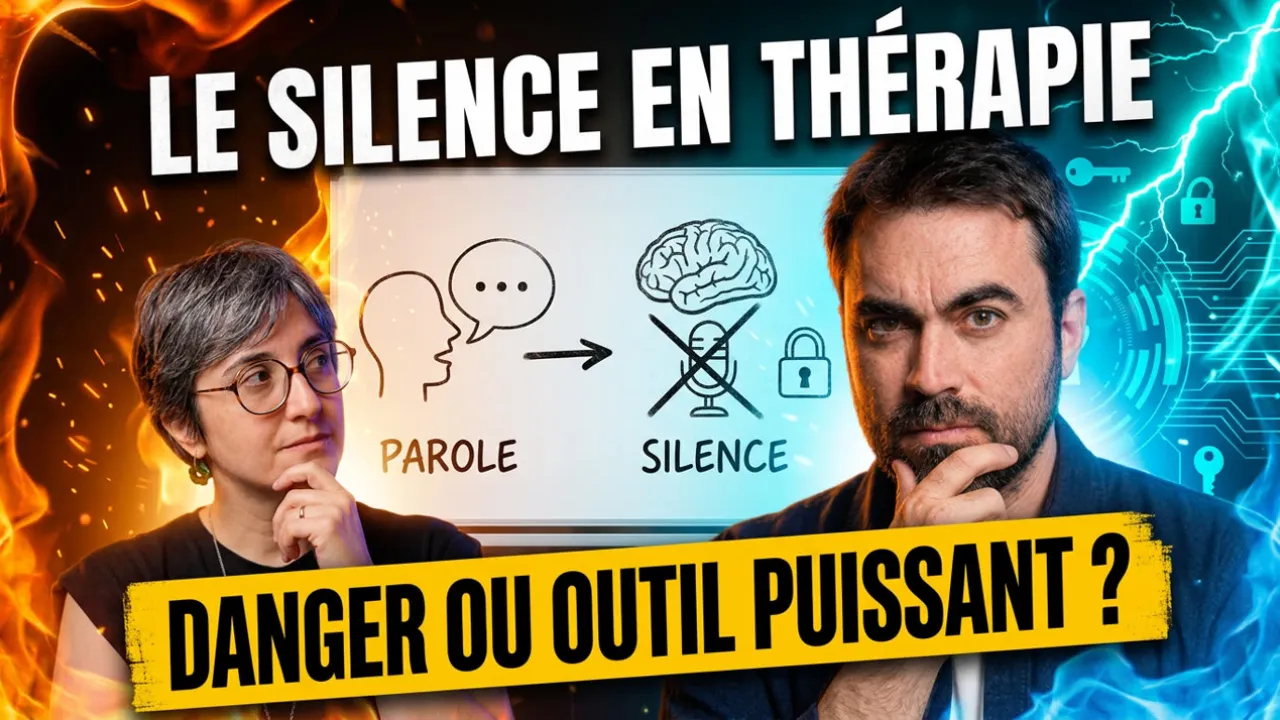
 Silence in therapy: a polysemic presence
From Heidegger to Palo Alto, silence is not an absence but a message. Defensive, strategic, reflective or shared: its forms, its functions and its risks.
 Article
 What if the shortest path to change ran through a joyful detour?
Humour in therapy is not a gimmick but a clinical skill: it loosens the loops, reframes without wounding and reopens the field of possibilities. With its ethical safeguards and a concrete toolbox.
 Article
 When intuition comes before strategy. The first flash of meaning
From Bergson to von Foerster, intuition is not the enemy of rigour but its immediate side. How it works concretely in the clinical interview, and why it calls for a reflexive stance.
Comments 0
Log in to join the discussion. Log in