Red Sistémica · Interview
Family therapy in context. Interview with Charles Fishman
Taking advantage of his stay in Argentina, we interviewed Dr. Charles Fishman, an expert in contextual therapies, executive director of the Institute for the Family and president of the Center for the Family in Princeton. With him, and with Dr. Alberto Vásquez, we talked about the treatment of families in their social context and about a subject we do not want to forget: the attack on the AMIA, which postponed, among so many other things, the seminar Dr. Fishman was due to lead in that setting.
“We family therapists have an inferiority complex. We can help find the right interventions in many fields, such as law and medicine.”
Charles Fishman
Editor’s note from Perspectivas Sistémicas
We wish to point out that Dr. Fishman did come to Argentina after all and generously offered his personal and professional support. We thank Dr. Vásquez and Cristina Bluthgen for giving Perspectivas Sistémicas access to Dr. Fishman, and for the invitation to take part in the scientific activity this professional will lead within the institution “Contextos.”
After the attack: supporting families
What was your impression regarding the attack?
Charles Fishman: The reaction of our community in the United States was impressive; we were deeply shaken. As family therapists, a fundamental question arises: in what way has the event affected, directly or indirectly, the family group? The essential thing is to know how to work so that the family keeps moving forward. Rehabilitation is an important subject that almost no one talks about.
We must ask ourselves what we can do with the people affected to reduce their isolation, to build a system of fellowship in which friends can help make “good medicine,” by offering a broader social context, community support. That helps reduce isolation. We obviously have to do concrete things for the families, but we are talking here about two different things: one is the social support system the family is part of; the other, the relationships within the family. Neither of the two can be ignored.
I understand that every family is different, but is there nevertheless a strategy that can be used in these cases, or a precaution to take?
Charles Fishman: In a way, we family therapists are always present in moments of crisis. Not in moments as extreme as this one, but, in general, people come to therapy at moments of emotional instability in families. So, to extrapolate to the crisis situation, there are a number of different areas that family therapy must address. The first is to bear witness to people’s experience, to be with them, to accompany them. It is impossible to ignore the pain they are enduring.
Do you think this could be addressed specifically through network work?
Charles Fishman: One has to determine which people in the system can function as genuine support for the family, maintaining homeostasis. One example could be the social service, or social workers. There are two ways of reinserting oneself into the system: the first is to help rebuild a genuine system; the second, to observe the functions within the system and restructure them.
The “Second Revolution”: beyond family therapy
Alberto Vásquez: For us at “Contextos,” this terrible event touched us closely, because the work we are going to do with Charles Fishman when he returns to our country, in the first week of October, was to be work at the AMIA, where I was trainer and supervisor of the social service for fourteen years. At that time, “Contextos” had a double insertion: on the one hand, because the director of the social service, Norma Lew, is one of our associates and one of our teachers; on the other, because we continue to train the AMIA social service and to remain in contact with it. That social service, which very few people know about, has been working for ten years, both inside and outside the community, in contextual therapies. That is why we decided to bring Charlie Fishman, for all the experience he could bring to our vision and to our fieldwork.
Starting from this situation, we decided to reformulate the seminars. We call them the “Second Revolution,” precisely because they speak of everything we family therapists can do beyond family therapy. In the current circumstances, this takes on an even greater meaning.
In our country, there is a lot of work in contextual therapies, in social services, outside the “psy” world, in the courts for example. The AMIA case allows all these experiences to come to light. People are now learning that at the AMIA, or at the San Isidro hospital, this is how work was done.
Moreover, people who work in social services have no time to write, because action is needed right away. There is so much work that no time is left for conceptualizing, even when one works seriously. Perhaps this will serve to make people aware that new tools exist, that there are areas to cover, and that we family therapists are not exempt from them. As Charlie (Fishman) says in the first chapter of his book Intensive Structural Therapy, we systemic family therapists were responding inadequately to pressing problems, such as unemployment, problems at work, family violence, insecurity. For us Argentines, this question of terrorism is now added. It is now a scenario for the whole world, and not only for what is called the “first world.”
Family therapy and managed care in the United States
Dr. Fishman, is it true that in the United States family therapy and brief therapy are now mostly chosen and that traditional therapies are disappearing?
Charles Fishman: Family therapy is developing, but it is a very slow process. It is true that traditional therapies are losing ground, but this in no way constitutes a conceptual revolution. It is a new phenomenon that in the United States is called managed care, the system of managed health insurance. People ask clinicians how many sessions their treatment will last, because the health insurance funds require it. That is why some traditional therapies, such as psychoanalysis, are disappearing: the insurers do not reimburse them. In the United States, no one pays for their treatment out of pocket. It is the health funds or insurers who do so.
Could you summarize the fundamental concepts of your work?
Charles Fishman: I can say that, like many of my colleagues, I am disappointed by the effects of family therapy in the United States. Over the past twenty years, the family has changed drastically. It is less transgenerational, grandparents are no longer taken into account as much; it is the contemporary system that has a much greater impact on the family: friends, institutions, social services.
The conceptual change consists in this: the solution to problems must be found within the framework of contemporary systems. The essential thing is to determine the contemporary context, in order to develop the therapy within that context and to build a broader, deeper system that influences the lives of many families, in particular for children’s problems, and not only in the judicial context, but in the particular context of each family.
The second area in which family therapy is developing has to do with social workers. In my experience, people appreciate the help they receive from these practitioners. I think family therapists have stayed shut in for too long. They are now finding new forms of approach, in which practitioners act within the community itself.
I think we family therapists have an inferiority complex. We can help find the right interventions in several fields, such as law and medicine. I believe it is essential that we be as effective as possible in reducing human suffering, which we can achieve through systemic interventions. Such treatments or interventions can be even more effective when carried out within the social context itself.
Key takeaway
For Fishman, the family of the 1990s is less transgenerational and far more shaped by its contemporary system (friends, institutions, social services). The solution to problems must therefore be sought in that context, by building with it a broader support system; and systemic intervention gains in effectiveness when it takes place within the social context itself.
“Altruism” (excerpt)
Excerpt from Intensive Structural Therapy. Treating Families in Their Social Context
“Most of us were taught that the fundamental human drives are procreation, aggression and curiosity. As clinicians, we must be very aware of the other great drive, altruism, and draw on the altruistic side of the people we work with to create a stronger supportive community. I want to be clear: in speaking of altruism, I am not referring to an attitude of excessive lightness and optimism. Sometimes, being altruistic means making difficult decisions: for example, advising the family to call the police to deal with a son who has gone astray, or refusing to take the family on and referring it elsewhere, if circumstances require it. One of the most painful manifestations of altruism occurs when clinicians provoke therapeutic crises in the system. It is much easier and more comfortable to join the system in order to diffuse the conflict; the skill consists in holding on to our seats and helping the crisis unfold.
Altruism represents a real challenge and an opportunity for our discipline. The challenge is this: if we perceive and respect the strength of the family and its underlying motivation (which, in many situations, is altruistic), we can increase that strength. Human beings possess a remarkable, well-documented repertoire of positive behaviors; we need only recognize it and use it for the benefit of all.”
Who is Charles Fishman
H. Charles Fishman is a psychiatrist and family therapist, trained with Salvador Minuchin at the Philadelphia Child Guidance Clinic, with whom he co-wrote Family Therapy Techniques. At the time of this interview (1994), he directs the Institute for the Family and presides over the Center for the Family in Princeton. His book Intensive Structural Therapy. Treating Families in Their Social Context (1993), translated into Spanish by Amorrortu under the title Terapia estructural intensiva, extends the structural approach toward the family’s social context: institutions, school, the justice system, the community network.
This interview is an English translation of “Terapia familiar en contexto. Entrevista a Charles Fishman”, published by Red Sistémica (first published in Perspectivas Sistémicas, n° 33, septembre-octobre 1994). Translated and republished with the journal’s permission.
Read the original articleHow to cite this article
De Salvo, G. (2022). Family therapy in context. Interview with Charles Fishman (Complexe Systémique, Trans.). Complexe Systémique. https://app.complexe-systemique.com/en_GB/articles/family-therapy-in-context-interview-with-charles-fishman (Original work published in 1994 in Perspectivas Sistémicas, n° 33, septembre-octobre 1994; republished in 2022 by Red Sistémica, https://redsistemica.ar/2022/06/23/terapia-familiar-en-contexto-entrevista-a-charles-fishman/)
To go further
- The structural approach in systemic therapy explained simplyMinuchin’s model, of which Fishman is one of the main continuators.
- Trauma: human systems facing traumas — IEFSH congressHow human systems absorb and get through a violent collective event.
- Working with institutions: a systemic vision to move from 'why' to 'how'Working with social services and institutions, at the heart of the “second revolution” discussed here.
Related training courses
 Short course
The suicidal crisis in adolescents and young adults
Training: assessing and supporting the suicidal crisis in adolescents and young adults. Clinical landmarks and systemic tools. In French.
 Certifying course
Training in Systemic Therapy and Interventions – Cycle 1
Certifying training cycle in systemic therapy and interventions – year 1. Courses, supervision and practice, aligned with EFTA/SFTF. In French.
 Certifying course
Training in Systemic Therapy and Interventions – Cycle 2
Certifying training cycle in systemic therapy and interventions – year 2. Clinical complexity, supervision and practice. EFTA/SFTF aligned. In French.
 Certifying course
Training in Systemic Therapy and Interventions – Cycle 3
Certifying training cycle in systemic therapy and interventions – year 3. In-depth intervention, supervision and practice. EFTA/SFTF aligned. In French.
Related articles
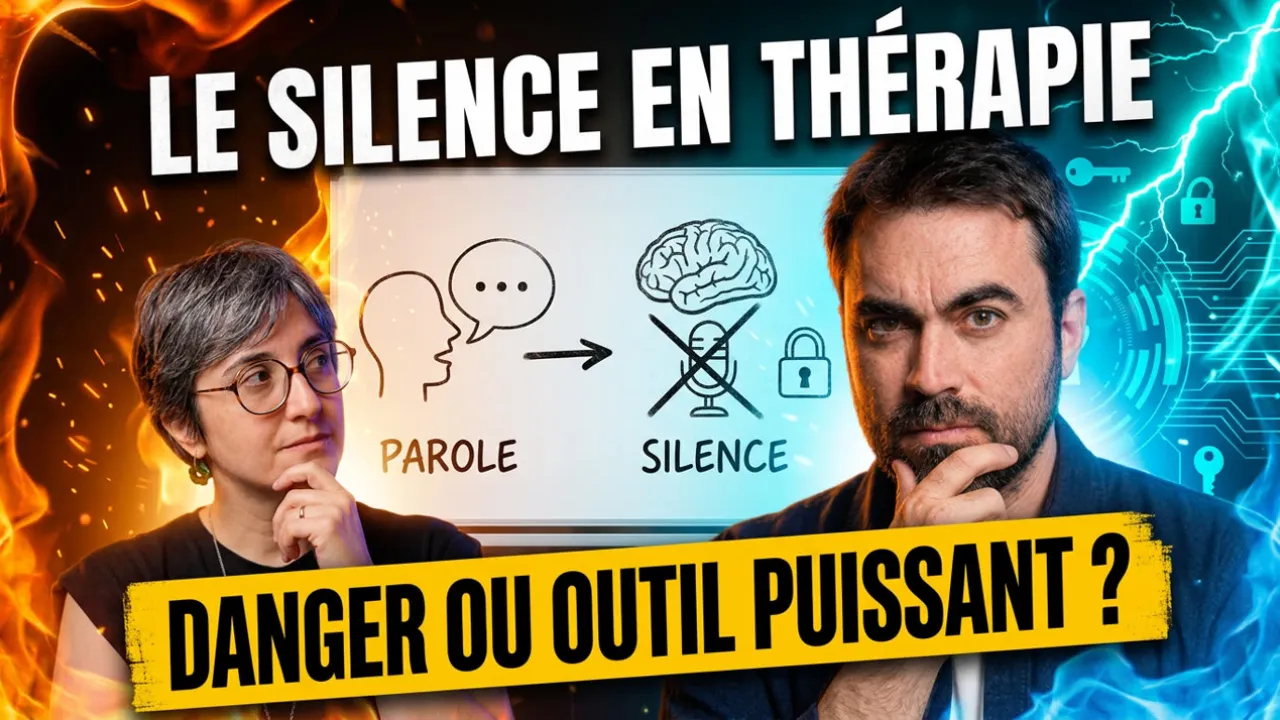 Article
 Silence in therapy: a polysemic presence
From Heidegger to Palo Alto, silence is not an absence but a message. Defensive, strategic, reflective or shared: its forms, its functions and its risks.
 Article
 Crisis: a catalyst of transformation in human systems
A crisis is not a malfunction to correct but an effort by the system not to founder. From the Denver Project to Falicov: a typology and what it asks of the practitioner.
 Article
 First Psychological Aid for Families During War: Integrating the Narrative Approach With Emotionally Focused Therapy (EFT)
Three or four meetings for families living under the threat of war: telling their story before a witness, then repairing the attachment cycle disrupted by fear.
 Article
 Homeostasis: what holds us together, and what holds us back
Homeostasis maintains a system’s internal balance. In families as in organisations, it protects the group while braking change. How to work with it rather than against it.
Comments 0
Log in to join the discussion. Log in