Red Sistémica · History of systemic therapy
Systemic therapy: the professional maturity of an intellectual adventure
Asked to give his perspective on the evolution of systemic therapy in the United States, Marcelo Pakman does not draw the map of schools and trends: he points to a few developments that have genuinely changed the way systemic therapy is practised and taught there. The first of them: the end of the masters who had become gurus.
“Born as an intellectual adventure at the margins of the then dominant psychodynamic perspective, systemic therapy first committed itself to practices that addressed the most demanding cases in mental health.”
Marcelo Pakman
What I am talking about, and from where
Responding to the request made of me to give my perspective on the evolution of systemic therapy in the United States, and far from attempting to draw an exhaustive map, conceptual or otherwise, of the territory of systemic therapy describing its schools and its trends, I will mention a few developments that, in my opinion, have significantly changed the way systemic therapy is practised and taught in the United States. It goes without saying that these changes are intrinsically linked to the contextual changes in the field of mental health that swept across the professional arena in the 1990s and the early years of the twenty-first century. I will not claim that my opinions are comprehensive or exhaustive. They are, however, the inevitably partial perspectives of a professional who has been very heavily involved in these developments.
I will focus mainly on the field of family therapy which, traditionally, has been the mainstay of the development of systemic therapy since its beginnings half a century ago. Organisational consulting and mediation have been other areas of application of systemic thinking and have developed significantly under the effect of the changes I am going to explore in this article, but they are not my main fields of practice and I will not deal with them. Under the heading of family therapy, on the other hand, I will include systemic interventions in the field of mental health, both at the level of direct clinical care and at the level of the making of health policy in the community, two domains that have evolved alongside family therapy and that are also part of my professional practice.
The end of the masters and the gurus
Born as an intellectual adventure at the margins of the then dominant psychodynamic perspective, systemic therapy first committed itself to practices that addressed the most demanding cases in mental health: psychoses, anorexia, delinquent and oppositional conduct in adolescents, and so on. Lacking an adequate language to describe those early studies, the founders of this new field showed others their actual practice, and the one-way mirror rapidly became the instrument of a transparency until then unknown in the domain. Expertise ceased to be understood as the skill of conceptualising clinical cases and became the skill of actually conducting those difficult sessions in which families were beginning to be included, in order to make a difference in situations that had until then remained resistant to change. Although theories developed quickly, the knowledge of how to conduct sessions remained an essential part of training in systemic family therapy; and the field, however much it was born of heterodoxy, could not do without its masters, who at times took on the proportions of gurus.
But the decades have not passed in vain on this point. In the United States at least, the great masters of family therapy are in retreat, partly because family therapy is no longer the great new fashion in a country where new trends arise and subside quickly, but also for other reasons. The dynamic of following a Master developed at a time when, despite the supposedly irreverent spirit of the 1960s, the authoritarian flavour of interactions remained fairly dominant. Patriarchal practices, criticised since then by the feminist movement that existed within the field, have clearly been part of the equation as well.
Since that time, authoritarianism has become unacceptable in educational institutions, the civil rights movements have worked to consolidate the position of minorities, women have gained greater equality at every level of professional practice, and teachers are only rarely treated any longer with that mystifying respect which prevented students or young professionals from questioning them: the latter ask for more transparency and demand that the “secrets” which make the former experts in the field be revealed to them.
Who is Marcelo Pakman
(*) Marcelo Pakman, MD, is director of psychiatric services at Behavioral Health Network, Springfield, Massachusetts, and adjunct professor in the department of applied social sciences at the Hong Kong Polytechnic University.
An extract
Red Sistémica publishes online only a fragment of this article: the full text appeared in no. 90 of the journal Perspectivas Sistémicas. Our translation covers the whole of the fragment put online, and nothing more; the continuation of the text, in which the author examines the other developments he announces, is not accessible to us. Read the original fragment in Spanish.
This article is an English translation of “Terapia Sistémica: La madurez profesional de una aventura intelectual”, published by Red Sistémica (first published in Perspectivas Sistémicas, n° 90). Translated and republished with the journal’s permission.
Read the original articleHow to cite this article
Pakman, M. (2022). Systemic therapy: the professional maturity of an intellectual adventure (Complexe Systémique, Trans.). Complexe Systémique. https://app.complexe-systemique.com/en_GB/articles/systemic-therapy-the-professional-maturity-of-an-intellectual-adventure (Original work published in 2022 in Perspectivas Sistémicas, n° 90; republished in 2022 by Red Sistémica, https://redsistemica.ar/2022/08/01/terapia-sistemica-la-madurez-profesional-de-una-aventura-intelectual/)
To go further
- Poetics and micropolitics of change: designing therapeutic conversations. Interview with Marcelo PakmanPakman develops here what the therapist’s expertise becomes once the gurus are gone.
- The transdisciplinary future of systemic therapyCarlos Sluzki takes on the same exercise in foresight, also from the United States.
- Family therapy: current trends and future prospects. A lecture by William PinsofThe North American mental health context and its effects on the profession.
Related training courses
 Symposium
Digital technology, AI and mental health
Conference in Lyon, 11 December 2026: digital technology, artificial intelligence and mental health. Six talks, replay for participants. In French.
 Short course
The suicidal crisis in adolescents and young adults
Training: assessing and supporting the suicidal crisis in adolescents and young adults. Clinical landmarks and systemic tools. In French.
 Certifying course
Training in Systemic Therapy and Interventions – Cycle 1
Certifying training cycle in systemic therapy and interventions – year 1. Courses, supervision and practice, aligned with EFTA/SFTF. In French.
 Certifying course
Training in Systemic Therapy and Interventions – Cycle 2
Certifying training cycle in systemic therapy and interventions – year 2. Clinical complexity, supervision and practice. EFTA/SFTF aligned. In French.
Related articles
 Article
 Toxic, narcissistic, borderline: what therapy speak does to your relationships
Narcissistic, borderline, toxic: therapy speak has left the consulting room. Julien Besse shows how these labels close the debate and relieve us of our own part.
 Article
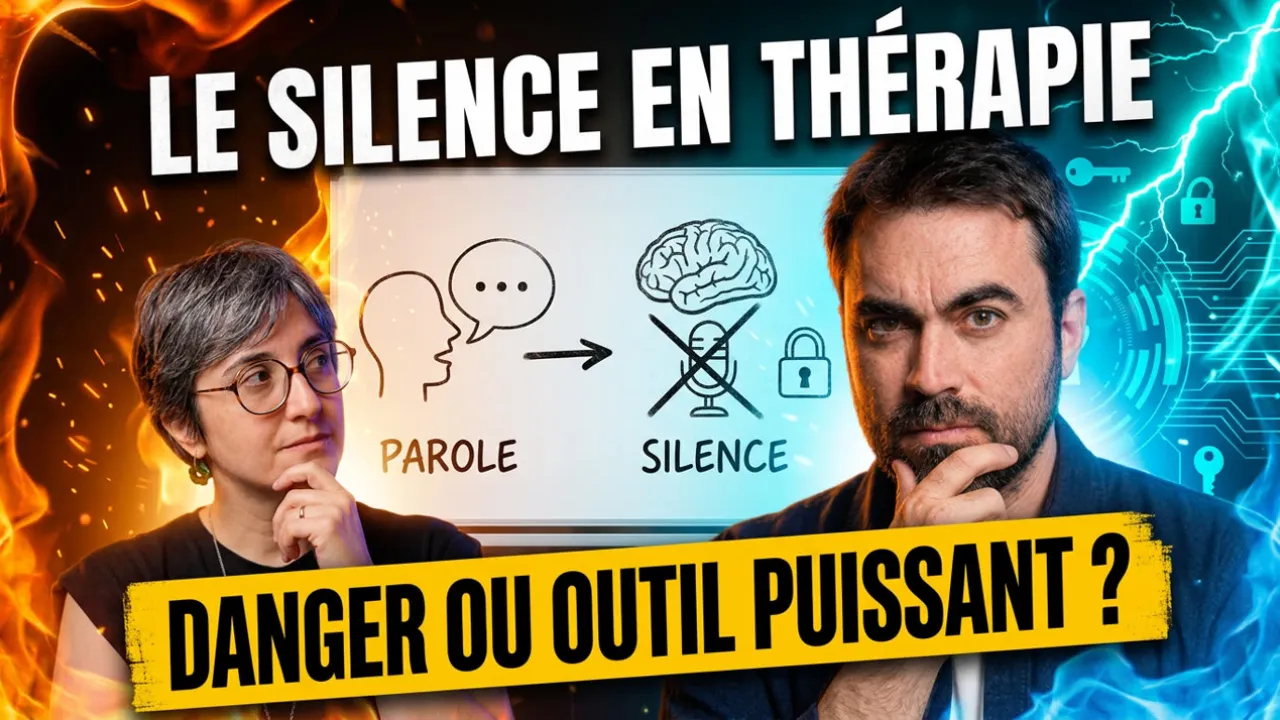
 Silence in therapy: a polysemic presence
From Heidegger to Palo Alto, silence is not an absence but a message. Defensive, strategic, reflective or shared: its forms, its functions and its risks.
 Article
 Crisis: a catalyst of transformation in human systems
A crisis is not a malfunction to correct but an effort by the system not to founder. From the Denver Project to Falicov: a typology and what it asks of the practitioner.
 Article
 First Psychological Aid for Families During War: Integrating the Narrative Approach With Emotionally Focused Therapy (EFT)
Three or four meetings for families living under the threat of war: telling their story before a witness, then repairing the attachment cycle disrupted by fear.
Comments 0
Log in to join the discussion. Log in