AI-assisted translation
This version was translated from Portuguese by Complexe Systémique with the help of artificial intelligence. In case of doubt, the original version prevails.
Revista Brasileira de Terapia Familiar · Ageing
Caring for the Caregiver: A Preventive and Therapeutic Programme for Caregivers of Older People
In Curitiba, since 2013, the Paraná Family Therapy Association has offered people who care for older people, whether relatives or professionals, a closed group of fifteen meetings. Josete Cesarina Tulio and Milena Buccianti Dias da Rocha describe this programme, which combines relaxation, the Tree of Life and group therapy, and report what the 87 people it has welcomed, 84 of them women, say about it.
Unofficial English translation. This article is a translation of Cuidando do Cuidador. Programa preventivo e terapêutico para cuidadores de idosos, by Josete Cesarina Tulio and Milena Buccianti Dias da Rocha, published in the Revista Brasileira de Terapia Familiar (ABRATEF), vol. 8, no. 1 (2019), doi: 10.60114/rbtf.v8i1.49, under a CC BY 4.0 licence. Translated by Complexe Systémique in November 2026 with the help of artificial intelligence: the original Brazilian Portuguese text has been translated into English and reformatted, which constitutes a modification of the work under the terms of the licence. Paragraphs and headings are those of the journal; the authors’ biographical notes, printed as footnotes on the first page, are included in the presentation; the testimonies, printed in italics, are presented as block quotations; a few obvious typographical errors, notably in proper names, have been corrected silently. The abstract is the authors’ own English version. This translation was made neither by the authors nor by the journal, who are not responsible for its content or for any errors. The original version prevails.
Caregivers too deserve a privileged space, such as a group, in which to work on issues linked to the process of their identity as people.
Josete Cesarina Tulio, Milena Buccianti Dias da Rocha
Abstract
The caregiver of the elderly is a person who is dedicated to the task of caring. Among the social actions of the Paranaense Association of Family Therapy, aiming to improve the caregiver’s quality of life through preventive practices and strengthening of bonds, this work brings the experience gained with groups of caregivers of the elderly – relatives and professionals. Therefore, a therapeutic space was created for groups of caregivers that facilitated the exchange of experiences, the construction of new competences and the possibility of reflection and redetermination of their conflicts and afflictions. The results of the process in group were positive regarding the improvement in self-esteem and self-care, better perception of oneself and of their resources, and resumption of personal projects. Self-care and self-respect have shown to be an important learning, being an exercise that awakens a commitment to oneself and one’s own relationships, reducing risks of high stress and diseases that compromises the physical and emotional well-being.
Keywords: caregiver; elderly; strengthening of bonds; preventive practice.
“Caring is more than an act; it is an attitude. It covers more than a moment of attention, of solicitude and of devotion. It represents an attitude of occupation, of concern, of responsibility and of affective involvement with the other.”
L. Boff
Introduction
In recent decades a gradual increase in the older population has been observed, owing to numerous factors; this increase in the incidence of ageing is often associated with chronic and degenerative diseases. Even when they are not affected by illness, people “aged 65 or over need some kind of help to carry out at least one task, such as shopping, managing their finances, preparing meals and cleaning the house” (Medina, 1998, in Camargo, 2010). Neri (2002), for her part, states that “a smaller share, 10%, requires help to carry out basic tasks such as bathing, dressing, going to the toilet, eating, and sitting down in and getting up from chairs and beds”. The same author further stresses that “for every highly dependent older person living in an institution, there are two being cared for at home by their family” (pp. 9-23). Areosa (2011) reports on a study showing that older people prefer to turn first to the informal support system (relatives, friends, neighbours and acquaintances) to solve problems… (p. 53).
As a result, the number of caregivers has also been rising steadily. The caregiver of an older person is someone who devotes themselves to the task of caring, which involves being available for a specific period, which may also become full-time as the illness or old age worsens. In some developed countries, the caregiver is regarded as a partner of the health team; here in Brazil, however, their role is not yet recognised within the health system (Neri, 2002). According to Faria, Aparecido, Cruz and Khater (2017), “the caregiver should also be able to count on the support of the health teams, which, in turn, need to be attentive to their difficulties, listen to their complaints, meet their health needs, encourage the rotation of caregivers and review the care process according to their condition. This lack of attention to the caregiver ends up being seen as a public health problem.”
Within the family, care for the older person may be provided by more than one person; however, most caring tasks are usually carried out by just one person, predominantly women (Krmpoti; de Ieso, 2010; Floriano et al., 2012, in Hedler, Santos, Faleiros and Almeida, 2016), as other studies also show (Amendola, Oliveira & Alvarenga, 2008; Carvalho, 2009; Campos, Cardoso & Marques-Teixeira, 2008; Gonçalves Pereira, Carmo, Silva, Papoila, Mateos & Zarit, 2010; Mayor, Ribeiro & Paúl, 2009; Figueiredo, Lima & Sousa, 2009, in Cunha, 2011). Guedes and Daros (2009) state that women, even when they work in professions unrelated to caring, are burdened with responsibility for the care of their relatives, either because these relatives are still developing (children and adolescents) or because, as a result of advanced processes of ageing or illness, they need intensive care.
According to some studies, the continuous effort often demanded by caring, together with the caregiver’s age and the need to reconcile care with their professional roles, may be related to various health problems, such as emotional and physical strain leading to real physical and/or mental harm (Andrade; Rodrigues, 1999; Matos; Decesaro, 2012, in Faria et al., 2017). The overwhelming majority will do so without any systematic informal or formal help. In this context, there is a strong tendency for care to be experienced as burdensome and unexpected (Neri, 2002).
The Paraná Family Therapy Association (APRTF) recognises the importance of social projects and their significant impact on the community, and, as part of its social initiatives, it developed the project Cuidando do Cuidador (“Caring for the Caregiver”), a preventive and therapeutic programme for caregivers of older people, whose main aim is to improve caregivers’ quality of life through preventive practices and the strengthening of emotional bonds. Quality of life is understood as the person’s well-being in terms of physical, mental, psychological and emotional health, as well as good interpersonal relationships with family and friends. The work is in line with the recommendations of the National Policy for the Health Care of Older People (Política Nacional de Atenção à Saúde dos Idosos), with its concern to offer care to the person who cares for older people, considering that the task of caring for a dependent adult is exhausting and carries the risk of making the caregiver ill and dependent in turn.
The programme is characterised by a therapeutic space that facilitates the exchange of experiences, the construction of new competences, the recovery of self-esteem and the resumption of personal projects, for professional caregivers and family caregivers alike.
Method
This work was carried out at the Paraná Family Therapy Association (APRTF), coordinated by two psychologists and family therapists, Josete Cesarina Tulio and Milena Buccianti Dias da Rocha, in the city of Curitiba, Paraná. The programme consists of fifteen meetings, held once a week and lasting two hours each. Each group may have a maximum of fifteen participants and is coordinated by two psychologists. Over the last six years, 87 caregivers have been seen, in six therapy groups. The programme is monitored through quantitative and qualitative evaluations, through which we identify the progress of the caregiver’s process and appraise the results of their actions. At the first and last meetings, the caregiver stress assessment scale (Guia do Cuidador, Norton Sayeg, 1991) is applied, in order to measure whether there have been significant changes in the caregiver’s stress level.
The methodology used in the programme with caregivers of older people is at once theoretical, practical and experiential, and involves support and acceptance. The theoretical basis is systemic family therapy, drawing on the resources of narrative practices to reflect on various themes, such as life history and motivations, personal resources, beliefs and values, feelings and emotions, self-esteem, self-care, independence and autonomy. Denborough (2008) explains that “when people experience that the knowledge gained through adversity can be a contribution to someone who is facing similar situations, they have the sense that their suffering ‘was not for nothing’; this awakens a sense of possibility” (p. 3).
The guiding resource of the work is the Tree of Life, cited in the work of Denborough (2008), a methodology developed by Ncazelo Ncube in Uganda, Africa, in the context of work with vulnerable children, with the aim of reconnecting these children with their history, their families, their values and their cultural heritage. The Tree of Life is a narrative, collaborative, integrative and dialogical tool that can have different applications.
Starting from the metaphor of the tree, each person is invited to tell their life story, beginning by drawing a tree that has been part of their affective memories. At this stage, the work focuses on exploring the parts of the tree in depth (roots, ground, trunk, branches, leaves and fruits). The roots stand for origins, legacies and traditions; the ground represents the present moment of life, with all its routine, work, family, friends, leisure and preferences; in the trunk we value strengths, competences, skills and values; the branches represent dreams and wishes, projections into the future and hopes; the leaves indicate the people who are or have been important in one’s life, including pets and heroes, and the fruits are the gifts received throughout life, such as talents and values. As they are drawn, the trees are placed side by side to form a large forest, which the whole group can then appreciate. We then turn to a deeper exploration of each participant’s story, shared with the group.
The practical and experiential activities take place through group therapy, as an instrument for reflective exchange and for the sharing of lived experiences.
The beginning of each meeting is set aside for a moment of pause, using relaxation with visualisation, with the aim of improving body awareness, reducing anxiety and improving the connection with oneself and the interaction with the other members of the group. According to Epstein (1935), working with images can have positive effects on physical and emotional health. It can lead us to a healthier, deeper and more meaningful life.
The work takes the form of group therapy, on the understanding that the conversations between participants construct meanings that may inhibit or facilitate change. In this context, change is generated from a meaning shared by the people in interaction. For Guanaes (2004), the organisation of the group depends on who the participants present are and on what the organising story of the conversation is. The way in which group interactions are organised varies from group to group, with the particularities of the participants and of the stories that organise the conversations.
According to the classification of therapeutic groups described by Osorio (2007), the type of group set up in the programme is homogeneous as regards identification through life situation, which creates affinities among the participants. All of them care for older people, as relatives or as health professionals, and they share their feelings about this role or function. On the other hand, the group has heterogeneous characteristics as regards age range, education and socio-economic level. It is a group closed to the entry of new members, of fixed duration and with clear rules made explicit at the start of the group process, such as: confidentiality, everything said in the group stays in the group; mutual respect, respect for each person’s individual and intimate matters; statements in the first person singular, speaking of one’s own experience without giving advice or judging; turn and voice, everyone has their turn and the opportunity to speak. All participants sign a consent form for the use of images and testimonies, for the purposes of study, research and scientific work by the APRTF.
Each meeting is structured with techniques and themes as a backdrop, but the central focus is on the presentation of the emerging narrative of the participant who is part of the group and on the effect of the group’s reflective communication. This construction of a safe and trustworthy context makes it possible to share accounts of the experiences lived by the caregivers taking part in the programme, as we can see in these words from R.V., aged 55, a family caregiver describing her experience in the group:
“with group therapy I am learning to deal better with various situations”.
The focus of the work is to foster potential, restore self-esteem and improve quality of life in family and interpersonal relationships. We believe that the group experience can be transformative insofar as it offers participants the possibility of experiencing multiple interactions, recognising skills and limits, in an encounter of mutual support and encouragement.
Faria, Aparecido, Cruz and Khater (2017) state in their article that “Care for the caregiver should be part of the teams’ work process because, in addition to strengthening caregivers’ formal or informal support network, it meets – in part – the need to share fears and difficulties, pointing to forms of support that exist in the community where they live. The impact of the caregiver’s quality of life on the patient’s health is well known.”
Results
87 caregivers took part in the Preventive and Therapeutic Programme for Caregivers of Older People, of whom 84 are women and 3 are men. Regarding the caregiver profile, it was found that the task of caring is overwhelmingly female, at 97%. The average age is between 45 and 60, a figure that confirms the reality found in current research. We also found significant data concerning the expression and redefinition of feelings, change in lifestyle, the resumption of personal projects, improvement in self-esteem and self-image, and improvement in interpersonal relationships and in the perception of one’s own limits and potential; this translates into an improvement in the caregiver’s quality of life.
In the testimony of V.G., aged 58, who currently cares for her 82-year-old mother and who previously cared for her late father (brain tumour), we can see an example of overload; she describes her experience of [facing the difficulties] she went through.
“After the diagnosis he survived for about 4 months. He was a baby in my hands. Giving him his medication, changing him, bathing him and exercising him, since he was bedridden. Here I could count only on myself, on divine strength and on the clemency I sought from the doctors. Everything else I learned by watching what they did in the hospitals and applying it.”
Regarding the [support] she received, the caregiver V.G., aged 58, shows in her words how hard it is to be alone and how she often needs to turn to something greater:
“In the meantime my mother underwent heart surgery. Being diabetic and hypertensive, her recovery was very complicated. For months I tended her leg, which would not heal, where the saphenous veins had been removed for the surgery. Once again I had no one to turn to, except God and a few doctors.”
In their study, Faria, Aparecido, Cruz and Khater (2017) identified from caregivers’ accounts that “It is clear that, in order to take on the role of caregiver and its challenges, it is very common to rely on spiritual practice as a support in the face of the difficulties of daily life.” The same study further stresses that statements such as this “may indicate the search for a ‘strength’ that sustains each person and must be sought externally. This ever-present religiosity represents a potential influence on caregivers’ physical and emotional well-being.”
V.G., aged 58, also describes the consequence of the [overload] in her life:
“During that period I carried on with my professional work. The exhaustion went beyond any limit I could bear. It was the accumulation of the role of daughter, standing in as mother, housekeeper, nurse, friend and, on top of that, professional. Until the moment when my body would have no more of it, my memory went, my body showed signs of stress, my motivation was gone, my patience snapped and I succumbed”.
The same authors stress in their studies that “The task of caring is often complex, pervaded by diverse and contradictory feelings… Usually, this responsibility is passed on to the family as one more task, and the family, in its daily life, is obliged to take on one more function among the many it already performs”.
One can therefore see how exhausting the caregiver’s task is, in an activity that is repetitive, daily, unceasing and often goes on for years without a break. This work is solitary and may alter the caregiver’s psychological life, with physical repercussions, leading the caregiver into effective and social isolation; since most caregivers come from the family nucleus, the caregivers’ daily activity places a significant burden on their lives, and there is therefore a need for measures to support the caregiver (Floriani, 2004).
In the participants’ testimonies it is possible to recognise the emotional impact experienced by family members who care for people with some physical and/or mental illness or other problems arising from ageing. The negative emotional impact affects the health of family relationships and physical and emotional health, and also has consequences for the caregiver’s professional role, owing to the overload and high level of stress (Andrade; Rodrigues, 1999; Matos; Decesaro, 2012, in Faria et al., 2017).
In addition, caregivers face economic difficulties and a reduction in social and leisure activities (Ribeiro & Souza, 2010, in Faria et al., 2017), owing to the way they immerse themselves in the caregiving role, shifting the focus from themselves to the care of their relative. In some situations this caring does not allow the caregiver to perceive themselves. It is striking how these people arrive having forgotten themselves, and we can see at the end of the programme that they manage to perceive themselves as having an existence of their own. One of the foundations of the work in the programme with caregivers is the development of resilience, which, according to Walsh (2005), “can be defined as the capacity to rebound from adversity strengthened and more resourceful. It is an active process of endurance, self-righting, and growth in response to crisis and challenge” (p. 4). Through techniques we offer the possibility of recovering their resilience potential, which emerges from their own values, their spirituality and faith, their self-love, their sense of worth as a person, the recovery of their personal history and of all the elements that make it up, and which brings a renewal of their self-esteem, legitimising new choices, skills and resources that had previously been submerged; as V.G. aptly put it:
“among my beliefs, faith has always been paramount… it showed me the capacity to make a new story of overcoming; even without mastering the role of caregiver, survival through life has spurred me on to seek understanding and a way of conducting my actions”.
To reflect on the process of resilience, the metaphor of the oyster is used, from Rubem Alves’s book Ostra feliz não faz pérola (2008) (“A happy oyster makes no pearl”). Unknown strengths may be revealed, as well as the learning of competences and creativity in the way of dealing with suffering.
One hundred per cent of the participants seen by the Preventive and Therapeutic Programme for Caregivers of Older People – Cuidando do Cuidador had positive evaluations regarding emotional strengthening and a reduction in stress levels. The systemic view holds that each participant, once strengthened, will act as a multiplier of change in other systems, such as the family and the workplace. We understand that when caregivers have strengthened emotional and physical health, good self-esteem, and security and confidence in themselves, they have more resources to support them in coping with the degree of overload generated by the demands of care and by the particular needs of each dependent older person. With a stronger caregiver, we prevent the institutionalisation of the dependent older person, as well as the worsening of their illness.
All the efforts made and the good results obtained are shared, thus consolidating the values and purposes of the APRTF.
Final considerations
Caring for someone, whether a family member or not, and thus becoming their caregiver, is not a simple task; it is often laden with feelings such as fears and uncertainties. The person who provides care has their attention fixed on their frail relative or patient, often forgetting themselves, and may present some physical and/or emotional symptom. The group experience is an opportunity to look generously at oneself and also to consider the complexity of the relationship between the one who cares and the one who is cared for, as an encounter of deep involvement, which entails commitment and self-giving.
The programme confirms that caring is still a function expected of women in our culture, by society. Wives, daughters or daughters-in-law devote almost all their time to caring. Moreover, the caregiving role is not always a choice; people take on this function unexpectedly, on a journey that may be long, repetitive and very lonely, and that involves managing the life of the dependent and frail person. Through the analysis of the stress assessment questionnaire we confirmed the physical and emotional strain on caregivers, but it should be emphasised that they show good resistance in dealing with challenges and a strong disposition in the process of developing resilience.
It is worth stressing that the caring relationship requires us to rethink how to meet adequately the needs and aspirations both of those who receive care and of those who provide it.
Considering also that the experience of this programme is a pioneering model in the city of Curitiba, in the state of Paraná, and has been part of the social actions of the Paraná Family Therapy Association since 2013, it can be concluded that the contributions of the therapeutic group to caregivers’ lives involve responsibility and commitment to others and to oneself, above all in learning self-care.
Participants’ accounts during the group meetings highlight the need to expand programmes like this one, turning a caring gaze towards this population, so as to recognise that caregivers too deserve a privileged space, such as a group, in which to work on issues linked to the process of their identity as people. In the interaction and exchanges with the group, the true potential of each person, previously forgotten, emerges.
We know that in Brazil support services whose aim is to keep older people in their own homes, offering effective support to families and caregivers, are still rare. In view of this, we clearly perceive that work with groups of caregivers is of the utmost importance for promoting the well-being and strengthening of the person of the caregiver.
Complexe Systémique: key points
This experience report does not present itself as research: the stress scale applied at the start and end of the programme is not reported in figures, and the “one hundred per cent” of positive evaluations remains an assertion. Its interest lies elsewhere. It shows a simple, reproducible set-up – a closed group, explicit rules, relaxation, the Tree of Life – that moves caregivers out of a role in which they have forgotten themselves and into a story in which they become subjects again. V.G.’s testimonies show the scale of the overload: daughter, substitute mother, nurse and professional all at once, until she collapsed. For systemic practice, two points deserve to be taken further. First, 84 of the 87 people seen are women: the article notes this, but working on each woman’s resilience is not enough to question how care is distributed in the family and in society. Second, the idea of the caregiver as a “multiplier” of change would be worth exploring with the rest of the family, siblings and partners included, rather than through the caregiver alone. Read alongside the Tree of Life in a women’s group with fibromyalgia, and the trial of family meetings for family caregivers.
References
Alves, Rubem. (2008). Ostra feliz não faz pérola. São Paulo: Planeta do Brasil.
Areosa, S. V. C., Henz, L. F., Lawisch D, Areosa R. C. (2014) Cuidar de si e do outro: estudo sobre os cuidadores de idosos. Psic., Saúde & Doenças [Internet]. 15(2): 482-494. Retirado 17/05/2017. http://www.scielo.mec.pt/scielo.php?script=sci_arttext&pid=S1645-00862014000200012&lng=pt.
Boff, L. (2004). Saber cuidar. Rio de Janeiro: Vozes.
Brasil (2009). Ministério da Saúde. Secretaria de Atenção à Saúde. Secretaria de Gestão do Trabalho e da Educação na Saúde. Guia prático do cuidador. (Série A. Normas e Manuais Técnicos 2ª ed.) – Brasília: Ministério da Saúde.
Camargo, R. (2010). Implicações na saúde mental de cuidadores de idosos: uma necessidade urgente de apoio formal. SMAD. Revista eletrônica saúde mental álcool e drogas, 6(2), 231-254. Retirado 17/05/2017. http://pepsic.bvsalud.org/scielo.php?script=sci_arttext&pid=S180669762010000200002&lng=pt&tlng=pt.
Cunha, M (2011). Impacto Positivo do Acto de Cuidar no Cuidador Informal do Idoso: Um estudo exploratório nos domicílios do concelho de Gouveia. (Dissertação de Mestrado). Universidade de Lisboa, Faculdade de Psicologia. Seção de Psicologia Clínica e da Saúde, Núcleo de Psicologia Clínica Sistêmica. Lisboa, Portugal. Retirado em 17/05/2017. http://repositorio.ul.pt/bitstream/10451/4334/1/ulfpie039519_tm.pdf
Denborough, D. (2008). Práticas Narrativas Coletivas, trabalhando com indivíduos, grupos e comunidades que vivenciaram traumas. Adelaide: Dulwich Centre.
Epstein, G. (1935). Imagens que curam: guia completo para a terapia pela imagem. Rio de Janeiro: Xenon.
Faria, A. F., Aparecido, A. M, Cruz. G. L. Khater, E. (2017). Revista Saúde em Foco, 9, 25-36. Retirado 17/05/2017. http://www.unifia.edu.br/revista_eletronica/revistas/educacao_foco/artigos/ano2017/004_artigo_saude_template.pdf
Floriani, C. A. (2004) Cuidador familiar: sobrecarga e proteção. Revista Brasileira de Cancerologia; 50(4): 341-345. Retirado 17/05/2017 http://www.inca.gov.br/rbc/n_50/v04/pdf/secao5.pdf
Guanaes, C. (2006). A construção da mudança em terapia em grupo: um enfoque construcionista social. São Paulo: Vetor.
Guedes, O. S.; Daros, M. A. (2009) O cuidado como atribuição feminina: contribuições para um debate ético. Serv. Soc. Rev., Londrina, v 12, n. 1, p. 122-134. Retirado em 17/03/2017. http://dx.doi.org/10.5433/1679-4842.2009v12n1p122
Hedler, H.C., Santos, M.J.S, Faleiros, V.P, Almeida, M.A.A. (2016) Representação Social do Cuidado e do cuidador familiar do idoso. R. Katál., Florianópolis, v. 19, n. 1, p. 143-153 Retirado em 17/05/2017. http://www.scielo.br/pdf/rk/v19n1/1414-4980-rk-19-01-00143.pdf
Neri, A. L. (2002). Cuidar de idosos no contexto da família: questões psicológicas e sociais. São Paulo: Alínea.
Osorio, Luiz Carlos. (2007). Grupoterapias: abordagens atuais. Porto Alegre: Artmed.
Walsh, F. (2005). Fortalecendo a resiliência familiar. São Paulo: Roca.
Sayeg, N. (1991). Doença de Alzheimer Guia do Cuidador. Norton Sayeg.
Unofficial English translation of Cuidando do Cuidador. Programa preventivo e terapêutico para cuidadores de idosos, by Josete Cesarina Tulio and Milena Buccianti Dias da Rocha, Revista Brasileira de Terapia Familiar, vol. 8, no. 1 (2019), doi: 10.60114/rbtf.v8i1.49, under a CC BY 4.0 licence. Translation (with the help of artificial intelligence) and layout: Complexe Systémique, November 2026 — the work has been modified under the terms of the licence. Neither the authors nor the journal are responsible for this translation; the original version prevails.
Unofficial English translation of “Cuidando do Cuidador. Programa preventivo e terapêutico para cuidadores de idosos”, published in Revista Brasileira de Terapia Familiar (2019) under a CC BY 4.0 licence. Made by Complexe Systémique with the help of artificial intelligence, it does not come from the authors or the journal, who are not responsible for its content; the original version prevails.
Read the original articleHow to cite this article
Tulio, J. C., et Rocha, M. B. D. da (2019). Caring for the Caregiver: A Preventive and Therapeutic Programme for Caregivers of Older People (Complexe Systémique, Trans.). Complexe Systémique. https://app.complexe-systemique.com/en_GB/articles/caring-for-the-caregiver-a-preventive-and-therapeutic-programme-for-caregivers (Original work published in 2019 in Revista Brasileira de Terapia Familiar, v. 8, n. 1 (2019); republished in 2019 by Revista Brasileira de Terapia Familiar, https://revbrasterapiafamiliar.abratef.org.br/revista/article/view/49)
To go further
- The Use of the Tree of Life in a Women's Group With FibromyalgiaThe Tree of Life in a group.
- Effectiveness of Family Meetings for Family Caregivers on Delaying Time to Nursing Home Placement of Dementia Patients: A Randomized TrialBringing the family together around the caregiver.
- The Other Within Oneself: Understanding Care for a Family Member with Early‐Onset Dementia Through the Lens of DividualityCaring for a relative, caring for oneself.
Related training courses
 Symposium
État des Lieux: a psychological approach to spaces
Replay of the “État des Lieux” conference (Paris, 16 October 2026): Ivy Daure, Maurizio Frisina, Viola Sallay and Gilbert Pregno on places as a clinical resource. In French.
 Online course
Master the art of narrative therapy: a unique journey with Charlie Crettenand
Immersive online course: discover the narrative approach with Charlie Crettenand. A unique audiovisual journey, lifetime access, exercises. In French, with English subtitles.
Related articles
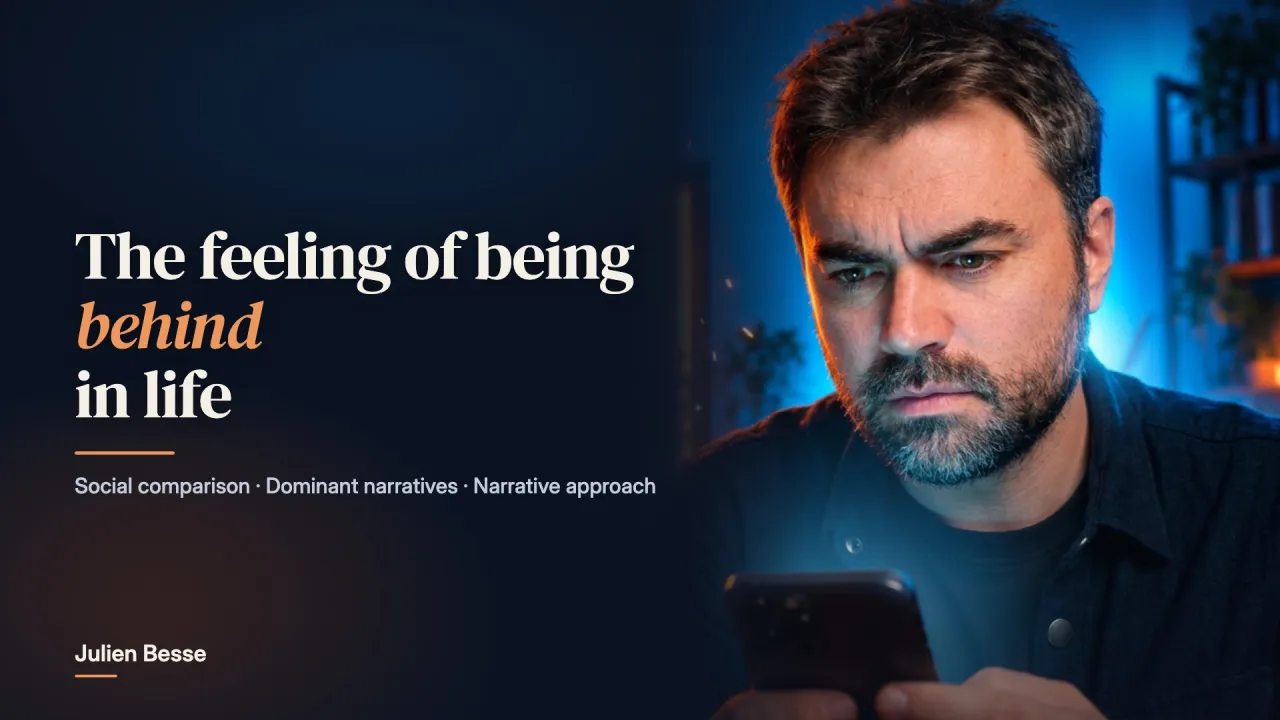 Blog
Why do we feel we are behind in our lives?
Checking how old Yalom was when he published his first book reassured me. But in which race? A systemic look at the feeling of being behind, and at what we can change together.
 Scientific
Sickle Cell Disease and Young Couples: Understanding the Influence of Shared and Individual Meaning on Couples’ Experience of Illness
Nine young adult couples facing sickle cell disease: how each partner makes sense of the illness, and how the couple moves from caregiving to equality from one crisis to the next.
 Scientific
Family group conference provision across the lifespan of child welfare intervention: A mixed-method realist-informed evaluation comparing three stages of welfare concern
Early help, child protection or children in care: among 155 UK families, experiences and outcomes of family group conferences vary very little by stage.
 Scientific
Beyond Self-Blame: A Qualitative Study of the Changing Experience of Parental Guilt Following the Death of a Child
Twenty-seven bereaved parents describe five forms of guilt after a child’s death, shaped by the cause of death, and a guilt that becomes integrated into grief without disappearing.
Comments 0
Log in to join the discussion. Log in