Family Process · Family therapy
Comparing Cognitive Behavioral Therapy and Systemic Therapy for Social Anxiety Disorder: Randomized Controlled Pilot Trial (SOPHO-CBT/ST)
Social anxiety is usually treated one-to-one, with CBT. Christina Hunger and Jochen Schweitzer’s Heidelberg team tested a manualized systemic therapy, which invites significant others, prescribes the symptom and runs real-life experiments, against the reference CBT. With 38 patients, both approaches clearly reduce anxiety, and systemic therapy does better on almost every outcome. A pilot trial, still to be confirmed.
This is a reformatted republication of Comparing Cognitive Behavioral Therapy and Systemic Therapy for Social Anxiety Disorder: Randomized Controlled Pilot Trial (SOPHO-CBT/ST), by Christina Hunger, Rebecca Hilzinger, Laura Klewinghaus, Laura Deusser, Anja Sander, Johannes Mander, Hinrich Bents, Beate Ditzen and Jochen Schweitzer, published in Family Process (Wiley) (2020), doi: 10.1111/famp.12492, under a CC BY 4.0 licence. Prepared by Complexe Systémique in September 2026: the authors’ text is unchanged; the layout has been adapted for reading online, which constitutes a modification of the work under the terms of the licence. Tables are presented as lists; the Spanish and Chinese abstracts of the original are not reproduced. This edition was made neither by the authors nor by the publisher, who are not responsible for its content or for any errors. The original version prevails.
Significant others seen in the ST possibly caused in-session exposure to social anxiety, whereas CBT did not include any significant others.
Christina Hunger, Rebecca Hilzinger, Laura Klewinghaus, Laura Deusser, Anja Sander, Johannes Mander, Hinrich Bents, Beate Ditzen and Jochen Schweitzer
Abstract
This randomized controlled trial (RCT) aimed to pilot the newly developed manualized and monitored systemic therapy (ST) for social anxiety disorder (SAD), as compared to manualized and monitored cognitive behavioral therapy (CBT). We conducted a prospective multicenter, assessor-blind pilot RCT on 38 outpatients (ICD F40.1; Structured Clinical Interview for DSM (SCID); Liebowitz Social Anxiety Scale, LSAS-SR >30). The primary outcome was level of social anxiety (LSAS-SR) at the end of treatment. A total of 252 persons were screened, and 38 patients were randomized and started therapy (CBT: 20 patients; ST: 18 patients; age: M = 36 years, SD = 14). Within-group, simple-effect intent-to-treat analyses (ITT) showed significant reduction in LSAS-SR (CBT:d = 1.04; ST:d = 1.67), while ITT mixed-design ANOVA demonstrated the advantage of ST (d = 0.81). Per-protocol analyses supported these results. Remission based on reliable change indices also demonstrated significant difference (LSAS-SR: 15% in CBT; 39% in ST;h: 0.550), supported by blind diagnosticians’ ratings of those who completed therapy (SCID; 45% in CBT, 78% in ST,p = .083). No adverse events were reported. CBT and ST both reduced social anxiety, supporting patient improvement with the newly developed ST for SAD; this has yet to be verified in a subsequent confirmatory RCT.
Introduction
Social anxiety disorder (SAD) is one of the most prevalent mental disorders (lifetime prevalence: 7–16%); it is characterized by fear of rejection accompanied by avoidance behavior, considerable psychosocial handicaps, and increased risk for comorbid disorders and suicidality (Ruscio et al., 2008; Stein & Kean, 2000). Remission rates are low (e.g., 20% in the first 2 years) compared with affective disorders and other anxiety disorders (Bruce et al., 2005). Thus, effective treatments are in high demand.
Social anxiety disorder can be understood as an intrapersonal, interpersonal, and social system disorder that becomes apparent in impaired reciprocal interaction and communication (e.g., cohesion failure, social rejection), emotional and physical feelings (e.g., nervousness; sweating), behavior (e.g., avoidance of feared situations), and thoughts (e.g., dysfunctional beliefs, self-focused attention) in face-to-face situations or when imagining social situations (Hunger, 2018a). It impedes the individuals’ and social system's ability to regulate closeness and distance, providing the best solution for the social system's sense of related autonomy while protecting the social system's members from social rejection (Anderson & Goolishian, 1988; Fry, 1962). The NICE Guidelines (National Institute for Health and Care Excellence (NICE), 2013) recommend psychotherapy and pharmacotherapy as first-choice, evidence-based treatments for SAD. Cognitive behavioral therapy (CBT) is determined to be the most effective psychotherapy approach, with Clark and Wells’ (1995) individual cognitive behavioral model proving to be one of the most effective approaches (Mayo-Wilson et al., 2014). Referring to systemic and family therapy, the body of research is small with only two studies investigating SAD. One randomized controlled trial (RCT) demonstrated manualized brief strategic therapy (BST) to be significantly superior to minimal supportive therapy (MST) in the reduction of social anxiety (Rakowska, 2011). The other RCT showed that a combination of manualized resource orientation (i.e., the solution-focused approach by Steve de Shazer) plus cognitive behavioral therapy (ROCBT) was superior to CBT alone (Willutzki, Neumann, Haas, Koban, & Schulte, 2004; Willutzki, Teismann, & Schulte, 2012). Both RCTs applied systemic interventions in individual sessions. Rakowska (2011) used an unspecific (MST) rather than an evidence-based comparator, and Willutzki et al. (2012) used a combined systemic and cognitive behavioral therapy approach (ROCBT) rather than a “pure” systemic therapy (ST) approach. To progress beyond both studies, we decided to perform a ST approach, not an add-on to CBT as in the ROCBT. Additionally, we compared it against a specific condition, rather than an unspecific treatment such as MST, using CBT as outlined by Clark and Wells (1995), as it is probably the best evaluated approach to social anxiety in psychotherapy research.
Our ST is mostly based and inspired by the work of Helm Stierlin and colleagues during the early 1980s, which has since continued to be refined and is comprehensively described in von Schlippe and Schweitzer (2012) and Hunger, Hilzinger and Schweitzer (2016). It integrates concepts and practices from post-Milan circular interviewing and questioning to fluidize the presented symptoms (Boscolo, Cecchin, Hoffmann, & Penn, 1987; Penn, 1982), solution-focused language and restoration of a dominant problem-saturated narrative, externalization of symptoms based on the narrative-solutions approach (de Shazer et al., 1986; Lund, Eron, & Dagirmanjian, 2016), genogram interviewing (Petry & McGoldrick, 2013) and symbolic action methods like sculpting (Duhl, Kantor, & Duhl, 1973) a variation of systems constellations which have been found to be effect in another RCT (Hunger, Weinhold, et al., 2015; Hunger, Bornhäuser, Link, Schweitzer, et al., 2014; Weinhold et al., 2013). Theoretically, it is grounded in communication (Watzlawick, Weakland, & Fisch, 1969) and social systems (Luhmann, 2017) theory, with strong ties to the autopoiesis concept (Maturana & Varela, 1987).
For the purpose of this project, we have manualized the ST approach with four therapy phases (Table S1). In the first phase, patients and significant others (e.g., family, partner, friends; colleagues) are invited to therapy. Significant others are allowed to participate at any time, although their presence is not obligatory. Therapists interact with a valuable, neutral, sensitive as well inquisitive therapeutic stance to join the system, explore the kind and degree of symptoms, their history and contexts, and transgenerative as well as reciprocal patterns. The first phase closes with a joint resource-oriented understanding of the function of the symptoms (e.g., shared feelings of belonging and communion, thus stabilization of the social system). The second phase integrates single and multiperson settings. With the therapists’ assistance, patients and significant others plan concrete interventions within different settings (e.g., within therapy, at home, and/or workplace) and perform symptom-relevant experiments (e.g., discussion of couple, family or work-place conflicts, performance of an examination situation or public speech). Therapists, patients, and significant others evaluate these experiments in terms of symptom reduction and improvement of global and social functioning, and repeat those that were helpful. The third and final phase concentrates on relapse prevention and preparation for life without therapy. Patients, therapists, and significant others evaluate the process over the course of therapy, identify moments of success and failure, provide praise, and perform a closing ritual (e.g., dispensing a certificate of achievements). The fourth phase serves to refresh and consolidate those involved, including patients and significant others. It mainly consists of evaluations and identification of success within interactions that caused elevated social anxiety in the past.
Therapy includes mostly individual sessions and some sessions with important others, mostly partners, parents, or close friends, as we well as one three-hour group session, facilitated by the supervisor, with four to seven patients and their therapists. A detailed description of this manual can be found in Table S1.
The aim of this pilot RCT was to investigate the efficacy of our manualized ST. It was guided by the following research questions: (a) Will patients report reduction in social anxiety symptoms from baseline to end of psychotherapy? (Research Question 1). (b) Will patients improve in their psychological, interpersonal, social system, and global functioning from baseline to termination of psychotherapy? (Research Question 2). (c) Will there be a difference between symptom change in CBT as compared to ST? (Research Question 3).
Method
Study Design
This is a prospective multicenter, assessor-blind RCT (CBT: Center for Psychological Psychotherapy; ST: Institute of Medical Psychology). The trial was approved by the Ethics Committee of the Heidelberg Medical Faculty (S-190/2014) and registered with the U.S. National Library of Medicine (ClinicalTrials.gov): #NCT02360033. Patients were randomly assigned by an independent allocation team to either CBT or ST (Schulz & Grimes, 2007). There were no important changes to methods after trial commencement. Because the study protocol and procedure are published elsewhere (Hunger, Hilzinger, Koch, et al., 2016), it is summarized here.
Patients
Outpatients were recruited by distributing flyers and study information to various professionals, as well as via public announcements. Inclusion criteria were as follows: between the ages of 18 and 65; SAD diagnosis (Structured Clinical Interview for DSM, SCID; ICD F40.1) (Wittchen, Zaudig, & Fydrich, 1997); a Liebowitz Social Anxiety Scale score of >30 (Rytwinski et al., 2009); and in cases of concurrent pharmacotherapy, stable medication for at least 4 weeks before the start of therapy. We allowed for concurrent pharmacotherapy as this is often a fact in pragmatic trials (Zwarenstein et al., 2008). Due to requirements of the German health insurance system, we had to include patients without psychotherapy during the past two years. Exclusion criteria comprised: substance dependency, psychosis, eating disorder (BMI < 14), severe physical disease, and suicidality.
Study Interventions
Patients were randomly assigned to receive either CBT or ST. The CBT manual (Stangier, Clark, Ginzburg, & Ehlers, 2016) works with the individual patient aiming at (re-)establishing a realistic self-perception in five therapy phases: (a) generation of an idiosyncratic version of the disorder and identification of safety behaviors; (b) manipulation of self-focused attention and safety behaviors, including role play and video feedback; (c) training in attentional redeployment and reduction of safety behaviors through behavioral experiments (expositions), cognitive restructuring and changing of dysfunctional convictions; (d) relapse prevention; and (e) refreshment and consolidation. Sessions were performed weekly per patient and in the phase of relapse prevention every 2–3 weeks. Therapy sessions were mainly 50 minutes long, but with allowances to extend up to six sessions to a maximum of 100 minutes in order to facilitate behavioral experiments.
The ST manual (Hunger, et al., 2016) works with social systems including the patient as well as significant others (e.g., family, partner, friends; colleagues) aiming at (re-)establishing a solution- and resource-oriented understanding of the interactional processes within the affected social systems in four therapy phases: (a) generation of a joint understanding of the function of the presented symptoms and the communication patterns that stimulate the development and maintenance of these symptoms; (b) experimentation with changes: symptom prescription, paradoxical intention, exploration of social fear systems, externalization, deconstruction of shared belief systems, enactment of socially anxious interactions; (c) relapse prevention; and (d) refreshment and consolidation. Sessions were performed weekly or every 2 weeks per patient and in the phase of relapse prevention every 2–3 weeks. Therapy sessions were mainly 60–120 minutes, with shorter sessions when only the patient attended therapy and longer sessions for multi-person settings and experimentation with changes outside the therapy room. The group therapy session lasted 180 minutes. A detailed description of the ST manual can be found in the Table S1.
Therapists
Therapists were recruited at training institutions (CBT: Center for Psychological Psychotherapy; ST: Helm Stierlin Institute Heidelberg, Mannheim Society for Systemic Therapy; Wiesloch Institute for Systemic Solutions). Trainee therapists had at least 300 hours of training, 100 hours of self-awareness single or group sessions, and 600 or more hours of internship psychotherapy. No therapist had practiced the CBT or ST manual before the trial started, so therapists all participated in three 3-day CBT or ST manual trainings, respectively. Subsequently, every therapist performed a training phase including the treatment of two patients, which were not part of the statistical analyses of this pilot RCT. During this trial, about two to three patients were allocated to each therapist in CBT and ST, respectively. Experts in CBT and ST provided supervision every fourth therapy hour.
On the CTAS-SP (von Consbruch, Heinrich, Engelhardt, Clark, & Stangier, 2008), two independent raters evaluated CBT therapists’ global adherence with only smaller deviations (M = 2.18; SD = 0.29; 0 = no adherence, 3 = very good adherence); CBT therapists were found to be somewhat adherent to ST (M = 1.1; SD = 0.23; 0 = no adherence, 3 = very good adherence); CBT raters demonstrated agreement at 96% (range: 86–100%; κ at 0.60, range = 0.35–100; ICC at 0.85). On the STAS (Hilzinger, Schweitzer, & Hunger, 2016), two independent raters evaluated ST therapists' global adherence to be frequently demonstrated (M = 2.51; SD = 0.66; 0 = not at all, 3 = very often); ST therapists were found to be not adherent to CBT (M = 0.06; SD = 0.24; 0 = not at all, 3 = very often); ST raters demonstrated agreement at 47% (range: 26–72%; κ at 0.20, range: 0.00–0.40; ICC at 0.77). In addition to the observer-based evaluation, therapists self-rated their adherence (0 = not at all; 100 = very much) and reported equal adherence in both CBT and ST (CBT: M = 72.39, SD = 14.98; ST: M = 73.86, SD = 14.98).
Outcomes
Primary outcome, patients’ view
We used the 24-item self-report LSAS-SR to assess social anxiety, and avoidance of interaction and performance situations in the past week (0 = no fear/never avoid; 144 = severe fear/usually avoid); this has demonstrated excellent internal consistency and good sensitivity to change (Rytwinski et al., 2009). In the present study, Cronbach's α for the LSAS-SR was excellent at 0.939–0.971.
Secondary outcomes, blind diagnosticians’ view
Independent diagnosticians, blind to the study arm in which patients were treated and how they performed, conducted SCID interviews for SAD (Wittchen et al., 1997) and rated on the Global Assessment of Functioning (GAF) scale for patients’ severity of illness (0 = severe pathology; 100 = positive mental health); this has shown good reliability and sensitivity to change (Aas, 2010).
Secondary outcomes, patients’ view
We used the Social Interaction Anxiety Scale (SIAS) and Social Phobia Scale (SPS) to assess social anxiety during interpersonal interactions or while being observed by others (0 = not at all; 80 = extremely); both have demonstrated good to excellent internal consistencies and sensitivity to change (Heinrichs et al., 2002). In this trial, α for these scales was excellent to good (SIAS: 0.887–0.930; SPS: 0.877–0.949).
For the assessment of psychological functioning, we used the Beck Depression Inventory (BDI-II) (0 = no depression; 63 = severe depression), which has demonstrated excellent to good internal consistencies and high sensitivity to change (Kühner, Bürger, Keller, & Hautzinger, 2007). We also used the Global Severity Index (GSI) of the Brief Symptom Inventory (BSI) (0 = not at all; 4 = extremely), which has demonstrated excellent to satisfactory internal consistencies and sensitivity to change (Geisheim et al., 2002). In this trial, α for these scales was excellent (BDI-II: 0.913–0.958; BSI: 0.935–0.984).
For the assessment of interpersonal and social systems functioning, we used the Inventory of Interpersonal Problems (IIP-32) (0 = not at all; 16 = extremely), which has demonstrated excellent to satisfactory internal consistencies and satisfactory sensitivity to change (Huber, Henrich, & Klug, 2007). We used the Experience in Social Systems Questionnaire, private social systems (EXIS.pers) (0 = not at all; 6 = entirely), which has shown excellent to satisfactory internal consistencies and good sensitivity to change (Hunger, Bornhäuser, et al., 2017; Hunger & Schweitzer, 2014). In this trial, α for these scales was excellent to good (IPP: 0.888–0.949; EXIS.pers: 0.939–0.964).
Patients were assessed online (UNIPARK) at baseline (T1), as well as after the 8th (T2), 15th (T3), 20th (T4), and 26th hours of therapy/end of therapy (T5). Continuous monitoring made the assessment data available for therapists, who discussed them with their patients. Those who withdrew completed the questionnaire 7 months after their initial therapy session, as this was the mean treatment duration expected after one third of the patients had finished therapy.
Adverse events
Harm was assessed by means of passive surveillance (Ioannidis, 2005). Patients were instructed to contact the therapist or any study team member whenever they experienced adverse events, defined as any unfavorable change in physical and/or mental condition at any time between allocation and end of therapy.
Sample Size Calculation
Cocks and Torgerson (2013) suggested that a two-arm pilot study should include at least 9% of the sample size of the main planned trial. Assuming an estimated small between-group effect size (80% power, 5% significance level) to the advantage of CBT, the established treatment, as compared to ST, the newly developed treatment, we calculated a sample size of 344 patients for the subsequent confirmatory RCT. Consequently, we aimed to recruit a minimum of 32 patients. Considering a possible drop-out rate of 25%, we decided not to stop recruitment until 38 patients were enrolled and allocated.
Randomization
Following eligibility screening, the independent diagnosticians labeled each patient code with a serial number and sent it to the independent allocator team, who used this number for block randomization of patients (Schulz & Grimes, 2007). The allocators used a pseudorandom number generator prior to the start of screening (www.randomization.com) (McLeod, 1985). They first randomized 38 subject numbers into 20 blocks of two, one number for CBT and one for ST, respectively; next, they randomized each number to one of the CBT or ST therapists, respectively. Having received the two serial numbers from the diagnosticians, the allocator team assigned these numbers to CBT and ST according to the previously established randomization plan. Subsequently, they randomized patients to therapists. They then sent assignment information to the study director (CH), who forwarded them to the staff members. Finally, staff members scheduled patients and therapists for the initial therapy session.
Blinding and Allegiance
All SCID and GAF diagnostics (pre, post) were assessor-blinded. The independent diagnosticians were not informed about the study arm in which patients were treated and how they performed. Patients, however, were informed for ethical reasons about their assignment, the general study aims, and the procedures, but not about the specific research questions. We balanced direct and indirect allegiance by conducting a multicenter trial (Munder, Flückiger, Gerger, Wampold, & Barth, 2012). In accordance with Borkovec and Nau (1972), we asked for the therapists’ allegiance to either CBT or ST (i.e., CBT: “How enthusiastic are you about CBT?”; ST: “How enthusiastic are you about ST?”; 1 = not at all, 5 = very much). Therapists’ allegiances did not differ between study arms (CBT: M = 3.95, SD = 0.59; ST: M = 4.10, SD = 0.38; t(31) = 0.868, p = 0.392).
Statistical Analyses
All outcome analyses were performed two-tailed (SPSS, Version 19.0; IBM, Ehningen, Germany). The online assessment did not to allow for empty fields, and thus, we had missing values only in the paper–pencil versions of the five patients who withdrew from CBT; we replaced them with the conditional mean value of the respective item in this group. Missing data of these patients at T2–T4 were replaced with the conditional mean value as well. Patients’ and therapists’ demographic and clinical data at baseline were reported using frequency distributions and descriptive statistics for between-group differences (t-tests). Diagnosticians’ and independent raters’ interrater reliability (IRR) for the SCID and GAF, and adherence, respectively, was computed as the percentage of agreement. As total observer variance was achieved, we calculated Cohen's κ. We also calculated cross-adherence of CBT therapists to ST interventions, and vice versa (Weck, Bohn, Ginzburg, & Stangier, 2011).
The principal intent-to-treat analysis (ITT) was performed for all outcomes with the 38 participants originally allocated who had started therapy (Shah, 2011). No differences were observed at baseline between patients who withdrew from therapy and those who completed, and thus, ITT analyses were performed with a minor likelihood of bias. Per-protocol analyses for the primary outcome measure (LSAS-SR) included all patients without major protocol deviations (i.e., completion of therapy based on a joint therapist-patient decision to end treatment, no changed use of pharmacotherapy, no use of additional healthcare services) to examine the robustness of our primary estimates. We performed mixed-design ANOVAs to identify differences between conditions (CBT; ST) over time (T1: baseline; T2–T4: 8th, 15th, 20th therapy hour; T5: 26th therapy hour/end of therapy). Simple effects analyses were conducted between and within conditions at each time, as well as between baseline and each time. Eta-squared (η2) served as effect size for the Time × Group interaction effect (Field, 2009). We calculated clinical change for the primary outcome by a combination of the Reliable Change Index (RCI) using the established internal consistencies of the LSAS-SR (Jacobson & Truax, 1991) and the determination of a cutoff according to Jacobson and Truax's third method (cutoff C), indicating the weighted average between a clinical and nonclinical sample, while norms for the outcome were determined on the basis of the original publication (Bauer, Lambert, & Nielsen, 2004). The RCI for LSAS-SR was at 13.77 (LSAS-SR cutoff: 30). Four categories emerged: (a) remission, (b) response, (c) no change, and (d) deterioration. Cohen's d was calculated for dimensional between- and within-group effects, and Cohen's h for categorical between-group differences (Cohen, 1988).
Results
Patients
We screened 252 interested persons, and of these, 38 patients were allocated to CBT and ST, respectively, 20 patients in CBT and 18 patients in ST (Figure 1, patient flow). Patients were almost equally men and women in their thirties with similar education levels. The majority were married or lived with a partner; 42% had at least one child. All patients had a primary diagnosis of SAD (SCID; ICD F40.1), half of them reported one comorbid SCID-I disorder and about 40% showed a comorbid personality disorder, mostly avoidant personality disorder. About 11% received stable concurrent pharmacotherapy. About 64% had attended previous psychotherapy (outpatient and/or inpatient) though not within the past two years. Study arms were balanced with respect to patients’ data at baseline (Table 1).
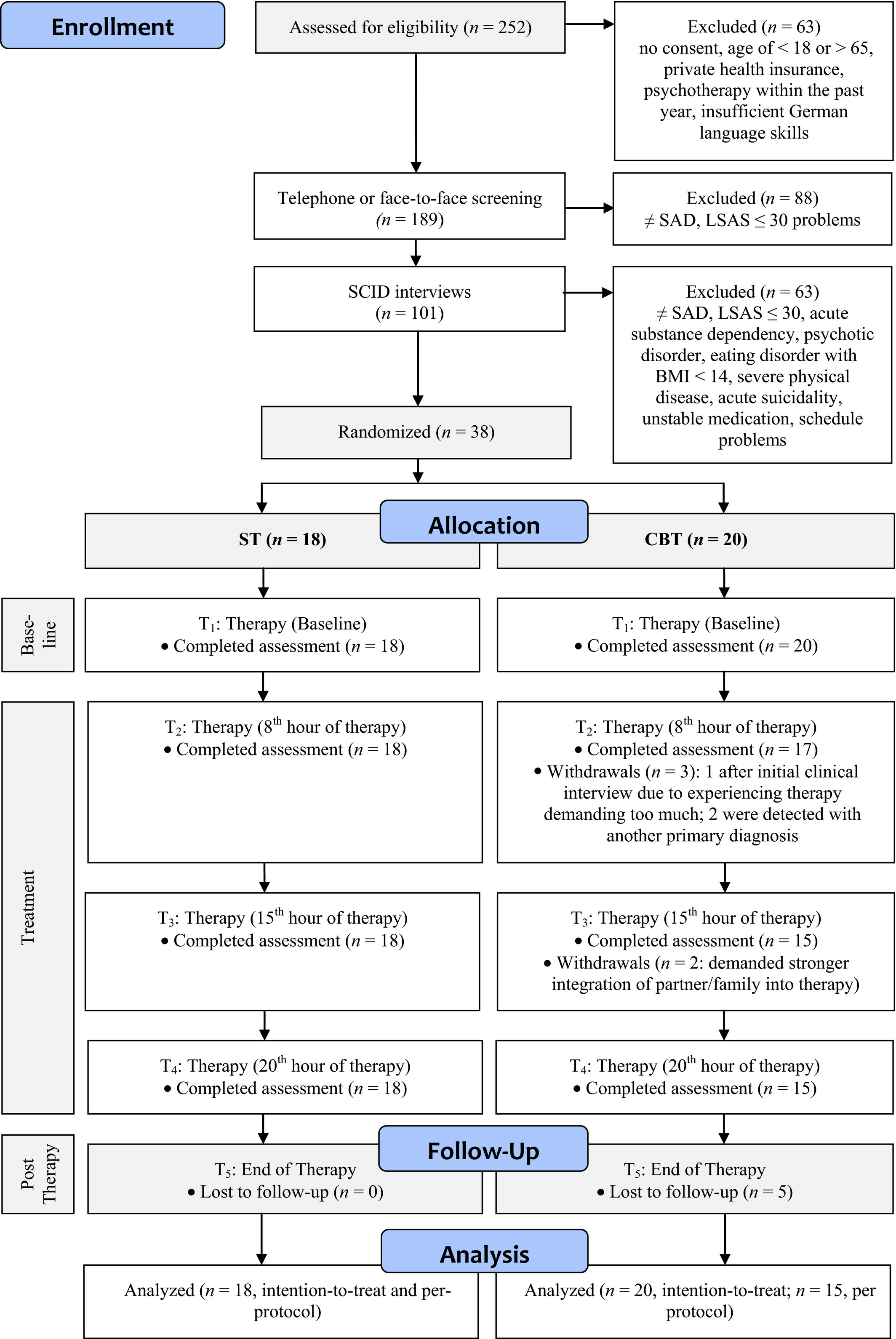
Table 1 — Patients’ Demographic and Clinical Data at Baseline
- Age (years). CBT (n = 20): M 37.35, SD 14.69; ST (n = 18): 33.94, 13.44; total (n = 38): 35.74, 14.03; t(36) = −0.743, p = .462.
- Gender (female). CBT 9 (45.0%); ST 13 (72.2%); total 22 (57.9%); χ²(1) = 2.880, p = .900.
- Civil status. Married/with partner: 11 (55.0%); 12 (66.7%); 23 (60.5%); 0.540, .463. Children: 10 (50.0%); 6 (33.3%); 16 (42.1%); 1.800, .180. Employment/student: 19 (95.0%); 18 (100.0%); 37 (97.4%); 0.924, .336.
- Education. No graduation: 1 (5.0%); 0 (0); 1 (2.6%); 0.924, .336. CSE: 3 (15.0%); 1 (5.6%); 4 (10.5%); 0.897, .334. GCSE: 2 (10.0%); 4 (22.2%); 6 (15.8%); 1.064, .302. University-entrance diploma: 6 (30.0%); 7 (38.9%); 13 (34.2%); 0.333, .564. University degree: 8 (40.0%); 6 (33.3%); 14 (36.8%); 0.181, .671.
- SCID-I. 0 comorbid disorder: 6 (30.0%); 8 (44.4%); 14 (36.8%); 0.286, .539. 1 comorbid disorders: 12 (60.0%); 7 (38.9%); 19 (50.0%); 1.316, .251. 2 comorbid disorders: 10 (40.0%); 3 (16.7%); 5 (13.2%); 0.200, .655.
- SCID-II. 10 (50.0%); 6 (33.3%); 16a (42.1%); 0.105, .746. Avoidant personality: 10 (50.0%); 5 (27.8%); 15 (39.5%); 1.080, .299.
- Medicationb. 2 (10.0%); 2 (11.2%); 4 (10.5%); 0.095, .758.
- Previous psychotherapyc. 14 (70.0%); 11 (61.1%); 24 (63.5%); 0.167, .683. Outpatient: 14 (70.0%); 11 (61.1%); 24 (65.7%); 0.360, .549. Inpatient: 4 (20.0%); 1 (5.5%); 5 (13.2%); 1.800, .180.
CBT = cognitive behavioral therapy; CSE = certificate of secondary education; GCSE = general certificate of secondary education; SCID = Structured Clinical Interview for DSM; ST = systemic therapy. a One person was diagnosed with a depressive personality disorder. b CBT: antidepressants (both patients with citalopram à 20 mg); ST: antidepressants (one patient with mirtazapine à 15 mg; one patient with citalopram à 20 mg). c Psychotherapy, that was attended before but not within the past two years.
Subgroup and sensitivity analyses
Five patients withdrew from CBT (7.6%; two female; all married/lived with a partner and at least one child; one with one, and four with two comorbid SCID-I disorders; three with a comorbid avoidant personality disorder; none received concurrent pharmacotherapy, four patients attended previous outpatient and/or inpatient psychotherapy). No differences were observed between patients who withdrew from therapy and those who completed.
Therapists
Therapists mostly were educated females in their thirties. The majority was married or lived with a partner. They had about 2.5 years of therapeutic experience including further training, and they conducted psychotherapy about 15 hours per week. No therapist had treated any outpatients with a primary diagnosis of SAD before the start of this trial. Study arms were balanced with respect to therapists’ data at baseline (Table S2).
Treatment Outcome
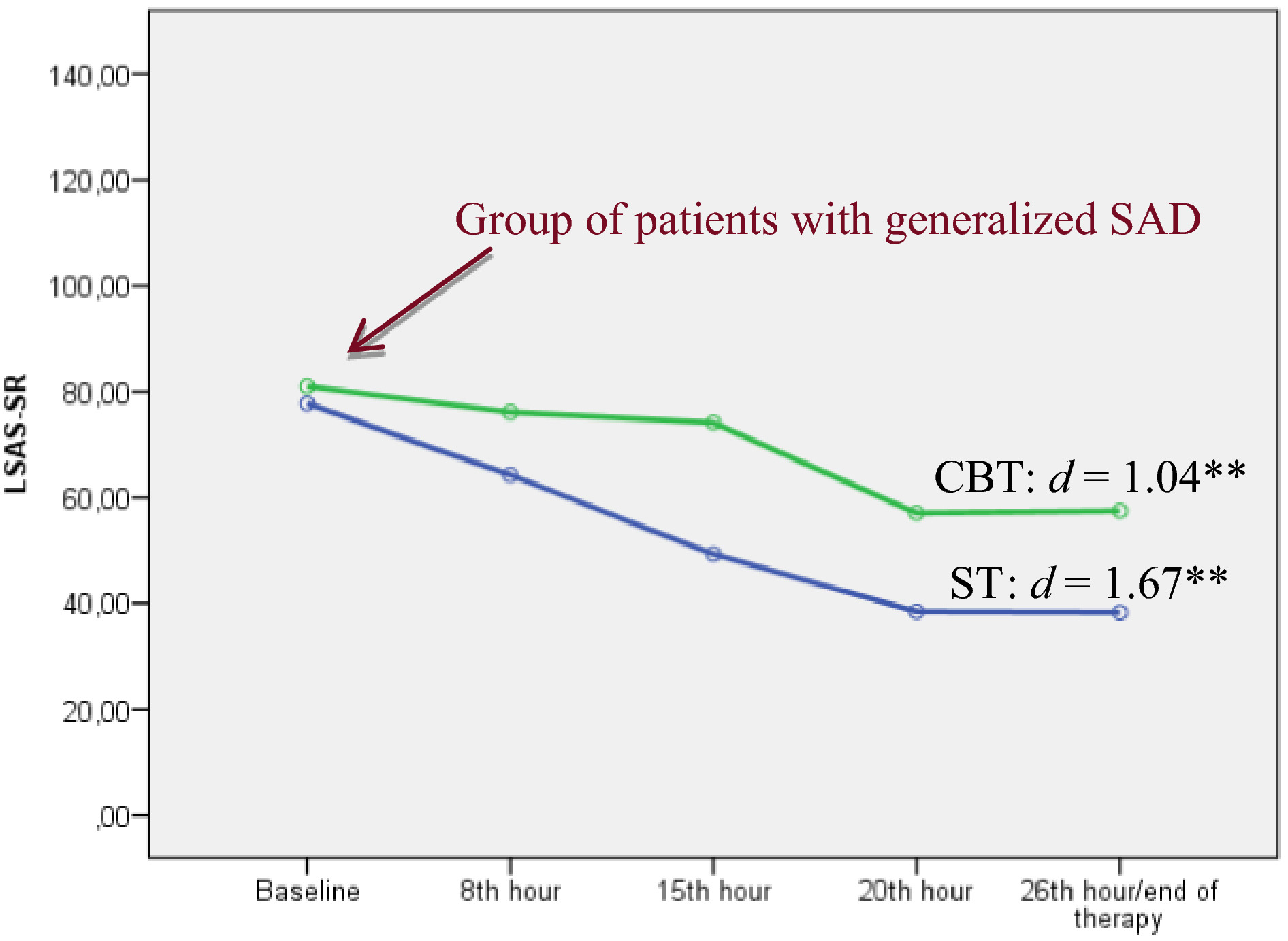
Within-group, simple-effect ITT of the patients' ratings on the primary outcome showed a significant reduction in social anxiety (LSAS-SR), with large effects seen in both conditions from baseline to end of therapy (CBT: d = 1.04; ST: d = 1.67). The ITT mixed-design ANOVA comparing the CBT and ST group showed a significant large effect to the advantage of ST (d = 0.81; Table 2, Figure 2). Per-protocol analyses supported these results.
Table 2 — Descriptive Data at Baseline and End of Therapy, Simple Effects and ANOVAs for CBT (n = 20) and ST (n = 18)
For each measure: baseline M (SD) → 26th hour M (SD); simple effects (within) T1–T5 with 95% CI; d; Mdiff (SDdiff); ANOVA interaction Time × Group; simple effects (between, controlled for baseline data).
- LSAS-SR (primary outcome, patient view: social anxiety). CBT: 80.22 (19.82) → 54.86 (26.12); t(19) = 5.641, p = .000 [14.77; 32.19]; d = 1.04; Mdiff 23.48 (18.62). ST: 77.78 (25.84) → 38.28 (21.33); t(17) = 7.914, p = .000 [28.97; 50.03]; d = 1.67; 39.50 (21.18). Time × Group: F(2.17, 73.79) = 5.967, p = .003, η2 = 0.149; between: 16.02 (6.45) [2.93; 29.11], t(36) = 2.482, p = .018, d = 0.81.
- GAF (secondary outcome, expert view, blind: global functioning). CBT: 72.07 (5.13) → 76.67 (4.88); t(14) = −3.025, p = .009 [−7.86; −1.34]; d = 0.92; −4.60 (5.89). ST: 69.28 (6.68) → 79.44 (6.83); t(17) = −5.095, p = .000 [−14.38; −5.96]; d = 1.50; −10.17 (8.47). Time × Group: F(1,31) = 4.612, p = .040, η2 = 0.130; between: −7.64 (7.82) [−10.41; −4.86], t(32) = −5.609, p = .000, d = 0.76.
- SIAS. CBT: 47.05 (12.55) → 33.82 (15.08); t(19) = 4.109, p = .001 [6.49; 19.97]; d = 0.97; 13.23 (14.40). ST: 44.44 (14.54) → 22.28 (7.59); t(17) = 8.281, p = .000 [16.52; 27.81]; d = 1.91; 22.17 (11.36). Time × Group: F(2.38, 85.64) = 2.737, p = .061, η2 = 0.071; between: 8.93 (4.24) [0.33; 17.53], t(36) = 2.107, p = .042, d = 0.69.
- SPS. CBT: 31.90 (12.39) → 21–98 (17.50); t(19) = 3.857, p = .001 [14.77; 32.19]; d = 0.67; 9.92 (11.50). ST: 33.44 (14.45) → 12.90 (5.61); t(17) = 6.709, p = .000 [14.09; 27.01]; d = 1.88; 20.56 (13.00). Time × Group: F(2.46, 88.39) = 3.798, p = .019, η2 = 0.095; between: 10.64 (3.97) [2.58; 18.70], t(36) = 2.678, p = .011, d = 0.88.
- BDI-II. CBT: 16.45 (11.55) → 10.68 (12.24); t(19) = 3.415, p = .003 [2.23; 9.31]; d = 0.50; 5.77 (7.56). ST: 16.18 (9.27) → 4.06 (3.79); t(17) = 5.775, p = .000 [7.69; 16.54]; d = 1.71; 12.11 (8.90). Time × Group: F(2.51, 90.62) = 2.705, p = .060, η2 = 0.070; between: 6.34 (2.67) [0.92; 11.75], t(36) = 2.374, p = .023, d = 0.77.
- BSI. CBT: 0.96 (0.71) → 0.73 (0.75); t(19) = 1.963, p = .064 [0.02; 0.50]; d = 0.34; 0.24 (0.55). ST: 0.86 (0.41) → 0.24 (0.21); t(17) = 5.967, p = .000 [0.40; 0.84]; d = 1.89; 0.62 (0.44). Time × Group: F(2.06, 74.31) = 2.985, p = .055, η2 = 0.077; between: 0.38 (0.16) [0.05; 0.71], t(36) = 2.331, p = .025, d = 0.77.
- IIP. CBT: 7.13 (2.42) → 5.8 (2.73); t(19) = 2.720, p = .014 [0.30; 2.35]; d = 0.53; 1.33 (2.19). ST: 6.48 (1.88) → 3.82 (2.28); t(17) = 5.141, p = .000 [1.57; 3.75]; d = 1.27; 2.66 (2.19). Time × Group: F(2.80, 100.94) = 1.757, p = .164, η2 = 0.047; between: 1.33 (0.71) [0.12; 2.77], t(36) = 1.864, p = .070, d = 0.60.
- EXIS.pers. CBT: 3.71 (1.04) → 4.34 (1.12); t(19) = −3.295, p = .004 [−1.03; −0.23]; d = 0.23; −0.63 (0.85). ST: 3.92 (0.75) → 4.75 (0.83); t(17) = −4.337, p = .000 [−1.25; −0.43]; d = 1.06; −0.84 (0.82). Time × Group: F(2.98, 107.44) = 0.575, p = .632, η2 = 0.016; between: −0.21 (0.27) [−0.34; 0.76], t(36) = −0.777, p = .442, d = 0.25.
BDI-II = Beck Depression Inventory; BSI = Brief Symptom Inventory; CBT = cognitive behavioral therapy; EXIS.pers = Experience in Personal Social Systems Questionnaire; GAF = Global Assessment of Functioning; IIP = Inventory of Interpersonal Problems; LSAS-SR = Social Anxiety Scale; SIAS = Social Interaction Anxiety Scale; SPS = Social Phobia Scale; ST = systemic therapy. Classification of effect sizes: η2 ≥ 0.01 small effect, ≥0.06 medium effect, ≥0.14 large effect; d ≥ 0.20 small effect, ≥0.50 medium effect, and ≥0.80 large effect.
Considering the secondary outcomes,blind diagnosticians rated 7 CBT patients (46.7%) and 14 ST patients (77.8%) as no longer demonstrating clinically relevant SAD symptoms at the end of therapy (χ²(1) = 3.422, p = .083) (SCID; IRR at 94%, range: 91–100%). Within-group, simple-effect ITT showed their ratings pointing to significant improvement in global functioning (GAF) in both conditions with large effects (CBT: d = 1.04; ST: d = 1.67) (IRR at 94%, range: 82–100%). The ITT mixed-design ANOVA showed a significant medium effect to the advantage of ST (d = 0.76) (Table 2).
Within-group, simple-effect ITTs of the patients’ ratings on the secondary outcomes showed a significant reduction in social interaction anxiety, performance anxiety, psychological, interpersonal, and social system functioning. Large effects were seen in ST from baseline to end of therapy. Effects in the CBT were large in regard to social interaction anxiety, and medium to small in all other secondary outcomes. With respect to social anxiety and psychological functioning, the ITT mixed-design ANOVAs comparing the CBT and ST group showed large to medium effects to the advantage of the ST. Considering interpersonal and social system functioning, the ITT mixed-design ANOVAs were not significant (Table 2).
Clinical Significance
For CBT, the level of remission (LSAS-SR) was 15%, response 55%, no change 25%, and deterioration 5%. For ST, the level of remission was 39% (h: 0.55), response 56% (h: 0.01), no change 1% (h: 0.57), and deterioration 0% (h: 0.45).
Dosage and Duration of Therapy
In the ITT analysis, dosage did not differ between conditions (CBT: M = 23.05 hours, SD = 7.48, range: 1–26; ST: M = 22.50 hours, SD = 2.57, range: 17–26) but there was a significant difference in duration between the groups (CBT: M = 6.24 months, SD = 2.88, range: 3–11; ST: M = 8.17 months, SD = 1.97, range: 5–12; t(36) = 2.381, p = .023, d = 0.79). In the per-protocol analysis, dosage demonstrated a large effect (CBT: M = 26.00 hours, SD = 0.00, no range; ST: M = 22.50 hours, SD = 2.57, range: 17–26; t(31) = 42.524, p = .000, d = 2.48), whereas the duration did not (CBT: M = 7.69 months, SD = 1.33, no range: 26; ST: M = 8.17 months, SD = 1.97, range: 5–12). Because dosage and duration of therapy did not predict the primary outcome (LSAS-SR), they were not considered in further analyses.
Medication
All patients undergoing concurrent pharmacotherapy at the start of therapy had tapered off their medication by end of therapy.
Adverse Events
There were no adverse events reported to therapists or any study team member, starting with patients’ allocation through the end of therapy, in particular no attempted or completed suicide, hospitalization, or death.
Discussion
We conducted a multicenter, assessor-blind pilot RCT investigating the efficacy of the newly developed, manualized, and monitored ST (Hunger, et al., 2016) compared to the established manualized and monitored CBT (Stangier et al., 2016) for SAD. The statistical results need to be interpreted with caution, since the nature of a pilot trial is its small sample size which is not sufficiently powered to address hypotheses of program efficacy. Both psychotherapies revealed a significant reduction in social anxiety over the course of therapy with large effects via both patient self-report and blind diagnostician rating. Patients improved in their global, psychological, interpersonal, and social system functioning. Effects were to the advantage of the ST on all outcomes. Findings support SAD being effectively treated by CBT (Clark et al., 2003, 2006; Hoyer et al., 2017; Leichsenring et al., 2013; Stangier, Schramm, Heidenreich, Berger, & Clark, 2011; Yoshinaga et al., 2016) and ST (Pinquart, Oslejsek, & Teubert, 2016; Rakowska, 2011; Scientific Advisory Board on Psychotherapy, 2008; von Sydow, Beher, Schweitzer, & Retzlaff, 2010; Willutzki et al., 2004, 2012).
The CBT group in our trial showed weaker effect sizes than those found in the meta-analysis published by Mayo-Wilson et al. (2014) for the Clark and Wells’ (1995) individual cognitive therapy model (d = 1.56). CBT however showed similar outcomes to routine care (Hoyer et al., 2017) and the German Social Phobia Network (SOPHO-NET) (Leichsenring et al., 2013). Effects cannot be explained by baseline patient characteristics or severity of social anxiety, as patients in other CBT trials were similar. They may be explained, though, by the measure of the primary outcome when composite scores and observer ratings (i.e., LSAS) demonstrate larger effect sizes compared to self-ratings (i.e., LSAS-SR), as applied in our study (Clark, 2013; Clark et al., 2003, 2006; Hoyer et al., 2017). The ST group performed slightly better in the reduction of social anxiety compared to the ROCBT (Willutzki et al., 2004). Baseline characteristics and severity of social anxiety were similar to previous trials including ST (Rakowska, 2011; Willutzki et al., 2004).
Outcome differences between the CBT and ST in our trial cannot be attributed to baseline patient characteristics or severity of social anxiety, as both groups were well balanced, nor to observer- and self-rated adherence, or therapists’ characteristics. Therapists in both CBT and ST had about 2–2.5 years of therapeutic experience. Though there are findings supporting greater effects of psychotherapy when delivered by more experienced and fully trained therapists (Clark, 2013), extensive reviews have also emphasized that more research is needed to better understand what characterizes expert therapists as it appears that better outcomes do not emerge as a function of experience (Tracey, Wampold, Lichtenberg, & Goodyear, 2014).
In terms of potential moderators (Hunger, 2018b; Mander et al., 2019; Münch, Hunger, & Schweitzer, 2016), there was no difference in the therapeutic alliance in CBT and ST (Sandmeir et al., 2016). Dosage did not differ between treatment types in the ITT analyses but did differ in the per-protocol analyses, with a larger number of sessions in CBT. Significant others seen in the ST possibly caused in-session exposure to social anxiety, whereas CBT did not include any significant others. It thus would be worthwhile to investigate dosage and duration in detail, as well as the setting composition, in a fully powered RCT. We recommend adherence ratings for ST be performed by trained systemic therapists. The ST raters demonstrated low agreement and we hypothesize that this was based on their lack of familiarity with ST in general, though both CBT and ST raters were trained equally.
There was no difference between the CBT and the ST therapists’ allegiance to treatment (Mooney, Connolly Gibbons, Gallop, Mack, & Crits-Christoph, 2013). In post hoc analyses, we did, however, observe allegiance to this trial to the advantage of ST, though this was not significant with respect to the reduction of social anxiety (Sandmeir, 2016). The ST therapists’ stronger allegiance to this trial may be explained by the ST team's initiation of this study (“pioneering spirit”). Findings from a meta-analysis on CBT in depression have demonstrated a decrease in its efficacy since 1977, explained by, among other things, the placebo effect that typically is stronger for innovative psychotherapies, that is, such as CBT was 40 years ago in the initial phase of the cognitive era (Johnsen & Friborg, 2015). As time passes and experience with therapy is gained, the strong initial expectations wane, applying to both therapists and patients. It will be interesting to see whether this placebo effect also applies to ST in a fully powered RCT, as well as to the innovation of this trial in the long run.
Limitations
Though the sample size had adequate power for a two-arm pilot RCT (Cocks & Torgerson, 2013), it still was small, indicating limited generalizability (Field, 2009). We did not set a wait-list condition, leaving unclear nonspecific treatment factors. Therapies were performed by trainee therapists who might be expected to be marginally skillful at both CBT and ST. Patients and therapists were nested within condition, potentially producing confounds in the between-group analyses. Considering concurrent pharmacotherapy, 11% of the patients were taking medication which may have influenced our study results due to the combined psychotherapy/pharmacotherapy approach. We did not report long-term outcomes, as we are currently collecting nine- and twelve-month follow-ups after the beginning of therapy. We did not report the view of significant others (e.g., partner, family, friends) as we have published these data elsewhere (Hunger et al., 2018). Patients and therapists knew which psychotherapy they were being allocated to. However, transparency is a fact of “real word delivery of care” (Zwarenstein et al., 2008, p. 6). Though allegiance to treatment was well balanced, allegiance to this trial was higher in the ST group.
The SOPHO-CBT/ST shows promise for the further exploration of the newly developed, manualized and monitored ST for SAD. While a pilot study is not reliable and valid enough to encompass the evaluation of a new treatment approach, ST however showed clinically significant effects in patients’ reduction in social anxiety symptoms and the improvement in psychological, interpersonal, social system, and global functioning from baseline to the end of psychotherapy. In addition, ST also contributed to the reduction of the psychosocial burden of patients’ significant others (Hunger et al., 2018; Hunger, Krause et al., 2016).
Conclusion
The SOPHO-CBT/ST was a multicenter, assessor-blind pilot RCT comparing a newly developed, manualized and monitored ST with manualized and monitored CBT for SAD. The positive findings in relation to symptom reduction and improvement of psychological, interpersonal, social system, and global functioning overall in ST bode well for a fully powered larger RCT. We presume that such confirmatory RCT will control for the confounding variables that we could not capture in this pilot.
Complexe Systémique: key points
The trial’s interest lies in bringing a “pure” systemic therapy into the arena of randomized trials, against the reference treatment for a disorder usually seen as individual. The Heidelberg manual, heir to Helm Stierlin, combines circular questioning, externalization, genograms, sculpting, symptom prescription and real-life experiments with significant others; it treats social anxiety as a problem of regulating closeness and distance within a system, not as one person’s affair alone. The results are encouraging: both therapies work, the systemic one slightly better on almost every outcome, with no adverse events, and several patients left CBT asking for their significant others to be involved. The authors remain cautious, rightly so: 38 patients, trainee therapists, stronger allegiance to the trial on the systemic side, low reliability of ST adherence ratings, and a CBT less effective than in the literature. Read alongside the article on systemic individual therapy with significant family members, and the article on the paradoxical prescription of the symptom.
Notes from the original
This project was the winner of the 2014 research competition of the German Association for Systemic Therapy, Counseling and Family Therapy (DGSF). It gained further financial support from the Systemic Society (SG), the Heidehof Foundation, the IMP, and the CPP. HB is the executive director of the CPP; JS is vice director of the IMP. HB and JM were CBT trainers and supervisors; JS and CH were ST trainers and supervisors.
Authors’ Contributions: CH, JS, and RH conceptualized and designed this study. CH, LK, LD, RH, JM, and AS contributed substantially to the data analysis, and all authors contributed to the interpretation of the study results. CH drafted the first manuscript, which all authors critically reviewed for important intellectual content. All authors have read and approved the final manuscript.
Acknowledgements. We sincerely thank Prof. Dr. Martin grosse Holtforth, Prof Dr. Ulrike Willutzki (research consultants), Dr. Rüdiger Retzlaff (clinical consultant), Dr. Denise Ginzburg (CBT training), Dr. Eva Vogel and Dr. Meike Peters (CBT supervision), as well as our patients, therapists, diagnosticians, master/bachelor students, and interns.
References
Aas, M. (2010). Global assessment of functioning (GAF): Properties and frontier of current knowledge. Annals of General Psychiatry, 9, 20. https://doi.org/10.1186/1744-859X-9-20.
Anderson, H., & Goolishian, H. A. (1988). Human systems as linguistic systems: Preliminary and evolving ideas about the implications for clinical theory. Family Process, 27(4), 371–393. https://doi.org/10.1111/j.1545-5300.1988.00371.x.
Bauer, S., Lambert, M. J., & Nielsen, S. L. (2004). Clinical significance methods: A comparison of statistical techniques. Journal of Personality Assessment, 82(1), 60–70.
Borkovec, T. D., & Nau, S. D. (1972). Credibility of analogue therapy rationales. Journal of Behavior Therapy and Experimental Psychiatry, 3(4), 257–260.
Boscolo, L., Cecchin, G., Hoffmann, L., & Penn, P. (1987). Milan systemic family therapy. New York: Basic Books.
Bruce, S. E., Yonkers, K. A., Otto, M. W., Eisen, J. L., Weisberg, R. B., Pagano, M. et al. (2005). Influence of psychiatric comorbidity on recovery and recurrence in generalized anxiety disorder, social phobia, and panic disorder: A 12-year prospective study. The American Journal of Psychiatry, 162(6), 1179–1187. https://doi.org/10.1176/appi.ajp.162.6.1179.
Clark, D. M. (2013). Psychodynamic therapy or cognitive therapy for social anxiety disorder. The American Journal of Psychiatry, 170(11), 1365. https://doi.org/10.1176/appi.ajp.2013.13060744.
Clark, D. M., Ehlers, A., Hackmann, A., McManus, F., Fennell, M., Grey, N. et al. (2006). Cognitive therapy versus exposure and applied relaxation in social phobia: A randomized controlled trial. Journal of Consulting and Clinical Psychology, 74(3), 568–578. https://doi.org/10.1037/0022-006X.74.3.568.
Clark, D. M., Ehlers, A., McManus, F., Hackmann, A., Fennell, M., Campbell, H. et al. (2003). Cognitive therapy versus fluoxetine in generalized social phobia: A randomized placebo-controlled trial. Journal of Consulting and Clinical Psychology, 71(6), 1058–1067. https://doi.org/10.1037/0022-006X.71.6.1058.
Clark, D. M., & Wells, A. (1995). A cognitive model of social phobia. In R. G. Heimberg, M. R. Liebowitz, D. A. Hope & F. R. Schneier (Eds.), Social phobia: Diagnosis, assessment, and treatment (pp. 69–93). New York: Guilford Press.
Cocks, K., & Torgerson, D. J. (2013). Sample size calculations for pilot randomized trials: A confidence interval approach. Journal of Clinical Epidemiology, 66(2), 197–201.
Cohen, J. (1988). Statistical power analysis for behavioral sciences. Hillsdale, NJ: Erlbaum.
de Shazer, S., Berg, I. K., Lipchik, E., Nunnally, E., Molnar, A., Gingerich, W. et al. (1986). Brief therapy: Focused solution development. Family Process, 25, 207–221.
Duhl, F., Kantor, D., & Duhl, B. (1973). Learning, space and action in family therapy: A primer of sculpture. In D. Bloch (Ed.), Techniques of family psychotherapy: A primer (pp. 47–65). New York: Grune & Stratton.
Field, A. P. (2009). Discovering statistics using SPSS ( 3th ed.). Los Angeles, CA [u.a.]: SAGE.
Fry, W. F. Jr (1962). The marital context of an anxiety syndrome. Family Process, 1(2), 245–252. https://doi.org/10.1111/j.1545-5300.1962.00245.x.
Geisheim, C., Hahlweg, K., Fiegenbaum, W., Frank, M., Schröder, B., & von Witzleben, I. (2002). The German version of the Brief Symptom Inventory (BSI): Reliability and validity in a sample of outpatient psychotherapy patients. Diagnostica, 48, 28–36.
Heinrichs, N., Hahlweg, K., Fiegenbaum, W., Frank, M., Schroeder, B., & von Witzleben, I. (2002). Validity and reliability of the Social Interaction Anxiety Scale (SIAS) and the Social Phobia Scale (SPS). Verhaltenstherapie, 12(1), 26–35. https://doi.org/10.1159/000056690.
Hilzinger, R., Schweitzer, J., & Hunger, C. (2016). How do I evalute whether it was systemic? An overview of systemic adherence scales examplified by psychotherapeutic efficacy studies on social anxiety. Familiendynamik, 43(3), 2–11.
Hoyer, J., Čolić, J., Pittig, A., Crawcour, S., Moeser, M., Ginzburg, D. et al. (2017). Manualized cognitive therapy versus cognitive-behavioral treatment-as-usual for social anxiety disorder in routine practice: A cluster-randomized controlled trial. Behaviour Research and Therapy, 95, 87–98. https://doi.org/10.1016/j.brat.2017.05.012.
Huber, D., Henrich, G., & Klug, G. (2007). The Inventory of Interpersonal Problems (IIP): Sensitivity to change. Psychotherapy Research, 17(4), 474–481. https://doi.org/10.1080/10503300600856160.
Hunger, C. (2018a). Cognitive behavioral therapy for social anxiety disorder: Intrapersonal and interpersonal aspects and clinical application. In Ö. Şenormancı & G. Şenormancı (Eds.), Cognitive behavioral therapy and clinical applications (pp. 49–64). Rijeka: InTech.
Hunger, C. (2018b). The three-level model of family and systems diagnostics. Overview and assessment. Psychotherapeut, 63(5), 381–392.
Hunger, C., Bornhäuser, A., Link, L., Geigges, J., Voss, A., Weinhold, J., & Schweitzer, J. (2017). The Experience in Personal Social Systems Questionnaire (EXIS.pers.): Development and psychometric properties. Family Process, 56(1), 154–170. https://doi.org/10.1111/famp.12205.
Hunger, C., Bornhäuser, A., Link, L., Schweitzer, J., & Weinhold, J. (2014). Improving experience in personal social systems through family constellation seminars: Results of a randomized controlled trial. Family Process, 53(2), 288–306.
Hunger, C., Hilzinger, R., Bergmann, N. L., Mander, J., Bents, H., Ditzen, B. et al. (2018). Burden of significant others of adult patients with social anxiety disorder. Psychotherapeut, 63(3), 204–212. https://doi.org/10.1007/s00278-018-0281-5.
Hunger, C., Hilzinger, R., Koch, T., Mander, J., Sander, A., Bents, H. et al. (2016). Comparing systemic therapy and cognitive behavioral therapy for social anxiety disorders: Study protocol for a randomized controlled pilot trial. Trials, 17, 171. https://doi.org/10.1186/s13063-016-1252-1.
Hunger, C., Hilzinger, R., & Schweitzer, J. (2016). People who know no fear have no imagination. Social anxiety, social anxiety disorders, and treatment options in systemic therapy. Familiendynamik, 41, 100–113.
Hunger, C., Krause, L., Hilzinger, R., Ditzen, B., & Schweitzer, J. (2016). When significant others suffer: German validation of the Burden Assessment Scale (BAS). PLoS ONE, 11(10), e0163101.
Hunger, C., & Schweitzer, J. (2014). EXIS – Experience in social systems. In C. Kemper, M. Zenger & E. Brähler (Eds.), Psychologische und sozialwissenschaftliche Kurzskalen: Standardisierte Erhebungsinstrumente für Wissenschaft und Praxis. Berlin: Medizinisch-Wissenschaftliche Verlagsgesellschaft.
Hunger, C., Weinhold, J., Bornhäuser, A., Link, L., & Schweitzer, J. (2015). Mid- and long- term effects of family constellation seminars in a general population sample: 8- and 12- month follow-up. Family Process, 54(2), 344–358.
Ioannidis, J. P. A. (2005). Why most published research findings are false. PLoS Medicine, 2, e124. https://doi.org/10.1371/journal.pmed.0020124.
Jacobson, N. S., & Truax, P. (1991). Clinical significance: A statistical approach to defining meaningful change in psychotherapy research. Journal of Consulting and Clinical Psychology, 59(1), 12–19. https://doi.org/10.1037/0022-006x.59.1.12.
Johnsen, T. J., & Friborg, O. (2015). The effects of cognitive behavioral therapy as an anti-depressive treatment is falling: A meta-analysis. Psychological Bulletin, 141(4), 747–768. https://doi.org/10.1037/bul0000015.
Kühner, P. D. C., Bürger, C., Keller, F., & Hautzinger, M. (2007). Reliability and validity of the revised beck depression inventory (BDI-II). Der Nervenarzt, 78(6), 651–656.
Leichsenring, F., Salzer, S., Beutel, M. E., Herpertz, S., Hiller, W., Hoyer, J. et al. (2013). Psychodynamic therapy and cognitive-behavioral therapy in social anxiety disorder: A multicenter randomized controlled trial. The American Journal of Psychiatry, 170(7), 759–767.
Luhmann, N. (2017). Introduction to social systems theory ( 7th ed.). Heidelberg: Carl-Auer.
Lund, T., Eron, J., & Dagirmanjian, S. (2016). Narrative solutions: Using preferred view of self to motivate individual and family change. Family Process, 55(4), 724–741. https://doi.org/10.1111/famp.12207.
Mander, J., Blanck, P., Neubauer, A. B., Kröger, P., Flückiger, C., Lutz, W., et al. (2019). Mindfulness and Progressive Muscle Relaxation as Standardized Session-Introduction in Individual Therapy: a Randomized Controlled Trial. Journal of Clinical Psychology, 75(1), 21–45. https://doi.org/10.1002/jclp.22695.
Maturana, H. R., & Varela, F. J. (1987). The tree of knowledge. Boston, MA: New Science Library.
Mayo-Wilson, E., Dias, S., Mavranezouli, I., Kew, K., Clark, D. M., Ades, A. E. et al. (2014). Psychological and pharmacological interventions for social anxiety disorder in adults: A systematic review and network meta-analysis. The Lancet Psychiatry, 1(5), 368–376.
McLeod, A. I. (1985). Remark AS R58: A remark on algorithm AS 183. An efficient and portable pseudo-random number generator. Journal of the Royal Statistical Society. Series C (Applied Statistics), 34(2), 198–200. https://doi.org/10.2307/2347378.
Mooney, T. K., Connolly Gibbons, M. B., Gallop, R., Mack, R. A., & Crits-Christoph, P. (2013). Psychotherapy credibility ratings: Patient predictors of credibility and the relation of credibility to therapy outcome. Psychotherapy Research, 24(5), 565–577.
Münch, A. L., Hunger, C., & Schweitzer, J. (2016). An investigation of the mediating role of personality and family functioning in the association between attachment styles and eating disorder status. BMC Psychology.
Munder, T., Flückiger, C., Gerger, H., Wampold, B. E., & Barth, J. (2012). Is the allegiance effect an epiphenomenon of true efficacy differences between treatments? A meta-analysis Journal of Counseling Psychology, 59(4), 631–637.
National Institute for Health and Care Excellence (NICE) (2013). Social anxiety disorder: Recognition, assessment and treatment. Manchester, UK: National Institute for Health and Care Excellence.
Penn, P. (1982). Circular questioning. Family Process, 21(3), 267–280. https://doi.org/10.1111/j.1545-5300.1982.00267.x.
Petry, S. S., & McGoldrick, M. (2013). Using genograms in assessment and therapy. In G. P. Koocher, J. C. Norcross & B. A. Greene (Eds.), Psychologists’ desk reference ( 3rd ed., pp. 384–391). New York: Oxford University Press.
Pinquart, M., Oslejsek, B., & Teubert, D. (2016). Efficacy of systemic therapy on adults with mental disorders: A meta-analysis. Psychotherapy Research, 26(2), 241–257. https://doi.org/10.1080/10503307.2014.935830.
Rakowska, J. M. (2011). Brief strategic therapy in patients with social phobia with or without personality disorder. Psychotherapy Research, 21(4), 462–471. https://doi.org/10.1080/10503307.2011.581707.
Ruscio, A. M., Brown, T. A., Chiu, W. T., Sareen, J., Stein, M. B., & Kessler, R. C. (2008). Social fears and social phobia in the USA: Results from the National Comorbidity Survey Replication. Psychological Medicine, 38(1), 15–28. https://doi.org/10.1017/S0033291707001699.
Rytwinski, N. K., Fresco, D. M., Heimberg, R. G., Coles, M. E., Liebowitz, M. R., Cissell, S. et al. (2009). Screening for social anxiety disorder with the self-report version of the Liebowitz Social Anxiety Scale. Depression and Anxiety, 26(1), 34–38. https://doi.org/10.1002/da.20503.
Sandmeir, A. (2016). Therapeutic alliance, allegiance, and adherence in the SOPHO-ST/CBT pilot RCT: What works and why when comparing Cognitive Behavioral Therapy and Systemic Therapy for Social Anxiety Disorder. Master thesis, Heidelberg University, Department of Psychology and Institute for Medical Psychology at the Heidelberg University Hospital.
Sandmeir, A., Hunger, C., Hilzinger, R., Kornely, A., Fuchs, K., Mander, J. et al. (2016). Therapeutic alliance, allegiance, and adherence in the SOPHO-ST/CBT pilot RCT: What works and why? Paper presented at the 47th International Conference of the Society for Psychotherapy Research (SPR), Jerusalem, Israel.
Schulz, K. F., & Grimes, D. A. (2007). Reihe Series epidemiology 6: Generating randomization lists in randomized trials: Chance, not selection. Zeitschrift für ärztliche Fortbildung und Qualität im Gesundheitswesen, 101(6), 419–426.
Scientific Advisory Board on Psychotherapy (2008). Report on the scientific recognition of systemic therapy. Retrieved from www.wbpsychotherapie.de
Shah, P. B. (2011). Intention-to-treat and per-protocol analysis. Canadian Medical Association Journal, 183(6), 696.
Stangier, U., Clark, D. M., Ginzburg, D. M., & Ehlers, A. (2016). Social phobia. Göttingen, Germany: Hogrefe.
Stangier, U., Schramm, E., Heidenreich, T., Berger, M., & Clark, D. M. (2011). Cognitive therapy versus interpersonal psychotherapy in social anxiety disorder: A randomized controlled trial. Archives of General Psychiatry, 68(7), 692–700. https://doi.org/10.1001/archgenpsychiatry.2011.67.
Stein, M. B., & Kean, Y. M. (2000). Disability and quality of life in social phobia: Epidemiologic findings. The American Journal of Psychiatry, 157(10), 1606–1613. https://doi.org/10.1176/appi.ajp.157.10.1606.
Tracey, T. J. G., Wampold, B. E., Lichtenberg, J. W., & Goodyear, R. K. (2014). Expertise in psychotherapy: An elusive goal? American Psychologist, 69(3), 218–229. https://doi.org/10.1037/a0035099.
von Consbruch, K., Heinrich, K., Engelhardt, K., Clark, D. M., & Stangier, U. (2008). Psychometric properties of the german versions of the Cognitive Therapy Competence Scale for Social Phobia (CTCS-SP) and the Cognitive Therapy Adherence Scale for Social Phobia (CTAS-SP). In E. Leibing, S. Salzer & F. Leichsenring (Eds.), SOPHONET Forschungsverbund zur Psychotherapie der Sozialen Phobie [SOPHONET research group for psychotherapy of social phobia] (pp. 14–21). Göttingen, Germany: Cuvillier Verlag.
von Schlippe, A., & Schweitzer, J. (2016). Textbook of Systemic Therapy and Counseling. Göttingen: Vandenhoeck & Ruprecht.
von Sydow, K., Beher, S., Schweitzer, J., & Retzlaff, R. (2010). The efficacy of systemic therapy with adult patients: A meta-content analysis of 38 randomized controlled trials. Family Process, 49(4), 457–485. https://doi.org/10.1111/j.1545-5300.2010.01334.x.
Watzlawick, P., Weakland, J. H., & Fisch, R. (1969). Pragmatics of human condition. New York: Norton.
Weck, F., Bohn, C., Ginzburg, D. M., & Stangier, U. (2011). Assessment of adherence and competence in cognitive therapy: Comparing session segments with entire sessions. Psychotherapy Research, 21(6), 658–669.
Weinhold, J., Hunger, C., Link, L., Rochon, J., Wild, B., Bornhäuser, A., et al. (2013). Family constellation seminars increase psychological functioning in a general population sample: Results of a randomized controlled trial. Journal of Counseling Psychology, 60(4), 601–609.
Willutzki, U., Neumann, B., Haas, H., Koban, C., & Schulte, D. (2004). Psychotherapy for social phobia: Cognitive behavioral therapy in comparison to a combined resource-oriented approach. A randomized controlled interventional trial. Zeitschrift für Klinische Psychologie und Psychotherapie, 33(1), 42–50. https://doi.org/10.1026/1616-3443.33.1.42.
Willutzki, U., Teismann, T., & Schulte, D. (2012). Psychotherapy for social anxiety disorder: Long-term effectiveness of resource-oriented cognitive-behavioral therapy and cognitive therapy in social anxiety disorder. Journal of Clinical Psychology, 68(6), 581–591. https://doi.org/10.1002/jclp.21842.
Wittchen, H., Zaudig, M., & Fydrich, T. (1997). Structured clinical interview for DSM-IV. Göttingen, Germany: Hogrefe.
Yoshinaga, N., Matsuki, S., Niitsu, T., Sato, Y., Tanaka, M., Ibuki, H. et al. (2016). Cognitive behavioral therapy for patients with social anxiety disorder who remain symptomatic following antidepressant treatment: A randomized, assessor-blinded, controlled trial. Psychotherapy and Psychosomatics, 85(4), 208–217. https://doi.org/10.1159/000444221.
Zwarenstein, M., Treweek, S., Gagnier, J. J., Altman, D. G., Tunis, S., Haynes, B. et al. (2008). Improving the reporting of pragmatic trials: An extension of the CONSORT statement. BMJ, 337, a2390.
Reformatted republication of Comparing Cognitive Behavioral Therapy and Systemic Therapy for Social Anxiety Disorder: Randomized Controlled Pilot Trial (SOPHO-CBT/ST), by Christina Hunger, Rebecca Hilzinger, Laura Klewinghaus, Laura Deusser, Anja Sander, Johannes Mander, Hinrich Bents, Beate Ditzen and Jochen Schweitzer, Family Process, vol. 59 (2020), doi: 10.1111/famp.12492, under a CC BY 4.0 licence. Edition and layout: Complexe Systémique, September 2026 — the work has been modified under the terms of the licence (tables presented as lists). Neither the authors nor the publisher are responsible for this edition; the original version prevails.
This is the original article “Comparing Cognitive Behavioral Therapy and Systemic Therapy for Social Anxiety Disorder: Randomized Controlled Pilot Trial (SOPHO-CBT/ST)”, published in Family Process (2020) under a CC BY 4.0 licence. Republished by Complexe Systémique: the author’s text is unchanged; only the presentation has been adapted for reading online, as set out at the head of this page.
Read the original articleHow to cite this article
Hunger, C., Hilzinger, R., Klewinghaus, L., Deusser, L., Sander, A., Mander, J., Bents, H., Ditzen, B., et Schweitzer, J. (2020). Comparing Cognitive Behavioral Therapy and Systemic Therapy for Social Anxiety Disorder: Randomized Controlled Pilot Trial (SOPHO-CBT/ST). Complexe Systémique. https://app.complexe-systemique.com/en_GB/articles/comparing-cognitive-behavioral-therapy-and-systemic-therapy-for-social-anxiety-disorder (Original work published in 2020 in Family Process, 59(4) (2020); republished in 2020 by Family Process, https://onlinelibrary.wiley.com/doi/full/10.1111/famp.12492)
To go further
- Systemic individual therapy with the involvement of significant family membersInvolving significant others.
- The paradoxical prescription of the symptom: a counter-intuitive strategy for changePrescribing the symptom.
- Systemic therapy: the different approaches explained simplyThe systemic approaches.
Related articles
 Blog
The 5 warning signs couples ignore
Never arguing doesn’t tell the whole story of a couple. Julien Besse explores silence, bitter compromises and unspoken expectations from a systemic perspective.
 Scientific
“One Can Have All Sorts of Good Intentions but Sometimes in Everyday Life, It Turns Out Differently”: Change Agreements in Couples' Everyday Lives
Six Danish couples followed after an online couple program: their change agreements become guilt-inducing contracts, shared understanding or revealers of inequality.
 Scientific
Internal Family Systems Therapy as Part of the ‘Family of Systemic Therapies’: A Critical Exploration of Systemic Practice in the Intra-Personal Domain
Does IFS belong to the family of systemic therapies? A critical exploration, grounded in a family court vignette, of systemic work with “parts”.
 Blog
The Crossed Beliefs Game in the family: we know each other, but not always as we think
Drawing on Stessie Fougeroux’s Crossed Beliefs Game, Julien Besse explores what a family can discover about itself, the place of children and the care therapy calls for.