Red Sistémica · Letter to the reader
Letter to you, dear reader: from the ordeal of a serious accident to resilience, a relational question
After breaking off, in April 2007, the editorial conversation he had kept up with his readers for twenty years, Claudio Des Champs takes it up again to say what his wife, his family and he have been going through since a coach accident: the operations, the months in hospital, the exhaustion, the indifference of the company and of its insurer — and, in spite of everything, his intact confidence in resilience and in the networks that make it possible.
“Why me and my wife, dear God?
Or perhaps rather: why not me, after all, why not my wife, why not us, like any other human being?”
Taking up the conversation again
Since the end of the printed stage of Perspectivas Sistémicas, in April 2007, I have broken off editorial communication with you, reader. It was to you that I addressed my farewell, it is to you that I am writing in this new stage. Along the way I have received, and often still receive, marks of gratitude, and the finest tribute an editor can receive:
“What a shame it no longer comes out, we miss it, why don’t you bring it back?” It is always pleasant to hear. It is also gratifying to have sold, over these years, whole collections to colleagues abroad, and to go on selling copies to professionals here, from all over the country, from Latin America and from Spain. Even today we get subscription requests, and readers write to us or telephone us to tell us, almost reproachfully, that they cannot find it at the newsstands! Charming, isn’t it?
What we are going through
But what I want to share with you today, reader, is something else. It concerns what we are going through, Ruth, my wife, my nuclear family and I. The big words, the reframings, the famous, witty or humorous formulas, uttered from the armchair of my consulting room about other people’s pain — which I have always listened to and do listen to, of course, with sincere empathy —, are not enough for me. Or they are not much use to me when it is my own pain that is at stake. Especially when I hear my dear wife’s daily, painful fits of coughing, as she waits for the next endoscopy or video-swallow study, knowing that she has been fitted with a tracheo-oesophageal stent (or prosthesis) with which she has been living for more than two months. Or when I watch her sleep sitting up in bed beside me, the way many patients sleep after long periods in hospital. And above all when I see her, with the endurance that is so much her own, still feeding herself through a nasogastric tube, enterally, for seven long months, and crushing her medicines in a mortar every day, after countless surgical operations, long stays in intensive care (three, to be exact) and a great many things still to be resolved, among them the tracheo-oesophageal fistula and her new face, operated on for very serious maxillofacial fractures.
My lumbar vertebra fractures, after the wheelchair and the brace, have knitted, and I now walk fairly well, despite pain and various limitations. And, naturally, the concomitant psychophysical exhaustion one feels when a situation drags on and is far from resolved, at the same time as one begins to admit that nothing will ever be as it was, above all for Ruth.
The pain of someone close is felt as one’s own, we have always known that, and the neurosciences confirm it, if confirmation were needed. It is the well-known phenomenon of emotional contagion, as Daniel Goleman (1) calls it in his latest book.
Quite the opposite of the owners of long-distance coach companies, who drive their employees to exhaustion by having them steer unstable vehicles, who take out insurance so that others will deal with the victims, and who go on with their lives without altering the essential things that would make their coaches — and therefore their passengers — safer, while behind them there remains the trail of victims, their own drivers included.
The accident
Let me tell you: our life changed radically from the moment of that accident, on the coach of the company TONY TUR (do not use it, please, neither you, nor your children, nor anyone!). It was Saturday 29 November 2008, at five in the afternoon, on a sunny day, on a clear two-lane Route 2, seventy kilometres from Mar del Plata, as we were returning to Buenos Aires after a most pleasant stay in “la Feliz”, as Mar del Plata is nicknamed. We shall never know why or how it happened: not much investigating is done, and even less when the driver dies. From what I am told, the companies see to it that the newspapers and the media in general do not go into detail and that the matter is quickly forgotten (particularly before the holidays and public holiday weekends).
It seems that, for some inexplicable reason, the coach left the road, struck a tree (!?) and overturned. We got out of it on all fours, as best we could, Ruth in shock because she had been asleep. An accident that could not happen — off season and in ideal weather conditions —, but it did happen.
If, as La Nación reported over the 1 May public holiday weekend of this year, breathalyser tests and checks on the compulsory rest period between two journeys came back positive in fifty per cent of cases among long-distance coach drivers, what on earth can we be surprised at? If the double-decker vehicles used by all the companies become unstable above ninety kilometres an hour, and it is proven that they often exceed that speed, what are we surprised at, readers? That the measures to prevent dengue were late and insufficient, just like those against influenza A, when our country has excellent health professionals? So what are we surprised at?
What comes next: the insurer, the delays
Oh, and if something like this happens to you, reader — God forbid —, do not count on the company (Tony Tur in this case, but they are all much the same in that respect; or worse *): you will be dealing with its insurance company. In that sense, this piece could be entitled “We are nothing”, the obligatory phrase at wakes. In any case, to them, you mean nothing. I made enquiries, I took advice, and everyone who knows the subject told me the same thing: what they do is drag the procedure out as long as they can, as I am already finding out (and the legal fine print gives them ample scope for it, I am talking about years); they scale physical damage as though it were a matter of objects of little value, and loss of earnings, like the enormous psychological, personal and family impact, they do not even take into account. Except, of course, if one is prepared and has the economic means — one’s own or those of one’s family network —, and the physical, mental and emotional health needed to face the long and exhausting theatre of negotiations or of a possible lawsuit, in which they try to intimidate you or to play on your anxiety in order to offer you sums so low that they do not even cover the medical costs. In our case, yes, of course, I am more than prepared. In fact, the legal claim would in theory be won; but can one wait two to four years? Delaying tactics, threats, party-appointed experts: and I will not even tell you what it cost me to obtain the medical information from the legal department of the Interzonal hospital in Mar del Plata. Ruth was hospitalised there in a critical, extremely serious condition for a fortnight, her life in danger; and it took me four months to obtain a photocopy of her medical file, which the person in that hospital’s legal department knew perfectly well where to find, but could not find (!?). It was in the archives, where it was supposed to be, since 15 December, the day we transferred Ruth to an intensive care unit in Buenos Aires, in a special ambulance with a doctor, a nurse and a ventilator. The archives are on the floor below or above the legal department. But she could not find it, and on one of the many times I called to ask for it, she said to me: “well, what odd surnames you people went and got yourselves!”
I am told that insurers and coach companies obtain such data very, very quickly.
Another thing: do you suppose, by any chance, that there was so much as a single telephone call from Mr Martín — that, I believe, is the name of the owner of Tony Tur (**) —, or from any representative whatsoever of the company, to ask after the most seriously injured, after the people in general who were travelling on that coach (in fact the driver died the following day in the very hospital where my wife was hospitalised, information that never circulated)? Well, do not count on it. Not one call of solidarity, not one humanitarian gesture. After a while, four months later, the Rivadavia insurance company got in touch with me. A glacial negotiation then begins with them. They require a prior medical assessment (that is what is happening to me seven months after the accident, and it will very soon be done with Ruth). It is carried out by a doctor on the company’s payroll. What counts is not what happened to you, what you endured, but the state you are left in. And that time should pass.
In short, out of modesty, out of respect for myself, out of respect for Ruth and for my family, I shall stop here as regards the details of our health and our feelings. You will understand and you will imagine the rest. I trust your emotional intelligence, dear reader.
What is more, carrying on my work at half speed — I have not yet resumed my teaching activities, but I have resumed seeing patients —, going with Ruth to the doctors, looking after my own health — I have lost a great deal of weight and I have been diagnosed with a post-accident anaemia, caused by an autoimmune reaction — and the legal matters: all of that takes, for the time being, all my energy.
“It is with a shared intimate world that we rebuild ourselves; woven together by affection, joined by empathy, we unfold like a plant that seeks the light and is reborn…”
Resilience, more than ever
Resilience, reader? I still believe in it, more than ever. Quite as much as in family networks and deep friendships, in neighbours, in colleagues, most of them very present, loving, supportive. Not to mention the strangers, or the people I barely knew and who have become beings I am fond of, whom I hold in esteem and for whose existence I am grateful. They unquestionably made the difference: one example among so many, throughout her hospital stay Ruth never spent a single night alone. Meditations, prayers of every faith, masses, sendings of energy, e-mails, telephone calls, words and gestures of solidarity abounded, and I am very, very grateful for them. To the doctors too, to the nurses, to all the health and maintenance staff of the Interzonal and to those of the Cemic. I shall go on writing about this and about other things. I needed to address you, to tell you, to share, as I have always done since Perspectivas Sistémicas first appeared, in May 1988, until the last editorial of April 2007.
Thank you for reading me once again, I embrace you,
Claudio Des Champs
Notes from the original
(1) La Inteligencia Social, by Daniel Goleman.
(*) Shortly before the accident, the owner of a well-known long-distance coach company (another one, not Tony Tur) came to consult me. His personal style and the way he conducted his life provoked rejection in me (and yet one has heard a fair number of stories, and we are not here to judge). I wondered, without saying so, how this man, who was looking less for a therapist than for an accomplice in his murky dealings, in the altered state in which he found himself and in which he seemed habitually to live, could run a business like that. To my great astonishment, at the end of the session, this man, a caricature of the “macho” par excellence, a paradigmatic example of the toxic masculinity described by Sergio Sinay (2) in the book of that name, said to me:
“I imagine you must be wondering how someone in my state can run a passenger transport company, something carrying such heavy responsibilities, mustn’t you?” Then he added, by way of conclusion, that certain specific matters to do with the coaches, accidents for instance, it was not in his interest to have mentioned. That was the first and the last session we had.
(2) La Masculinidad Tóxica, by Sergio Sinay (see the bibliography section — books — of www.redsistemica.com.ar).
(**) On 29 March of this year, another Tony Tur coach again had a very serious accident, on the expressway, heading for Mar del Plata: the coach struck the rear of a lorry. The driver, as in our accident, died.
As to the death of the driver who was driving our coach, and beyond whatever responsibility may fall to him in our accident, may he rest in peace; and I offer his family my most sincere and heartfelt condolences.
One last comment, and not the least important, for the other passengers of that unhappy but sadly not so rare event which we were given to share — I know that several are still suffering serious physical consequences, and that none of them will ever forget what happened: I feel for them and with them, and with their families, who will receive the same poor treatment from Tony Tur and its insurance company, and I wish them the best and the swiftest possible psychophysical recovery.
This article is an English translation of “Carta a vos, querido/a lector/a: «De la Ordalía de un Grave Accidente a la Resiliencia, Una Cuestión Relacional»”, published by Red Sistémica (first published in Red Sistémica). Translated and republished with the journal’s permission.
Read the original articleHow to cite this article
Des Champs, C. (2023). Letter to you, dear reader: from the ordeal of a serious accident to resilience, a relational question (Complexe Systémique, Trans.). Complexe Systémique. https://app.complexe-systemique.com/en_GB/articles/letter-to-you-dear-reader-from-the-ordeal-of-a-serious-accident-to-resilience-a-relational-question (Original work published in 2009 in Red Sistémica; republished in 2023 by Red Sistémica, https://redsistemica.ar/2023/02/10/carta-a-vos-querido-a-lector-ade-la-ordalia-de-un-grave-accidente-a-la-resiliencia-una-cuestion-relacional/)
To go further
- Systemic therapy of resilience. Opening paths, from suffering to well-beingWhat the clinic makes of resilience once it stops being a slogan: work on the bonds.
- On resilience. The thought of Boris CyrulnikResilience as a relational knitting rather than an individual quality: the thesis this letter embodies.
- Argentina 2001-2003. Stress, trauma and resilienceHow Argentine family and community networks absorbed a collective shock.
Related training courses
 Short course
The suicidal crisis in adolescents and young adults
Training: assessing and supporting the suicidal crisis in adolescents and young adults. Clinical landmarks and systemic tools. In French.
Related articles
 Article
 First Psychological Aid for Families During War: Integrating the Narrative Approach With Emotionally Focused Therapy (EFT)
Three or four meetings for families living under the threat of war: telling their story before a witness, then repairing the attachment cycle disrupted by fear.
 Article
 Psychological trauma: what to do in the first 24 to 48 hours — Stéphanie Khalfa
Early intervention does not begin with a detailed account. Stéphanie Khalfa presents the nine-step MOSAIC emergency protocol: body, co-regulation and connection.
 Article
 Becoming a therapist: Stessie Fougeroux's journey
Stessie Fougeroux, creator of the crossed-beliefs game, recounts her path, the Mony Elkaïm turning point, and how hard it is to think “family” inside institutions.
 Article
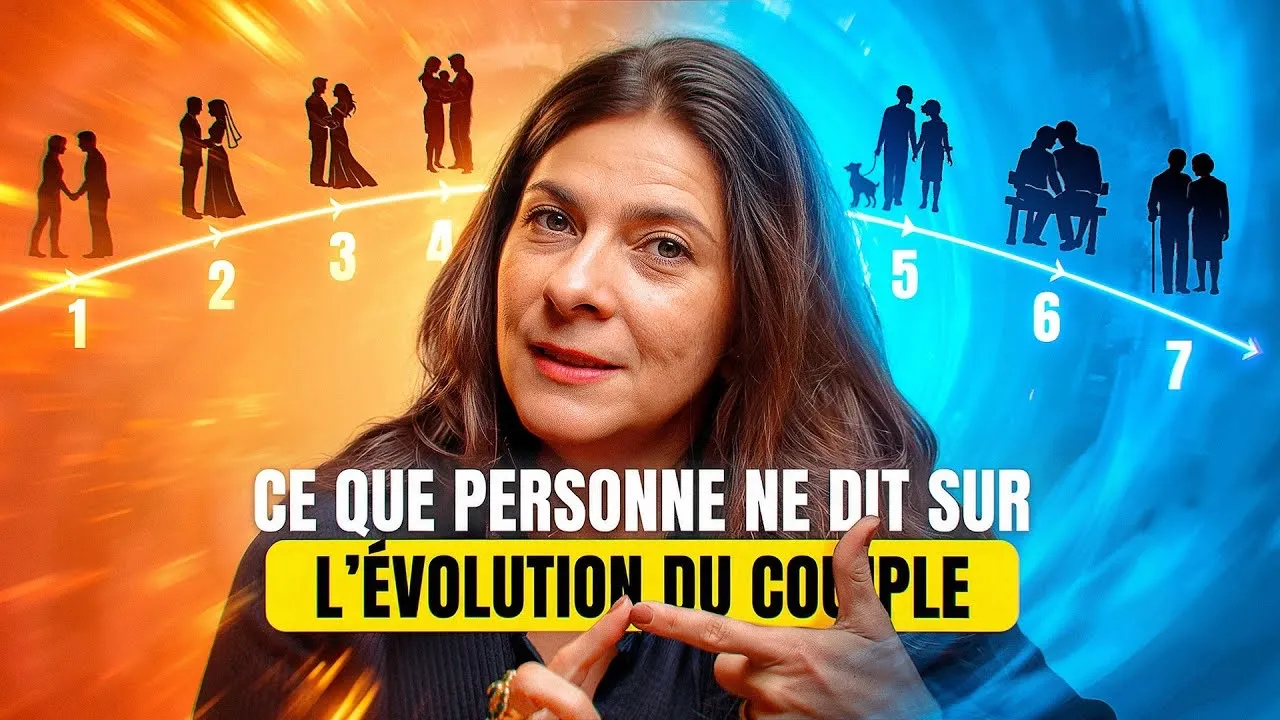
 The couple's life cycle: a clinical compass for navigating marital crises
A marital crisis may signal a passage rather than an exhausted love. Ivy Daure’s grid: eight stages, from first meeting to the bond’s continuity after a death.
Comments 0
Log in to join the discussion. Log in