Journal of Family Therapy · Family therapy
Non-violent resistance treatment for parenting stress and parent–child interaction in parents of adolescents with anorexia nervosa: A pilot study
In Amsterdam, Irene Meijer's team offered Haim Omer's non-violent resistance to parents of adolescent girls with anorexia nervosa, on top of usual care. In six parents, parenting stress fell markedly three months after the training, while parent–child interaction improved only non-significantly. A first, modest signal for an approach that works on the parents' position rather than on the symptom.
This is a reformatted republication of Non-violent resistance treatment for parenting stress and parent–child interaction in parents of adolescents with anorexia nervosa: A pilot study, by Irene G. Meijer, Luuk Stapersma, Leonieke Terpstra, Joost P. van der Mandele and Elisabeth M. W. J. Utens, published in Journal of Family Therapy (Wiley) (2024), doi: 10.1111/1467-6427.12455, under a CC BY 4.0 licence. Prepared by Complexe Systémique in September 2026: the authors’ text is unchanged; the layout has been adapted for reading online, which constitutes a modification of the work under the terms of the licence. This edition was made neither by the authors nor by the publisher, who are not responsible for its content or for any errors. The original version prevails.
When accommodating behaviour of parents is a core element in the eating disorder symptoms, NVR may be considered as an add-on to care-as-usual.
Irene G. Meijer, Luuk Stapersma, Leonieke Terpstra, Joost P. van der Mandele and Elisabeth M. W. J. Utens
Abstract
Parenting a child with anorexia nervosa (AN) is highly stressful, and the struggles around eating have a large impact on family functioning. Parents get involved in conflicts with their child and/or accommodate to the eating disorder symptoms. Non-violent resistance (NVR) offers an additional treatment option for these families. NVR aims at helping parents effectively deal with their child's (self-)destructive behaviour and their own helplessness, by non-violent and non-escalating means. In our pilot, we examined whether NVR was helpful in reducing stress and improve parent–child interaction. In six parents, it was found that parenting stress was significantly reduced at post-assessment and at 3-month follow-up. For parent–child interaction, a non-significant trend was found for improvement. Change in body mass index of the adolescents was not associated with the decrease in parenting stress. Although preliminary, the results of this pilot suggest that NVR can be a feasible treatment alternative for families of adolescents with AN.
Practitioner points
- Accommodating behaviour is prevalent in families of patients with anorexia nervosa (AN)
- Non-violent resistance has a central focus on accommodating behaviour of parents
- Parenting stress and parent–child interaction are important in AN treatment
- NVR may be a promising and feasible treatment alternative for families of patients with AN
INTRODUCTION
During the first years of the coronavirus disease 2019 (COVID-19) pandemic, the incidence of eating disorders increased (Nicholls, 2023; Taquet et al., 2022). Anorexia nervosa (AN) is a severe psychiatric disorder, characterised by restricted food intake (resulting in reduced body weight), intense fear to gain weight and a distorted perception of body and weight (American Psychiatric Association, 2013). In the Netherlands approximately 1,300 new patients develop AN each year (Dutch Centre of Youth Health; Jeugdgezondheid, 2013). In a large cohort study, the lifetime prevalence of AN in adolescence was estimated to be 1.7% (Smink et al., 2014). Eating disorders can emerge in every age group, but AN often develops in adolescence or young adulthood. The highest incidence of AN has been found between 15 and 19 years of age (Smink et al., 2016; Van Son et al., 2006). AN is associated with high morbidity and high mortality rates. It has a relatively poor prognosis, with less than half of the patients recovering, one-third improving and 20% remaining chronically ill (Dobrescu et al., 2020). Of all psychiatric disorders, AN has the highest morbidity, with 5% of the patients dying within 10 years, approximately 20% due to suicide and others due to somatic dysfunctions resulting from the restricted food intake (Arcelus et al., 2011; American Psychiatric Association, 2013).
As a result of the age of onset being in adolescence, many patients with AN live with their parents and, when present, siblings. Taking care of an adolescent with AN has a large impact on parents and other caretakers and often leads to anxiety, depression and decreased quality of life (Anastasiadou et al., 2014). Parents of patients with AN experience high levels of stress and a high caregiver burden (Zabala et al., 2009). Few studies have focused on parenting stress in parents of adolescents with AN. Rhind et al. (2016) showed that mothers spend more time than fathers on caregiving behaviours, such as preparing food and providing emotional support to their child. Furthermore, mothers experience more stress and show more accommodating behaviours, compared with fathers (Kyriacou et al., 2008). For parents, it is highly difficult to help their child to restore the eating pattern without getting involved in conflicts or without accommodating to the demanding behaviour resulting from the eating disorder. For example, parents buy specific foods or prepare separate meals for their child, parents permit the child to eat in his/her own room, or parents have to be present with every moment the child eats something. This accommodating behaviour of caregivers predicts psychological stress as well as caregiver burden (Coomber & King, 2012) and has a negative effect on treatment outcomes (Salerno et al., 2016). Accommodation has been identified as a maintaining factor in AN, following the cognitive-interpersonal model stating that dysfunctional responses of caregivers (such as accommodations) reinforce and contribute to the maintenance of symptoms (Fox & Whittlesea, 2017; Treasure & Schmidt, 2013).
European guidelines emphasise the high relevance of family members' involvement in the treatment of AN (Herpertz-Dahlmann et al., 2015). Family-based treatment (FBT) or Maudsley family therapy has been demonstrated to be the most effective treatment for adolescents with AN, to restore weight and improve AN symptoms (Lock, 2015; Treasure et al., 2015). In several phases, parents learn to supervise food intake and compensatory behaviours. After sufficient weight gain has been achieved, parents learn how to incrementally hand over responsibility. This provides more opportunities for an age-appropriate development of the adolescent.
Another supplementary treatment option for families of adolescents with AN is non-violent resistance (NVR). NVR focuses on de-escalating, presence, social support and resistance to self-destructive behaviour, by parents or caregivers (Omer & Wiebenga, 2015). NVR aims to reduce helplessness of parents and their accommodation behaviour, which is very prevalent (Anastasiadou et al., 2014). Especially the anchoring function of NVR provides a surplus rationale for working with families of a child with AN. When parents are more anchored in their parental role, they become able to help their child, dealing with the pressure of the AN (Shimshoni et al., 2022). NVR teaches parents and caregivers to fight aggressive, self-destructive or risky behaviour of children and adolescents, in a non-violent manner. The NVR method is developed by Haim Omer (Omer & Wiebenga, 2015) and based on non-violent methods applied in the social domain by, for example, Gandhi and Martin Luther King. At first, NVR was aimed at parents of adolescents with behavioural problems. In recent years, NVR has been successfully used in families of children with anxiety or obsessive-compulsive disorder (OCD), eating disorders, school refusal, addiction, mild intellectual disability and autism spectrum disorder (ASD) (Omer & Wiebenga, 2015). Furthermore, NVR has been applied in schools as well as inpatient settings. It has been shown that NVR is also effective in reducing coercive measures from the staff (Van Gink et al., 2018).
NVR is primarily focused on changing the attitude and behaviour of parents, caregivers or professionals towards problematic behaviour of the child or adolescent, thus by anchoring them in their parental or caregiving role. Parents are taught how to take a stand against this behaviour, such as refusing to eat, compensatory behaviour (moving, using laxatives, vomiting) and losing weight. At the same time, parents learn to increase their presence and increasingly support their child. Furthermore, parents learn to actively request for support in their own social network in taking a stand towards the problematic behaviour (Omer & Lebowitz, 2016); see also Appendix 1 for a detailed description of the elements. Hereby, parents feel less powerless and experience more support and a decrease in aggressive and self-destructive behaviour of their child (Weinblatt & Omer, 2008).
Parents of young people with aggressive and self-destructive behaviour are torn between yielding to the child or getting angry. When parents are permissive, young people make more demands and parents are inclined to make more concessions. Parents increasingly ignore the negative behaviour of the young person to avoid confrontation and then experience more powerlessness. When getting angry, a power struggle arises between parents and young people, whereby mutual animosity increases. As a result, the youngster shows more extreme behaviour to strengthen the position of power. NVR stresses the importance of breaking through negative interaction patterns and restoring a positive parent–child interaction. Parents learn to make gestures of respect and reconciliation to show their unconditional love for their child (Omer & Wiebenga, 2015).
In an outpatient setting, NVR is provided in groups of parents as well as in individual family treatment. To our knowledge, no studies have yet been conducted on NVR parent training and its potential contribution to the treatment of AN in adolescents. Nevertheless, it has been suggested as treatment alternative in eating disorders (Shimshoni et al., 2022). Furthermore, family therapy for adolescents with AN already evolves towards several treatment forms, including working only with parents (Hughes et al., 2015).
The aim of this pilot study is to investigate the treatment outcomes in patients with AN and their parents after group NVR parent training, added to care-as-usual (see below). We focus on the perceived parenting stress and the parent–child interaction as the most important outcome measures. In line with the guidelines for treatment for AN (Salerno et al., 2016), NVR pays a lot of attention to reducing the accommodation behaviour of parents. We hypothesised that, after the NVR parent training, parents of 12–18-year-old adolescents with AN would report less parenting stress. Furthermore, in the NVR training, parents practice with various interventions to avoid an overly permissive or hostile parent–child interaction. They also practice with reconciliation gestures to achieve a positive parent–child interaction. Therefore, secondly, we hypothesised that parents experience fewer conflicts with their child and that they report the parent–child interaction to be more positive. Thirdly, following the results of Weinblatt and Omer (2008), we hypothesised that, after the NVR parent training, parents report fewer psychosocial problems in their child. Lastly, the burden for parents is related to the AN symptoms of their child (Matthews et al., 2018; Ohara et al., 2016). Henceforth, we secondly hypothesised that there will be an association between the change in scores for parenting stress and the change in body mass index (BMI).
MATERIALS AND METHODS
Inclusion and exclusion criteria/participants
For this study, parents were eligible if their child (aged 11–17 years, diagnosed with AN and having significant underweight) was referred to Levvel between June 2018 and June 2019. Exclusion criteria were as follows: incapacitated child/IQ lower than 85, parents' insufficient mastery of the Dutch language, parental substance abuse or previous parental participation in an NVR parent training.
Procedure
The Medical Ethics Review Committee of the Academic Medical Center declared that the Medical Research Involving Human Subjects did not apply to the study (reference number W18_208 # 18.251), since only non-incriminating questionnaires were administered. Therefore, full ethical approval of the study was not required. If families were eligible, their treating professional invited them for the study. Informed consent was obtained in writing from all participating parents and adolescents prior to participation in the study. Thereafter, all included parents participated in the next NVR parent training.
Assessments
Several assessments were performed: a pre-assessment prior to the training (T0), a post-assessment directly after the training (T1) and a follow-up 3 months after the training (T2). The assessments consisted of well-validated questionnaires, with sufficient psychometric characteristics, and of which normative data were available. Parents completed the questionnaires in a secured digital environment that automatically generated the raw and scaled scores.
Measures
Demographic information
Gender and age of both the adolescent and parents were retrieved from the patient's record. The BMI (Talma et al., 2010) of the adolescent at the three assessments was registered. For the calculation of the BMI, the most proximate weighing moment within care-as-usual was used, to minimise the burden for the adolescents. Time between assessment and weighing moment ranged between zero and 4 days, except for one follow-up measurement in one young person that deviates from T2 due to the closing of the patient file.
Parenting stress
Parenting stress was measured at T0, T1 and T2 with the Dutch Opvoedingsbelasting Vragenlijst (OBVL; which can be translated as Parenting Stress Questionnaire; Vermulst et al., 2015). The OBVL is a questionnaire for parents of children aged 0–18 years, in which the parent indicates on a four-point scale the extent to which he/she agrees with thirty-four different statements. Answers are: 1 = does not apply, 2 = applies a little, 3 = applies quite a bit, 4 = applies completely. The OBVL has five subscales. The scale ‘problems in the parent–child relationship’ refers to the extent to which the parent perceives the parent–child relationship as burdensome and problematic. The ‘parenting problems scale’ relates to the extent to which the parent experiences the parenting of the child as burdensome and has the feeling that he has too few skills to have adequate control over the child. The ‘depressive mood’ scale refers to the extent to which a parent is (un)happy with himself and his living conditions. The ‘role restriction scale’ refers to the extent to which the parental role is experienced as a restriction on one's own freedom and as a frustration with attempts to maintain one's identity. The ‘health complaints’ scale relates to the extent to which the parent feels healthy and fit. Summing up all questions forms a total score for parenting stress. For all scales, high scores are representative of a high degree of perceived parenting stress. Reliability of the total and subscales have been found to be sufficient to good (Cronbach's alpha; total score 0.89, subscales 0.74–0.87), and the OBVL has been shown to have a strong construct validity, including discriminating between parents with or without parenting stress (Vermulst et al., 2015).
Parent–child interaction
The parent–child interaction was assessed at T0, T1 and T2 by the Dutch Ouder-kind Interactievragenlijst – revised (OKIV-R, which can be translated as Parent–Child Interaction Questionnaire-Revised; Lange, 2001). The OKIV-R measures the relationships within the family and is completed by parents of children aged 8–18. Questions are asked about concrete behaviour, opinions and affection between parent and child. It consists of twenty-one items. There is a version both for fathers and for mothers, reporting on their individual relationship with their child. The parent indicates on a five-point scale to what extent he/she agrees with a statement of how often behaviour occurs (1 = never, 2 = almost never, 3 = sometimes, 4 = almost always, 5 = always). The items add up to a total score and two scale scores: conflict management (quality in preventing and resolving conflicts) and acceptance (warmth, comfort, protection, pride). A high score means that there is an accepting parent–child relationship with adequate authority. For both the original (Lange et al., 1997) and the revised version (Lange, 2001), reliability was found to be sufficient to good.
Psychosocial problems
Psychosocial problems of the adolescents were assessed with the Strengths and Difficulties Questionnaire (SDQ; Goedhart et al., 2003), a questionnaire for parents of children aged 4–18 years. The SDQ consists of twenty-five questions that are rated on a three-point scale. Possible answers are as follows: 0 = not true, 1 = somewhat true, and 2 = certainly true. The SDQ has five subscales: emotional problems, behavioural problems, attention deficit and hyperactivity, problems with peers and prosocial behaviour. The first four subscales (i.e. without prosocial behaviour) add up to a total problem score. In addition, there are eight additional questions about the impact of the perceived difficulties on psychosocial adaptation and about the burden on others. For the total score of the parent version of the SDQ, good reliability has been found (Cronbach's alpha 0.82; Theunissen et al., 2019).
Intervention: NVR Parent training (see Appendix 1)
The NVR parent training was provided in groups according to an internal manual (Ottenbros & Stelt, 2016). Four to six sessions added up to an average of 10 treatment hours over an average timeframe of 2 months. The groups were led by two highly experienced and NVR certified trainers. Prior to the training an intake interview with parents was held. Afterwards, a closing interview was held. Group sessions focused on understanding the principles of NVR, sharing experiences between parents, and practicing practical interventions to take a stand against problematic behaviour (such as starvation). Several topics are covered: escalations between parents and their child, parental presence and norms and values, prioritising, involving the support network, and several interventions (such as ‘reparation acts’, the ‘announcement’ and the ‘sit-in’). Psycho-education, group discussion, role play, group feedback, group trainer feedback and homework were used during the group sessions.
Characteristics of the NVR parent training
The parent groups consisted of different parent pairs of children with various psychiatric problems. The number of participating parents per training depended on the number of enrolled parents. The included parents of children with AN were not enrolled simultaneously and participated in different, but comparable, NVR parent training groups.
Care-as-usual
Parallel to the NVT parent training, families received care-as-usual, consisting of FBT and medical follow-up of the adolescent. For the FBT, parents were invited to practice coaching eating moments. In these moments they were encouraged to use the principles they learned in the NVR Parent training, to coach their child without getting into fights, but stand next to their child, on the way to recovery. Medical follow-up consisted of daily to weekly weight measurements; baseline somatic controls such as blood pressure and heart rate were monitored during the refeeding phase. Furthermore, all participants were seen by a paediatrician, who performed routine laboratory investigation, electrocardiogram and bone density tests.
Statistical analyses
A non-parametric test was used, because, due to the limited amount of data points and due to some adolescents for whom two parents were reporting, no statement could be made about a normal distribution an about the independence of the data points. The Wilcoxon signed-rank test was chosen to be able to compare the results of the different measurement moments. Correlations between the change in BMI from T0 to T2 and the change in parenting load from T0 to T2 was calculated using Pearson's r.
RESULTS
Characteristics of participating parents and their children with AN
A total of seventeen parents were invited to participate, of whom nine were eligible and agreed. Results of three parents could not be included in the analyses, because of missing data in the questionnaires, giving a final sample of six parents. The mean age of the six parents (four mothers and two fathers, of a total of four adolescents) was 50.4 years [range 47.8–54.8 years; standard deviation (SD) 2.7]. The mean age of the participating adolescents (all girls) was 15.4 years (range 12.10–18.0; SD 2.5). The BMI at T0 mean was 16.1 (range 14.7–17.4; SD 1.39).
Changes in parenting stress, parent–child interaction, BMI and psychosocial problems of the adolescents
The changes in the total score of parenting stress are shown in Figure 1. From T0 to T2, the parenting stress decreased on average for all participating parents. From T0 to T1, an increase in parenting stress was found in two parents, but a decrease in parenting stress was found in the other four parents. Figure 2 shows that, on average, a decrease was found on all five subscales of parenting stress from T0 to T2. From T0 to T1, there was an increase in parenting stress on the subscales depressive moods, health complaints and the parent–child relationship. The Wilcoxon signed-rank test shows a significant change in parenting stress from T0 to T2 (p = .028) and from T1 to T2 (p = .027), but not from T0 to T1 (p = .833; Table 1).
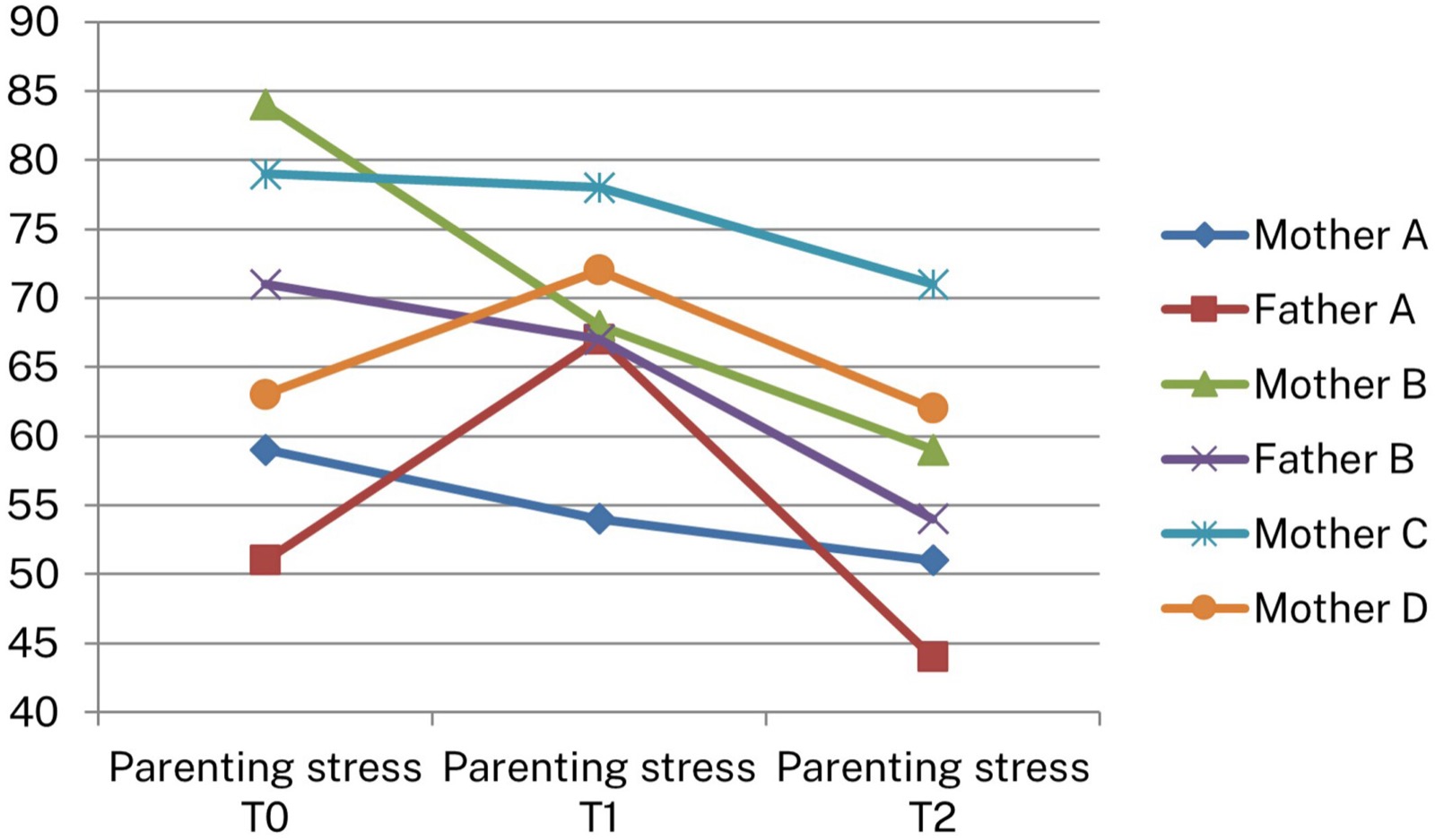
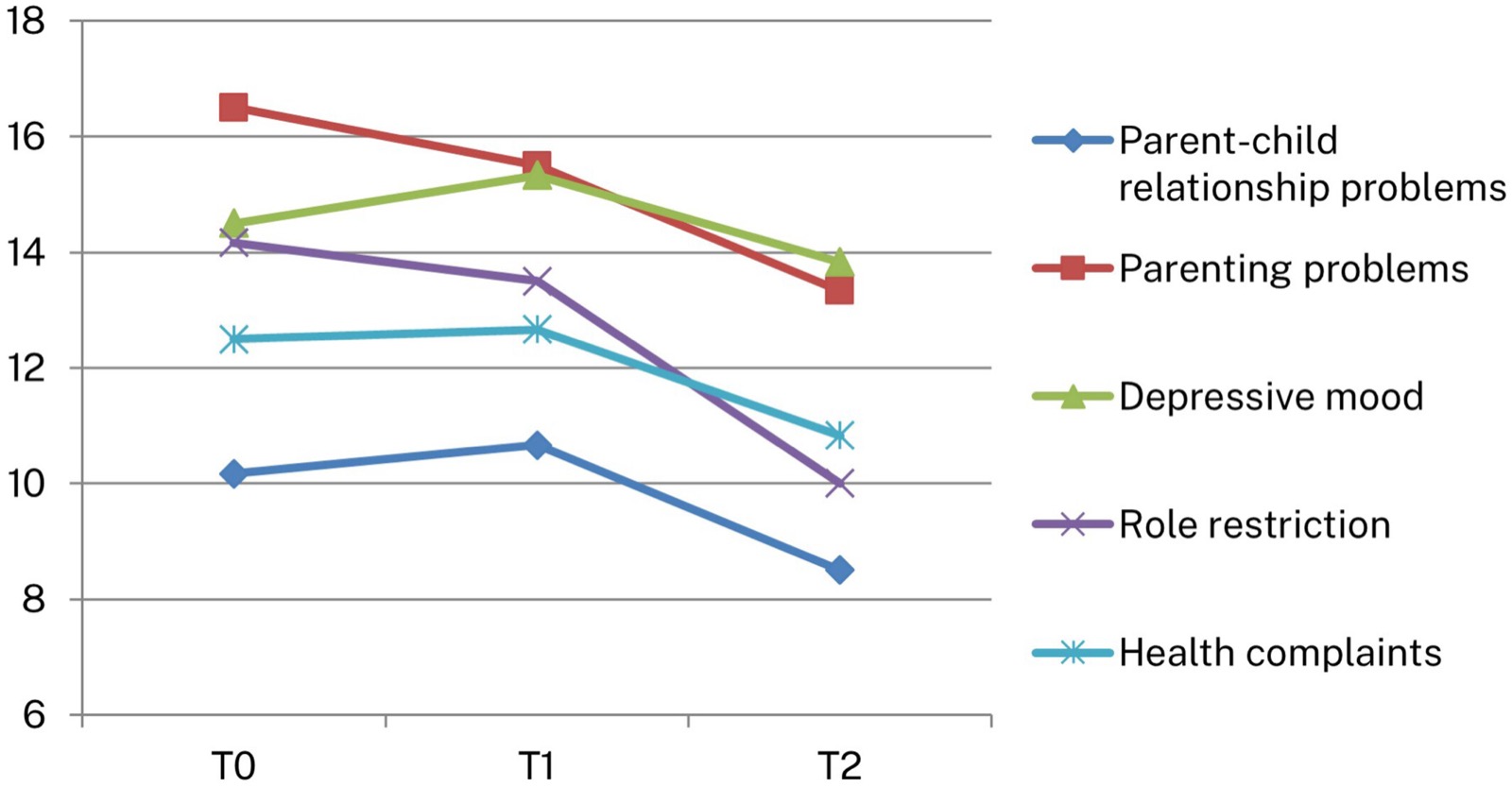
Table 1 — Wilcoxon signed-rank test for change over time in parenting stress (OBVL total score, N = 6).
- Z-score; ∆ parenting stress T1 – T0: −0.210a; ∆ parenting stress T2 – T1: −2.201a; ∆ parenting stress T2 – T0: −2.207a
- Asymptotic significance (2-tailed); ∆ parenting stress T1 – T0: 0.833; ∆ parenting stress T2 – T1: 0.028; ∆ parenting stress T2 – T0: 0.027
a Based on positive ranks.
With respect to the parent–child interaction (Figure 3), an increase in the total score was found in five parents from T0 to T2, which means a more positive perception of the parent–child interaction. A decrease in the total score was found in one parent from T0 to T2. From T0 to T1, a decrease in the total score was found in three parents, while the score remained the same in one parent. From T1 to T2, a decrease in the total scores was found in two parents, while an increase in the total score was found for the other parents. As shown in Table 2, no significant changes were found in parent–child interaction scores from T0 to T1 (p = .680), nor from T1 to T2 (p = .248). However, a positive, non-significant trend from T0 to T2 was found (p = .09).
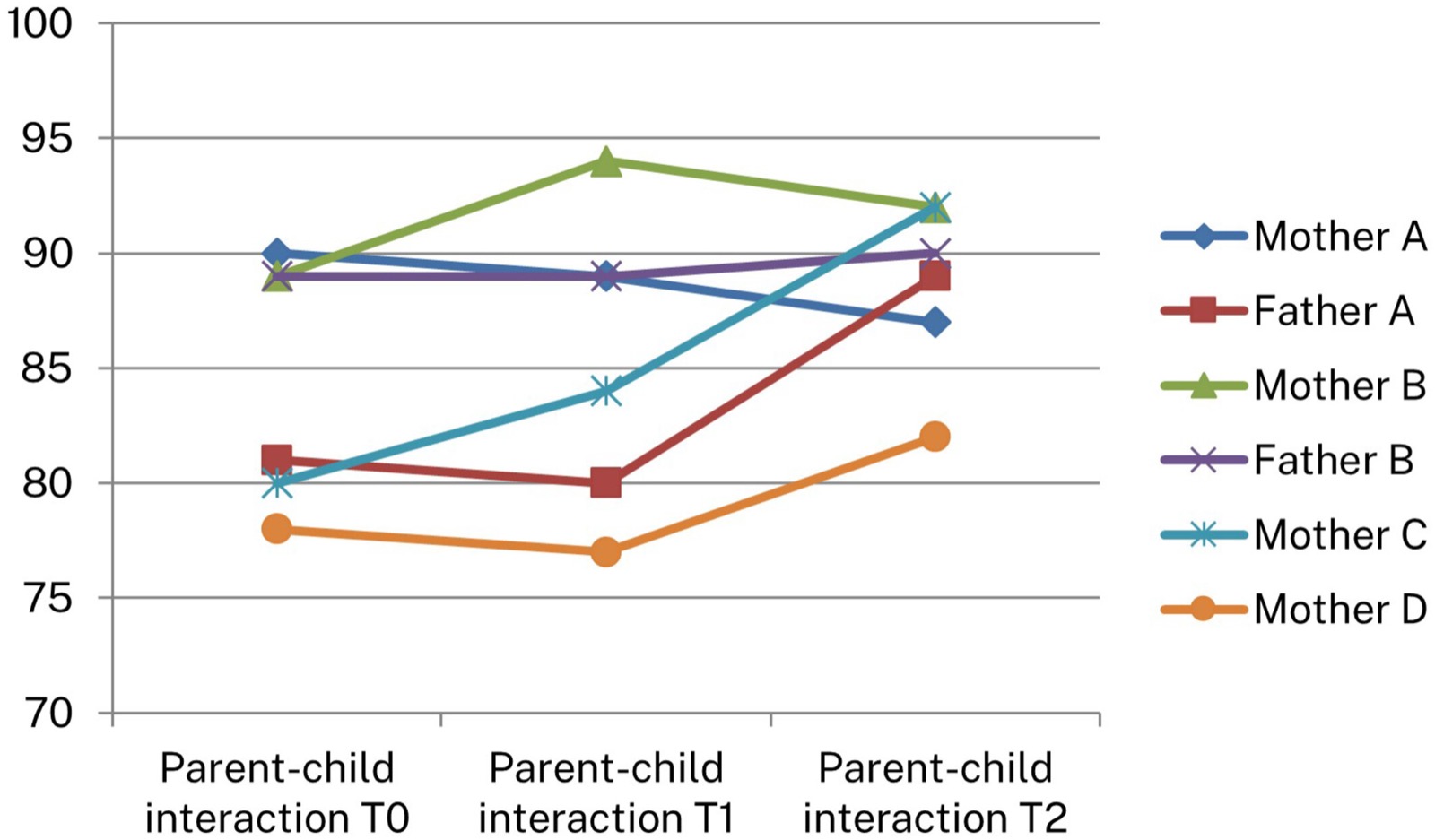
Table 2 — Wilcoxon signed-rank test of parent–child interaction (OKIV-R total score, N = 6).
- Z-score; ∆ parent–child interaction T1 – T0: −0.412a; ∆ parent–child interaction T2 – T1: −1.156a; ∆ parent–child interaction T2 – T0: −1.682a
- Asymptotic significance (two-tailed); ∆ parent–child interaction T1 – T0: 0.680; ∆ parent–child interaction T2 – T1: 0.248; ∆ parent–child interaction T2 – T0: 0.093
a Based on negative ranks.
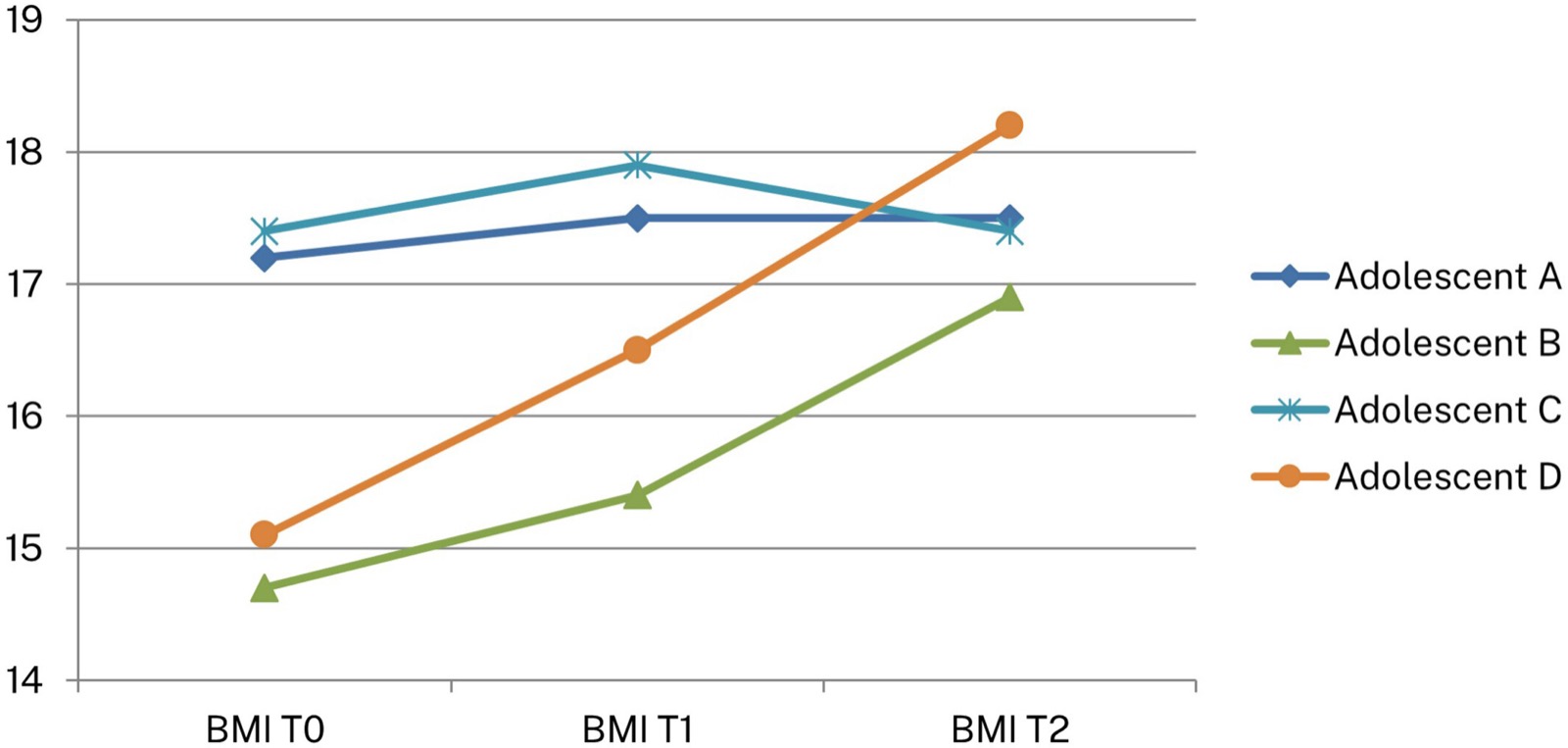
All parents reported fewer psychosocial problems in their daughters from T0 to T2 (Figure 4). The pre- and post-measurements differed significantly (p = .027) (Table 3). On the BMI assessments (Figure 5), all four adolescents showed an upward trend from T0 to T1. In three of the four adolescents there was also an increase from T1 to T2; in one adolescent, the BMI remained stable. Finally, the correlation between the change in BMI from T0 to T2 and the change in parenting stress from T0 to T2 was not significant (r = .195, p = .711).
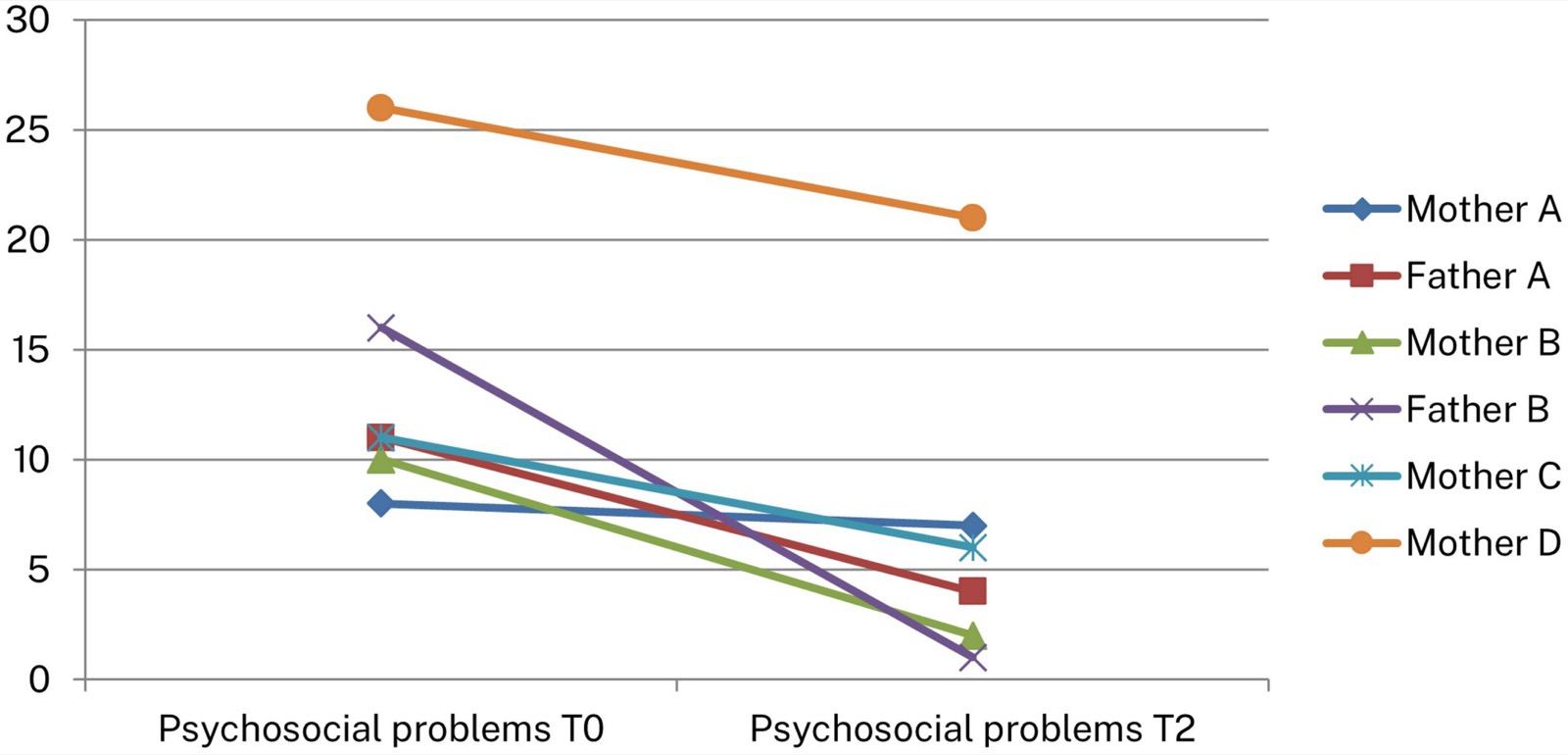
Table 3 — Wilcoxon signed-rank test of parent-reported psychosocial problems (SDQ total score, N = 6).
- Z-score; ∆ psychosocial problems T0 – T2: −2.207a
- Asymptotic significance (two-tailed); ∆ psychosocial problems T0 – T2: 0.027
a Based on positive ranks.
DISCUSSION AND CONCLUSION
In this pilot study, we investigated the influence of the NVR parent training on parenting stress and parent–child interaction of parents of adolescents with AN. These preliminary results are promising and warrant further research. Firstly, a decrease in the total parenting stress score was found after participation in the parent training NVR. Secondly, for parent–child interaction, no significant change from T0 to T1 and from T1 to T2, but a non-significant trend from T0 to T2, was found. A possible explanation for this result may the fairly high levels of positive parent–child interaction at the start of the study. It is unclear whether social desirability had an impact on how the parents completed the parent–child interaction measure. Thirdly, a positive change was also found for parent-reported psychosocial problems of their AN-diagnosed offspring. Lastly, a change in BMI was not significantly associated with a change in parenting stress. This lack of a correlation between parenting stress and BMI is not unique. Matthews et al. (2018) already found that parents' subjective perception of the consequences of their child's AN is indicative of parenting stress, independent of the severity of the symptoms of the AN.
This pilot is the first study into the outcomes of NVR treatment for parents of adolescents with AN. Future research should focus on testing the effectiveness of NVR, in a larger, more controlled design. Since this was an open pilot study, it is possible that the found changes in parenting stress and psychosocial problems can be attributed to care-as-usual the families received parallel to the NVR treatment. In the current pilot, BMI was used as outcome. However, for future studies, covering a larger time period, weight gain might be a better outcome, because the weight/length ratio changes with increasing length. Furthermore, other outcomes should be considered as well, for example, parenting style, attachment, parental quality of life and other recovery parameters of AN. Other suggestions are to examine mediating factors, such as treatment length, amount of hospital admissions and the modality of the treatment (in our outpatient treatment programme). Family accommodation can be also be considered as mediating factor, since recently a network analysis showed that accommodation indeed was involved in the maintenance of AN (Monteleone et al., 2023).
Although preliminary, the results of this pilot study suggests that NVR may be a feasible treatment alternative for families of youth with AN. More specifically, when accommodating behaviour of parents is a core element in the eating disorder symptoms, NVR may be considered as an add-on to care-as-usual. Furthermore, NVR can be applied even when the adolescent refuses treatment, so NVR offers an additional option for parents, next to the family therapy options already available. Future research should examine the effectiveness of NVR in reducing parenting stress, improving parent–child interaction and AN outcomes.
APPENDIX 1: NON-VIOLENT RESISTANCE
- Self-control/de-escalating: self-destructive behaviour of the adolescent often elicits two reactions from parents. Either parents clash with their child (i.e. symmetrical escalation, for example, insisting that the adolescent eats) or they give in (i.e. complementary escalation, for example, ignoring the negative behaviour). Both have negative consequences. By clashing with their child, the mutual hostility increases and the adolescent will try harder to persist in the self-destructive eating behaviour. By giving in, the demands of the adolescent and the eating disorder will increase. Parents work towards resisting the behaviour, rather than controlling it, and also to focus on their own behaviour, rather than on their child's behaviour. In de-escalating, parents are taught to postpone their (primal) reaction, to have more self-control over their own behaviour.
- Presence: presence of parents can be decreased, either mentally or physically, as a result of the eating disorder. Mentally, the eating disorder dominates the thoughts of an adolescent, leaving less space for parents. Physically, adolescents withdraw to their bedroom or spend more and more time on social media. In NVR, parents are trained to increase their presence, physical (to eat more proximate when an adolescent insist to eat on their own room) as well as mental (by texting the adolescent with merely supporting or loving messages or leaving notes in the bedroom)
- Social support: families of a child with an eating disorder get more and more isolated from social contacts, for several reasons, for example, taboo talking about the eating disorder or inviting friends or family over less. To receive help in their struggles, parents can seek social support from their network, by asking family, friends, neighbours or other relatives, to help in fighting the eating disorder. Each member of the network can have their own way of helping. For example, they can go out with the adolescent, go out with parents or just provide mental support via texts or calls.
- Resistance to destructive behaviour: since the self-destructive eating behaviour can be very persistent, the abovementioned three principles are not always sufficient for parents. In this situation, they can decide to actively resist the behaviour of their child. They are asked to list several problematic behaviours and decide which to target first. This can be their child's behaviour (refusing food, excessive moving or vomiting) or their own (buying specific food, places the family members eat or not inviting others over for dinner). By targeting specific behaviour, the programme aims to get parents to agree more easily and have less discussion about how to act. Furthermore, NVR provides them with several intervention techniques. ‘Reparation acts’ or ‘reconciliation gestures’ are behaviours intended to repair damaged relationships and to address the responsibility of the child. The child is requested to make a clear apology accompanied with a symbolic act of compensation. ‘Request for solution’ can be a next step, when multiple reparation acts have been requested, but the destructive behaviour continues to exist. With requesting the child to come up with the solution, again the responsibility and autonomy of the child is reinforced. The ‘announcement’ is a semi-formal message from parents to the child, in which they declare that they will resist the (self-)destructive behaviour and will no longer keep it secret. This can be seen as opening to a new phase, in which parents state their position in a self-controlled manner. Finally, the ‘sit-in’ concerns the entering of the child's room by parents (either accompanied by a supporter in person or via technology), after which parents state something like ‘We are here because we are no longer willing to accept the kind of (self-)destructive behaviour that you displayed today. We will sit here and wait for a proposal as to how this behaviour might end’. Then, parents stay silent, for 30–60 min. For all intervention techniques, parents are supported in preparing the intervention, as well as coping with the possible responses of the child to the intervention.
Complexe Systémique: key points
This tiny pilot (six parents, four adolescent girls, no control group) is valuable above all for the question it raises: what if anorexia were addressed by starting with the parents' position? Haim Omer's non-violent resistance shifts attention from the symptom to the relational loop that sustains it: accommodation (separate meals, compulsory presence, concessions) and symmetrical escalation feed each other, and the eating disorder gains ground. Presence, de-escalation, calling on the network and reconciliation gestures aim to break out of the choice between giving in and clashing, without waiting for the child's agreement. The results remain fragile: parenting stress falls mainly between the end of the training and follow-up, families were receiving family-based treatment in parallel, and the lack of association with BMI is a reminder that parents' experience and somatic change follow different timelines. For clinical work, the interest is concrete: when the child refuses care, parents have a lever that does not depend on their consent. Read alongside the technique drawn from non-violent resistance for aggression in adolescence, and the overview of treatments for anorexia and bulimia.
Notes from the original
Acknowledgements. The authors want to thank the participating parents and adolescents, as well as the therapists that provided the NVR group treatment.
Funding information. No funding supported the research described in this paper.
Conflict of interest statement. The authors report there are no competing interests to declare.
Ethics and integrity statement. In conducting this study, the authors state that they followed the appropriate ethical guidelines. The fundamental rights of participants have been respected.
References
American Psychiatric Association. (2013). Diagnostic and statistical manual of mental disorders (5th ed.). https://doi.org/10.1176/appi.books.9780890425596
Anastasiadou, D., Medina-Pradas, C., Sepulveda, A.R. & Treasure, J. (2014) A systematic review of family caregiving in eating disorders. Eating Behaviors, 15(3), 464–477. Available from: https://doi.org/10.1016/j.eatbeh.2014.06.001
Arcelus, J., Mitchell, A.J., Wales, J. & Nielsen, S. (2011) Mortality rates in patients with anorexia nervosa and other eating disorders: a meta-analysis of 36 studies. Archives of General Psychiatry, 68(7), 724–731. Available from: https://doi.org/10.1001/archgenpsychiatry.2011.74
Coomber, K. & King, R. (2012) Coping strategies and social support as predictors and mediators of eating disorder carer burden and psychological distress. Social Psychiatry and Psychiatric Epidemiology, 47, 789–796.
Dobrescu, S.R., Dinkler, L., Gillberg, C., Råstam, M., Gillberg, C. & Wentz, E. (2020) Anorexia nervosa: 30-year outcome. The British Journal of Psychiatry, 216(2), 97–104. Available from: https://doi.org/10.1192/bjp.2019.113
Dutch Centre of Youth Health. (2013) Guideline: nutrition and eating behavior.
Fox, J.R. & Whittlesea, A. (2017) Accommodation of symptoms in anorexia nervosa: a qualitative study. Clinical Psychology & Psychotherapy, 24(2), 488–500.
Goedhart, A., Treffers, F. & Widenfelt, B. (2003) Vragen naar psychische problemen bij kinderen en adolescenten: de Strengths and Difficulties Questionnaire (SDQ). Maandblad Geestelijke Volksgezondheid, 58, 1018–1035.
Herpertz-Dahlmann, B., Elburg, A., Castro-Fornieles, J. & Schmidt, U. (2015) ESCAP expert paper: new developments in the diagnosis and treatment of adolescent anorexia nervosa – a European perspective. European Child and Adolescent Psychiatry, 24, 1153–1167.
Hughes, E.K., Sawyer, S.M., Loeb, K.L. & Le Grange, D. (2015) Parent-focused treatment. Family Therapy for Adolescent Eating and Weight Disorders. London, UK: Routledge, pp. 79–91.
Kyriacou, O., Treasure, J. & Schmidt, U. (2008) Understanding how parents cope with living with someone with anorexia nervosa: modelling the factors that are associated with carer distress. International Journal of Eating Disorders, 41, 233–242.
Lange, A. (2001) De Ouder-Kind Interactie Vragenlijst – Revised. Houten: Verantwoording en Handleiding. Bohn Stafleu Van Loghum.
Lange, A., Blonk, R., Wiers, R. & Schaar, D. (1997) De ouder–kind interactie vragenlijst (OKIV). Kind en Adolescent, 18, 10–23.
Lock, J. (2015) An update on evidence-based psychosocial treatments for eating disorders in children and adolescents. Journal of Clinical Child and Adolescent Psychology, 44, 707–721.
Matthews, A., Lenz, K.R., Peugh, J., Copps, E.C. & Peterson, C.M. (2018) Caregiver burden and illness perceptions in caregivers of medically hospitalized youth with anorexia nervosa. Eating Behaviors, 29, 14–18. Available from: https://doi.org/10.1016/j.eatbeh.2018.01.003
Monteleone, A.M., Cascino, G., Salerno, L., Schmidt, U., Micali, N., Cardi, V. et al. (2023) A network analysis in adolescent anorexia nervosa exploring the connection between both patient and carer reactions and outcome. European Eating Disorders Review, 31(1), 65–75. Available from: https://doi.org/10.1002/erv.2933
Nicholls, D. (2023) Editorial perspective: a perfect storm – how and why eating disorders in young people have thrived in lockdown and what is happening to address it. Journal of Child Psychology and Psychiatry, 64(2), 335–338. Available from: https://doi.org/10.1111/jcpp.13676
Ohara, C., Komaki, G., Yamagata, Z., Hotta, M., Kamo, T. & Ando, T. (2016) Factors associated with caregiving burden and mental health conditions in caregivers of patients with anorexia nervosa in Japan. BioPsychoSocial Medicine, 10(1), 21. Available from: https://doi.org/10.1186/s13030-016-0073-5
Omer, H. & Lebowitz, E. (2016) Nonviolent resistance: helping caregivers reduce problematic behaviors in children and adolescents. Journal of Marital and Family Therapy, 42, 688–700.
Omer, H. & Wiebenga, E. (2015) Geweldloos verzet in gezinnen. Een nieuwe benadering van gewelddadig en zelfdestructief gedrag van kinderen. Houten: Bohn Stafleu van Loghum.
Ottenbros, R. & Stelt, M. (2016) Draaiboek oudertraining Geweldloos Verzet en Verbindend Gezag. Amsterdam: Interne publicatie. De Bascule/Levvel.
Rhind, C., Salerno, L., Hibbs, R., Micali, N., Schmidt, U., Gowers, S. et al. (2016) The objective and subjective caregiving burden and caregiving behaviours of parents of adolescent with anorexia nervosa. European Eating Disorders Review, 24, 310–319.
Salerno, L., Rhind, C., Hibbs, R., Micali, N., Schmidt, U., Gowers, S. et al. (2016) An examination of the impact of care giving styles (accommodation and skilful communication and support) on the one year outcome of adolescent anorexia nervosa: testing the assumptions of the cognitive interpersonal model in anorexia nervosa. Journal of Affective Disorders, 191, 230–236.
Shimshoni, Y., Omer, H. & Lebowitz, E.R. (2022) Non-violent resistance and family accommodation: a trans-diagnostic solution to a highly prevalent problem. Family Process, 61(1), 43–57. Available from: https://doi.org/10.1111/famp.12706
Smink, F., Hoeken, D., Oldehinkel, A. & Hoek, H. (2014) Prevalence and severity of DSM-5 eating disorders in a community cohort of adolescents. International Journal of Eating Disorders, 6, 610–619.
Smink, F.R.E., van Hoeken, D., Donker, G.A., Susser, E.S., Oldehinkel, A.J. & Hoek, H.W. (2016) Three decades of eating disorders in Dutch primary care: decreasing incidence of bulimia nervosa but not of anorexia nervosa. Psychological Medicine, 46(6), 1189–1196. Available from: https://doi.org/10.1017/S003329171500272X
Talma, H., Schonbeck, Y., Bakker, B., Hirasing, R.A. & Buuren, S. (2010) Groeidiagrammen 2010. Den Haag: Koninklijke de Swart.
Taquet, M., Geddes, J.R., Luciano, S. & Harrison, P.J. (2022) Incidence and outcomes of eating disorders during the COVID-19 pandemic. The British Journal of Psychiatry, 220(5), 262–264. Available from: https://doi.org/10.1192/bjp.2021.105
Theunissen, M., de Wolff, M., Vugteveen, J., Timmerman, M. & de Bildt, A. (2019) Handleiding voor Het gebruik van de SDQ bij adolescenten (12–17 jaar) binnen de Jeugdgezondheidszorg. Vragenlijst voor Het signaleren van psychosociale problemen. Leiden: TNO.
Treasure, J., Rhind, C., Macdonald, P. & Todd, G. (2015) Collaborative care: the new Maudsley model. Eating Disorders, 23(4), 366–376. Available from: https://doi.org/10.1080/10640266.2015.1044351
Treasure, J. & Schmidt, U. (2013) The cognitive-interpersonal maintenance model of anorexia nervosa revisited: a summary of the evidence for cognitive, socio-emotional and interpersonal predisposing and perpetuating factors. Journal of Eating Disorders, 1(1), 13. Available from: https://doi.org/10.1186/2050-2974-1-13
Van Gink, K., Visser, K., Popma, A., Vermeiren, R., Domburg, L., Stegen, B. et al. (2018) Implementing non-violent resistance, a method to cope with agression in child and adolescent residential care: exploration of staff members experiences. Archives of Psychiatric Nursing, 32, 353–359.
Van Son, G.E., Hoeken, D., Bartelds, A.I.M., Furth, E.F. & Hoek, H.W. (2006) Time trends in the incidence of eating disorders: a primary care study in The Netherlands. International Journal of Eating Disorders, 39, 565–569.
Vermulst, A., Kroes, G., Meyer, R., Nguyen, L., Veerman, J.W. & Omer, H. (2015) Handleiding OBVL. Journal of Family and Marital Therapy, 34, 75–92.
Weinblatt, U. & Omer, H. (2008) Nonviolent resistance: a treatment for parents of children with acute behavior problems. Journal of Marital and Family Therapy, 34(1), 75–92. Available from: https://doi.org/10.1111/j.1752-0606.2008.00054.x
Zabala, M.M., Macdonald, P. & Treasure, J. (2009) Appraisal of caregiving burden, expressed emotion and psychological distress in families of people with eating disorders. European Eating Disorders Review, 24, 310–319.
Reformatted republication of Non-violent resistance treatment for parenting stress and parent–child interaction in parents of adolescents with anorexia nervosa: A pilot study, by Irene G. Meijer, Luuk Stapersma, Leonieke Terpstra, Joost P. van der Mandele and Elisabeth M. W. J. Utens, Journal of Family Therapy, vol. 46, no 3 (2024), doi: 10.1111/1467-6427.12455, under a CC BY 4.0 licence. Edition and layout: Complexe Systémique, September 2026 — the work has been modified under the terms of the licence. Neither the authors nor the publisher are responsible for this edition; the original version prevails.
This is the original article “Non-violent resistance treatment for parenting stress and parent–child interaction in parents of adolescents with anorexia nervosa: A pilot study”, published in Journal of Family Therapy (2024) under a CC BY 4.0 licence. Republished by Complexe Systémique: the author’s text is unchanged; only the presentation has been adapted for reading online, as set out at the head of this page.
Read the original articleHow to cite this article
Meijer, I. G., Stapersma, L., Terpstra, L., van der Mandele, J. P., et Utens, E. M. W. J. (2024). Non-violent resistance treatment for parenting stress and parent–child interaction in parents of adolescents with anorexia nervosa: A pilot study. Complexe Systémique. https://app.complexe-systemique.com/en_GB/articles/non-violent-resistance-treatment-for-parenting-stress-and-parent-child-interaction (Original work published in 2024 in Journal of Family Therapy, 46(3), 231-244 (2024); republished in 2024 by Journal of Family Therapy, https://onlinelibrary.wiley.com/doi/full/10.1111/1467-6427.12455)
To go further
- Stopping teenagers' aggressive behaviour: a surprising techniqueA technique drawn from non-violent resistance.
- Anorexia and bulimia: what you need to know. Treatments for eating disordersTreatments for anorexia.
- Beyond the project of anorexia nervosa: Integrating White’s externalizing conversations and Sartre’s existential approach to empower a new sense of agencyAnother reading of anorexia.
Related training courses
 Short course
The suicidal crisis in adolescents and young adults
Training: assessing and supporting the suicidal crisis in adolescents and young adults. Clinical landmarks and systemic tools. In French.
 Symposium
The Abnormal Normals and the Normal Abnormals
Conference replay: six clinicians explore normality — diagnoses, norms, adolescents, therapists. Immediate, lifetime access. Talks in French.
Related articles
 Article
 How Venezuelan mothers and their young children use storytelling to process immigration journeys
Seven Venezuelan mothers tell their young children about crossing the Darién: shared memories or superhero tales, six ways of facing fear together.
 Article
 The AFFIRM Model for Navigating Challenges in Continuously-Interfaith and Divergent-Interfaith Marriages
Thirty happy interfaith couples describe how they navigate their religious differences: five processes, from respecting each other’s choices to religious intimacy, gathered in the AFFIRM model.
 Article
 Parenting after critical illness: a biopsychosocial review of post-intensive care syndrome, family systems, and child outcomes
After post-intensive care syndrome, parenting falters, the co-parent is worn down and children help in silence. A biopsychosocial review proposes how to spot them.
 Article
 Are You Qualified, ChatGPT? Examining Clinical Skills and Competencies of ChatGPT in Delivering Systemic Interventions
A GPT trained in systemic interventions, blind-rated by twelve clinical supervisors: a rushed, dominating novice, whom the client nonetheless loved.