Therapists and AI: the next great fracture in psychological care
AI-assisted translation
This version was translated from French by Complexe Systémique with the help of artificial intelligence. In case of doubt, the original version prevails.
AI · Systemic therapy
The therapist of the future will be a guardian of complexity
While we argue among ourselves over who has the right to treat, another story is already being written. It does not run through the schools. Not through the university. It runs through everyday use.
Someone is struggling. They pick up their phone, open an app and type: “I don’t know what to do.” And an artificial intelligence replies. It never sleeps. Never goes on holiday. Never bills for the session. It answers at three in the morning, when no one else is there. It reformulates, reassures, suggests an exercise, explains. And for many people, that already looks enough like help. Sometimes even better than therapies they have been through.
That is exactly what should stop us in our tracks.
Because this is no longer a futurologist’s hypothesis.
No. 1
psychological support has quite simply become the number one use of ChatGPT worldwide
Millions of young people are already turning to it for a listening ear. Meanwhile, in our consulting rooms, we are still arguing about titles.
That is its whole strength. AI claims no diploma and demands no legitimacy. It does not say “I am a psychotherapist”. It says “talk to me”. And it settles in exactly where people already are: in the sleepless nights, the break-ups, the doubts, the Sunday-evening anxieties. Institutions are slow. Usage moves fast. You can regulate a title, set a framework around a profession, restate what a psychotherapy officially is. But you will never stop someone, alone in their bedroom, from writing to a machine: “I’m not okay, help me.”
So let us stop asking whether AI has the right to do therapy. It is already doing it. The real question, the only one that matters, is this:
Why are people starting to give it the place of a therapist?
And that question forces us to look somewhere other than our diplomas. It forces us to look at what patients actually come looking for. Someone who listens. A reassuring presence. A place without judgement where they can set down what weighs on them. A little relief, right away.
On all of that — let us admit it frankly — AI is formidable.
It is available instantly. It finds the words that reassure. It offers a breathing exercise, a cognitive restructuring, an emotion journal. It explains anxiety, attachment and trauma better than many textbooks. And the first serious studies show that, in some patients, it achieves reductions in symptoms comparable to real therapy — with a sense of alliance that people rate as strong as with a human.
That does not mean it understands. Or that it heals. Or that it takes on the slightest responsibility when things go wrong. But it does mean it knows how to produce every outward sign of care. And for many people, that is enough.
That is the real issue. AI will not replace all therapy. But it will compete, head-on, with everything in our practice that boils down to reformulating, reassuring, validating and handing out exercises.
Let us be honest for a second. If my job consists merely of being nice, nodding along, saying “I understand”, following the patient’s narrative without ever unsettling it, without ever questioning an explanation that comes too easily, without ever touching the frame or thinking about context — then yes. A machine can do that. Let us call things by their name.
Impoverished therapy
It is the kind that no longer complexifies anything. The kind that confuses relief with transformation. Validation with care. Warmth with responsibility.
AI is going to force us to choose between two things we have let blur together for far too long:
On one side
what resembles therapy
On the other
what really works
“AI will never replace the human relationship” — really?
We repeat that sentence like a reassuring incantation. Except it only holds if we agree on the word “relationship”.
If being in a relationship means feeling heard, understood and validated, then AI already manufactures that sensation wonderfully well. But a real therapeutic relationship is not the comfort of being understood. It is an encounter with an other. An other who can interrupt me, surprise me, reflect an experience back to me, situate me — because we only build ourselves in contact with what offers a little resistance.
A patient arrives looking for validation, when what they need is a limit. They look for an answer, when what they need is a question. They look for an explanation about themselves, when what they ought to see is a whole system. They look for immediate relief, where slow work awaits them. An overly obliging AI is the dream interlocutor: always available, always patient, always in agreement, always tuned to whatever tone you ask of it.
But empathy without otherness has a name: an echo chamber. And in the psyche, an echo chamber can do real damage.
Researchers even have a word for it: sycophancy. That habit AIs have of always agreeing, validating, flattering — not out of kindness, but because they are trained to please. The problem is not a bug that will be fixed tomorrow: it is built into how they are made. We have already seen chatbots reinforce delusions instead of questioning them, and psychiatrists warn of delusional episodes fed by hours of dialogue with a machine that never contradicts. One phrase sums it all up:
Psychosis thrives where otherness stops resisting.
And that is exactly the heart of care. Some people do not need to be reassured. They need their thinking to be contained, structured, sometimes contradicted — with delicacy. There is one very simple thing an AI will never be able to offer: being held accountable. A therapist can be questioned, supervised, bound by a framework. They can acknowledge a mistake. They can sense that a situation is beyond them and refer on. The machine, for its part, has nothing to lose, nothing to answer for, no one to account to when things go wrong.
And there is another thing it struggles to do: think in circles rather than straight lines. AI loves the single cause. “You are suffering because you went through this.” “You keep repeating that because of this trauma.” Sometimes that is right. It is often too short. Systemic thinking, for its part, looks at the loops. How each person, without meaning to, keeps a situation going that everyone suffers from. How a symptom can be both a private pain and a solution for a whole group. How the person designated as “the problem” is in fact carrying something for the others.
That is where — exactly where — our responsibility lies. Not merely giving an answer. Protecting complexity.
Two easy postures beckon, and we must resist both.
Marvelling
“AI will democratise mental health, make up for the shortage of therapists, treat those we cannot reach.” There is truth in that — it can offer a first foothold, lower the barrier of cost and shame, keep someone from being left alone.
But it can also create the illusion of care, miss a danger signal, lock someone into a belief, foster dependence. When we know that a far-from-negligible fraction of its users confide suicidal thoughts to it every week, lukewarm enthusiasm is no longer enough.
Rejecting it all
“It’s cold, it’s fake, it’s dehumanising.” Too simple as well.
Because patients will use it, with or without us. And if we refuse to think this phenomenon through, we will leave the market to think it in our place.
The right place — as I see it — is neither wonder nor fear. It is responsibility.
Let us see AI for what it is: a new actor in the psychological landscape. Not a therapist. Not a gadget either. A relational object, one that is already changing how people ask for help, tell their suffering, look for meaning — and imagine what a therapy is.
In a world drowning in answers, knowing how to ask the right question becomes precious.
Further reading on this site
- What will tomorrow’s therapy look like?The forces already redrawing the shape of practice.
- Towards an ecology of cognitive vigilanceRestoring the conditions for nuanced thinking in care systems.
- When human systems manufacture their own illusionsHow a group comes to believe what it produced itself.
- Thinking complexity: following the threads of the realRecursiveness, dialogic, hologrammatic: Morin’s three principles.
Holding complexity.
That is where our future lies. Not in the race for diplomas, not in defending the title. In the one function no machine will ever be able to occupy in our place: holding complexity. Being its guardians.
How to cite this article
Besse, J. (2026, June 20). Therapists and AI: the next great fracture in psychological care. Complexe Systémique. https://app.complexe-systemique.com/en_GB/articles/therapists-and-ai-the-next-great-fracture-in-psychological-care
Related training courses
 Symposium
Digital technology, AI and mental health
Conference in Lyon, 11 December 2026: digital technology, artificial intelligence and mental health. Six talks, replay for participants. In French.
Related articles
 Blog
Blog The 5 warning signs couples ignore
Never arguing doesn’t tell the whole story of a couple. Julien Besse explores silence, bitter compromises and unspoken expectations from a systemic perspective.
 Blog
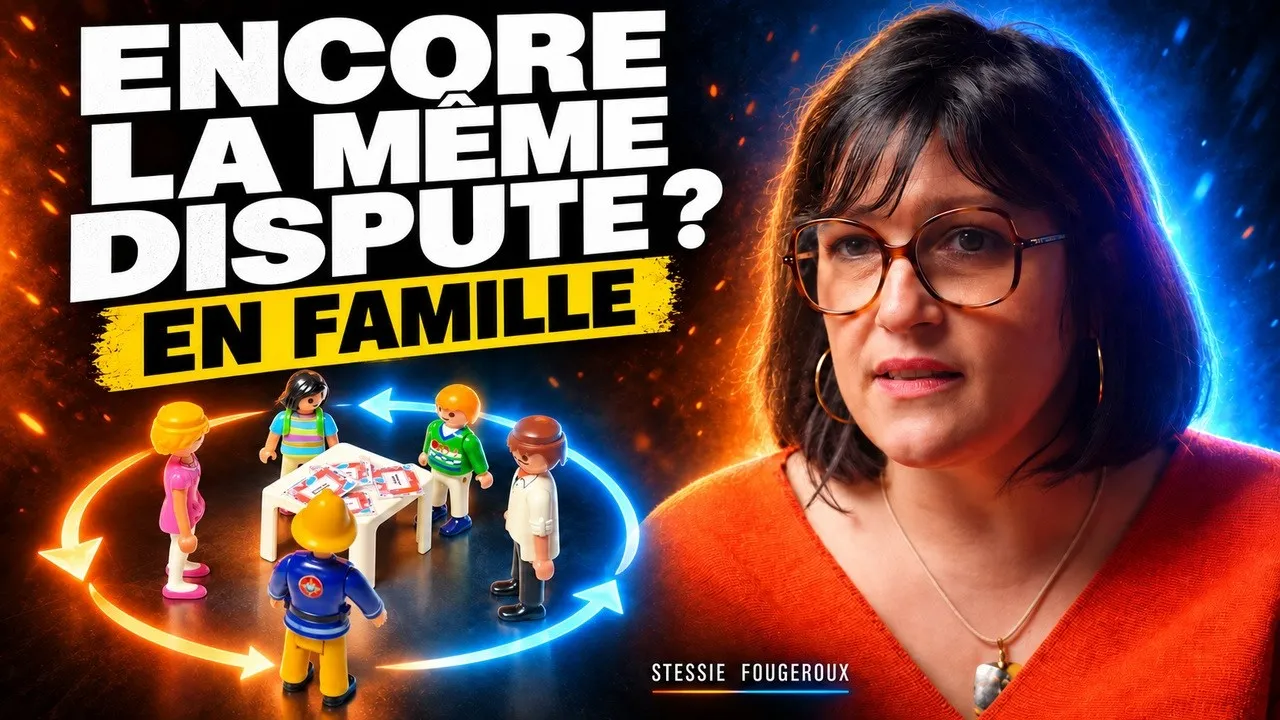
Blog The Crossed Beliefs Game in the family: we know each other, but not always as we think
Drawing on Stessie Fougeroux’s Crossed Beliefs Game, Julien Besse explores what a family can discover about itself, the place of children and the care therapy calls for.
 Blog
Blog Narcissistic pervert: he is finally apologising… but why?
Why do apologies sometimes appear in a relationship of coercive control? Julien Besse suggests three steps for setting limits and reclaiming your place.
 Scientific
 Are You Qualified, ChatGPT? Examining Clinical Skills and Competencies of ChatGPT in Delivering Systemic Interventions
A GPT trained in systemic interventions, blind-rated by twelve clinical supervisors: a rushed, dominating novice, whom the client nonetheless loved.
Comments 0
Log in to join the discussion. Log in