The project · Systemic management
Work is a story of bonds: our systemic management project
There is one ambition that drives me at Complexe Systémique: to make the systemic approach accessible and to help it find its place wherever it can be useful. In supporting individuals, couples and families, of course. But also in those places where we spend a large part of our lives, where we try to build something together, and where human relationships can support us just as much as they can put us in difficulty: our workplaces.
We bring our skills, our ideas and our wish to do things well. We also invest something more personal: our need for recognition, our relationship with authority, the way we find our place, our fear of disappointing others or of not being heard. All of this meets an organisation, economic constraints, a collective history, rules that are sometimes very clear and others that nobody has ever really put into words.
It is in this encounter that work becomes possible. It is also where certain situations become complicated.
A manager keeps adding checks because he fears his team lacks autonomy. The team members, feeling less and less free to make decisions, wait for his instructions. He sees this as confirmation that he has to supervise everything. Everyone can explain, quite sincerely, what leads them to act this way. And everyone ends up, despite themselves, reinforcing what weighs on them.
This kind of situation is exactly where a systemic perspective proves its worth. It invites us to observe how one person’s responses become another’s context, how a difficulty takes hold, and where it might be possible to try something different.
It is in this spirit that we are building the Systemic Management department of Complexe Systémique.
We want it to be a living space for transmission, reflection and experimentation for people who lead, manage, support or take part in the life of organisations. The business world holds an important place there, alongside non-profits and institutions. Everywhere, cooperation means dealing with people, responsibilities and realities that can never be entirely foreseen.
Five of us are carrying this project: Damien Légère, head of the department, Marie-Anne Perrey, Claudio Godoy, Yara Doumit, head of teaching and learning at Complexe Systémique, and myself, Julien Besse, as director.
What I like about this team is the diversity of experience from which each of us thinks about human relationships. We share an orientation, while following different paths and having different sensibilities and fields of practice. I want this diversity to nourish what we are going to build.
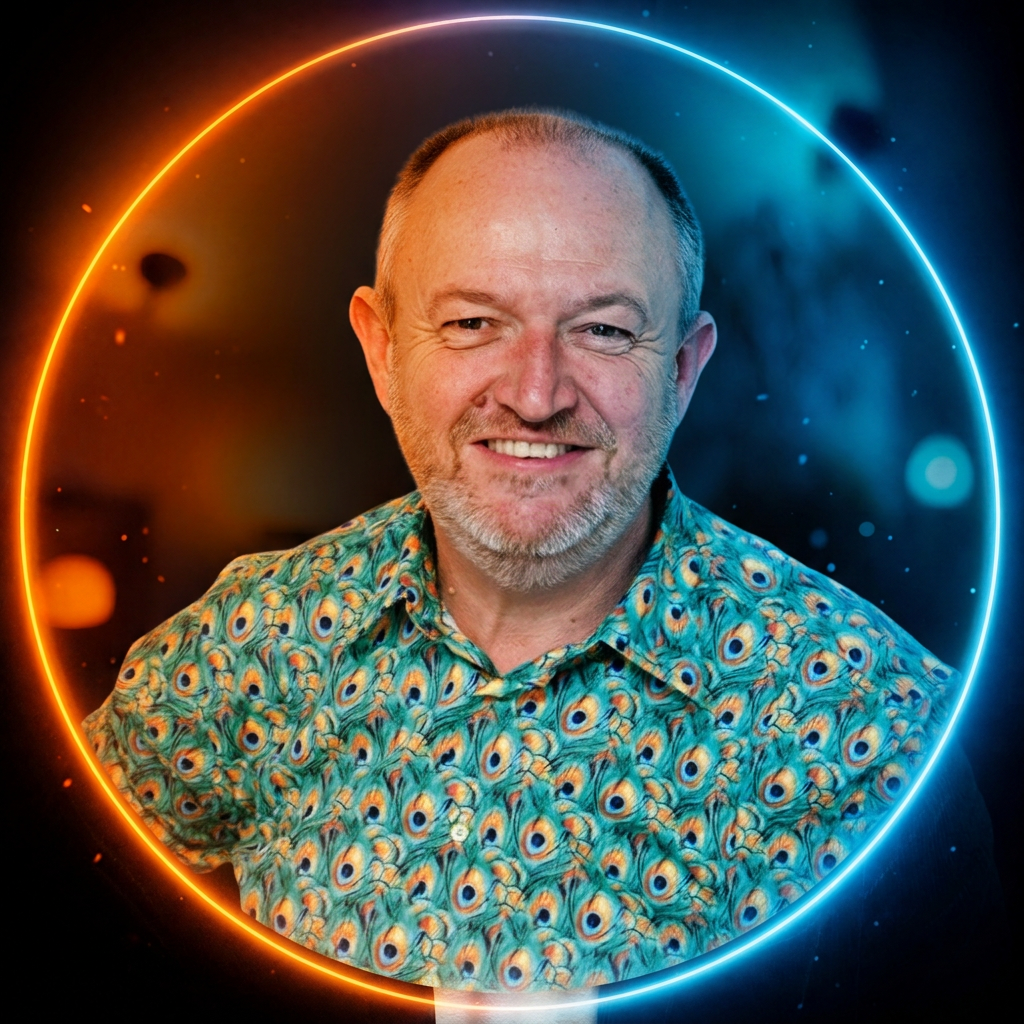
Damien Légère
Head of the Systemic Management department – Systemic practitioner – Psychologist
I come from the non-profit sector.
For more than thirty-five years, my professional path has been built within social and medico-social organisations. Committing to a collective project matters a great deal to me: contributing to something bigger than ourselves and taking part in a shared energy.
It was in this professional world that I encountered systemic thinking, first in supporting children and families, then in working with professionals through supervision. Little by little, this way of looking at situations became much more than a method of intervention: a way of thinking about and looking at the world.
A recent period in my professional life led me to question in depth the way I exercised leadership. It was essential to understand how a difficult situation could have emerged in a system in which I myself was taking part. Opening an introduction by stating a difficulty may seem unusual. Yet it is quite representative of the way I think: I am wary of positions of absolute knowledge and prefer people who are able to doubt, to look at their own difficulties and to question what they are part of.
Looking at one’s successes as well as one’s difficulties means, for me, being willing to draw on experience. Whether in therapy, supervision, training or management consulting, I favour an experiential approach, not only because it increases our knowledge, but above all because it transforms us.
I became interested in what happens when we look at a non-profit organisation as a human system: not as an assembly of individuals who simply need to be made to work together, but as a living whole, shaped by histories, relationships, alliances and coalitions, tensions and crises, rules and constant movement.
I developed this thinking in a master’s degree in business and public administration management. My dissertation was entitled “How the systemic approach can help managers of non-profit organisations support processes of change”. This led me to develop what I call systemic process management. I became interested in the processes through which an organisation transforms itself.
A manager’s role is like a gardener’s: the gardener does not make the plants grow, but prepares the ground, creates the conditions, tends, observes, adjusts… and accepts that part of what will come about lies beyond their control.
Systemic thinking invites us to leave behind a logic in which someone carries the problem and someone else holds the solution; in which there are good people and bad people. It leads us instead to look at what is being built in relationships, at what helps to maintain a situation and at what may allow it to change. Managers are never outside what they observe. In the current climate, this way of thinking seems particularly necessary to me: it invites us to resist polarisation and scapegoating.
It is this experience that I now wish to share within the Management department of Complexe Systémique: not to pass on a new method, but to offer a collective space in which to look at situations differently, to work on our own representations and to experiment with other ways of intervening.
With, at heart, a simple question: in a given situation, what is the next possible move?
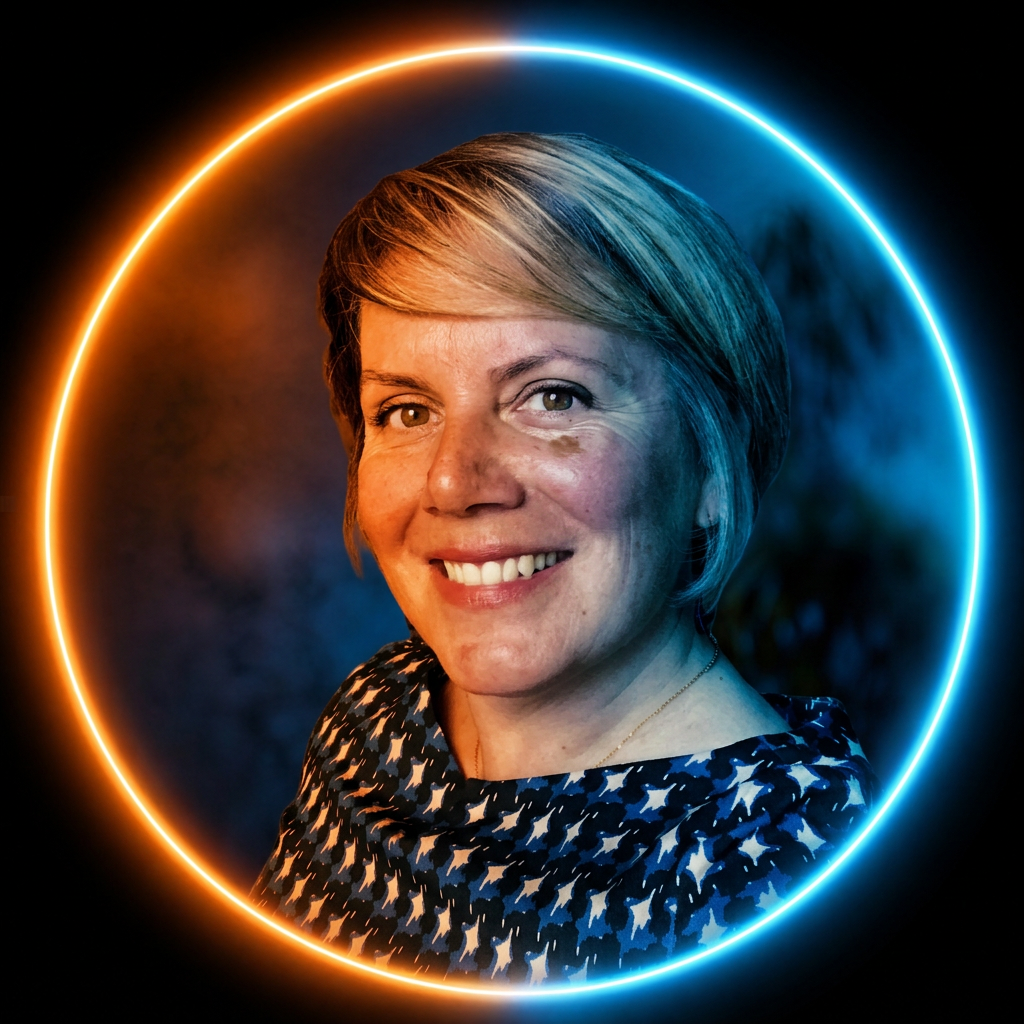
Marie-Anne Perrey
Occupational psychologist – Systemic therapist – Consultant in human and organisational dynamics – Mental performance coach
I am an occupational psychologist, a systemic therapist, a consultant to organisations and a mental performance coach. These practices might seem quite far apart, yet for me they ultimately speak of the same thing: people, relationships, contexts… and what makes it possible to get moving again when something has become a little too stuck.
I support individuals, couples and athletes, but also teams, managers and organisations facing complex human situations. I love this variety of settings. It feeds my curiosity and, above all, it has taught me to be wary of overly simple explanations.
Because I have rarely come across a “problem” that came down to a single person.
A couple who can no longer talk to each other, an athlete who can no longer perform to their potential when the stakes are high, an employee who is burning out, a manager in difficulty or a team that is tearing itself apart: behind what can be seen, something more complex is usually at play.
That is precisely where I like to look.
Understanding what is happening between people, around them and sometimes in spite of them. Exploring the context, the interactions, the history, the constraints, the representations, but also the resources and strengths at hand. Asking not so much “who is the problem?” as “what is happening here, and what could allow the situation to evolve?”
The systemic approach therefore found its way quite naturally into my practice. It matches the way I think and work: changing focus, shifting perspective, questioning what seems obvious and sometimes looking somewhere other than where the problem seems to lie.
In organisations, this way of looking at situations takes on a particular resonance. When a conflict sets in, when a team stops cooperating, when a manager is put in difficulty or when an employee burns out, it is very tempting to look for the person at the root of the problem. My work as a consultant consists rather in widening the lens: looking at the interactions, the framework, the constraints, the organisation of work and the attempts at regulation already in place. Not to dilute individual responsibility, but to understand what the system produces and what could allow it to function differently.
My mental performance work with athletes also greatly informs this perspective. It reminds me that performance, like difficulty, is never solely a matter of talent, willpower or individual qualities. We always act within a context, with something at stake, with emotions, representations, an environment and resources that are more or less accessible at that moment.
I particularly love those moments when something “clicks”. Not necessarily a great revelation. Sometimes a question, a change of perspective or a different experience is enough to bring within reach what had until then seemed out of reach.
In the end, whatever my field of intervention, one question often comes back: what is possible, here and now, for something to start moving?
I do not try to tell people what they should do, nor to lead them towards an answer that would be “the right one”. In any case, there is probably no right answer independent of the person — or the system — who will have to live with it. I prefer to help each person find the one that suits them, that takes account of their context, their resources and what really matters to them.
That is probably where my optimism lies. Not in the idea that everything necessarily works out in the end, but in the conviction that a situation often contains more possibilities than we are able to see when we are caught up in it.
My work then consists in helping to bring them to light. And because the situations people bring me are often serious enough as it is, I like to work seriously without necessarily taking myself too seriously.
A slightly unexpected question, a smile or that little touch of mischief that is also part of who I am can sometimes create just enough of a shift to see differently what seemed insoluble. It is not about minimising the difficulty. The mountain is still there. But if it can gradually take on the proportions of a hill, then we can once again begin to imagine how to cross it.
Finally, I give an essential place to the power to act. For me, supporting someone does not mean knowing better than they do what would be good for them. It means creating a space safe enough to set down what weighs on them, understand what is at play, bring out the resources available and sometimes discover new ones. And then to regain some room for manoeuvre and choose how they wish to move forward.
This is probably what best connects all my practices:
Understanding without confining. Questioning without judging. Bringing out resources rather than pointing out shortcomings. Creating the conditions for the click. And bringing movement back where people had come to believe there was none left.
It is also, after all these years, what still makes me want to do this work.

Claudio Godoy
Systemic psychotherapist – Expert in organisational dynamics
My vision of systemic support
“If there is one thing I believe in deeply, it is your ability to be well.”
In my practice, I hold firmly to a simple idea: every person, every couple and every system has resources, which may have become hard to mobilise but have never entirely disappeared. My role is to create the conditions needed for these resources to become accessible again.
When we meet, I do not position myself as the expert who comes to rescue you or to impose ready-made solutions. You have moved forward, grown and functioned until now thanks to your own skills. I am there to help you recognise them, set them in motion again and develop them.
Sometimes life’s journey takes us down side paths. We may then feel that we have lost our way. This is not necessarily for lack of will, but because the mist, the fog or an unforeseen event caught our attention and drew us away from “our road”.
My role is neither to impose a predefined path nor to bring people back to what is called the “straight and narrow”. I try to accompany people so that they can find their own direction again, based on what makes sense to them.
To guide my practice, I rely on several fundamental commitments:
- As short as possible, as long as necessary.
- Mutual authenticity.
- Time to get to know each other.
- A clear framework.
- Respect for rhythms and seasons.
To support people better, I take an interest in life paths, family histories and, where relevant, experiences of migration and the different cultural contexts that have shaped this odyssey.
Understanding the philosophy, beliefs, values and worldview of a system helps me better grasp the way people relate to one another. This understanding helps us identify what keeps the mist in place and look together for the paths that may become possible again.
After fifteen years of experience in the field, I have observed many dysfunctions, and many ways of functioning, within organisations. These experiences have fed my interest in understanding “systemic” management and in the need to make management practices more human, clearer and more accessible.
I have noticed that the difficulties encountered in teams are not always linked to a single person. They often take root in interactions, roles, implicit rules, modes of communication and organisational decisions.
I have encountered, for example:
- Frequent management dysfunctions: relational tensions, loss of meaning, communication difficulties (explicitly) or a lack of coherence.
- Managers who do not always take sufficient account of their relational, teaching and human skills.
- People who are given, or who take on, management responsibilities without training or support.
This is why I think it is necessary to make management practices more widely understood and to rethink them, so as to make them more concrete, more comprehensible and more effective.
This approach seems particularly relevant to me for building lasting solutions. It helps to restore coherence, strengthen cooperation and foster more balanced functioning within teams and organisations.
Finally, whether in individual, couple, family or organisational support, I make a point of regarding people as actors capable of change. I believe in the strength of existing resources, in the quality of the bond and in the possibility of building better-adjusted paths together.

Yara Doumit
Head of teaching and learning at Complexe Systémique · Introduced by Julien Besse
Yara Doumit is head of teaching and learning at Complexe Systémique. She takes part in all the projects of our departments, and her presence in this adventure means a great deal to me. She enables us to connect what we are building here with the approach to transmission that we champion across Complexe Systémique.
Making room for systemic thinking in the world of work also commits us to thinking about how we pass it on. How can we make an idea accessible without losing its richness? How can we help people make it their own, test it against their experience, and then put it to use in their everyday working lives? These are questions I care about, and ones we have to work on together with Yara.
I want this department to be a place where people can learn from concrete situations, compare their interpretations and take the time to explore. Yara’s responsibility for teaching and learning lies at the heart of this ambition: giving coherence to transmission while making room for the different experiences that make up our team. I am glad to be building this project with her, like the other projects that bring Complexe Systémique to life.
Building what comes next, together
Reading these introductions, I find what makes me want to carry this project forward: people who have experience and convictions, and who continue to let themselves be questioned by what they encounter. This willingness to learn together seems precious to me when it comes to working alongside other groups.
I would like this department to help those who join us rediscover possibilities for action in situations that sometimes seem deadlocked. Being able to understand what keeps repeating, trying another way of taking part in a relationship, clarifying a responsibility or reopening a conversation: these are the concrete changes we want to contribute to.
We have a great deal to build, and I want this work to be nourished by the realities of the businesses, non-profits and institutions we will meet. With Damien, Marie-Anne, Claudio and Yara, we share a common ambition: to make the systemic approach alive and useful wherever people are trying to work together.
The department is committed to publishing an article every Thursday on the systemic approach applied to organisations. We are also working on action-learning training projects, to connect the contributions of systemic thinking with the concrete situations encountered in the field. We are available for any specific request and to design with you a tailor-made intervention in your organisation, based on your context, your needs and the questions that matter to you.
If these questions resonate with your experience, I hope we will have the opportunity to explore them with you.
Comments 4
Log in to join the discussion. Log in
J’ai pris mon poste de directrice il y a 4 ans, alors que j'entrai en 2eme année du diplôme universitaire de thérapie familiale a Toulouse. Je n’avais pas ete formée à cette nouvelle fonction. J’ai appris et grandi a mon poste avec cette lecture des systèmes, faisant le pont entre des apprentissages pensés pour la thérapie familiale mais qui se ne limitent jamais à un système, et ma pratique. Et j’ai beaucoup ecrit dans les premiers temps, pour garder la mémoire de ce que j'ai vécu et imaginé. Je ne sais pas comment, mais je suis partante pour l'aventure !
Merci pour ce temps, pour cet article et cette super présentation.
Prêt pour le voyage!
Félicitations pour ce projet, j'ai hâte de lire les premiers articles !