AI-assisted translation
This version was translated from French by Complexe Systémique with the help of artificial intelligence. In case of doubt, the original version prevails.
Systemic tool · Amour Monstre
Amour Monstre: a playful floating object for relational therapy
Designed by Ivy Daure, the therapeutic floating object Amour Monstre offers a playful and metaphorical mediation of couple issues through a set of illustrated cards. Part of the tradition of floating objects developed in systemic therapy, this device mobilises analogic communication, humour and projection in order to foster emotional dialogue and the co-construction of meaning.
From speech to play
Contemporary couple therapy, shaped by the social transformations of the love bond and by family reconfigurations, is constantly looking for new tools to support communication in conjugal systems in distress. Introducing play as a therapeutic medium is a fruitful path, particularly through floating objects, those concrete devices that make it possible to externalise tensions, foster symbolisation and reintroduce creativity into exchanges.
Amour Monstre, a therapeutic game designed by the psychologist Ivy Daure (2025), belongs to this current. Through its illustrated cards and open questions, it invites couples to explore their relationship in a playful, tender and reflective way.
What a floating object is
The concept was introduced by Philippe Caillé and Yveline Rey (2004) in the field of systemic family therapy. It designates a symbolic and interactive tool — often a playful or visual support — that allows participants to express themselves from a third object, easing the circulation of speech while decentring conflictual stakes. The floating object belongs neither to the therapist nor to the members of the system: it becomes a mediating space, floating at the heart of the relationship, available to each. It is, according to the authors, a “relational transitional tool”.
“It connects everyone’s universes, in a shared space and time.”
Philippe Caillé & Yveline Rey, Les objets flottants (2004, p. 31)
These devices are anchored in a vision of therapy as a language game and a shared narration, where the point is less to interpret than to co-construct. Through metaphors, symbols or unusual questions, the floating object mobilises analogic communication (Watzlawick, Beavin & Jackson, 1967) and acts as a disturber of the frame (Bromberg, 1998), opening new spaces of utterance.
The game itself
Amour Monstre consists of illustrated cards depicting a small colourful monster staged in symbolic situations, accompanied by questions inviting introspection and exchange. The artwork, by Nicolas Saudane, combines humour, tenderness and expressiveness to encourage projective identification. The questions address the essential dimensions of couple life: affection, recognition, sexuality, wounds, memories, plans.
According to Daure (2025), the game aims to “encourage dialogue within the couple and about the couple”, whether in a therapy session, at home, in a group, or even alone, to revisit one’s own relation to love. It thus creates a symbolic and emotional distance that makes speech possible where direct confrontation becomes too threatening.
Clinical applications: mediation, narration and ritual
Using such a floating object in couple therapy opens three types of intervention, which can be combined over the course of the same work.
a
An emotional mediation
By introducing a mediator external to the relationship, the game reduces the risk of symmetrical escalation (Watzlawick et al., 1974) and encourages more authentic, less defensive speech. Each partner can say “I” with the support of a card, rather than accusing the other: a tool of gentle de-escalation, particularly useful with couples in crisis.
b
A narrative externalisation
Like the narrative techniques developed by White & Epston (1990), the game works as a device of externalisation: tensions are projected onto a card, a monster or a scene, allowing the couple to build together a story about their experience, their expectations, their pain, their desires.
c
A playful ritual
The repetitive structure of the game, its reassuring affective atmosphere and its shared symbolisation make it a therapeutic ritual, in the sense given by Imber-Black & Roberts (1992). It can open or close a session, mark a turning point, or serve as a tool of self-reflection between appointments.
Towards a playful culture of relationship
By taking its place in the tradition of floating objects, Amour Monstre embodies a clinical orientation that grants narration, play and shared affect an essential function in the transformation of relational systems. It takes part in a wider movement opening therapy to more sensitive, embodied and participatory forms, in which the imagination becomes a therapeutic operator.
This kind of tool also invites us to question the boundary between therapy and relational education. Can devices such as this one be considered a form of affective pedagogy or of an ecology of the bond? In this sense, the floating object goes beyond the therapeutic frame stricto sensu and can become a cultural mediator of human relationships.
Beneath its playful, illustrated exterior, Amour Monstre therefore offers a deeply structuring device for conjugal exchanges. It belongs to a contemporary systemic perspective, combining narration, affect and symbolisation, and constitutes a valuable clinical tool for helping professionals. Used thoughtfully, it opens fruitful perspectives for thinking about therapy differently, in an alliance of depth and lightness. Putting it into practice in session is the subject of a piece of its own.
References
Bateson, G. (1972). Steps to an ecology of mind. Ballantine Books.
Boszormenyi-Nagy, I., & Krasner, B. (1986). Between give and take: a clinical guide to contextual therapy. Brunner/Mazel.
Bromberg, P. M. (1998). Standing in the spaces: essays on clinical process, trauma, and dissociation. Analytic Press.
Caillé, P., & Rey, Y. (2004). Les objets flottants: méthodes d’entretiens systémiques. Fabert.
Daure, I. (2025). Amour Monstre — Couple, relation, vérités [therapeutic card game]. Artesã Editora.
Watzlawick, P., Beavin, J. H., & Jackson, D. D. (1967). Pragmatics of human communication. Norton.
Watzlawick, P., Weakland, J. H., & Fisch, R. (1974). Change: principles of problem formation and problem resolution. Norton.
White, M., & Epston, D. (1990). Narrative means to therapeutic ends. Norton.
A demonstration of the game and its uses can be watched below — in French.
How to cite this article
Besse, J. (2025, June 15). Amour Monstre: a playful floating object for relational therapy. Complexe Systémique. https://app.complexe-systemique.com/en_GB/articles/amour-monstre-a-playful-floating-object-for-relational-therapy
To go further
- Mastering Amour Monstre: learning to use a floating object in systemic therapyMoving to practice: how to introduce the cards in session and what to do with what they bring up.
- Floating objects in systemic therapyThe family of tools Amour Monstre belongs to, and the shared logic that makes them work.
- Sewing buttons: a floating object for systemic family therapyThe same principle with almost nothing: a box of buttons is enough to make a whole system speak.
- The couple is a place — Ivy DaureThe thinking about couples from which this game came, in its designer's own words.
Related training courses
 Symposium
État des Lieux: a psychological approach to spaces
Replay of the “État des Lieux” conference (Paris, 16 October 2026): Ivy Daure, Maurizio Frisina, Viola Sallay and Gilbert Pregno on places as a clinical resource. In French.
 Webinar
Extramarital affairs: what does the therapist do when the couple explodes?
Free webinar: how to position yourself as a systemic therapist in the crisis of the extramarital affair. Revelation, secrecy, multipartiality.
 Webinar
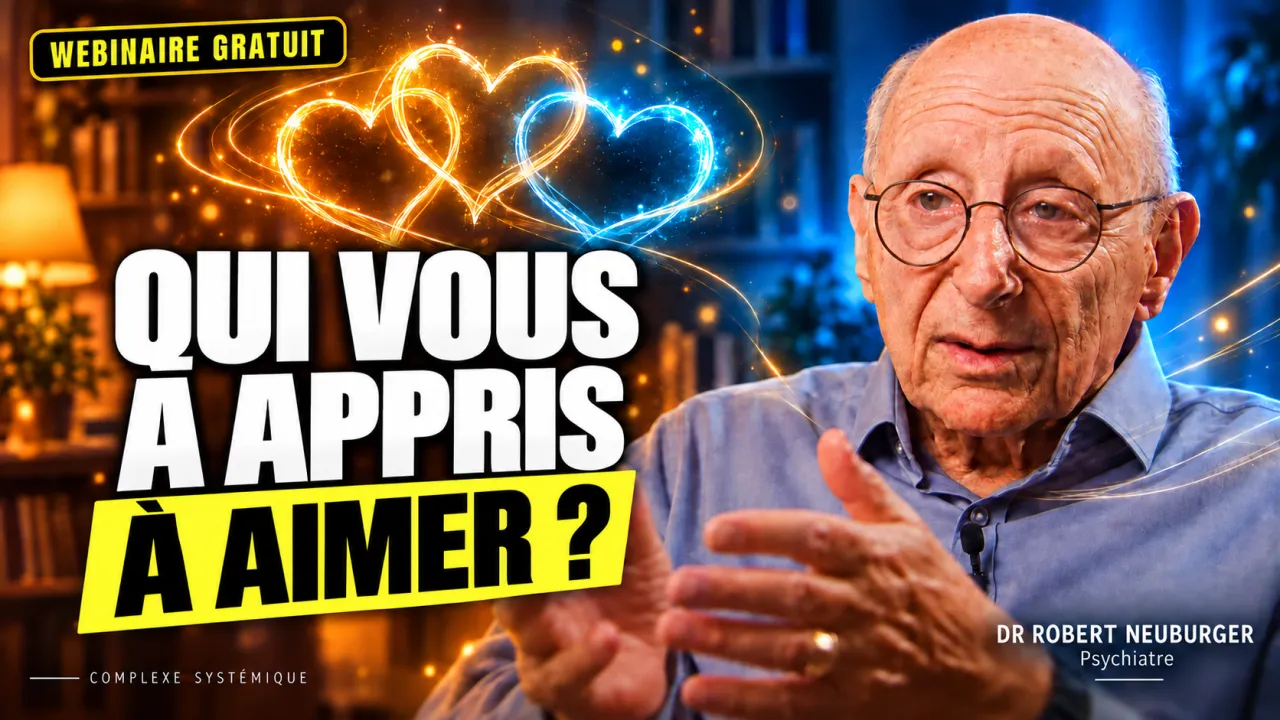
The three loves
Free live webinar with Dr Robert Neuburger, 1 October 2026, 6 pm (Paris): the three loves, attachment and ways of loving. Held in French.
 Certifying course
Training in Systemic Therapy and Interventions – Cycle 1
Certifying training cycle in systemic therapy and interventions – year 1. Courses, supervision and practice, aligned with EFTA/SFTF. In French.
Related articles
 Blog
Blog Adult ADHD: when forgetting turns into a misunderstanding
Forgetting, compensating, tension in the couple: a systemic look at adult ADHD, to understand what is at stake and to look for more fitting forms of support.
 Scientific
 Sickle Cell Disease and Young Couples: Understanding the Influence of Shared and Individual Meaning on Couples’ Experience of Illness
Nine young adult couples facing sickle cell disease: how each partner makes sense of the illness, and how the couple moves from caregiving to equality from one crisis to the next.
 Scientific
 Digital Co-Regulation and Dysregulation in Romantic Relationships: A Systemic Model of Technology-Mediated Emotional Processes
Checking, chasing, blocking: 31 interviews show how the phone regulates or dysregulates a couple’s anxiety, with a systemic model of the loop.
 Scientific
 “One Can Have All Sorts of Good Intentions but Sometimes in Everyday Life, It Turns Out Differently”: Change Agreements in Couples' Everyday Lives
Six Danish couples followed after an online couple program: their change agreements become guilt-inducing contracts, shared understanding or revealers of inequality.
Comments 0
Log in to join the discussion. Log in