Behind the scenes · Origins
My path and the genesis of the project
Hello, my name is Julien and I am a psychologist. I am embarking — not without apprehension — on a content-creation project (articles, videos, podcasts) whose aim is to explore, in a simple and understandable way, the concepts, tools and strategies that have the potential to improve our lives. Since the genesis of this project is intimately tied to my life path and to the development of my thinking, I offer you a unique and authentic retrospective of my journey — a very difficult exercise but, after all, I am here to take risks!
A dreamer in Lozère
If you had met me as a child, you would probably have thought — or heard people say — that I was a dreamer, always with my head in the clouds; which, as you can imagine, was far from being a quality in the eyes of my teachers.
I grew up in a tiny village in Lozère, the cradle of my childhood and of the feeling of freedom that comes with it. What my teachers viewed with a critical eye actually contributed all the more to that feeling of freedom: my imagination kept carrying me further and further, beyond the borders of the real, exploring the hidden meaning of the world and injecting fantasy wherever it could.
As a child, I loved reading and making up stories, each more fantastical than the last. Growing up, while keeping my taste for reading, I found in games and video games another outlet for channelling my imagination and my fantasy. As an adult, I have held on to that taste, with its tender flavour of childhood, for reading and for games.
As far back as my memories go, I have always been fascinated by the complexity and depth of the people I met. So I quickly became interested in psychology, and I remember being drawn, very young, to the profession of psychologist; after having been drawn, respectively, to the professions of garbage-truck driver and writer (a dream that has, incidentally, never left me).
I also remember having this thought at the time I was considering becoming a psychologist: will my interest in other people not fade as I come to understand the workings of the psychological mechanisms that drive them? It will probably sound silly to you, but I told myself back then that what made people charming was precisely the fact of not understanding everything, which helps keep them forever surprising. I was irresistibly drawn to the mystery that every human being represents, and I wanted it to stay that way. That reflection rested on two major errors. The first was to think that it is possible to understand anyone completely. The second was tied to the fantasy of believing that if we hold the keys to understanding human beings, then all their actions become predictable and we can read souls the way we read a book. I was obviously wrong on every count, but I would only find that out much later.
Detours and false trails
As a teenager, initially drawn by the idea of earning a little money, I took the training course to become an activity leader, the BAFA (the French certificate for youth-camp leaders). That experience would go a long way towards shaping my destiny, but we will come back to it later. I then accumulated experience in youth work, followed by a multitude of small summer jobs, some of which were also extremely formative and helped build the person I am today.
Meanwhile, once I had obtained my Bac (the French secondary-school diploma) and had to choose a path for my future, I once again seriously considered studying psychology. That is when a new doubt crept into my mind, a thought that would turn out to be my last great error of judgement: imagining that the psychologist’s profession would be a burden to carry every day, and that I was not made to listen to other people’s problems all day long. I could not have been more wrong but, once again, I would only discover that a little later…
And so I threw myself into sociology studies at university, passionate at the time about ethnology, which was a specialisation within that programme. It was less the sunshine than the good company of my friends that I went looking for when I chose Université Paul-Valéry in Montpellier. I did not know, incidentally, that this man, who gave his name to that university, once said a sentence that would soon ring with great meaning in my ears.
“Everything simple is false, but everything that is not simple is unusable.”
Paul Valéry
The summer destiny came knocking
As I was telling you, taking up the BAFA proved a decisive turning point in my life, and I will now tell you why. It is always surprising to see how chance can sometimes create odd synchronicities. As it happens, two events converged towards a common meaning within the same period.
At the beginning of that summer, I received a letter telling me I had only a few weeks left to register for an advanced session to complete the BAFA, failing which the validation of the first level would be cancelled. At the same time, I received another one announcing that my application for a summer job had been turned down. There I was, looking for summer work while urgently needing to find an advanced training session. After sending dozens of cover letters and hunting for every training session near my home, I found myself accepted as a care assistant in a Maison d’Accueil Spécialisée (a French residential care home for adults with severe disabilities), as well as in the only training session available within the allotted time, whose theme was: welcoming people with disabilities. Destiny had come knocking.
While I was starting to discover the work at the MAS, meeting the residents and learning to provide care, to build relationships with people I would never have spoken to before, I set off on the adventure of that advanced BAFA session.
For a week, we lived in self-sufficiency, in an old farmhouse, with about fifteen other participants. We followed a short theoretical training, but our main objective was to run a full day of games and activities for a group of children with disabilities who were staying nearby. That is how I found myself in a situation where, for the first time, my imagination and my fantasy seemed to be perceived as qualities. Ideas were swarming and jostling in my head, and I became aware for the first time that my ideas could seem relevant to others. Whereas until then they had been confined to darting back and forth, pirouetting and soaring inside my mind, they could now escape through my speech and spread, like a forest fire in the summer heat, into the minds of others. No feeling has ever thrilled me more than watching them then evolve as they pleased, autonomously and independently, in each of my companions. You have to picture me finding myself, perhaps for the very first time, in a situation where others came to ask for my opinion, where they seemed to hand me a role I did not think I had the makings to play; and I surprised myself not only by rising to it, but above all by finding meaning and satisfaction in it. For someone like me, who had always been naturally discreet in company, more at ease dreaming in my corner than speaking in public, this was a serious change of perspective. At the end of that training session, the lead trainer offered to have me come and run a camp with him, and I would later take over from him for a few years. If that experience taught me a great deal about myself, it taught me even more about other people.
Let me put that learning into perspective with the experience I was continuing at the MAS after the end of that final training session. There, I would gradually forge an idea that would plant itself in my thinking like Excalibur in its stone: there is beauty, depth and complexity anchored in every human being, without exception.
Through that experience, I realised that I draw immense joy and a feeling of deep gratitude from sharing simple but authentic moments with people. It is probably no coincidence that I felt I was learning this for the first time in contact with the people with disabilities I was lucky enough to meet; for they have learned, in spite of themselves, something essential. I was meeting people who know how to open their hearts and show themselves vulnerable, and I understood then that this vulnerability is precisely what makes them so unique and so deeply human; a vulnerability we all take great care to hide behind a large number of artifices, thereby protecting ourselves from ever truly meeting anyone. I later discovered, through his books, someone who wrote a sentence that sums up this discovery all on its own, and I could not put it better than he did; so I give it to you as it is.
“I must now mention one of the most rewarding discoveries I have made; rewarding because, thanks to it, I feel closer to others. It could be put as follows: what is most personal is also what is most general.”
Carl Rogers, On Becoming a Person
From sociology to psychology
After that summer so rich in lessons, I made a decision that — as you will have gathered — came from far back in my history: leaving the sociology faculty to join the psychology one. To be completely honest with you, that decision had little consequence for my academic record, since my overall average for the year had been dreadful; I had probably spent more time playing World of Warcraft, reading and watching films with my best friend than studying remotely during the almost five months of strikes that marked that university year.
That being said, my interest in this new field of study would keep growing crescendo, along with my university results, which ended up reaching heights I had never attained in all my school years. I made wonderful encounters, both in my social life and in my readings of those years, encounters that kept sculpting me until I obtained my psychologist’s degree in 2013.
After seriously considering doing a doctorate, life events led me to set that project aside and go into practice; a choice I am happy to have made today, given all it has brought me in learning, encounters, constructive doubts, formative failures, and therefore growth.
What the profession taught me
And so it was in contact with people, and in the practice of my profession, that my old doubts were blown away, and my old fears collapsed like a house of cards. I then understood how stimulating it is precisely to give all one’s energy to getting as close as possible to the other person’s reality. I learned never to judge anyone, because everyone always has a very good reason for acting the way they do (a lesson first instilled by my mother, to whom I owe a great deal). One day I heard Mony Elkaïm say at a conference: “To judge is to spare yourself the analysis”; I made it a personal maxim.
I discovered that, in the end, we suffer above all from the interpretation we make of the world and of what happens to us. So I spent my time looking for everything that could help change our perception of reality, for that is how a failure could turn into a lesson, how a deep crisis could open onto a formidable opportunity. The engine of resilience is narrative. In other words, the capacity to transform the stories we tell ourselves is our greatest strength for overcoming ordeals.
I understood that, beyond theories, it is the relationship that is therapeutic. I learned that a sentence spoken at the right moment, a fitting gesture, even a single word could change everything. Sometimes a simple piece of information could alter our deep understanding of a situation and thus drastically improve our life.
I learned to simplify my speech, to make my knowledge accessible, to make understandable the concepts that, in my view, should be handed to everyone. So today I put all my imagination, all my creativity and all my knowledge at the service of the people who need them: that is what gives meaning to my life and fuels my energy. I have accumulated such gratitude for everything people have offered me of their stories, their doubts and their projects, their fears and their intimacy, that I feel indebted to humanity for a lifetime.
An invitation
Dear friends, if you have read me this far, you have given me the most beautiful gift, in the form of a message of confirmation and encouragement for what comes next. I end this introduction with the beginning of a new adventure. For it is to give another dimension to my vocation that I invite you to join me in this community. I invite you with all my doubts, all my fears and all my apprehensions, but also with my enthusiasm, my energy and my determination; and above all with the certainty that if you find something of interest here, you will give me the strength to keep going down this path.
I gave my name to this project in a spirit of authenticity: I do not intend to hide behind a brand or a pseudonym. I offer you all my sincerity, my vulnerabilities and my strengths, my flaws and my hopes, my doubts and my certainties. I open my thinking to you in the hope that it may interest you, and I am already looking forward to interacting with you, to hearing your feedback, your opinion, in short… to meeting you.
Julien
How to cite this article
Besse, J. (2021, April 20). My path and the genesis of the project. Complexe Systémique. https://app.complexe-systemique.com/en_GB/articles/my-path-and-the-genesis-of-the-project
To go further
- Show your work!The Austin Kleon book that convinced Julien to share his work publicly.
- My decision is madeTen years later, resigning from the institution to devote himself fully to the project.
- The craziest project of my career…Where this path eventually led: the most pharaonic project undertaken so far.
- Taking flightThe very first reading review, published right after this founding post.
Related training courses
 Certifying course
Live now
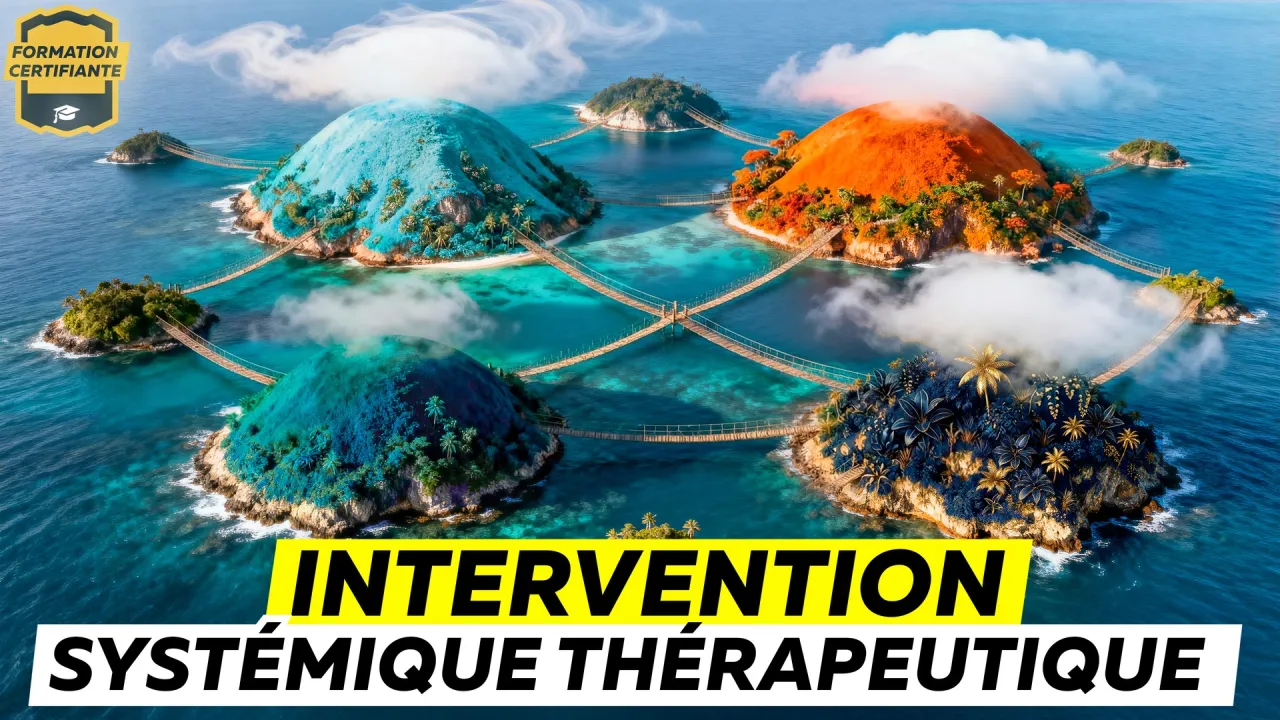
Training in Systemic Therapy and Interventions – Cycle 1
Certifying training cycle in systemic therapy and interventions – year 1. Courses, supervision and practice, aligned with EFTA/SFTF. In French.
 Certifying course
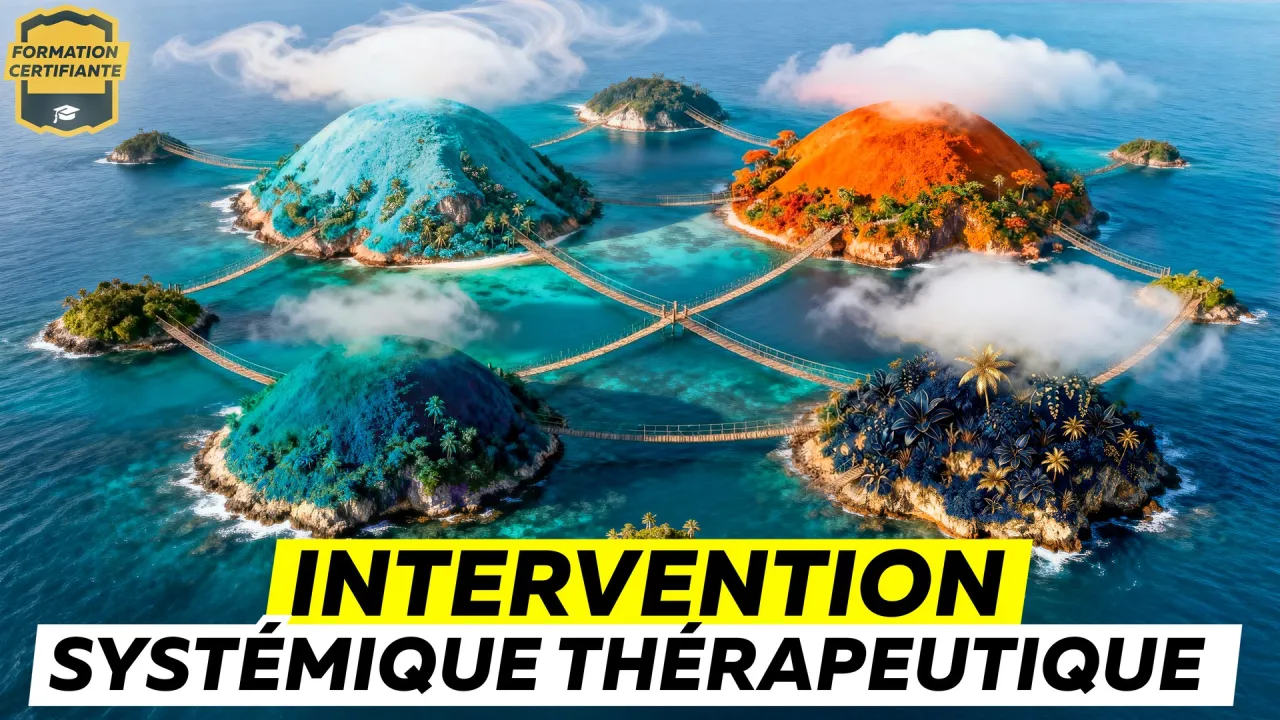
Training in Systemic Therapy and Interventions – Cycle 2
Certifying training cycle in systemic therapy and interventions – year 2. Clinical complexity, supervision and practice. EFTA/SFTF aligned. In French.
 Certifying course
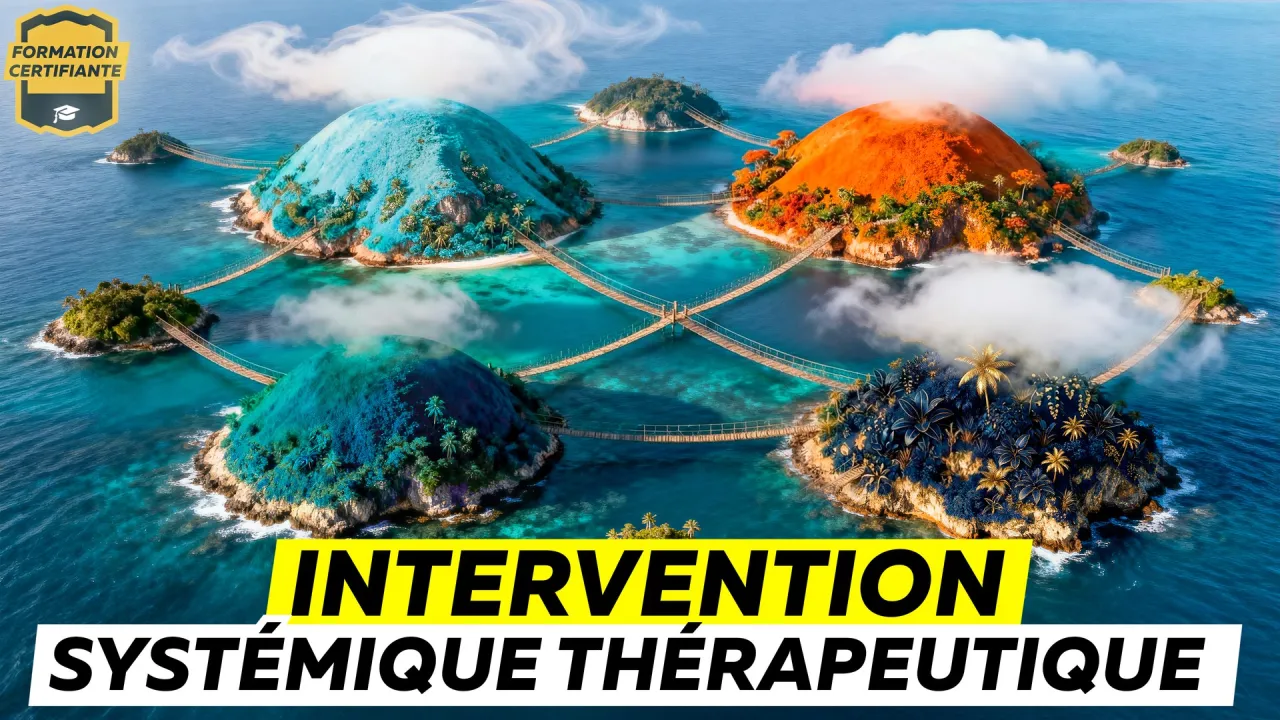
Training in Systemic Therapy and Interventions – Cycle 3
Certifying training cycle in systemic therapy and interventions – year 3. In-depth intervention, supervision and practice. EFTA/SFTF aligned. In French.
 Certifying course
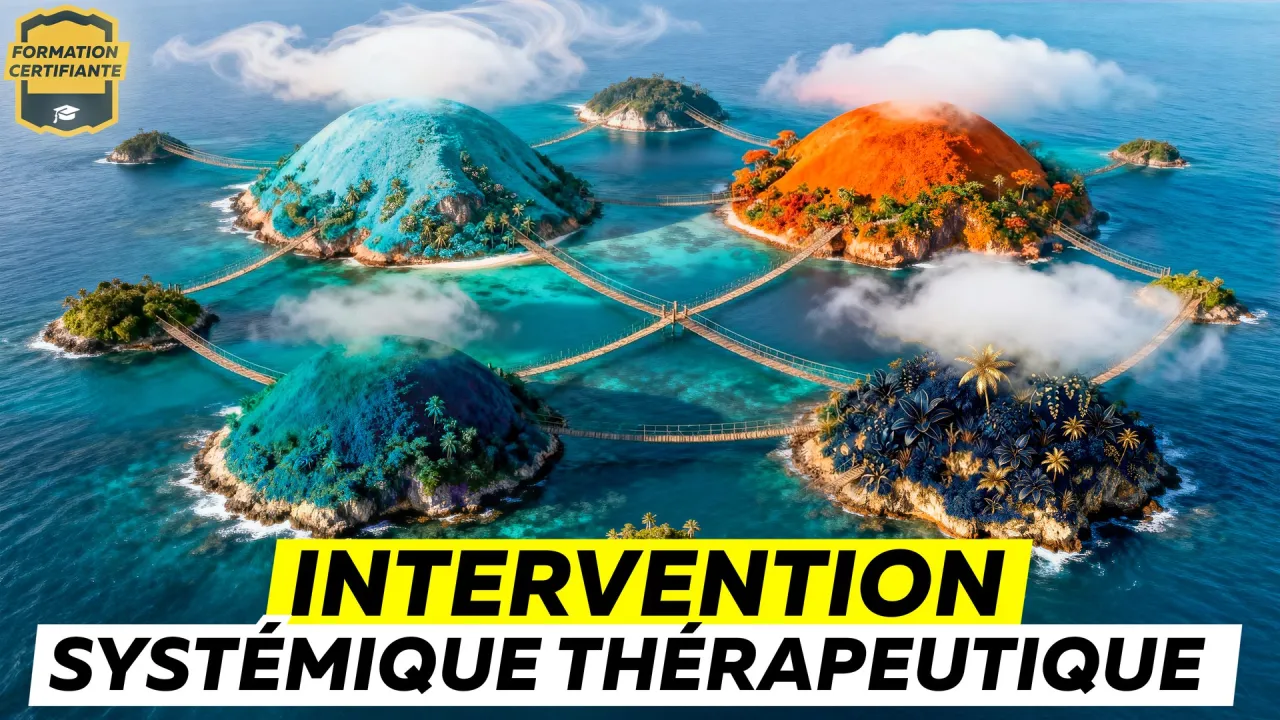
Training in Systemic Therapy and Interventions – Cycle 4
Certifying training cycle in systemic therapy and interventions – year 4. Clinical integration, supervision and certification. EFTA/SFTF. In French.



Comments 0
Log in to join the discussion. Log in