Complex thinking
Thinking complexity: following the threads of the real without breaking them
At the crossing of uncertainty, contradiction and emergence, complex thinking opens a way to inhabit the real in all its density.
Part 1
An invitation to think in relation
Thinking complexity is not about seeking complications. It is about refusing mutilating simplifications.
It means recognising that the real — human, social, biological or psychic — is made of links, tensions, and nested levels.
Complex thinking, as formulated by Edgar Morin since the 1970s, offers not a tool but an intellectual and ethical attitude. It invites us to think of phenomena not as isolated blocks but as living processes caught in networks of interdependence.
Faced with the fragmentation of knowledge, Morin argues for a transversal thinking that articulates disciplines, levels of reality and apparently contradictory logics. Against the classical Cartesian paradigm — which separates, reduces, ranks — he proposes a relational, dynamic, recursive thinking.
This turn was born of a double dissatisfaction: that of the hard sciences before the limits of determinism, the irreducibility of the living, the unpredictability of systems; and that of the human sciences before the complexity of behaviour. The real obeys neither simple linearity nor single-track causality. Another reading grid is needed.
Part 2
Three principles for thinking differently
1
Recursiveness
This principle overturns the usual cause → effect order. In a complex system, the effect acts on the cause: the products of a process react back on the process that produced them. Society produces the individuals who in turn produce society. The therapist influences the family system, which in turn transforms their stance.
2
Dialogic
Morin introduces this word to think together notions that are complementary yet antagonistic. Life is at once order and disorder, stability and mutation, unity and multiplicity. Setting them against each other misses the real. Complex thinking accepts that two logics coexist without resolving: holding the paradox together without dissolving it.
3
Hologrammatic
As in a hologram where each part contains the image of the whole, the whole is in the part and the part in the whole. An individual carries within them the culture they come from; a cell carries the organism’s information; a sentence contains an implicit culture. Thinking holographically means thinking at several scales at once.
Part 3
From biology to society: complexity as a common thread
In La Méthode, Edgar Morin starts with the living: how does life, so improbable, sustain itself in the rising entropy of the universe? By self-organising. By taking in disorder to create novelty. The living cell is not a well-oiled clock: it is a knot of adaptive interactions, constantly rebalancing.
He then extends these observations to social organisations, education systems, political institutions. Here too, what stands is not a fixed structure but an organisation able to negotiate the unforeseen, to learn, to transform itself without losing itself.
Complexity is not chaos
It is a supple, living order — a fabric of relationships woven and rewoven without end.
Part 4
A thinking for human systems
Complex thinking also speaks to clinical work. In family therapy and in crisis work, systemic practitioners experience daily the effects of an intervention on a moving system.
A symptom is not the trace of an inner disorder to be corrected, but the signal of an entire system under tension. Thinking in complexity means seeing that a child’s complaint may regulate a marital tension, and that a colleague’s resistance may conceal an invisible loyalty to the group.
The systemic approach has been one of the most powerful contemporary vehicles of this complex thinking applied to relationship: circular causality, co-construction of reality, levels of communication. All of them refuse linearity in order to follow the spiral form of living exchange.
Part 5
An ethics of complexity: neither above nor abdicating
For Morin, thinking in complexity is not only a matter of intelligence but also an ethics of modesty.
Edgar Morin, La Méthode
“The principle of uncertainty is not only physical, it is also anthropological, social, political. To think is to navigate an ocean of uncertainty through archipelagos of certainty.”
This calls for continuous attention, humble questioning, and listening to interactions. The complex practitioner does not impose a solution: they co-construct a path of understanding and accept revising their hypotheses. They act not from above, but from an adjusted dialogue with the living system they support.
What to take away
What am I wrongly simplifying? Which relationship am I overlooking?
For Morin, complexity is not an intellectual luxury. It is a necessity if we are not to impoverish the world, not to mutilate what resists analysis. It is a thinking for what lives, what moves, what holds together without merging.
In a world crossed by uncertainty, complex thinking does not promise to explain everything. It offers a better way to inhabit the inexplicable, to connect the fragments, to cultivate the weaving. It invites each of us to ask: which link am I ready to re-braid?
Further reading
- Morin, E. (1977). La Méthode I : La nature de la nature. Seuil.
- Morin, E. (1990). Introduction à la pensée complexe. ESF.
- Bateson, G. (1972). Steps to an Ecology of Mind. Chandler Publishing.
- Maturana, H. R., & Varela, F. J. (1980). Autopoiesis and Cognition: The Realization of the Living. D. Reidel.
- Simondon, G. (2005). L’individuation à la lumière des notions de forme et d’information. Millon.
- Deleuze, G., & Guattari, F. (1980). Mille Plateaux. Éditions de Minuit.
Further reading on this site
- Edgar Morin’s great lesson for therapistsWhat complex thinking changes concretely in the clinical stance.
- When systems fall apart… and put themselves back togetherEntropy, fertile chaos and the birth of a new order.
- Circular causalityThe principle of recursiveness applied to human systems.
- EquifinalityThe same becoming reached by different paths.
How to cite this article
Doumit, Y. (2025). Thinking complexity: following the threads of the real without breaking them. Complexe Systémique. https://www.complexe-systemique.com
Related training courses
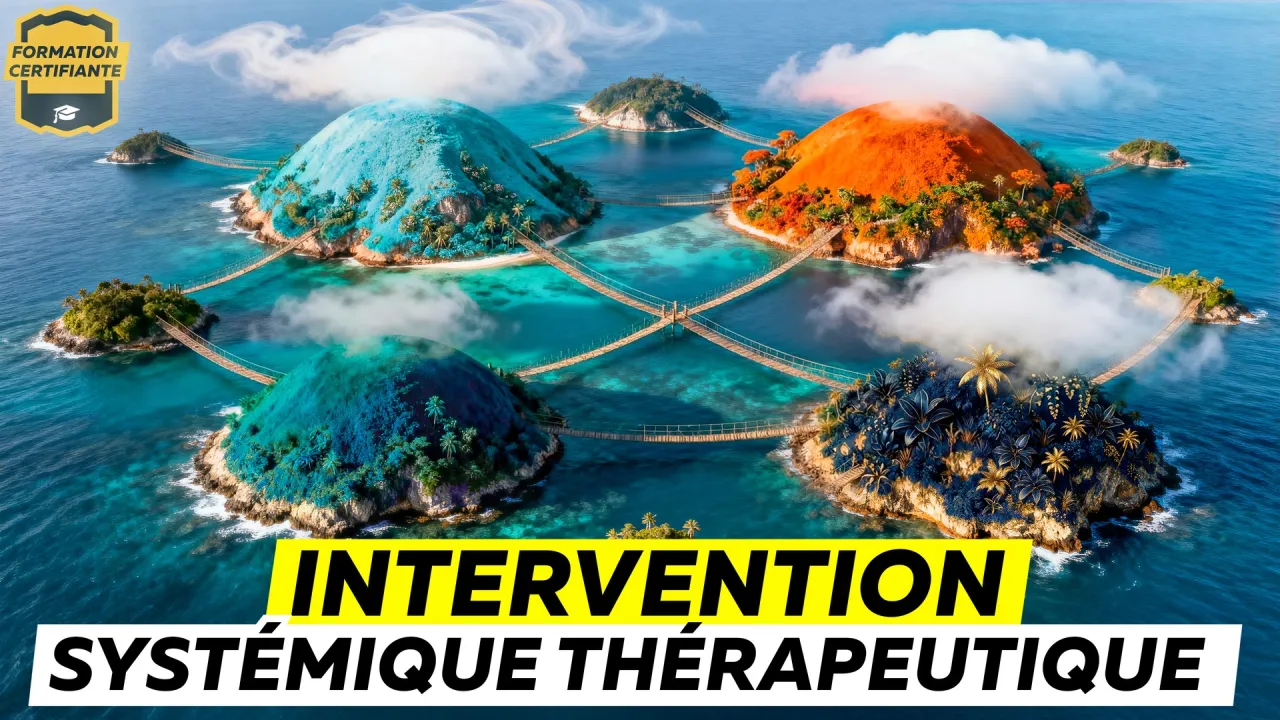 Certifying course
Live now
Training in Systemic Therapy and Interventions – Cycle 1
Certifying training cycle in systemic therapy and interventions – year 1. Courses, supervision and practice, aligned with EFTA/SFTF. In French.
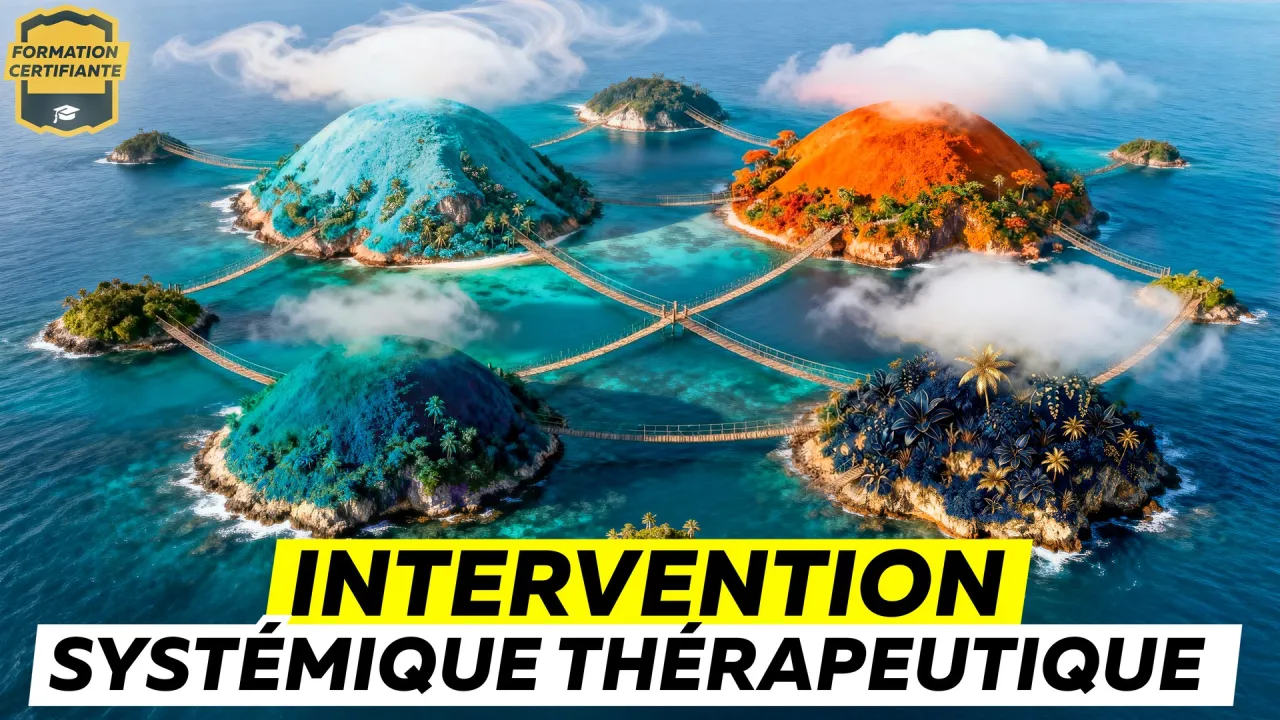 Certifying course
Training in Systemic Therapy and Interventions – Cycle 2
Certifying training cycle in systemic therapy and interventions – year 2. Clinical complexity, supervision and practice. EFTA/SFTF aligned. In French.
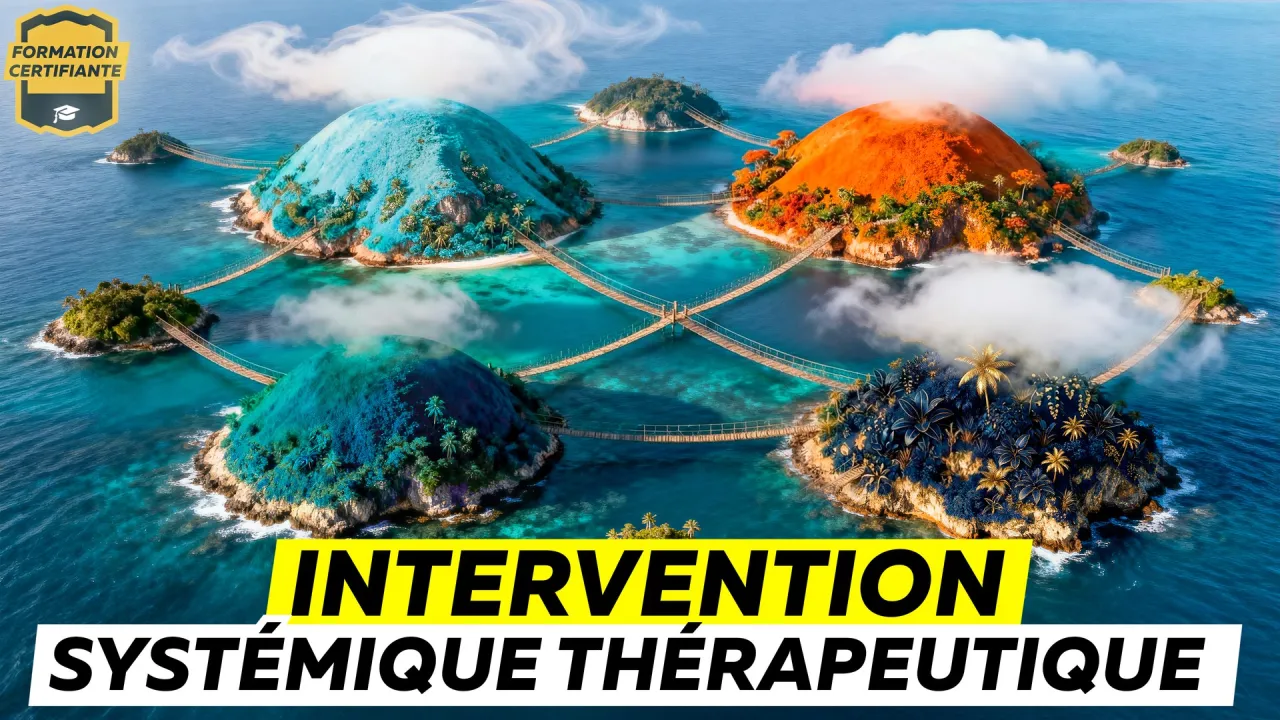 Certifying course
Training in Systemic Therapy and Interventions – Cycle 3
Certifying training cycle in systemic therapy and interventions – year 3. In-depth intervention, supervision and practice. EFTA/SFTF aligned. In French.
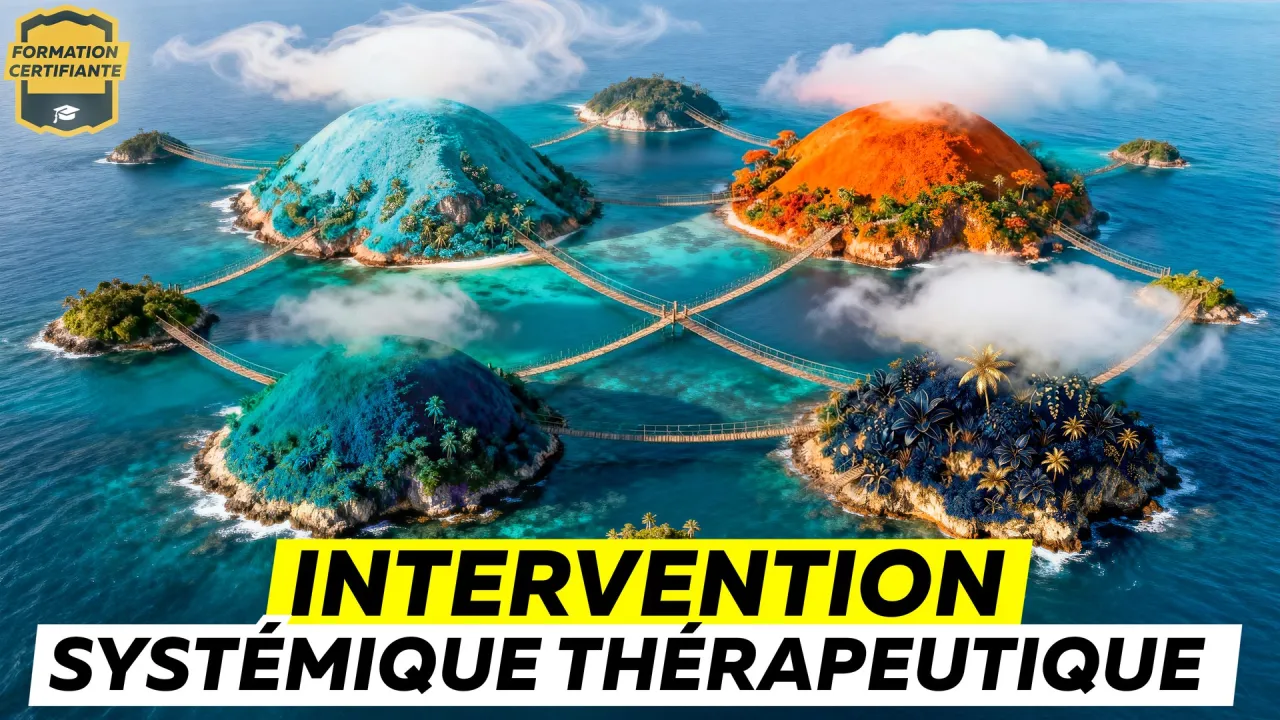 Certifying course
Training in Systemic Therapy and Interventions – Cycle 4
Certifying training cycle in systemic therapy and interventions – year 4. Clinical integration, supervision and certification. EFTA/SFTF. In French.
Comments 0
Log in to join the discussion. Log in