AI-assisted translation
This version was translated from Portuguese by Complexe Systémique with the help of artificial intelligence. In case of doubt, the original version prevails.
Revista Brasileira de Terapia Familiar · Ageing
A Study of the Impact of Having a Family Member with Dementia
At the Centre for the Care of Older People in Fortaleza, seventeen relatives of people with dementia, all of them women, complete the Zarit Burden Interview. Drawing on Rolland and on the family life cycle, the study shows that the burden is heaviest when the caregiver is not the wife but a daughter who feels solely responsible, and that conflict then concentrates among the siblings. The statements gathered make the case for a gerontology that cares for the whole family.
Unofficial English translation. This article is a translation of Estudo sobre o impacto em ter um portador de demência na família, by Albertina Proença Rodrigues Alves and Júlia Sursis Nobre Ferro Bucher-Maluschke, published in the Revista Brasileira de Terapia Familiar (ABRATEF), vol. 1, no. 1 (2008), doi: 10.60114/rbtf.v1i1.127, under a CC BY 4.0 licence. Translated by Complexe Systémique in November 2026 with the help of artificial intelligence: the original Brazilian Portuguese text has been translated into English and reformatted, which constitutes a modification of the work under the terms of the licence. The paragraphs and headings are those of the journal; the abstract and affiliation, printed in the margin of the first page, are given in the box and in the presentation; the WHO definition of active ageing and the Zarit Burden Interview items are given in their original English wording (the first item keeps the “frequently” added in the article’s version); the other quotations (WHO, Rolland, Falcão, Mendes) and the caregivers’ statements are translated from the article’s Portuguese; the six charts, in Portuguese, are reproduced as they are, with translated legends. The abstract is the authors’ own English version. This translation was made neither by the authors nor by the journal, who are not responsible for its content or for any errors. The original version prevails.
Working with older people means being involved with a subject with a long history, belonging to a context of relationships that influence their care.
Albertina Proença Rodrigues Alves, Júlia Sursis Nobre Ferro Bucher-Maluschke
Abstract
The present study it searchs to know the impact to the familiar responsible one for taking care of aged carriers of dementia as for its estresse. For this, it chooses a qualitative boarding in a Center of Attention Aged of Fortaleza City (Ceará State, Brazil) through the application the 17 familiar ones of the scale of overload of Zarit. Based theoretically the light of the study on the vital cycle, the work observes that the familiar conflicts appear with more intensity when the familiar’s responsible does not have relation of spouse with the dementia carrier and has direct relation with the only sensation of being the responsible one for the aged one.
Keywords: family, aged, dementia, caretaker
Introduction
Over the life cycle, the family goes through various phases and tasks that call for a period of adaptation and redefinition of roles. When it is faced with a member who has dementia, this process is altered, and the myths, loyalties and forms of communication existing between the person with dementia and the other family members become visible.
The gerontological systemic approach should seek to mediate between the patient, the family and the professionals, setting a single goal of care. Thus, understanding that older people have the family, above all, as their source of shelter and assistance, working with this caregiving family means providing better conditions of care for the older person.
This study is qualitative in nature, and its target population will be family members of older people with dementia attended by the Centre for the Care of Older People in the municipality of Fortaleza.
We will first look at ageing and dementia, discussing the current situation of ageing with the help of epidemiological data. As regards dementia, we will discuss its alterations and its diagnosis, with an emphasis on Alzheimer’s disease.
Under the role of the family in the context of ageing and illness, we will address what the family is and the impact it undergoes when it is faced with a member who has Alzheimer’s disease. We will study Carter and McGoldrick (1997) and their work on the changing family life cycle and the person with chronic illness. We will then look at the data collected in 17 questionnaires on caregiver burden.
The aim of this work is to learn about the profile of the family and of the responsible family caregiver, and with this knowledge to provide information to guide the work of the interdisciplinary team.
Ageing
Ageing is a global phenomenon. However, developed and developing countries have gone through this process in different ways. While in the so-called first-world countries the increase in age came about slowly, in Brazil the shift from a triangular population pyramid to a more cylindrical structure took place within a few decades. Older people now account for 8.6% of the Brazilian population, the equivalent of 14.5 million people. By 2025, Brazil is expected to have approximately 33 million older people.
It was from 1940, when infant mortality began to decline, that the age structure of the Brazilian population began to change. High fertility (6 to 7 children per woman on average), combined with falling mortality, meant that between 1940 and 1970 the Brazilian population grew from 41 to 93 million.
By the mid-1960s, fertility in urban areas and in the southern and south-eastern regions was starting to fall. Hence, with fewer children and lower mortality, the proportion of older people relative to the number of young people began to rise. In the world ranking, Brazil is expected to reach 7th place among the countries with the largest older populations in 2025, up from 16th place in 1970.
Switzerland took about 85 years to go through population ageing, whereas in Brazil this transformation is happening in a few decades. This rapid ageing of developing countries comes with many other transformations, such as urbanization and the reduction in family size already mentioned above.
According to Chaiamowicz (1998), in this short space of time it will be virtually impossible to build the infrastructure needed to meet the new social demands of this large contingent of older people.
In the Brazilian context, the heterogeneity of old age is very evident. In addition to the individual characteristics that make this process unique, we find regional diversity and class differences, which call for work that takes their particularities into account within a broader context. In all of them, encouraging families and individuals to plan and prepare for their ageing in the earlier phases of life is essential.
According to Falcão (2006), ageism (discrimination against human beings in the process of ageing, or against older people) can be a risk to older people’s quality of life, especially with regard to interpersonal relationships. The association of old age with illness is commonplace, which is why it is important to distinguish two processes of ageing:
- Senescence: which concerns normal, progressive ageing that gradually affects the organism, also called eugeria for the physiological changes associated with primary ageing;
- Senility: pathological ageing, which relates to changes caused by illnesses associated with the prevalence of ageing but not necessarily inherent to it. These changes caused by illness are also called pathogeny.
The feminization of old age is another striking characteristic: according to IBGE indicators (2004), average life expectancy is 75.2 years for women and 67.6 years for men. Moreover, the high death rate of young men (aged 20 to 24) who are victims of accidents or violence widens this gender gap further. Added to this is the tendency, shown in studies, for women to see doctors more often and take more medicines, taking more care of their health. Feminization has repercussions in the socio-economic sphere, for example on retirement pensions. According to PNAD data (2002), a quarter of households are headed by women, including older women. For Debert (1999), older people are at times portrayed as the cause of problems that afflict the public health and social security systems.
In Envelhecimento ativo: uma política de saúde (Active Ageing: A Policy Framework), Brundtland, Director-General of WHO, declares that “population ageing is, above all, a success story for public health policies, as well as for social and economic development”. New economic, social, political and health challenges are now emerging, and with them the need to create programmes that foster active ageing in the population.
Nevertheless, Brazil still faces classic development problems such as health and basic sanitation, and new challenges are now arising for governmental and non-governmental bodies, especially in the areas of health, social security and social assistance, calling for gerontological and systemic studies and actions. On this point, Sérgio Leme da Silva states that if the growing share of older people in the general population takes place under the social health conditions offered today, ageing will not be accompanied by a good quality of life. Sérgio Leme da Silva adds that there thus seems to be a consensus that therapeutic and care work, with older people as well as with the family and the caregiver, should be governed by interdisciplinary programmes concerned with health promotion and quality of life.
In Envelhecimento Ativo: uma política de saúde, the World Health Organization states that governments, international organizations and civil society need to implement policies and programmes geared to “active ageing”, in order to improve the health, participation and security of older citizens. These should be based on the rights, needs, preferences and abilities of older people.
“Active ageing is the process of optimizing opportunities for health, participation and security in order to enhance quality of life as people age.”1
The fundamental goal for governments and individuals is to maintain autonomy and independence for most of life, in keeping with the WHO concept of health as the most complete physical, mental and social well-being.
Successful ageing is not related only to individual aspects; it is systemically integrated with social, environmental and economic conditions, as well as family relationships. Thus, the quality of life of older people does not concern only their individual condition, but also the descending generations and how much help and support these will be able to offer.
The causes of morbidity have also changed during this period of transition. As individuals age, it is non-communicable diseases (NCDs) that become the main causes of morbidity, disability and mortality in all regions of the world. They are costly diseases for individuals, families and the State.
The main chronic diseases affecting older people are: cardiovascular diseases; hypertension; stroke; diabetes; cancer; chronic obstructive pulmonary disease; musculoskeletal diseases; mental illnesses (mainly dementia and depression); blindness and impaired vision.
In the household survey carried out by Coelho, with a random sample of 667 people over 60 in Fortaleza (Ceará), 14% of the population reported more than 5 chronic diseases.
Besides being a cause of mortality, chronic diseases favour the loss of independence and autonomy.
Studying the predominant family arrangements in our society, Ramos (1993) found that:
- 12% of older people live alone;
- 32% live in single-generation households;
- 28% live in two-generation households;
- 28% live in three-generation households.
These data stand out even more when we turn to the information gathered by Coelho (1999), which shows that only 6.3% of the older population of the municipality of Fortaleza live alone.
The family is the first shelter and the primary source of assistance for older people (Baum and Page, 1991). When it is faced with a member who has dementia, a new readjustment of the family structure becomes necessary, with the definition of new roles.
Dementia and its repercussions
Dementia is today an emerging public health problem. It is one of the most common diseases in older people and one of the leading causes of disability. In Brazil, it currently affects between 750,000 and one million older people.
As defined by the International Neuropsychiatric Association, cited by Montano and Ramos (2005), dementia is:
Gradual cognitive decline, present for at least six months, altering at least one of the five cognitive functions: memory and learning; attention and concentration; thinking, language; visuospatial function. This impairment must interfere with activities of daily living, and performance on neuropsychological testing must be one standard deviation below the mean, taking cultural variables and age into account, these variations not being sufficient to justify a diagnosis of dementia; other physical and psychiatric causes, such as depression, must be ruled out.
The average prevalence of dementia over the age of 65 ranges from 2.2% in Africa to 5.7% in Asia, 6.2% in North America, 7.1% in South America and up to 9.0% in Europe. In Brazil, the prevalence rate of dementia reported by Herrera et al. (1998) is intermediate compared with international studies (7.1%); this work also states that the prevalence of dementia increases with age in all regions of the world and that in Brazil Alzheimer’s disease (AD) is the most prevalent, followed by vascular dementia (VD). AD affects men and women of all races, socio-economic levels, ethnic groups and geographical regions.
The diagnosis of AD is based on the observation of a compatible clinical picture and on the exclusion of other causes of dementia. Exclusion is carried out through laboratory tests (blood count, thyroid, liver and kidney function, B12, among others) and structural neuroimaging (computed tomography or magnetic resonance imaging). The Mini-Mental State Examination, the clock-drawing test or verbal fluency tests may be unreliable when assessing people with little schooling or with intellectual blunting. They should be supplemented with performance tests for activities of daily living (ADLs) and with neuropsychological tests.
It is important to stress that early diagnosis benefits both the patients, who can take part in decisions about their future, and the community, the public health system and the family members, who will have the opportunity to do their work better.
AD usually affects memory, reasoning and language first. However, it can affect other brain functions. Another early symptom may be a change in personality, as well as impaired judgement, which alters family relationships. Other non-cognitive symptoms are mood disorders, delusions or hallucinations, aggressiveness, wandering, sexual disinhibition and eating disorders. In more advanced stages, urinary and faecal incontinence may occur. In the final stages, rigidity, ataxia and dysarthria.
The initial symptoms of AD often go unnoticed, being frequently regarded by family and friends as normal reactions of ageing. Only when they start to interfere with activities of daily living, when memory loss and temporo-spatial disorientation appear, or changes in language or behaviour, do the people close to the person begin to seek professional help.
The progression of AD is slow and continuous, with a highly variable survival time that can range from two to fifteen years, regardless of race and socio-economic level.
Falcão and Bucher-Maluschke (2006) explain that people with AD need help to carry out many activities of daily living and consequently need someone to look after them. This is a person who performs the tasks that the patient can no longer carry out, ranging from personal hygiene to financial management.2
Although Alzheimer’s disease can manifest itself differently in each individual, it is marked by three stages:
In the first stage, the person with the disease has less energy, a reduced capacity for learning, memory loss and mood changes. Patients prefer familiar surroundings to new ones. At times they realize that something is wrong with them and try to disguise it by avoiding more complex tasks.
In the second stage, the disability is clear. The person remains in memories of the past most of the time, gets lost in familiar places, and has impaired recent memory. The person may show a lack of affect and fail to recognize people close to them.
In the third stage, patients require round-the-clock care. They have sleep disturbances, night-time wandering, loss of urinary and faecal control and an inability to chew and swallow, and they remain in bed most of the time.
Alzheimer’s dementia still has no cure; however, geriatric follow-up combined with non-pharmacological treatments, in work carried out by an interdisciplinary team involving care and training that go beyond the patient (care for the family, and in particular for the family caregiver), can bring a better quality of life to the person with dementia and to their family.
Santos and Rifiotis (2006) state that the prevalence of dementia in old age goes beyond the biological event itself, since dementias have different representations and repercussions in the economic, political, social and cultural context of the people and families they affect.
The family and chronic illness
Alongside the demographic and epidemiological transition of ageing, the profile of the family has changed in our country. Events such as women’s entry into the workforce, the possibility of birth control and family planning, as well as divorce, have been changing the current composition of families.
Santos and Rifiotis (2006) state that the repercussions of dementia take on particular features in families, the preferred locus of the instrumental, material, cognitive and affective care of older people with dementia. This statement is confirmed by international and Brazilian studies.
Conceptualizing and studying families requires a socio-historical and cultural contextualization. The family universe has been a research topic for many scholars and for the perspectives of fields such as psychology, sociology, philosophy, anthropology, history and law.
Falcão (2006) finds in that study that there is no single, all-encompassing concept capable of defining the family. Beavers and Hampson (1995), cited by Falcão (2006), state that the family is necessary for the individual’s health, but that it need not have the traditional form (father, mother, children), “but rather the form of a group of people committed to mutual support”. It is thus understood as a “group with a history”, tending to be a lasting formation. This notion implies that the family changes over time, mainly in three respects: structural, interrelational and functional (Realvas, 2003).
In this work, we will regard the family as the space in which individuals have a sense of intimacy and belonging.
In contemporary times, this construction is linked to ties of blood, marriage, alliance and filiation. “Such ties reveal movements among its members that bind and unbind them, closing and opening up to the world and to life” (Falcão, 2006).
The sense of belonging to a family involves affection, freedom, reciprocity and shared histories, and not all of these memories necessarily bring positive feelings.
In systems theory, the family can be understood as a system and, as such, as a set of entities or elements joined by some form of interaction and/or interdependence that makes it up as a whole. A system cannot be analysed through its parts in isolation, nor is the system simply the sum of its parts.
Historically, the family goes through various phases of disorganization when the equilibrium of one stage is broken in preparation for another, more suitable one.
Chronic illness, like individuals, should not be viewed in isolation. According to Rolland, to understand how illness unfolds and affects the individual and the family, it is crucial to grasp the interweaving of three developmental threads: the illness cycle and the life cycles of the individual and of the family.
In order to understand the repercussions of Alzheimer’s disease on the family, we will seek to understand some concepts and connections between these three threads.
In the case of a family in which one member has a chronic illness, we need to identify the interweaving of the illness and the life cycles of the individual and the family. Rolland states that the illness needs to be characterized in psychosocial and longitudinal terms. Chronic illnesses need to be organized according to their similarities and differences. In proposing the psychosocial typology of illness, he proposes to examine the relationship between family or individual dynamics and chronic illness. To this end he makes four distinctions: onset, course, outcome and degree of incapacitation of the illness, which, for this study, we will seek to relate to Alzheimer’s disease.
1. Onset: illnesses can be divided into those with an acute onset and those with a gradual onset.
Illnesses with an acute onset require family readjustment within a shorter period of time, as in the example of stroke (cerebrovascular accident); by contrast, illnesses with a gradual onset allow a prolonged period of adjustment. At the same time, the family may find it difficult to understand the situation, to perceive how the illness is evolving and to see that it will require constant adaptations.
2. Course: chronic illnesses take three basic forms: constant, relapsing/episodic and progressive.
The constant form usually refers to illnesses that have an abrupt onset, such as stroke or heart attack, and that stabilize for a long time after the initial period, remaining constant.
The relapsing or episodic form is characterized by alternating periods. This type of illness (e.g. asthma, recurrent cancer, ulcer) requires the family to adapt between continuous, at times intense, care and periods of “normal life”. This strain is shaped by the length and frequency of the periods of crisis and non-crisis.
Rolland (1995) describes progressive illness, the category to which Alzheimer’s belongs, as by definition an “illness that is continuously or generally symptomatic and progresses in severity”. The individual and the family face the effects of a perpetually symptomatic family member whose disability increases in a gradual or progressive way. Periods of relief from the demands of the illness tend to be minimal. Continual adaptation and role change are implicit. Increasing strain on the people providing care is caused both by the risk of exhaustion and by the continual addition of new tasks over time. What is at stake is family flexibility, in terms of the internal reorganization of roles and the willingness to use outside resources.
3. Outcome: a major impact of illness is the possibility that it may cause death or shorten someone’s life. In the case of life-threatening illnesses, the person who has the illness may fear that life will end before the life cycle has been completed. In illnesses identified especially in childhood, such as haemophilia, diabetes or asthma, the family’s concern about triggering a crisis may lead to the child being overprotected and gaining secondary benefits.
Depending on the outcome of the illness, members of a family in which someone has a chronic illness may be caught between a desire for intimacy and the fear of loss, and may withdraw emotionally.
The family of a person with Alzheimer’s faces a progressive and continuous cognitive and physical impairment in which the person with the disease loses the ability to recognize and identify family members and recent events.
4. Incapacitation: the degree of incapacitation, its presence or absence, is one of the most stressful factors and one of those that make the family need to readjust, requiring a redistribution of roles.
Incapacitation in the initial phase of the illness requires the family to make adjustments within a shorter period of time.
In progressive illnesses, the family has more time to organize itself and absorb the changes as the person gradually becomes more dependent. In particular, early identification of the illness gives the ill member the opportunity to take part in family planning concerning the illness.
Rolland highlights the existence of other attributes, important variables for the adaptation of the individual and the family, such as the complexity, frequency and efficacy of a treatment regimen, as well as the amount of care at home versus in hospital.
In their research, Carter and McGoldrick (1997) found that systemically oriented theorists stress that the family’s current behaviour cannot be understood independently of its history: the family is understood as a system, looking at how it has dealt with stressors and considering patterns of adaptation, repetition, discontinuity and relational change. A history of the family’s specific difficulties at each time phase of chronic illness can alert us to vulnerable periods in the current illness.
Understanding the dialogue between the life cycles of the illness, the individual and the family is crucial.
Another concept concerns the life structure, in which periods of building/maintaining alternate with periods of change. The work of Combrinck-Graham, cited by Rolland (1995), applies centripetal and centrifugal phases to the family life cycle, according to which the family goes through periods of family closeness (centripetal) and periods of family distance (centrifugal). Thinking about chronic illness from this perspective is useful for bringing together the individual and family life cycles.
If the onset of the illness coincides with the centripetal movement, it may alter the natural movement of the family or even cause a permanent standstill in that phase. Carter and McGoldrick (1995) state that the tendency of an illness to interact centripetally with the family increases as the level of incapacitation or the risk of death also increases. Over time, progressive illnesses are inherently more centripetal in their effects on families than constant illnesses. This is due to the permanent addition of new demands and readjustments. This centripetal force increases the risk of the family freezing in a permanent state of fusion. At the onset and identification of chronic illness, it is natural for a centripetal movement to occur in the family, but a fundamental goal for a family that has to deal with chronic illness is to establish mechanisms that allow its members to continue their own development, or that of the family as a system.
It is in this context that primary caregivers are chosen. Caregivers, together with the family and health professionals, are the great partners in the care of older people.
The choice of caregiver
The term caregiver is commonly used by gerontologists and health professionals to designate the person involved in the process of caring for another. According to Braga (2007), it is the person who takes on the responsibility of caring for, supporting or assisting some need of the person cared for. It is worth stressing that the literature does not yet define the term in terms of time and involvement in care.
The caregiver’s function is a role that is sometimes not chosen voluntarily and that is taken on for a long period of time, given that in most cases the patient will live 10 to 20 years in a situation of growing dependence, requiring attention 24 hours a day.
According to Saad (1999), caregivers can provide three types of support:
- Material: involves money (donations, loans, payment of health insurance) or necessities such as food and clothing;
- Instrumental: involves instrumental activities of daily living (IADLs) such as light housework, shopping, preparing meals, etc.
- Functional: involves activities of daily living such as bathing, eating, sitting down or getting up, walking, using the toilet.
“The designation of the caregiver is informal and results from a dynamic, based on four factors (Mendes, 1995)”:
- Kinship: in most cases it is the spouse;
- Gender: predominantly the woman (already referred to as the “great caregiver”);
- Physical proximity: whoever lives with the older person;
- Affective proximity: established through the marital relationship and the relationship between parents and children.
Néri (2006) clarifies the distinction between primary, secondary and tertiary caregivers. Primary caregivers are the people mainly responsible for the older person and for the care, and those who carry out most of the tasks. Secondary caregivers may perform the same tasks as primary caregivers, but do not have the same level of responsibility and decision-making. They often act on an occasional basis and help with getting around and transfers, with housework and with occasionally taking over from the primary caregiver. Tertiary caregivers play a supporting role and have no responsibility for care. They may keep the older person company or carry out tasks such as shopping, paying bills or collecting the pension.
Santos and Rifiotis (2006) state that being the caregiver of an older person with dementia involves a multiplicity of interactions, negotiations, rapprochements and separations, dilemmas and interpersonal conflicts.
The family caregiver of a person with dementia is faced with the need for a new reorganization of roles and routine. “The international literature indicates, through numerous works reviewed by Gatz, Bengtson and Blum (1991), that caring for dependent older people has a variety of adverse effects, and recognizes the emotional impact experienced by family members who care for older people with mental illness or other problems resulting from ageing. This emotional impact or burden has been defined as the physical, psychological or emotional, social and financial problems that family members experience as a result of caring for sick older people (Gwyther, 1985).
Karsh’s (2003) research confirms these data, revealing that in the group studied on the health of women caring for older people, 40.7% had lower back pain, 39.0% depression and 37.3% high blood pressure. The research adds that the work and assistance provided to these people usually becomes invisible and unsupported, with all the team’s attention focused on the older person with dementia.
The impact of the exercise of caring on the caregiver’s well-being is individual and unique; however, research by Hughes et al. (1992) shows antecedent variables associated with greater burden: the previous relationship with the older person, caring for people with Alzheimer’s or Parkinson’s disease, people who need help with ADLs, or people with behavioural problems.
Karsh (2003) points out that the four main causes of this stress relate to “the practice of caring”, in which physical work is required 24 hours a day; behaviours, when older people display dangerous or aggressive behaviour; interpersonal relationships, when the care and effort required wear down the existing affective relationship between the older person and the caregiver, to which is added the relationship with the rest of the family; and the consequences for social life, when the losses caused by the pace of care damage the caregiver’s relationships with friends and participation in any leisure activity.
Compared with non-caregivers, caregivers show more depressive and anxiety symptoms, as well as physical problems.
According to Mendes (1995), “when caring for someone close who becomes dependent, there is a whirlwind of feelings: love, pity, relief, guilt and even anger at the other’s dependence”.
Garrido and Menezes (2004) point out in their article that studies have shown that the caregiver’s poor physical health is one of the predictors of early institutionalization of the person with dementia.
The caregiver’s well-being should be a constant concern among the members of the health team, as a way of ensuring a better quality of life for the caregiver and for the person with dementia.
Materials and method
The research began with a review of gerontological and family therapy texts, in order to provide a basis for constructing the reality experienced by caregivers facing Alzheimer’s disease.
After this review, the Centre for the Care of Older People (CAI) at the Walter Cantídio Hospital, Fortaleza (Ceará), was chosen as the place of study.
We chose a Thursday, the day on which older people with dementia are seen at the hospital, to administer the Zarit burden questionnaire (1990), validated for Portuguese by Taubi (2004), supplemented with socio-family data. On that day, the CAI saw 23 older people, and 17 of their family members answered the questionnaire.
The data were analysed qualitatively. The questionnaire and the consent form were approved by the Research Ethics Committee, opinion no. 08-044, in accordance with the provisions of Resolution no. 196 of 19 October 1996 of the National Research Committee, which governs studies involving human beings.
Place of study
The place chosen for the study is one of the public health Centres for the Care of Older People in the State of Ceará.
Care is provided by a multidisciplinary team, with medical, speech therapy, psychology, social work and physiotherapy consultations, as well as neuropsychological assessment and the dispensing of medicines regulated by the Ministry of Health.
In addition to these regular consultations, monthly meetings are held with people who care for older people in order to provide explanations and information, and the centre recently began the practice of “Caring for the Caregiver” (Cuidando do Cuidador), from the systemic community therapy approach.
Training courses are regularly offered to informal caregivers of older people in order to guide them and prepare them to care for their family members and/or older people.
About the instrument
The caregiver burden scale was created by Zarit (1990), disseminated and translated in several countries, and validated for Portuguese by Anita Taubi (2004) in a master’s dissertation.
The questionnaire consists of 22 closed questions scored from 0 to 4, from never to nearly always. The higher the score, the higher the level of stress.
Discussion of the data
Karsh (2003) reports on research carried out in São Paulo on the profile of caregivers, in which in 98% of the cases studied the caregiver was a family member, predominantly female (92.9%); 44.1% were wives, followed by daughters (31.3%). These data reinforce Mendes’s study (1995) cited above.
In our study, we found this profile repeated, with 100% of cases being female. As for kinship, 88.2% are relatives: 10 daughters, 2 daughters-in-law, 2 wives, 1 granddaughter, and 11.8% have no direct kinship. In one of these cases, the older woman had been the caregiver’s nanny and has lived in her home for 40 years; in the other, the caregiver has had a domestic service relationship for over 25 years. Although they are not blood relatives, we chose to include these questionnaires, considering that they fit the definition of family set out at the beginning of the study and illustrated below:
“Well, I’m not family by blood, but I can answer the survey. I feel like her daughter. She took me into her home when I was 15 with a baby in my arms. She helped me when nobody else wanted to help me, she raised my son. Now I’m going to look after her until the end, it’s my turn to help. (quest. D)”
“When I remember being held in someone’s lap, it’s her lap I remember being in. (quest. G)”
In another study, carried out in Bambuí (Minas Gerais), Giacomin (2005) found that the wife is the preferred caregiver and that she regards this condition as natural, the result of the marital commitment made earlier: the wives understood that they had made a commitment to care for their husband in sickness and in health, and this truth was accepted without question. We find corroboration of this study in the statement below:
“He’s always, ever since we got married, he asks me for help, waits for me to serve his plate, get his clothes, he wants me to look after him. I didn’t feel any difference when he fell ill. Now he’s ill like this and he calls me mum, he thinks I’m his mother… I like doing it. I get tired, but the responsibility is mine, when I go to bed I have the feeling of a mission accomplished.” (quest. F)
A daughter is chosen as caregiver when the wife is no longer able to do it, or in her absence. Silva, citing Zarit (2006), states that this situation usually brings more conflict among the siblings (the children of the person with dementia) in choosing the main caregiver. Cattani (2004) reports that the daughter accepts this situation as if she had no other alternative, owing to her affection for and sense of obligation towards the older person who has fallen ill.
In our study, we identified statements expressing conflict in the family when the daughter is the main caregiver, reporting stress not only because she was chosen as caregiver, but because of the feeling that the burden falls on a single person:
“Now I regret it, I shouldn’t have stopped working, I shouldn’t have changed my life so much. That didn’t happen with my siblings, now everything’s left to me as if I were the only one.” (quest. A)
“I’d like to share the time and the responsibility with the others. But everybody’s always so busy…” (quest. B)
“Christmas was the last time I said anything. Christmas and New Year went by, and my sister didn’t even come and spend 20 minutes with Mum. So I called her and asked what had happened. Nothing, she answered. So I said: Nothing? I don’t believe your love for Mum is over. Even prisoners get leave to go home for Christmas, and you, who are free, didn’t come because you didn’t want to? After that I gave up talking, I’ll do my part, the rest…” (quest. A)
Santos and Rifiotis (2003) state that the situations of greatest tension between the caregiver and the other family members were observed when the main caregiver has no marital relationship with the patient. For example, a young daughter may gain greater ascendancy over the other members when she occupies the position of caregiver; at the same time, the conflict found in constant complaints and demands, especially regarding recognition of the sacrifice, gives rise to conflicting feelings within the family group, which peak in the relationship between siblings in the face of the situation of the family member with dementia. The definition of the caregiver role and this type of communicational relationship usually predate the illness, to which the answer was negative.
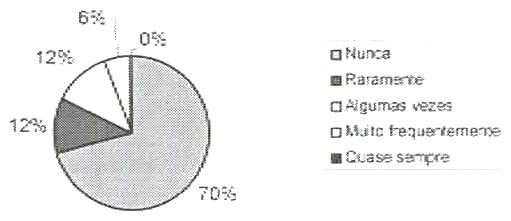
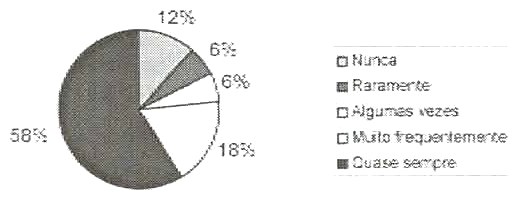
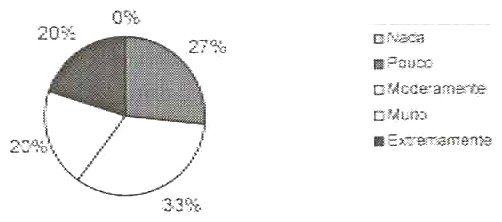
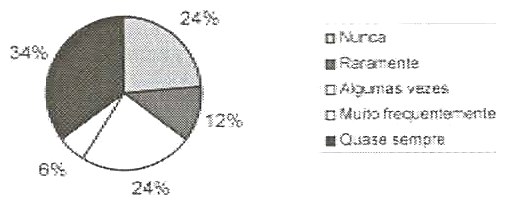
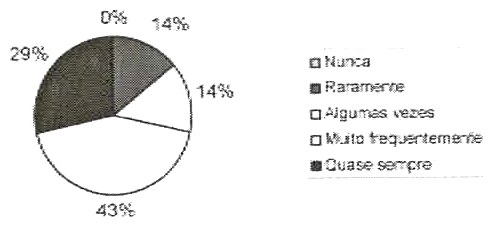
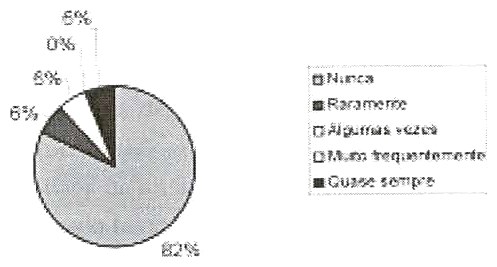
In a study of daughter caregivers, Falcão (2006) highlighted in the concluding remarks that married daughter caregivers had a more cohesive relationship than single daughters, underlining the importance of family networks in this process.
On the Zarit scale (1990), validated for Portuguese by Taubi (2004), we observe that feeling as if one were the only person the family member with dementia can depend on is a source of stress, and it emerged as the question with the third-highest score on the scale, followed by these questions, which corroborate the statement: “Do you feel your relative is dependent on you?” and “Overall, how burdened do you feel in caring for your relative.”
The burden on the family caregiver is also perceived by other family members:
“She forgets about herself, she only thinks about Mum and lives for her. Some days I get there and she hasn’t even combed her hair or had a wash.” (quest. H)
“I can see she’s run out of patience. When we got here he didn’t want to get out of the car because he said he didn’t know this place. She (daughter) sat down and gave up without even trying. So I (daughter-in-law) talked to him and he agreed to come. I saw that she was relieved, but she had no strength left.” (quest. E)
“Today her son (the patient’s) was at home, he could have helped bring her. Even knowing that I (daughter-in-law) would have to miss work, she asked me to come because she knows I’m willing, and if she asked him, he’d start by complaining a lot first, and she can’t take that anymore.” (quest. E)
The data presented suggest that, besides kinship, important variables for stress are the type of care provided, with the material, instrumental and functional support piling up on a single family member, and the process of readjusting roles, especially for the main caregiver.
“I feel tired. I had 14 children, I had a lot of work, but he was the one who looked after the money, the men’s business. Now I do my own work and take on what he used to do.” (quest. F)
Another question stands out, this time for its questionable result: “Are you afraid what the future holds for your relative?” Despite answers such as “rarely” and “never”, there are spontaneous remarks such as “I try not to think about it” (quest. A) and “The doctors tell me, but my faith is very great and my God has told me that with my husband it’s going to be different. I won’t see him dependent, stuck in bed.” (quest. F)
The lowest-scoring question was “Do you feel embarrassed over your relative’s behavior?”, which is explained by the family caregivers’ understanding of what is part of the progression of the disease. The only interview that gave this question the maximum score referred to a habit the older person had before the illness.
Final considerations
The present study points to the need for more in-depth research able to encompass more variables and so provide a better view of the issue. Moreover, this subject is dynamic and strongly influenced by the context in which it arises.
The data were collected at the Centre for the Care of Older People in Fortaleza (Ceará), where care is provided by a multidisciplinary team, and it can be seen that older people are able to receive care in the various dimensions in which the illness presents itself, within the limits of the socio-economic condition of the population. The nature of this care suggests that we are dealing with better informed and more knowledgeable caregivers, whose basic needs for pharmacological and non-pharmacological follow-up are met, which may have influenced their level of stress compared with a group without access to therapeutic resources.
The Zarit burden instrument (1990), although lengthy, proved easy to administer and able to screen numerous variables. However, as a closed questionnaire administered without the possibility of listening as in an interview, it loses important information that cannot be captured in a few words. Data from the instrument also need to be cross-referenced with additional data such as length of caregiving and socio-economic data. We would also stress that this instrument is valid for the longitudinal follow-up of care groups, as a way of having an impact on the progression of the illness and on the service provided.
We observed that the opportunity to talk about their anxieties and experiences is very enriching for caregivers, who also need to feel valued. By talking, it becomes possible to give new meaning to the events and feelings expressed.
We note the need for gerontological care to include care for the family, understanding the older person systemically. We suggest that training in gerontology and geriatrics include a course devoted to understanding the family and the impact it undergoes when an older member has chronic illnesses. Hence, working with older people means being involved with a subject with a long history, belonging to a context of relationships that influence their care.
Complexe Systémique: key points
This paper from the first issue of the Brazilian family therapy journal is valuable above all for the voices it records: daughters, wives, daughters-in-law and a former protégée turned caregiver speak of fatigue, loneliness and anger at absent siblings. The systemic reading is useful here: with Rolland, dementia appears as a progressive illness that draws the family into a lasting centripetal movement, at the risk of freezing everyone’s position. The study suggests that the choice of the main caregiver, almost always informal, replays old loyalties and rivalries, and that the feeling of being “the only one” weighs as much as the task itself. For clinical work, this is an invitation to bring the siblings together and to work on how roles are shared, not only to support the caregiver. The limitations are clear: seventeen questionnaires collected on a single day, a largely descriptive analysis and charts without a table of figures. Read alongside the Dutch study of caring for a family member with early-onset dementia, and the trial of family meetings for family caregivers.
Notes from the original
1 Envelhecimento ativo: uma política de saúde (Active Ageing: A Policy Framework): see references.
2 These people are called cuidadores primários, cuidador responsável or familiar responsável (primary caregivers, responsible caregiver or responsible family member).
References
Baum, M. e Page, M. (1991). Caregiving and multigenerational families. The Gerontologist, 31 (6).
Braga, S.L. (2007) – A percepção do cuidador quanto à prevenção de úlceras por pressão em pacientes acamados em um serviço de assistência domiciliar – monografia de especialização, Fortaleza, UECE.
Carter, B.; McGoldrick, M. (1997) – As mudanças no ciclo de vida familiar. Porto Alegre: Artes Médicas.
Cattani, R.B.; Girardon-Perlini, N.M.O. Cuidar do Idoso doente no domicílio na voz de cuidadores familiares. Recuperado em 06 de Fevereiro de 2004 Revista Eletrônica de Enfermagem da Faculdade de Enfermagem – UFG – Goiânia.
Chaiamowicz, F. (1998) – Os idosos brasileiros no século XXI. Belo Horizonte: Editora Postgraduarte Brasil.
Coelho, J.M.C.; Ramos L.R. (1999) Epidemiologia do envelhecimento no Nordeste do Brasil: resultados de inquérito domiciliar, Revista de Saúde Pública, (33).
Debert, G. G. (1999) A reinvenção da velhice. São Paulo: FAPESP EDUSP.
Falcão, D. V. da S. (2006) Doença de Alzheimer: um estudo sobre o papel das filhas cuidadoras e suas relações familiares, Tese de Doutorado na Universidade de Brasília, 2006, 284p.
Falcão, D.V.S.; Dias, C.M.S.B.; Bucher-Maluschke, J.S.N.F.; Salomão, N.M.R. (2006) As relações familiares entre as gerações. In D.V.S. Falcão & C.M.S.B. Dias (Orgs) Maturidade e velhice: pesquisas e intervenções psicológicas. (págs 59-80). São Paulo: Casa do Psicólogo.
Garrido, R.; Menezes, P. R. (2004) Impacto em cuidadores de idosos com demência atendidos em um serviço psicogeriátrico. Revista de Saúde Pública, vol. 38 nº6, obtido em www.scielo.br em 03/10/2006.
Gatz, M.; Bengston, V.L.; Blum, M.J. (1990). Caregiving families. In Birren. Handbook of Psychology of Aging. 3ª Ed. San Diego, CAL: Academic Press.
Giacomin, K. C.; Uchoa, E.; Costa, M. F. F. L. (2005) – Projeto Bambuí: a experiência do cuidado domiciliário por esposas de idosos dependentes. Caderno de Saúde Pública vol.21 nº5 Rio de Janeiro Set./Out.
Gwyther, L. P. (1985), Cuidados com portadores da doença de Alzheimer: manual para cuidadores e casas especializadas. Rio de Janeiro: Sindicato Nacional dos Editores de Livro.
Herrera Jr. E.; Caramelli, P.; Nitrini, R. (1998) Estudo epidemiológico populacional de demência na cidade de Catanduva, Revista de Psiquiatria Clínica, Estado de São Paulo.
Hughes A. J.; Daniel S.E.; Kilford L.; Less A. J. (1992) Accuracy of clinical diagnosis of idiopathic Parkinson’s disease: a clinico-pathological study of 100 cases. Neurol Neurosurg Psychiatry, USA.
IBGE – Fundação Instituto Brasileiro de Geografia e Estatística (2004). Síntese de indicadores sociais 2004. Obtido em 18/07/2005, a partir de http://www.ibge.gov.br/home/estatística/população/condicaodevida/indicadoresminimos/sinteseindicsociais2004/inidc_sociais2004.pdf
Karsh, Ú. M. (2003) Cuidadores familiares de idosos: parceiros da equipe de saúde. Revista Serviço Social e Sociedade, 75, ano XXIV. Editora Cortez, São Paulo.
Mendes, P.B.M.T. (1995) Cuidadores: heróis anônimos do cotidiano. São Paulo: Dissertação de mestrado em Ciências Sociais, PUC/SP.
MINISTÉRIO DA SAÚDE (2005), Envelhecimento Ativo: uma política de saúde, Brasília/DF.
Montano, M.B.; Ramos L. R. (2005), Declínio cognitivo e quadros demenciais, in Guia de geriatria e gerontologia, Barueri/SP: Ed. Manole.
Neri, A.L. & Sommerhalder, C. (2006) As várias faces do cuidado e do bem estar do cuidador. In A. L. Neri, Cuidar de idosos no contexto da família: questões psicológicas e sociais, 2ª ed, Campinas-SP – Editora Alínea.
PNAD – Pesquisa Nacional por Amostra de Domicílios (2002). Instituto Brasileiro de Geografia e Estatística (IBGE).
Ramos, L.R. (1993) Perfil do Idoso em área metropolitana na região sudeste do Brasil: Resultados do Inquérito domiciliar. Revista de Saúde Pública 27 – 87-94.
Realvas, A.P. (2003) Por detrás do espelho: da teoria à terapia com a família. Coimbra: Quarteto.
Rolland, J. (1995) Doença Crônica e o Ciclo de Vida Familiar. In B. Carter, M. McGoldrick & colaboradores. As mudanças no ciclo de vida familiar, 2ª Ed, Porto Alegre, Artmed Editora.
Saad, P.M. (1999) Transferências de apoio entre gerações no Brasil: um estudo para São Paulo e Fortaleza. In A. A. Camarano (org), Muito além dos 60: os novos idosos brasileiros. Rio de Janeiro, IPEA.
Santos, S. M. A. & Rifiotis, T. (2003). Cuidadores familiares de idosos dementados: uma reflexão sobre o cuidado e o papel dos conflitos na dinâmica da família cuidadora. In O. R. M. V. Simson, A. L. Neri & M. Cachioni (Orgs), As múltiplas faces da velhice no Brasil (pp 141-164). Campinas, SP: Alínea.
Silva, S.L. (2006) Intervenções neuropsicológicas, promoção de saúde e melhoria de qualidade de vida de idosos. In D.V.S. Falcão & C.M.S.B. Dias (Orgs), Maturidade e Velhice: pesquisas e intervenções psicológicas (pp. 381-406). São Paulo: Casa do Psicólogo.
Taubi, A, II; Sergio B.; Andreoli III; Paulo H.; BertolucciI V. (2004) Dementia caregiver burden: reliability of the Brazilian version of the Zarit caregiver burden interview, Cadernos de Saúde Pública v.20 n.2 Rio de Janeiro mar./abr.
Zarit, S. H. (1990) Interventions with frail elders and their families: are they effective and why? In M.A. Stephens; J. H. Crowter; S.E. Hobfoll; D.L. Tennembaum. Stress and coping in later-life families. Washington, Hemisphere.
Unofficial English translation of Estudo sobre o impacto em ter um portador de demência na família, by Albertina Proença Rodrigues Alves and Júlia Sursis Nobre Ferro Bucher-Maluschke, Revista Brasileira de Terapia Familiar, vol. 1, no. 1 (2008), doi: 10.60114/rbtf.v1i1.127, under a CC BY 4.0 licence. Translation (with the help of artificial intelligence) and layout: Complexe Systémique, November 2026 — the work has been modified under the terms of the licence. Neither the authors nor the journal are responsible for this translation; the original version prevails.
Unofficial English translation of “Estudo sobre o impacto em ter um portador de demência na família”, published in Revista Brasileira de Terapia Familiar (2008) under a CC BY 4.0 licence. Made by Complexe Systémique with the help of artificial intelligence, it does not come from the authors or the journal, who are not responsible for its content; the original version prevails.
Read the original articleHow to cite this article
Alves, A. P. R., et Bucher-Maluschke, J. S. N. F. (2008). A Study of the Impact of Having a Family Member with Dementia (Complexe Systémique, Trans.). Complexe Systémique. https://app.complexe-systemique.com/en_GB/articles/a-study-of-the-impact-of-having-a-family-member-with-dementia (Original work published in 2008 in Revista Brasileira de Terapia Familiar, v. 1, n. 1 (2008); republished in 2008 by Revista Brasileira de Terapia Familiar, https://revbrasterapiafamiliar.abratef.org.br/revista/article/view/127)
To go further
- The Other Within Oneself: Understanding Care for a Family Member with Early‐Onset Dementia Through the Lens of DividualityA family facing early-onset dementia.
- Effectiveness of Family Meetings for Family Caregivers on Delaying Time to Nursing Home Placement of Dementia Patients: A Randomized TrialBringing the family together around care.
- How Older Adults and Their Families Perceive Family Talk about Aging-Related EOL Issues: A Dialectical AnalysisTalking about the end of life as a family.
Related training courses
 Symposium
État des Lieux: a psychological approach to spaces
Replay of the “État des Lieux” conference (Paris, 16 October 2026): Ivy Daure, Maurizio Frisina, Viola Sallay and Gilbert Pregno on places as a clinical resource. In French.
 Symposium
Digital technology, AI and mental health
Conference in Lyon, 11 December 2026: digital technology, artificial intelligence and mental health. Six talks, replay for participants. In French.
 Short course
The suicidal crisis in adolescents and young adults
Training: assessing and supporting the suicidal crisis in adolescents and young adults. Clinical landmarks and systemic tools. In French.
 Certifying course
Training in Systemic Therapy and Interventions – Cycle 1
Certifying training cycle in systemic therapy and interventions – year 1. Courses, supervision and practice, aligned with EFTA/SFTF. In French.
Related articles
 Blog
Adult parentification: when being useful becomes a condition for being loved
Why is it sometimes so hard to hand over? Julien Besse explores parentification and parentalisation, acknowledgement and the place we take in our adult relationships.
 Scientific
Family group conference provision across the lifespan of child welfare intervention: A mixed-method realist-informed evaluation comparing three stages of welfare concern
Early help, child protection or children in care: among 155 UK families, experiences and outcomes of family group conferences vary very little by stage.
 Scientific
Transitioning to the Business of a Session in Collaborative-Dialogic Meetings: A Conversation Analysis
How do Open Dialogue therapists move to the business of a session? The open question creates silences and family negotiation: a conversation analysis of ten sessions.
 Scientific
How can we BeST? meet the needs of adoptive families? Relevant findings from a major Randomised Controlled Trial of infants in foster care in the UK
The BeST? trial (488 infants in care in the UK) reread for adoption: holistic, ongoing assessment of children and a move to dual registration.
Comments 0
Log in to join the discussion. Log in