Training in Systemic Therapy and Interventions – Cycle 1
0 reviews
€4,680.00
Sessions
Présentiel Du 9 au 13 mars 2026
Génogramme - Gisèle Abi Chahine
Thérapie systémique à l'ère du numérique - Julien Besse
Le 21 septembre 2026
Du 7 au 9 octobre 2026
Le 2 novembre 2026
Du 18 au 20 novembre 2026
Du 9 au 11 décembre 2026
Le 21 décembre 2026
Loading...







Certifying cycle – Year 1
Year 1 — Foundations of systemic thinking
The entry point into a long, 1400-hour certifying cycle, designed to train systemic therapists and practitioners with depth, rigour and progressiveness.
This first year lays the indispensable groundwork. It does not merely introduce a few concepts: it installs a framework of thought, an emerging clinical stance, first interviewing landmarks and a way of reading human situations in their relational complexity.
The hybrid format plays a central role here. In-person sessions allow human embodiment, experimentation, role-playing, work on oneself, the experience of the group and lively learning. Remote sessions bring flexibility, continuity of follow-up, progressive integration of theoretical input and a more sustainable organisation over time.
Year after year, the journey rises in clinical responsibility. This first stage is therefore both a complete training in itself and the gateway to a particularly ambitious certifying cycle.
Year 1 of 4
260 hrs over 11 months
Hybrid format
15 participants max
Clinical placement
Supervision & intervision
Training delivered in French
Monthly payment possible • Institutional funding possible
A genuine entry into systemics
You lay solid foundations before trying to “apply tools”.
A pedagogically designed hybrid format
In-person time serves the human experience; remote time supports continuity and flexibility.
Real clinical progression
Basic interviewing, simple hypotheses, beginner supervision and clinical placement.
A long, certifying trajectory
This Year 1 is part of an overall journey of 1400 hours over 4 years.
Because in systemics, the quality of practice depends first on the quality of the framework of thought
This first year gives you the epistemological foundations, the major systemic models and a first capacity for building useful hypotheses.
The work does not stay theoretical: workshops, simulations, role-playing, first interviews, supervision and placement establish a professionalising dynamic from the very first year.
Year 1 is designed as the foundation of a particularly broad, progressive and demanding certifying cycle, leading towards greater clinical autonomy over the 4 years.
Skills developed
What you will develop from the first year
- Describe and mobilise the epistemological foundations of the systemic approach.
- Identify the main systemic models and their postulates.
- Conduct a basic systemic interview under supervision.
- Develop simple, useful systemic hypotheses.
- Bring out a reflective clinical stance.
- Link theory, practice, ethics and context in a first logic of intervention.
The choice of the hybrid format
In person for embodiment. Remote for continuity.
This training is neither a simple condensed in-person course nor a theoretical distance-learning programme. The hybrid format is designed here as a genuine pedagogical choice.
- In-person time supports the group experience, work on stance, experiential workshops, simulations and the quality of the human bond.
- Remote time facilitates regular follow-up, progressive integration of content, organisational flexibility and continuity of the journey over several months.
The goal is simple: keep the experiential depth of the encounter without sacrificing the flexibility a long training requires.
The theoretical, clinical and experiential foundations of systemic thinking
The programme is organised into major progressive blocks, identical from one session to the next; the detailed calendar is communicated upon registration.
Block 1
Epistemology and systemic thinking
- General systems theory
- Fundamental principles of the systemic approach
- First- and second-order cybernetics
- Constructivism and phenomenology
Block 2
Communication and the Palo Alto legacy
- Communication theory
- Major contributions of the Palo Alto school
- First interactional readings of problems
- Landmarks for observing relational loops
Block 3
The major systemic currents
- Structural approach
- Strategic approach
- Solution-focused approach
- Narrative and process approaches, Milan school
Block 4
Family, life cycle and contemporary contexts
- A systemic reading of the family
- Contemporary families and the life cycle
- Family map, boundaries, roles and functions
- First landmarks of interculturality and context
Block 5
The systemic interview and first techniques
- Structure of the systemic interview
- Genogram
- Foundations of the strategic resolutive method
- Organisation of the therapeutic process
Block 6
Work on oneself, supervision and placement
- Exploratory work on the family of origin
- Introduction to social justice and intersectionality issues
- Beginner supervision and intervision
- Clinical placement and experience feedback
Teaching methods
- Interactive theoretical courses
- Experimentation workshops
- Role-playing and simulations
- Reading notes and guided personal work
Clinical guidance
- Individual and group supervision
- Progressive intervision
- Supervised placement or clinical practice
- Learning through feedback on situations
Validation
- Progressive validation of skills
- Written work and clinical reflections
- Continuous assessment of learning
- Active attendance expected throughout the journey
Intended audience
For which professionals
This Year 1 is aimed at professionals in the mental-health, social, medico-social or corporate fields who wish to deepen their practice from a systemic perspective.
Psychologists
Psychiatrists
Physicians
Nurses
Specialised educators
Medico-social professionals
Social workers
Marriage counsellors
Family mediators
Managers, coaches, executives
Framework of the cycle
A long, structured and recognised training
- Certifying cycle over 4 progressive years for a total of 1400 hours.
- Double certification in collaboration with Le Lien Systémique.
- Training aligned with EFTA and SFTF standards and registered within AEP frameworks.
- International dimension with two parallel cohorts and exchange opportunities between them.
- Eligible for institutional funding under Qualiopi certification.
Teaching team
A first year carried by a solid clinical team
The cycle's main trainers are Yara Doumit, Julien Besse and Gisèle Abi Chahine.
The training is part of a wider teaching environment that also includes leading guest trainers, among them Robert Neuburger, Jacques Pluymaekers, Ivy Daure, Bernard Filleul, Damien Légère, Marie-Jeanne Schon, Cinthe Lemmens, Stessie Fougeroux, Marie-Christine Cabié-Jacquemin and Lola Pernot.
With the group limited to 15 participants, the guidance can remain demanding, lively and personalised.
Year 1 of the certifying cycle
Entering systemic thinking seriously
This first year is designed to give a strong foundation to those who want to train seriously in systemic therapy and interventions, within a hybrid, progressive and professionalising framework. The training is delivered in French.
Year 1: 260 hrs • Full cycle: 1400 hrs • Hybrid format • Funding possible
Info
There are no reviews
Our programmes
 Webinar
Extramarital affairs: what does the therapist do when the couple explodes?
Free webinar: how to position yourself as a systemic therapist in the crisis of the extramarital affair. Revelation, secrecy, multipartiality.
 Symposium
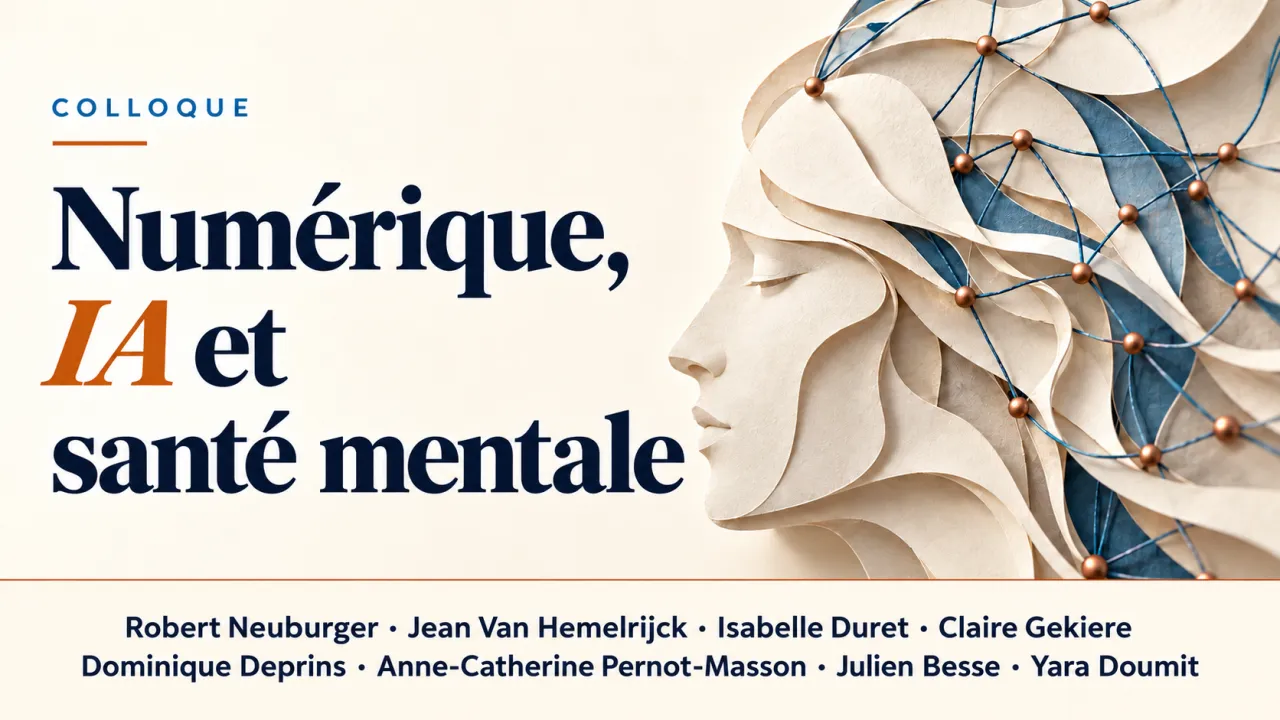
Digital technology, AI and mental health
Conference in Lyon, 11 December 2026: digital technology, artificial intelligence and mental health. Six talks, replay for participants. In French.
 Webinar
The three loves
Free live webinar with Dr Robert Neuburger, 1 October 2026, 6 pm (Paris): the three loves, attachment and ways of loving. Held in French.
 Short course
The suicidal crisis in adolescents and young adults
Training: assessing and supporting the suicidal crisis in adolescents and young adults. Clinical landmarks and systemic tools. In French.