AI-assisted translation
This version was translated from French by Complexe Systémique with the help of artificial intelligence. In case of doubt, the original version prevails.
Readings · Discovering systemics
Books to discover the systemic approach easily
You want to discover the systemic approach, but you don’t know which books to start with. Here are my reading recommendations for a gentle initiation into this theoretical current in psychology.
The human pyramid
To put it simply, the systemic approach is a current that proposes taking a step back to gain height in interpreting human phenomena. It opens in particular onto the idea that we can suffer without this being due to a psychological problem or a personal dysfunction, but to a relational phenomenon in which we are caught, sometimes without knowing it. To use a metaphor, we could say that every human group — a family, an organization, a company… — is like a human pyramid.
As a member of several groups yourself, you belong to just as many human pyramids. Although you do not perceive it directly, your actions bring about a change in the structure of the whole, however imperceptible it may seem, and can produce consequences for a person at the other end of the pyramid. Imagine that one of the members gets a cramp: they will inevitably shift their position, which will naturally lead every other person in the structure to adjust their own to compensate for the imbalance — every system always tending towards equilibrium. Thus, some will bear a little more weight on one shoulder, others will have to contort themselves to hold the whole together, while some will notice nothing at all. It all depends on their place in the system.
Shifting the way we look
In the same way, in a family, a company or an institution, the behaviours of some always have consequences for the attitudes of others. And if you follow this idea, it is possible that some people suffer from a situation caused — without their even suspecting it — by a relational phenomenon played out at the other end of the pyramid. Our society is built in such a way that we then tend to target our actions at the person in distress, looking for factors inherent to their person, or seeking the causes of their unease in their private life, their work, their childhood, their unconscious… whereas if we shift our gaze, if we observe the complex relational context in which they find themselves, the solution sometimes appears so obvious.
“When a flower doesn’t grow, you change the environment in which it grows, not the flower.”
Paulo Amaro
A “de-pathologizing” approach
One of the aspects I find most interesting in this approach is the fact that it strikes me as “de-pathologizing”. It builds on people’s resources and abilities to solve their own problems, rather than defining them by a psychopathological diagnosis that confines them to an identity of being ill, deviant, dysfunctional. So many people have gone to see cohorts of therapists with the ambition of finding what was “dysfunctional” in them so as to correct it, or to learn to “live with it”. And guess what: when we look for something, our mind is built in such a way that we always end up finding it a bone to gnaw on — we always end up finding the signs we came looking for. It is a cognitive bias well known to psychologists working in research.
So, how can we shift the way we look? How can we understand what is happening to us, or what is wearing down the people around us, by taking a step back and trying to grasp the relational stakes in which they are caught? In the video below — in French — I let you discover my reading recommendations for an initiation into this current of thought, with references that are easy to approach and fascinating.
How to cite this article
Besse, J. (2021, August 13). Books to discover the systemic approach easily. Complexe Systémique. https://app.complexe-systemique.com/en_GB/articles/books-to-discover-the-systemic-approach-easily
To go further
- My systemic reading tips for the summerA summer selection to extend your discovery of the systemic current.
- Which systemic books to pack for the holidays?New systemic references to slip into your suitcase.
- Readings to discover psychologyThree books to enter psychology as if entering Willy Wonka’s chocolate factory.
Related training courses
 Symposium
État des Lieux: a psychological approach to spaces
Replay of the “État des Lieux” conference (Paris, 16 October 2026): Ivy Daure, Maurizio Frisina, Viola Sallay and Gilbert Pregno on places as a clinical resource. In French.
 Certifying course
Training in Systemic Therapy and Interventions – Cycle 1
Certifying training cycle in systemic therapy and interventions – year 1. Courses, supervision and practice, aligned with EFTA/SFTF. In French.
 Certifying course
Training in Systemic Therapy and Interventions – Cycle 2
Certifying training cycle in systemic therapy and interventions – year 2. Clinical complexity, supervision and practice. EFTA/SFTF aligned. In French.
 Certifying course
Training in Systemic Therapy and Interventions – Cycle 3
Certifying training cycle in systemic therapy and interventions – year 3. In-depth intervention, supervision and practice. EFTA/SFTF aligned. In French.
Related articles
 Blog
Blog Adult parentification: when being useful becomes a condition for being loved
Why is it sometimes so hard to hand over? Julien Besse explores parentification and parentalisation, acknowledgement and the place we take in our adult relationships.
 Scientific
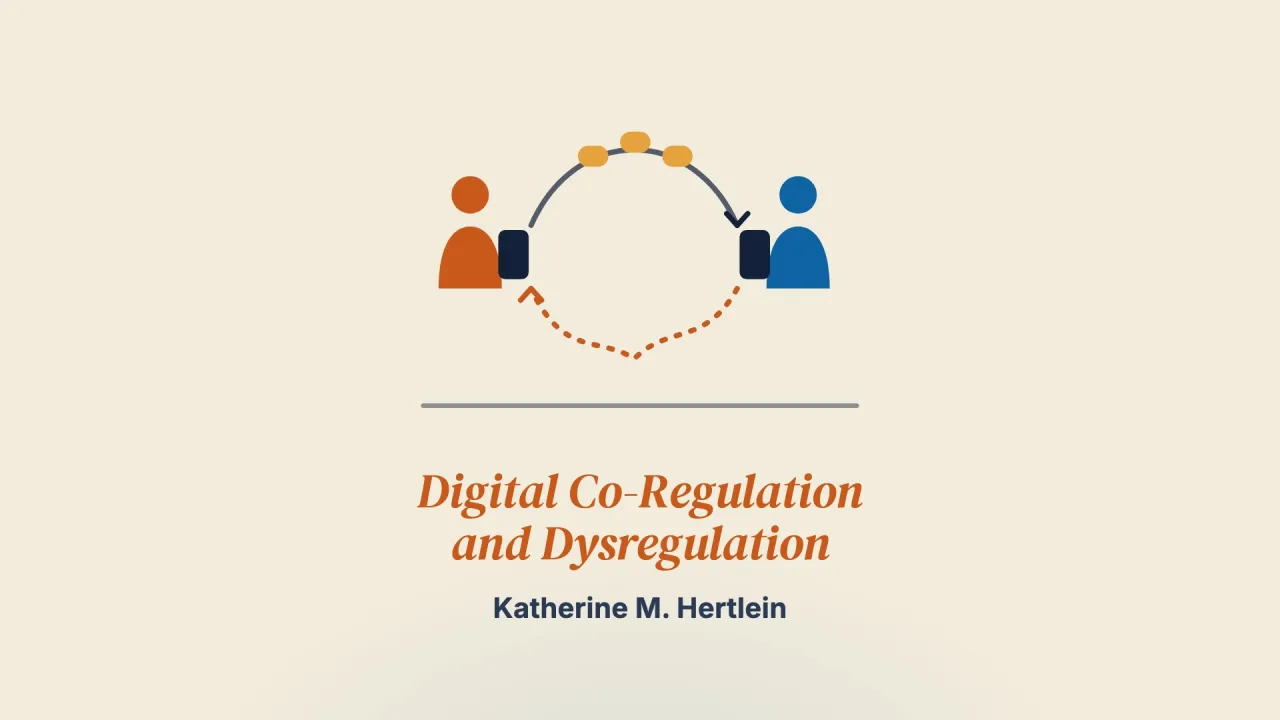
 Digital Co-Regulation and Dysregulation in Romantic Relationships: A Systemic Model of Technology-Mediated Emotional Processes
Checking, chasing, blocking: 31 interviews show how the phone regulates or dysregulates a couple’s anxiety, with a systemic model of the loop.
 Scientific
 Collaborative Polyphonic Writing as Therapeutic Practice: A Longitudinal Case Study
A patient and her therapist co-write her autobiography: the psychiatric diagnosis becomes one voice among others, coordinated by an “I as a writer”.
 Blog
Blog Toxic, narcissistic, borderline: what therapy speak does to your relationships
Narcissistic, borderline, toxic: therapy speak has left the consulting room. Julien Besse shows how these labels close the debate and relieve us of our own part.
Comments 0
Log in to join the discussion. Log in