AI-assisted translation
This version was translated from Portuguese by Complexe Systémique with the help of artificial intelligence. In case of doubt, the original version prevails.
Revista Brasileira de Terapia Familiar · Case study
Codependency and transgenerationality: a case study of codependency from the perspective of Bowenian transgenerational theory
Making oneself useful in order to deserve love: where does this pattern come from when no addiction is involved? Drawing on a couple seen at a social clinic, Daniely Vitor de Albuquerque and Eliane Santos Alves reread codependency through Murray Bowen’s concepts: differentiation of self, triangles, family projection, multigenerational transmission, sibling position and emotional cutoff. They show how a male way of caring, handed down from grandfather to father to son, is replayed in the complementarity between José, the caregiver, and Maria, the one cared for.
Unofficial English translation. This article is a translation of Codependência e Transgeracionalidade: Estudo de Caso de Codependência sob a Perspectiva da Teoria Transgeracional Boweniana, by Daniely Vitor de Albuquerque and Eliane Santos Alves, published in the Revista Brasileira de Terapia Familiar (ABRATEF), vol. 6, no. 1 (2016), doi: 10.60114/rbtf.v6i1.97, under a CC BY 4.0 licence. Translated by Complexe Systémique in November 2026 with the help of artificial intelligence: the original Brazilian Portuguese text has been translated into English and reformatted, which constitutes a modification of the work under the terms of the licence. Paragraphs and headings are those of the journal; the authors’ biographical notes, printed as footnotes on the first page, are included in the presentation; the quotations from Zampieri and from Kerr and Bowen are translated from the article’s Portuguese, not taken from the original texts; a few typographical errors, notably in the names of Kerr and Schwartz, have been corrected silently. The abstract is the authors’ own English version. This translation was made neither by the authors nor by the journal, who are not responsible for its content or for any errors. The original version prevails.
If codependency is the disorder of undifferentiation of self, fostering a family environment that leads the person to differentiate is of the utmost importance.
Daniely Vitor de Albuquerque, Eliane Santos Alves
Abstract
The codependency is defined as an emotional, psychological and behavioral condition, a relational pattern where the concern and care for each other is greater than the self-care. it is known that codependency extrapolates homes with drug addicts homes. From the clinical practice with couples with relational pattern of codependency we sought to investigate whether it is possible to identify transgenerational aspects that favor the development of this disorder. Based on this issue, it sought, through case study, to investigate the possible links between codependency and transgenerationality from the perspective of Bowen’s transgeracional theory. We found that the way the subject experiences the emotional triangulation, family projection process, emotional process of the nuclear family, multigenerational design process, birth place among brothers and emotional breakdown and differentiation of self within their family of origin fosters the perpetuation of the codependency as a repeating pattern of maladaptive functioning.
Keywords: codependency; codependent; transgenerationality.
Introduction
Codependency is still a controversial topic in psychology, calling for particular attention that can support therapeutic work with those who suffer from this disorder. Zampieri (2004b) describes codependency as “an emotional, psychological and behavioral condition, a relational pattern and a disorder of non-identification of the self” (p. 68). Codependency means being directly involved with someone who is chemically dependent and, by extension, having lived in a stressful, parentified environment, marked by responsibilities incompatible with one’s age. The same author also stresses that the presence of chronic illness, physical or mental disability, or any other rigid condition that sets up a dysfunctional relational pattern can lead to the emergence of codependency in family members.
Building on Zampieri’s (2004b) idea that the very construction of a codependency pattern takes place transgenerationally, we will discuss the possible links between codependency and the transgenerational aspects found in Murray Bowen’s transgenerational systemic theory, exploring the concepts of differentiation of self, emotional triangulation, the nuclear family emotional process, the family projection process, the multigenerational transmission process, sibling birth position and emotional cutoff.
We understand transgenerationality as what encompasses, what happens in or what concerns several generations; it is the inheritance passed down through the generations (Souza & Carvalho, 2003). It is through this transgenerational transmission that families pass on values, beliefs, legacies, myths and patterns to their members. It is this repetitive transmission of maladaptive patterns that perpetuates disorders within families, repeating in each generation a suffering already experienced by others in the same family.
Through the analysis of these concepts applied to a case study, this paper sets out to investigate the existence of codependency as a repetitive, maladaptive transgenerational pattern that reaches beyond the homes where chemical dependency is present (Zampieri, 2004b).
Exploring and seeking to understand the phenomenon of codependency is important if the concept is to be properly understood and applied, and if it is to assist diagnosis and therapeutic intervention, so as to foster the identification of the repetitive and dysfunctional transgenerational patterns of the past, integrate them in the present and bring about changes that reach future generations.
Codependency
Chemical dependency is the subject of countless scientific studies and is regarded as a serious and complex public health problem (Prata & Santos, 2009). If we consider that the dependent person is a being in relationship with their environment, that person is the spokesperson for a dysfunctional system. This leads us to the codependent family, those who complement the dependent person and who need treatment and prevention as much as the dependent person does (Zampieri, 2004b).
Codependency, however, is not restricted to the relatives of dependent people, and manifests itself in other contexts and configurations. Zampieri (2012) extends the concept of codependency beyond drug addiction, to include any dysfunctional and persistent situation in which someone is reinforced in maintaining and encouraging the inappropriate behavior of others.
Zampieri (2004b) defines the codependent person as:
A person who lives directly with someone who has a chemical dependency, in particular on alcohol. And, by extension, people who, for any other chronic reason, have lived a prolonged parentified relationship in their family of origin, taking on early responsibilities inappropriate for their age and cultural context (p. 63).
Our genetic programming places us in someone’s care at birth, since our survival depends on that care. The same programming also disposes us to become caregivers of other human beings at other times in life. Zampieri (2004b) emphasizes that what is healthy is to keep a flexibility between the tendencies to care and to be cared for, and that it is the emphasis placed on one tendency or the other that places a person in dependency (being cared for in most of the roles they play) or in codependency (being the caregiver in their roles).
The concept of codependency speaks of a compulsive tendency to care for and control the other. It means focusing on the other to the detriment of one’s own needs; it is a constant search for approval in order to feel secure and to have an identity. It is the illness of lost self-esteem, resulting in suffering and harm for the person.
Codependency shows itself in relationships; it concerns the way of relating. According to Zampieri (2004, 2012), it manifests itself in two spheres: the individual sphere – characterizing the personality disorder proposed by the same author – and the systemic group – where the whole group appears bound to a dysfunctional and inappropriate way of functioning.
Against this background, we will focus on codependency that exists without chemical dependency being present, considering that a dependent behavior pattern, understood here as a tendency to demand care from others (being cared for), is sufficient for dependency and codependency to feed each other within a relationship.
Within the family context, codependency appears as a way of coping and surviving in a dysfunctional and stressful environment, without any possibility being created of feeling secure enough to make one’s own choices (Humberg, 2004), or the capacity to separate from it, the family group, in a healthy way. According to Bowen (1988, in Zampieri, 2012), this refers to the concept of differentiation of self, which we will address when discussing transgenerationality.
When studying codependency, it seems necessary not only to examine the present relationship in which the person finds themselves, but also to widen the view to their whole relational history. One must investigate the relational patterns learned in their family of origin, the presence of chemically dependent people or of chronic illness, any parentification undergone, and development in a stressful, repressed or non-functional family environment over long periods. Nor can we leave out of this analysis the other areas of the person’s life, as well as their relationships in the various social groups to which they belong.
Despite the different definitions of codependency found in the literature, this disorder has not yet been officially recognized, and does not appear in the ICD-10 or the DSM-V. The proposal to include codependency as a personality disorder is put forward by Zampieri (2004a), who argues that a consistent theoretical apparatus is needed to ground the diagnosis and the interventions required when working with codependency.
Humberg (2004) points out that, although this concept has no diagnostic validity, it needs to be defined so that it can be used as well as possible, in order to help those who suffer from codependency and to prevent the concept from becoming generic and being misused.
In setting out the different concepts of codependency and its history, Zampieri (2004a) concludes that, despite this difficulty, various studies converge in pointing to the characteristics most frequently found in codependent patients. Usually defined as a behavioral, emotional and psychological condition, codependency presents characteristics centered on the person themselves, on the couple and on the family system. For it to be recognized and diagnosed as a disorder, these characteristics must be recurrent and permanent, resulting in harm to the person’s functioning in one or more spheres of their life.
In order to systematize diagnosis, Zampieri (2012) presents a detailed list of symptoms (areas of life affected), divided into the categories of compulsive helping (their priority is the other’s need, they must constantly be helping in order to feel useful, they take on most of the responsibilities, they control and invade the other’s life in the name of the help they give), recurrent relationships (they become involved in conflictual relationships with emotionally unstable partners), clear limits (they cannot impose or respect limits, they always give a second chance), satisfaction or pleasure (difficulty in the sexual relationship, prioritizing the other’s pleasure), sensitivity and mood (low self-esteem, difficulty in giving and receiving affection, mood swings, low tolerance of criticism), childhood (they were parentified or have a drug-addicted relative), fixed pattern (even when they try, they cannot get out of this pattern).
In general, to understand the phenomenon of codependency, one has to take into account the person’s history, customs, culture, relationships and the suffering that arises from this condition. When we speak of codependency in families, we must pay attention to the fact that the whole family system is affected by it: boundaries are not clear, interfamily games follow fixed patterns that tend to be repeated by the next generations, parents are immature and enmeshed, children are triangulated (Zampieri, 2004b).
Once codependency has been diagnosed, its modus operandi understood and the areas affected by the disorder identified, action is needed. The therapeutic work proposed by Zampieri (2004b) is network intervention, understood as “intervention that involves more than one complementary subsystem in the codependent relationship” (p. 211).
Transgenerationality
Understanding a person involves knowing their life history, the social context in which they live and their family. It is not only the nuclear family that should be observed: knowing the ascending and descending generations (if any) provides a range of information that can help us build a broader picture of the person.
The family is a complex locus of relationships in which its members are recognized as subjects and in which they build their first bonds, which will serve as a model for all the other bonds built over the course of life (Rodrigues & Chalhub, 2009). The family is our first frame of reference for the world.
The concept of transgenerationality has been studied by many theorists from various schools within psychology. Trans, in its etymological definition, is a prefix meaning change; displacement; beyond; through. Transgenerationality can be understood as what encompasses, what happens in, or what concerns several generations; it is the psychic inheritance that crosses the generations and remains present throughout the family’s history (Souza & Carvalho, 2003).
The family passes on values, beliefs, legacies, myths and patterns to its members. This happens through generational psychic transmission. This transgenerational psychic transmission includes both positive and negative aspects. The positive elements ensure the transgenerational survival of the family group and facilitate human survival. The negative elements are those loaded with dysfunctional and maladaptive content. This transmitted content is not always identified, worked through and integrated by the person consciously. And it is this unmetabolized transmitted content that leads the person to reproduce, in their relationships, repetitive dysfunctional patterns that lead to psychic suffering (Souza & Carvalho, 2010).
Nichols and Schwartz (2007) discuss Murray Bowen’s transgenerational school, Bowen being, together with Boszormenyi-Nagy, one of the main representatives of this school within systemic family therapy.
Bowen believes that we have less autonomy in our emotional lives than we imagine, since we are the product of a set of influences received from our families of origin over time. He postulates that we carry an unresolved emotional reactivity towards our parents, which shows itself as the repetition of patterns in each new relationship we enter (1966, in Nichols & Schwartz, 2007).
Bowen’s theory (1989, in Souza & Carvalho, 2010) defines the family as an emotional unit organized around two counterbalancing life forces: one that leads the person towards union with their family and another that drives them to break free of the family towards individuation. Ideally, there should be a balance between these two forces. When the imbalance tips towards union, fusion, agglutination and lack of differentiation occur.
The Bowenian concepts concerning transgenerationality are: differentiation of self, triangles, the nuclear family emotional process, the family projection process, the multigenerational transmission process, sibling birth position, emotional cutoff and the societal process.
Differentiation of self
This concept is the foundation of Bowen’s theory; it refers to the individual’s capacity “to think and reflect, not to respond automatically to emotional pressures, internal or external” (Kerr & Bowen, 1988, in Nichols & Schwartz, 2007, p. 110).
Differentiation is about separating emotional and intellectual processes; undifferentiated people are overtaken by emotionality and driven by the emotional climate of their family. They find it hard to maintain their autonomy and, under pressure, cannot keep thoughts and feelings in balance.
Differentiated people are able to be flexible, respond to pressure without being held back by emotional impulses, and manage to keep a balance between feeling and thinking. They are able to take a position and maintain their autonomy; they take part in the emotional climate of their families of origin without letting themselves be imprisoned by it (Zampieri, 2012).
Differentiating oneself also concerns the degree of separation a person has from their family of origin (Zampieri, 2012). We are born fused, undifferentiated from our family of origin. But the person is expected to be led towards independence and autonomy, separating emotionally from their family and asserting themselves as an active subject in that system. This stance gives the person the possibility of thinking and acting according to their own views, even if this goes against what their family holds.
According to Zampieri (2012), Bowenian theory postulates that chronic anxiety results from the person’s state of undifferentiation in relation to their family of origin; differentiation of self would thus be the solution to chronic anxiety.
Emotional triangles
The concept of triangulation refers to the relational system between three people, formed by a dyad and a third person invited into this relationship in order to reduce anxiety and relieve pressure.
A triangle occurs when two people have a problem and, because they cannot resolve it or manage the anxiety it generates, one or both of them turn to someone outside the dyadic relationship to solve the problem and relieve the tension and anxiety (Nichols & Schwartz, 2007).
When the involvement of this third person is temporary or prompts the two to resolve their conflicts, the triangle does not become fixed. But if the third person’s involvement is constant, the triangle becomes part of the relationship. What defines triangulation is the frozen position of the dyad in relation to the third person invited into the relationship. The dyad becomes reactive to the third person’s behavior.
The greatest influence on the manifestation of triangles is anxiety. The greater the anxiety, the greater the activity of the triangle. For Kerr and Bowen (1988, in Martins, Rabinovich & Silva, 2008), triangles are forever. They remain latent or active depending on the tensions and anxieties that arise in the dyad.
Nuclear family emotional process
Originally called the undifferentiated family ego mass in Bowen’s theory, this concept refers to the emotional forces in the family that act over the years and across generations, and that require the person to give up as much of their autonomy as possible in order to belong to the family. This concept takes us to agglutination and fusion within the family. The psychosocial pressures experienced by this undifferentiated ego mass foster the agglutination of its members.
Nichols and Schwartz (2007) explain that a lack of differentiation of self in relation to the family of origin leads the couple to an emotional cutoff from their parents, which leads to fusion within the marriage. With this new fusion, the couple develops some means of controlling its intensity. The means found and developed are: emotional distance between the partners, physical or emotional dysfunction in one of the spouses, marital conflict, and transmission of the tension to one or more children, who will develop a symptom.
Thus, the intensity of this problem is linked to the degree of differentiation of self, the extent of emotional cutoff from the family of origin and the stress present in the system (Nichols & Schwartz, 2007).
Family projection process
This is the process by which parents pass on their immaturity and lack of differentiation to their children. In this process, according to Nichols and Schwartz (2007), the child on whom this projection is placed reaches low levels of differentiation of self. The father or mother directs an excessive, enmeshed concern towards this chosen child, transferring onto the child the burden of their own frustrations and leaving no room for differentiation.
The person who carries this burden becomes increasingly infantilized and emotionally impaired, which reinforces the excessive concern and perpetuates the dysfunctional pattern. In general, the child who receives this projection will be the third person drawn into a triangle with the couple.
Multigenerational transmission process
The multigenerational transmission process describes how families pass anxiety down from generation to generation. Martins, Rabinovich and Silva (2008) describe how anxiety, transmitted in each generation over time, leads the person most fused with the family to an ever lower level of differentiation, while the less involved child moves towards a higher level of differentiation. The most fused individual thus carries anxiety as their transmitted legacy.
This process directly affects the choice of a romantic partner. When marrying, the less differentiated person will look for a partner whose level of differentiation matches their own; in other words, the partner will also be poorly differentiated. In forming a couple, these two will pass this climate of anxiety on to their descendants. Nichols and Schwartz (2007) explain that children may have various levels of differentiation of self, but these will not be far from the level reached by their parents. Thus chronic anxiety and lack of differentiation of self, transmitted as a transgenerational legacy, tend to increase over the generations.
Sibling birth position
In his theory, Bowen considers it important to observe the place each person occupies in their family of origin, pointing out that some personality traits can be predicted from the sibling position we hold. According to Sulloway (1996, in Nichols & Schwartz, 2007), each individual develops within their personality an arsenal of strategies to secure a place in the family in the competition with their siblings.
In addition, sibling position can tell us about the possible difficulties couples have encountered in their marriage. Those who marry people who occupy the same sibling position as themselves are more likely to have greater difficulty adapting to marriage than those who marry people who occupy a position complementary to their own, for example, the husband is the firstborn and the wife the youngest (Martins, Rabinovich & Silva, 2008).
Emotional cutoff
This concept refers to the way people deal with lack of differentiation and the anxiety associated with it across the generations. The greater the degree of undifferentiation, the greater the likelihood of emotional cutoff, because the person finds no other way to see themselves as emotionally separate from their family of origin.
Thus, the aim of therapeutic work based on the Bowenian transgenerational systemic school would be to promote differentiation of self and the detriangulation of each person involved in a maladaptive triangular system (Zampieri, 2012). It means identifying and analyzing repetitive dysfunctional patterns and enabling the person to integrate them into their self, bringing about changes in patterns.
Case presentation and clinical work
Maria is 35 and a journalist; José is 34 and a sales representative. They have been married for 7 years. Maria seeks psychological help at the social clinic of the Centro de Diagnóstico e Intervenção Psicológica (Cedipsi) in 2014. The family was seen as part of the clinical practice of the training course in Systemic Family and Couple Therapy.
Maria is in her third marriage. Of her first relationship, she says she was madly in love and that her ex-husband was a sex addict and a great womanizer. From this relationship she has a son, Luis, aged 14, who, after living with his father in another country for 6 years, now lives with the couple. Maria also reports that she married a second time in an attempt to forget her first husband, and that this relationship produced Pedro, aged 12. The boy lives with Maria’s mother in another city.
José had also been married before and has a son from this first relationship, Carlos, aged 10, who lives with his ex-wife. Of this relationship, he says that they got on well and that it ended because they had nothing in common. He does not report any major problems or any specific reason that led to the separation.
It is Maria who seeks help, complaining of difficulty adapting to living with her son, Luis, who has been living with the couple for eight months. Since they got together, this is the first time that one of the couple’s children has lived with them. In addition to this complaint, Maria says the couple is also having problems and asks for help with both complaints.
In order to establish clear boundaries between the family subsystems, it was decided to separate the family therapy and couple therapy sessions; in addition, over the course of the process, Luis was seen in individual therapy. In this paper we will focus on the therapy carried out with the couple.
Work with the couple began with the complaint that they were having difficulty adapting to life with Luis: the arrival of Maria’s adolescent son had brought conflict into the couple’s life. Gomes and Levy (2010) stress that it is common for the complaint a couple brings to therapy to concern parenting issues, in which case the most common recommendation is family therapy. This complaint was worked on in family therapy, and the changes the family hoped for were achieved.
It can be observed, in some cases, that conflicts related to parenting serve to conceal difficulties regarding conjugality, a theme that is central to work with couples and that should be addressed as a priority. In this situation, according to Gomes and Levy (2010), the spouses cannot maintain their places as man and woman, cannot see themselves as husband and wife, but lose themselves in the places of father and mother, in this case of mother and stepfather. The complaint about parenting concealed the fact that the couple had always had problems in their relationship, and that the only period in which they had lived in relative calm was the first eight months, when they were dating before living together as a married couple.
Maria reports that she was very jealous and that their fights led to aggression that was not only verbal but also physical, from her towards him. José says that Maria was jealous of everyone, including his family, his parents and son, and his ex-wife. The couple explain that things improved (fights, jealousy and physical aggression) after they both took up a religious life, in which they formalized their union in a civil and a religious ceremony.
José tells us that in the middle of their fights Maria would threaten to reveal the couple’s problems to his parents and to make a scene at the company where he worked at the time, and that this prevented him from going against her. He says that, for fear she would carry out her threats and in order to protect his parents, he gave in to Maria in every argument, granting her requests. There were many accounts of attempts at separation, with José giving up most of the time because he worried about what Maria’s life would be like if he left home.
Throughout the sessions, Maria complains about the couple’s sex life, reporting that her husband did not approach her and that the couple had sex only once or twice a month. Maria says she is sexually dissatisfied with her husband and no longer approaches him because she has been rejected by him before. José confirms his wife’s account and says that he does not feel like having sex in the climate of conflict in which they live. He reports that he feels no desire for his wife, that he has no need for sexual relations and that, when he does have them, it is to “fulfill his role as a husband” [sic].
When asked about living with the children from their previous relationships, a major conflict emerges: Maria does not accept José’s relationship with his biological son, Carlos. José reports that he sees his son very little, and that to see him he has to go to his parents’ house, where the boy spends the weekends. Carlos does not visit the couple’s home, because Maria does not accept him. When asked about this problem, José says he is sad that he cannot live with his son and cannot take care of him as he was cared for by his own father, as he takes care of Maria’s son, Luis, but that he keeps him at a distance to avoid conflict. Maria, for her part, states categorically that she will never accept his relationship with his son Carlos, and that for her the only possible solution would be the boy’s death, which would be the sign that they would stay together as a couple. As for Maria’s children, José accepts them and has fatherly responsibilities towards Luis, but does not feel he has authority over the boy, since the boy stands up to him and is protected by his mother.
Over the course of the process, Maria leaves a session determined to separate so that José can devote himself to his son and his ex-wife. Maria seeks comfort from her son, Luis, confiding in him about the conflicts with her husband, thus triangulating the relationship. From this point on, Luis allies himself with his mother against his stepfather, even declaring that he wants to be his mother’s man, which Maria supports with smiles and caresses for her son. Mother and son also report that since his return home Luis has slept with his mother in her room, and that sometimes she has to lie down with him until he falls asleep in his own bed.
Our diagnosis, made through interviews, data collection and testing, indicated that we were dealing with a couple whose relational pattern is one of dependency and codependency. Maria is the dependent and José the codependent.
A look at codependency
We observe in José the characteristics most frequently identified in a codependent person. Using the data collected during the sessions, we will set out these characteristics as follows:
- A strong tendency to care for the other, to the detriment of his own needs – he stays in the relationship with Maria because he worries about what her life will be like without him; he abandons his role as a father to meet the need to be Maria’s caregiver, devoting himself exclusively to her;
- Low self-esteem – he feels belittled and diminished by Maria all the time;
- A sense of being victim and hero – he is constantly attacked by Maria, but nevertheless keeps trying to save the marriage;
- Elastic tolerance – he always gives up his plans to separate, believing that Maria will change;
- Difficulty with limits – he cannot mark out his space as father, husband and stepfather
- Oscillation between worthlessness and overvaluation – while he feels diminished, he is proud of being the most sought-after member of the family;
- Self-pity and resentment at the lack of recognition – as his self-esteem depends on what Maria validates in him, he constantly feels sorry for himself;
- Difficulty expressing, giving and receiving affection – emotional and physical distance from Maria, avoiding giving and receiving physical contact with her.
- Great sensitivity to criticism – what Maria says has a great impact on him, affecting his self-esteem;
- Relationships with emotionally unstable people, with difficulty leaving such relationships – the relationship with Maria, who displays dependent behavior;
- Difficulties in the sexual relationship – lack of sexual desire and the suffering involved in having to have sexual relations with his wife.
According to Zampieri’s (2004b, 2012) conceptualization, codependency is the compulsive need to care for the other, placing the other above one’s own needs: this is his stance towards Maria. José’s codependency also shows itself in other family relationships, which causes Maria distress, as she wants all of José’s care to be directed at her alone.
As Rodrigues and Chalhub (2009) set out, the family is a locus in which people build the first bonds that will serve as a model for all the other bonds built over the course of life. It is therefore necessary to know each partner’s transgenerational history in order to understand how the couple relates. From this point we began to investigate the history of both families of origin, focusing more on José’s history.
In the history of Maria’s family of origin we can see the presence of an alcoholic, Maria’s father. From this, it is possible to infer the existence of a transgenerational pattern of dependency in her family. It is known that having a drug-addicted relative is not a determining factor in a person developing dependency. However, we consider that this fact, combined with other aspects of family relationships, contributes to the person repeating the pattern of dependency and perpetuating it transgenerationally. Since our focus is codependency, we will not go further into the transgenerational study of dependency in Maria’s family.
José is the middle child of three, and the one most attached to the family. He describes his parents as very present and involved in their children’s lives. In particular, he reports that his father is a very caring man who has always devoted a great deal of attention to his children, just as José’s grandfather devoted himself to José’s father. He describes himself as a calm person who likes helping very much, always the person everyone in his family of origin turns to for favors and for solving problems. His parents always turn to him for whatever they need, just as he turns to his father whenever he has to make a decision he considers important. He says that he has often given up projects because his father did not approve of them, even though he wanted them and considered them viable. He says that his siblings were able to distance themselves from their parents and go their own way much more easily than he did, as he still sees himself as very attached to his parents. There is no mention of drug addiction in any of the generational lines studied in José’s family.
What José says about his family allows us to consider the transgenerational aspect through which codependency became established as a family pattern that he repeats in his relationships. The aspect that gave rise to the codependent pattern in the family remains obscure; however, what remains alive in the family is codependency itself.
The first aspect we analyzed is that this way of caring that he learned is a male family pattern: the grandfather cared for his children in this way, and José’s father cared for his children by repeating the model. For José, this way of caring is what shows his affection for people, just as it is by being useful to others that he feels important, worthy of being loved. Zampieri (2004b) says that it is the repetition of patterns that self-regulates the system, generating a sense of belonging to the family group.
Here the pattern learned in the family environment appears in conjugal form. In this configuration there is no emotional space for the children, as Zampieri (2012) postulates. Faced with this situation, the children have three options: to stand between the parents (triangulation), to take on the role of parents to their parents (parentification), or to stay out of the game. Carlos, in this configuration, stays out of the game, neglected by his father, as does Pedro, Maria’s son brought up by his maternal grandmother. It can be said that Carlos, even though he does not live with the couple, triangulates the relationship.
Faced with Maria’s pressure, we see José responding emotionally, which leads him always to meet Maria’s demands and give in to her emotional blackmail. This reactive way of functioning takes us back to the concept of differentiation of self. Bowen states that lack of differentiation of self leads a person to respond emotionally to pressure, their life driven by reactivity (Nichols & Schwartz, 2007). José has a low level of differentiation of self in relation to his family of origin, and is still fused with it. Maria, too, can be seen to have a poorly differentiated self, illustrated by her emotionally charged responses, as she cannot keep a balance between reason and emotion; like José, Maria is also fused with her family of origin. According to Zampieri (2004b, 2012), codependency is the disorder of non-differentiation of self. The more developed and differentiated the self, the less likely it is that the patterns learned will be repeated in relationships.
As for emotional triangulation, we note that it is José who, in his family of origin, is the member called on to resolve conflicts and reduce the resulting tension. According to Kerr and Bowen (1988, in Martins, Rabinovich & Silva, 2008), triangles are forever, varying between active and latent depending on the demands of relationships. He still occupies this triangular position in his family of origin today. In his current family, on the other hand, the third person invited into the marital dyad is his stepson Luis, who responds to his mother’s emotional appeals by joining with her. And there is Carlos, who, though far away, is drawn into the marital conflicts.
At this point we can raise the possibility that this family is already passing on the pattern of codependency and dependency to the new generations, since Luis, in answering his mother’s call, is awakened to the need to take care of her, a role that is not his. We stress that this triangulation creates instability in the system and could lead to Luis’s parentification. Parentification experienced over prolonged periods within the family of origin can become fertile ground for codependency (Zampieri, 2004b).
As for the nuclear family emotional process, we see José undifferentiated from his family (undifferentiated family ego mass). Unable to achieve this differentiation, and under pressure from Maria, he makes an emotional cutoff from his parents. Emotional cutoff is the way a person deals with their lack of differentiation and the anxiety that arises from it. The greater the fusion, the greater the likelihood of emotional cutoff, without the person having the chance to mature along their path towards differentiation.
This forced emotional cutoff puts him in fusion with Maria, reinforcing the pattern of codependency between them. However, as this new fusion is unstable, the couple produces the situations described by Nichols and Schwartz (2007) as responses to cutoff: physical or emotional dysfunction, presented by José in the form of depression, and the marital conflict itself, which brings them into therapy.
As described by Nichols and Schwartz (2007), parents pass on their own lack of differentiation to their children, and the child who carries this burden reaches a lower level of differentiation of self, is emotionally impaired and is usually the third person invited into a triangle with the couple. As already explained, in the family projection process it is José, in his family of origin, who is the child receiving this transmission, the one who reaches the lowest level of differentiation among the siblings and is the most vulnerable to problems.
Martins, Rabinovich and Silva (2008) state that the family projection process leads the person most fused with the family to an ever lower level of differentiation, while the less involved child moves towards a higher level of differentiation. We see this process in what José says when he highlights his siblings’ progress towards independence from their parents while he still sees himself as emotionally bound to them.
Likewise, anxiety is also passed down from generation to generation. This process, described by Bowen (1988, in Nichols & Schwartz, 2007) as the multigenerational transmission process, is directly related to a person’s choice of partner. Thus we see José joining Maria, who also has a low level of differentiation of self. This union already carries more anxiety than the unions of previous generations. Following the process, the third generation will carry still greater anxiety and lower levels of differentiation of self, perpetuating this pattern in the family over the generations.
Each spouse’s sibling position is also an aspect that stands out in this analysis. According to Martins, Rabinovich and Silva (2008), sibling position can tell us about the possible difficulties couples have encountered in their marriage. From this perspective, José and Maria are complementary. José, although not the eldest, is the one who plays this role in his family. It is on him that most responsibility falls within the sibling system, which fosters a greater tendency to care for others. Maria, on the other hand, is the only girl among eight siblings, the sixth in birth order. Because she was the only girl, all the family’s care fell on Maria, and she was always being cared for by others.
Here we see what Zampieri (2012) tells us about the innate tendencies to be cared for and to care. These roles, crystallized in both partners, are complementary but not healthy. The dependent and the codependent feed each other in such a way as to keep the dysfunctional pattern active in the family. Unless this pattern is broken, it will continue to be passed on to future generations.
The initial complaint, parenting, was worked through successfully. Luis had the opportunity to become aware of the whole burden that was being transferred to him and to take a position on it, leaving the triangle into which he was being drawn. Once the triangle had been dissolved, the stepfather was reintegrated into a peaceful relationship with Luis, strengthening their bond and establishing him as an authority figure alongside Maria. The aim of transgenerational systemic therapy in the work with this family was achieved, since the path to Luis’s differentiation of self was opened and detriangulation took place. From this point, with only the couple work continuing, José and Maria are forced to deal with their marital issues.
Final considerations
Codependency is a much more frequent disorder than we might imagine. It affects men and women, appears in the most diverse contexts of human interaction and causes suffering for the codependent person.
Chemical dependency is not always the only setting in which codependency appears; although it is one of the settings most conducive to its emergence, we need to pay attention to the other contexts that give rise to codependency. We find that codependency can take shape as a way of relating learned within families and passed on by them to their members.
We understand codependency as a maladaptive pattern transmitted in families across generations, as a transgenerational inheritance. The existence of this pattern places the person in psychic suffering, suffering that, most of the time, is not correctly diagnosed. The lack of diagnosis deprives the person of the possibility of dealing with codependency in a way that gives it new meaning and builds a healthier way of relating.
Maria and José form a couple whose relational pattern is codependency. There are no chemically dependent people in José’s family, which allows us to see codependency as a transgenerational pattern that originated in previous generations and is repeated by José.
With the couple, the work aimed to identify and analyze the repetitive dysfunctional patterns that each partner brought from their family of origin, so as to enable each to integrate this content into their self, bring about changes in patterns and reach higher levels of differentiation of self. However, seeking to maintain its homeostasis, the couple gives up therapy when confronted with the dependency – codependency pattern through which they relate. The goals sought in couple therapy were not achieved.
It is possible to see how the transgenerational aspects described by Bowen in his theory influence and create a family emotional environment conducive to the emergence of codependency.
It is essential that the person have the opportunity to detach in a healthy way from their family of origin, balancing the opposing forces of belonging to the group and constituting themselves as a differentiated subject. If codependency is the disorder of undifferentiation of self, fostering a family environment that leads the person to differentiate is of the utmost importance.
We understand codependency as a maladaptive mode of functioning transmitted by the family across generations, and we affirm that psychotherapy is an indispensable tool in the identification, diagnosis and treatment of this disorder, which causes so many people to suffer.
Complexe Systémique: key points
The value of this case lies less in its diagnosis than in its transgenerational reading: with no addiction in José’s family, his need to be useful in order to be loved reads as a male legacy, passed from grandfather to father to son, which a genogram makes visible at once. Luis’s detriangulation, achieved in family therapy, also shows the value of separating therapeutic spaces when a child is pulled into marital conflict. Some caution is needed, however. “Codependency” is not a recognized diagnosis, the test used is not specified, and the “dependent / codependent” pairing risks fixing each partner in the very role therapy hopes to loosen. The end of couple therapy is read as homeostasis, without questioning the framework offered. Above all, Maria’s physical violence and her stated wish for Carlos to die call for an assessment of risk and of the child’s protection, which the article does not discuss. In sessions, one question remains valuable: in each generation, who takes care of whom, and at what cost? Read alongside the article on adult parentification, and the review on codependency in couples therapy.
References
Gomes, I. C., & Levy, L. (2010). Indicações para uma terapia de casal. Vínculo 7(1). Retirado em 25/06/2015, do SciELO (Scientific Eletronic Library On-line) http://pepsic.bvsalud.org/scielo.php?script=sci_arttext&pid=S1806-24902010000100003&lng=pt&nrm=iso
Humberg, L. V. (2004) Dependência do vínculo: Uma releitura do conceito de codependência. Dissertação de mestrado. Mestrado em Fisiopatologia Experimental. Faculdade de Medicina, Universidade de São Paulo, São Paulo. Retirado em 01/06/2015, da Biblioteca Digital de Teses e Dissertações da USP. http://www.teses.usp.br/teses/disponiveis/5/5160/tde-18102005-105706/
Martins, E. M. A., Rabinovich, E. P., & Silva, C. N. (2008). Família e o processo de diferenciação na perspectiva de Murray Bowen: Um estudo de caso. Psicol. USP 19(2), 181-197. Retirado em 25/05/2015, do SciELO (Scientific Eletronic Library On-line) http://www.scielo.br/scielo.php?pid=S0103-65642008000200005&script=sci_arttext.
Nichols, M. P., & Schwartz, R. C. (2007). Terapia familiar: Conceitos e métodos (7º ed.). Porto Alegre: Artmed.
Rodrigues, S., & Chalhub, A. (2009). Amor como dependência: Um olhar sobre a teoria do apego. Artigo de Graduação não publicado. Graduação em Psicologia. Centro Universitário Jorge Amado, Salvador. Retirado em 11/06/2015, do Psicologia http://www.psicologia.pt/artigos/textos/TL0155.pdf
Sei, M. B., & Gomes, I. C. (2011). Demandas por atendimento psicológico e a transmissão psíquica transgeracional. Omnia Saúde 8(1), 26-35. Retirado em 27/05/2015, do Faculdades Adamantinenses Integradas http://www.fai.com.br/
Souza, C. L. L., & Carvalho, M. A. (2010). Padrões transgeracionais repetitivos que incidem nas relações familiares. 2010. Artigo de Especialização não publicado. Especialização em Terapia Sistêmica de Casal e Família. Centro de Estudos de Família e Casal, Salvador. Retirado em 02/06/2015, do Cefac (Centro de Estudos da Família e do Casal) http://www.cefacbahia.org.br/
Zampieri, M. A. J. (2004a) Transtorno de personalidade co-dependente: Discussão sobre a classificação diagnóstica e manifestações sistêmica. Revista Brasileira de Psicoterapia; 6(2), 123-134.
Zampieri, M. A. J. (2004b). Codependência: O transtorno e a intervenção em rede. São Paulo: Ágora.
Zampieri, M. A. J. (2012). Se amo demais – não amo! Tratando a dissociação e codependência com EMDR, psicodrama e terapia familiar: Um livro pra você completar. São José do Rio Preto: Raízes do Brasil.
Unofficial English translation of Codependência e Transgeracionalidade: Estudo de Caso de Codependência sob a Perspectiva da Teoria Transgeracional Boweniana, by Daniely Vitor de Albuquerque and Eliane Santos Alves, Revista Brasileira de Terapia Familiar, vol. 6, no. 1 (2016), doi: 10.60114/rbtf.v6i1.97, under a CC BY 4.0 licence. Translation (with the help of artificial intelligence) and layout: Complexe Systémique, November 2026 — the work has been modified under the terms of the licence. Neither the authors nor the journal are responsible for this translation; the original version prevails.
Unofficial English translation of “Codependência e Transgeracionalidade: Estudo de Caso de Codependência sob a Perspectiva da Teoria Transgeracional Boweniana”, published in Revista Brasileira de Terapia Familiar (2016) under a CC BY 4.0 licence. Made by Complexe Systémique with the help of artificial intelligence, it does not come from the authors or the journal, who are not responsible for its content; the original version prevails.
Read the original articleHow to cite this article
Albuquerque, D. V. de, et Alves, E. S. (2016). Codependency and transgenerationality: a case study of codependency from the perspective of Bowenian transgenerational theory (Complexe Systémique, Trans.). Complexe Systémique. https://app.complexe-systemique.com/en_GB/articles/codependency-and-transgenerationality-a-case-study-of-codependency-from-the-perspective (Original work published in 2016 in Revista Brasileira de Terapia Familiar, v. 6, n. 1 (2016); republished in 2016 by Revista Brasileira de Terapia Familiar, https://revbrasterapiafamiliar.abratef.org.br/revista/article/view/97)
To go further
- Adult parentification: when being useful becomes a condition for being lovedBeing useful in order to be loved.
- Psilocybin and MDMA in Couples Therapy: Investigating Treatment for Substance Use Disorders and CodependencyCodependency in couples therapy.
- Natural Systems Thinking and the Human FamilyBack to the sources of Bowen theory.
Related training courses
 Short course
Extramarital affairs in couple therapy: from crisis to forgiveness
One-day online training with Julien Besse: reading the crisis triggered by an extramarital affair, positioning oneself as a couple therapist, rebuilding trust and working on forgiveness up to the repair ritual. Delivered in French.
 Symposium
État des Lieux: a psychological approach to spaces
Replay of the “État des Lieux” conference (Paris, 16 October 2026): Ivy Daure, Maurizio Frisina, Viola Sallay and Gilbert Pregno on places as a clinical resource. In French.
 Certifying course
Training in Systemic Therapy and Interventions – Cycle 1
Certifying training cycle in systemic therapy and interventions – year 1. Courses, supervision and practice, aligned with EFTA/SFTF. In French.
 Certifying course
Training in Systemic Therapy and Interventions – Cycle 2
Certifying training cycle in systemic therapy and interventions – year 2. Clinical complexity, supervision and practice. EFTA/SFTF aligned. In French.
Related articles
 Blog
Challenging in therapy: What a patient taught me
A couples therapy session led me to reflect on confrontation, authenticity and resonance: how to address difficult behaviour without invalidating the person.
 Scientific
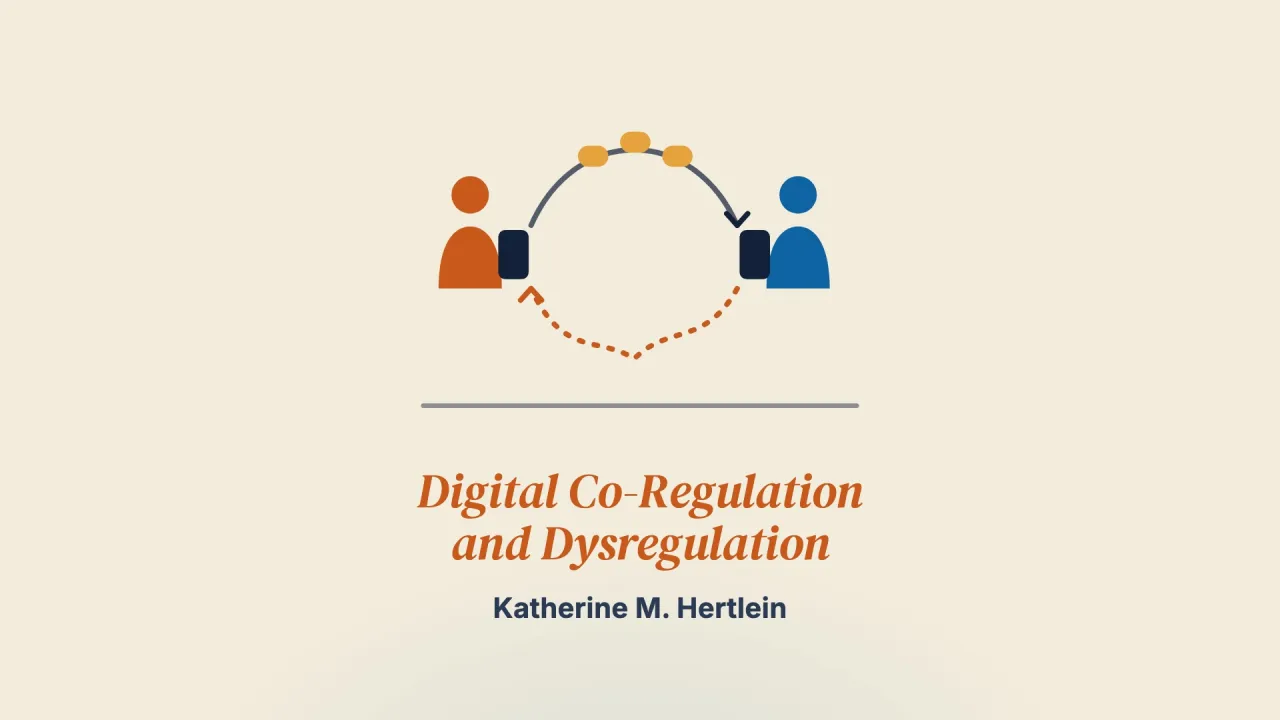
Digital Co-Regulation and Dysregulation in Romantic Relationships: A Systemic Model of Technology-Mediated Emotional Processes
Checking, chasing, blocking: 31 interviews show how the phone regulates or dysregulates a couple’s anxiety, with a systemic model of the loop.
 Scientific
“One Can Have All Sorts of Good Intentions but Sometimes in Everyday Life, It Turns Out Differently”: Change Agreements in Couples' Everyday Lives
Six Danish couples followed after an online couple program: their change agreements become guilt-inducing contracts, shared understanding or revealers of inequality.
 Scientific
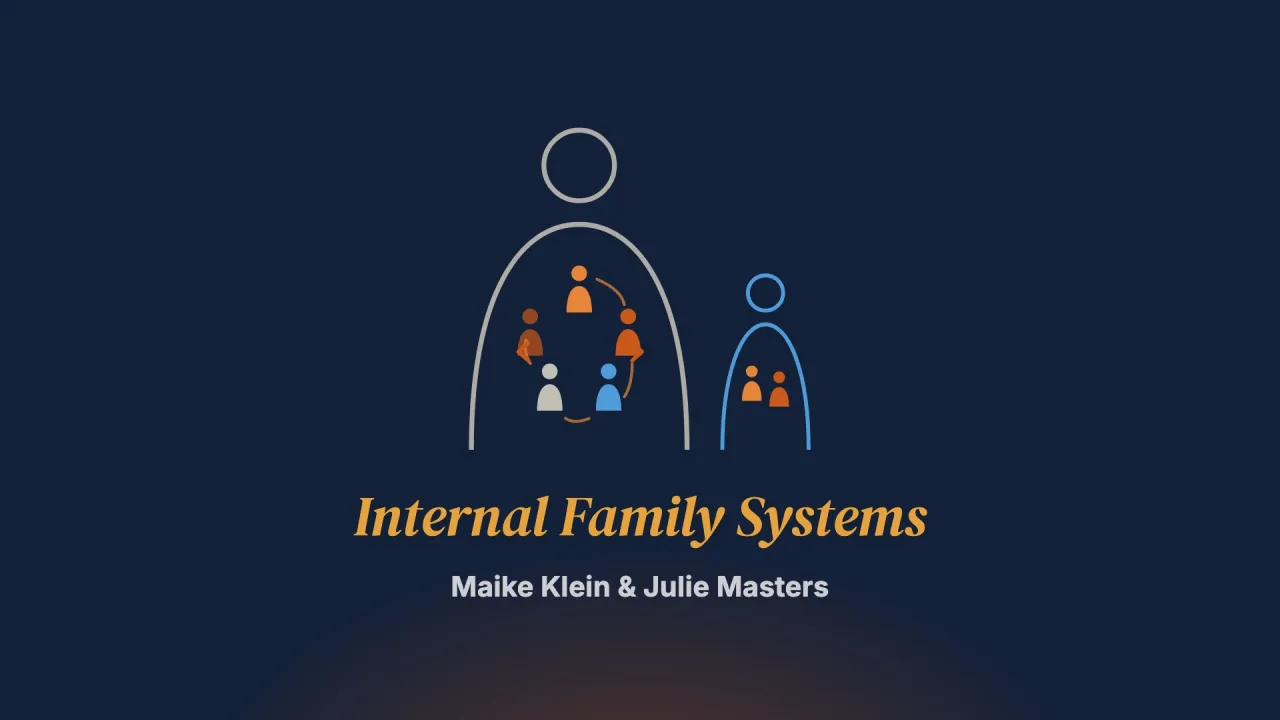
Internal Family Systems Therapy as Part of the ‘Family of Systemic Therapies’: A Critical Exploration of Systemic Practice in the Intra-Personal Domain
Does IFS belong to the family of systemic therapies? A critical exploration, grounded in a family court vignette, of systemic work with “parts”.
Comments 0
Log in to join the discussion. Log in