AI-assisted translation
This version was translated from Portuguese by Complexe Systémique with the help of artificial intelligence. In case of doubt, the original version prevails.
Revista Brasileira de Terapia Familiar · Substance use
Family therapy and psychoactive substance use: reflections on family dynamics
Seven families followed at the Family Therapy Service of the Institute of Psychiatry of the Federal University of Rio de Janeiro allow the team to describe what substance use organizes within the family. The reflecting team, the four-step model and the genogram broaden the complaint beyond the drug and bring to light four relational dynamics, centered above all on the bond between the person using substances and their mother.
Unofficial English translation. This article is a translation of Terapia de família e uso de substâncias psicoativas: Reflexões sobre as dinâmicas familiares, by Sabrina Celestino, Maria Beatriz Botto de Barros, Alexandre Lins Keusen, Glória Regina Bandeira de Araujo and Marcelo Santos Cruz, published in the Revista Brasileira de Terapia Familiar (ABRATEF), vol. 14, no. e0426 (2026), doi: 10.60114/rbtf.v14i1.158, under a CC BY 4.0 licence. Translated by Complexe Systémique in November 2026 with the help of artificial intelligence: the original Brazilian Portuguese text has been translated into English and reformatted, which constitutes a modification of the work under the terms of the licence. The paragraphs and headings are those of the journal; the three tables are presented as lists; the reported expression “parou no tempo” is given in Portuguese, followed by its translation; the text has been checked against the facsimile, as the automatic extraction was faulty. The abstract is the authors’ own English version. This translation was made neither by the authors nor by the journal, who are not responsible for its content or for any errors. The original version prevails.
The drug functions as a mediator of the family relationship.
Sabrina Celestino, Maria Beatriz Botto de Barros, Alexandre Lins Keusen, Glória Regina Bandeira de Araujo, Marcelo Santos Cruz
Abstract
This is a qualitative, descriptive study aimed at reflecting on the care provided to families with reports of psychoactive substance use, based on experience gained in a public mental health service, field diary entries, and observations of care provided from 2023 to 2024. The results indicate that substance use manifests as a systemic phenomenon intertwined with family and relational dynamics that sometimes strengthen coping mechanisms for psychological suffering and sometimes exacerbate it. Family therapy proved to be a powerful tool for expanding care, shifting the exclusive focus away from the individual substance user. To conclude, including the family in treatment fosters more integrated care practices in the field of mental health.
Keywords: Family therapy, Substance use, Mental health.
Introduction
The use and abuse of, and dependence on, psychoactive substances are complex phenomena that go beyond the individual dimension and are embedded in broader social, cultural and relational contexts. Even so, the treatment offered to people who use substances has historically focused predominantly on the individual user, often identified as the family’s “problem,” rendering invisible the relational dynamics that run through this process.
Many studies show that substance use has significant repercussions on family relationships, bringing about reorganizations and negatively affecting roles, boundaries and forms of communication among family members (Silva & Noto, 2022). Furthermore, research points to the recurrence of transgenerational patterns related to the use of alcohol and other drugs, reinforcing an understanding of the phenomenon as systemic (Grant, 1998).
In this sense, family therapy emerges as a relevant clinical approach, as it proposes broadening care by making the family system the focus of therapeutic attention.
Understanding the use and abuse of, and dependence on, psychoactive substances as systemic, we find that adherence, compulsive effects and their manifestation as a disorder go beyond individual issues and point to broad social, cultural and psychosocial questions, which are also expressed transgenerationally in the family system.
Starting from a systemic understanding of the family, we find that the system produces and reproduces relational dynamics within which each member is defined by their own singularity, while also being structured by collective expressions inscribed in the relationships formed with others. As Dias (2011, p. 148) puts it, “individuals seek to define, for themselves and for the other members of the family, meanings, power, and the formation and distribution of affection.”
Psychological suffering in the face of psychoactive substance use, and family therapy as a therapeutic resource
According to Perrusi (2015), psychological suffering is a social construction: we can therefore understand that, although it is expressed individually, contexts of crisis and instability take hold more broadly in shared life, in the tensions and withdrawals that arise in relationships.
Focusing on families that express psychological suffering reflected in the use of psychoactive substances, we can identify the presence of these accounts throughout the family history: they are experienced across different generations by one or several members and represent greater vulnerabilities in the system (Silva & Noto, 2022).
The impacts of use, abuse and dependence are not always recognized by the group or by family members; they are often overshadowed by socioeconomic and/or marital difficulties. Taking alcohol use as an example, we may thus consider, with Silva and Noto (2022, p. 86), that “excessive drinking generally occurs when family stress increases, being used to relieve or reduce individual stress, which ends up increasing family stress.”
In focusing on family dynamics, we draw on Schenker’s study (2008, p. 18), taking as essential the observation of how substance use is inscribed in family values, in order to understand how this process is permeated “by the principles and practices of conduct produced and reproduced within families.” Following the author’s proposal, we understand that the dynamics surrounding psychoactive substance use may be sedimented in the subjectivities experienced by those who use substances, but are also inscribed in the system itself and reproduced across generations.
The drug functions as a mediator of the family relationship, and for its usefulness to be identified and reflected upon with family members, it is necessary to understand, following Birman (2014, p. 28), that the substance produces “a conspicuous lowering, in subjects, of the thresholds of pain and anguish, so that today our threshold for enduring such passions has dropped dramatically.”
The use and abuse of, and dependence on, substances (licit or illicit) occupy a place in the lives of families and of those who use them; they can be understood as a symptom of a broader individual and collective suffering, as a way of communicating or expressing the crisis, and as an “inability to come into contact with individual and/or social crises, in an attempt to resolve existential processes, in the face of the anxieties and characteristics of modernity” (Osório & Valle, 2009, cited by Paz & Colossi, 2013, p. 553).
As for the effects of substance use on families, one can identify, as Ganc (2000) points out, a loosening of the developmental stages of relationships, resulting in a failure to negotiate certain stages in the evolution of the family life cycle, such as adolescence, leaving home and the permission to be competent fathers and/or mothers.
The author further argues that addictions such as alcohol addiction (extending, in our view, to all psychoactive substances) are understood as symptoms that fulfill a function in family homeostasis, revealing processes of pseudo-individualization that allow the individual to be independent and to isolate themselves while, at the same time, remaining loyal to and dependent on their family (Ganc, 2000, p. 202). Family homeostasis is defined by Kim and Rose (2014) as the capacity and the mechanisms by which balance is restored in the family after a change has occurred.
Thus, the harmful use and abuse of, and dependence on, psychoactive substances function as a link that keeps families and individuals interconnected. The relationship of dependence, beyond the substance, is reproduced in financial, emotional and social dependence, in the midst of which one or more members keep relationships organically sedimented.
If psychological suffering is shared by the family group, even though responsibility for the effects of harmful use of and/or dependence on psychoactive substances is directed at the person who uses them, the effects of this relationship are collective, and they need to be cared for in a broader way, extending to all members of the family.
In highlighting family therapy as an important resource for therapeutic care, it is necessary to understand, drawing on Silveira (1998, p. 6), that the processes running through this form of intervention ranged from research focused on the work of Gregory Bateson, in the United States and England, to the study group proposed by Ronald Laing. According to the author, systemic family therapy, influenced by cybernetics, was suggested by Margaret Mead to mark the inclusion and participation of the observer in the system. Bateson (1972), Maturana (2001), Varela (1999) and Von Foerster (1996) characterized the “cybernetics of cybernetics” as the epistemology of living and mental processes, which involve recursion, self-reference and paradox.
The different approaches to family therapy have been correlated with the focus of their attention, directed at times to family processes, at times to family members and at times to therapists. The emphasis on the potential of observation in work with families also draws attention to interaction and language, actions inscribed in the cycle of communication, which, according to Watzlawick and Krieg (1995, p. 127), referring to Maturana, “is not a transmission of instructions or instructive information but the coordination of actions by means of languages (in the broadest sense, as a coding of attitudes).”
Accordingly, the family therapy framework adopted in this work is grounded in the systemic perspective, located at the intersection of second-order cybernetics and narrative therapies; it pays particular attention to observation and especially values the intricacies inscribed in the language and communication established by the members of the family group, or, to a considerable extent, in the silences and secrets they often keep.
This article therefore aims to reflect on family therapy with families in which use and abuse of, or dependence on, psychoactive substances is reported, based on the experience gained at the Family Therapy Service of the Institute of Psychiatry of the Federal University of Rio de Janeiro (STF/IPUB/UFRJ), in collaboration with the Program for Studies and Assistance on the Misuse of Drugs (PROJAD/IPUB).
Method
Design
This is a qualitative study of a descriptive and reflective nature, based on the analysis of field diary entries and of observations of sessions with families and individuals followed at the STF/IPUB/UFRJ, in collaboration with PROJAD/IPUB, from 2023 to 2024.
Regarding ethical procedures, the research drew on observation, field diary entries and reflections based on the case reports presented in technical supervision, on the understanding that this instrument of exchange between colleagues and teams is an important source of information that can provide relevant input for improving care in specific situations (Yoshida, 2007). Given the initial design of the research, it was submitted to the Research Ethics Committee of the IPUB/UFRJ under number CAAE: 84013924.2.0000.5263. However, for the purposes of writing the final course paper and this article, the decision was made not to work with the data initially planned in the document-gathering and interview procedures, focusing only on aggregate, non-identified data, in accordance with CNS Resolution No. 510/2016/CONEP (Conselho Nacional de Saúde, 2016).
In the social sciences, the case study is understood as a methodological strategy aimed at grasping singularities inscribed in one or more cases, allowing complex realities to be analyzed in their sociocultural contexts. For Chizzotti (2009), the case study constitutes a frame of reference that makes it possible to grasp the multiplicity of aspects that make up a given reality.
In this article, the research problem centers on the invisibility of families in mental health care in relation to drug use. As the study’s guiding question, we therefore asked what family dynamics were present in families in which use and abuse of, or dependence on, psychoactive substances was reported. How were relationships established, revealing the production and reproduction of psychological suffering mediated by drug use?
As Deslandes (2010) notes, the formulation of objectives in research should answer what one intends to achieve by the end of the investigation. In light of this perspective, our research focused on including the family in care in relation to psychoactive substance use, reaffirming that this phenomenon involves systemic processes that go beyond the individual user and manifest themselves in family dynamics, even transgenerationally.
Our theoretical foundation stemmed from the orientation used in the family therapy sessions, namely the “reflecting team” (Andersen, 2001). In this methodology, two team members took part in the therapeutic setting: the first more oriented to the field, leading the dialogue, and the second more engaged in proposing reflections, which at times were not visible either to the field therapist or to the families. The directive and reflective questions proposed were based on the “four-step model,” seeking to: 1) broaden the presenting complaint; 2) highlight the problem (maintaining interactions); 3) explore the past with a focus on structure, and finally; 4) discover/co-create alternative forms of relationship (Minuchin, 1974, p. 25).
We understand, with Minuchin (1974), that the use of the four-step model aimed to “broaden the complaint.” The aim was thus to move the drug away from the center of family tension.
Given the relevance of applying the four-step model, we should share the movement we proposed in the therapeutic process, as described in Table 1.
Table 1 — Movement proposed in the therapeutic process
- Broaden the presenting complaint: How do you understand the family relationship?
- Highlight the problem (maintaining interactions): But if we took away the substance, what would the family’s “problem” be? What purpose does substance use serve?
- Explore the past with a focus on structure: Apart from X, does or did any other family member use psychoactive substances? Which ones?
- Discover/co-create alternative forms of relationship: Can we adopt the rule that when one person speaks, the other listens? Can each person speak for themselves without trying to guess or translate what the other feels or meant to say? How can you commit to improving the family relationship?
Source: prepared by the research team.
Thus, in family therapy at the STF/IPUB/UFRJ, we took as our object, as already noted, the family’s social relationships and interactions, seeking to broaden the apparent issues: we took up the main complaint, focused on the substance and its use, but broadened it. Neither the steps nor some of the questions accompanying them necessarily followed a chronological order of application; they depended on the process directed by the individuals and families seen.
In addition to directive and reflective questions, we used the “genogram,” following McGoldrick et al. (2016), as an important and appropriate instrument for identifying, in the family history, members, stages of the life cycle (births, deaths, marriages, illnesses, etc.), experiences and memories, paying attention to the presence and context of substance use by individuals across the different generations inscribed in the family system.
Equipped with these theories, methodologies and instruments, we catalogued the field diary entries relating to sessions with families, the issues highlighted in team supervision and the case reports discussed in intersectoral meetings, in order to map the profiles of the families seen, their motivation for seeking care and the main family dynamics identified.
Results
For the analyses that follow, we took as our reference the memories, reflections and questions raised in the care of seven families, among the many who sought care at the STF/IPUB/UFRJ, referred by PROJAD, whose main complaint was tension in the family relationship that aggravated the use of psychoactive substances and/or was heightened by that use.
As an inclusion criterion, we selected for the study families considered engaged in treatment, that is, those who attended family therapy sessions at the STF/IPUB/UFRJ and the clinical consultations provided by PROJAD regularly.
It emerged that the profile and the difficulties faced, highlighted as motivation for seeking care, showed a certain regularity among the participating families, although they retained particularities related to each family’s situation. Regarding profile, Table 2 categorizes the main characteristics identified.
Table 2 — Profile of the families seen
- Person using substances: male, over 40; education: completed secondary school; main psychoactive substance: cocaine; family member present at sessions: mother*; siblings: no; father: living.
- Person using substances: male, over 40; education: postgraduate (specialization); main psychoactive substance: alcohol; family member present at sessions: mother; siblings: yes; father: deceased.
- Person using substances: male, over 40; education: incomplete higher education; main psychoactive substance: cocaine; family member present at sessions: mother*; siblings: no; father: deceased.
- Person using substances: male, over 40; education: higher education (master’s degree); main psychoactive substance: synthetic drug; family member present at sessions: mother; siblings: yes; father: deceased.
- Person using substances: male, over 40; education: completed secondary school; main psychoactive substance: cocaine; family member present at sessions: mother; siblings: no; father: deceased.
- Person using substances: male, over 20; education: incomplete secondary school; main psychoactive substance: cocaine; family member present at sessions: mother*; siblings: yes; father: living.
- Person using substances: female, over 30; education: postgraduate (specialization); main psychoactive substance: alcohol; family member present at sessions: mother; siblings: no; father: deceased.
* Occasionally the father. Source: prepared by the research team.
As can be seen, cocaine use, with or without alcohol use, stood out as the prevalent substance. Among those using substances are men, mostly in their forties, who have at least completed secondary school and/or higher education. Mothers stood out as the main caregivers, since fathers were either deceased or played a supporting role in care and in the family relationship.
It should be noted that all the families seen lived in the Centro and Zona Sul areas of the city of Rio de Janeiro and that, in socioeconomic terms, all of them had some kind of security, through income from pensions and/or financial support provided by close relatives (siblings, uncles and aunts, cousins). Another point worth noting is that each family owned a material asset, such as one or more properties and/or a vehicle.
In the context of these families, a certain ambiguity could be identified in how substance use was understood: at times placed in the field of psychological suffering, understood as a form of illness, at times moralized as a “liking,” a desire that could be halted depending on the will and effort of the person using.
This issue deserves to be highlighted, since it is directly related to the reasons for seeking care and to the objectives put forward for taking part in it (sometimes different for family members and for those who use substances), as we seek to illustrate in Table 3.
As regards the relational dynamics established among family members, we identified ambivalent movements directed at times toward maintaining the bond and at times toward distancing from the people using substances, given the tensions caused by use. Accordingly, among the main relational dynamics identified in the families, we highlight: the guilt x debt dynamic; the dependence x disqualification dynamic; the symbiosis x isolation dynamic; and the attachment to the past x stagnation of the present dynamic, as illustrated in Fig. 1.
Table 3 — Reasons for seeking care, and objectives
- Reason expressed by the family member: substance use; reason expressed by the person using: the way the family member treats them; objective of the family member: that X stop using the substance; objective of the person using: greater understanding from the family member regarding substance use.
- Reason expressed by the family member: financial strain; reason expressed by the person using: lack of support (financial and emotional) from the family member; objective of the family member: that X stop asking for money; objective of the person using: that the family member understand the need for support given the possibility of moderate substance use.
- Reason expressed by the family member: stagnation in life processes; reason expressed by the person using: the discredit shown by the family member; objective of the family member: that X develop autonomy in concrete activities, such as work and study; objective of the person using: that the family member understand their difficulties and limits and their reasons for using substances.
Source: prepared by the research team.
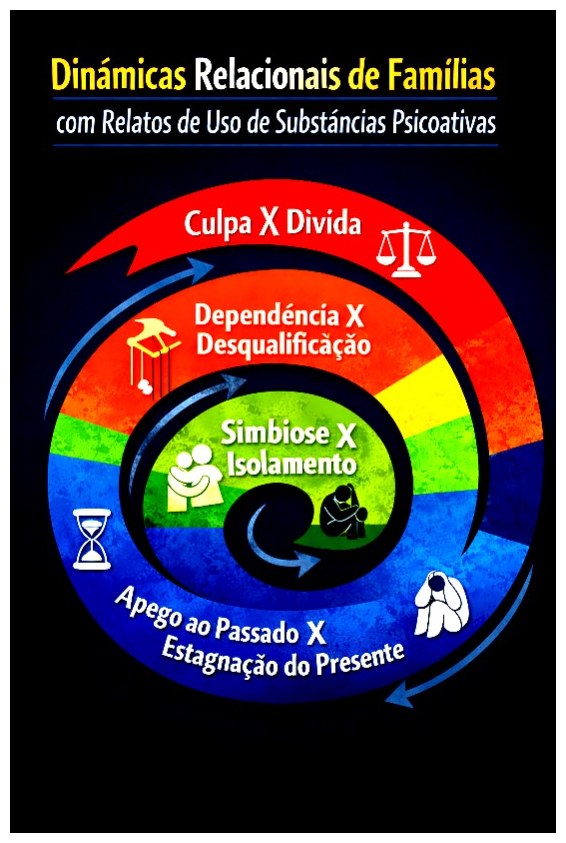
In this sense, understanding that substance use corresponds to processes that go beyond individual issues, we identified care for the family as essential and, within it, the importance of uncovering the objective and subjective dynamics at work around this use.
Discussion
As Andersen (2001) points out, each member of the reflecting team listened silently to the interaction between the field therapist and the family. Therapists and family members did not talk to one another, but each of them asked themselves inquiringly: how can the situation, or the issue(s) the system presents, be described beyond the description presented? How can the situation or the issue be explained beyond the explanation(s) presented (Andersen, 2001, p. 72)?
As already noted, the intention of the care was to welcome the suffering concentrated on drug use but to broaden it by seeking to understand the function of the use. Thus, we understand, as Minuchin (1974) teaches, that in working with families, the art of reaching them involves helping them discover what prevents them from achieving their goals, allying with them to establish strategies so that they can move from where they are to where they wish to be.
The use of the reflecting team, as proposed by Andersen (2001), proved to be a distinctive feature of the therapeutic methodology in the care of families and individuals with reports of alcohol and other drug use, by broadening the dialogical field and making it circular, opening up multiple perspectives on lived experience. This device fostered the construction of shared meanings between therapists and patients, seeking to reduce the traditional hierarchy typical of such interventions. Finally, it can be understood that the reflecting team promoted the emergence of alternative and more powerful narratives for the reflections conducted in the therapeutic “setting.”
Combined with this approach, the four-step structural intervention model grounded by Minuchin (1974), articulated with the specific context of care for people who use substances, made it possible to identify crystallized relational dynamics and weakened family boundaries, which reproduced suffering, both consciously and unconsciously. This articulation also made it possible to propose reflections that would strengthen family bonds, as they were and/or as family members wish them to be – and to expand participants’ autonomy, highlighting their recognition as subjects of the therapeutic process.
From a constructionist perspective, we understand that it is relationships, and not individuals, that form the basis of society; therefore, by entering into this construction, we can promote new and more promising forms of action (Gergen & Gergen, 2010, pp. 40–41). We therefore took up this relational context, seeking to identify the dynamics that, in our view, were present in family life.
Paz and Colossi (2013), citing Minuchin and Fishman (1990), state that family dynamics can be understood by considering the structure, subsystems and functional boundaries of families.
Accordingly, in choosing family dynamics as the focus of our analyses, we understand them as dynamic processes, inscribed primarily in the relational context. In our field of observation, we found that these dynamics are revealed in the family history, in memories, bonds, feelings, beliefs and the emotions expressed in everyday life among family members.
As regards families with reports of substance use, we understand that each one expresses its own particularity and experience of this process; however, the way in which the psychoactive substance is present fulfills a function in the family relationship as expressed, with some similarity across different individuals and groups.
What the families studied had most fundamentally in common was the choice of the psychoactive substance as the focus of family suffering and tension, and of the person using it as the one to blame for all the problems. This premise underpinned the motivation for seeking care, which took a dual form: for family members, as a means of curing the individual user, and, for the users, as the need to be accepted and understood.
To understand the concept of family dynamics, we draw on Beerenwinkel and Keusen (2014, p. 774), who stress that these “comprise a series of functional configurations, forms of relationship and family structures that are constantly changing, such as, for example, unions, ruptures, breakups, reconciliations, estrangements, etc.”
In this context, family dynamics were established according to certain patterns. In the “guilt x debt relationship” dynamic, the person using substances took on the role of being to blame for the family’s problems but, at the same time, adopted an argument that directed a feeling of debt toward one or more members of the family group. Illustrating this dynamic, Payá (2011, cited by Maciel et al., 2013, p. 192) points out that “the family blames itself for the behaviors of the chemically dependent person, who believes the family to be the cause of their inappropriate behavior.”
Thus, with the seven families at the center of our reflections, it was possible to identify, in the histories and trajectories of those using substances, the experience of particular traumatic circumstances, for example parentification in the parents’ marital relationship and/or the parents’ separation, the illness and/or death of one parent and the family’s material losses. Active involvement in these processes, sometimes at a very young age, was expressed by those using substances as a kind of trauma that calls for a debt in compensation, to be paid in the present by the female relatives, generally the mothers, who are required to meet their needs (emotional, financial and relational), even in adulthood.
Another dynamic observed in the families studied is the “dependence x disqualification relationship,” evident above all in the money spent on buying the psychoactive substance. Mothers highlight, as their main complaint, the demand for money, reporting that those using substances manipulate, extort and even steal. Observing the position taken by the female relatives, we find that this impacts the family budget and their mental health, since they are responsible for supporting the family. Yet, for reasons not always rationalized, the money continues to be given.
The family complaint comes with a deep lack of confidence in the person using the psychoactive substance and in the possibility that they might achieve autonomy and life projects of their own. This disqualification was manifested in a discourse of incapacity voiced by the female relatives, an incapacity to be “remedied” in two ways: through a request for legal guardianship, so that those using substances could be entitled to the pension benefit after the mother’s death; and, above all, in periods of heavy substance use, insofar as this would justify admission to psychiatric and/or religious/philanthropic institutions.
This dynamic is thus affirmed by the position of total care occupied by the female relatives, who take on the role of debtors, at the cost of keeping the person using substances in the place of someone incapable of achieving autonomy and running their own life; subjective gains can be observed in both of the positions taken.
The “symbiosis x isolation relationship” can be highlighted as another dynamic identified in the family groups followed. The relationship between those using substances and their mothers was marked by a certain complicity, revealed by relational exclusivity. Those using substances are deeply bound to this relationship and have no other relational networks. While, on the one hand, a certain discomfort can be identified in the exclusivity of the relationship described here, on the other, it was possible to see that the symbiotic relationship established by those using substances fills a certain loneliness expressed by the mothers, elderly women with a limited intimate circle, whose devotion is also potentially and primarily directed toward their children who use alcohol and other drugs.
Finally, the last point we consider important to highlight concerns the “relationship between attachment to the past x stagnation of the present.” Nostalgia for the past is an element repeatedly raised by the female relatives of those using substances, especially when they relate the behaviors adopted under the effects of psychoactive substances. The female relatives constantly use the expression parou no tempo (“stopped in time”) to illustrate how they perceive the relationship of the person using substances with possible life projects.
Stagnation in time, reported by the female relatives in a very interesting way, transports the person using psychoactive substances to an infantilized and childish place. Curiously, this same period is reported as important for the mothers, if not as a happy time, then as a phase of life in which they were structuring life projects devoted to their professional careers and/or to their marital separation.
Final considerations
In following the families described, it became possible to understand that the psychoactive substance occupied a central place in social interactions and relationships, with the person using it singled out as the cause of all the problems and tensions experienced in the family.
The families with reports of use/abuse of and/or dependence on psychoactive substances who came to the STF/IPUB/UFRJ, despite their countless particularities, shared anxieties, apprehensions and fears expressed through intense psychological suffering. In this context, seeking family therapy pointed to the recognition of the limit of what these families could no longer bear alone, as well as to the understanding that this care could offer some contribution, even if that contribution was focused on the belief in a certain cure for the person using substances.
Our challenge was thus the attempt to broaden complaints and tensions beyond the “drug” and the effects it produces. In exploring the relationship of the family group and among its members, we sought to identify how these substances affected the system as a whole, while also striving to identify how the social interactions and relationships of each of these families had been constructed (historically and across generations) around the use/abuse of and dependence on psychoactive substances.
In light of the above, and of the dynamics that could be observed in the families at the center of our work at the STF/IPUB/UFRJ, we have sought to share how the use of psychoactive substances sediments modes of relationship and social interaction among family members which, although they objectively reveal borderline circumstances expressing intense psychological suffering, to some extent make it possible to sustain and perpetuate a subjective relational logic and to maintain the organic coherence of the family system.
Complexe Systémique: key points
Conducted with seven families in a public mental health service in Rio de Janeiro, this qualitative study recalls a simple systemic principle: the drug is not only the problem, it is also a way of holding the family together. Three contributions stand out for practice. First, the four dynamics described (guilt x debt, dependence x disqualification, symbiosis x isolation, attachment to the past x stagnation of the present) offer working hypotheses for identifying what substance use stabilizes, and what stopping it would threaten. Second, the study foregrounds the bond between elderly, often lonely mothers and an adult child who uses substances: each is in turn creditor and debtor, and the relationship also fills a loneliness. Third, combining the reflecting team with Minuchin’s four-step model shows how to broaden the complaint without denying the suffering linked to the substance. The limitations are clear: seven families with relative socioeconomic security, aggregate data drawn from a field diary, no directly reported speech and an often highly interpretive reading. Read alongside the theory and epistemology of the relational treatment of drug addiction, and the views of mothers of people who use substances.
Notes from the original
CONFLICT OF INTEREST. Nothing to declare.
AUTHORS’ CONTRIBUTIONS. Substantive scientific and intellectual contributions to the study: Celestino, S.; Barros, M. B. B.; Keusen, A. L.; Araujo, G. R. B. O.; Cruz, M. S. Conception of the design: Celestino, S. Data analysis and interpretation: Celestino, S.; Barros, M. B. B.; Keusen, A. L.; Araujo, G. R. B. O.; Cruz, M. S. Final approval: Celestino, S.
DATA AVAILABILITY STATEMENT. Not applicable.
FUNDING. STF/IPUB/UFRJ – teaching and research infrastructure. PROJAD/IPUB/UFRJ – teaching and research infrastructure.
STATEMENT ON THE USE OF ARTIFICIAL INTELLIGENCE TOOLS. An artificial intelligence resource was used to generate the image intended to illustrate what we conceptualize as the relational dynamics present in families with reports of psychoactive substance use.
ACKNOWLEDGMENTS. We thank the management of the IPUB/UFRJ for its support of teaching, research and university outreach in family therapy. We thank the faculty and students of the STF and PROJAD for the professional exchanges and dialogue that contributed to the reflections brought together in this scientific work.
References
Andersen, T. (2001). Processos reflexivos. NOOS.
Bateson, Gregory. (1972). Steps to an ecology of mind: collected essays in anthropology, psychiatry, evolution, and epistemology. Ballantine Books.
Beerenwinkel, A., & Keusen, A. L. (2014). A dinâmica familiar sob a ótica do profissional da Estratégia Saúde da Família. Saúde em Debate, 38(103), 771-782. https://doi.org/10.5935/0103-1104.20140070
Birman, J. (2014). Drogas, performance e psiquiatrização na contemporaneidade. Ágora: Estudos em Teoria Psicanalítica, 17(spe), 23-37. https://doi.org/10.1590/S1516-14982014000300003
Chizzotti, A. (2009). Pesquisa em ciências humanas e sociais. Cortez.
Conselho Nacional de Saúde. (2016). Resolução nº 510, de 7 de abril de 2016: Dispõe sobre as normas aplicáveis a pesquisas em Ciências Humanas e Sociais. Ministério da Saúde. https://www.gov.br/conselho-nacional-de-saude/pt-br/atos-normativos/resolucoes/2016/resolucao-no-510.pdf/view
Deslandes, S. F. (2010). A construção do projeto de pesquisa. In M. C. S. Minayo (Org.), Pesquisa social: teoria, método e criatividade (34ª ed., pp. 31–50). Vozes.
Dias, M. O. (2011). Um olhar sobre a família na perspectiva sistêmica: o processo de comunicação no sistema familiar. Gestão e Desenvolvimento, (19), 139-156. https://doi.org/10.7559/gestaoedesenvolvimento.2011.140
Ganc, L. (2000). Álcool, drogas e família: um eterno desafio. In Cadernos IPUB (nº 16, Famílias, redes sociais e práticas terapêuticas). IPUB/UFRJ.
Gergen, K. J., & Gergen, M. (2010). Construcionismo social: um convite ao diálogo. Instituto NOOS.
Grant, B. F. (1998). The impact of a family history of alcoholism on the relationship between age at onset of alcohol use and DSM-IV alcohol dependence. Alcohol Health & Research World, 22(2), 144-147.
Kim, H., & Rose, K. M. (2014). Concept analysis of family homeostasis. Journal of Advanced Nursing, 70(11), 2450-2468. https://doi.org/10.1111/jan.12496
Maciel, L. D., Zerbetto, S. R., Filizola, C. L. A., Dupas, G., & Ferreira, N. M. L. A. (2013). Consequências e dificuldades da dependência química no âmbito familiar: uma revisão de literatura. Revista de APS, 16(2), 187-194. https://periodicos.ufjf.br/index.php/aps/article/view/15155
Maturana, H., & Varela, F. (2001). A árvore do conhecimento: as bases biológicas da compreensão humana. Tradução de Jonas Pereira dos Santos. Palas Athena.
McGoldrick, M., Gerson, R., & Petry, S. (2016). Genogramas: avaliação e intervenção familiar (3ª ed.). Artmed.
Minuchin, S. (1974). Familias y terapia familiar. Gedisa.
Paz, F. M., & Colossi, P. M. (2013). Aspectos da dinâmica da família com dependência química. Estudos de Psicologia (Natal), 18(4), 551-558. https://doi.org/10.1590/S1413-294X2013000400002
Perrusi, A. (2015). Sofrimento psíquico, individualismo e uso de psicotrópicos: saúde mental e individualidade contemporânea. Tempo Social, 27(1), 139-159. https://doi.org/10.1590/0103-20702015017
Schenker, M. (2008). Valores familiares e uso abusivo de drogas. Fundação Oswaldo Cruz. https://doi.org/10.7476/9788575413791
Silva, E. A., & Noto, A. R. (2022). Família e uso de drogas: paradigmas da pós-modernidade. RED Publicações.
Silveira, A. F. (1998). O impacto da cibernética de segunda ordem na terapia familiar (Dissertação de mestrado, Universidade Federal do Rio de Janeiro).
Varela, F. (1999). El fenomeno de la vida. Dolmen.
Von Foerster, H. (1996). Reflexiones ciberneticas. In: FISCHER, H.R. et al. El final de los grandes proyectos. Gedisa.
Watzlawick, P., & Krieg, P. (Orgs.). (1995). O olhar do observador: contribuições para uma teoria do conhecimento construtivista. Psy.
Yoshida, W. B. (2007). Redação do relato de caso. Jornal Vascular Brasileiro, 6(2), 112-113. https://doi.org/10.1590/S1677-54492007000200004
Unofficial English translation of Terapia de família e uso de substâncias psicoativas: Reflexões sobre as dinâmicas familiares, by Sabrina Celestino, Maria Beatriz Botto de Barros, Alexandre Lins Keusen, Glória Regina Bandeira de Araujo and Marcelo Santos Cruz, Revista Brasileira de Terapia Familiar, vol. 14, no. e0426 (2026), doi: 10.60114/rbtf.v14i1.158, under a CC BY 4.0 licence. Translation (with the help of artificial intelligence) and layout: Complexe Systémique, November 2026 — the work has been modified under the terms of the licence (tables presented as lists). Neither the authors nor the journal are responsible for this translation; the original version prevails.
Unofficial English translation of “Terapia de família e uso de substâncias psicoativas: Reflexões sobre as dinâmicas familiares”, published in Revista Brasileira de Terapia Familiar (2026) under a CC BY 4.0 licence. Made by Complexe Systémique with the help of artificial intelligence, it does not come from the authors or the journal, who are not responsible for its content; the original version prevails.
Read the original articleHow to cite this article
Celestino, S., Barros, M. B. B. de, Keusen, A. L., Araujo, G. R. B. de, et Cruz, M. S. (2026). Family therapy and psychoactive substance use: reflections on family dynamics (Complexe Systémique, Trans.). Complexe Systémique. https://app.complexe-systemique.com/en_GB/articles/family-therapy-and-psychoactive-substance-use-reflections-on-family-dynamics (Original work published in 2026 in Revista Brasileira de Terapia Familiar, v. 14, n. e0426 (2026); republished in 2026 by Revista Brasileira de Terapia Familiar, https://revbrasterapiafamiliar.abratef.org.br/revista/article/view/158)
To go further
- Theory and epistemology of the relational treatment of drug addictionThe relational foundations of drug addiction.
- Mothers' experiences of stigma and blame: The views of mothers of people who use substancesWhat mothers of people who use substances go through.
- A systematic review and meta-synthesis exploring client experience of reflecting teams in clinical practiceThe reflecting team as seen by clients.
Related training courses
 Symposium
Digital technology, AI and mental health
Conference in Lyon, 11 December 2026: digital technology, artificial intelligence and mental health. Six talks, replay for participants. In French.
 Short course
The suicidal crisis in adolescents and young adults
Training: assessing and supporting the suicidal crisis in adolescents and young adults. Clinical landmarks and systemic tools. In French.
Related articles
 Scientific
The Duogramma®: An innovative methodology for psychotherapy
A map of the couple relationships lived, desired or rejected since childhood: the Duogramma®, its graphic rules and its use in individual therapy.
 Scientific
How can we BeST? meet the needs of adoptive families? Relevant findings from a major Randomised Controlled Trial of infants in foster care in the UK
The BeST? trial (488 infants in care in the UK) reread for adoption: holistic, ongoing assessment of children and a move to dual registration.
 Scientific
“Tired of Being Tired”: Intergenerational Trauma and Relational Bridging Among 1.5‐Generation East African Refugees
Sixteen Somali, Oromo and Ethiopian refugees who arrived as children describe their role as bridges between generations, between inherited silences and burdened resilience.
 Blog
Toxic, narcissistic, borderline: what therapy speak does to your relationships
Narcissistic, borderline, toxic: therapy speak has left the consulting room. Julien Besse shows how these labels close the debate and relieve us of our own part.
Comments 0
Log in to join the discussion. Log in