Journal of Solution-Focused Brief Therapy · Interview
From School Psychology to Disaster Recovery: A Journey of Encountering Resilience and Continually Being Surprised by Peoples’ Own Solutions. An Interview With Cynthia K. Hansen
Twenty-five years of Solution-Focused practice, from an office where children, adolescents and families are seen to field work in the aftermath of disaster. Michael Durrant invited Cynthia K. Hansen to look back on that journey: discovering the approach in 1988, the years alongside Insoo Kim Berg and Steve de Shazer, and the ten essentials she now carries into the field.
This is the original interview From school psychology to disaster recovery: A journey of encountering resilience and continually being surprised by peoples’ own solutions. An interview with Cynthia K. Hansen, by Michael Durrant, published in Journal of Solution-Focused Brief Therapy, vol. 2, no. 1 (2016), doi: 10.59874/001c.75116, under a CC BY 4.0 licence. Republished by Complexe Systémique: the authors’ text is unchanged; only the layout has been adapted, section headings have been added for reading online, and a few obvious typesetting slips in the printed original have been corrected. One bracketed note signed “Complexe Systémique” flags a date that does not match the chronology of the interview.
My interactions with people always began from a profound respect for what they had been able to do in the midst of terror.
Cynthia K. Hansen
Michael Durrant introduces Cynthia Hansen
Dr. Cynthia Hansen, a clinical psychologist, has more than 25 years’ experience as a Solution-Focused practitioner in a variety of settings — from seeing children, adolescents and families in a “typical” therapy setting to field work in response to disasters such as Typhoon Pongsona, 9/11 and Hurricane Katrina. She is currently working in the Office of the Assistant Secretary for Health after serving eight years with the Office of the Assistant Secretary for Preparedness and Response in the US Department of Health and Human Services and was previously Special Advisor on Suicide Prevention with the US Substance Abuse and Mental Health Services Administration (SAMHSA). I invited Cynthia to reflect on her Solution-Focused journey.
Note carried on the article title
This paper contains Cynthia Hansen’s personal reflections and none of these remarks should be construed as an official endorsement of any product, person, or service and may not be quoted or reproduced for the purpose of stating or implying HHS or US Government endorsement or approval of any product, person, or service.
Solution-Focused by nature
How long have you been working with people therapeutically … what were the driving forces in your early work with people?
I’ve worked with people therapeutically since the early 1980’s. For many years, I worked as a paraprofessional — peer counsellor in college, child care worker in a therapeutic group home, and psychiatric aide in an inpatient unit. I began graduate school in 1981, and studied for a doctorate in Clinical Psychology at the University of Arkansas. During these years, my primary influences ranged from theories of abnormal child development to the systemic approaches of the MRI Group in Palo Alto. I remember being most interested in family systems therapy, Sullivanian approaches to understanding development, and Paul Watzlawick’s book about second order change. Most importantly, I was very pragmatic. The individuals and families I saw in Arkansas often did not meet any of the criteria for treatment that I read about in my studies, nor could I expect them to attend weekly sessions, but they were still in my office asking for help. I had great supervisors who taught me to match the theory of change to the people in my office.
Yvonne Dolan once interviewed me about the signs that I might be a Solution-Focused therapist, before I knew about SFBT. I told her about two clinical situations that tapped into my mindset. The first was a multi-generational family who drove to the clinic because they heard that incest could be one of the reasons that an infant had been born with developmental problems. They wanted help to fix this problem in the family. Because there were so many people, and generations, in the room, the therapists decided to divide up the family into small subgroups to make a plan. I remember the most important decision that the grandparents, parents and children agreed upon is how to reconfigure who slept in what bed. I was struck by it being such a practical action, generated by the clients and essential for changing the family dynamics — and ultimately much more practical than the things the professionals devised. For the worried reader, yes, Child Protective Services was involved.
Another individual who came to see me reported hearing voices, but no other symptoms of psychosis. I asked some questions about what he thought would be most helpful with the voices, and he said it would probably help to get a good night’s sleep at the hospital. It turned out that he was homeless and knew that he would be admitted to the hospital if he said he was hearing voices. Instead of a psychiatric diagnosis, we worked together on a plan for getting a good night’s sleep more often than he could get through admission to a hospital.
“Getting a good night’s sleep” immediately strikes me as a very de Shazer-esque kind of goal formulation, since it immediately makes the question of whether or not the client is actually psychotic completely irrelevant.
Absolutely … and, once again, practical. For years, this young man checked in with me as a “walk-in” to discuss how he was managing shelter and money and relationships, and I learned a lot about resilience and independence. I look back on it now, and see how Solution-Focused I was by nature.
1988: meeting Insoo and Steve
When were you first exposed to the Solution-Focused approach?
In 1988, I was working as a school psychologist and saw a brochure for a workshop on substance abuse treatment. The timing was right to meet my continuing education requirements, and I was seeking additional training in substance abuse treatment, so I signed up. Insoo and Steve were teaching. By the mid-morning break of the first day, I was returning calls to colleagues with great excitement about what I was learning. It was as if someone lifted the screen that made my interactions with clients ad hoc events, driven by a mix of academic theories of change and practical realities, to show the underlying pattern that could lead to real change. I think back on that day now and can still remember the thrill of finally resonating with a therapeutic approach that suited me. Luckily, I met some people that day that evolved into dear colleagues and, eventually, partners in a Solution-Focused training and consultation business: Phil Trautmann (who began visiting BFTC in the early 1980s), Stuart Levy and JoAnna Henry. With the addition of Carol Nelson and Karen Scott, Incorporated Solutions was born. We travelled together to learn from Insoo, Steve, Yvonne and others, saw clients as a team and sponsored workshops on SFBT in Portland, Oregon. I know that learning SFBT with this team had a profound impact on the creativity, flexibility and philosophy underlying my practice of SFBT.
How did it fit with what was already important to you?
- The approach worked with what the client really had — not what they were supposed to have — and so reconciled my conflict with wanting to help people who weren’t supposed to be helped by talking therapy.
- It was practical.
- It realistically understood the power that a therapist has, what he/she pays attention to, even in a few minutes or a single session.
- It gave a language for a team to work together on learning how best to help people.
And so, how did that make a difference?
It gave me a pattern for purposefully practicing therapeutic strategies and believing in the client’s resources. It also helped me think through what shifts might make a difference when therapy wasn’t working well. For example, scaling helped focus on the goal and small steps. Mastering the miracle question gave discipline and purpose to the theories of systems and interactions. Pre-session change helped build on what was already working. And all of these strategies interacted with the unique gifts of the therapist. Just as Insoo, Steve, Yvonne, and Peter DeJong used the same strategies but with different “touches”, so did Phil, JoAnna, Carol, Stuart and I.
In addition, I realised that practicing from a Solution-Focused perspective reduced burnout because I could see how to match the client’s resources with their hoped for outcome.
Insoo once told a story that stuck with me a long time. She said that, when I asked clients what they wanted without understanding what they already had, I was acting like a waitress taking an order that the kitchen would fill. Alternatively, if I heard what they wanted with an understanding of what they had in their own kitchen, then we could begin putting ingredients together that worked with what was already available. So, and I think now this was a little funny, I had an odd strategy for practicing being curious about what the client could do to get what they wanted. When I heard the client say what he or she wanted, I internally translated it to a food order in my head (e.g. corned beef on rye) to help me remember to ask the client when a little part of the client’s hopes had been realised or times when things had already been a little better. This kept me focused on doing what was possible in the client’s “kitchen” instead of thinking “how can I make this happen for the client?”.
What SFBT changed in my stance
How has SFBT made a difference to how your practice as a therapist has developed?
The practice of SFBT shifted my stance as a therapist profoundly. I became interested in the client’s expert knowledge, beginning to see him/her as a partner in designing solutions to the problems that brought them to meet with me. Many times I’ve taught this paradigm shift as moving from the three basic questions that I learned in graduate school:
- What is the client’s problem?
- What do I think the client should do about the client’s problem?
- What do I need to do to motivate/educate/persuade the client to do what I think the client should do about the client’s problem?
With SFBT, I learned to ask these three questions with each encounter:
- What does the client want?
- What can the client do about what the client wants (and, indeed, what is the client ALREADY doing)?
- What needs to happen for the client to do what the client can do about what the client wants?
What have been the particular challenges that your commitment to SFBT have raised in your practice as a therapist?
Probably the first challenge was curbing the zeal of a “convert” to Solution-Focused. SFBT doesn’t suit everybody — clients or therapists. Steve once said, “Sometimes you want sushi, sometimes spaghetti”, reminding me that there is no “right way” but that we have to understand the client’s preferences.
That being said, SFBT truly suited me and I was profoundly moved by the changes my clients made in their lives. I was lucky to have my own practice so I could dedicate myself to learning Solution-Focused ways to highlight and encourage my clients to clarify their hopes, and act on their inner knowing. In terms of the business of practice, I had many more clients and frequent intakes than my colleagues working in more traditional ways so I had to set up some streamlined procedures so that each session could be the last.
Some years ago, you produced an audiotape (now CD) with Insoo called Making a Difference with Adolescents.
Oh, yes, that was one of the highlights of my life. For years Insoo had been encouraging me to write a book about my work with children, teenagers and families. I kept telling her I didn’t have time to write and what I was learning and practicing was not enough information for a book. So, Insoo invited me to come to Milwaukee for a weekend, take long walks and talk and work on videos together — but she also wanted to interview me for an audiotape. No pressure; just have a discussion. We could always erase it if we wanted to.
Well, the first morning, after eating breakfast and taking a walk, Insoo and I went to their home office in the basement and set up the audiotape. She just started asking me questions and I answered. We did the tape in one take and she dismissed any idea that we could improve it by doing it again. I’m very glad that my description of how I worked with teenagers has been helpful to clinicians but I really think Insoo’s talent at bringing out the best in anyone is the most noteworthy aspect of the audiotape. And now that Insoo has passed, I treasure this memory and the respect she showed for my eagerness to teach coupled with my reluctance to write. Hey, Michael, I think you may be doing the same thing with this interview! Am I being Insooed?!!
I never thought of “Insoo” as a verb (and I don’t think I have the energy)! You have been described as being “mentored” by Insoo. What this was like?
Oh my gosh — I was so lucky! Insoo answered any call or email from me, welcomed me with open arms into formal classrooms and workshops as well as her home. I could crash on her sleeper sofa at conferences, take drives with Steve to get Insoo her favourite frozen custard and we walked and talked for hours. We’d sit and watch videotapes, discuss ideas my Portland team had for teaching and consulting, review challenges I was experiencing working with my clients, review draft manuscripts and heat up leftovers that Steve (the cook) had frozen for Insoo to eat when he was out of town. She taught me with stories, curiosity, generosity, experience, trust, love and, sometimes, impatience. Insoo recommended me as a SFBT presenter to colleagues in such varied places as Europe, South Korea, Okinawa and Taiwan, so I got to travel the world and learn from so many SFBT practitioners. I have to say that Steve was as kind and generous as Insoo was, albeit in different ways. Steve would sit — or walk — and visit in kind of a meandering way. But at the end of the beer, or the visit, I would have this “ah ha” moment that I couldn’t wait to share with my colleagues.
I was truly blessed to have been part of their lives and my practice became more purposeful because of their influence and wisdom. I still remember Insoo reminding me that wisdom is choosing what to ignore! I would add that it’s also what never to forget.
From the consulting room to the disaster field
How did you move from working with children, adolescents and families to working in disaster recovery?
I never planned to work with people impacted by disasters but my practice included people of all ages trying to cope with the negative consequences of a traumatic event. The event ranged from acute or chronic abuse, witnessing murder, workplace violence or any number of life events where the individual feared for their safety. My work was strongly Solution-Focused and influenced by Insoo, Steve and Yvonne Dolan. I became more skilled, quieted my “inner diagnostician” and focused more on the essence of the individual that survived the event and how it impacted the meaning they made of their lives.
I was on holiday in Nairobi in 1998 when a bomb went off at the US Embassy. Disoriented, I sought out the familiar. I found the office where I had arranged internal travel several weeks earlier and asked if I could get a phone line to my Mom. I will always be grateful to the Kenyans who helped me connect with my family and feel safe on such a terrible day.
While I was listening to the radio in the travel agent’s office, I met some medical students who had been getting their visas renewed at the Embassy and were also trying to contact their families in the U.S. We talked and tried to make sense of what was happening that day and what our next steps should be. After a while, the travel agent closed the office and we went our separate ways, exchanging email to stay in touch.
Looking back, I realise that — while I clearly was not doing therapy — I almost instinctively talked with them about how they were coping and managing to keep going, as well as planning small steps for a future when we all survived this terrible event.
Several weeks later, I received an email from the supervising physician of these medical students. He wanted to tell me that the students who had talked with me were back in the village functioning and learning, but others who had been around the embassy the day of the bombing were staring off into space, unable to sleep or concentrate, and counting the days until they would go home. He asked questions about what we discussed in the office of the travel agent and encouraged me to seek out opportunities to help others in the immediate aftermath of a disaster. I am forever grateful for the time he took to contact me. It is a profound lesson in the power of a compliment.
While SFBT is more than a focus on resilience, it seems like your Solution-Focused lens was making you naturally attuned to peoples’ resilience.
Yes, I think so — and it certainly meant that, as I got further and further into disaster response work, my interactions with people always began from a profound respect for what they had been able to do in the midst of terror rather than from some immediate knee-jerk response of diagnosing a disorder or finding ways for someone else to meet their needs. Often I discovered that their natural resources could be readily supported by just a few donations or offers.
Where did your journey go after your personal disaster experience in Kenya?
From there, I began doing pro bono work as a Disaster Mental Health responder with the American Red Cross and learned the language of disaster assistance and incident command. The people I met resonated with Solution-Focused questions because they were practical, focused on small steps and reinforced their natural coping strategies and personal hopes. Some of the interventions I developed were to help the organisation of assistance run more smoothly. For example, I jokingly referred to creating interventions with and for the hundreds of people standing in line for hours as treating “line disease”. I also worked with the managers to organise the space and process of disaster assistance centres to improve flow for the people requesting help.
Other times, the interventions were very individualised. For example, there was one boy who survived a horrible storm would not stop screaming at a disaster assistance centre. After interviewing his caregiver I discovered there was a very good reason for the screaming — he screamed during the storm and the storm finally went away. So, because the assistance centre was so loud and confusing, he screamed to make it stop. I also discovered that, in the past, he had used earphones and music to drown out loud noises but the machine had been destroyed in the storm. A donated audio system made all the difference in this boy’s recovery.
The ten essentials for field work
A recurrent theme has been your concern for the disaster responders as much as for the families and communities.
Absolutely! I remember having dinner with some friends on Long Island one night in September 2001. They told me about a neighbour who had been working at the World Trade Center site non-stop for weeks until a “Red Cross lady from Oregon” talked with him about what he had accomplished, the toll it had taken on him and his family, and when he would know he had done enough. After that conversation, he said he felt he could finally go home. My friends told him they were so glad he was okay and asked what they could do to help, then just happened to ask the name of the lady from the Red Cross. He said my name! So, not only is this an unbelievably small world, it also illustrates the impact of a simple Solution-Focused conversation.
I learned to conceptualise disaster work as using a very small bag of skills (such as a “day pack” for the field) rather than the large array of skills available in an office environment. Modelling on my experience backpacking in Oregon, when we each carried a kit that included 10 essentials such as a fire-starter, water and compass, I identified “ten essentials” for Solution-Focused disaster work. I remember presenting those 10 essential strategies I use in disaster-focused field interactions at the European Brief Therapy Association conference back in 2004.
- Curiosity about what happened,
- Coping questions (e.g. what keeps you going, how have you managed, how were you able to)
- “Wow, how did you do that?”
- “What did others notice you doing?”
- “What else?”
- Practical knowledge about resources (e.g. water, diapers, coffee, charging stations)
- “There must be a very good reason …” (see story above about screaming child)
- Scaling questions (to offer perspective on the challenges, any pre-session change, one small step)
- Remembering that the client–therapist relationship is like a Mobius strip in a disaster zone — one tremor, one infectious disease, one explosive device, and ‘we are them’.
- Compliments — reflecting the clients words and values
I continued to work intermittently at disaster sites for the years between 1999 and 2004, in between seeing clients in my practice, teaching and consulting. In 2004, I was offered an opportunity to spend a year in Washington DC as a Fellow with the American Academy for the Advancement of Science working on the organisation and financing of mental health services in the U.S. This tapped into my passion for making a difference, so with Steve and Insoo’s blessing, in January 2015 [sic: 2005 in the chronology of the interview — note by Complexe Systémique] I took this next step into a different world.
In August, Hurricane Katrina hit the Gulf Coast and I was asked to serve as Deputy Incident Commander of the Emergency Response Center at the Substance Abuse and Mental Health Services Administration. All of my work was informed by Solution-Focused Brief Therapy, some of which is described in this article: https://www.hsdl.org/?view&did=747354
Katrina, policy, and what remains
I know you weren’t “doing therapy”. So, can you give us an example of how Solution-Focused ideas made a difference in your work in this context?
One particular example is the “Returning Home Questionnaire” for federal employees who had been deployed at the front line on the Gulf Coast. There was a need for them to be able to debrief; however, I was clear that I wanted such interviews to be an opportunity to celebrate accomplishment and success as well as to identify the need for additional services. The materials we created can be found at https://www.osha.gov/SLTC/emergencypreparedness/resilience_resources/support_documents/supervisorhome/returninghome_questionnaire_supervisors.html
It was exciting to discover how well Solution-Focused approaches could be applied to developing pre-deployment and post-deployment materials, intervening with individuals impacted by the disaster, developing policies and procedures with colleagues, and coping with the day to day challenges in the field and at headquarters. The extent of the catastrophe was mind-boggling and the scope of interventions overwhelming. Small steps that make a big difference over time, exception finding, meaningful goals, scaling, compliments, and highlighting coping strategies were the essential skills I applied to each situation.
Looking back on the years since 1998, I see how SFBT gives me a lens to understand the natural trajectory of how disaster impacts people. Yes, some people struggle longer than others with making meaning or coping with the adverse consequences to their health and lives. I’ve been amazed at the power of the struggle to clarify priorities and create a future unimaginable before the disaster, as well as the network of survivors that reach out to help others that were impacted at a different time. For example, the leaders in communities impacted by shootings in the United States regularly reach out to the leaders involved in a later shooting. It’s a network born of tragedy, but also the knowledge and compassion of those who came before.
I’ve been lucky to work with some incredible leaders to develop policies and procedures that highlight the strengths, meaning and coping that can emerge from response operations. Many of my colleagues resonate deeply with a Solution-Focused orientation and seek out opportunities to develop materials that build on Solution-Focused practices such as exception-finding, scaling, identifying small change and a preferred future.
What have been the particular challenges that your commitment to SFBT have raised in your disaster work?
I think it’s been important to keep an open mind and always consider both/and rather than being limited to either/or. There are times when a problem focus or “root cause analysis” is very helpful to people. Just like SFBT, though, this is a means to an end that is pre-defined beforehand. In the responder world we say “Begin with the end in mind.” So, while this isn’t a challenge per se, it’s an important application of SFBT. I would add the phrase “there must be a very good reason”, which I first heard from Insoo, which guides me to be curious when behaviours, reactions, policies or procedures don’t make immediate sense. Once I understand the intent, SFBT provides the framework for opening up choices and overlooked experiences that can improve impact.
I’ve known you for nearly twenty years and we’ve shared a conference stage and numerous restaurant tables, but I don’t think we’ve ever talked this much about you. Thank you for this very different conversation. Any final thoughts?
Solution-Focused Brief Therapy as a model is inextricably intertwined with the curiosity, vibrant intelligence, profound respect and phenomenal integrity of Insoo and Steve. I see the model growing and building on what works, in response to the changes in the world around us, via my colleagues in the solution focused brief therapy community and how we listen to our clients. I’m grateful to have been in places where I can learn and share SFBT to foster healing, connection and creativity.
About the authors
Dr Cynthia Hansen may be contacted at: drcynthiahansen@gmail.com
Michael Durrant is Associate in the Faculty of Education and Social Work at the University of Sydney, Director of the Brief Therapy Institute of Sydney and Editor of this journal.
Email: michael@briefsolutions.com.au
Original interview From school psychology to disaster recovery: A journey of encountering resilience and continually being surprised by peoples’ own solutions. An interview with Cynthia K. Hansen, by Michael Durrant, published in Journal of Solution-Focused Brief Therapy, vol. 2, no. 1 (2016), doi: 10.59874/001c.75116, under a CC BY 4.0 licence. Republished by Complexe Systémique in September 2026; the authors’ text is unchanged — only the layout has been adapted, section headings added for reading online, and a few obvious typesetting slips corrected.
This is the original article “From school psychology to disaster recovery: A journey of encountering resilience and continually being surprised by peoples’ own solutions. An interview with Cynthia K. Hansen”, published in Journal of Solution-Focused Brief Therapy (2016) under a CC BY 4.0 licence. Republished by Complexe Systémique: the author’s text is unchanged; only the presentation has been adapted for reading online, as set out at the head of this page.
Read the original articleHow to cite this article
Durrant, M. (2016). From School Psychology to Disaster Recovery: A Journey of Encountering Resilience and Continually Being Surprised by Peoples’ Own Solutions. An Interview With Cynthia K. Hansen. Complexe Systémique. https://app.complexe-systemique.com/en_GB/articles/from-school-psychology-to-disaster-recovery-an-interview-with-cynthia-hansen (Original work published in 2016 in Journal of Solution-Focused Brief Therapy, vol. 2, n° 1; republished in 2023 by Journal of Solution Focused Practices, https://journalsfp.org/article/75116)
To go further
- Confessions of an Unashamed Solution-Focused Purist: What Is (and Isn’t) Solution-Focused?The interviewer, in the same issue: why resilience and strengths are not enough, in his view, to make a practice Solution-Focused.
- A Brief, Informal History of SFBT as Told by Steve de Shazer and Insoo Kim BergThe two teachers of that 1988 workshop tell for themselves where what they were teaching that day had come from.
- A Solution Focused Approach in Times of War: Views From the InsideThe same questions asked from inside a country at war, by practitioners who live there.
Related training courses
 Certifying course
Training in Systemic Therapy and Interventions – Cycle 1
Certifying training cycle in systemic therapy and interventions – year 1. Courses, supervision and practice, aligned with EFTA/SFTF. In French.
 Certifying course
Training in Systemic Therapy and Interventions – Cycle 2
Certifying training cycle in systemic therapy and interventions – year 2. Clinical complexity, supervision and practice. EFTA/SFTF aligned. In French.
 Certifying course
Training in Systemic Therapy and Interventions – Cycle 3
Certifying training cycle in systemic therapy and interventions – year 3. In-depth intervention, supervision and practice. EFTA/SFTF aligned. In French.
 Certifying course
Training in Systemic Therapy and Interventions – Cycle 4
Certifying training cycle in systemic therapy and interventions – year 4. Clinical integration, supervision and certification. EFTA/SFTF. In French.
Related articles
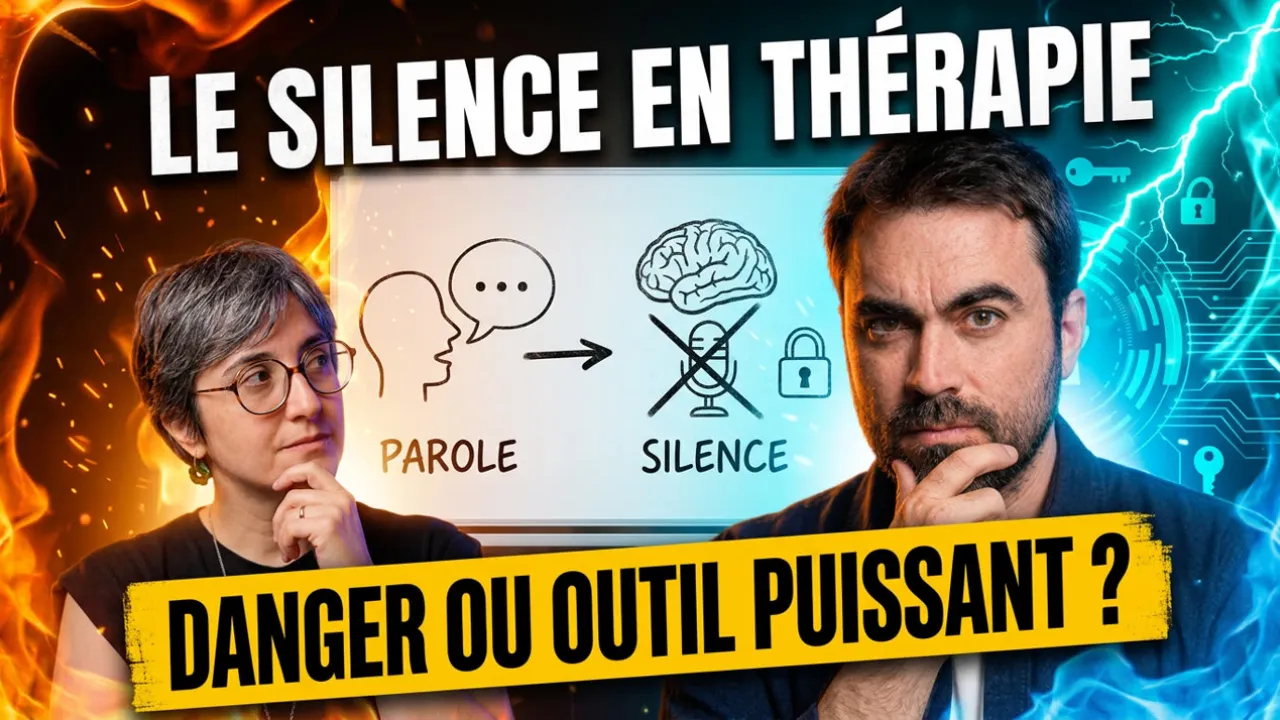 Article
 Silence in therapy: a polysemic presence
From Heidegger to Palo Alto, silence is not an absence but a message. Defensive, strategic, reflective or shared: its forms, its functions and its risks.
 Article
 What if the shortest path to change ran through a joyful detour?
Humour in therapy is not a gimmick but a clinical skill: it loosens the loops, reframes without wounding and reopens the field of possibilities. With its ethical safeguards and a concrete toolbox.
 Article
 When intuition comes before strategy. The first flash of meaning
From Bergson to von Foerster, intuition is not the enemy of rigour but its immediate side. How it works concretely in the clinical interview, and why it calls for a reflexive stance.
 Article
 First Psychological Aid for Families During War: Integrating the Narrative Approach With Emotionally Focused Therapy (EFT)
Three or four meetings for families living under the threat of war: telling their story before a witness, then repairing the attachment cycle disrupted by fear.
Comments 0
Log in to join the discussion. Log in