Journal of Solution Focused Practices · Opinion
Horses, Histories and Futures: Some Thoughts on the Evolution of Solution-Focused Brief Therapy
Bruno Latour describes an exhibit at the Natural History Museum in New York: on one side, horse fossils; on the other, the history of the interpretations scientists have made of them. Gale Miller finds in it a way of thinking about the future of solution-focused brief therapy: what if large three toed horses with long teeth already existed in the therapy world, without being recognised for what they are? Three ways of going to look for them: listening to what clients teach therapists, rereading the official versions of the approach, and continuing to talk where we disagree.
This is the original article Horses, Histories and Futures: Some Thoughts on the Evolution of Solution-Focused Brief Therapy, by Gale Miller, published in Journal of Solution Focused Practices (2020), doi: 10.59874/001c.75065, under a CC BY 4.0 licence. Republished by Complexe Systémique: the author’s text is unchanged; only the layout has been adapted and section headings added for reading online.
Without serious conversation there is no evolution.
Gale Miller
Two histories of the horse
The French sociologist of science Bruno Latour (2006) tells us that roughly 20 years ago he visited the Natural History Museum in New York City. Latour started on the top floor where he found a two-part exhibit dealing with the history of horses. One part consisted of an arrangement of fossils tracing the evolution of horses from their earliest known presence on earth to today. The other part showed the history of scientists’ interpretations of how horses have evolved. He noted that scientists state that horses have generally been moving from being small animals with three toes and short teeth to being large animals with one toe and long teeth.
Latour adds, however, that there is great variation within this trend. Even as most horses have evolved in the typical way, we see fossils from the 20th century of smaller horses with three toes and short teeth. The history of horses as told by fossils is much more varied than the history told by linear depictions of this process. Latour next turns to scientists’ interpretations of the fossils’ meaning. Here, too, he discovers significant differences, including scientists who question the certainty of their statements about the evolution of horses. Latour (2006) states that, “…the whole floor is punctuated by videos of scientists at work, little biographies of famous fossil-hunters at war with one another, with even different reconstructions of skeletons to prove to the public that ‘we don’t know for sure…’” (p. 4).
The two parts of the exhibit show that while scientists’ interpretations of the evolution of horses are connected to discoveries unearthed by archaeologists, the interpretations are more than simple reports on these discoveries. Scientists’ interpretations are also related to where they look for fossils, how they date fossils, the ways in which they assemble fossils into representations of horses, and the prevailing assumptions about the proper scientific study of horses. Such decisions can become institutionalized as typical assumptions and methods of assessing the scientific credibility of one’s own and others’ research. The assumptions and methods become justifications when scientists use them, for example, to minimize the significance of the existence of three toed horses during a time when most horses have one toe.
What if a herd were found today?
Latour’s skillful description forms a starting point for reflecting on a number of questions about scientists’ use of the social category called horse. For example, how might scientists respond to the discovery of a herd of large, three toed, horse-like animals with long teeth, living in the contemporary world? Would they treat the animals as an interesting oddity that is irrelevant to their scientific knowledge? I can imagine some scientists declaring that the category of “horse” applies only to animals that were once small, three toed and had short teeth and today are large, one toed and have long teeth. Therefore, the newly discovered animals would not be viewed as horses.
Others might say that the newly discovered animals show that horses’ body size, teeth length and number of toes evolve somewhat separately from each other. This could be a basis for classifying them as a distinctive variation within the evolution of horses. A third group might insist that the newly discovered herd foretells the future of horses. If we could only live long enough, we would see that most horses in the future will be large, have three toes and long teeth. Thus, scientists who define large three toed horses with long teeth as not real horses, prematurely declare the end of the evolution of the horse. Given these possibilities, is it any wonder that scientists’ conversations about the limits of their knowledge are ongoing?
Three-toed horses in the therapy world
My point may be obvious. Solution-focused therapists have no more insight into their future lives than anyone else does. This should not, however, keep them from imagining what is possible in the future. Such imaginings are important because they inform therapists’ assessments of potentially emergent changes in solution-focused thought and practice. The close connection between imagining what is possible in the future and assessments of unanticipated discoveries is central to my hypothetical disagreement between some scientists claiming that large three toed horse-like animals are early evidence of what the future entails and other scientists’ dismissal of them as something other than horses.
I recognize that these types of comments are common sense for solution-focused therapists who facilitate change by encouraging their clients to see and think about actual and potential events in their lives in new ways. This common sense is also potentially useful in imagining and seeing possible future developments in solution-focused thought and practice. For me, the process of engaging potential futures begins with the following imagined reality: something like large three toed horses with long teeth exist in the therapy world, although solution-focused thinkers and practitioners do not always recognize them for what they are.
This assumption helps me see possible solution-focused futures in the ideas and practices of therapists who do not classify themselves as solution-focused, and in the deviations in typical ideas and practices of therapists who are recognized as solution-focused. Unfortunately, these potential sources of change are largely absent from solution-focused therapy conferences, journals and other established sites for participation in the solution-focused community. Their absence is unfortunate because it robs solution-focused therapists of potentially rich resources for imagining their futures. I conclude by discussing some ways that solution-focused therapists might assist each other in collectively imagining and noticing possible new directions in the evolution of their community.
Three ways of engaging possible futures
Ask what the clients taught the therapist
Perhaps the richest source for insight into possible futures is the techniques used by therapists in interacting with their clients. I see solution-focused techniques as loosely similar to the body size, toes and teeth of horses. The evolution of horses is a history of changing environments to which horses slowly adapt. This lesson is easily forgotten when it comes to changes in solution-focused therapists’ practices. Too often, advocates of new techniques over emphasize how their practices derive from established solution-focused principles and under state how their interactions with clients are contexts of invention. This emphasis risks ignoring how clients are agents who influence what sorts of questions therapists may ask and, perhaps most important, what therapists’ questions mean within the context of therapy interactions.
An alternative way of making sense of a new technique is to ask, “How did that therapist’s clients teach her or him to do that?” A related question involves the shifting professional environments to which solution-focused practitioners adapt. These questions are also a basis for challenging the dismissal of past techniques as no longer relevant to solution-focused practice. Treating any past practice as no longer relevant is risky for people who work in environments that they do not fully control. The future sometimes hides in remnants of past assumptions and practices that are marginalized in the conventional wisdom of the moment. Clients can be very skilled at revealing these futures.
Reread the official versions
A second way of engaging possible futures involves reinterpreting official versions of what it means to be solution-focused. Consider how revered texts, dominant histories and typical training methods could be recast to construct new insights and practices that might better fit with your work circumstances. Ask those who justify their innovative techniques as derived from longstanding solution-focused ideas to also discuss how their inventions alter or even challenge some aspects of established solution-focused thought. This is not heresy. It is basic to how solution-focused brief therapy was created in the first place. I know that solution-focused therapists like to say that you should not try to fix a problem that doesn’t exist, but that claim was made in discussing clients’ situations. It does not accurately capture the attitude of the early experimenters with this approach to change, or the work of current innovators.
Keep talking, especially where you disagree
Third, keep interacting with one another, particularly around areas of disagreement. This is the most important lesson of Latour’s story for me. Scientists’ continuously disagree about how to study horse fossils and what they have learned from them. They also recognize that without serious conversation there is no evolution. Serious conversations involving multiple perspectives remind us that no one really knows what the future will entail. Solution-focused therapists might take heart from Latour’s scientists who use their uncertainties about horse evolution to energize their ongoing efforts to understand what it means to be a horse.
Those who do not come to the conferences
This brings me back to those large three toed horses with long teeth that don’t attend professional conferences. Who are they, what do their clients want from them, how do they address their clients’ desires and needs, how are their work environments similar to and different than those of most solution-focused practitioners, and how did they acquire their skills and knowledge? I see solution-focused conferences as particularly promising settings for interacting with therapists whose ideas and practices might challenge the conventional wisdom of solution-focused thinkers and practitioners. Their ideas may stimulate new conversations about what it means to be solution-focused and the limits of mainstream solution-focused therapists’ understanding of what solution-focused thought and practice might become.
References
Latour, B. (2006). A textbook case revisited – Knowledge as mode of existence. In E. J. Hackett, O. Amsterdamska, M. E. Lynch, & J. Wajam (Eds.), The handbook of science and technology studies (3rd ed., 2007, pp. 83–112). Cambridge, MA: MIT Press.
Original article Horses, Histories and Futures: Some Thoughts on the Evolution of Solution-Focused Brief Therapy, by Gale Miller, published in Journal of Solution Focused Practices, vol. 4, no. 1 (2020), doi: 10.59874/001c.75065, under a CC BY 4.0 licence. Republished by Complexe Systémique in September 2026; the text is the author’s own, with the layout adapted and section headings added.
This is the original article “Horses, Histories and Futures: Some Thoughts on the Evolution of Solution-Focused Brief Therapy”, published in Journal of Solution Focused Practices (2020) under a CC BY 4.0 licence. Republished by Complexe Systémique: the author’s text is unchanged; only the presentation has been adapted for reading online, as set out at the head of this page.
Read the original articleHow to cite this article
Miller, G. (2020). Horses, Histories and Futures: Some Thoughts on the Evolution of Solution-Focused Brief Therapy. Complexe Systémique. https://app.complexe-systemique.com/en_GB/articles/horses-histories-and-futures-some-thoughts-on-the-evolution-of-solution-focused-brief-therapy (Original work published in 2020 in Journal of Solution Focused Practices, vol. 4, n° 1; republished in 2020 by Journal of Solution Focused Practices, https://journalsfp.org/article/75065)
To go further
- Conversations in Palo Alto. Interview with Steve de ShazerThe man whose work Miller observed in Milwaukee, telling how the approach was invented.
- Tribute to the master Gianfranco Cecchin: systemic prejudicesWhen a school’s assumptions turn into justifications: irreverence as a form of hygiene.
- Family therapy: current trends and future prospects. A lecture by William PinsofAnother exercise in foresight about a field wondering what it is going to become.
Related training courses
 Symposium
Digital technology, AI and mental health
Conference in Lyon, 11 December 2026: digital technology, artificial intelligence and mental health. Six talks, replay for participants. In French.
 Symposium
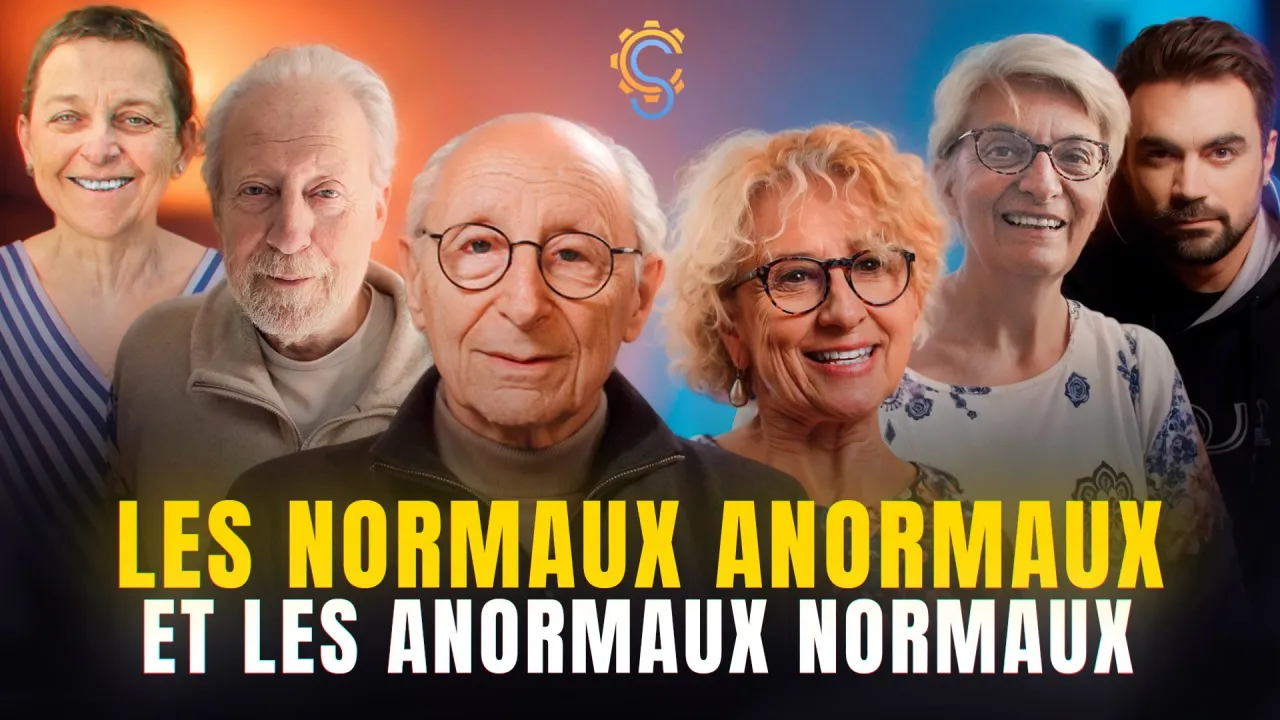
The Abnormal Normals and the Normal Abnormals
Conference replay: six clinicians explore normality — diagnoses, norms, adolescents, therapists. Immediate, lifetime access. Talks in French.


Comments 0
Log in to join the discussion. Log in