Journal of Marital and Family Therapy · Family therapy
It got me thinking: The impact of participating in a divorce decision-making interview
What if simply being asked about wanting a divorce already changed something? A year after a research interview on divorce decision-making, 22 married people in the United States describe what it did: talking got them thinking, thinking got them acting, and the conversation turned out, to their surprise, to be therapeutic. The team publishes its interview guide for clinical use.
This is a reformatted republication of It got me thinking: The impact of participating in a divorce decision-making interview, by Shauna R. Fenske, Steven M. Harris, Jacqueline LaPlant-Braughton, Sarah Allen, Kelly Roberts and Grace Anderson, published in Journal of Marital and Family Therapy (Wiley) (2024), doi: 10.1111/jmft.12735, under a CC BY 4.0 licence. Prepared by Complexe Systémique in September 2026: the authors’ text is unchanged; the layout has been adapted for reading online, which constitutes a modification of the work under the terms of the licence. The appendix table (interview guide) is presented as a list. This edition was made neither by the authors nor by the publisher, who are not responsible for its content or for any errors. The original version prevails.
Asking these specific interview questions, without an expressed agenda to either divorce or commit to working on the marriage, may provide space for additional insight to develop for both the therapist and the client.
Shauna R. Fenske, Steven M. Harris, Jacqueline LaPlant-Braughton, Sarah Allen, Kelly Roberts and Grace Anderson
Abstract
Although there is literature documenting the reasons for and outcomes of divorce, there is limited research about the divorce decision-making process. Researchers with the National Divorce Decision-Making Project interviewed (n = 30) people in the process of making a divorce decision. One year later they conducted a second interview (n = 22) with the same sample to track any changes in participants' divorce ideation. The current study reports on the results of a thematic analysis of participants' responses to the final question, “How did the initial interview impact your thinking about the future of your marriage?” Three salient themes emerged from the data: (1) talking got me thinking, (2) thinking got me acting, and (3) the conversation was (surprisingly) therapeutic. The authors highlight possible clinical implications and directions for future research.
Over the past 30 years in the United States, rates of divorce have nearly doubled for persons over 35 (Kennedy & Ruggles, 2014). Public perception is that half of all first marriages in the United States will end in divorce (Amato, 2000; Stanley, 2015). While determining the actual rate of divorce is complicated and depends heavily on the method and approach used and has been more recently affected by shifting demographic trends (legalization of same-sex marriage, increasing age of first marriage, increases in co-habitation, etc.) and the pandemic, one scholarly conversation on the topic estimates a divorce rate of 42 – 45% in the United States (Stanley, 2015). Divorce is something that clearly affects many marriages. Additionally, Hawkins et al. (2017) found that 53% of married individuals surveyed have previously or recently thought of divorce as a solution for solving their marital problems. While the literature is robust with studies on outcomes of and reasons for divorce, the information on the divorce decision-making process is still in its infancy. Scholars with the National Divorce Decision Making Project have provided information through both quantitative (Allen et al., 2021; Galovan et al., 2022; Hawkins et al., 2017) and qualitative (Bell et al., 2018; Crabtree et al., 2018; Harris et al., 2017, 2022) approaches to understanding divorce ideation. As this body of literature dedicated to divorce ideation grows, we were interested in knowing how talking about divorce ideation has impacted those who have participated in these interviews. The researchers of the current study ask the question, “What impact did participating in a divorce decision-making research interview have on how the participants thought about, or acted on, their marital situation?” This study reports on the findings of this inquiry.
While there is no guaranteed personal benefit of participating in any research study, there is some evidence that participants can benefit from engaging in research projects, and that participation can have an impact on their lives (Dyregrov et al., 2000). Regarding divorce ideation, where much of one's thinking is typically done in private (Fackrell, 2012; Vaughan, 1986), we wondered how talking to another person about one's thoughts about getting a divorce would impact their thoughts or actions after the interview. To provide context, we will first provide an overview of the literature on divorce ideation and the divorce decision-making process. We will then review the literature on the effects of participating in research with an emphasis on any personal gains associated with it.
LITERATURE REVIEW
Divorce and divorce ideation
Divorce can be a life-altering, arduous process that impacts all areas of life with lasting consequences for all involved (Doherty et al., 2011). While the reasons for, and outcomes of divorce have been well established (Amato, 2000; Hawkins et al., 2017; Kennedy & Ruggles, 2014), the process of thinking about whether or not to pursue a divorce and the experiences of those who are in the middle of a divorce ideation process are just now beginning to attract empirical attention (Galovan et al., 2022; Hawkins et al., 2017).
The decision to divorce is filled with uncertainty as individuals navigate the complexity and unknown dimensions of its impact (Harris et al., 2017). Scholars have referred to this decision-making process as “divorce ideation” (Hawkins et al., 2017). Given its sensitive nature, divorce ideation may not be regularly discussed; however, its existence is prevalent. The work of Hawkins and colleagues suggests that as many as 53% of married individuals have had thoughts about divorce at least once in their marriage, while approximately 25% had these thoughts as recently as the past 6 months (2017). In addition, thoughts of divorce were shown to be stable throughout the first fifteen years of marriage, meaning that if individuals had thoughts of divorce early in the marriage, these thoughts were not ameliorated until 16 years of marriage or more (Hawkins et al., 2017). This suggests that divorce ideation is not only prevalent but may also be chronic for some.
Individuals who experience divorce ideation are not all the same and merely thinking about divorce does not mean that it is imminent (Hawkins et al., 2017). Hawkins et al. discovered different “types” of divorce thinking among those in their sample. Approximately half of their sample (49%) who had thoughts of divorce were categorized as “soft thinkers.” These were individuals who had infrequent thoughts of divorce, seemed to be more hopeful about the future of their marriages, and were more likely to believe that their marital problems could be fixed if one or both partners got some help.
In contrast, a second group was categorized as “long-term-serious thinkers” about divorce (45% of all thinkers in their sample). Participants in this category tended to have more chronic thoughts of divorce, lasting over years of marriage. Regarding this group, Hawkins et al. (2017) indicate that these people experienced
a significant loss of connection and substantial conflict, and they were thinking more about divorce and had been doing so for longer periods of time. Long-term-serious thinkers were also less committed to the future of the marriage, on average, and to working through their problems. (p. 861)
However, this group also indicated that they were seeking more clarity in their thoughts about a divorce decision.
A final category was referred to as “conflicted thinkers,” representing only 6% of those in the sample experiencing divorce ideation. This group consisted of individuals who had frequent thoughts of divorce, had severe and persistent problems in their marriage, but surprisingly high scores with regard to hope that their marital situation could change. They also indicated that they would feel like a “failure” if they were to get divorced. Thirty-three percent of the individuals in this group indicated that they were “done” with their marriage.
Given the significant impact of divorce on individuals and their families, the varying levels of contemplation and action of divorce may be due to the lack of clarity and confidence people report having on deciding to divorce or stay married (Harris et al., 2017). According to Harris et al. (2017), individuals in the midst of the divorce decision-making process are confronted with thoughts of fluctuating uncertainty and fear. These thoughts push individuals to seek clarity and confidence by examining pivotal moments of decision validation (e.g., circumstances or experiences) and waiting to be sure to make “the right decision.” These findings align with other scholars' discovery that divorce ideation is not a static phenomenon; rather it is dynamic and fluctuates throughout the course of the relationship (Allen et al., 2021; Hawkins et al., 2017).
Divorce ideation and couple therapy
The lack of clarity and confidence that individuals experience during the divorce decision-making process may lead many to seek professional help in the form of marriage counseling or couple therapy. However, couple therapy is based on the idea that both partners are committed to the relationship despite the problems that they have identified. Unfortunately, traditional couple therapy models neglect the divergent needs and goals of what has been referred to as “mixed-agenda” couples (one partner leaning into the marriage and the other either leaning out or ambivalent about staying in the marriage), which estimates suggest account for approximately 30% of the couples that present for couple therapy (Doherty et al., 2016a). In fact, one study found that the assumed challenge of bringing up the idea of therapy with a partner was the greatest constraint in seeking help (Jefferson et al., 2017). Due to the complexities of treating mixed-agenda couples with traditional models, clinicians may struggle with how to effectively provide services. Therefore, discernment counseling was created in an effort to provide clinicians and these mixed-agenda couples with scaffolding to meet their specific therapeutic goals (Doherty & Harris, 2017). Discernment counseling specifically targets couples at the divorce decision-making crossroads and holds as the key goal for treatment to help couples get greater clarity and confidence in making a decision about the future of their marriage.
Ambivalence regarding the decision to stay in or leave a marriage does not necessitate divorce. In fact, many people who wrestle with this decision can be ambivalent toward divorce and move in and out of thinking about it (Allen et al., 2021; Fackrell, 2012). Due to the complexities of making this life-altering decision, partners categorized as “leaning out” may silently reflect on this decision for many years to find other avenues to stay married or maintain the marital status quo. This phenomenon is something that divorce attorneys have labeled “divorce ambivalence” and they report it being a challenge to the successful resolution of a divorce proceeding (Doherty et al., 2016a; Doherty, 2020), contributing to a longer and more drawn-out divorce process. However, some couples divorce—since there appear to be no other options to solve their marital problems. In fact, scholars examining typologies of 624 couples filing for divorce found that approximately 26% specified ambivalence, and 8% specified not wanting to divorce (Doherty et al., 2016b). Divorce ambivalence seems to be a prevalent phenomenon in the divorce decision-making process.
In summary, although the causes and the effects of divorce have been well established in the literature, research examining the divorce decision-making process is still in its infancy. Further, the identification and labeling of “mixed-agenda couples” and their subsequent unique needs when seeking therapy (Doherty & Harris, 2017) necessitates further investigation into this population's divorce decision-making processes. This is the main reason for the current study. Mental health professionals, specifically family therapists, don't really know what is helpful or harmful to individuals and couples at this marital crossroads. Our hope in reporting the results of the current study is to provide mental health professionals with more information on how to interview individuals and couples in this divorce decision-making space.
Next, and as an integral part to the literature review for the current study, we examine the potential benefits of participating in research more generally. Although participating in research may have risks, we are focusing this review on the possible benefits discovered through research participation.
Impact of participation in research
Taking part in research studies may provide a space for participants to share otherwise undisclosed, important narratives. Participants may have had prior negative experiences of sharing past events and research participation may grant positive opportunities to feel validated and heard (Hutchinson et al., 1994). For example, bereaved participants disclosed, in a follow-up interview, that participating in the research study granted them the ability to share their stories, despite the intense emotions felt during the first interview (Cook & Bosley, 1995). Other populations, such as at-risk and trauma-affected populations, have stated that the act of sharing their story within research studies results in cathartic, positive feelings (Dyregrov et al., 2000; Grace et al., 2016; Lakeman et al., 2013). Simply put, the act of talking about one's experience may result in reflection and provide another avenue for healing or advocacy.
Individuals who participate in interpersonal research studies may receive increased intra- and interpersonal insight and skills. In a study designed to review the inadvertent impact of couple interviews on couples participating in marital research studies, 72% of participants disclosed that engaging in marital studies produced positive effects, such as an increase in insight and communication (Bradbury, 1994). Other studies utilizing individual interviews have found similar results (Bourne & Robson, 2013; Grace et al., 2016). For example, Grace et al. (2016) found that research questions influenced participants to observe and reflect on their interpersonal behaviors. In a longitudinal study of African Americans who were interviewed about a health procedure, participants reported they found it beneficial and empowering to participate and complete the study (Castillo et al., 2012). Dyregrov et al. (2000) interviewed refugee families on their experience of participating in research. They found that couples who participated in dyadic interviews reported increased communication and parenting skills.
Though not exhaustive, the above research shows that individuals engaging in certain behavioral science research may have inadvertent positive effects, such as increased intra- and interpersonal insight and skills. Thus, in the current study, we examine the impact of participating in an interview on the divorce decision-making process for individuals who are in a couple where one of its members indicated that they had thoughts about divorce in the last 6 months.
METHOD
Sample
Participants were derived from the National Divorce Decision-Making Project's wave one survey pool (n = 3000) of men and women between the ages of 25–50, married at least 1 year, with at least one child living at home. This sample was asked if, in the last 6 months, they thought that their marriage was in “trouble.” From the original 3000 survey respondents, 745 people (around 25%) indicated that they had felt this way. From this group, 30 individuals, across a host of stratified variables (age cohort, race, gender, hopefulness for the marriage, divorce attitudes, etc.), were selected to participate in in-depth interviews about their personal divorce ideation. Inclusion criteria further narrowed the pool of interview participants to those who were willing to be interviewed, who had thoughts of divorce in the last 6 months and were living with their children (under the age of 18). Participants were interviewed originally in a semi-structured interview format and the second interview was a follow-up interview with that same group approximately 1 year later to see how/if their divorce ideation responses had changed. Due to attrition, the second interview phase had fewer original participants (n = 22) and was comprised of 9 males and 13 females. The majority of participants were White, college-educated, and had full-time employment. The average age and annual income of interviewees was 38 years and $60,000–$69,000. The average length of marriage and number of children of the participants were 12.5 years and 1.7 children, respectively. Of the 22 people we interviewed, 18 were still married and 4 had divorced at the time of the second interview. Most of those who were married reported still thinking about divorce, but their level of thinking varied from “occasionally” to “often.” All participants were compensated $75 for their participation in both wave one and wave two interviews.
Interview procedure
The focus of the current study is interviewee personal responses to the first wave's interview process. Specifically, we wanted to know if participating in wave one's divorce decision-making interview had any impact on how they were thinking about their marriage after the interview. The wave one interview protocol was a semi-structured format and was pilot-tested for content, duration, and question order. The interview focused on elements of divorce ideation. These elements included, “context, meaning and sense-making, decision-making processes, moments of clarity and confidence, feelings of being stuck, identity, love, happiness, reconciliation, and the degree(s) to which their decision-making was public or private” (Harris et al., 2017, p. 87). Interviews concluded with participants being given the opportunity to explore any topics missed or in need of further clarification.
The second interview, conducted about 1 year later, consisted of the same questions, lasted approximately 45 min, and was designed to assess the same elements of the divorce decision-making process included in the wave one interview protocol. The main difference between the wave one and wave two interview protocols was the inclusion of the following question in the wave two interview protocol. All participants were asked if “…the last conversation you had with us on this project (wave one) had any impact on how you were thinking about the future of your marriage?” Follow-up questions were used to increase the clarity of participant responses and provide any additional description of the answers given by interviewees, such as “Can you tell me how it was helpful? Are there specific examples that come to mind?” All interviews were administered via telephone by researchers at three universities and were audio-recorded and transcribed for later data analysis.
This study focuses specifically on the question given in the follow-up interview (wave two) on the impact of participating in the first interview (wave one). Although the original interview was focused on the divorce decision-making process itself and divorce ideation generally, we were specifically interested in discovering if the act of being interviewed on this sensitive topic, divorce decision-making, stimulated any changes in the participant, either their thoughts or actions. While we had a sense that having such a conversation might have some kind of impact, we viewed this study as exploratory and did not feel it was appropriate to attach a specific theoretical approach to “drive” the study. And, consistent with many qualitative research traditions (Braun & Clarke, 2006; Sandelowski, 2000), we did not believe it was necessary to ground this study in a specific theoretical framework.
Analysis
We approached the data from a general thematic analysis standpoint with a focus on a specific research question (What was the impact of participating in a divorce ideation interview?). Braun and Clarke (2006) indicate that this type of “thematic analysis…is…driven by the researcher's…analytic interest in the area…and is thus more explicitly analyst driven” (p. 84). We closely followed their six-step process. This included each member of the coding team getting familiar with the data by reviewing the entirety of the transcripts alone and then meeting together in weekly meetings as a team to discuss what we were seeing emerge from the data (step 1); creating initial open codes (step 2); and analyzing, characterizing, and naming themes that produce a theoretical narrative of the data (step 3). The research team (coders) included the lead researcher, as well as a graduate and undergraduate student. This team established inter-coder reliability by joint-coding each interview (after each coder reviewed all transcripts individually) and meeting weekly to discuss analytic findings and reach group consensus on new formulations from the data (step 4). Finally, we named the themes (step 5) and wrote the final report (step 6). We coded all 22 interviews despite reaching theoretical saturation of the main themes before reviewing all transcripts. The process of gathering in weekly coding meetings (joint-coding) to establish consensus helped to ensure the trustworthiness of our results and the clarity of our theme labels (Braun & Clarke's step 4). Our discussion in these meetings reflected our prolonged engagement with the data. The consensus-building in these meetings helped to ensure that no one coder would go beyond what the data were telling us. Additionally, the portion of the data that was quantitative (reported earlier) contributed to triangulation. Further, we kept (and eventually compared) individual field notes after each coding session. Notes taken during our coding sessions provided an audit trail of our process of developing codes and themes and consensus-building during our team meetings. We were unable to engage in a member-checking process (Lincoln & Guba, 1985) as we did not have human subjects approval to conduct further follow-up with interviewees.
We also acknowledge our position as researchers and clinicians in the area of divorce ideation. The research team included clinically active family therapy professors, doctoral students who were master's level clinicians, and undergraduates seeking research experience. This was an educationally privileged group of people. Most of the team were women and some team members had personal experiences with divorce ideation. Further, members of the team have written and published in this area and worked clinically with this population and we approached this investigation with some biases about what we might find in the transcripts. For example, we know that divorce ideation can be a protracted and drawn-out process characterized by moments of ambivalence, confusion, and frustration over a long period of time (Fackrell, 2012; Galovan et al., 2022; Hawkins et al., 2017). As such we could normalize that we might find those things reflected in the data. However, the specific focus of this study was on how participating in the original interview might have had an impact on participants' divorce ideation processes and this was something we really knew nothing about. Because of this, we were cautious to rely too heavily on what we already knew about divorce ideation so we could be open to what the data were saying.
RESULTS
This study included the interview transcripts of 22 men and women from the second wave of data collection on the National Divorce Decision-Making Project. One of the questions participants were asked was if the interview they had had a year prior (wave one) had any impact on how they have been thinking about the future of their marriage. Three salient themes emerged from the data as we investigated their responses to this specific question: (1) Talking got me thinking, (2) Thinking got me acting, and (3) The conversation was (surprisingly) therapeutic. We present each theme in greater detail and include accompanying participant quotes to illustrate their experiences.
Talking got me thinking
Most of the interviewees indicated that the interview format provided the necessary space for them to process their thoughts and feelings on the possibility of divorce in their life or conversely consider the process of marital reconciliation. The questions probed a variety of areas and domains that could be affected by a divorce, and interviewees had to reflect on how divorce was going to impact them personally, their partner, and other dimensions of their family life (children, finances, happiness, etc.). A common experience among the interviewees was that the interview cultivated a space to reflect on root causes, external and internal beliefs, and an avenue to think more critically about the seriousness of their situation and the complexities of the divorce decision-making process.
Participants (names are pseudonyms) shared that the interview provided an outlet to not only vocalize unsaid thoughts and feelings but that it encouraged the processing of thoughts not yet fully accessed and feelings potentially suppressed. Crystal, a 25-year-old woman experiencing divorce ideation reported, “…It made me have to say out loud…things that I hadn't thought of.” For this participant, the interview protocol urged reflection and discovery of underlying thoughts and feelings. She continued to say, “It made me realize that I was stopping myself from saying the really negative stuff about him.” Similarly, John, a 47-year-old man married 20 years who had divorced since the last interview stated, “It basically got me to talk and think more about how bad the situation was.”
Like other stressful or anxiety-provoking decisions, the complexity of the divorce decision-making process is difficult. People in this decision-making process have indicated that they lack clarity and confidence in making a decision (Harris et al., 2017). Additionally, many may avoid the conversation due to other, yet related, reasons (i.e., care for the other person, waiting for change, waiting for the “right time”). The act of participating in the interview protocol encouraged participants to discuss and reflect on this process. Amber, a 34-year-old woman married 10 years working toward reconciliation of her marriage since the wave one interview stated, “I thought in more concrete terms about it.” She shared how the interview created space, and maybe pushed her a bit to stop, think, and evaluate her divorce decision-making process and thoughts, rather than avoiding the topic:
And I hadn't really thought, you know like, really long and hard about the issue, it was more the ‘let's keep plugging away and get what we need to do done, [Before the interview], I would tell myself that I'll think about whether it's [the marriage] working, or [if] we're happy, when things calm down some.
Similarly, other participants stated that the interview format and probing questions stimulated reflections that stayed with them for weeks, months, and even a year after the initial interview. For example, Mark, a 31-year-old man married 6 years who has reconciled with his wife since the wave one interview, stated how the initial interview remained on his mind and encouraged reflection and action.
I've thought back to that conversation quite a few times…. it's always kind of been in the back of my mind when things have come up. I think it was just a lot of introspection. That it was forty-five minutes of me really thinking about, you know, trying to get down to the root causes of what was causing the issues in the relationship. And really, that got me thinking more about what I, and what we, could do to make things better. The [interview] just got the wheels turning in my head…and then that forty-five minutes turned into me thinking about it, you know, over and over again after the interview.
Other participants simply made comments on how the interview was thought-provoking. Mike, a 48-year-old man married 16 years who occasionally still thinks about divorce, stated, “…you know when you're asked a question to hear yourself give an honest and true answer is a little enlightening and it is very thought-provoking, quite honestly.” Lynn, a 46-year-old woman married 15 years who expressed a willingness to work on her marriage expressed, “The questions were harder than I thought they were going to be and they made me think…they made me have to reflect on, you know, on happenings [situations] and my feelings.” Carlos, a 32-year-old man married 5 years wanting to reconcile the marriage stated, “It really got me thinking. It got me to thinking we need…I need to figure out this situation.” Similarly, Adam, a 44-year-old man married 13 years who wants to reconcile, stated, “It made me think, you know, about things a little bit more…look at things from a different perspective.”
The act of the interview and its content provided space for the majority of participants to reflect, evaluate, and produce new insight about themselves and their marriage. Another area not as represented in the participant quotes but still a topic of discussion included the impact on children and family, as well as common complexities of divorce, such as finances and parenting. Although the interview only lasted approximately 45 min, the impact on the participants' divorce decision-making process appeared to be profoundly meaningful.
Thinking got me acting
Most interviewees also stated that the introspection brought on by the interview motivated them to some kind of action. These acts included engaging in conversations with partners about the state of their marriage, accessing appropriate services for physical or mental health support, finally filing for divorce, or generally pushing interviewees to find specific, action-oriented solutions for their relationships. For example, Chris, a 47-year-old man married 13 years who, at the time of our second interview, was still vacillating between divorce and reconciliation, shared how the interview spurred a conversation with his wife. “It had been a number of years [since] I had that [kind of] conversation with her. I think that after we spoke, it kind of pushed me to be more vocal with her about looking for a way to separate soon.” Similarly, Mike, whom we have mentioned earlier, expressed that it enabled him to talk with his partner, “…it allowed me to voice my opinion and my feelings, and it also gave me insight to what my spouse might be feeling as well.”
Others referred to the influence the interview had on leading them toward a solution (or some other action). Carlos, who we mentioned above, expressed, “I think it set off a fire within to find us…a solution.” Crystal, who was getting closer to deciding that divorce was the right choice for her, stated, “I think this has made it a lot easier to find all of the support and moved to find the pieces, just coming together…this has given me that strength to overcome that fear that I couldn't [do it].”
For some interviewees, the interview promoted changes in other areas of their life. For example, Jaime, a 49-year-old woman married 25 years who still considers divorce but wants to reconcile, stated how the interview motivated her to make health-related changes, “I don't know, maybe, when I spoke to you last year, you know, that got me motivated to think about myself and that's why I lost 70 pounds.” For Cynthia, married 17 years and the mother to one child, the interview spurred her to “find more positive reasons to make it [her marriage] work.” For Bill, a 47-year-old man married 20 years with one child, the interview prompted him to begin to tell his story to others in the same situation. “I'm glad to [share my story with my friends] because I just want people to be whole [in their marriages].” While the actions reported were different from one another it seems clear that for the majority of our interviewees, the interview did not stop at getting them thinking but prompted them to movement or action in some regard.
These quotes give a snapshot of the reactions as a result of the initial interview. Due to the lack of clarity and confidence, exacerbated by the complexity of the divorce decision-making process, individuals may feel stuck and frozen by the life-altering impact. It appears the interview played a role in providing a space to process thoughts regarding divorce decision-making and in propelling some interviewees to take action. One participant, who was now expressing a desire to stay in their marriage at the time of the second interview, was specifically asked by the interviewer, “I'm wondering, if we hadn't spoken [in the original wave one interview], do you think you'd be at the same place you were [leaning toward divorce]?” To which they responded, “Yeah, I'd be at the same place I was back then.”
The conversation was (surprisingly) therapeutic
A final salient theme that emerged from the data was that participants described the interview, which they commonly referred to as a conversation, as unexpectedly therapeutic. Most interviewees indicated their surprise at having this experience with a research interview. There was both an emotionally freeing and healing aspect to their experiences that was unexpected. Many expressed that it was helpful to have someone (an expert, someone who could keep things confidential, a non-biased party) simply listen to them. Due to the sensitive nature of divorce ideation as well as the ambiguity involved (Harris et al., 2017), participants reported not feeling comfortable sharing these particular thoughts with people who are in their daily lives (such as their partner, family, friends, etc.). And they expressed a surprised emotional relief or psychological weight off their shoulders after having participated in the first interview.
Lindsay, a 43-year-old woman, stated, “I spoke a lot of things out loud that I normally would just think about in my head, and it was kind of like a counseling session.” Adam, who we mentioned earlier, reported “And I enjoyed doing the interview, so I mean, it was somewhat therapeutic (chuckle). Somebody to talk to…you know?” Participants used words and phrases such as “oddly,” or “I never would've guessed” as well as laughter in recalling the impact of the initial interview. Other words such as enjoyable, therapeutic, or helpful described the act of engaging in the interview as well as the impact of the interview on interviewees' divorce decision-making process. John, a 45-year-old man, married 19 years who ended up divorcing between the two interviews, reported that the initial interview was helpful in processing thoughts regarding the possibility of divorce, “You know, I presume you to be experts. PhDs doing things…doing research for reasons. Oddly enough it actually was helpful. I found it more helpful than talking to a therapist.” Mark indicated, “[I] never would've guessed that I would've had this experience by clicking on some online questionnaire. I think it's actually contributed to the change. It may not have been a desired effect of the research.”
For Melinda, the thought of talking about divorce ideation and processing through the unique complexities with her partner felt unattainable. She kept these thoughts and feelings to herself. Therefore, the opportunity to talk with someone “removed” provided an avenue to talk openly and honestly about the subject. Melinda, who was 38 years old at the time of the second interview, and reported that she had since reconciled with her husband, stated the following:
Well I feel like with the last conversation that we had, it was kind of like I spoke a lot of things out loud that I normally would just think about in my head and it was kind of like a counseling session and so I also remember saying that having that conversation back in June, just like having it now, I couldn't do that with him here, like he couldn't be in the same room with me because I couldn't be as open and honest about my feelings.
Similarly, Shannon, a 43-year-old woman, married 22 years and working on reconciliation, expressed how the opportunity of participating in this interview protocol with an unknown researcher encouraged her to acknowledge and reflect on feelings not yet accessed. She reported, “I think that it was beneficial to have the invitation and the opportunity to just talk about it with someone I didn't know, so I'm sure that allowed me to process some feelings that I probably hadn't confronted.” Other participants expressed that the simple act of having the opportunity to discuss this topic openly was beneficial. For example, Jaime stated that she had kept her thoughts about divorce to herself for more than two decades. “Well, I'll tell you it's nice after bottling it up for (laughter) [all these] years you know, [to talk to] somebody who actually listened about it. That was really nice…”
The present study seems to indicate that the original divorce decision-making interview, although meant to engage and collect information from interviewees solely about the divorce decision-making process, created space for a surprisingly therapeutic conversation. This might be because typically talking about sensitive topics, such as divorce decision-making, with others in one's social circles, or even with one's marital partner may produce feelings people would rather avoid (i.e., confusion, anger, disappointment, fear, etc.). These feelings may encourage participants to shut down and not communicate about these critical decisions that may impact not only their lives but also others around them. Therefore, it is noteworthy that this interview protocol provided positive experiences for respondents. Additionally, as seen in the above quotes, the majority of participants expressed that the interview protocol, in which the interviewer was a removed and unbiased listener, provided the opportunity to talk openly and honestly about feelings associated with divorce ideation. In fact, the experience of the interviewer and their ability to guide and engage with the participant led many participants to get in touch with underlying feelings, gain additional insight, and arrive at a feeling of being unburdened. This new insight appeared crucial for some participants in providing greater clarity and confidence in their divorce ideation process.
DISCUSSION
To our knowledge, this study is the first of its kind in the area of divorce ideation. We see this study as a pilot testing of sorts for the interview guide. Because of this, any results we discuss should be considered tentative and exploratory. The results of this study suggest that the interviewees' participation in research surrounding divorce ideation got people thinking differently about their divorce ideation and that this thinking may have led them to action in multiple ways, including making relational or personal changes that further moved them toward reconciliation or divorce. Further, participants reported that they experienced the interview as surprisingly therapeutic. These findings support other research that suggests participating in some research studies may result in increased intra- and interpersonal insight and skills (Grace et al., 2016). As mental health professionals, the authors are not surprised at these unintended benefits of having an in-depth conversation on a sensitive topic especially considering that when it comes to divorce ideation specifically, people report that talking with someone about their thoughts about divorce is helpful (Fackrell, 2012; Hawkins et al., 2017, 2022).
Given the lack of clarity and confidence (Harris et al., 2017) and the confusion and ambivalence (Doherty et al., 2011; Fackrell, 2012) experienced in the divorce decision-making process, limited information is known about variables that aid in the creation of greater certainty among people with divorce ideation. The results of the current study suggest we may have new insight into the impact and value of participating in this kind of focused semi-structured interview on the divorce decision-making process. Because of this, we have provided the interview protocol in the appendix of this manuscript. We encourage others to borrow from it liberally, use it in its entirety, or incorporate portions of it into clinical conversations about divorce decision-making with their clients. Further, we encourage the use of this interview protocol/guide in research settings as well.
A common mistake for therapists with mixed-agenda couples or individuals with divorce ideation is the inability to merely sit with or be with them in their ambivalence (Doherty & Harris, 2017). At times therapists push their clients to decide one way or another instead of offering to simply be with them in their ambivalence. We either offer to help them repair their relationship or offer divorce/transition counseling if they choose to end their marriage (Doherty & Harris, 2017). There are some clients, however, who may just need someone to talk to them about being in the decision-making space without pressure to decide one way or another. This interview outline might be a helpful guide for these kinds of conversations. Asking these specific interview questions, without an expressed agenda to either divorce or commit to working on the marriage, may provide space for additional insight to develop for both the therapist and the client. Adopting a clinical stance such as this acknowledges the “back and forth” thinking (should I stay or should I go?) that people can experience in this space that has been shown in the divorce ideation literature (Allen et al., 2021; Hawkins et al., 2022).
Limitations
While this study has some strengths, it is not without its limitations. This study should be regarded as a pilot study for this interview protocol/guide. The questions were initially developed for research purposes alone. We were not anticipating the “surprisingly therapeutic” outcome of this interview reported by the participants of wave two. Further research will be needed to see if the interview protocol/guide would have the same kind of impact on those who talk to a therapist, a clergy or family member, lawyer, or any other person to discuss their divorce ideation as opposed to those who are signing up to participate in a research project. Selection bias may suggest that these are all different types of populations and might get different things out of participating in this type of semi-structured interview regardless of who is asking the questions. Further, our sample was small and additional studies with a variety of populations would be necessary to validate the clinical usefulness of this interview protocol/guide. Finally, there is a chance that participants' recall, whether limited or accurate, of the first wave interview may have had an impact on how they responded to the main research question for this study, “What impact did participating in a divorce decision-making research interview have on how you thought about, or acted on, your marital situation?” In response to this potential limitation, we feel it is sufficient that all 22 participants remembered being interviewed in wave one and responded to the current questions based on their memories of that interview and any actions that followed therefrom.
CONCLUSION
We examined the impact of participating in a semi-structured interview on the divorce decision-making process. Three salient themes emerged from the data: “Talking got me thinking,” “Thinking got me acting,” and “The conversation was (surprisingly) therapeutic.” While the participant pool is small and these results cannot be generalized to the overall population of people engaged in a divorce decision-making process, these findings might help us understand how to help those in the middle of a divorce decision-making process arrive at greater clarity and confidence in their final decision. In addition, the interview protocol has been included for clinical and research use as an additional resource for working with or studying couples and individuals amid a divorce decision-making process.
APPENDIX
See Table A1.
Table A1 — Divorce Decision-Making Interview
- 1. Context/Frame: Can you tell me more about how you're currently thinking about the future of your marriage? How is it that you've come to this particular place?
- 2. Meaning/Sense-Making: How do you make sense out of the ways your marriage has changed over time? How does this impact the decisions you might make today about the future of your relationship?
- 3. Decision-Making Process: Can you tell me about your decision-making process? What are some important factors you are considering as you make this decision? What factor do your child(ren) play in your decision-making? What factor does your financial situation play in your decision-making?
- 4. Identity: Can you say something about how your final decision about the future of your marriage might say anything about you as a person? Or that it might be in the eyes of someone else? Have you reflected on how your identity might be impacted based on your decision one way or another?
- 5. Clarity and Confidence: Have you experienced moments during this process where you felt you've had clarity or confidence about a particular decision? What helped you experience that kind of clarity or confidence? How clear are you about this decision (stay married/get divorced)? How confident? How did you arrive at those places?
- 6. Stuck: If you haven't experienced clarity or confidence with your decisions, what do you think would need to shift, change, or happen in order for that to happen? Can you think of moments when you were stuck and how you were able to get unstuck?
- 7. Public/Private: Who have you spoken with about your concerns about your marriage? How has that impacted your thinking? What are your thoughts about sharing your concerns with your spouse?
- 8. Love: How does the idea of love or being in love fit into how you've been considering the future of your marriage? To what extent is love impacting your decision-making process?
- 9. Reconciliation: What are your thoughts about a possible reconciliation with your partner? How does the idea of reconciliation play into the divorce decision-making process for you? How do you move from your thoughts about reconciliation to actually taking steps in that direction?
- 10. Happiness: How does the idea of “happiness” or your personal happiness play into the way you're thinking about your current marital situation? How about the happiness of others, is that something you've considered?
- 11. Metaphor: What comes to mind when you assign a metaphor to the following sentences: Deciding to stay married is like…. or, Deciding to divorce is like….
- 12. Anything We Missed? From your point of view, what do you think are the most important things to know about your divorce decision-making process? Is there anything more you would like to share?
Complexe Systémique: key points
The study starts from a side effect, and that is what makes it valuable: an interview designed to collect data acted as an intervention. From a systemic standpoint, the result is only half surprising. Asking questions already introduces difference into a system; and a neutral third party, with no agenda for the couple, opens a space that neither the spouse, nor friends and family, nor sometimes conventional couple therapy allow. The clinical interest is twofold: a reminder that ambivalence deserves to be accompanied rather than settled, and a twelve-question interview guide that can be used directly in individual sessions or in discernment counseling. The limits are clear and acknowledged by the team: only 22 people, mostly White and college-educated, paid for their time, a memory of the interview reconstructed a year later, and a single open question as the whole material. Nor do we know what the other member of the couple experienced, since they were never interviewed. Read alongside the article on discernment counseling, and the article on ambiguous marital separation.
References
Allen, S., Hawkins, A. J., Harris, S. M., Roberts, K., Hubbard, A., & Doman, M. (2021). Day to-day changes and longer-term adjustments to divorce ideation: Marital commitment uncertainty processes over time. Family Relations, 71, 611–629. https://doi.org/10.1111/fare.12599
Amato, P. R. (2000). The consequences of divorce for adults and children. Journal of Marriage and Family, 62, 1269–1287. https://doi.org/10.1111/j.1741-3737.2000.01269.x
Bell, N. K., Harris, S. M., Crabtree, S. A., Allen, S. M., & Roberts, K. M. (2018). Divorce decision-making and the divine. Journal of Divorce and Remarriage, 59, 37–50. https://doi.org/10.1080/10502556.2017.1375330
Bourne, A. H., & Robson, M. A. (2013). Participants' reflections on being interviewed about risk and sexual behaviour: Implications for collection of qualitative data on sensitive topics. International Journal of Social Research Methodology, 18(1), 105–116. https://doi.org/10.1080/13645579.2013.860747
Bradbury, T. N. (1994). Unintended effects of marital research on marital relationships. Journal of Family Psychology, 8(2), 187–201. https://doi.org/10.1037//0893-3200.8.2.187
Braun, V., & Clarke, V. (2006). Using thematic analysis in psychology. Qualitative Research in Psychology, 3, 77–101. https://doi.org/10.1191/1478088706qp063oa
Castillo, A. G., Jandorf, L., Thélémaque, L. D., King, S., & Duhamel, K. (2012). Reported benefits of participation in a research study. Journal of Community Health, 37, 59–64. https://doi.org/10.1007/s10900-011-9416-0
Cook, A. S., & Bosley, G. (1995). The experience of participating in bereavement research: Stressful or therapeutic? Death Studies, 19(2), 157–170. https://doi.org/10.1080/07481189508252722
Crabtree, S. A., Harris, S. M., Bell, N. K., Allen, S., & Roberts, K. M. (2018). The roles of love and happiness in divorce decision making. Journal of Divorce & Remarriage, 59, 601–615. https://doi.org/10.1080/10502556.2018.1466254
Doherty, W. J. (2020). Public Policy and Systemic Family Therapy for Couples. In K. S. Wampler, & A. J. Blow (Eds.), The Handbook of Systemic Family Therapy. https://doi.org/10.1002/9781119438519.ch82
Doherty, W. J., & Harris, S. M. (2017). Helping couples on the brink of divorce: Discernment counseling for troubled relationships. American Psychological Association.
Doherty, W. J., Harris, S. M., & Didericksen, K. W. (2016b). A typology of attitudes about divorce among parents in the divorce process. Journal of Divorce & Remarriage, 57, 1–11. https://doi.org/10.1080/10502556.2015.1092350
Doherty, W. J., Harris, S. M., & Wilde, J. L. (2016a). Discernment counseling for “mixed-agenda” couples. Journal of Marriage and Family Therapy, 42(2), 246–255. https://doi.org/10.1111/jmft.12132
Doherty, W. J., Willoughby, B. J., & Peterson, B. (2011). Interest in marital reconciliation among divorcing parents. Family Court Review, 49, 313–321. https://doi.org/10.1111/j.1744-1617.2011.01373.x
Dyregrov, K., Dyregrov, A., & Raundalen, M. (2000). Refugee families experience of research participation. Journal of Traumatic Stress, 13(3), 413–426. https://doi.org/10.1023/a:1007777006605
Fackrell, T. A. (2012). Wandering in the Wilderness: A Grounded Theory Study of the Divorce or Reconciliation Decision-Making Process (Order No. 28111320). Available from ProQuest Dissertations & Theses Global; ProQuest Dissertations & Theses Global Closed Collection. (2550610901). http://login.ezproxy.lib.umn.edu/login?url=https://www.proquest.com/dissertations-theses/wandering-wilderness-grounded-theory-study/docview/2550610901/se-2
Galovan, A. M., Hawkins, A. J., Harris, S. M., & Simpson, D. M. (2022). What are they doing? A national survey of help-seeking and relationship-repair behavior of individuals who are thinking about divorce. Journal of Marital and Family Therapy, 48, 371–390. https://doi.org/10.1111/jmft.12480
Grace, D., Steinberg, M., Chown, S. A., Jollimore, J., Parry, R., & Gilbert, M. (2016). “it's almost therapeutic, right? Because it's almost like that session that I never had”: Gay men's accounts of being a participant in HIV research. AIDS Care, 28(10), 1306–1311. https://doi.org/10.1080/09540121.2016.1178701
Harris, S. M., Crabtree, S. A., Bell, N. K., Allen, S. M., & Roberts, K. M. (2017). Seeking clarity and confidence in the divorce decision-making process. Journal of Divorce & Remarriage, 58(2), 83–95. https://doi.org/10.1080/10502556.2016.1268015
Harris, S. M., Fenske, S. R., Baer, S., Dick, M., Katovich, J., Osterbauer, M., Allen, S., & Roberts, K. R. (2022). The impact of identity on divorce decision-making: A grounded theory study. Journal of Divorce & Remarriage, 63, 464–481. https://doi.org/10.1080/10502556.2022.2144094
Hawkins, A. J., Galovan, A. M., Harris, S. M., Allen, S. E., Allen, S. M., Roberts, K. M., & Schramm, D. G. (2017). What are they thinking? A national study of stability and change in divorce ideation. Family Process, 56(4), 852–868. https://doi.org/10.1111/famp.12299
Hawkins, A. J., Harris, S. M., & Fackrell, T. A. (2022). Should I try to work it out? A guidebook for individuals and couples at the crossroads of divorce ( Second Edition). Family Matters Press.
Hutchinson, S. A., Wilson, M. E., & Wilson, H. S. (1994). Benefits of participating in research interviews. Image: the Journal of Nursing Scholarship, 26(2), 161–166. https://doi.org/10.1111/j.1547-5069.1994.tb00937.x
Jefferson, S. G., Roberts, K. M., Kim, H., Powell, M., & Gardner, B. C. (2017). The weighty world of a “standard bearer”: The influence of help-seeking behaviors on feeling pressure. Journal of Divorce & Remarriage, 58, 393–410. https://doi.org/10.1080/10502556.2017.1322861
Kennedy, S., & Ruggles, S. (2014). Breaking up is hard to count: The rise of divorce in the United States, 1980–2010. Demography, 51(2), 587–598. https://doi.org/10.1007/s13524-013-0270-9
Lakeman, R., Mcandrew, S., Macgabhann, L., & Warne, T. (2013). ‘That was helpful no one has talked to me about that before’: Research participation as a therapeutic activity. International Journal of Mental Health Nursing, 22(1), 76–84. https://doi.org/10.1111/j.1447-0349.2012.00842.x
Lincoln, Y., & Guba, E. G. (1985). Naturalistic Inquiry. Sage.
Sandelowski, M. (2000). Whatever happened to qualitative description? Research in Nursing & Health, 23(4), 334–340. https://doi.org/10.1002/1098-240x(200008)23:4<334::aid-nur9>3.0.co;2-g
Stanley, S. (2015). What is the divorce rate, anyway? Around 42 percent, one scholar believes. Institute for Family Studies Blog: Retrieved from https://ifstudies.org/blog/what-is-the-divorce-rate-anyway-around-42-percent-one-scholar-believes
Vaughan, D. (1986). Uncoupling: Turning points in intimate relationships. Oxford University Press.
Reformatted republication of It got me thinking: The impact of participating in a divorce decision-making interview, by Shauna R. Fenske, Steven M. Harris, Jacqueline LaPlant-Braughton, Sarah Allen, Kelly Roberts and Grace Anderson, Journal of Marital and Family Therapy, vol. 50, no 4 (2024), doi: 10.1111/jmft.12735, under a CC BY 4.0 licence. Edition and layout: Complexe Systémique, September 2026 — the work has been modified under the terms of the licence (table presented as a list). Neither the authors nor the publisher are responsible for this edition; the original version prevails.
This is the original article “It got me thinking: The impact of participating in a divorce decision-making interview”, published in Journal of Marital and Family Therapy (2024) under a CC BY 4.0 licence. Republished by Complexe Systémique: the author’s text is unchanged; only the presentation has been adapted for reading online, as set out at the head of this page.
Read the original articleHow to cite this article
Fenske, S. R., Harris, S. M., LaPlant-Braughton, J., Allen, S., Roberts, K., et Anderson, G. (2024). It got me thinking: The impact of participating in a divorce decision-making interview. Complexe Systémique. https://app.complexe-systemique.com/en_GB/articles/it-got-me-thinking-the-impact-of-participating-in-a-divorce-decision-making-interview (Original work published in 2024 in Journal of Marital and Family Therapy, 50(4), 867-881 (2024); republished in 2024 by Journal of Marital and Family Therapy, https://onlinelibrary.wiley.com/doi/full/10.1111/jmft.12735)
To go further
- Discernment Counseling for “Mixed-Agenda” CouplesDiscernment counseling.
- The Lived Experience of Ambiguous Marital Separation: A Phenomenological StudyAmbiguous marital separation.
- Staying Together After Infidelity: An Exploration of the Decision‐Making Process of Recovery From the Perspective of the Injured PartnerDeciding to stay together.
Related training courses
 Webinar
Extramarital affairs: what does the therapist do when the couple explodes?
Free webinar: how to position yourself as a systemic therapist in the crisis of the extramarital affair. Revelation, secrecy, multipartiality.
 Short course
The suicidal crisis in adolescents and young adults
Training: assessing and supporting the suicidal crisis in adolescents and young adults. Clinical landmarks and systemic tools. In French.
 Certifying course
Training in Systemic Therapy and Interventions – Cycle 1
Certifying training cycle in systemic therapy and interventions – year 1. Courses, supervision and practice, aligned with EFTA/SFTF. In French.
 Certifying course
Training in Systemic Therapy and Interventions – Cycle 2
Certifying training cycle in systemic therapy and interventions – year 2. Clinical complexity, supervision and practice. EFTA/SFTF aligned. In French.
Related articles
 Article
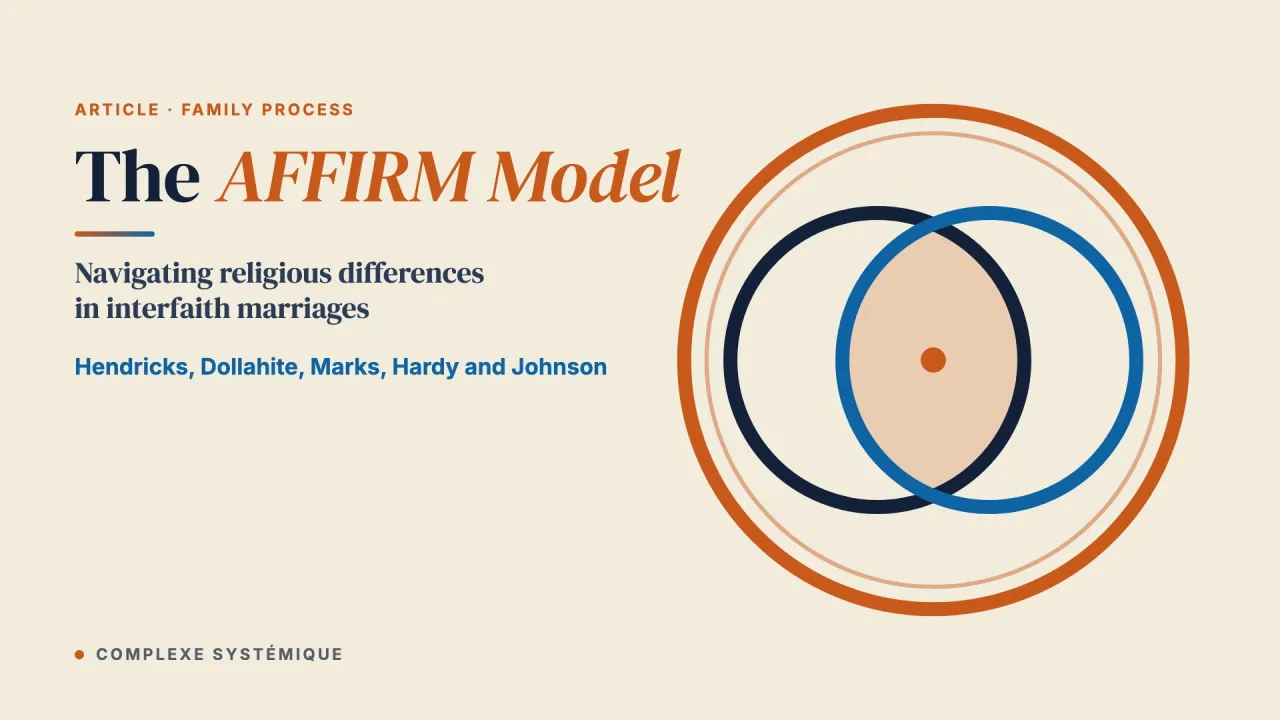
 The AFFIRM Model for Navigating Challenges in Continuously-Interfaith and Divergent-Interfaith Marriages
Thirty happy interfaith couples describe how they navigate their religious differences: five processes, from respecting each other’s choices to religious intimacy, gathered in the AFFIRM model.
 Article
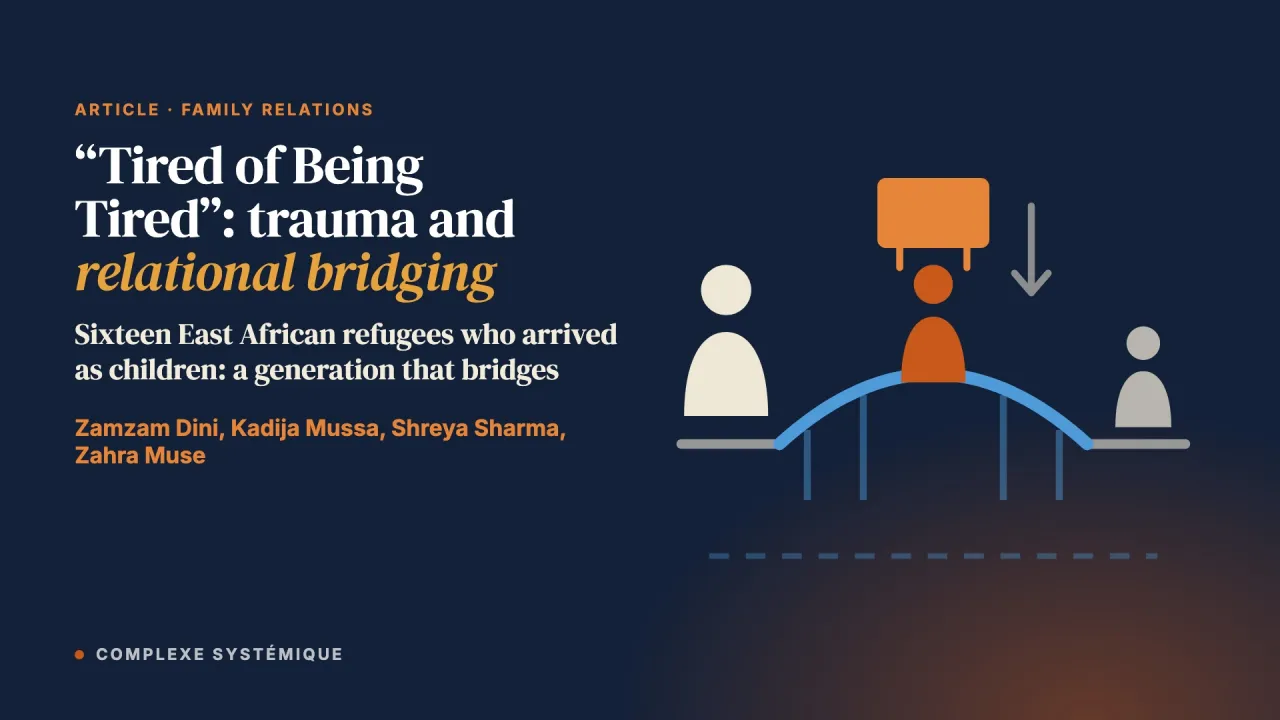
 “Tired of Being Tired”: Intergenerational Trauma and Relational Bridging Among 1.5‐Generation East African Refugees
Sixteen Somali, Oromo and Ethiopian refugees who arrived as children describe their role as bridges between generations, between inherited silences and burdened resilience.
 Article
 Toxic, narcissistic, borderline: what therapy speak does to your relationships
Narcissistic, borderline, toxic: therapy speak has left the consulting room. Julien Besse shows how these labels close the debate and relieve us of our own part.
 Article
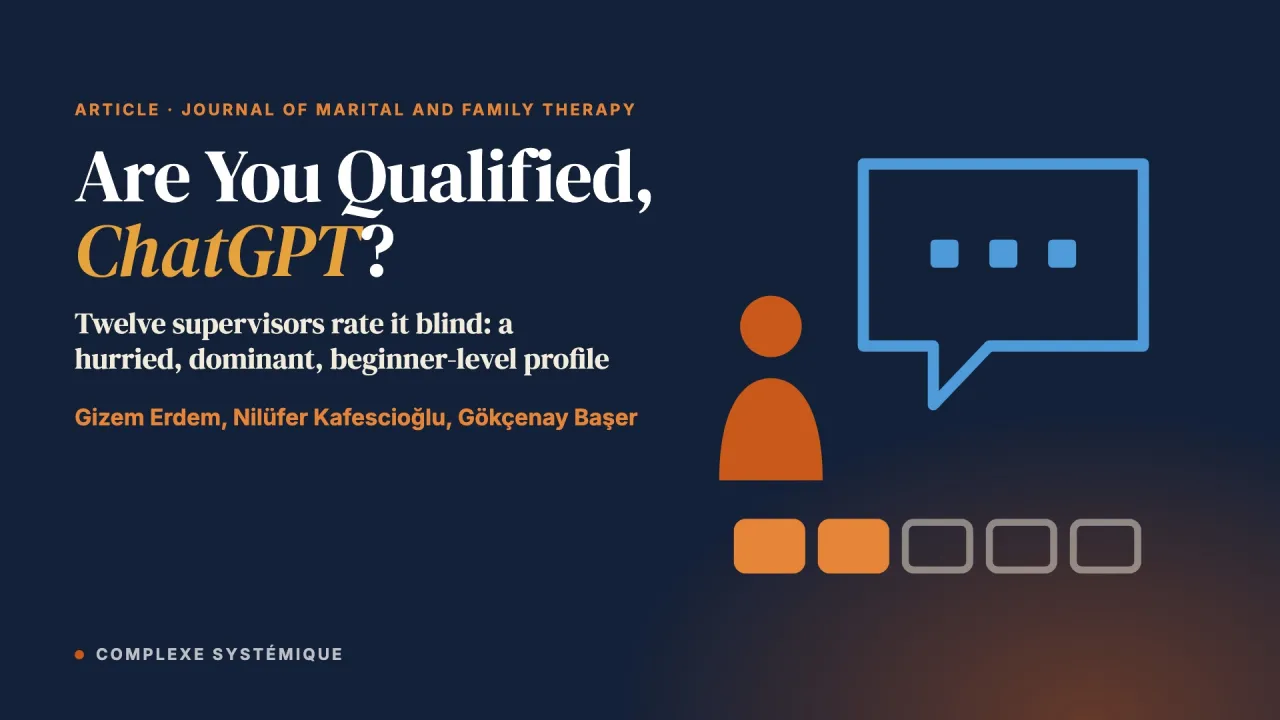
 Are You Qualified, ChatGPT? Examining Clinical Skills and Competencies of ChatGPT in Delivering Systemic Interventions
A GPT trained in systemic interventions, blind-rated by twelve clinical supervisors: a rushed, dominating novice, whom the client nonetheless loved.