AI-assisted translation
This version was translated from Italian by Complexe Systémique with the help of artificial intelligence. In case of doubt, the original version prevails.
Connessioni · Parenting
Parents in search of parents. Between parental fragility, invisible loyalties and parts work
Rebecca, 33, was adopted; her 16-year-old daughter has always lived with the grandparents, who are also Rebecca’s adoptive parents. She feels dispossessed twice over: of her place as a daughter by Marta, and of her place as a mother by her parents. Two therapists describe a still ongoing course of therapy that combines family and individual sessions, a systemic-relational reading and Richard Schwartz’s Internal Family Systems model, in order to listen to the “inner child” without letting her take over the whole relationship with her daughter.
Unofficial English translation. This article is a translation of Genitori in cerca di genitori. Tra fragilità genitoriale, lealtà invisibili e lavoro sulle parti, by Maria Enrica Batolo and Chiara La Barbera, published in Connessioni (Centro Milanese di Terapia della Famiglia), “Contributi” section (2026), under a CC BY 4.0 licence. Translated by Complexe Systémique in November 2026 with the help of artificial intelligence: the original Italian text has been translated into English and reformatted, which constitutes a modification of the work under the terms of the licence. The paragraphs and headings are those of the journal; the terms of the Internal Family Systems model (Self, Exiles, Firefighter) are rendered by their usual English names; Rebecca’s words are translated from the Italian; a few typographical errors have been silently corrected. This translation was made neither by the authors nor by the journal, who are not responsible for its content or for any errors. The original version prevails.
Asking means hurting, searching means betraying.
Maria Enrica Batolo, Chiara La Barbera
Introduction
This contribution tells the story of Rebecca, a young woman with an adoptive history, the mother of an adolescent girl, the bearer of a fragile parenthood, living in a family context marked by a strong presence of her adoptive parents and by an adoption story that has not been fully worked through. The intervention focuses on reading the relational dynamics, the loyalty conflicts and the identity processes, showing how the therapeutic work takes shape as a multilevel action that integrates the individual, family and intrapsychic dimensions.
The systemic-relational perspective is integrated with Richard Schwartz’s “Internal Family Systems” model, which makes it possible to show how Rebecca’s position is a critical point where three-generational dynamics of low differentiation and intrapsychic processes of fragmentation converge.
The family’s story
The family unit is made up of Rebecca, 33, a mother with an adoptive history and a university student; Marta, 16, Rebecca’s daughter; and the grandparents, Rebecca’s adoptive parents, who are Marta’s caregivers. No one has any contact with Marta’s father. The relationship between Rebecca and him was very brief, lived at a time when Rebecca was very young, and marked by a carefree spirit that sat poorly with the project of building an independent family.
Marta has always lived at her grandparents’ home; Rebecca lived with a man for a while, a relationship that later ended, and for the past two years she has been living permanently with her parents again.
The first three meetings involved the whole system made up of the grandparents, Rebecca and Marta, followed by two meetings with Rebecca and her parents. After these first meetings, the decision was made to outline a family therapy plan with, initially, only Rebecca and her parents present, and then to open an individual setting for Rebecca in parallel.
When care begins, Marta is in individual therapy. Since there is a high level of conflict between Rebecca and her parents, the choice is made for an initial clinical setting with Rebecca and her own parents, temporarily excluding Marta. Behind this lies a clear premise of the therapists: the quality of the adult relational context is a fundamental protective factor for a minor. In other words, it was considered a priority to work on the critical points in the relationship between Rebecca and her adoptive parents, in order to try to make Marta’s relational and emotional context more protective and, at the same time, to be able to work on developing Rebecca’s skills and recovering a parental function in her. Not involving Marta was also intended to protect her individual therapeutic setting and her resources. Marta does indeed appear to have good skills: she attends school regularly and shows adequate social functioning and adequate communication skills. These resources, however, coexist with a significant risk, namely chronic exposure to conflict and to guilt, in our hypothesis, in relation to the comparison with her mother, who, as a daughter, did not reach the individual goals the grandparents wished for her.
The choice of therapeutic setting is also connected to the initial hypothesis that encouraging Marta’s individual setting might allow Rebecca to remain in the role of her parents’ daughter, excluding the “emotional rival”, in the hope of activating a new positioning in her relationship with her parents with regard to her own process of individuation and differentiation, which is still at an early stage.
The three-generational dynamic: between belonging and role confusion
The family system appears to be organized around a critical knot: the overlapping and confusion of generational roles.
The grandparents, implicitly defined as “grandparent-parents”, are the main caregivers and the only stable point of reference for both Rebecca and Marta; but in their relationship with Rebecca they seem to lack adequate tools, tending to respond materially to emotional requests, thereby setting off an endless spiral of demands that leaves them mutually exhausted.
This position produces a difficulty in differentiation for Rebecca, who remains anchored in her role as a daughter. She sees herself as a victim of injustice “since forever”, and she is stuck in a past time for which she thinks she is owed compensation that, from her point of view, she might finally obtain from Marta (by receiving recognition as a mother) and through Marta (by receiving recognition as a daughter from her parents). This prevents her from seeing Marta’s emotional and affective needs; she seems not to grant Marta an autonomy of thought free from the grandparents’ influence. Indeed, she tends to read every movement of differentiation by Marta as an effect of her own relationship with her parents, and therefore as an attempt by her parents to turn her daughter against her.
Rebecca feels torn inside a tangle: Marta has “stolen” her role as her parents’ daughter, and her parents have “stolen” her role as Marta’s mother. Whichever way she looks at it, she sees herself as “the loser”.
Rebecca’s individual work
Rebecca enters the therapy room already heavily defined by other people’s narratives. Teachers, family, friends and her own parents (Marta’s grandparents) have always reflected back to her a position of chronic discontinuity and fragility, and have always ascribed to her a perpetual need for outside support. These descriptions, which Rebecca shares, risk taking shape as an identity cage that prevents her from reaching thinkable changes or from experimenting with different versions of herself, making her always feel a victim of injustice. Rebecca’s individual work centred on several core themes:
- Narrating her own adoptive story: Rebecca needs to give new meaning to her experience but fears hurting her adoptive parents
- Building identity and boundaries
- Building autonomy and plans for the future
- Recognizing her own limits and “accepting” that her parenting can be only partially recovered
For Rebecca, narrating her own adoptive story is a central therapeutic knot and, at the same time, a highly sensitive one. The need to give new meaning to her experience emerges clearly, to build a narrative thread that allows her to integrate her early experiences with her adult identity and with her role as a mother. However, this developmental movement meets a significant obstacle: the fear that this reworking might be experienced by her adoptive parents as calling the bond into question or, as she puts it, “even worse, as a form of ingratitude or rejection” on her part towards them.
An inner tension emerges between two fundamental needs: the need for differentiation and for building an autonomous identity, and the need for belonging and for keeping the emotional bond with her adoptive parents. In Rebecca, these needs cannot coexist at the same time, and they give rise to areas that tend to be reactivated in her relationship with her daughter Marta, by whom Rebecca feels unloved and/or rejected, and whom she sees as ungrateful towards her (exactly the same ingratitude she feels towards her own adoptive parents). At the same time, to preserve the bond, Rebecca wipes out Marta’s capacity to decide by reading her behaviour as merely imposed by the grandparents. It is as if Rebecca thought, through the lenses she built in her own experience as an adopted child, that her daughter Marta cannot be so determined to break away from her and to determine herself, because this part is something Rebecca does not, as it were, recognize as belonging to her own “genetic-relational endowment”. How can Marta want to break away from her, when she herself cannot break away from her own parents?
This fear of “hurting” her parents can be read as a sign of how hard it has been for the family system, since the beginning of the adoptive story, to tolerate processes of redefining meanings. It is something learned: over time, Rebecca’s requests, her questions about her origins, her attempts to understand and name her own story seem to have been intercepted and returned by the adoptive system as “unfair”, “excessive” or “ungrateful”.
Within this frame, the legitimate need to know and integrate her own roots is gradually transformed, in Rebecca’s eyes, into something relationally risky. Curiosity about identity becomes associated with the possibility of causing others to suffer, producing a kind of inner “prohibition”: asking means hurting, searching means betraying. An implicit bind thus takes shape that limits freedom and helps keep her personal story in an opaque, barely explorable zone.
It is a learning that becomes deeply inscribed at the emotional and relational level, feeding the position of the inner child. It is precisely this part of herself that has learned, over time, to “sacrifice” her own needs for the sake of holding on to the bond.
One example comes from an individual session in which Rebecca, prompted to talk about her adoptive story, mentions her wish to know some aspects of her origins, starting from the premise that a mother does not abandon her child and so something serious must have happened to her birth mother. After a few moments, however, she breaks off the story and adds: “But there’s no point anyway, it’s a search I would have to do on my own and it would make me even more alone… I would only make my father and my mother feel bad.”
Later in the meeting, Rebecca recalls an episode from her early teenage years when she had asked a few questions about her birth mother. On that occasion, she remembers, the emotional climate had quickly become charged with tension: her adoptive mother had fallen silent and her father had stressed how much had been done for her, implying that those questions were inappropriate. Rebecca describes that experience as a moment when she had felt “wrong and ungrateful”, coming to the conclusion that it was better not to “open certain things”.
In the present session, this learning is replayed almost automatically: the wish to know and make sense of her own story is immediately blocked by a thought of protecting her adoptive parents. It is as if a part of Rebecca, which can be traced back to her inner child, stepped in to regulate the expression of needs, anticipating not so much contact with the other’s possible pain as the emotional position of feeling ungrateful and wrong.
It is precisely in this conflict that the presence of an “inner child” who has been neither fully recognized nor listened to can be felt with particular clarity: she takes shape as a part of the self that holds primary needs for belonging, recognition and mirroring, which have remained largely unmet and, for that very reason, are still active in the present.
This inner dimension seems to emerge above all in moments of frustration and emotional activation, steering Rebecca’s reactions in a regressive direction and making it difficult to maintain an adult position, showing, for example, aggressive reactions when she comes into contact with her own core vulnerabilities.
So, from this perspective, the fear of hurting her adoptive parents can be read as the expression of a deep loyalty of the inner child, who keeps seeking approval and protection, avoiding any movement that might put the bond at risk. The possibility of telling her own story authentically is thus blocked by an emotional regulation centred on the fear of losing love and recognition, of losing the bond.
How does this child part speak with the adolescent daughter? What defensive effect can this part produce in the relationship with her daughter Marta? In what way may Rebecca have created a relational context in which, by “giving” her daughter to the grandparents, she allows them to have a “gift of love” that compensates them for Rebecca’s possible process of individuation (experienced, precisely, as dangerous), while at the same time Rebecca creates the relational context in which the self-fulfilling prophecy comes true, namely that she is exposed to losing the bond with her daughter. Marta, for her part, with regard to her own story, has a double experience of abandonment in relation to her biological parents: she recognizes no parental functions in either of them and feels “adopted” by her grandparents, thereby assimilating her own experience to her mother’s. The grandparents, in this sense, are covered generationally against the possible loss of the adoptive parental function, whether they are acting as Rebecca’s adoptive parents or as Marta’s.
This dynamic helps keep Rebecca in a position suspended between generations: on the one hand, she remains strongly anchored in the role of daughter, carrying needs that have not been fully worked through; on the other, she struggles to reach a sufficiently stable parental function, running the risk of placing Marta in a caregiving position or in the position of mirroring her own inner states. In this sense, the unrecognized inner child tends to take up space in the mother-daughter relationship, interfering with the possibility of seeing Marta in her own identity.
Speaking about her daughter Marta, Rebecca uses words of praise: “She’s much better than me, she knows how to be in relationships, everyone loves her.” This statement, apparently appreciative, shows worrying elements. It takes us into an implicit comparison between mother and daughter within relationships: Rebecca puts herself in a subordinate position to her daughter, delegating to her the function of “the one who knows how it’s done”, and from this position she shows her jealousy at having had her parents “stolen”, at having had her place as a daughter stolen: “it’s not enough for her that she took my room”.
The therapeutic work therefore aimed to make this inner voice visible and legitimate, without colluding with the needs but fostering a process of recognition and integration. Offering a space where the “little girl” can be heard might gradually allow Rebecca not to act out these needs in her relationship with her daughter or with her parents, but to recognize them, differentiate them and reposition them over time.
Over the course of the meetings, Rebecca’s functioning appeared to be marked by pronounced oscillation. At some moments she is present, attuned, able to recognize her daughter’s needs and to respond appropriately. At others, her speech breaks off, her gaze drops, the thread of what she is saying is lost, and it is as if different inner states alternated with no possibility of integration.
From this perspective, it is as if giving new meaning to the adoptive story could also become a process, first of reconciliation and then of integration, between the different parts of the self: the demanding child, the adult in the making and the possible mother. Only through this work of integration does a developmental movement become thinkable, one that could open a space for the reactivation, even if partial, of the parental function: a parenthood less driven by the inner child’s vulnerability and more able to recognize and support Marta’s developmental needs.
This can only happen if Rebecca perceives her own “growing up” as not dangerous for her parents, from whom she feels she cannot take away the adoptive parental role.
Working with parts
Richard Schwartz’s Internal Family Systems offers a useful operational approach to this process of reconciliation and integration between the different parts, and lets us see how this tension can be read as the expression of an inner system organized into parts in relation to one another.
Schwartz suggests that the mind is made up of a Self (the natural leader) and of various parts that take on protective roles or carry traumatic burdens. In Rebecca, we can hypothesize the presence of three main categories of parts: the vulnerable parts are the fragments of the Self that carry the pain of adoptive abandonment, the sense of being “wrong” or unworthy of love. These parts are, as it were, isolated to protect the rest of the system from their pain, which would overwhelm it; the protective parts are those that try to keep Rebecca “at least somewhat functioning” in everyday life: this might be, for example, the part that submits to the grandparents’ judgement to guarantee continuity, however painful, or the part that tries desperately to be a “good mother”, only to fail under the weight of anxiety and confusion. Finally, there are recognizable parts that become active when the Exiles threaten to emerge. Rebecca’s “withdrawal”, her “switching off” during sessions, her wondering whether there is any point in asking herself questions, can be seen as the intervention of an inner Firefighter who cuts off contact with emotional connection to avoid collapse.
In Rebecca’s case in particular, an exiled part emerges strongly, traceable to the “inner child”, who carries deep needs for belonging, recognition and love that have not been fully met. This part, which has remained in a state of vulnerability, tends to be reactivated in moments of frustration, affecting Rebecca’s emotional and relational functioning.
Alongside it, we can observe the action of protective parts, aimed at avoiding contact with the pain, which try to prevent it from resurfacing. The fear of hurting her adoptive parents, for example, can be interpreted as a protective function: avoiding conflict and preserving the bond becomes a strategy for maintaining a sense of inner safety. This protection, however, comes at a cost: it activates conflict whenever this “sacrifice” is not recognized, which exposes Rebecca to feeling like a “victim of the world”. And this dynamic helps keep Rebecca in a stuck position, since every movement towards differentiation is perceived as potentially destructive.
In this scenario, the Self, understood in the IFS model as an integrative core characterized by qualities of presence, curiosity and compassion, appears barely accessible, or almost entirely hidden by the activation of the parts. The intensity of the emotions tied to the experience of injustice makes it difficult for Rebecca to take a reflective and regulated position, which is necessary for integrating the different components of her experience.
The effect of this inner organization also shows at the level of the parental function. When the inner child takes over, Rebecca tends to move within her relationship with Marta from her own unmet needs, with the risk of reversing roles or implicitly asking her daughter to serve a mirroring function. At the same time, the protective parts can make the interactions rigid and put her in a position that comes across as not very credible and not very authentic.
The therapeutic work therefore aimed to foster progressive access to the Self, creating the conditions for Rebecca to be able to relate to her parts without being overwhelmed by them. The steps of the therapeutic process fostered the recognition and legitimation of the inner child’s suffering. Being able to differentiate the protective parts from their defensive function reduced polarization and promoted a more flexible and integrated inner dialogue.
This new, more integrated position opened up a space for a more regulated and aware parenthood, in which the inner child’s needs are not acted out in the relationship with Marta, but recognized and contained.
In the therapeutic work, this child part was narrated to the adoptive parents, who, within the therapeutic setting, were able to retell to Rebecca, or tell her for the first time, the story of the adoption journey, the difficulties they had experienced as parents and, above all, their wound over the grief of a biological parenthood that never came. This step allowed the adoptive parents to make explicit the sense of belonging they experienced in their relationship with Marta, whom they perceived, at an implicit level, as a “biological daughter”.
The case is not yet closed, but we are in the phase in which, in line with our systemic-relational epistemology, we are working to foster a new reading of the bonds and relationships between the generations, allowing Marta to be recognized, for the first time, as the grandparents’ granddaughter and Rebecca’s daughter, despite her mother’s fragilities.
In this sense, the work on parts proved useful not only in supporting an identity process in Rebecca, but also as a fundamental lever for reactivating a possible parental function both in her and in her parents.
Conclusions
In Rebecca’s case, the difficulty in reaching a sufficiently stable parental function appears deeply intertwined with an adoptive story that has not been fully given new meaning and with a family context that struggles to tolerate processes of differentiation.
From this perspective, the therapeutic work takes shape as a process of gradually building spaces of thinkability, in which what has not found words, in the family story and in the inner world, can be named, recognized and integrated. A possible integration of the systemic-relational approach and the IFS model made it possible to work simultaneously on bonds and on parts, making visible the connections between family dynamics and the inner organization of experience.
The possibility, for Rebecca, of reaching a more integrated position, in which the “inner child” can be recognized without taking over the whole relational field, is not only a developmental step at the level of identity, but also a necessary condition for building a possible parenthood. A parenthood that may not be fully reparative, but is regulated enough to allow Marta to withdraw from movements dictated by loyalty conflicts and feelings of guilt, and to inhabit a developmental space more in keeping with her stage of life.
In this sense, clinical work is not aimed at finding a definitive balance, but rather at building conditions, both relational and internal, that make possible a space in which belonging and differentiation can coexist, and in which one’s own story can gradually be transformed from a constraint into a resource.
Complexe Systémique: key points
The text presents an ongoing case, without hindsight or outcomes, but it captures with subtlety a configuration that is common in adoptive families: a mother who has remained a daughter, an adolescent raised by her grandparents, and grandparents who find through their granddaughter the biological parenthood they never had. The triangle can be read at every generation: Rebecca feels deprived of her place as a daughter by Marta and of her place as a mother by her parents. Two clinical choices deserve attention. First, the setting: keeping Marta out of the first sessions, to protect her own therapy and let her mother work on her position as a daughter. Second, the link between invisible loyalty, which gives the article its title, and Schwartz’s model: the fear of hurting the adoptive parents is read both as family loyalty and as the protective function of an inner part. The most fruitful moment is the one in which the adoptive parents finally tell their own grief over a biological parenthood. One would like to know more about Marta’s own voice and the place of the absent father. Read alongside the study of adopted people who become parents, and the article on relational injustices and invisible loyalties.
References
Bateson, G. (1976). Verso un’ecologia della mente. Adelphi. (Opera originale pubblicata nel 1972)
Boscolo, L., & Bertrando, P. (1996). Terapia sistemica individuale. Raffaello Cortina.
Boscolo, L., Cecchin, G., Hoffman, L., & Penn, P. (2004). Clinica sistemica (P. Bertrando, A cura di). Boringhieri.
Boszormenyi-Nagy, I., & Spark, G. (1988). Lealtà invisibili: La reciprocità nella terapia familiare intergenerazionale. Astrolabio.
Bowen, M. (1979). Dalla famiglia all’individuo (M. Andolfi & M. De Nichilo, A cura di). Astrolabio.
Fonagy, P. (2002). Regolazione affettiva e sviluppo del Sé. Cortina.
Sannasardo, P. F., & Noto, C. (2007). Il trattamento multicontestuale applicato ai contesti di prevenzione e cura delle dipendenze patologiche. Connessioni, 19, 143–164.
Schwartz, R. C. (2023). Come allearsi con le parti “cattive” di sé: Guarire il trauma con il modello dei sistemi familiari interni. Raffaello Cortina.
Schwartz, R. C., & Sweezy, M. (2023). Terapia dei sistemi familiari interni. Cortina.
Siegel, D. (2001). La mente relazionale: Neurobiologia dell’esperienza interpersonale. Raffaello Cortina.
Unofficial English translation of Genitori in cerca di genitori. Tra fragilità genitoriale, lealtà invisibili e lavoro sulle parti, by Maria Enrica Batolo and Chiara La Barbera, Connessioni, “Contributi” section (2026), under a CC BY 4.0 licence. Translation (with the help of artificial intelligence) and layout: Complexe Systémique, November 2026 — the work has been modified under the terms of the licence. Neither the authors nor the journal are responsible for this translation; the original version prevails.
Unofficial English translation of “Genitori in cerca di genitori. Tra fragilità genitoriale, lealtà invisibili e lavoro sulle parti”, published in Connessioni (2026) under a CC BY 4.0 licence. Made by Complexe Systémique with the help of artificial intelligence, it does not come from the authors or the journal, who are not responsible for its content; the original version prevails.
Read the original articleHow to cite this article
Batolo, M. E., et La Barbera, C. (2026). Parents in search of parents. Between parental fragility, invisible loyalties and parts work (Complexe Systémique, Trans.). Complexe Systémique. https://app.complexe-systemique.com/en_GB/articles/parents-in-search-of-parents-between-parental-fragility-invisible-loyalties-and-parts-work (Original work published in 2026 in Connessioni, sezione «Contributi» (2026); republished in 2026 by Connessioni, https://connessioni.cmtf.it/genitori-in-cerca-di-genitori-tra-fragilita-genitoriale-lealta-invisibili-e-lavoro-sulle-parti/)
To go further
- Understanding how adults adopted in England pre-1989 experience parenthoodBecoming a parent after adoption.
- Relational injustices, invisible loyalties and repair: what the contextual approach revealsInvisible loyalties according to Boszormenyi-Nagy.
- When people adopted from severely depriving institutions become parents: The experiences of young adult mothers from the ERA study and their adoptive parentsThree generations around an adoption.
Related articles
 Blog
Why do we feel we are behind in our lives?
Checking how old Yalom was when he published his first book reassured me. But in which race? A systemic look at the feeling of being behind, and at what we can change together.
 Scientific
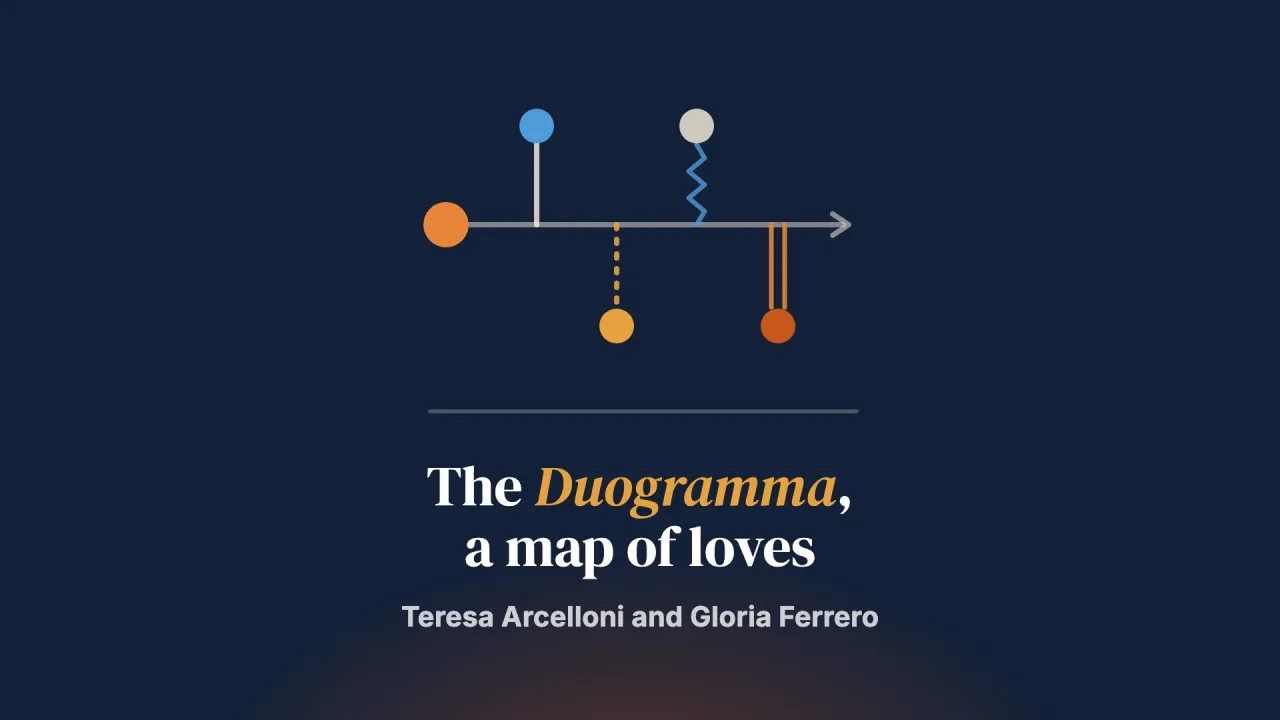
The Duogramma®: An innovative methodology for psychotherapy
A map of the couple relationships lived, desired or rejected since childhood: the Duogramma®, its graphic rules and its use in individual therapy.
 Blog
Capp® groups give parents a place to think together
How does a reflective parenting group work? Jalila Kormachi and Yara Doumit describe how parents revisit a difficult moment and choose what to try next.
 Scientific
“One Can Have All Sorts of Good Intentions but Sometimes in Everyday Life, It Turns Out Differently”: Change Agreements in Couples' Everyday Lives
Six Danish couples followed after an online couple program: their change agreements become guilt-inducing contracts, shared understanding or revealers of inequality.
Comments 0
Log in to join the discussion. Log in