AI-assisted translation
This version was translated from Spanish by Complexe Systémique with the help of artificial intelligence. In case of doubt, the original version prevails.
Red Sistémica · Interview
Poetics and micropolitics of change: designing therapeutic conversations. Interview with Marcelo Pakman
Interview with Marcelo Pakman conducted by Alicia Moreno at the Comillas Pontifical University in Madrid, in February 2006, at the close of a workshop organised by the master’s programme in family and couple therapy. An Argentine community psychiatrist and systemic family therapist based in the United States, Pakman lays out the two faces of therapeutic change: micropolitics, which opens up spaces, and poetics, which gives them content.
“Make no mistake: these things are not part of the context of therapy, they are part of the text of therapy.”
Marcelo Pakman
Micropolitics and poetics of change
The title of your workshop was “Poetics and micropolitics of change: designing therapeutic conversations”. What does this title refer to?
This title tries to capture an interest in two aspects of therapeutic change. The first is what I call the micropolitical aspects, that is, those that have to do with everything we do to give a chance of defining realities in a different way within the field where the actors we are working with at that moment — patients, social networks, and so on — operate. Very often these aspects are put into practice by doing things that, in the tradition of psychotherapy, are not very well regarded, because they are considered to be what a social worker should do, not someone from the “psy” world. In other words, what is traditionally assumed to be legitimate for a therapist is to work on the strictly mental; yet it turns out that a good part of what is mental has to do with social and political questions, tied to definitions of reality on which one has to operate in one way or another. So this micropolitical aspect is an attempt to legitimise, as a genuine part of therapeutic work, the fact that doing all these things is part of what we have to do; and, at the same time, a warning to avoid falling into what one frequently falls into, which consists of saying: “Well, I would know how to do many things in this situation, but unfortunately I can’t, because there are contextual problems that prevent me from doing what I should be doing as a psychotherapist.”
Instead, I say: “Make no mistake, these things are not part of the context of therapy, they are part of the text of therapy.” That is what the mental is, in many situations: the kind of actions that make up a legitimate part of therapeutic work — making the phone calls, facilitating contact with the different systems, activating the inactive parts of social networks, and so on. It is micropolitics in the sense that it is a local politics, in the locality where one works. It is not politics in the traditional sense of macropolitics or the politics of society at large. But it is politics, if by politics we mean the actualisation of power as an opportunity to define realities.
Secondly, the other word, poetics, refers to an interest in those moments of therapeutic work in which discontinuous changes occur. That is, there are moments in the therapeutic process when one does work that has a certain continuity: certain transformations happen little by little, one uses different interpretive lenses to look at what is going on, while working micropolitically. By contrast, there are other moments, discontinuous and generative, which I call poetic (in the etymological sense of poetic as productive or generative), which are followed by other interpretive moments, so that a disarticulation of continuity takes place, opening up new possibilities.
I have been very interested in studying these singular moments of the therapeutic process, which escape both the interpretations that were being made of things up to then and the fact that they are not determined by the models we claim to adhere to and which inform what we do, but by other sources of learning; they are related to something we frequently use in everyday communication, generative metaphors, but they are not exhausted by them and do not necessarily include them. For a time I used Donald Schön’s concepts to think about this question, then I began to elaborate other developments in order to understand these expressive aspects and moments, which are full of sense even though they cannot be domesticated into a clear and distinct meaning that we could identify and articulate. Treating these moments theoretically singles them out and confronts us with the paradoxes of theorising the singular that occupied Roland Barthes.
Micropolitics
The continuous, critical work: phone calls, contacts between systems, activation of networks. A local politics that opens up spaces where social determinations block what is possible.
Poetics
The discontinuous, generative moments that escape current models and interpretations, and that give content to the spaces opened up by micropolitics.
Coming back to micropolitics, I think your proposal is related to the cultural, ideological and gender-role conditionings, and so on, that act on therapists. Many of them understand that this is there, but do not know how to bring it into therapy without therapy turning into a kind of “rally” where certain ideologies are promoted.
Yes, indeed, that is the challenge. It lies between one extreme, which consists of considering that this belongs to the context, that it is not mental and that it is therefore not legitimate to deal with it in therapy, and the other extreme, which implies that the mental, as we understand it in a restrictive way, does not exist: only ideological-political forces exist, and therapy then turns into an ideological base. Between these two poles lies the challenge of doing something in the local as a therapist, but at the same time using therapy to carry out a certain critical reflection on the way all these forces shape the choices I make in my life.
What is the role of talking explicitly about these social phenomena in therapy?
Exploring where these ideas about what one should or should not do come from has a role: asking oneself why it is so hard not to follow these ideas and how far one has a choice. All of this is a critical reflection, and therapy is a legitimate place to carry it out.
Between the mental and the social: subjection and subjectivation
If psychotherapy has traditionally addressed the mental, the internal, considering that the other aspects remained outside, don’t you think that today, by reaction, certain models of therapy may have fallen into the other extreme?
In truth, there has been an enormous theoretical elaboration, within post-structuralism and postmodernism, on subjectivity and the social determinants to which it is subjected. Foucault, for example, dealt with the complexity of this relationship between the subjective, constituted by the social yet exceeding it. It is a difficult relationship to navigate in practice, between the two extremes: getting rid of the social and having a somewhat naive and restricted view of mental phenomena; and, at the other extreme, forgetting that subjectivity exists, which cannot be assimilated to individuality, homogeneity or identity — that is where the complexity of the matter lies. For me, the key is to see how therapy can be a social format allowing a reflection that is not based on an asocial image of oneself (like Rodin’s Thinker, who starts thinking inwards and discovers things all by himself), but a critical reflection on oneself through others. A critical social practice, through a micropolitics that challenges the social determinants and the identity-formation processes by which we are constituted — that is, the mechanisms of subjection —, and a poetic practice which, through singular events, generates opportunities for subjectivation. Micropolitics and poetics, operating on the two faces of the phenomenon we call subjectivity: subjection and subjectivation.
In your work experience, where do you find that these proposals meet with the most acceptance or the most rejection?
These ideas may meet with more acceptance or rejection depending on each person’s openness to the political concepts being put into practice. Very often it is more appropriate to remain implicit when making these moves, in order to avoid confrontation and not alienate people, because if one confronts, it can give rise to a discussion about principles, and it is better to discuss concrete situations, since in practice we have to live together. The other danger is the acceptance these ideas may arouse. If they are accepted too much and turn into a new orthodoxy, they lose the critical force they may have. Being rejected is a problem, but being accepted too much is also a problem.
Are poetics and micropolitics your preferred themes of work at the moment?
Yes. What interests me is exploring, through concepts developed in contemporary philosophy and epistemology, the whole question of discontinuous change and of what I call generative poetic moments, and their relationship with the other moments. But, above all, I want to see whether something more can be said about what has been a mysterious focus of attention for many thinkers. On the one hand, whether it is possible to theorise the singular; on the other, whether it is possible to train professionals who have a social practice so as to increase their chances of generating, in their practice, these singular poetic moments of discontinuous change — or whether, on the contrary, we must abandon this project as an impossible one, deal only with what can be conceptualised and leave that to intuition or personal style. It is an interest in what life and circumstances make of us and in what we make of life and circumstances, between determination and freedom, between subjection and subjectivation beyond social identity, centred on points of indeterminacy. The micropolitical, which works critically by creating virtual spaces, and the poetic, which gives them content. I develop all of this in a book whose subtitle is precisely Poetics and micropolitics of change. In it I explore how words touch people in a physical sense that can be traumatic and also poetic — words aiming not at the already-said, but at the saying, as Emmanuel Levinas wanted. I also deal with the material and bodily dimension of the voice, of the gaze, of the role of images and the visual in their entanglement with the textual, in therapeutic interventions and in those poetic events I was referring to.
Key takeaway
For Pakman, therapy is neither a purely “mental” place cut off from the social, nor an ideological platform. It is a social format for critical reflection on oneself through others: micropolitics challenges the mechanisms of subjection, poetics opens up opportunities for subjectivation.
Training therapists for the unpredictable
It is generally thought that there are skills one either has or does not have, but you maintain that it is possible to train and acquire them.
There are things to be said about these singular moments and about those elements I mentioned as relevant when we are interested in everything that touches us in a bodily sense, and which deserve to be recognised and legitimised as important and genuine moments of processes of change. And it is possible to have a training process that increases the chances that this type of situation will occur — situations that are not extraordinary but everyday, although blocked by our professional training itself. In the training of the therapist, one has to learn the theories and skills that make up the tradition of therapy. At the same time, one has to have enough critical practice to avoid as far as possible that these same models and theories inhibit the possibilities of creating moments determined by things that lie beyond theory. These are moments generated systemically, but in a way that cannot be conceptualised systemically.
This reminds me of Gianfranco Cecchin’s latest publication on irreverence, that is, the attitude that consists of being able to revise and question what one habitually believes in.
Indeed, this work by Gianfranco Cecchin has a lot to do with avoiding remaining a prisoner of the restrictive power of theories. The constantly ironic attitude that Cecchin had in his practice has a lot to do with this. I believe that irony as well as cynicism are necessary in order to revise one’s own models or theories that no longer work; the cynical aspect is a little more unpleasant, and the ironic one a little more fun.
In your workshop, you argued that future systemic therapists must learn not only techniques, but also to see themselves in context. How can they achieve this?
The project of being a systemic thinker is somewhat impossible; it is nevertheless worth trying. It is impossible because, in the last instance, we cannot be outside the systems within which we think about systems; there is, however, a very clear difference between trying and not trying. The difference is that we, the professionals who have a systemic vocation, try — and that is precisely what learning is. But this attempt must avoid alienating everything into a fixed model that constrains and blinds us.
When you set out your ideas about this attitude according to which one should not be totally attached to any idea or theory, are there people who challenge you by arguing that there are ideas or options which, in themselves, are better than others?
Yes, but in fact I believe it is true that we all make decisions and that we try to go in directions we choose on the basis of the different values we hold. But, precisely, we make these decisions at moments when all the categories we use to transform situations into situations that can be solved in mathematical terms do not work well; hence the importance of Heinz von Foerster’s concept according to which we can only decide in situations that are undecidable — or, as I prefer to call them, dilemmatic. Therapy is a very interesting place for showing that undecidable situations can be generated, because that is what puts us, human beings, in the position of making a decision, that is, of being ethical. If something is already fixed, if there is a solution, it no longer depends on us; what depends on us is what has no solution, what is not decidable by following a formal procedure, and it is in those cases that it falls to us to be ethical. Being ethical means taking a risk; every intervention in the generative poetic sense is a risk one takes. That is what I was referring to when I said that the other face of the poetic is the traumatic. One really does not know whether it is going to be generative or whether it is going to be paralysing and traumatic. Micropolitical work creates virtual spaces where social, political and discursive determinations block the field of the possible. And it does so as a work of social critique that brings to light and amplifies points of indeterminacy on which the poetic, when it occurs, produces kernels of what, following and betraying Alain Badiou, we may call the metapolitical.
Key takeaway
We only decide where no formal procedure decides in our place. A therapy that knows how to produce undecidable situations puts people back in the position of being ethical — and every poetic intervention is a risk, whose other possible face is the traumatic.
Protocols, teachers and pathways
What do you find most interesting in the latest developments in systemic family therapy?
To be honest, apart from concrete conversations with therapists, I have not followed the intellectual production in the field of therapy very much. It seems to me that it has gone round in circles, without trying to use new concepts or concepts developed in the fields of philosophy, history or sociology to think about everyday things, and that it has not advanced much in that direction. To tell the truth, I have devoted myself more to that than to exploring what was going on in therapy. My contact comes from my role as a reviewer of articles for a few publications. I do not read many theories from the field of therapy; I feed more on readings that come from outside the field of therapy, in order to do what I call “thinking the clinic”.
Among the most popular models of recent times are, on the one hand, narrative approaches and, on the other, brief therapy and the design of very concrete intervention protocols for relieving symptoms in a few sessions. In your experience, are these models also on the rise in the United States, where you work?
It depends on the area. In the United States, in the field of community mental health, the therapist’s everyday experience has to do with the influence that insurance companies’ policies exert on their work, for example on the procedures to be followed. That is a great subjection today. Globalisation has ravaged the field of the possible in therapy, and procedures have replaced theories to a large extent, which is a problem in itself. Protocols are like a subtle way of smuggling in ideologies; they are the opposite of therapy as a place of critical thinking, of reflection and of change understood as a “passion for being otherwise”, as subjectivation, within an ethical conception of change. In that sense, I see a problem there. Just as there is literature and there are best-sellers, there is therapy as a place to reflect on life, and protocol-based therapy is the equivalent of the best-seller. I find it very honourable that others take it up as a profession, but it is not what interests me.
How did you begin your work in the systemic model, both in its most practical side and in the more abstract dimension of epistemology?
I have never devoted myself primarily to academic work. That condemned me to not having some of the privileges of the academic world, but it also allowed me not to have some of its shortcomings, since it threw me onto the battlefield: facing complex social situations from the inside, as a participant. However, since I had at the same time another interest, in ideas, concepts, abstraction, I have always used clinical practice in one way or another to think about these abstract concepts, and used these abstract concepts to reflect on the clinic. In that sense, I have always tried to negotiate between these two roots.
Who have been your teachers, either because you worked personally with them or because their works influenced your thinking?
I had early teachers. When I was a psychiatry resident in Argentina, at the old Children’s Hospital in Buenos Aires, I had a fantastic instructor, from whom I learned a lot, called Alfredo García. He taught me openness of thought and critical thinking. Then I had interlocutors, such as Carlos Sluzki, with whom I still interact frequently, and I was lucky enough to be close, for a certain time, to the work of Gianfranco Cecchin. Today I have an ongoing dialogue with Pietro Barbetta, a therapist from Bergamo. Besides, on the theoretical level, in the field of cybernetics, I had for years a fairly close contact with Heinz von Foerster. My conversations at home about the things of life with my partner, Chus Arrojo, are also central. All of them are among the internal interlocutors I have on all these questions. But it is always unfair to name certain people, so numerous are the influences one gathers.
Gender violence and human violence
Here in Spain there are burning issues, such as the question of working in situations of gender violence, and how to combine aspects of the systemic model with feminist positions. In your experience, what is the key to addressing this problem?
The movement that made the problem of gender violence visible has been very important. That basic impulse probably did not come from the field of therapy; it had more to do with the advance of human rights discourse, with the advance of the feminist movement, with the interrelation of these discourses with the progress of democratisation, with all the unresolved problems of what a democratic State is. Research, sociology, the social sciences and communication joined this whole movement. The role of therapy has not been central, but it is one of the social forces that can do something about it, and I do not believe there is a privileged approach for helping in this type of situation; I believe that critical practice, once again, is very important. It must be a practice open to observation and reflection on the way social forces constitute us as a certain type of subjects, constitute gender, role expectations; but it must also be critical of the very subjections that come from the institutionalisation of established ways of thinking about the question.
Do you think family violence is more frequent today, or simply more visible?
Reading historical documents, one sees that this planet has always been very violent; what happens is that concern about this violence, as something requiring reflection and legislation, has spread much more widely since modernity. But it seems to me that we are a wild species, not because of what is most primitive in us, but because of what is most developed. What is peculiar to human violence is that it has Reason on its side: a lion is aggressive because it is programmed for that, we are aggressive for “reasons”; a good part of our problem comes from what is most evolved in us. A Nobel laureate in literature, Kertész, set out to thematise this and said that, unfortunately, in a certain sense, Nazi logic triumphed: it was a triumph of the worst aspects of reason. What was terrible about Nazism was not what was inhuman in it, but what was human in it — Goya’s monsters of Reason. I too believe that the human problem lies in what is most developed in us; in a certain way, language has something excessive about it, we are a young species to possess this instrument. Once we have language and can, thanks to it, unbind ourselves from the absolutely material, we can make plans, dream… and, as a young species, we are like a child endowed with a terrible power.
Immigration and globalisation
Another topical issue is immigration, which, here in Spain, is much more recent than in the United States, but is increasingly present in psychotherapeutic work. In your experience, what helps make this immigration process less traumatic, so that there is less clash between immigrants and the new culture?
A theme that has interested me is thinking about this whole problem in terms of cultural borders. I call cultural borders the zones of contact between social groups, subcultures or ethnic groups that come from different traditions; they may be borders between the dominant groups of society and minorities, or between people from outside the community and those inside it, or anything else. One of the problems that arise across these borders is that a double blindness is at play. One has to do with the fact that it is difficult to perceive things from other cultures because we do not have the receptors to perceive them, and we do not have them because we were socialised in another tradition. So there are things we do not see, not because we are bad, but because we cannot see them. The other is blindness towards one’s own culture: we navigate within our culture, but that does not mean we see our culture or are capable of reflecting on it. In fact, we only begin to see our culture at the very moment we come into contact with another culture. In a certain way, a paradoxical situation arises, in which one begins to see something on the basis of this double blindness. Cultural borders are therefore points of contact between two groups, each of which is doubly blind. From this double blindness it follows fairly easily that the other turns into an enemy, and many studies show how this process occurs. In this regard, an interesting thing is that this is not something that can be solved by knowledge alone. There is the idea, somewhat naive to my taste, that if we knew more about the other, we would accept them more. It is the idea of cultural competence: if we learn things about the other, we get along better. In my opinion, the process is much more complex, and it is not something that can be solved solely through cultural competence. The basis which, in my eyes, gives rise to a process, sometimes long and painful, of mutual accommodation, is precisely cohabitation and misunderstanding. It is from this combination that experiences arise on which one has to reflect, and therapy is a legitimate place to reflect on these things. For example, a “back-to-back neighbourliness” sometimes occurs, in which there is an interaction that consists precisely of not interacting with the other. And it is important to reflect on this in therapy. In any case, I do not think there are cultural cases and non-cultural cases, since all cases are cultural and, in all of them, a reflection on the cultural has to be carried out. When one gets used to working in therapy by carrying out a critical reflection on culture, one obviously does so for cases of cultural borders, but also for all the others.
Key takeaway
At cultural borders a double blindness reigns: we do not perceive what we have no receptors for, and we do not see our own culture until we encounter another. “Cultural competence” is not enough; it is cohabitation, misunderstandings included, that makes mutual accommodation possible — and all cases are cultural.
You have experience as a consultant and teacher in many different countries — Europe, South America, China, the United States. Do you see significant differences in the problems addressed in therapy? Or are the problems becoming globalised too?
I suppose that, because of globalisation, certain things are reproduced, although with certain differences; for example, in developing cultures such as China, the obesity epidemic, typical of societies growing rich rapidly. There seems to be a fairly clear correlation between growing wealth and change in diet, and this leads to epidemic diabetes. There are also forms of domestic violence which, although they already existed, take on a more epidemic character. One sees this in various places. One wonders in what way intercultural contact is beneficial or constitutes a problem. We are also at a moment when we are faced with universal political questions, such as the fear of pandemics, of terrorism… there are certain fears that determine the horizon of possibilities that many societies face, and that are part of the backdrop against which family therapy takes place. In the window onto society and culture that every family is, all of this is present, and so it is also found in the text of the conversations one has in therapy.
Who is Marcelo Pakman
Dr Marcelo Pakman, a physician, was born in Buenos Aires, Argentina. He has lived since 1989 in western Massachusetts, in New England (United States). He is director of psychiatric services at Behavioral Health Network, a network of community mental health services, adjunct professor in the department of applied social sciences at the Hong Kong Polytechnic University and scientific co-director of the counselling school of the Isadora Duncan Centre in Bergamo, Italy (with Pietro Barbetta). A community psychiatrist and systemic family therapist, he is a member of the editorial board of numerous professional journals in North America, South America and Europe, and has published numerous articles and book chapters in English, Spanish, Italian, French and Portuguese. He chaired the human rights committee and was vice-president of the American Family Therapy Academy, as well as vice-president of the American Society for Cybernetics. A frequent lecturer and visiting professor, he has given courses, seminars and workshops in more than 80 cities in North America, South America, Europe and Asia, on themes related to family and systemic therapy and network interventions, community mental health, intercultural aspects of mental health, cybernetics, epistemology and human rights, with particular attention to practices in contexts of poverty, violence and ethnic dissonance.
He is particularly recognised for his articulations between critical theory, philosophy and epistemology, on the one hand, and clinical practices in psychotherapy and mental health, on the other.
Who is Alicia Moreno
Alicia Moreno Fernández holds a doctorate in psychology and is a psychotherapist. She studied psychology in Madrid, then did her postgraduate training in the United States, in the master’s programme in family and couple therapy at Seton Hall University (New Jersey) and at the Kantor Family Institute (Boston). She obtained her doctorate several years ago from the Comillas Pontifical University in Madrid. She has worked in various public and private institutions, including a psychological support centre for women and a public social services centre in Madrid. She directs the master’s / specialisation programme in family and couple therapy at the postgraduate institute of the Comillas Pontifical University, a programme in which she also teaches and supervises placements. She also collaborates as a lecturer in several postgraduate programmes at other Spanish universities. For several years she was a member of the board of the Madrid Association for Couple, Family and Other Human Systems Therapy. She is currently part of the Training Division of IFTA (International Family Therapy Association). She works in private practice, and her areas of professional interest are gender issues, the integration of the systemic model with other approaches in individual therapy, and innovations in the teaching and supervision of the systemic model.
See also, on Red Sistémica (in Spanish)
Terapia sistémica: la madurez profesional de una aventura intelectual — by Marcelo Pakman.
Vida, libertad y búsqueda de la felicidad: los derechos humanos y la ética de la vida cotidiana — by Marcelo Pakman.
This interview is an English translation of “Poética y micropolítica del cambio: diseñando conversaciones terapéuticas. Entrevista a Marcelo Pakman”, published by Red Sistémica (first published in Red Sistémica). Translated and republished with the journal’s permission.
Read the original articleHow to cite this article
Moreno, A. (2023). Poetics and micropolitics of change: designing therapeutic conversations. Interview with Marcelo Pakman (Complexe Systémique, Trans.). Complexe Systémique. https://app.complexe-systemique.com/en_GB/articles/poetics-and-micropolitics-of-change-designing-therapeutic-conversations-interview-with-marcelo-pakman (Original work published in 2023 in Red Sistémica; republished in 2023 by Red Sistémica, https://redsistemica.ar/2023/02/10/poetica-y-micropolitica-del-cambio-disenando-conversaciones-terapeuticas-entrevista-a-marcelo-pakman/)
To go further
- Mobility and migration: rethinking the systemic approach in a globalized worldThe cultural borders and the double blindness Pakman speaks of, seen from the French-speaking clinical work on migration.
- The movement that revolutionized therapy: social constructionism and narrative therapiesThe current which, like Pakman, makes reality a social definition on which therapy can operate.
- The Milan school of systemic family therapyGianfranco Cecchin, whose irreverence and irony Pakman hails as an antidote to the restrictive power of theories.
Related training courses
 Certifying course
Training in Systemic Therapy and Interventions – Cycle 1
Certifying training cycle in systemic therapy and interventions – year 1. Courses, supervision and practice, aligned with EFTA/SFTF. In French.
 Certifying course
Training in Systemic Therapy and Interventions – Cycle 2
Certifying training cycle in systemic therapy and interventions – year 2. Clinical complexity, supervision and practice. EFTA/SFTF aligned. In French.
 Certifying course
Training in Systemic Therapy and Interventions – Cycle 3
Certifying training cycle in systemic therapy and interventions – year 3. In-depth intervention, supervision and practice. EFTA/SFTF aligned. In French.
 Certifying course
Training in Systemic Therapy and Interventions – Cycle 4
Certifying training cycle in systemic therapy and interventions – year 4. Clinical integration, supervision and certification. EFTA/SFTF. In French.
Related articles
 Scientific
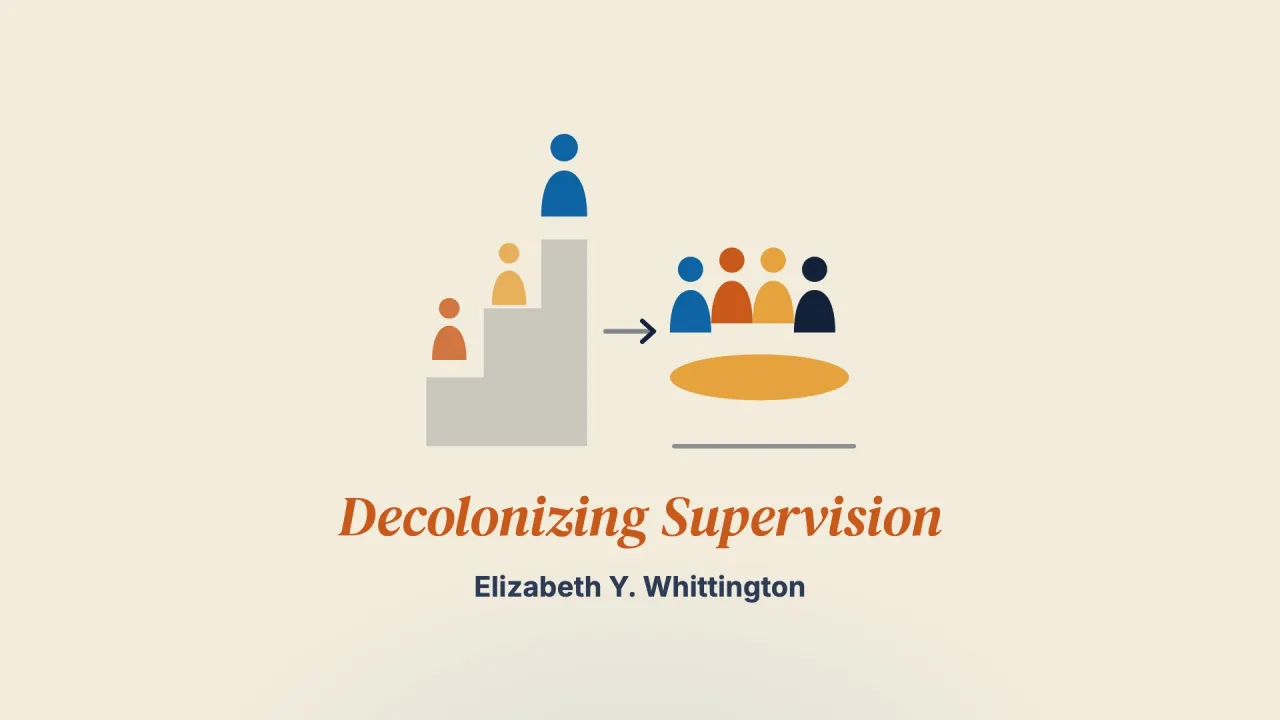
 Decolonizing Supervision: A Critical Race and Queer Theory Framework for Marriage and Family Therapy
Supervision is not neutral: a framework drawing on Critical Race Theory and Queer Theory to name and share power in supervision, with a vignette.
 Scientific
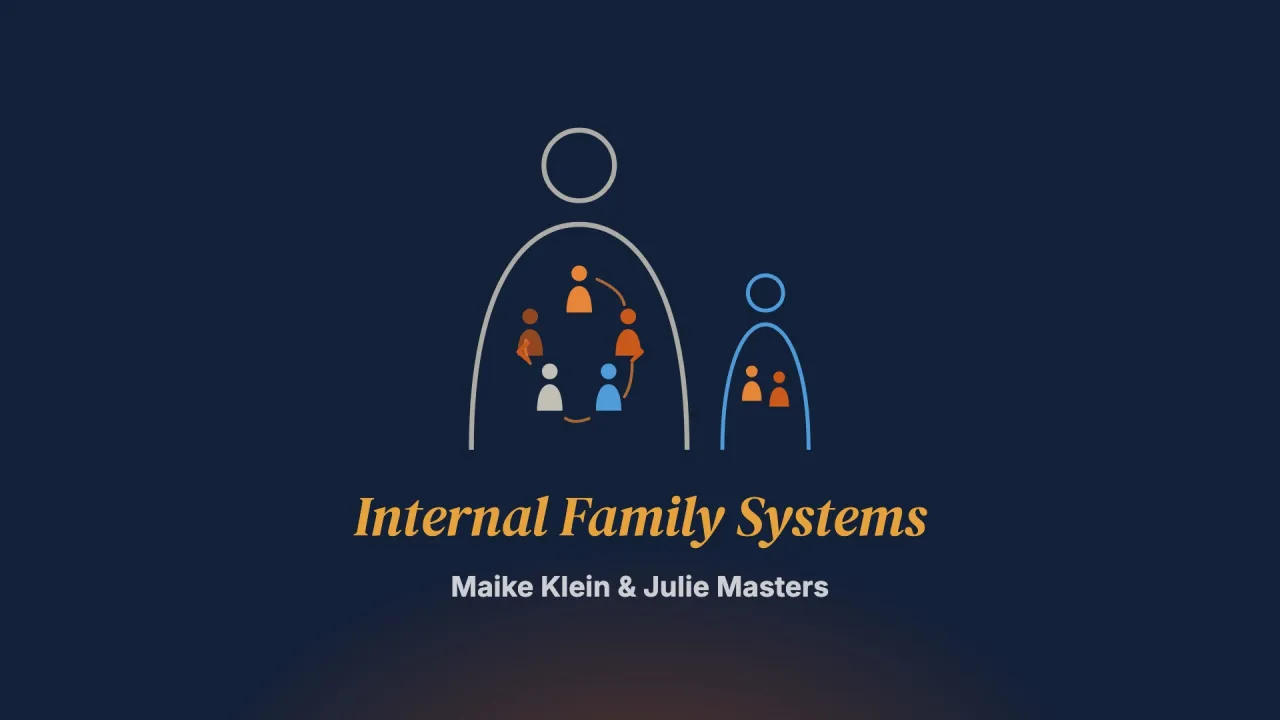
 Internal Family Systems Therapy as Part of the ‘Family of Systemic Therapies’: A Critical Exploration of Systemic Practice in the Intra-Personal Domain
Does IFS belong to the family of systemic therapies? A critical exploration, grounded in a family court vignette, of systemic work with “parts”.
 Scientific
 How Venezuelan mothers and their young children use storytelling to process immigration journeys
Seven Venezuelan mothers tell their young children about crossing the Darién: shared memories or superhero tales, six ways of facing fear together.
 Scientific
 “Tired of Being Tired”: Intergenerational Trauma and Relational Bridging Among 1.5‐Generation East African Refugees
Sixteen Somali, Oromo and Ethiopian refugees who arrived as children describe their role as bridges between generations, between inherited silences and burdened resilience.
Comments 0
Log in to join the discussion. Log in