Complexe Systémique · Original article
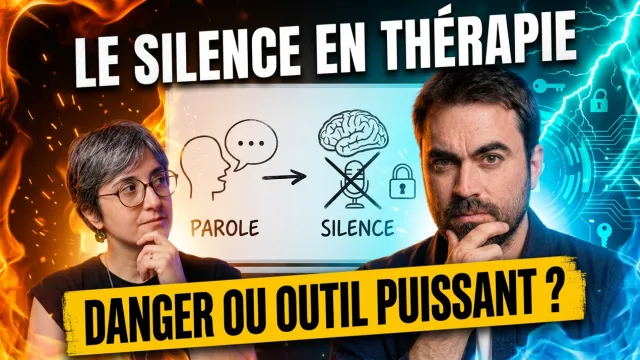
Silence in therapy: a clinic of the in-between words
Julien Besse and Yara Doumit take seriously what our textbooks leave out of frame: the moments when nobody speaks. Philosophy, anthropology and systemic practice meet here to distinguish the silences that come before speech, those that follow it, and those that take its place, all the way to the silences of trauma, which protect before they can be transformed. Three clinical vignettes show what these pauses shift within a system, and the article closes on an ethics of inhabited silence.
Authors’ abstract
Silence holds a central, complex and ambivalent place in the therapeutic encounter. Sometimes experienced as a moment of calm, at other times as a tension to be resolved, it is a relational phenomenon that is at once personal, cultural and systemic. This article offers an in-depth exploration of silence in therapy through a hybrid perspective: philosophical, anthropological, systemic and clinical. Three clinical vignettes illustrate how moments of pause alter family, couple and individual dynamics. Finally, the article sets out practical and ethical implications for a well-calibrated use of silence in therapeutic work.
Keywords: silence, systemic, temporality, communication, resonance, interaction, family therapy.
Introduction
“What music, silence!”
Jean Anouilh
Like light on a painting by Pierre Soulages, silence does not force itself upon the eye: it sculpts, it reveals. Without it, forms blur together, contrasts fade, and meaning, too full of itself, turns opaque. Silence is what allows the world to appear with clarity, what gives words their depth. Music has always known this. A score saturated with notes becomes an ordeal for the ear. It is the interval, the waiting, the suspension that give a melody its breath and its power. Silences do not cut the musical flow: they organise it. They prepare emotion, they set the gravity, they make the return possible. Alexandre Astier often speaks of this obvious fact when he talks about his writing: he composes his dialogue like a symphony. What matters is not only what is said, but what is held back, deferred, left hanging. Without silence there would be nothing but cacophony; with it, rhythm is born.
In our training as therapists, what is fitting to say is often placed ahead of what is fitting to leave unsaid; the books written by our masters show us the words exchanged in their sessions, not their silences… And yet it is certain that those silences gave their work all its depth, gave their interventions their singular character, and gave them the authenticity that made their style inimitable.
Silence in therapy is such a common phenomenon that one might think it needs no comment. And yet few clinicians feel entirely at ease with it. Some approach it as a fertile parenthesis, a breathing space in which thought reorganises itself; others see in it a risk of deadlock, a moment when the alliance might waver.
In the therapeutic space, silence is never simply an absence of noise. It is an event. It changes the texture of the relationship, gives another contour to emotions, allows speech or prevents it. Sometimes it imposes itself as self-evident; at other times it resists interpretation. It can bring meaning into being, or suspend its formation.
This article offers an exploration of silence in therapy from a broadened systemic perspective. We shall first address silence as a human experience, then its various temporalities in clinical work. We shall then show how silence operates as an interactional and temporal agent of the therapeutic process. A specific section is devoted to the links between silence and trauma, in order to think of silence as a protective response, but also as the trace of a wounded temporality. The clinical implications of these proposals will be illustrated through three clinical vignettes. The article will close with a critical reflection on the misuses of silence, before opening onto a concluding ethical discussion that considers silence as a relational stance engaging the presence, the posture and the responsibility of the therapist.
Silence as a human experience
“What is more complete than silence?”
Honoré de Balzac
Before it is a clinical object, silence is a fundamental human experience. It often accompanies some of the most significant moments of existence — birth, death, shock, wonder, revelation, suffering — and in these threshold zones, so often met with in session, language does not so much fail as reveal itself momentarily unfit to hold the experience. Silence there does not designate an absence to be filled, but a density to be sustained.
This perspective immediately sheds light on a central clinical question: should silence be interpreted, accompanied, or simply held? Heidegger (1927/1986) distinguishes a silence that opens a space for something to come from a muteness marked by withdrawal and the avoidance of encounter. In clinical work, this distinction invites us not to confuse silence with closure. Even when silence fills the whole space, even when it thickens to the point of making the atmosphere stifling, it invites us to pay attention, to stretch our senses to catch what escapes language. As in that meeting with a boy of about ten, brought to the session by his mother because “he refuses to talk to anyone but me” — what does such selective silence reveal? Certainly far more than the child could have conveyed with the words available to him.
Certain apophatic traditions extend this intuition: some experiences, too dense or too vulnerable, exceed the capacity for naming and call for a suspension of speech. Silence supports a maturing of experience before it is put into words, a function familiar to the clinician after a bereavement, a trauma or an intimate disclosure. This suspension of speech opens a narrative field: certain marginalised stories cannot emerge as long as the conversational space remains saturated (White & Epston, 1990; White, 2007). Silence then becomes the condition of possibility of alternative stories.
Systemic practice, however, reminds us that silence is also a socially and culturally situated fact (Le Breton, 1997). Depending on the cultural context, it may signify respect, restraint or, on the contrary, embarrassment and withdrawal. A single-meaning reading of silence would therefore expose us to clinical errors, and it will always be necessary to situate it in its socio-cultural context. Coming ourselves from two different cultures (between Europe and the Middle East), we are often surprised by, and curious about, our differing interpretations of what is passed on, what is kept quiet, and the way things are said or held back. The systemic approach offers an effective reading grid here: silence is seen as a relational event inscribed in a plurality of interacting systems — cultural, familial, interactional and transgenerational.
The different temporalities of silence
“Rhythm is to time what symmetry is to space”
Eugène d’Eichtal
In clinical work, not all silences have the same value or the same meaning, and to tell them apart a fundamental notion must be added: time. Some come before speech, others follow it, and still others stand in for it.
The silences that come before emergence mark a time of inner gathering: a gaze that turns away, a breath that deepens, a sentence broken off at the edge of what matters. They signal work in progress. These are the first silences we learn not to fear in our consulting rooms, for they are essential to the construction of a thought in the making. An anxious therapist, afraid of silences, will tend to fill them too quickly, inviting a dance without breath, a rapid-fire conversation from which only already-constructed representations can find expression. Yet therapy is precisely a space for the redefinition of established dysfunctional constructions, limiting beliefs and rigidified patterns. How could such automatisms be reconfigured in a conversational tumult? In his work on reflexive interviewing, Tomm (1987) stresses the importance of pauses and silences as moments in which thought shifts. Silence then works as a reflexive interface, allowing the members of a system to perceive their own relational patterns before being able to name them. At this stage, silence also becomes a clinical stance. To keep quiet does not mean to withdraw, but to suspend one’s knowing. Cecchin (1987; Cecchin et al., 1992) insists on this clinical curiosity: an active gesture of non-interference that keeps the space of meanings open. In our experience as trainers, this is often what surprises trainee therapists most in their first simulated interviews: the change of rhythm. Some spontaneous comments illustrate that surprise: “it’s almost hypnotic! You feel like you are entering another world…” The way the therapist sets up a temporality different from that of ordinary conversation is genuinely surprising; it punctuates exchanges differently, gives a particular value to each word exchanged and to each silence, and in that sense it takes part in the emergence of a difference that will make a difference.
The silences that come after speech form the after-time needed to integrate what has just been said. A disclosure or a realisation only acquires its full clinical import if a silence comes to receive it, allowing the emotion to inscribe itself in the body and in the relationship. When a significant piece of information makes sense, silence is a setting of the finest kind, just as space allows the preciousness of an object to be brought out. Certain brands seeking to give their products a luxury image have understood this well in the field of marketing. Apple, for example, designs its stores as spaces where the superfluous gives way to the essential. Placed alone on a stand in the middle of the largest room of a museum, a banana skin would acquire the status of a work of art. Emptiness confers value on the object, as silence does on words.
We try to keep this logic in mind whenever a piece of information strikes us as significant enough to deserve emphasis. Seen this way, silence is not only a facilitating frame: it becomes a contributing piece of information in its own right. By increasing the permeability of the system, it makes the sender’s intention more legible, it thickens the message and amplifies its impact on the receiving system. Silences thus become genuine clinical operators, in the service of change in the systems we meet.
Finally, some silences neither precede nor follow: they stand fully in place of language, and open the way to another network of signifiers. As Alfred de Musset puts it: “the mouth keeps silent so as to listen to the heart speak”. From Palo Alto onwards, communication has been thought of as inescapable: one cannot not communicate. Silence thus becomes a situated relational act (Watzlawick et al., 1967). In our clinical experience, sometimes only silence can receive what is being laid down, including when what is laid down takes the same features — we shall give a clinical example of this below. In a transgenerational temporality, certain silences protect invisible loyalties (Boszormenyi-Nagy & Spark, 1973). Clinicians of the Milan school have shown how far unfilled silences make implicit alliances and hierarchies visible. In Andolfi’s work, silence takes on an embodied dimension: a shared emotional presence.
It is sometimes surprising to discover, through what the people we work with tell us afterwards, that the most powerful moments were far removed from what we might have imagined. While preparing a conference paper, we sent our clients a questionnaire designed to gather their view of the therapeutic process undertaken with us, and what they said proved highly instructive. Among these responses, it was striking to see that what had marked people most was not so much the content of the interventions as the quality of the listening and of the presence. The rhythm of the session, the aptness of the silences, and above all the deep feeling of being understood emerged as decisive elements of the therapeutic experience. This is not to reduce therapy to a simple stance of presence, but to recognise that presence is one of the foundations on which technical interventions can then take on meaning.
Silence and trauma: between freeze, protection and a wounded temporality
Silence holds a singular place in traumatic trajectories. It is neither a mere side effect of trauma, nor an absence of symbolisation that ought to be filled. It is first of all an adaptive response, often a vital one, to an experience that overwhelmed the person’s psychic, relational and bodily capacities for integration. In this context, keeping quiet is not failing to speak; it is not yet being able to speak without risking disorganisation.
Trauma deeply alters one’s relation to time. It introduces a break in the continuity of experience, a before and an after that can no longer be joined up. Traumatic silence belongs to this wounded temporality. It may correspond to an initial freeze, but over time it often becomes a protective strategy, allowing the client to maintain a minimal coherence in the face of an environment perceived as dangerous (van der Kolk, 2014).
In clinical work this shows, for example, in clients able to relate facts in a highly structured way, but who freeze or fall silent as soon as the interview approaches a denser affective zone. Silence then arises not as a refusal, but as a protective threshold: to say more would risk an emotional flooding that the internal system cannot yet contain.
In family systems marked by trauma, silence never lodges in the individual alone. It circulates, it distributes itself, and sometimes it establishes itself as an implicit rule. What one member cannot say becomes what the others learn not to hear. Silence then works as a device of systemic regulation, aimed at preserving bonds, avoiding collapse or maintaining a precarious relational balance. In that respect, traumatic silence is rarely a refusal to speak; it is more often an attempt at relational survival. In the world of trauma, silence can also be a vehicle for symptomatic transmission, as we heard Boris Cyrulnik say at the “Human systems facing trauma” conference held by the IEFSH in Brussels (2023), speaking of psychotrauma: “saying too much passes on the horror, saying nothing passes on the dread”.
Thus one observes, in certain families confronted with an old traumatic event, that any mention of the past, even an indirect one, is immediately followed by a slowing of the conversation, a change of bodily posture or a turning away of the gaze. No explicit prohibition is stated, yet silence imposes itself as a shared boundary. Only when the therapeutic frame becomes secure enough can this silence be named as such, often through phrases like: “If we start talking about it, we won’t know how to stop.”
Clinically, this distinction is essential. Confusing traumatic silence with resistance exposes us to unsuitable, even violent interventions. Prompting speech too early, interpreting silence as avoidance, or trying to “get the story out” can reactivate the freeze response or reinforce dissociation (Herman, 1992). In such situations, silence does not ask to be lifted, but to be held and respected in its function.
Therapeutic work then consists less in producing speech than in restoring a temporality safe enough for silence to be able, when the time comes, to transform. It is a matter of accompanying the passage from a silence of protection to a silence of preparation, and then possibly to speech becoming possible. That passage cannot be forced; it depends on the quality of the frame, on the stability of the therapeutic bond and on the clinician’s capacity to tolerate not yet knowing.
Silence and trauma therefore maintain a close relationship, not as obstacle and solution, but as two modalities of one and the same process of preserving psychic and relational integrity in the face of the unbearable. The therapist’s role is not to abolish this silence, but to accompany its metamorphosis, at a rhythm that belongs to the client and to the system in which they are embedded.
These considerations take on a particularly concrete dimension when one observes how silence inscribes itself, session after session, in clinical work with families and with the people we accompany.
Clinical implications: a practice of silence at the heart of the therapeutic relationship
“Silence is one of the most perfected forms of the art of conversation.”
William Hazlitt
Working with silence in therapy first requires learning to recognise its many faces.
First clinical vignette
Following a case of sibling incest that had lasted more than ten years, disclosed in adulthood by the person who was harmed, a genuine detonation took place within the family system. This late disclosure broke an equilibrium founded on the unsaid and confronted the family with the extent of the trauma, with its deferred effects, and with the relational dynamics that had allowed it to persist.
The person who was harmed expressed the wish that the person who had caused the harm undertake therapeutic work. This request gradually drew the whole family system into a long-term therapeutic process involving different settings and subsystems: specific work with the person who had caused the harm, support for the person who was harmed, spaces devoted to the siblings, and work with the parents. This process unfolded over more than two years.
The therapeutic work addressed the identification and understanding of relational patterns, the extent of the trauma and its after-effects, the processes of discernment and acknowledgement, and the questioning of roles, positions and relational dynamics. Gradually, a movement began towards a differentiation of responsibilities, an acknowledgement of the harm suffered and a redefinition of the bonds that remained possible.
At the end of this long process, the family members asked for a meeting of confrontation. It was conceived as a therapeutic ritual meant to punctuate one loop of the family history: not in order to restore a façade of unity, but to allow each member to write a future story that would be dignified and acceptable. This meeting was to enact a symbolic separation — necessary to protect the person who had suffered the harm — without imposing a total family rupture. New rules of relational functioning were then drawn up, centred on respect for each person’s needs and limits.
It was during the preparatory work for this meeting, carried out with the parental couple, that a particularly significant clinical moment occurred. The mother appears very silent. An unusual silence, in contrast with her constant involvement throughout the therapeutic process. She listens, sometimes nods, but does not speak.
The therapist chooses not to prompt her straight away and reframes this silence as possibly linked to what is at stake as the coming rite of passage approaches: after this meeting, each of the children is about to move towards new projects, projects that began to take shape in the course of the therapeutic work. The siblings are setting themselves in motion again, each in their own way. But she, the mother, seems to stay where she is, faced with the collapse of a dream: that of a family that will never again be able to come together as before, complete, in an intact continuity, particularly at the family’s high points and celebrations.
A silence settles. Then another. The mother does not react. Time dilates.
The therapist then says her first name gently and adds: “We can’t begin the approach until the whole crew is ready to come aboard. Perhaps it is better to wait until everyone can feel ready…”
The silence goes on. The mother lowers her eyes. After a long moment, she speaks, in tears: “I think I am not yet ready to allow myself to get better… nor to have a project of my own.”
She breaks off, then continues: “I resent him. I resent him for having betrayed me. Not only for what he did, but for having imposed silence… by saying that, in any case, I would never believe the person who was the victim if they spoke.”
This is the first time the mother has put this anger into words explicitly. Until then, she had relied on a linear understanding of the motives of the child who had caused the harm, as if this understanding were necessary to maintain a form of excuse and to preserve a bearable internal coherence. The silence that preceded these words was not a withdrawal, but a time of tipping over. It allowed a redistribution of the relational cards, in which the mother no longer seeks at all costs to protect the child who caused the harm.
In that precise moment, silence operated as a threshold: a threshold between a frozen grief and ambivalence, between the protection of a family myth and the emergence of a more fitting subjective position. It made possible the appearance of words that until then had not yet found their place, opening the way to later work on the redefinition of bonds and on the acceptance of a family morphogenesis.
Second clinical vignette
The person comes to therapy in a context of long-established suffering. Over the years, they have developed increasingly rigid protective mechanisms, outbursts of anger and a pervasive anxious background. Gradually these strategies, protective at first, have become disabling. Panic attacks have intensified, particularly while driving, to the point of making work-related travel extremely difficult. Daily life is then dominated by constant relational hypervigilance: every interaction is perceived as potentially violent, every situation as a threat.
The individual therapeutic work begins with a systemic reading of their history. It gradually becomes possible to identify the adaptive value of these behaviours in the context in which they emerged: necessary responses, at a given moment, for coping with an environment perceived as dangerous. What made survival possible yesterday appears, however, today as what stands in the way of living. A metaphor gradually imposes itself in the work: that of a person assigned to stand sentry, permanently on the lookout, while the party goes on without them. From watching out for danger, they have lost access to the banquet.
A stocktaking of the resources available and activatable then begins, aimed at identifying what might support a different movement, less defensive and more alive. It is in this context that a singular clinical moment occurs.
During one session, the therapist mentions the film Underground. He tells how, during the war, a family hides in a cellar, regularly supplied by go-betweens. The war ends, life resumes above ground, but nobody tells the family that the danger has passed. They go on hiding, going on surviving as if the war had never ceased.
The therapist finishes the story and falls silent.
He then calls the person by their first name and slowly pronounces a performative sentence: “Today, the 19th of April, the war is over.”
Silence.
A dense silence, but a different one. Tears rise, not tears of distress, but tears mixing relief and hope. The therapist repeats, in the same tone: “Today, the 19th of April, the war is over.”
That silence is not a void. It acts as a permission. A tipping over takes place: a before and an after. This moment marks a turning point in the therapeutic process, not through an interpretation, but through a new symbolic inscription of the present time. What had been necessary in order to survive is no longer required in order to live.
In the months that follow, the person gradually begins to leave the sentry’s position. They try out other ways of being in the world, less defensive, more open. They regain a taste for the “banquet”. A few months later, they are preparing a trip to Europe. They choose to make it by car. This time, they drive themselves.
Third clinical vignette
The person is a woman in her forties, with a polytraumatic history. In childhood, she was mistreated by a stepfather described as hungry for power and domination. In the present, this experience still organises an important part of her relational functioning: any figure of authority, any implicit asymmetry, any sign — however slight — of a possible seizure of power over her triggers an immediate internal alarm. Her preferred mode of protection is then symmetrical escalation: she counter-attacks, raises her voice, rigidifies her position, and seeks to take back control before she is taken in hand. This pattern, adaptive to begin with, has ended up colonising her daily life. At work, it exposes her to explosive episodes (shouting at a line manager, sabotaging relationships with clients as soon as she perceives a challenge). In her intimate life, it contributes to a series of break-ups: any shade of disagreement, any need expressed by the other, any gap in emotional availability may be interpreted as an attempt at control. The bond then turns into a battlefield, and she prefers to break it off rather than risk being “taken in hand”.
In this context, the therapeutic stance is a permanent balancing act. Therapy, by definition, sets up a frame, a rhythm, rules: all of them elements liable to be experienced as authority. The slightest gesture may be interpreted as directive. The therapist must constantly hold two requirements together: offering a frame stable enough to contain (and to make safe), without that frame being experienced as domination.
It is within this tension that a decisive clinical moment takes place, during a videoconference session. The cameras are on. From the first minutes, the person says she “doesn’t have the words”, then specifies that she does not want to speak. Her tone is not aggressive; it is closed, as if speech itself were becoming a risk. The therapist then perceives something very particular: this refusal resembles neither a provocation nor a manoeuvre of control in the strategic sense of the term. It looks much more like a traumatic threshold. As if, at that precise point, “speaking” exposed her to an internal danger: that of an emotional rout, or that of an intrusion felt as unbearable (Herman, 1992; van der Kolk, 2014).
She then starts to write in the online chat panel. A few short sentences, sometimes fragmentary. The therapist first replies aloud, in a natural attempt to stay in contact. But he very quickly realises that his voice — calm though it is — produces a paradoxical effect: it seems to heighten the hierarchical dimension of the scene. Speaking aloud reactivates something of authoritarian address: speech as a tool of direction, speech that takes up the space, speech that organises.
At that instant, the therapist chooses a simple but risky clinical gesture: he gives up spoken language. He does not try to “translate” what she writes. He offers no reformulation. Nor does he write. He stays there, fully present, and lets the exchange shift from the digital to the analogic: posture, gaze, micro-movements, breathing rhythm, quality of presence. This woman then becomes extremely attentive to these analogic signals. She observes, watches, scans. Not out of ordinary curiosity, but the way one keeps watch over a potentially dangerous environment: “Is he going to push me? Is he going to interpret? Is he going to take back power through language? Is he going to fill the space, impose a meaning on me, make me speak?” The therapist, for his part, holds to an inner discipline: to receive without capturing; to take in without transforming; to be present without directing. He deliberately denies himself the professional reflex of shaping things. He repeats to himself, in substance, that what is being laid down here cannot be said, and that any attempt to “do it well” with words would risk cutting into the moment instead of supporting it.
The session then unfolds in almost total silence. And for nearly an hour, not a word is spoken. Yet it is not that “nothing” happens. The silence is dense, inhabited, worked. It resembles a suspension rather than a void. Here the therapist does not answer on the same register. He does not contest. He does not negotiate. He does not direct. Nor does he withdraw. He holds an existential position: an engaged presence, without hold over the other. In doing so, he introduces a difference that modifies the interactional grammar. Where the person’s relational system expects a power struggle (and prepares for one), it meets a non-dominating stability. Silence then becomes a relational act, a response that does not feed the escalation, and that makes another form of coordination possible.
Here the therapist does not try to lift the silence: he contains it, and by that gesture he authorises it to metamorphose. Silence is no longer merely a defensive withdrawal: it becomes a safe place, an airlock, a preparation.
After this session, something in the therapeutic bond is transformed. Not because some new content had been put into words, but because a new relational experience had taken place: the rare and structuring experience of being received without being seized.
This vignette brings out a dimension of silence that is often underestimated: its capacity to become, in certain traumatic contexts, a language safer than language itself.
The clinical implications of silence are therefore not limited to its technical use. They engage an entire therapeutic stance: an availability, a presence, a capacity to tolerate uncertainty, to welcome what emerges, to let the system show itself, and to let oneself be touched as well. Silence is not a tool one applies; it is a relational space one learns to inhabit. And it is perhaps in this way of inhabiting silence that the very essence of systemic work is revealed: creating, with and for the system, the conditions of a transformation that comes about at its own rhythm.
An ethics of silence in therapy
If silence can be protective, containing and transformative, it can also become a source of violence when it is badly calibrated, imposed or left unexamined. Silence is never neutral: it always acts within the relationship. It is precisely for this reason that, in certain contexts, it can reproduce or reinforce dynamics of domination, erasure or disqualification.
A first misuse appears when silence takes the form of therapeutic abandonment. Keeping quiet without presence, without perceptible engagement, without attention to the client’s experience, can leave that person alone in the face of overwhelming affects. In such situations, silence is no longer a containing space, but a relational void, sometimes justified after the fact by a theoretical reference.
It happens, for instance, that a client briefly mentions an intrusive thought or an intense fear, and then falls silent. If the therapist prolongs this silence without inhabiting it — without a gaze, without a containing posture, without any sign of presence — the client may read this unsaid as implicit confirmation that what they feel is too heavy, too excessive or unacceptable. Silence, here, does not open a space; it reinforces isolation.
A second misuse concerns silence as an instrument of power. Keeping quiet in the face of hurtful, violent or disqualifying speech, without naming or containing it, can be experienced as implicit validation. In contexts marked by strong asymmetries — domestic violence, abuse, rigid hierarchical relations — the therapist’s silence can expose the most vulnerable client to a symbolic revictimisation.
Likewise, silence can become violent when it is culturally ill-suited. A silence perceived by the therapist as respectful or containing may be experienced by the client as rejection, indifference or cold distance, depending on their relational history or cultural frame. When such a mismatch is not examined, it can lead to a silent rupture of the alliance, often noticed too late.
Another misuse appears when silence serves to avoid taking a necessary clinical position. Faced with clear ethical stakes — protecting a child, acknowledging harm, making violence explicit — silence can become a way of evading therapeutic responsibility. In such situations, speaking is not interpreting; it is taking up the function of a third party, indispensable to the safety of the system (Boszormenyi-Nagy & Spark, 1973).
Finally, silence can be instrumentalised as a technique, detached from any presence. Used mechanically, it loses its relational dimension and becomes an empty procedure. When it is used without fine attention to its effects, it ceases to be therapeutic.
These misuses recall a fundamental requirement: silence must be examined not only in its intentions, but in its concrete effects. The clinical question is never “should I keep quiet?”, but “what does this silence produce here, now, for this client, in this particular system?”.
It is in this vigilance that an essential part of the ethics of therapeutic work is played out. Silence is a situated relational act, which can support or wound, open or freeze, transform or repeat. It can support the emergence of meaning or, on the contrary, leave the client in an unbearable solitude. This is why the ethics of silence never comes down to the use or non-use of speech, but to a way of being, to a quality of presence that supports — or compromises — the therapeutic process.
An ethical silence is an inhabited silence, in which the therapist remains engaged, connected, attentive to what is at stake, even when not speaking. One can keep quiet for a long time while remaining fully with the other; one can speak a great deal while being secretly absent. Keeping quiet may mean momentarily giving up expertise, suspending interpretation, avoiding the rush into a theorising reading that would fix hypotheses too soon; it then embodies a stance of therapeutic humility: “I do not yet know what is coming about, but I am here with you so that it can be said — or lived”. This attitude of not-knowing cannot be confused with a cold neutrality; ethical silence presupposes a sensitive presence, an engagement that shows itself through posture, gaze, breathing, bodily orientation. What the therapist does not say, his body communicates. Silence then becomes a support for relational affiliation, a way of offering a space without invading it, of accompanying without directing, of containing without confining.
The ethics of silence also implies a respect for temporalities. Every system has its own rhythm. Some clients speak in order not to feel; others keep quiet because the words are still missing. The therapist must attune to these temporalities without imposing them or being subjected to them. Keeping quiet too soon can be violent; speaking too quickly can be just as violent. Silence thus becomes a tool of synchronisation.
This temporal vigilance matters all the more when the session touches on traumatic experiences. The silences that follow the recall of a trauma are never neutral: they require active containing work. The therapist must then support this time of suspension so that the client is not sent back alone to the freeze or to the pain. In such moments, silence is not an absence but an orientation: it signals that the person is not alone in carrying what is happening.
Finally, silence engages a clinical and relational responsibility. Whatever its intentions, it always produces an effect within the system. The therapist must therefore ask continually:
- Why am I keeping quiet now?
- Does this silence help co-construction?
- Does it risk reinforcing an asymmetry, a hierarchy, an implicit disqualification?
- Does this silence support the process or risk complicating it?
In certain contexts — notably situations of trauma, of power imbalance, of acute conflict or of invisible loyalties — silence can unintentionally reproduce dynamics of oppression or erasure. Keeping quiet in the face of hurtful speech can put someone in danger; keeping quiet in the face of a disclosure that comes too suddenly can leave someone in an emotional vertigo that is not contained. Ethics then requires us to recognise that silence is never neutral: it acts, it modulates, it influences.
The ethics of silence is not a protocol: it is a way of being in relationship, attentive, situated and humble — an ethics of presence more than of interpretation.
Navigating with silences brings therapists what knowledge of the currents brings to sailors: a subtle humility, a just awareness of our place, and an experiential knowing that time knows how to polish.
Bibliography
Boszormenyi-Nagy, I., & Spark, G. M. (1973). Invisible loyalties: Reciprocity in intergenerational family therapy. Harper & Row. ISBN 9780061405211
Cecchin, G. (1987). Hypothesizing, circularity, and neutrality revisited: An invitation to curiosity. Family Process, 26(4), 405–413. https://doi.org/10.1111/j.1545-5300.1987.00405.x
Cecchin, G., Lane, G., & Ray, W. A. (1992). Irreverence: A strategy for therapists’ survival. Karnac. ISBN 9781855750319
Hall, E. T. (1976). Beyond culture. Anchor Press/Doubleday. ISBN 9780385124744
Heidegger, M. (1986). Être et temps (F. Vezin, Trad.). Gallimard. (Ouvrage original publié en 1927). ISBN 9782070707393
Herman, J. L. (1992). Trauma and recovery: The aftermath of violence—from domestic abuse to political terror. Basic Books. ISBN 9780465061716
Le Breton, D. (1997). Du silence. Métailié. ISBN 9782864242567
Markus, H. R., & Kitayama, S. (1991). Culture and the self: Implications for cognition, emotion, and motivation. Psychological Review, 98(2), 224–253. https://doi.org/10.1037/0033-295X.98.2.224
Minuchin, S., & Fishman, H. C. (1981). Family therapy techniques. Harvard University Press. ISBN 9780674292369
Tomm, K. (1987). Interventive interviewing: Part II. Reflexive questioning as a means to enable self-healing. Family Process, 26(2), 167–183. https://doi.org/10.1111/j.1545-5300.1987.00167.x
Triandis, H. C. (1995). Individualism and collectivism. Westview Press. ISBN 9780813318509
van der Kolk, B. A. (2014). The body keeps the score: Brain, mind, and body in the healing of trauma. Viking. ISBN 9780670785933
Watzlawick, P., Beavin, J. H., & Jackson, D. D. (1967). Pragmatics of human communication: A study of interactional patterns, pathologies, and paradoxes. W. W. Norton. ISBN 9780393010091
White, M. (2007). Maps of narrative practice. W. W. Norton. ISBN 9780393705164
White, M., & Epston, D. (1990). Narrative means to therapeutic ends. W. W. Norton. ISBN 9780393700985
English translation of a text written in French by Yara Doumit & Julien Besse and first published as “Le silence en thérapie : une clinique de l’entre-mots” in Cahiers critiques de thérapie familiale et de pratiques de réseaux, n° 76 (2026/1), p. 25-41. The translation is ours; the authors put this text online themselves, and the journal’s version is the version of record.
Read the original articleHow to cite this article
Doumit, Y., & Besse, J. (2026). Silence in therapy: a clinic of the in-between words (Complexe Systémique, Trans.). Complexe Systémique. https://app.complexe-systemique.com/en_GB/articles/silence-in-therapy-a-clinic-of-the-in-between-words (Original work published in 2026 in Cahiers critiques de thérapie familiale et de pratiques de réseaux, n° 76 (2026/1), p. 25-41; republished in 2026 by Cahiers critiques de thérapie familiale et de pratiques de réseaux, https://doi.org/10.3917/ctf.076.0025)
To go further
- Unspoken Answers: Using Silence in Session – Engaging Client Silence With Thoughtful Solution Focused Questions to Address Family DiscordA session in which the therapist asks each person to answer in silence: what the unsaid makes possible.
- Leaving No FootprintsChris Iveson on neutrality and influence: accompanying without imposing one’s own mark.
- Tribute to the master Gianfranco Cecchin: systemic prejudicesCuriosity as an active gesture of non-interference, keeping the space of meanings open.
Related training courses
 Certifying course
Live now
Training in Systemic Therapy and Interventions – Cycle 1
Certifying training cycle in systemic therapy and interventions – year 1. Courses, supervision and practice, aligned with EFTA/SFTF. In French.
 Certifying course
Training in Systemic Therapy and Interventions – Cycle 2
Certifying training cycle in systemic therapy and interventions – year 2. Clinical complexity, supervision and practice. EFTA/SFTF aligned. In French.
 Certifying course
Training in Systemic Therapy and Interventions – Cycle 3
Certifying training cycle in systemic therapy and interventions – year 3. In-depth intervention, supervision and practice. EFTA/SFTF aligned. In French.
 Certifying course
Training in Systemic Therapy and Interventions – Cycle 4
Certifying training cycle in systemic therapy and interventions – year 4. Clinical integration, supervision and certification. EFTA/SFTF. In French.



Comments 0
Log in to join the discussion. Log in