Journal of Solution Focused Practices · Research
Solution Focused Therapy for Trauma Survivors: A Review of the Outcome Literature
Directly confronting and processing past trauma can be distressing, and may contribute to the high dropout rates of leading trauma treatments. Ray Eads and Mo Yee Lee conducted the first systematic review of outcome studies on solution focused therapy with trauma survivors: five studies retained out of 676 records, significant within-subjects improvements in symptoms, post-traumatic growth, self-esteem and parenting, more mixed results against treatment as usual, and no evidence of harm. A thin evidence base, but a first foothold for an approach that does not require clients to revisit the worst.
This is the original article Solution Focused Therapy for Trauma Survivors: A Review of the Outcome Literature, by Ray Eads and Mo Yee Lee, published in Journal of Solution Focused Practices (2019), doi: 10.59874/001c.75083, under a CC BY 4.0 licence. Republished by Complexe Systémique: the authors’ text is unchanged; only the presentation has been adapted for reading online — the two tables are rendered as cards, and the study selection flow chart (Figure 1) is described in the text rather than reproduced. Boxes labelled “Complexe Systémique” are ours, not the authors’.
It is notable that SFT produced favorable treatment effects without a direct, past-focused approach to trauma treatment.
Ray Eads and Mo Yee Lee
Abstract
Directly confronting and processing past trauma can be distressing for clients and may contribute to the high dropout rates among leading trauma treatments. Solution-focused therapy (SFT) primarily focuses on the present and future and has been proposed as a strengths-based alternative for treating trauma survivors. This review systematically evaluated the existing outcome literature for the effectiveness of SFT for trauma survivors. Multiple databases were searched using search terms to identify results for solution-focused therapy as a treatment for trauma survivors. Eligible studies included experimental, quasi-experimental, or pre-post designs that reported outcome measures following SFT-based treatment. A total of five studies met inclusion criteria and were evaluated and summarized. Four out of the five studies included data on within-subjects changes in the SFT treatment group, reporting statistically significant improvements on trauma symptoms, recovery, self-esteem, and parenting, with moderate to large effect sizes. Three studies compared SFT with treatment-as-usual (TAU) or no treatment and found mixed results. Compared to control groups, SFT showed statistically significant improvements with large effect sizes on post-traumatic growth and sleep issues, but effect sizes for trauma symptoms were small and not statistically significant or varied greatly between different reporters. The existing literature provides initial evidence of overall improvement for trauma survivors who received SFT, but the effectiveness of SFT at addressing trauma symptoms requires further investigation. More high quality, controlled studies are needed to evaluate SFT as a trauma treatment.
Trauma as a public health issue
Trauma is a significant public health issue with wide-ranging consequences for individuals and communities (Magruder, McLaughlin, & Elmore Borbon, 2017). Up to 70% of people experience some form of trauma in their lifetime, with an average of up to three traumas per person (Kessler et al., 2017). The risk of trauma exposure varies widely across different countries due to variations in experiences related to war, crime, and disasters (Burri & Maercker, 2014), but many traumatic experiences are more common to everyday life—such as interpersonal violence, sexual assault, and sudden loss of loved ones (Kessler et al., 2017). Traumatic experiences that cause symptoms such as hyperarousal, flashbacks, and intense psychological distress may lead to a diagnosis of post-traumatic stress disorder (PTSD) (American Psychiatric Association [APA], 2013), but only if the traumatic event meets narrow and controversial criteria related to threat of death, severe injury, or sexual violence (Pai, Suris, & North, 2017). Qualitative research drawing on the lived experiences of participants indicates that PTSD criteria encompass only a small portion of problematic symptoms secondary to trauma, and instead suggests a complex relationship among relational distress, individual distress, and resilience (Coulter & Mooney, 2018). In response to the limitations of the PTSD diagnosis, there has been increased attention in the research literature to complex trauma and developmental trauma, which include repeated traumatic exposures and trauma beginning in early developmental stages (Denton, Frogley, Jackson, John, & Querstret, 2017; Wamser-Nanney & Vandenberg, 2013).
Effects of Trauma
Traumatic experiences are associated with a variety of co-occurring disorders and disproportionately affect vulnerable populations (Mørkved et al., 2018; Slack, Font, & Jones, 2017). The effects of childhood trauma continue to reverberate through later life. Adverse childhood experiences (ACE) are associated with problematic changes in brain structure, mental and physical health problems in adulthood, and even early death (Brown et al., 2009; Herzog & Schmahl, 2018). The experience of childhood trauma is also associated with mental illness and substance use disorders, and increased exposure to repeated childhood trauma is related to increased rates of psychosis (Mørkved et al., 2018). There is also a relationship between child abuse and more severe psychosis; trauma from psychological abuse is associated with increased hospital admissions, and sexual abuse doubles the likelihood of attempting suicide (Álvarez et al., 2011). Trauma and PTSD are both found at high rates among youth in foster care, with males more likely to experience interpersonal violence and females more likely to experience sexualized violence (Salazar, Keller, Gowen, & Courtney, 2013).
Trauma Treatment
Considering the high prevalence and lasting impacts of trauma, effective interventions are needed to address symptoms and promote healing following the experience of trauma. There has been significant focus on evaluating effective treatments for PTSD among adults, children, and people with serious mental illnesses (Bisson, Roberts, Andrew, Cooper, & Lewis, 2013; Gillies, Taylor, Gray, O’Brien, & D’Abrew, 2012; Sin, Spain, Furuta, Murrells, & Norman, 2017).
In general, research supports the effectiveness of psychotherapy for improving symptoms related to trauma among adults and children (Bisson et al.; Gillies et al., 2012). However, the evidence is weaker for the treatment of PTSD symptoms in persons who also have diagnoses of serious mental illnesses (Sin et al., 2017). The most tested interventions for PTSD symptoms are trauma-focused cognitive behavioural therapy (TF-CBT), exposure therapy, eye movement desensitization and reprocessing (EMDR), and non-trauma focused cognitive behavioural therapy (CBT; Bisson et al.). While the overall evidence supports the effectiveness of psychotherapeutic approaches, there is weaker evidence that these treatments are significantly more effective than other psychotherapies (Bisson et al., 2013). The most commonly tested trauma treatments—TF-CBT, EMDR, and exposure therapy (Bisson et al.)—reflect a linear perspective that trauma treatment must directly address the traumatic event to be effective. However, there is growing interest and evidence for present-centered therapy (PCT) as an effective alternative to “active” treatments focused specifically on trauma (Belsher et al.).
Drawbacks of a Trauma-focused Approach
Trauma can be a difficult subject for clients to discuss. By the nature of PTSD’s diagnostic criteria, clients with PTSD likely already experience flashbacks, hypervigilance, and psychological distress (APA, 2013), even without the added stress of having to recall traumatic memories during therapy. Incompetence or lack of empathy among helping professionals can result in a client’s re-traumatization rather than healing (Newgent, Fender-Scarr, & Bromley, 2002). The potential drawbacks of a trauma-focused approach are evident in the high dropout rates for PTSD treatments, which include reported dropout and non-response rates as high as 50% (Schottenbauer, Glass, Arnkoff, Tendick, & Hafter Gray, 2008). One meta-analysis found that various trauma treatments showed similar dropout rates when compared with each other, with the exception that PCT showed notably lower dropout rates than trauma-focused therapies (22% for PCT compared to 36% for trauma-focused; Imel, Laska, Jakupcak, & Simpson, 2013). This has contributed to increased interest in PCT as a frontline treatment for trauma, but the authors of a Cochrane Review Protocol point out that PCT was originally designed only as a comparator condition for TF-CBT, and thus its design can likely be improved upon (Belsher et al., 2017).
Solution-Focused Therapy
Solution-focused therapy (SFT) originated at the Brief Family Therapy Center in Milwaukee, Wisconsin, with an emphasis on the construction of solutions rather than assessment of problems (de Shazer et al., 1986). Like PCT, SFT does not focus on the past, except to elicit past successes and exceptions to problems (De Jong & Berg, 2013). Unlike PCT, SFT has an intentional design based in constructivist philosophy, systems theory, and observations from real-world practice with clients and families (de Shazer et al., 1986). The fundamental shift from a problem-solving approach to a solution-building approach eschews the need for detailed discussion of past events, and instead necessitates a present- and future-focused orientation to generate change that is meaningful from the client’s point of view (De Jong & Berg). SFT techniques such as praise, exploring past successes, and looking for exceptions to problems reflect a strengths-based orientation that may help with problems such as client “resistance” or treatment drop out (De Jong & Berg).
Solution-Focused Therapy for Trauma
SFT has been applied to clients managing a variety of different forms of trauma (Froerer, von Cziffra-Bergs, Kim, & Connie, 2018), with an emphasis on post-traumatic success rather than PTSD symptoms or the trauma itself (Bannink, 2008). Trauma can produce overwhelming feelings of helplessness and hopelessness (Sklarew & Blum, 2006), but SFT offers a number of strategies for empowering clients and building hope (De Jong & Berg, 2013). First, the exploration of exceptions can help clients identify the times when they are already able to manage the symptoms or effects of their trauma and could generate hope that these moments of exception can increase in the future. Second, the emphasis on small changes—which will reverberate through client systems to become larger change (De Jong & Berg)—may seem more realistic and manageable for trauma survivors than attempting to directly confront their worst trauma. The miracle question may not be appropriate for clients who have experienced severe trauma, as this does involve picturing the trauma completely gone and may be too much for some clients to imagine (Coulter, 2014).
SFT has demonstrated effectiveness across a variety of populations and problem areas (Gingerich & Peterson, 2013; Kim, 2008). Research has also supported the utility of resource-based and future-oriented processes in SFT techniques (Franklin, Zhang, Froerer, & Johnson, 2017), which are key to the conceptual case for SFT as a trauma treatment. SFT has been applied to work with populations with a high prevalence of trauma history, such as child welfare (Sabalauskas, Ortolani, & McCall, 2014). Growing evidence supports the effectiveness of SFT among foster care youth; SFT has demonstrated improved results in placement stability (Koob & Love, 2010), self-efficacy (Cepukiene, Pakrosnis, & Ulinskaite, 2018), and behaviour problems (Cepukiene & Pakrosnis, 2011). Systemic group therapy—with a similar orientation to SFT—outperformed a psychoanalytic group for adult survivors of childhood sexual abuse (Lau & Kristensen, 2007), though the treatment effects diminished over time (Elkjaer, Kristensen, Mortensen, Poulsen, & Lau, 2014). With a strong conceptual argument for SFT’s applicability to trauma (Bannink, 2008; Coulter, 2014), current application of SFT for trauma treatment (Froerer et al., 2018), and evidence of effectiveness in populations where trauma is likely (Cepukiene & Pakrosnis, 2011; Cepukiene et al.; Koob & Love), a review of the evidence for SFT for trauma survivors is warranted.
Method
The present study aimed to conduct the first systematic review of the outcome literature for the effectiveness of SFT for trauma survivors, and to evaluate the methodological rigor and fidelity of existing studies. For the purposes of the review, studies needed to clearly identify the presence of trauma history among the entire treatment group or employ a direct measure of trauma symptoms. Due to the systemic nature of SFT—where change in one area is expected to cause change throughout the system—additional outcome measures unrelated to trauma were assessed as part of the effectiveness of SFT so long as the entire sample consisted of trauma survivors. As a result of the variety of outcome measures included, the authors decided not to employ meta-analytic techniques as part of the review.
Selection Criteria
The study aimed to obtain as much useful information as possible regarding a topic that has never previously been the subject of a systematic review. For this reason, the study sought all available outcome literature on the effectiveness of SFT for treatment with trauma survivors. For the purposes of the review, we included any research study—published or unpublished—that 1) utilized identifiable SFT techniques with a treatment group, 2) identified the entire sample as trauma survivors or directly measured the effect of SFT on trauma symptoms, and 3) reported quantitative outcome measures. Unpublished dissertations met inclusion criteria but masters theses found in database searching were excluded. Study designs could include randomized controlled trials (RCTs), quasi-experimental designs, or one group pre-post designs; single subject designs and case studies were excluded. Though randomized controlled studies are considered the most rigorous evidence (Engel & Schutt, 2017), we decided to include a broader range of methodologies to allow for the most comprehensive review possible of the literature regarding SFT for trauma survivors.
Search Process
The search process began with database searches to identify studies related to the treatment of trauma survivors or trauma symptoms that used a solution-focused approach. Since there has been no prior review on the topic area, we searched the time period up to and including June 2019. The search included the following databases: EBSCOHost (Criminal Justice Abstracts with Full Text, MEDLINE, PsycINFO, Social Work Abstracts, SocINDEX with Full Text), PubMed, Web of Science, ProQuest Dissertations and Theses, Campbell Collaboration, and Cochrane Library. In each database, we searched for SFT studies by searching titles, abstracts, and keywords for “Solution focused” OR “SFBT” OR “SFT,” and narrowed results to trauma survivors by adding an additional title, abstract, and keyword search for “trauma*” OR “PTSD” OR “post-traumatic” OR “abuse” OR “victim” OR “violence” or “survivor.” In addition to database searching, the grey literature was assessed by looking for studies on ClinicalTrials.gov, as well as by contacting SFT researchers. We also reviewed the reference lists of included studies and identified one potential study from the reference list of a systematic review evaluated during the full-text review process. Studies written in languages other than English were included in the review and were assessed based on their English abstract; no studies in other languages proceeded to full-text review. The search process identified 676 total records for screening and review.
Screening and Eligibility Review
From the initial pool of 676 records, we eliminated 275 duplicate results so that 401 records progressed to the screening process (see Figure 1 in the original, a flow chart of the process). We then conducted title and abstract reviews and excluded a further 333 records that did not meet study selection criteria. The remaining 68 articles and dissertations warranted full-text review to determine if they met all inclusion criteria. During full-text review, we determined that 37 results did not met criteria for being an outcome study, and a further 5 studies did not meet the criteria for using an SFT-based intervention. The final phase of eligibility screening involved determining whether the study used SFT as a treatment for trauma survivors. Twelve studies in the full-text review did not relate sufficiently to trauma and were excluded. Another 3 articles used solution-focused approaches as part of macro interventions for trauma-informed agencies, and 6 studies used SFT with offenders or couples in domestic violence situations; these studies were excluded as they were not interventions targeting the survivors of trauma. In total, 63 studies were excluded during full-text review, and 5 studies met all inclusion criteria and were included in the analysis.
Data Analysis Strategy
For the five studies meeting all inclusion criteria, data were abstracted from the articles regarding the study design, intervention, sample size, population, and outcome measures. We then assessed each article for its methodological quality and SFT fidelity, adapting a format used in a prior SFT review by Gingerich and Peterson (2013). The present study used an adapted version of the SFBT Model Adherence Checklist (Smock et al., 2008) to assess for seven SFT components and techniques: scaling questions, miracle question, exceptions, goal-setting, focus on solutions, break for consultation, and compliments/praise. For methodological quality, seven common components of high-quality studies were assessed for each study: use of a control group, randomization to treatment conditions, clear treatment fidelity procedures, large sample size for the treatment group (n > 20), active treatment comparison condition, and peer-reviewed publication process (Engel & Schutt, 2017; Gingerich & Peterson, 2013). Finally, the present study compiled and summarized the findings of each study regarding the effectiveness of SFT for trauma symptoms and/or trauma survivors, and the comparative effectiveness of SFT against control groups. When possible, we included effect sizes in terms of Cohen’s d that were published by the included studies’ authors, that we converted from other published effect sizes into Cohen’s d, or that we calculated ourselves from information provided in the included studies’ results sections.
Table 1 — Study Outcomes and Effect Sizes (Cohen’s d)
Kim, Brook, & Akin (2018) — Experimental (vs. TAU); 64 child welfare parents; Trauma Symptom Checklist-40 (TSC-40)†. Within group: SFT .76*, control .62*; between: .29.
Liu (2017) [dissertation] — Experimental (vs. TAU); 41 children with sleep problems and trauma history; Child Reaction to Traumatic Events Scale-Revised (CRTES-R), Connecticut Trauma Screen (CTS), Sleep Self Report (SSR). Within group: CRTES-R SFT .82**, control −.09; CTS and SSR insufficient data reported. Between: CRTES-R 1.00*, CTS .06, SSR 1.05*.
Zhang, Yan, Du, & Liu (2014) — Quasi-experimental (vs. no treatment); 43 mothers of ASD children; Post-traumatic Growth Inventory (PTGI, Chinese version). Within group: insufficient data reported; between: 1.26** at post-test, .92** at 6-month follow-up.
Hiebert-Murphy & Richert (2000) — One group pretest-posttest; 29 mothers with CSA history; Rosenberg Self-Esteem Scale, Parenting Sense of Competence Scale, Kansas Parental Satisfaction Scale, Index of Parental Attitudes. Within group: self-esteem .68**, parenting efficacy .47*, parenting self-esteem .81**, attitude toward children .53*.
Kruczek & Vitanza (1999) — One group pretest-posttest; 41 teen girls with CSA history; The Solution Focused Recovery Scale for Survivors of Sexual Abuse, The Skill Mastery Test (SMT). Within group: recovery 2.62**; SMT insufficient data reported.
TAU = Treatment as usual; N/A = Not Applicable; ASD = Autism Spectrum Disorder; CSA = Childhood Sexual Abuse. *statistically significant at p < .05; **statistically significant at p < .01. Positive effect size indicates desired direction (improvement or favoring treatment), negative effect size indicates change in undesired direction. † For Kim et al., the entire sample did not have established trauma history, so only the trauma symptom measure was assessed.
Results
Five studies met all criteria for inclusion in the review. The studies consisted of two RCTs (including one dissertation), one quasi-experimental design, and two single group pretest-posttest designs. Total sample sizes ranged from 29 to 64, and SFT treatment conditions ranged from 18 to 41 participants each. The studies were all assessed to be adequately powered, which was supported by the later observation that each study produced at least one statistically significant effect size. Four of the five studies had samples comprised entirely of trauma survivors, which included mothers and adolescent girls with history of childhood sexual abuse, mothers whose children had received an autism spectrum disorder (ASD) diagnosis, and children with sleep problems and assessed trauma history. Kim, Brook, and Akin (2018) did not specify trauma history for their sample of child welfare parents with substance use problems—though a high prevalence of trauma is expected for this population—so only the outcome measure directly assessing trauma symptoms was included in the review. In addition to the trauma histories among studies’ participants, four out of the five studies also included outcome measures related to trauma symptoms, post-traumatic growth, or recovery following sexual abuse. Table 1 shows the study designs and samples, as well as outcome measures and effect sizes.
Intervention Outcomes
As shown in Table 1, the included studies employed a variety of outcome measures capturing symptoms and recovery directly related to trauma, as well as additional benefits of SFT treatment on the lives of trauma survivors. The inclusion of indirect as well as direct effects of SFT on trauma reflects the systemic perspective underlying SFT. Among the direct measures related to trauma, two studies used outcome measures specifically assessing trauma symptoms, which included: Trauma Symptom Checklist-40 (TSC-40); Child Reaction to Traumatic Events Scale-Revised (CRTES-R; child report); and Connecticut Trauma Screen (CTS; parent report). Additionally, two studies directly measured growth or recovery following the experience of trauma, which included: Post-traumatic Growth Inventory (PTGI; Chinese version) and The Solution Focused Recovery Scale for Survivors of Sexual Abuse. In addition to the outcomes directly related to trauma, included studies also measured additional benefits of SFT for trauma survivors, including sleep problems (Sleep Self Report [SSR]), self-esteem (Rosenberg Self-Esteem Scale), parenting (Parenting Sense of Competence Scale [PSOC], Kansas Parental Satisfaction Scale [KPS], and Index of Parental Attitudes), and knowledge of positive coping strategies (The Skill Mastery Test [SMT]).
Since included studies measured outcomes in terms of within-subjects improvement over time, improvement compared to no treatment, and improvement compared to treatment-as-usual (TAU), it is important to analyze various categories before discussing the overall evidence of SFT effectiveness.
Within-subjects findings. All five included studies reported results of within-subjects changes over the course of treatment, though, for several measures (CTS, SSR, PTGI, SMT) there was not sufficient data reported to calculate an effect size. On direct measures of trauma symptoms (TSC-40, CRTES-R), subjects in SFT treatment groups showed statistically significant improvements in their trauma symptoms with moderate to large effect sizes (d = .76 – .82). On the TSC-40, the control group also showed statistically significant within-group improvements with moderate effect size (d = .62), but on the CRTES-R the control group showed slight regression (d = -.09). The reporting in Liu (2017) did not allow within-subjects effect sizes to be calculated on the CTS, but visual inspection of reported results showed notable improvements for both the SFT and control groups. As the CRTES-R (child report) and CTS (parent report) represent trauma symptom measures from two sources within the same study, it is unclear why the control group in Liu’s study varied so significantly between child and parent reports; however, the SFT group showed improved PTSD symptoms on both child and parent reports. On direct measures of post-traumatic growth or recovery, the SFT group in Kruczek and Vitanza (1999) showed statistically significant improvements in symptom recovery with a very large effect size (d = 2.62). Zhang, Yan, Du, and Liu (2014) did not report sufficient data to report within-subjects effect sizes on the PTGI, but visual inspection showed notable improvement in the SFT group and no significant change in the control group.
For the additional indirect benefits (not directly related to trauma) from SFT with trauma survivors, three studies reported data on additional benefits but only Hiebert-Murphy and Richert (2000) reported sufficient data to calculate effect sizes. The SFT treatment for mothers with history of childhood sexual abuse showed statistically significant improvements related to self-esteem (d = .68 – .81) and parenting (d = .47 – .53). The authors also published significant results on parental satisfaction from the PSOC but noted that the improvement in parental satisfaction on KPS was not significant (p = .11) without reporting the data, so the effect size on parental satisfaction was excluded from this review. For sleep problems (SSR), visual inspection showed improvements for both the SFT and control groups, and for knowledge of coping strategies (SMT). Kruczek and Vitanza (1999) noted visual evidence of improvement that did not achieve statistical significance.
Between-group findings. Three of the included studies used control groups that allowed statistical testing between the treatment and control conditions. For post-traumatic growth, Zhang et al. (2014) tested SFT against a no-treatment control condition. The PTGI scores were significantly better for the SFT group at both post-intervention and 6-month follow-up, with a very large effect size in favor of SFT at post-intervention (d = 1.26, p < .01) and a large effect size favoring SFT at 6-month follow-up (d = .92, p < .01). Two other studies compared SFT to a TAU control group and tested direct measures of trauma symptoms. Liu (2017) compared solution-focused art therapy provided during a summer youth program to a control group receiving only the summer youth program. The findings on the effectiveness of SFT compared to the youth program differed between child and parent report of PTSD symptoms. Based on CRTES-R (child report) scores, SFT significantly outperformed TAU in reducing PTSD symptoms with a very large effect size (d = 1.00, p < .05). However, based on CTS (parent report) scores, there was no meaningful difference between SFT and TAU (d = .06). Liu (2017) also tested SFT for sleep problems (SSR) among trauma survivors against TAU and found a large effect size (d = 1.05, p < .05) favoring SFT. Finally, Kim et al. (2018) compared SFT to a TAU condition consisting of other research-supported treatments used by agency clinicians, which mostly consisted of CBT, TF-CBT, and motivational interviewing. The study found a small effect size in favor of SFT (d = .29) for improved TSC-40 scores at post-treatment, but the effect was not statistically significant. Based on this finding, Kim et al. concluded that SFT showed comparable effectiveness with other evidence-based treatments. The overall evidence for SFT versus TAU for trauma symptoms varies widely, with effect sizes ranging from very small to large (d = .06 – 1.00) in favor of SFT.
Harms from SFT treatment?
None of the five included studies indicated evidence of harm caused by SFT with trauma survivors. In fact, all within-subjects changes mentioned by study authors showed some improvement following SFT even if the trend was not statistically significant, and none of the control groups outperformed SFT when compared on outcome measures.
Treatment Fidelity and Study Quality
In addition to compiling the empirical evidence for SFT for trauma survivors, the present study sought to evaluate the quality and methodological rigor of included studies. The included studies provided SFT-based interventions through a number of modalities, including individual counselling, group treatment, and art therapy (see Table 2). This review assessed the SFT treatment fidelity of each included study, and also evaluated the quality of the study design.
SFT fidelity. To determine whether the treatments delivered in each study met criteria for being solution-focused, the author assessed each study for evidence of seven solution-focused techniques: scaling, miracle question, exceptions, goal-setting, focus on solutions, consultation break, and compliments/praise (Smock et al., 2008; SFBTA, 2013). All three of the controlled studies included six out of the seven SFT components, indicating a high level of fidelity to SFT principles and techniques. Both RCTs also included formal fidelity procedures and measures, while the quasi-experimental study employed expert content developers. The two older pre-post designs employed four and one SFT components respectively, with no formal fidelity process, indicating moderate to poor SFT treatment fidelity.
Table 2 — Intervention Fidelity and Study Quality
Kim, Brook, & Akin (2018) — SFBT individual counseling; 40 hours SFBT training for clinicians, SFBT Fidelity Instrument, sessions reviewed at random by clinical directors; SFBT components: scaling, exceptions, goal-setting, focus on solutions, break, compliments; quality: control group, randomization, peer review, fidelity process, large sample, active treatment control, objective outcome measures.
Liu (2017) [dissertation] — Solution-focused art therapy; author-developed Solution-Focused Art Therapy Manual and Fidelity measure; components: scaling, miracle question, exceptions, goal-setting, focus on solutions, compliments; quality: control group, randomization, fidelity process, large sample, active treatment control, objective outcome measures.
Zhang, Yan, Du, & Liu (2014) — SFBT group counseling; intervention content developed by 10 experts on SFBT, group counseling or raising children with Autism Spectrum Disorders; components: scaling, miracle question, exceptions, goal-setting, focus on solutions, compliments; quality: control group, peer review, objective outcome measures.
Hiebert-Murphy & Richert (2000) — Solution-focused parenting group; authors give an outline of a 12 session group based on a solution-focused approach to intervention; components: exceptions, goal-setting, focus on solutions, compliments; quality: peer review, large sample, objective outcome measures.
Kruczek & Vitanza (1999) — Solution-focused / Ericksonian group therapy; authors developed treatment protocol based on solution-focused and Ericksonian interventions; component: focus on solutions; quality: peer review, large sample, objective outcome measures.
Evaluation of components adapted from Gingerich and Peterson (2013).
Study quality. The present review also assessed the methodological quality of the included studies using seven components of design quality: control groups, randomization, peer-reviewed publication process, formalized treatment fidelity process, large treatment group sample size (n > 20), active treatment control condition, and objective outcome measures (Engel & Schutt, 2017; Gingerich & Peterson, 2013). Only one study (Kim et al., 2018) included all seven quality components, representing a high level of methodological quality and rigor. The other RCT (Liu, 2017) included six out of seven quality components, but was an unpublished dissertation that did not go through a peer-review process. Also, the wide variation in the control group’s post-test PTSD scores between child and parent reports raises concerns about the study’s measurement validity. The remaining three studies each met three out of seven quality criteria, with only Zhang et al. (2014) including a control group, representing lower methodological quality susceptible to various threats to internal validity (Engel & Schutt). These three studies all lacked formal fidelity processes, which weakens the conclusions that can be drawn regarding the effectiveness of SFT for their reported outcome measures. In the case of Kruczek and Vitanza (1999) in particular, it is questionable whether the intervention tested truly represents SFT.
Discussion
The present study conducted the first systematic review of the effectiveness of SFT for the treatment of trauma survivors. The evidence base for SFT for trauma is still in an emerging developmental state, with only five studies meeting inclusion criteria for SFT outcome studies for trauma survivors. Despite the small number of studies and dearth of high-quality studies, the review provides valuable insights into the potential benefits of SFT with trauma survivors.
Effectiveness of SFT for Trauma Survivors
The existing outcome literature provides initial evidence of the overall effectiveness of SFT for treating survivors of trauma. In particular, within-subjects treatment effects showed moderate to large effect sizes on direct measures of both trauma symptoms and recovery, as well as indirect benefits on outcome measures including self-esteem and parenting. The within-subjects tests meet two criteria for causal validity—time order and association—but cannot rule out additional explanations for the change in scores, such as maturation (Engel & Schutt, 2017). In fact, two measures of direct trauma symptoms also showed notable improvements in the control group, and the unpublished dissertation reported large time effects in repeated measures ANOVA tests (Liu, 2017). However, the effectiveness of SFT for trauma survivors was also supported by between-group tests, particularly for post-traumatic growth and benefits for sleep problems. SFT showed large effect sizes for post-traumatic growth (compared to no treatment) and for sleep problems (compared to TAU). The use of control groups in both studies and randomization in the latter study lend greater confidence to the evidence of benefits from SFT for trauma survivors. Though the overall evidence is weakened by fidelity and rigor concerns and the small number of studies, there is some evidence that SFT provides both general benefit to trauma survivors and specifically encourages post-traumatic growth and recovery.
SFT for Alleviating Trauma Symptoms
A primary concern among many studies of trauma treatments is the reduction of PTSD symptoms (Bisson et al., 2013). In this area, the existing evidence regarding the effectiveness of SFT is mixed, particularly when compared with TAU. Though all trauma symptom measures showed significant improvements following SFT in within-subjects tests, this evidence is weakened by similar improvements in control groups. In the highest quality study, SFT outperformed TAU that included established trauma treatments, but the effect size was small (d = .29) and not statistically significant. In the other RCT, the large effect size favoring SFT over TAU on child-reported PTSD symptoms vanished when comparing parent-reported PTSD symptoms, suggesting possible measurement issues. More well-controlled studies are needed to establish the effectiveness of SFT for alleviating trauma symptoms.
Appropriateness of SFT for Trauma Treatment
The application of SFT to trauma survivors draws from compelling conceptual arguments that a solution-focused approach could be an effective means of treating trauma without subjecting clients to the stress of directly focusing on traumatic memories. Notably, the included studies in this review did not show evidence of harms from SFT, and no evidence suggested SFT was less effective than TAU. Furthermore, the benefits seen from SFT with trauma survivors on a variety of direct and indirect outcomes provide support for the systemic assumptions underlying the SFT treatment approach. The initial evidence supports the appropriateness of SFT for trauma survivors, and it is notable that SFT produced favorable treatment effects without a direct, past-focused approach to trauma treatment. Therefore, it is plausible that some of the clients who drop out of trauma-focused treatments could benefit from the SFT approach. The present study did not analyze retention or dropout rates, though the comparative dropout rates for SFT versus trauma-focused treatments would be a rich area for future research.
Limitations
The small number of studies and lack of high-quality controlled studies significantly limits the conclusions that can be drawn regarding the effectiveness of SFT for treating survivors of trauma. Many of the conclusions noted in this review are based on within-subjects findings, which are especially susceptible to multiple sources of bias. The decision to include weaker methodological designs added to the scope of the review but lowers the quality of research evidence summarized in this review. Also, the search process did not include hand searching of trauma journals, so it is possible that some studies could have been missed; however, the final list of studies was sent to leading SFT researchers who felt it was comprehensive. We also opted to exclude studies that used SFT as a treatment for perpetrators of trauma as well as macro-level responses to traumatized populations, which may have omitted valuable insights on the systemic applications of SFT in the field of trauma. This review did not analyze included studies’ dropout rates, which would help bolster the case for SFT as an alternative to trauma-focused treatments with high dropout.
Implications
This systematic review of the outcome literature for SFT for trauma survivors has important implications for future research and practice. First, policymakers, agencies, and clinicians should consider adding SFT to the evidence-supported treatments offered to clients who have experienced trauma. While the evidence for SFT for trauma is in an early developmental stage, there is no evidence of harm from SFT or lower effectiveness compared to other treatments. More importantly, SFT offers a distinctly different approach than the direct, trauma-focused approaches that may contribute to the high dropout rates seen for PTSD treatments (Imel et al., 2013). Some traumatized clients who would otherwise drop out of traditional treatment may find SFT a more acceptable alternative. Even as the evidence base continues to build for SFT as a trauma treatment, clients who prefer a present-focused or strengths-based approach should be given the option of receiving SFT as part of an approach that allows clients to discuss their traumatic experiences if they choose, but without pressuring them to do so.
Future Research
The current review’s findings indicate the need for additional research on the effectiveness of SFT for trauma survivors. The current evidence suffers from a small number of studies and low-quality research designs, so additional studies with randomized, experimental designs would add considerably to the quality of the evidence for SFT for trauma treatment. In particular, more research is needed regarding the effectiveness of SFT at alleviating trauma symptoms when compared with other treatments. Also, the conceptual basis for SFT for trauma treatment warrants additional research on the comparative retention rates between SFT and trauma-focused treatments. This review did not analyze dropout rates, but future research studies and systematic reviews should seek to determine whether SFT involves lower dropout than trauma-focused approaches. Finally, the search process uncovered a number of studies regarding SFT with perpetrators of trauma and couples experiencing domestic violence – this alternative approach to use SFT to prevent future trauma may warrant its own systematic review.
Conclusion
This study conducted the first systematic review of the effectiveness of SFT for the treatment of trauma survivors. Though based on a small number of studies with limited quality, the evidence provides initial support for the benefits of SFT for trauma survivors without needing to directly focus on past trauma. Additional research is needed in this area, especially regarding the effectiveness of SFT for alleviating trauma symptoms when compared with other treatments. The conceptual basis for SFT for trauma suggests that SFT may involve a lower dropout rate than trauma-focused treatments, but this was not a focus of the review. Future studies should seek to replicate the positive effects of SFT with trauma survivors, and also test retention rates for SFT versus trauma-focused treatment.
Complexe Systémique: key points
Only five studies, and only one of high methodological quality. What they show: moderate to large within-subjects improvements in symptoms and recovery, large effects on post-traumatic growth and sleep against control groups, and no evidence of harm. What they do not yet show: superiority over treatment as usual for PTSD symptoms themselves. The authors’ clinical argument rests on a hypothesis still to be tested: an approach that does not require revisiting the worst might retain the clients who drop out of trauma-focused therapies.
References
References marked with an asterisk indicate studies included in the systematic review.
Álvarez, M. J., Roura, P., Osés, A., Foguet, Q., Solà, J., & Arrufat, F. X. (2011). Prevalence and clinical impact of childhood trauma in patients with severe mental disorders. Journal of Nervous and Mental Disease, 199(3), 156–161. https://doi.org/10.1097/NMD.0b013e31820c751c
American Psychiatric Association. (2013). Diagnostic and statistical manual of mental disorders (5th ed.). Arlington, VA: American Psychiatric Publishing.
Bannink, F. P. (2008). Posttraumatic success: Solution-Focused brief therapy. Brief Treatment and Crisis Intervention, 8(3), 215–225. https://doi.org/10.1093/brief-treatment/mhn013
Belsher, B., Beech, E., Evatt, D., Rosen, C. S., Liu, X., Otto, J., & Schnurr, P. P. (2017). Present-centered therapy (PCT) for post-traumatic stress disorder (PTSD) in adults (Protocol). Cochrane Database of Systematic Reviews, 2017(12), 1–13. https://doi.org/10.1002/14651858.CD012898
Bisson, J. I., Roberts, N. P., Andrew, M., Cooper, R., & Lewis, C. (2013). Psychological therapies for chronic post-traumatic stress disorder (PTSD) in adults (Review). Cochrane Database of Systematic Reviews, (12), 1–242. https://doi.org/10.1002/14651858.CD003388.pub4
Brown, D. W., Anda, R. F., Tiemeier, H., Felitti, V. J., Edwards, V. J., Croft, J. B., & Giles, W. H. (2009). Adverse childhood experiences and the risk of premature mortality. American Journal of Preventive Medicine, 37, 389–396. https://doi.org/10.1016/j.amepre.2009.06.021
Burri, A., & Maercker, A. (2014). Differences in prevalence rates of PTSD in various European countries explained by war exposure, other trauma and cultural value orientation. BMC Research Notes, 7(1). https://doi.org/10.1186/1756-0500-7-407
Cepukiene, V., & Pakrosnis, R. (2011). The outcome of solution-focused brief therapy among foster care adolescents: The changes of behavior and perceived somatic and cognitive difficulties. Children and Youth Services Review, 33, 791–797.
Cepukiene, V., Pakrosnis, R., & Ulinskaite, G. (2018). Outcome of the solution-focused self-efficacy enhancement group intervention for adolescents in foster care setting. Children and Youth Services Review, 88 (November 2017), 81–87. https://doi.org/10.1016/j.childyouth.2018.03.004
Coulter, S. (2014). The applicability of two strengths-based systemic psychotherapy models for young people following type 1 trauma. Child Care in Practice, 20(1), 48–63. https://doi.org/10.1080/13575279.2013.847057
Coulter, S., & Mooney, S. (2018). Much more than PTSD: Mothers’ narratives of the impact of trauma on child survivors and their families. Contemporary Family Therapy, 40(3), 226–236. https://doi.org/10.1007/s10591-017-9408-z
De Jong, P., & Berg, I. K. (2013). Interviewing for solutions (4th ed.). Belmont, CA: Brooks/Cole.
De Shazer, S., Berg, I. K., Lipchik, E., Nunnally, E., Molnar, A., Gingerich, W., & Weiner-Davis, M. (1986). Brief therapy: Focused solution development. Family Process, 25(2), 207–221. https://doi.org/10.1111/j.1545-5300.1986.00207.x
Denton, R., Frogley, C., Jackson, S., John, M., & Querstret, D. (2017). The assessment of developmental trauma in children and adolescents: A systematic review. Clinical Child Psychology and Psychiatry, 22, 260–287. https://doi.org/10.1177/1359104516631607
Elkjaer, H., Kristensen, E., Mortensen, E. L., Poulsen, S., & Lau, M. (2014). Analytic versus systemic group therapy for women with a history of child sexual abuse: 1-Year follow-up of a randomized controlled trial. Psychology and Psychotherapy: Theory, Research and Practice, 87(2), 191–208. https://doi.org/10.1111/papt.12011
Engel, R. J., & Schutt, R. K. (2017). The practice of research in social work (4th ed.). Thousand Oaks, CA: Sage.
Franklin, C., Zhang, A., Froerer, A., & Johnson, S. (2017). Solution focused brief therapy: A systematic review and meta-summary of process research. Journal of Marital and Family Therapy, 43(1), 16–30. https://doi.org/10.1111/jmft.12193
Froerer, A. S., von Cziffra-Bergs, J., Kim, J. S., & Connie, E. E. (2018). Solution-focused brief therapy with clients managing trauma. New York, NY: Oxford University Press.
Gillies, D., Taylor, F., Gray, C., O’Brien, L., & D’Abrew, N. (2012). Psychological therapies for the treatment of post-traumatic stress disorder in children and adolescents (Review). Cochrane Database of Systematic Reviews, (12), 1–110. https://doi.org/10.1002/14651858.CD006726.pub2
Gingerich, W. J., & Peterson, L. T. (2013). Effectiveness of solution-focused brief therapy: A systematic qualitative review of controlled outcome studies. Research on Social Work Practice, 23, 266–283. https://doi.org/10.1177/1049731512470859
*Hiebert-Murphy, D., & Richert, M. (2000). A parenting group for women dealing with child sexual abuse and substance abuse. International Journal of Group Psychotherapy, 50, 397–405.
Herzog, J. I., & Schmahl, C. (2018). Adverse childhood experiences and the consequences on neurobiological, psychosocial, and somatic conditions across the lifespan. Frontiers in Psychiatry, 9, 1–8. https://doi.org/10.3389/fpsyt.2018.00420
Imel, Z. E., Laska, K., Jakupcak, M., & Simpson, T. L. (2013). Meta-analysis of dropout in treatments for posttraumatic stress disorder. Journal of Consulting and Clinical Psychology, 81, 394–404. https://doi.org/10.1037/a0031474
Kessler, R. C., Aguilar-Gaxiola, S., Alonso, J., Benjet, C., Bromet, E. J., Cardoso, G., … Koenen, K. C. (2017). Trauma and PTSD in the WHO world mental health surveys. European Journal of Psychotraumatology, 8(sup5), 1353383. https://doi.org/10.1080/20008198.2017.1353383
Kim, J. S. (2008). Examining the effectiveness of solution-focused brief therapy: A meta-analysis. Research on Social Work Practice, 18, 107–116. https://doi.org/10.1177/1049731507307807
*Kim, J. S., Brook, J., & Akin, B. A. (2018). Solution-focused brief therapy with substance-using individuals: A randomized controlled trial study. Research on Social Work Practice, 28, 452–462. https://doi.org/10.1177/1049731516650517
Koob, J. J., & Love, S. M. (2010). The implementation of solution-focused therapy to increase foster care placement stability. Children and Youth Services Review, 32, 1346–1350. https://doi.org/10.1016/j.childyouth.2010.06.001
*Kruczek, T., & Vitanza, S. (1999). Treatment effects with an adolescent abuse survivor’s group. Child Abuse and Neglect, 23, 477–485. https://doi.org/10.1016/S0145-2134(99)00023-X
Lau, M., & Kristensen, E. (2007). Outcome of systemic and analytic group psychotherapy for adult women with history of intrafamilial childhood sexual abuse: A randomized controlled study. Acta Psychiatrica Scandinavica, 116, 96–104. https://doi.org/10.1111/j.1600-0447.2006.00977.x
*Liu, C. (2017). Examining the effectiveness of solution-focused art therapy (SF-AT) for sleep problems of children with traumatic experience (Doctoral dissertation, The Ohio State University). Retrieved from http://rave.ohiolink.edu/etdc/view?acc_num=osu1500567615448267
Magruder, K. M., McLaughlin, K. A., & Elmore Borbon, D. L. (2017). Trauma is a public health issue. European Journal of Psychotraumatology, 8(1), 1375338. https://doi.org/10.1080/20008198.2017.1375338
Mørkved, N., Winje, D., Dovran, A., Arefjord, K., Johnsen, E., Kroken, R. A., et al. (2018). Childhood trauma in schizophrenia spectrum disorders as compared to substance abuse disorders. Psychiatry Research, 261 (October 2017), 481–487. https://doi.org/10.1016/j.psychres.2018.01.011
Newgent, R. A., Fender-Scarr, L. K., & Bromley, J. L. (2002). The retraumization of child sexual abuse: The second insult. Trauma & Loss: Research & Interventions, 2(2), 2–17.
Pai, A., Suris, A., & North, C. (2017). Posttraumatic stress disorder in the DSM-5: Controversy, change, and conceptual considerations. Behavioral Sciences, 7(1), 7. https://doi.org/10.3390/bs7010007
Sabalauskas, K. L., Ortolani, C. L., & McCall, M. J. (2014). Moving from pathology to possibility: Integrating strengths-based interventions in child welfare provision. Child Care in Practice, 20(1), 120–134. https://doi.org/10.1080/13575279.2013.847053
Salazar, A. M., Keller, T. E., Gowen, L. K., & Courtney, M. E. (2013). Trauma exposure and PTSD among older adolescents in foster care. Social Psychiatry and Psychiatric Epidemiology, 48(4), 545–551. https://doi.org/10.1007/s00127-012-0563-0
Schottenbauer, M. A., Glass, C. R., Arnkoff, D. B., Tendick, V., & Hafter Gray, S. (2008). Nonresponse and dropout rates in outcome studies on PTSD: Review and methodological considerations. Psychiatry: Interpersonal and Biological Processes, 71(2), 134–168. https://doi.org/10.1521/psyc.2008.71.2.134
Sin, J., Spain, D., Furuta, M., Murrells, T., & Norman, I. (2017). Psychological interventions for post-traumatic stress disorder (PTSD) in people with severe mental illness (Review). Cochrane Database of Systematic Reviews, (1), 1–103. https://doi.org/10.1002/14651858.CD011464.pub2
Sklarew, B. H., & Blum, H. P. (2006). Trauma and depression. The International Journal of Psychoanalysis, 87(3), 859–861. https://doi.org/10.1516/14P5-CYAN-MPL8-6RL4
Slack, K. S., Font, S. A., & Jones, J. (2017). The complex interplay of adverse childhood experiences, race, and income. Health and Social Work, 42(1), e24–e31. https://doi.org/10.1093/hsw/hlw059
Smock, S. A., Trepper, T. S., Wetchler, J. L., McCollum, E. E., Ray, R., & Pierce, K. (2008). Solution-focused group therapy for level 1 substance abusers. Journal of Marital and Family Therapy, 34, 107–120. https://doi.org/10.1111/j.1752-0606.2008.00056.x
Solution Focused Brief Therapy Association. (2013). Solution focused therapy treatment manual for working with individuals (2nd version). Retrieved from https://irp-cdn.multiscreensite.com/f39d2222/files/uploaded/SFBT_Revised_Treatment_Manual_2013.pdf
Wamser-Nanney, R., & Vandenberg, B. R. (2013). Empirical support for the definition of a complex trauma event in children and adolescents. Journal of Traumatic Stress, 26, 671–678.
*Zhang, W., Yan, T., Du, Y., & Liu, X. (2014). Brief report: effects of solution-focused brief therapy group-work on promoting post-traumatic growth of mothers who have a child with ASD. Journal of Autism and Developmental Disorders, 44(8), 2052–2056. https://doi.org/10.1007/s10803-014-2051-8
Original article by Ray Eads and Mo Yee Lee, Solution Focused Therapy for Trauma Survivors: A Review of the Outcome Literature, published in Journal of Solution Focused Practices, vol. 3, no. 1 (2019), doi: 10.59874/001c.75083, under a CC BY 4.0 licence. Republished by Complexe Systémique, September 2026: the authors’ text is unchanged; only the presentation has been adapted for reading online, as set out at the head of this page.
This is the original article “Solution Focused Therapy for Trauma Survivors: A Review of the Outcome Literature”, published in Journal of Solution Focused Practices (2019) under a CC BY 4.0 licence. Republished by Complexe Systémique: the author’s text is unchanged; only the presentation has been adapted for reading online, as set out at the head of this page.
Read the original articleHow to cite this article
Eads, R., & Lee, M. Y. (2019). Solution Focused Therapy for Trauma Survivors: A Review of the Outcome Literature. Complexe Systémique. https://app.complexe-systemique.com/en_GB/articles/solution-focused-therapy-for-trauma-survivors-a-review-of-the-outcome-literature (Original work published in 2019 in Journal of Solution Focused Practices, vol. 3, n° 1 (2019); republished in 2019 by Journal of Solution Focused Practices, https://journalsfp.org/article/75083)
To go further
- A Broad Overview of Solution Focused Severe Trauma & Stress Recovery Work, with the Introduction of Two Additional SF Instruments to Promote ThriverhoodWhat this review evaluates from afar, John Henden has practised for twenty-five years: the three stages and the tools that go with them.
- The manifestations of psychological trauma: how to recognize the signsThe symptoms that the scales in these five studies try to measure, described for the clinician.
- The solution-focused approach explained simplyThe principles of the approach whose fidelity the authors check here, study by study.
Related articles
 Article
 The AFFIRM Model for Navigating Challenges in Continuously-Interfaith and Divergent-Interfaith Marriages
Thirty happy interfaith couples describe how they navigate their religious differences: five processes, from respecting each other’s choices to religious intimacy, gathered in the AFFIRM model.
 Article
 What if the shortest path to change ran through a joyful detour?
Humour in therapy is not a gimmick but a clinical skill: it loosens the loops, reframes without wounding and reopens the field of possibilities. With its ethical safeguards and a concrete toolbox.
 Article
 First Psychological Aid for Families During War: Integrating the Narrative Approach With Emotionally Focused Therapy (EFT)
Three or four meetings for families living under the threat of war: telling their story before a witness, then repairing the attachment cycle disrupted by fear.
 Article
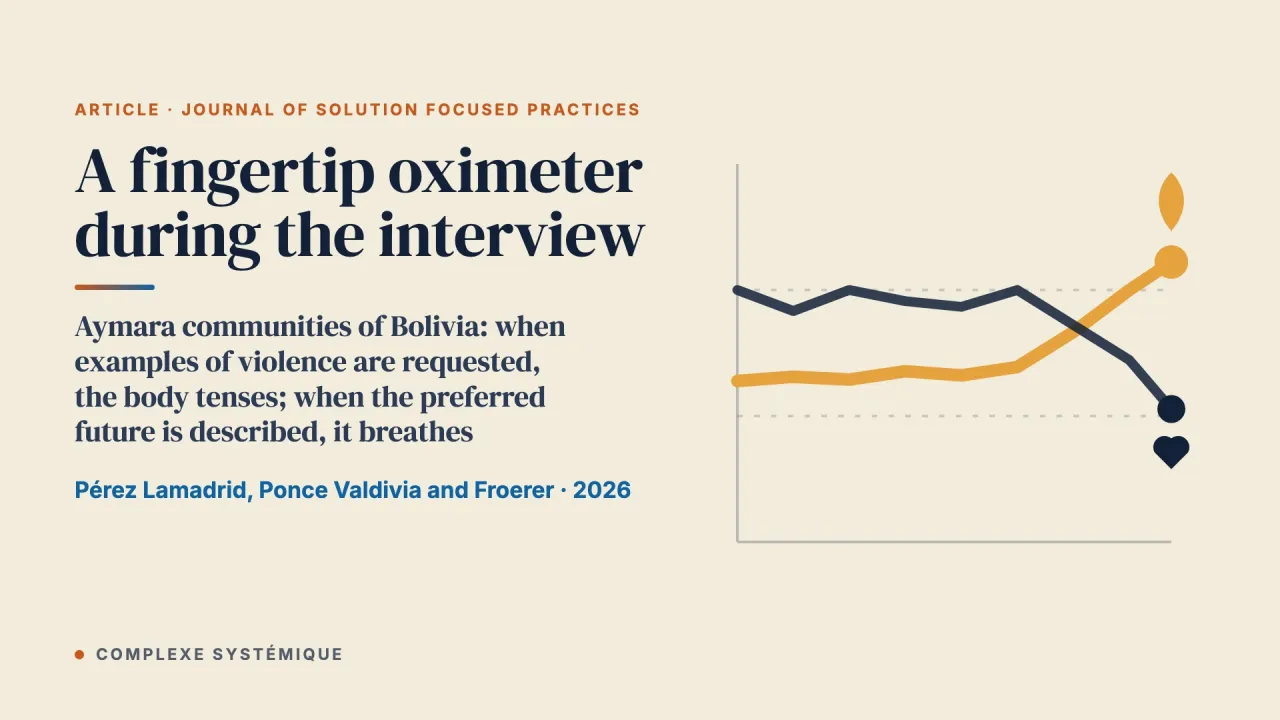
 Oxygenation and Heart Rate in Solution-Focused and Problem-Focused Interviews With Rural and Indigenous Aymara Communities (Viacha and Laja) Regarding Intersectional Violence
A fingertip oximeter on 19 Aymara people of the Altiplano: the problem-focused interview tenses when examples of violence are requested; the solution-focused one oxygenates and slows the heart.