Family Process · Family therapy
The effect of multiple family therapy on mental health problems and family functioning: A systematic review and meta-analysis
Bringing together several families going through the same ordeal: the idea goes back to Laqueur and schizophrenia in the 1960s. Carlijn Maria van Es, Trudy Mooren and colleagues (ARQ, Utrecht University) gathered 31 controlled studies of multiple family therapy and subjected 16 to meta-analysis. The verdict is honest: promise for schizophrenia and family functioning, little demonstrated effect elsewhere, and a great deal of bias.
This is a reformatted republication of The effect of multiple family therapy on mental health problems and family functioning: A systematic review and meta-analysis, by Carlijn Maria van Es, Beatrice El Khoury, Eva A. M. van Dis, Hans te Brake, Elisa van Ee, Paul A. Boelen and Trudy Mooren, published in Family Process (Wiley) (2023), doi: 10.1111/famp.12876, under a CC BY 4.0 licence. Prepared by Complexe Systémique in September 2026: the authors’ text is unchanged; the layout has been adapted for reading online, which constitutes a modification of the work under the terms of the licence. The table is presented as a list. This edition was made neither by the authors nor by the publisher, who are not responsible for its content or for any errors. The original version prevails.
It is still unknown whether factors such as psychoeducation, social support, the multifamily format, or a combination of such factors contribute to the potential effectiveness of MFT.
Carlijn Maria van Es, Beatrice El Khoury, Eva A. M. van Dis, Hans te Brake, Elisa van Ee, Paul A. Boelen and Trudy Mooren
Abstract
The aim of this systematic review and meta-analysis was to provide an overview of existing controlled trials focusing on the impact of multiple family therapy (MFT) on mental health problems and family functioning, and to examine the efficacy of MFT. Relevant studies were selected following a screening of 3376 studies identified by a systematic search of seven databases. The following data were extracted: participant characteristics, program characteristics, study characteristics, and information of mental health problems and/or family functioning. A total of 31 peer-reviewed, English, controlled studies evaluating the effect of MFT were included in the systematic review. Sixteen studies presenting 16 trials were included in the meta-analysis. All but one of the studies was at risk of bias, with problems concerning confounding, selection of participants and missing data. The findings confirm that MFT is offered in diverse settings, with studies presenting a variety of therapeutic modalities, focal problems, and populations. Individual studies reported some positive findings, including improvements in mental health, vocational outcomes, and social functioning. The findings of the meta-analysis suggest that MFT is associated with improvements in symptoms of schizophrenia. However, this effect was found not to be significant due to the large amount of heterogeneity. In addition, MFT was associated with small improvements in family functioning. We found little evidence to suggest that MFT successfully alleviates mood and conduct problems. To conclude, more methodologically rigorous research is needed to further examine the potential benefits of MFT, as well as the working mechanisms and core components of MFT.
Introduction
Over five decades ago, Laqueur et al. (1964) introduced “multiple family therapy” (MFT) as a treatment for patients with schizophrenia and their relatives. MFT was based on the notion that illness can affect close relatives and that relatives may impact and perpetuate the illness (Laqueur et al., 1964). During MFT, close relatives of the patient are involved in treatment as multiple families facing similar difficulties and issues are brought together. This setting allows families to share experiences, offer and receive mutual support and feedback, and learn about different perspectives on, and solutions for, difficulties within families (Asen, 2002; Asen & Scholz, 2010). Since its development MFT has been applied to families with a wide range of problems and concerns.
O'Shea and Phelps (1985) wrote a critical appraisal on MFT. The authors defined MFT as a psychosocial intervention where two or more families represented by at least two family generations are present for most or all sessions. MFT sessions have an explicit focus on problems or concerns shared by the attending families, with an emphasis on (inter)familial interaction, and also utilize alliances between members of different families (p. 573). MFT distinguishes itself from therapy focusing on a single family and groups without the primary patient being present. The criticism of the authors included that MFT was conceptually underdeveloped and poorly differentiated from other treatments.
Over the past decades, MFT has received increased interest and several studies have reviewed the research on MFT (Cook-Darzens et al., 2018; Gelin et al., 2016; McFarlane, 2016; Stuart & Schlosser, 2009). The literature reveals a variety of approaches to MFT: various therapeutic models have been used, including a systemic, psychoeducational, and cognitive-behavioral model (Gelin et al., 2016); and MFT has been applied to families with a wide range of focal problems, ranging from chronic medical illnesses to marital distress.
The vast majority of individual studies have focused on the empirical evidence regarding applications of MFT for psychiatric problems (Cook-Darzens et al., 2018; Gelin et al., 2018). A review conducted by Gelin et al. (2018) concluded that most empirical support has been found for the treatment and prevention of schizophrenia, suggesting that MFT is superior to single-family approaches for first-episode psychosis patients with a high risk of relapse and high levels of family stress. The authors further suggest that the psychoeducational model, which includes a focus on education, problem-solving, communication, vocational skills, and social skills, offers one of the best available practices (Gelin et al., 2018; McFarlane, 2016). According to a literature review by McFarlane (2016), MFT is associated with lower relapse rates in patients with schizophrenia than single-family therapy. In addition, there is a growing body of literature covering its applicability for mood disorders, eating disorders, and alcohol–substance abuse (Gelin et al., 2016, 2018). To our knowledge, none of the previous reviews have performed a systematic review or meta-analysis. Considering the presented reviews, Jewell and Lemmens (2018) commented that future reviews should include systemic search strategies and consider the risk of bias in the identified studies. Risk of bias refers to issues that might affect the ability to draw reliable conclusions from a study (Sterne et al., 2019).
It is important to bear in mind that MFT presents a mode of delivery rather than a highly protocolized treatment approach, therefore there are high levels of heterogeneity between the treatment approaches and protocols used throughout the studies. As a consequence, it is difficult to evaluate the specific effects of MFT. However, it is believed that MFT does offer a specific contribution to family functioning and mental health problems. More research is needed to increase our understanding of the effects of MFT. To the best of our knowledge, research into the working mechanisms of MFT is scarcely available. Potentially, social support provided by other families experiencing similar conditions is a crucial element of MFT. Coming together with several families at once might provide participating families with a sense of acknowledgment and with opportunities to share experiences and help each other. As a result, instead of feeling powerless, a sense of empowerment may be developed (Asen & Scholz, 2010). However, it remains unclear whether, and if so, how social support may add to the impact of MFT.
Several factors have limited the possibility to conduct a systematic review and meta-analysis on MFT. First of all, there is the large heterogeneity in studies, as MFT has been offered within a wide variety of illnesses, disorders, and populations (Cook-Darzens et al., 2018; Gelin et al., 2016, 2018). Second, in some studies it remains unclear in what way MFT is different from individual and other forms of family therapy (Gelin et al., 2016). However, we believe that a systematic review and meta-analysis can provide an important overview of the current knowledge on MFT and provide recommendations for future research.
The current study follows up on existing literature by providing a systematic review and meta-analysis of the literature on MFT. Since the main aims of MFT are to target focal problems (Cook-Darzens et al., 2018; Gelin et al., 2018) as well as family interactions (O'Shea & Phelps, 1985), this study evaluates the effect of MFT on mental health problems and family functioning. Our first aim was to conduct a systematic review to provide an overview of existing controlled trials focusing on the impact of MFT on mental health problems and family functioning. Our second aim was to conduct a comprehensive meta-analysis to examine the efficacy of MFT in terms of improving mental health and family functioning.
Materials and Methods
Identification and selection of studies
The systematic review and meta-analysis were pre-registered at PROSPERO (ID: CRD42020196491). Relevant studies published before June 2021 were identified through searches in seven databases (PsycInfo, Ovid Medline, Ovid Evidence Based Medicine Reviews, Embase, Published International Literature on Traumatic Stress, Web of Science, and Google Scholar) using the search terms related to MFT (e.g., multiple family therapy) and study design (e.g., trials). Individual search terms were generated for each database. Full electronic searches can be found on PROSPERO. In addition, we performed a hand search and included relevant references from two key review articles on MFT, namely those by Gelin et al. (2018) and Jewell and Lemmens (2018).
Studies were included if they assessed the impact of MFT on mental health problems and/or family functioning in comparison with a control condition. As put forward in the Introduction section, we defined MFT as a prevention or intervention program in which two or more families, including the patient and at least one family member, together representing at least two generations, take part. The following active and passive control conditions were included: waiting list and care as usual (i.e., any type of care that participants would normally receive, such as routine psychiatric services and medication). All controlled studies, not only randomized controlled trials (RCTs), were included. To keep heterogeneity as low as possible, trials that only compared MFT to another structured (family) treatment(s) were excluded. Studies were excluded if they lacked quantitative pre- and posttreatment assessments and/or were not written in English.
Article titles and abstracts were screened independently by two researchers. Based on this screening, full-text articles were retrieved and independently assessed by two researchers. If the researchers disagreed on inclusion or exclusion, the article was discussed. If they could not reach agreement, a third researcher decided whether the article should be included or not. Four authors were contacted and requested to supply additional information because their publications supplied insufficient information to calculate effect sizes (25% response rate).
Data extraction
Data extraction for the systematic review included participant characteristics (presenting problem; relation between participating family members and primary patient; numbers in the MFT and control conditions; gender; age; ethnicity), program characteristics (description of therapeutic models/techniques; training of facilitators; use of manual; frequency and duration; whether MFT was combined with another service), and study characteristics (study design; characteristics of control condition; outcomes measured; main findings based on the Abstract). Data extraction for the meta-analysis included information on mental health problems and/or family functioning in the MFT and control conditions. Data extraction for both the systematic review and the meta-analysis was conducted independently by two researchers.
Statistical analysis
The primary outcomes were posttreatment indices of mental health symptoms and/or family functioning. In one case, data on these outcomes were unavailable and the estimated differences of slopes were used. In some studies, several instruments were used to measure the same construct, therefore a hierarchy was defined to establish which instruments would be included. The most used instrument (determined by two assessors) was chosen first; if that instrument was not available, then the second most used was chosen. Outcomes were categorized based on the mental health problems addressed in the study. Intention-to-treat data were used when available. When three or more studies focused on the same mental health problem, a meta-analysis of treatment effects was conducted.
The program “Comprehensive Meta-Analysis, version 3” (Biostat) was used to compute effect sizes, using random effects models. Hedges' g was used to indicate differences between treatment and control conditions at posttreatment. Higher effect sizes represent effects in favor of MFT relative to the comparison condition. The pooled effect sizes were converted to the “number needed to treat” (NNT) by using the conversion table by Kraemer and Kupfer (2006). The NNT indicates the number of patients that have to be treated to result in one additional patient with positive outcomes (Cuijpers, 2016). In addition, we calculated 95% prediction intervals in order to estimate the effect size range. Studies from which the 95% confidence interval did not overlap with the 95% confidence interval of the pooled effect size were identified as potential outliers.
For quality assessment of the included studies, risk of bias was evaluated by one researcher (C.v.E.) using the Cochrane revised risk of bias tool (RoB 2.0) for randomized trials (Sterne et al., 2019) and the risk of bias in nonrandomized studies of interventions tool (ROBINS-I) for nonrandomized trials (Sterne et al., 2016). A second researcher (T.M.) independently scored three articles (19%) to verify the reliability of the scoring. Heterogeneity was assessed by visual inspection of the forest plot and the I2 statistic (Borenstein et al., 2017). The I2 statistic represents the proportion of the total variance that can be explained by heterogeneity (range 0%–100%). Finally, publication bias was assessed by conducting Egger's test of the intercept (Egger et al., 1997). To adjust for publication bias, a trim-and-fill technique based on the funnel plot method was used (Duval & Tweedie, 2000).
Results
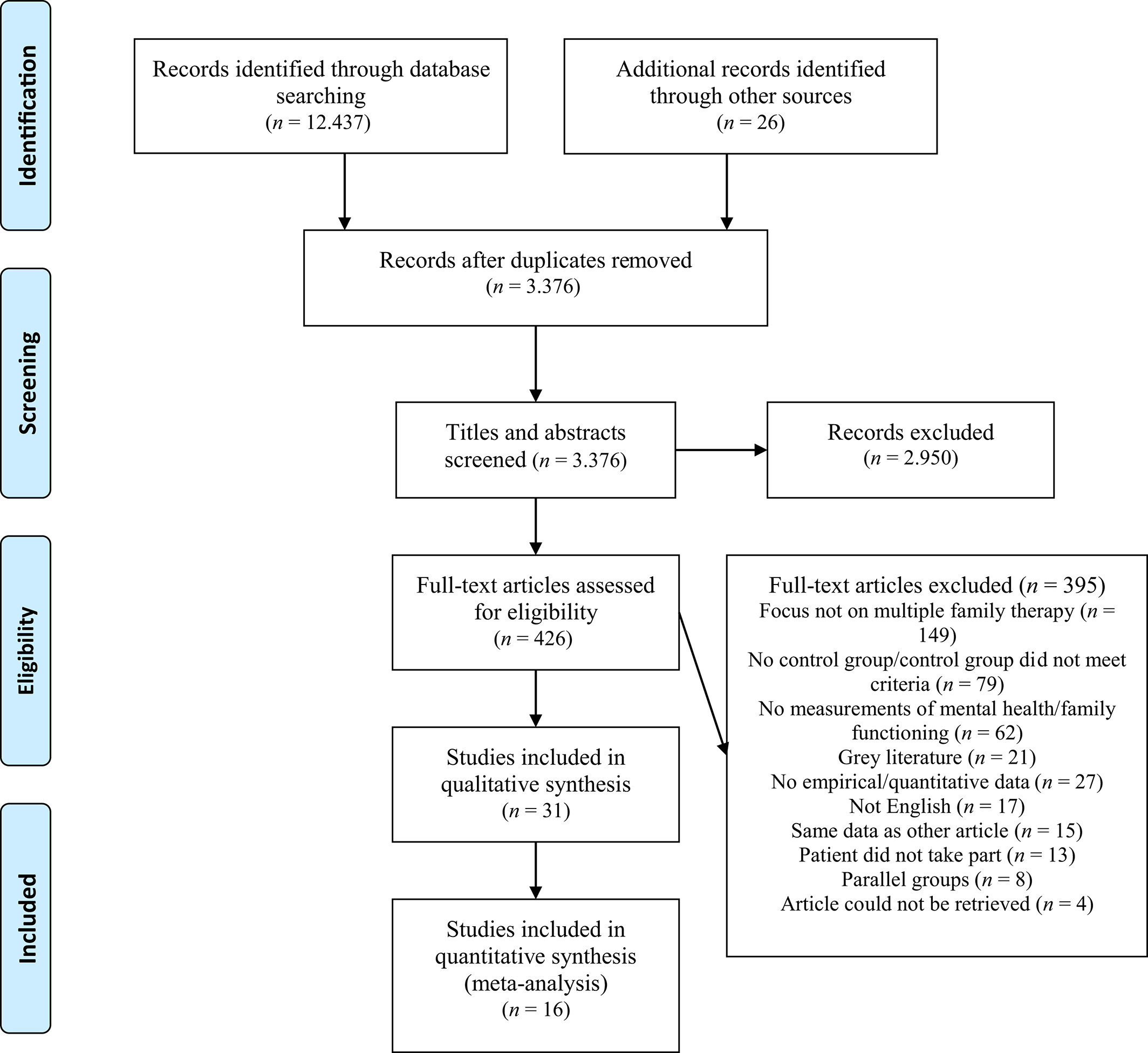
Figure 1 presents a PRISMA flow diagram of the selection and inclusion process. In total, 3376 titles and abstracts were screened and 426 full-text articles were retrieved; 395 articles were excluded based on the inclusion and exclusion criteria. A total of 31 trials met all the inclusion criteria. When three or more studies focused on the same mental health issue, a meta-analysis of treatment effects was conducted. Consequently, 16 articles presenting 16 trials were included in the meta-analysis.
Part I: Systematic review
Participant characteristics
The characteristics of the participants are summarized in the (Table S1). Approximately 4760 participants were included in the 31 MFT trials analyzed in this review. About half of the participants (53%) were included in the MFT condition and 47% in the control condition. Most of the 31 trials were conducted in the United States (52%), Western Europe (19%), China or Hong Kong (16%), and Australia (6%). The studies predominantly examined MFT offered to families of patients dealing with schizophrenia/psychosis (k = 9; 29%), mood problems such as depressive disorders (k = 5; 16%), and conduct problems such as disruptive behavior (k = 5; 16%). Other studies focused on families dealing with cancer, lower social capital, opiate or Internet addiction, attention deficit hyperactivity disorder (ADHD), trauma, diabetes, cognitive impairment, and specific minority target groups (American Indian, Latino, and Hmong refugee families).
Most studies were conducted with children aged 0–18 years (55%), their caregivers and sometimes their siblings. The studies focusing on adults included adults and their care dyad and/or key relative (i.e., spouse, child, friend, and parent). A total of 29 studies reported the gender of the participants, in which 57% of the participants were male. Nine studies did not report the ethnicity of the participants. Other studies reported that the majority of the participants were white (k = 8), Asian (k = 5), Latino (k = 4), or of another ethnicity (k = 6).
Program characteristics
The program characteristics are summarized in the (Table S2). A broad range of implemented therapeutic models has been described in the studies evaluating MFT. Five trials (16%) explicitly refer to psychoeducational MFT as developed by McFarlane (McFarlane et al., 1995, 2002) and five studies (16%) refer to “Families and Schools Together” (FAST), developed by McDonald (2002). Other studies focused on “4Rs 2Ss” (rules, responsibility, relationships, respectful communication, stress, and social support) (McKay et al., 1999). Psychoeducation focused on concepts such as adaptation to illness, coping skills, social support, and illness management skills. Other techniques applied were behavioral parenting interventions, social skills training, and cognitive-behavioral techniques. The majority (k = 18; 58%) of the studies explained the training that MFT facilitators obtained. Most studies (k = 22; 71%) explicitly reported the use of a manual by the facilitators. There was a wide variety in duration and frequency, ranging from six weekly sessions to biweekly meetings for 2 years. Most studies (k = 19; 61%) reported that MFT was offered in combination with another service, such as pharmacological treatment, medical care, and treatment-as-usual/routine outpatient care.
Study characteristics
Table S3 in the Appendix presents the study characteristics of the included trials. Most studies were RCTs (k = 19; 61%). Seven studies presented a quasi-experimental design (23%). Other designs included a school-randomized trial, a risk-based allocation study, a prospective cohort study, and a naturalistic follow-up study. Most comparison conditions consisted of treatment as usual (k = 13; 42%), including case management, routine psychiatric services, pharmacological treatment, mental health services, and medical care. Other active control conditions included psychoeducation, relaxation workshops, mailings of parenting skills information, and school-based interventions. Some studies implemented passive control conditions (k = 7; 23%), including waiting list and no treatment.
Schizophrenia
Nine trials (29%) focused on addressing symptoms of schizophrenia, of which all but one focused on adult participants and their relatives. Studies reported a decrease in the symptoms of schizophrenia, including negative and positive symptoms (Bradley et al., 2006; Dyck et al., 2000; McFarlane et al., 2015; Valencia et al., 2010), lower relapse rates (Bradley et al., 2006; Liberman et al., 1984; Valencia et al., 2010), and improvements in the number and duration of (re-)hospitalizations (Chien et al., 2018; Chien & Chan, 2004; Valencia et al., 2010). However, one study reported that MFT participants had significantly less improvement in positive and excitation symptoms and a longer duration of psychotic symptoms compared to participants who refused or were not offered MFT (Rossberg et al., 2010).
Changes with regard to family functioning included improved family functioning (Chien et al., 2018), decreased relative burden (Jeppesen et al., 2005), and reduced family conflict and expressed emotion (Liberman et al., 1984). One study found no impact of MFT on expressed emotion (Jeppesen et al., 2005).
Other findings concerned improvements in vocational outcomes (Bradley et al., 2006; McFarlane et al., 2015), (global) functioning (Chien et al., 2018; Chien & Chan, 2004; McFarlane et al., 2015), medication adherence, and attendance to appointments and social functioning (Valencia et al., 2010). Although one study reported an increase in knowledge of schizophrenia (Liberman et al., 1984), another found no impact of MFT on knowledge (Jeppesen et al., 2005).
Mood problems
Five trials (17%), of which three included children and their relatives and two included adults and their relatives, had a main focus on mood problems. MFT was associated with improvements in mental health, including mood severity, emotional health, and psychological distress (Fristad et al., 2009; Lemmens et al., 2009; Ma et al., 2021). Lemmens et al. (2009) reported a decrease in the number of study participants using antidepressant medication. Poole et al. (2018) found no difference in depressive symptoms between participants attending MFT and participants in the control condition.
Changes concerning family functioning included improvements in parental knowledge about childhood mood symptoms, positive family interactions, and parental support (Fristad et al., 2003), and also reduced parental stress and parental depressive symptoms (Poole et al., 2018). Fristad et al. (2003) did not find an impact of MFT on negative family interactions and Ma et al. (2021) found no difference between the MFT and control conditions regarding parental and family functioning.
Other results included increased service utilization (Fristad et al., 2003) and higher rates of treatment responders in the MFT condition (Lemmens et al., 2009).
Conduct problems
Five (16%) of the 31 trials considered the impact of MFT on conduct problems, all of which focused on children and their relatives. The studies reported improvements in conduct problems, including disruptive, oppositional, and externalizing behavioral issues (Chacko et al., 2015; Kratochwill et al., 2009; McKay et al., 1999; Morris et al., 2014), symptoms of hyperactivity and impulsivity (McKay et al., 1999), and emotional functioning (Morris et al., 2014). Chacko et al. (2015) did not find a difference in impairment between participants attending MFT and participants in the control condition. Pérez-García et al. (2020) suggested that MFT was associated with improvements in internalizing behavior, but also reported greater improvements in externalizing behavior (especially verbal aggression) and depression in the control condition.
Concerning the impact on family functioning, a smaller decline in family adaptability in families attending MFT was reported by Kratochwill et al. (2009). Morris et al. (2014) found that participants in the MFT condition reported stable family functioning, whereas participants in the control condition showed a deterioration in family functioning.
Other changes associated with MFT included improvements in learning difficulties (McKay et al., 1999) and social functioning (Chacko et al., 2015; Morris et al., 2014).
Medical illness
Three trials (10%) focused on the impact of MFT on families of patients with medical illnesses, including cancer and diabetes. Chiquelho et al. (2011) reported that MFT for families dealing with cancer prevented a deterioration of psychosocial adjustment and was associated with family cohesion and lower perceived stress of patients and family members.
Concerning MFT for families dealing with diabetes, Satin et al. (1989) reported that MFT resulted in increased positive perceptions of being a teenager with diabetes and improvements in diabetes control. Both studies on diabetes found that participation in MFT was associated with improvements in blood sugar levels (Satin et al., 1989; Wysocki et al., 2006).
Addiction
Two trials (6%) had a main focus on addiction, namely opiate and Internet addiction. Garrido-Fernández et al. (2017) reported that participation in MFT was associated with a reduction in opiate addiction severity and improvements in employment, drug use, and psychiatric condition. Alcohol consumption worsened in participants in both the MFT and the control condition. Liu et al. (2015) stated that participants attending MFT showed a decline in Internet addiction, which was partly explained by the satisfaction of the participants' psychological needs and improved parent–adolescent communication and closeness.
Specific cultural adaptations of MFT
Three studies (10%) evaluated specific cultural adaptations of MFT. Cultural adaptations included making interventions more accessible, using role modeling, integrating traditional healing methods with culturally appropriate interventions (Kratochwill et al., 2004), and having culturally represented teams review, adapt, and host the program (Kratochwill et al., 2004; McDonald et al., 2006, 2012). Kratochwill et al. (2004) found improvements in aggressive/withdrawn behavior and academic performance in American Indian participants. McDonald et al. (2006) reported that Latino participants showed improvements in academic performance and classroom behaviors, including aggression and social skills. Finally, according to McDonald et al. (2012), Hmong refugees taking part in MFT showed improvements in child anxiety, social skills, and family adaptability. This study found no change in family cohesion or externalizing behavior.
Miscellaneous target groups
Four studies (13%) focused on other problems, including families with lower social capital, families dealing with trauma, families of patients with cognitive impairment, and families of children with ADHD. Gamoran et al. (2012) reported improvements in social networks and behavioral outcomes in families with lower social capital. Rosenblum et al. (2017) stated that MFT for families dealing with trauma resulted in improvements in mental health and parenting stress. Schmitter-Edgecombe and Dyck (2014) explored MFT for participants with cognitive impairment and reported improvements in everyday functioning, memory, and coping of care-partners. The authors did not find a difference in psychological functioning. Finally, Ma et al. (2018) found that MFT for children with ADHD resulted in parents perceiving their children's symptoms as less serious and pathological, along with improvements of the parent–child relationship, parenting stress, parental efficacy, hope, and social support.
Part II: Meta-analyses
Risk of bias
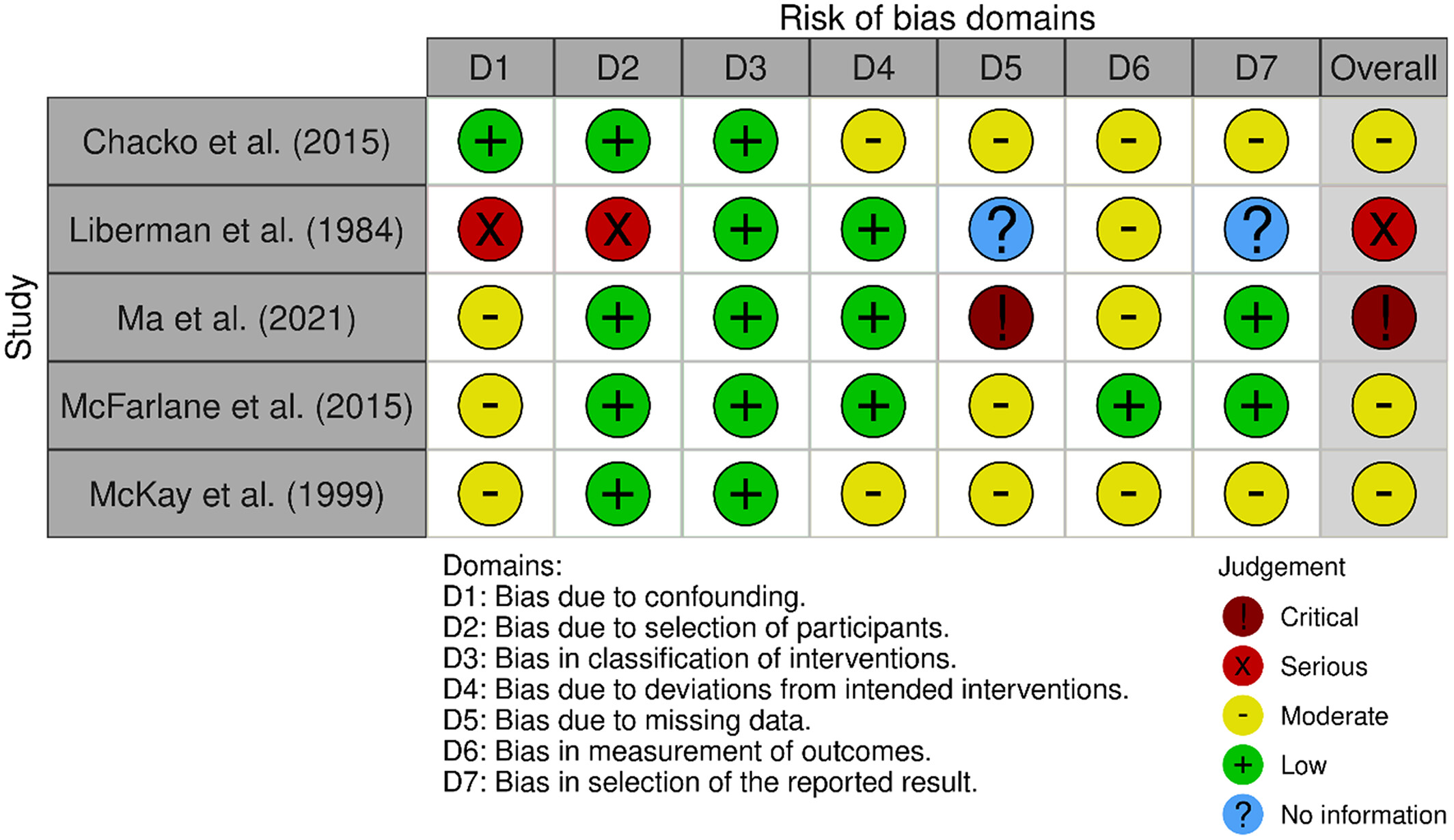
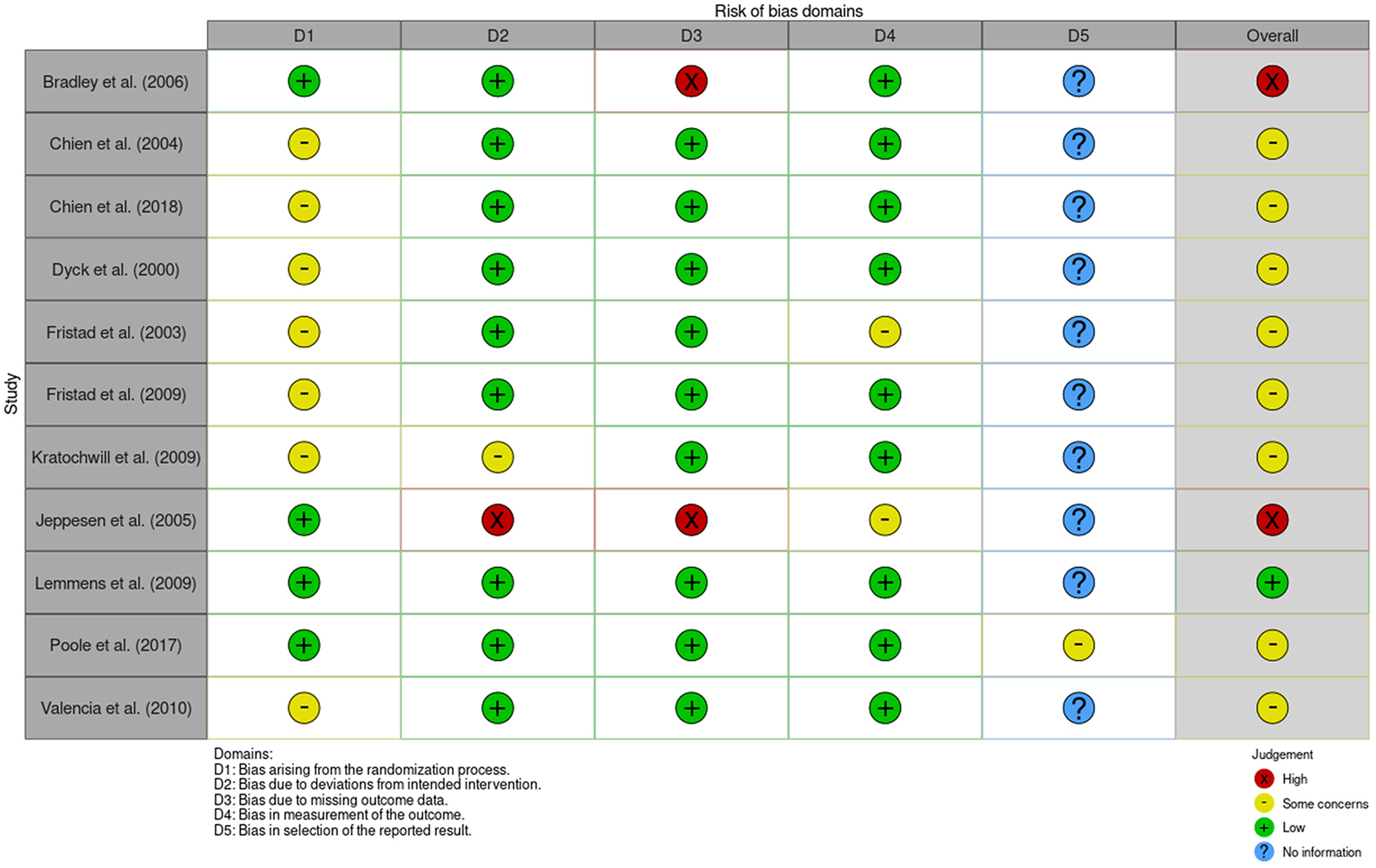
A total of 16 articles presenting 16 trials were included in the meta-analysis. Risk of bias assessments are presented in Figures 2 and 3. Only one of the 16 trials met the criteria for high quality (Lemmens et al., 2009). In nonrandomized studies, most problems concerning bias were related to confounding (meaning that factors that predict the outcome also predict the condition in which an individual is placed) and selection of participants (Liberman et al., 1984) and missing data (Ma et al., 2021). High risk in RCTs was mostly due to missing outcome data (Bradley et al., 2006; Jeppesen et al., 2005).
Main analyses
Sufficient studies were found to calculate effect sizes for schizophrenia, mood problems, and conduct problems. In addition, a meta-analysis of the impact of MFT on family functioning was conducted for all articles included in the meta-analyses on mental health problems that also measured family functioning. Table 1 presents the effect sizes (Hedges' g) using the random effects model, the NNT, and the heterogeneity indices (I2). Forest plots are reported in the Appendix (Figure S1).
Table 1 — Treatment effects and heterogeneity indices.
- Schizophrenia. k/N 6/564; g (95% CI) 0.96 (−0.19, 2.11); p 0.10; NNT 1.99; I2 97.
- Mood problems. 4/348; 0.05 (−0.34, 0.44); 0.79; 35.71; 67.
- Conduct problems. 3/467; 0.32 (−0.14, 0.77); 0.17; 5.56; 75.
- Family functioning. 7/621; 0.26 (0.05, 0.51); 0.046*; 6.85; 50.
Abbreviations: CI, confidence interval, k, number of studies, NNT, number needed to treat. * Effect sizes that are statistically significant (p < 0.05).
Schizophrenia
At treatment completion, the pooled effect size of the impact of MFT conditions compared to control conditions on positive and/or negative symptoms was large, but not statistically significant (Hedges' g = 0.96, 95% CI [−0.19, 2.11]; p > 0.05). The NNT was 1.99. Egger's test of the intercept was not significant (intercept β = −2.57, 95% CI [−46.15, 41.02]; p > 0.20), suggesting there was no indication of publication bias. The trim-and-fill procedure did not provide other results concerning the effect of MFT. The heterogeneity in studies on schizophrenia and psychosis was very high (I2 = 97). One study by McFarlane et al. (2015) was identified as an outlier, but removal of this study did not result in a statistically significant effect size (Hedges' g = 0.39, 95% CI [−0.13, 0.90]; p > 0.05).
Mood problems
The pooled effect size of the impact of MFT compared to the control condition on mood problems was small and not statistically significant (Hedges' g = 0.05, 95% CI [−0.34, 0.44]; p > 0.05), corresponding with a large NNT value of 35.71. Egger's test did not indicate a risk of publication bias (intercept β = −3.84, 95% CI [−19.39, 11.71]; p > 0.20). The trim-and-fill procedure resulted in the same effect size. The heterogeneity in studies on mood problems was high (I2 = 67). No study was considered an outlier.
Conduct problems
A small but not statistically significant effect size was found for the impact of MFT compared to the control condition on conduct problems (Hedges' g = 0.32, 95% CI [−0.14, 0.77]; p > 0.05), resulting in an NNT value of 5.56. No risk of publication bias was indicated by Egger's test (intercept β = 1.26; 95% CI [−55.10, 57.61]; p > 0.20). The trim-and-fill procedure produced a lower adjusted effect size (Hedges' g = 0.13, 95% CI [−0.35, 0.61]; p > 0.05). There was a high amount of heterogeneity in the studies (I2 = 75). No outliers were found.
Family functioning
Finally, the pooled effect size of the impact of MFT on family functioning was small and statistically significant (Hedges' g = 0.26, 95% CI [0.05, 0.51]; p < 0.05). Egger's test was not significant (intercept β = 0.95, 95% CI [−4.29, 6.19]; p > 0.20). The trim-and-fill procedure resulted in a small effect size as well (Hedges' g = 0.12, 95% CI [−0.17, 0.41]; p < 0.05). The heterogeneity of the included studies was heightened (I2 = 50). There were no outliers.
Discussion
To the best of our knowledge, this is the first systematic review and meta-analysis to examine the effect of MFT on mental health problems and family functioning. The systematic review confirmed that MFT is offered across diverse settings, with studies presenting a variety of therapeutic modalities, focal problems, populations, and durations. In line with the review by Gelin et al. (2018), we found most evidence that MFT can result in improvements in the symptoms of schizophrenia. Other empirical studies focused mostly on mood and conduct problems. MFT programs described in the studies were often based on models developed by McFarlane et al. (1995) and McDonald (2002). Individual studies reported some positive findings, including improvements in mental health, vocational outcomes, medication usage, treatment adherence, and social functioning.
In summary, the meta-analysis suggests that MFT is associated with improvements in the symptoms of schizophrenia. However, this effect was found not to be significant due to the large amount of heterogeneity (i.e., variability) among the results of the included studies. The high level of heterogeneity in the included studies limits the drawing of conclusions on the effect of MFT, therefore the reported effect estimates should be interpreted with caution. Moreover, MFT was associated with small improvements in family functioning. We found little evidence to suggest that MFT successfully alleviates mood and conduct problems; these findings are in line with a recent review on the MFT program FAST, suggesting that FAST is associated with a very small impact on school performance, internalizing behavior, or family relationships (Valentine et al., 2019). However, while it should be noted that psychotherapy in general, across all mental disorders, reveals small effect sizes overall (Leichsenring et al., 2022), our review demonstrated that there are currently only a limited number of RCTs of MFT available.
Although we expected to find studies evaluating the impact of MFT on families with eating disorders based on earlier reviews (Gelin et al., 2016, 2018), no studies on eating disorders were included in this systematic review. Studies on eating disorders that came up in the full-text search did not meet our inclusion criteria: for example, they did not include a control group or measurements of mental health issues or family functioning. As a result, we are unable to make any statements concerning the impact of MFT on eating disorders.
Strengths and limitations
The current study has several strengths. As proposed by Jewell and Lemmens (2018), we included systemic search strategies and provided a rigorous quality assessment of the included articles. Independent assessors screened the titles, abstracts, and full texts, and performed the data extraction for the systematic review and meta-analysis. Several limitations of this study should also be considered. A first limitation is that the study focused only on the impact of MFT on mental health symptoms and family functioning. As suggested by the systematic review presented in this article, MFT might have an impact on other important outcomes, such as social functioning and vocational outcomes. A second limitation is the relatively small number of studies included in the meta-analysis. The lack of significant findings might be due to the limited number of English, peer-reviewed, controlled studies evaluating MFT. In addition, we only selected studies based on the definition of MFT suggested by O'Shea and Phelps (1985), to distinguish MFT from other therapeutic modalities and techniques, such as group therapy or single-family therapy. A larger number of included studies would increase the power of the analyses. Moreover, the limited number of trials included in this meta-analysis did not allow for subgroup analyses to further examine the causes of heterogeneity, potential working mechanisms, or differences between studies with high or low risk of bias. Finally, the current meta-analysis focused only on assessment obtained immediately posttreatment. It would be interesting to establish the longer term outcomes of MFT as the results could either strengthen or decrease over time.
Recommendations
Because there is limited evidence for the positive impact of MFT, clinicians implementing MFT should apply caution in monitoring the effects of MFT (Valentine et al., 2019). More rigorous evaluations of MFT are warranted. Future studies should provide a clear explanation of the therapeutic modalities and techniques used. In addition, a description is needed of how the program was adapted to suit the needs of the specific target group of the particular study. Moreover, it is important to use a structured manual and training of facilitators because this can improve the implementation and replication of the program. Finally, future studies should take into account the potential sources of risk of bias and methodological limitations, including missing data, selection bias, and problems with randomization.
Such studies describing the implementation of MFT in diverse settings, explicating target groups, describing specific interventions and strategies, as well as monitoring program integrity (e.g., adherence, exposure, quality of delivery, and participant responsiveness), will be helpful to more narrowly define MFT. Furthermore, assessment of the systematic variations of intervention strategies may increase our understanding of the working mechanisms.
Similar issues to those listed by O'Shea and Phelps almost four decades ago continue to exist: MFT is still covering a wide range of therapeutic modalities and therapeutic aims. However, the potential added value of MFT to existing evidence-based treatments is not well defined. Clinicians and researchers have suggested that MFT touches upon factors that other therapies cannot reach (Jewell & Lemmens, 2018; Schmidt & Asen, 2005), suggesting that the added value of MFT might be social support (McFarlane, 2016) or the interaction between participants from different families, including mutual feedback and support (Hellemans et al., 2011; Jewell & Lemmens, 2018; Lemmens et al., 2009). However, it is still unknown whether factors such as psychoeducation, social support, the multifamily format, or a combination of such factors contribute to the potential effectiveness of MFT. First, more rigorous studies on the effectiveness of MFT are needed. Future studies must also pay attention to defining outcome measures that capture the potential specific impact of MFT. If the effectiveness of MFT is shown in future studies, research should focus on identifying the specific added value of MFT, including potential working mechanisms.
It is as yet unknown in what circumstances MFT is optimal as a stand-alone primary intervention or whether it may be better offered as an adjunctive facility. For posttraumatic stress disorder (PTSD), for instance, an individual trauma-focused treatment may be most effective to alleviate symptoms, while MFT may be indicated to support family interactions that suffer the consequences of the disorder. For patients with schizophrenia, it is more likely that psychoeducation offered to family members would be beneficial.
Finally, as more studies become available, future meta-analyses can take into account potential mediators for the effect of MFT on mental health, such as family functioning and social support. In addition, future meta-analyses might shed light on the causes of heterogeneity in the results of the studies on MFT.
Conclusion
The results of this meta-analysis suggest that MFT might have beneficial effects for families dealing with schizophrenia. Additionally, small overall improvements in family functioning were found. There was no indication of the impact of MFT on mood problems or conduct problems, though studies on MFT in these focal areas were scarce. The current study offers an important starting point to improve our understanding of MFT and its specific contribution. More methodologically rigorous research focusing on the potential benefits of MFT, as well as the working mechanisms and core components of MFT, is warranted.
Complexe Systémique: key points
This meta-analysis is valuable for taking an unflattering look at a format dear to systemic practice: bringing several families together so that they learn from one another. The results call for caution more than enthusiasm. The clearest signal concerns schizophrenia, the method’s historical field, but it is not significant given how much the studies diverge; the only significant effect is a small gain in family functioning; nothing conclusive for mood or conduct. For a systemic reader the discussion is the most useful part: multiple family therapy is a format more than a treatment, and we still do not know what works, peer support, psychoeducation or simply being several families together. The limits lie in the corpus: 16 trials, only one of good quality, massive heterogeneity, measures taken only at the end of treatment, and no eating disorder studies, although this is a major field of the method. Read alongside the article on working with the families of schizophrenic patients, and schizophrenia explained simply.
Notes from the original
Acknowledgments. We thank Jonna Lind, librarian and information specialist at the ARQ National Psychotrauma Centre, for her assistance in designing and carrying out the literature searches.
References
Asen, E. (2002). Multiple family therapy: An overview. Journal of Family Therapy, 24(1), 3–16.
Asen, E., & Scholz, M. (2010). Multi-family therapy: Concepts and techniques. Routledge.
Borenstein, M., Higgins, J. P., Hedges, L. V., & Rothstein, H. R. (2017). Basics of meta-analysis: I2 is not an absolute measure of heterogeneity. Research Synthesis Methods, 8(1), 5–18.
*Bradley, G. M., Couchman D Psych, G. M., Perlesz, A., Nguyen, A. T., Singh, B., & Riess, C. (2006). Multiple-family group treatment for English-and Vietnamese-speaking families living with schizophrenia. Psychiatric Services, 57(4), 521–530.
*Chacko, A., Gopalan, G., Franco, L., Dean-Assael, K., Jackson, J., Marcus, S., Hoagwood, K., & McKay, M. (2015). Multiple family group service model for children with disruptive behavior disorders: Child outcomes at post-treatment. Journal of Emotional and Behavioral Disorders, 23(2), 67–77.
*Chien, W. T., Bressington, D., & Chan, S. W. (2018). A randomized controlled trial on mutual support group intervention for families of people with recent-onset psychosis: A four-year follow-up. Frontiers in Psychiatry, 9, 710.
*Chien, W. T., & Chan, S. W. (2004). One-year follow-up of a multiple-family-group intervention for Chinese families of patients with schizophrenia. Psychiatric Services, 55(11), 1276–1284.
Chiquelho, R., Neves, S., Mendes, A., Relvas, A., & Sousa, L. (2011). proFamilies: A psycho-educational multi-family group intervention for cancer patients and their families. European Journal of Cancer Care, 20(3), 337–344.
Cook-Darzens, S., Gelin, Z., & Hendrick, S. (2018). Evidence base for multiple family therapy (MFT) in non-psychiatric conditions and problems: A review (part 2). Journal of Family Therapy, 40(3), 326–343.
Cuijpers, P. (2016). Meta-analyses in mental health research. A practical guide. Pim Cuijpers Uitgeverij.
Duval, S., & Tweedie, R. (2000). Trim and fill: A simple funnel-plot–based method of testing and adjusting for publication bias in meta-analysis. Biometrics, 56(2), 455–463.
*Dyck, D. G., Short, R. A., Hendryx, M. S., Norell, D., Myers, M., Patterson, T., McDonell, M. G., Voss, W. D., & McFarlane, W. R. (2000). Management of negative symptoms among patients with schizophrenia attending multiple-family groups. Psychiatric Services, 51(4), 513–519.
Egger, M., Smith, G. D., Schneider, M., & Minder, C. (1997). Bias in meta-analysis detected by a simple, graphical test. BMJ, 315(7109), 629–634.
*Fristad, M. A., Goldberg-Arnold, J. S., & Gavazzi, S. M. (2003). Multi-family psychoeducation groups in the treatment of children with mood disorders. Journal of Marital and Family Therapy, 29(4), 491–504.
*Fristad, M. A., Verducci, J. S., Walters, K., & Young, M. E. (2009). Impact of multifamily psychoeducational psychotherapy in treating children aged 8 to 12 years with mood disorders. Archives of General Psychiatry, 66(9), 1013–1021.
Gamoran, A., Turley, R. N. L., Turner, A., & Fish, R. (2012). Differences between Hispanic and non-Hispanic families in social capital and child development: First-year findings from an experimental study. Research in Social Stratification and Mobility, 30(1), 97–112.
Garrido-Fernández, M., Marcos-Sierra, J. A., López-Jiménez, A., & Ochoa de Alda, I. (2017). Multi-family therapy with a reflecting team: A preliminary study on efficacy among opiate addicts in methadone maintenance treatment. Journal of Marital and Family Therapy, 43(2), 338–351.
Gelin, Z., Cook-Darzens, S., & Hendrick, S. (2018). The evidence base for multiple family therapy in psychiatric disorders: A review (part 1). Journal of Family Therapy, 40(3), 302–325.
Gelin, Z., Cook-Darzens, S., Simon, Y., & Hendrick, S. (2016). Two models of multiple family therapy in the treatment of adolescent anorexia nervosa: A systematic review. Eating and Weight Disorders-Studies on Anorexia, Bulimia and Obesity, 21(1), 19–30.
Hellemans, S., de Mol, J., Buysse, A., Eisler, I., Demyttenaere, K., & Lemmens, G. (2011). Therapeutic processes in multi-family groups for major depression: Results of an interpretative phenomenological study. Journal of Affective Disorders, 134(1–3), 226–234.
*Jeppesen, P., Petersen, L., Thorup, A., Abel, M.-B., Christensen, T. Ø., Krarup, G., Hemmingsen, R., & Nordentoft, M. (2005). Integrated treatment of first-episode psychosis: Effect of treatment on family burden: OPUS trial. The British Journal of Psychiatry, 187(S48), s85-s90.
Jewell, T., & Lemmens, G. (2018). Multiple family therapy: Forever promising? Commentary on Gelin et al.(2018) and Cook-Darzens et al.(2018), the evidence base for multiple family therapy in psychiatric and non-psychiatric conditions: A review (parts 1 and 2). Journal of Family Therapy, 40(3), 344–348.
Kraemer, H. C., & Kupfer, D. J. (2006). Size of treatment effects and their importance to clinical research and practice. Biological Psychiatry, 59(11), 990–996.
Kratochwill, T. R., McDonald, L., Levin, J. R., Bear-Tibbetts, H. Y., & Demaray, M. K. (2004). Families and schools together: An experimental analysis of a parent-mediated multi-family group program for American Indian children. Journal of School Psychology, 42(5), 359–383.
*Kratochwill, T. R., McDonald, L., Levin, J. R., Scalia, P. A., & Coover, G. (2009). Families and schools together: An experimental study of multi-family support groups for children at risk. Journal of School Psychology, 47(4), 245–265.
Laqueur, H. P., LaBurt, H., & Morong, E. (1964). Multiple family therapy. Current Psychiatric Therapies, 4, 150–154.
Leichsenring, F., Steinert, C., Rabung, S., & Ioannidis, J. P. A. (2022). The efficacy of psychotherapies and pharmacotherapies for mental disorders in adults: An umbrella review and meta-analytic evaluation of recent meta-analyses. World Psychiatry, 21(1), 133–145.
*Lemmens, G. M., Eisler, I., Buysse, A., Heene, E., & Demyttenaere, K. (2009). The effects on mood of adjunctive single-family and multi-family group therapy in the treatment of hospitalized patients with major depression. Psychotherapy and Psychosomatics, 78(2), 98–105.
*Liberman, R. P., Falloon, I. R., & Aitchison, R. A. (1984). Multiple family therapy for schizophrenia: A behavioral, problem-solving approach. Psychosocial Rehabilitation Journal, 7(4), 60, 77.
Liu, Q.-X., Fang, X.-Y., Yan, N., Zhou, Z.-K., Yuan, X.-J., Lan, J., & Liu, C.-Y. (2015). Multi-family group therapy for adolescent internet addiction: Exploring the underlying mechanisms. Addictive Behaviors, 42, 1–8.
Ma, J. L., Lai, K. Y., & Xia, L. L. L. (2018). Treatment efficacy of multiple family therapy for Chinese families of children with attention deficit hyperactivity disorder. Family Process, 57(2), 399–414.
*Ma, J. L., Xia, L. L., Yau-Ng, M., & Yan-Yee, C. Y. (2021). Treatment efficacy of multiple family therapy in helping Hong Kong Chinese parents recover from depression. Journal of Family Therapy, 45(1), 47–64.
McDonald, L. (2002). Evidence-based, family strenthening to reduce delinquency: FAST Families and SchoolsTogether. In A. R. Roberts, & G. J. Greene (Eds.), Social workers’ desk reference (pp. 717–722). Oxford University Press.
McDonald, L., Coover, G., Sandler, J., Thao, T., & Shalhoub, H. (2012). Cultural adaptation of an evidence-based parenting programme with elders from South East Asia in the US: co-producing families and schools together–FAST. Journal of Children's Services, 7, 113–127.
McDonald, L., Moberg, D. P., Brown, R., Rodriguez-Espiricueta, I., Flores, N. I., Burke, M. P., & Coover, G. (2006). After-school multifamily groups: A randomized controlled trial involving low-income, urban, Latino children. Children and Schools, 28(1), 25–34.
McFarlane, W. R. (2016). Family interventions for schizophrenia and the psychoses: A review. Family Process, 55(3), 460–482.
McFarlane, W. R., Hornby, H., Dixon, L., & McNary, S. (2002). Psychoeducational multifamily groups: Research and implementation in the United States (pp. 43–60). Family Interventions in Mental Illness: International Perspectives.
*McFarlane, W. R., Levin, B., Travis, L., Lucas, F. L., Lynch, S., Verdi, M., Williams, D., Adelsheim, S., Calkins, R., & Carter, C. S. (2015). Clinical and functional outcomes after 2 years in the early detection and intervention for the prevention of psychosis multisite effectiveness trial. Schizophrenia Bulletin, 41(1), 30–43.
McFarlane, W. R., Lukens, E., Link, B., Dushay, R., Deakins, S. A., Newmark, M., Dunne, E. J., Horen, B., & Toran, J. (1995). Multiple-family groups and psychoeducation in the treatment of schizophrenia. Archives of General Psychiatry, 52(8), 679–687.
*McKay, M. M., Gonzales, J., Quintana, E., Kim, L., & Abdul-Adil, J. (1999). Multiple family groups: An alternative for reducing disruptive behavioral difficulties of urban children. Research on Social Work Practice, 9(5), 593–607.
Morris, E., Le Huray, C., Skagerberg, E., Gomes, R., & Ninteman, A. (2014). Families changing families: The protective function of multi-family therapy for children in education. Clinical Child Psychology and Psychiatry, 19(4), 617–632.
O'Shea, M. D., & Phelps, R. (1985). Multiple family therapy: Current status and critical appraisal. Family Process, 24(4), 555–582.
Pérez-García, M., Sempere-Pérez, J., Rodado-Martínez, J. V., López, D. P., Llor-Esteban, B., & Jiménez-Barbero, J. A. (2020). Effectiveness of multifamily therapy for adolescent disruptive behavior in a public institution: A randomized clinical trial. Children and Youth Services Review, 117, 105289.
*Poole, L. A., Knight, T., Toumbourou, J. W., Lubman, D. I., Bertino, M. D., & Lewis, A. J. (2018). A randomized controlled trial of the impact of a family-based adolescent depression intervention on both youth and parent mental health outcomes. Journal of Abnormal Child Psychology, 46(1), 169–181.
Rosenblum, K. L., Muzik, M., Morelen, D. M., Alfafara, E. A., Miller, N. M., Waddell, R. M., Schuster, M. M., & Ribaudo, J. (2017). A community-based randomized controlled trial of mom power parenting intervention for mothers with interpersonal trauma histories and their young children. Archives of Women's Mental Health, 20(5), 673–686.
Rossberg, J. I., Johannessen, J. O., Klungsoyr, O., Opjordsmoen, S., Evensen, J., Fjell, A., Haahr, U., Joa, I., Langeveld, J., & Larsen, T. K. (2010). Are multi family groups appropriate for patients with first episode psychosis? A 5-year naturalistic follow-up study. Acta Psychiatrica Scandinavica, 122(5), 384–394.
Satin, W., La Greca, A. M., Zigo, M. A., & Skyler, J. S. (1989). Diabetes in adolescence: Effects of multifamily group intervention and parent simulation of diabetes. Journal of Pediatric Psychology, 14(2), 259–275.
Schmidt, U., & Asen, E. (2005). Does multi-family day treatment hit the spot that other treatments cannot reach? Journal of Family therapy, 27(2), 101–103.
Schmitter-Edgecombe, M., & Dyck, D. G. (2014). Cognitive rehabilitation multi-family group intervention for individuals with mild cognitive impairment and their care-partners. Journal of the International Neuropsychological Society, 20(9), 897–908.
Sterne, J. A., Hernán, M. A., Reeves, B. C., Savović, J., Berkman, N. D., Viswanathan, M., Henry, D., Altman, D. G., Ansari, M. T., & Boutron, I. (2016). ROBINS-I: A tool for assessing risk of bias in non-randomised studies of interventions. BMJ, 355. https://doi.org/10.1136/bmj.i4919
Sterne, J. A., Savović, J., Page, M. J., Elbers, R. G., Blencowe, N. S., Boutron, I., Cates, C. J., Cheng, H.-Y., Corbett, M. S., & Eldridge, S. M. (2019). RoB 2: A revised tool for assessing risk of bias in randomised trials. BMJ, 366, l4898.
Stuart, B. K., & Schlosser, D. A. (2009). Multifamily group treatment for schizophrenia. International Journal of Group Psychotherapy, 59(3), 435–440.
*Valencia, M., Rascon, M. L., Juarez, F., Escamilla, R., Saracco, R., & Liberman, R. P. (2010). Application in Mexico of psychosocial rehabilitation with schizophrenia patients. Psychiatry: Interpersonal and Biological Processes, 73(3), 248–263.
Valentine, J. C., Leach, S. M., Fowler, A. P., Stojda, D. K., & Macdonald, G. (2019). Families and schools together (FAST) for improving outcomes for children and their families. Cochrane Database of Systematic Reviews, 7, CD012760.
Wysocki, T., Harris, M. A., Buckloh, L. M., Mertlich, D., Lochrie, A. S., Taylor, A., Sadler, M., Mauras, N., & White, N. H. (2006). Effects of behavioral family systems therapy for diabetes on adolescents' family relationships, treatment adherence, and metabolic control. Journal of Pediatric Psychology, 31(9), 928–938.
Reformatted republication of The effect of multiple family therapy on mental health problems and family functioning: A systematic review and meta-analysis, by Carlijn Maria van Es, Beatrice El Khoury, Eva A. M. van Dis, Hans te Brake, Elisa van Ee, Paul A. Boelen and Trudy Mooren, Family Process, vol. 62 (2023), doi: 10.1111/famp.12876, under a CC BY 4.0 licence. Edition and layout: Complexe Systémique, September 2026 — the work has been modified under the terms of the licence (table presented as a list). Neither the authors nor the publisher are responsible for this edition; the original version prevails.
This is the original article “The effect of multiple family therapy on mental health problems and family functioning: A systematic review and meta-analysis”, published in Family Process (2023) under a CC BY 4.0 licence. Republished by Complexe Systémique: the author’s text is unchanged; only the presentation has been adapted for reading online, as set out at the head of this page.
Read the original articleHow to cite this article
van Es, C. M., El Khoury, B., van Dis, E. A. M., te Brake, H., van Ee, E., Boelen, P. A., et Mooren, T. (2023). The effect of multiple family therapy on mental health problems and family functioning: A systematic review and meta-analysis. Complexe Systémique. https://app.complexe-systemique.com/en_GB/articles/the-effect-of-multiple-family-therapy-on-mental-health-problems-and-family-functioning (Original work published in 2023 in Family Process, 62(2) (2023); republished in 2023 by Family Process, https://onlinelibrary.wiley.com/doi/full/10.1111/famp.12876)
To go further
- Working with the families of schizophrenic patientsFamilies facing schizophrenia.
- Schizophrenia explained simplyUnderstanding schizophrenia.
- Systemic therapy: the different approaches explained simplyThe systemic approaches.
Related training courses
 Symposium
Digital technology, AI and mental health
Conference in Lyon, 11 December 2026: digital technology, artificial intelligence and mental health. Six talks, replay for participants. In French.
 Short course
The suicidal crisis in adolescents and young adults
Training: assessing and supporting the suicidal crisis in adolescents and young adults. Clinical landmarks and systemic tools. In French.
 Certifying course
Training in Systemic Therapy and Interventions – Cycle 1
Certifying training cycle in systemic therapy and interventions – year 1. Courses, supervision and practice, aligned with EFTA/SFTF. In French.
 Certifying course
Training in Systemic Therapy and Interventions – Cycle 2
Certifying training cycle in systemic therapy and interventions – year 2. Clinical complexity, supervision and practice. EFTA/SFTF aligned. In French.
Related articles
 Article
 The AFFIRM Model for Navigating Challenges in Continuously-Interfaith and Divergent-Interfaith Marriages
Thirty happy interfaith couples describe how they navigate their religious differences: five processes, from respecting each other’s choices to religious intimacy, gathered in the AFFIRM model.
 Article
 Toxic, narcissistic, borderline: what therapy speak does to your relationships
Narcissistic, borderline, toxic: therapy speak has left the consulting room. Julien Besse shows how these labels close the debate and relieve us of our own part.
 Article
 Are You Qualified, ChatGPT? Examining Clinical Skills and Competencies of ChatGPT in Delivering Systemic Interventions
A GPT trained in systemic interventions, blind-rated by twelve clinical supervisors: a rushed, dominating novice, whom the client nonetheless loved.
 Article
 Relational Therapy in Post‐Incarceration Reentry: A Scoping Review
What does the literature say about relational therapy after prison? A review of 19 articles: decisive family bonds, almost no tested model, nothing on couples.