Journal of Solution Focused Practices · Empirical research
The Effectiveness of Solution-Focused Group Counseling for Taiwanese Unmarried Females’ Post-Breakup Loss: A Pilot Study
Six women aged 22 to 32, in Taipei, left or having left within the past year, still in pain or confusion. Eight two-hour sessions, love songs to bring up what triggers the tears, a list of the benefits of being single, a miracle question acted out together, a drawing of oneself at three moments. Wei-Su Hsu and colleagues measure, before, after and a month later, seven dimensions of post-breakup resilience. What moves: pleasure, flow, hope, optimism, personal growth, everything that looks at the present and the future. What does not move: forgiveness and gratefulness, everything that looks at the past. The authors say it plainly: this is to be expected from an approach that does not work on the past. A small study, without a control group, which says exactly what it can and cannot say, and describes a reusable group protocol, session by session.
This is the original article The Effectiveness of Solution-Focused Group Counseling for Taiwanese Unmarried Females’ Post-Breakup Loss: A Pilot Study, by Wei-Su Hsu, Hsiang-Yun Chen and Hsuan-Jung Chen, published in Journal of Solution Focused Practices (2022), doi: 10.59874/001c.75001, under a CC BY 4.0 licence. Republished by Complexe Systémique: the authors’ text is unchanged; only the presentation has been adapted for reading online, the seven tables being rendered as cards, their figures re-read on the rendered pages. Boxes labelled “Complexe Systémique” are ours, not the authors’.
Introduction
The breakup of an intimate relationship is one form of loss. In addition to signifying the end of an intimate relationship, a breakup also results in the loss of the social connections, emotional support, role identity, hopes for the future, and personal identity associated with the relationship (Hebert & Popadiuk, 2008). Robak and Weitzman (1995) found that young adults’ experiences of post-breakup loss were like those following loss through death and were remarkably similar to responses to grief such as depression, distress, pain, and other negative emotions. Robak and Weitzman (1998) describe this form of unacknowledged and difficult-to-articulate loss as disenfranchised grief, which may not be sufficiently addressed. Romantic breakup is positively correlated with anger (Purwoko & Fitriyah, 2018) and depressive symptoms (Verhallen et al., 2019), which interferes with subsequent intimate relationships or choice of spouse in the early adulthood stage (Wu, 2001).
The impact of the breakup of a romantic relationship often poses a significant challenge to one’s way of living and can be associated with feelings of confusion and uncertainty about the future. However, not every breakup results in grief and loss, nor do all breakups have negative or traumatic effects. Though a breakup could result in multiple forms of loss and produce significant stressors, it may prompt an individual to have a stronger ability to cope with stress and to engage in effective coping behaviors (Huang, 2003). Norona et al. (2018) especially highlighted the ways emotion regulation strategies help emerging adults cope with relational stressors such as breakups. Moreover, people who can construct meaning in a breakup and find explanations for their pain can transform the breakup into opportunities for change (Huang; Neimeyer, 2001). People also can attain personal growth through the recovery process, such as by meaningfully reflecting on personal traits and their intimate relationships, and by obtaining positive development through social support (Tashiro & Frazier, 2003).
Based on Seligman’s (2002) work on positive psychology, positive emotions can help people facilitate the establishment of lasting personal resources, including physical, intellectual, social, and psychological resources. Also, positive emotions expand the flexibility of people’s cognition and action by stimulating people’s openness to new information and experimentation, leading to constructive changes (Kim & Franklin, 2015). Seligman distinguished between past, present, and future-oriented positive emotions. Forgiveness and gratitude can help a person feel satisfaction and other positive emotions towards the past; pleasure, a relatively easily-achievable emotion, and flow, which can bring about long-lasting satisfaction, are means of evoking positive emotions in the present; whereas the positive emotions of optimism and hope can instill faith and confidence with regards to future challenges (Chen, 2010; Seligman).
Solution-focused brief therapy (SFBT) has been widely implemented in the form of personal counseling, group counseling, coaching, and supervision work, and has been successfully adapted for a range of issues, target populations, and clinical sites (Bavelas et al., 2013; Franklin et al., 2012; Hsu et al., 2017; Martenstyn & Grant, 2021). SFBT’s evidence-based research indicates that the model is highly effective in short time frames (Kim et al., 2019). Because of SFBT’s high efficiency and wide range of applications, recent findings from research in East Asia, including Taiwan, have found that SFBT is easily adaptable to diverse cultural contexts, and results in good counseling outcomes for clients (Chen et al., 2018; Gong & Hsu, 2017; Kim et al., 2015). According to Kim and Franklin, in the solution building process (with the components of self-determined goal, vision future change, commitment to change, small steps toward change, noticing improvement, and increased sense of resiliency to sustain change), SFBT professional values and techniques can lead to mutually-reinforcing cycles of change, including behavioral changes (including follow-through on homework, expanded options of solutions, practicing new behaviors, and amplifying the behaviors that work), increased positive emotions (including hope, happiness, joy, gratitude, pride, and interest), and improved thought–action repertoire (including greater openness towards new ideas and behaviors, increased sense of competence, and reversed negative thoughts and emotions). A strength of SFBT may lie in the central role it accords to finding new possibilities in life. For clients who can turn crises into opportunities, the personal changes prompted by losses are often profound and relatively permanent changes in one’s way of thinking (Hsu, 2014).
When addressing loss-related issues, the solution-focused approach views therapy not just as a simple story-telling process or providing explanations to the client, but rather as a collaborative effort involving narration, active listening, and helping clients explore unknown parts to guide them in the construction of therapeutic narratives with the goal of producing positive meanings, new realities, and new narratives (Simon, 2010). In addition to serving as signals that clients hope to get more out of life, emotions can also help reveal what the clients want (Hsu, 2014). The client’s goals should serve as a compass for the therapy process, and collaborative work should proceed according to the client’s desired method and pace, without imposing a predetermined framework or theory of loss onto the client (De Jong & Berg, 2012; Hsu). In SFBT, it is understood that individuals can simultaneously move through the processes of grieving and healing. Emphasis is therefore placed on self-care during times of loss and framing relapses as expected parts of learning new experiences. SFBT works on client perception, shifting it to include new interactions among the client’s emotions, cognition, and actions in social contexts. Transformative responses to loss are actively encouraged and, with transformed perceptions, clients may come to understand that the future still offers potential for further adjustment, and that the real problem is not loss itself but how to face life after the loss with different perspectives and actions (de Shazer & Miller, 2000; Simon). Huang (2012) found that losses are often reframed as opportunities for change. In her study, the positive effect SFBT has on the growth of clients dealing with breakup issues helped clients deal with the frustration and pain from the ending of their relationships. SFBT clients strengthened their ability to reorganize their experiences as they developed new, more stable, forms of self-awareness.
Like all SF approaches, solution-focused group counseling (SFGC) emphasizes members’ changes and possibilities. SFGC uses the same tools as SFBT but applies them to the group context (Cooley, 2009; Sharry, 2007). In addition to integrating the spirit of the solution-focused approach, other key characteristics of SFGC include: (a) rapid establishment of group cohesiveness, and active facilitation of interaction between group members so that the group leader does not dominate conversations, (b) members can better learn from each other and develop solutions on their own, especially when members have relatively homogeneous problems, goals, and life experiences, and (c) the “work on what works” rule can significantly reduce the struggles, conflicts, and anxiety that traditional groups often encounter at the transition stage (Hsu, 2003; Sharry, 2007). Regarding specific steps in the SFGC process, Pichot and Dolan (2003) proposed a 13-step model which includes asking introduction questions, exploring and identifying common themes, connecting common themes with each member’s themes, requesting members’ permission to focus on a common theme, asking the miracle question, eliciting as many details pertaining to the miracle question as possible, listening for exceptions and relevant details, asking scaling questions to assess member’s progress towards their goals, helping members discover what they have done to help themselves maintain their current situation, asking relationship questions, inviting members to assign themselves homework, and giving feedback to group members.
In recent years, SFGC has started to be applied at a range of sites and with members from diverse backgrounds, and a considerable amount of research supports the effectiveness of SFGC (Smock et al., 2008), including Taiwan (Gong & Hsu, 2017). Quick and Gizzo (2007) investigated the effectiveness and change-promoting factors of a “Doing What Works” SFGC, involving a total of 108 participants. They found that members gained a significantly enhanced sense of control over their personal problems by the last group session, with participants who attended more sessions experiencing greater changes. This study also suggested that the more specific the focus, the better. In addition, Gray et al. (2000) and Whitehead et al. (2018) applied SFBT to bereavement groups and found that a solution-focused program positively impacted young people suffering from loss in terms of their sense of relatedness to others, sense of mastery, social and emotional competence, and optimistic thinking.
Although there is a large body of research into the effectiveness of SFGC for a broad range of populations and issues, there is a lack of research on the specific effectiveness of SFGC for breakup-related issues. Hence, the purpose of this study is to investigate the effectiveness of SFGC on unmarried adult females’ post-breakup adjustment in Taiwan. The research questions are:
- For unmarried Taiwanese women, does SFGC have an immediate and follow-up therapeutic effect on their post-breakup recovery dimensions of forgiveness, gratefulness, pleasure, flow, optimism, hope and personal growth?
- What are Taiwanese unmarried women’s changes in post-breakup perceptions of adjustment ability and confidence after attending SFGC?
- What are Taiwanese unmarried women’s experiences in SFGC?
Methods
Participants
Group Members. Participants were recruited through the internet (i.e. Facebook, electronic bulletin boards, E-mail, etc.). Due to the wide age range and length of break-up time of the recruited participants, the selection criteria were revised to include unmarried Taiwanese females who: (a) were never married and were currently not engaged or dating, (b) were in the early adulthood stage (between the ages of 20 and 35), (c) had their breakup within one year, (d) subjectively thought they had not yet overcome the impact of the breakup and still felt pain or confusion, but were willing to break through and make some changes, and (e) were interested in this research topic, willing to participate in all the SFGC sessions, willing to complete the requisite scales and individual interviews, and willing to be recorded during interviews.
This study invited eligible candidates to meet one-on-one to inform them of the study. During the one-on-one meeting, each applicant’s current state was also assessed. Applicants were prescreened to see if they were ready to join the group or needed to be referred. For example, if they were in a high-risk state, individual counseling was recommended first. Fourteen eligible individuals signed up initially, after which six agreed to participate and signed the study consent form.
The ages of the six Taiwanese participants were 22, 23, 24, 25, 28, and 32. All participants had at least a 4-year college degree. Three of them had full-time jobs, and three were full-time students. Their breakups ranged from one week to six months ago. Only two of the participants initiated their breakup. Regarding the length of the intimate relationship pre-breakup, one was six months, one was more than two years, three were three years and one was ten years.
Group Leaders. The group was led by the second author of this paper, who has undergone over ten years of training in SFBT. The group’s co-leader had basic training in SFBT and rich experience leading groups.
Group protocol of SFGC
Adjustments to the group protocol of SFGC in this study were made on the basis of a pilot group and from feedback provided by three SFBT experts. The final protocol (displayed in Table 1) called for eight group sessions, each lasting for 120 minutes. Each session of this group focused on one theme related to SF technology. Since this group was about breakups and loss, after understanding the initial goals of the members’ participation in the group, the group first explored the members’ coping processes after their breakups. The group then explored possible positive views on the breakup in order to enhance their energy and reflected members’ individual resources and strengths (sessions 1–3). Afterwards, the group discussed the vision of each member’s preferred future, and then discussed a small step toward that vision (sessions 4–5). Members were invited to share their small changes in the beginning of each session, and were also encouraged to review their progress and explore how to maintain it after the group (sessions 6–8). All sessions also included a 10 minute break for members and leaders’ feedback with compliments and homework after the break.
Table 1. Group Protocol of SFGC in this Study
1. An Encounter with Happiness: Group Formation. Invite members to choose a colored card that represents a positive personal quality, and then to introduce themselves. Members share their motivation to participate in the group, and the leaders guide members to articulate their best hopes for change or the goals they wish to accomplish in the group. The leaders explore, confirm, and take note of the members’ goals, and encourage members to participate in this group process in accordance with their own goals. Members recall and share what has changed since the breakup, and the leader inquires about what might help members maintain hope. The group discusses what rules are necessary for creating a safe group environment. Short break. Members give praise to each other, and the leaders give feedback to each member. Homework: invite members to look out for events they hope can persist.
2. Love Always Shines: Coping Strategies. Members share small changes from the last week and how they made them happen. After listening to popular love-related songs, members share situations that easily trigger their emotions. The leader normalizes the negative reactions related to heartbreak. Explore the details of exception moments when the breakup issues didn’t have such a big influence. Members share strategies and resources which have been helpful, and the leader summarizes members’ coping strategies. Short break. Members give praise to each other, and the leader gives feedback to each member. Homework: invite members to continue to do what has been helpful for themselves.
3. Turning Towards Happiness: Reframing. Members share small changes from the last week and how they made them happen. Invite each member to quickly write down the benefits of being single. The leader invites members to share which benefits of being single they have personally experienced or hope to experience. Invite members to reframe their breakup experience, and discover the positive meanings, areas of learning, and positive personal qualities in the experience. Short break. Members give positive praise to each other, and the leader gives feedback to each member. Homework: invite members to continue to discover the positive meanings and personal strengths in the breakup experience.
4. Miracles that Move You: Establishing Goals. Members share small changes from the last week and how they made them happen. Describe one sparkling moment from the last week and link it to a personal strength. Leader uses a miracle question to help members imagine when they were not disturbed by the breakup. Members describe in detail how their lives would be different after the miracle happens. Each member chooses a new action to engage in after the miracle happens, then act it out together. Members share and discuss their experience acting out the action. Short break. Members give positive praise to each other, and the leaders give feedback to each member. Homework: invite members to take one small step that would make the miracle more likely to happen.
5. Love Songs Jukebox, part 1: My First Small Step. Members share small changes from the last week and how they made them happen. Invite members to picture a symbol which represents the miracle, then share how they could use that symbol to remind themselves to put the miracle into practice in their daily life. Invite members to draw a chart of their emotional ups and downs over the last month. Members reflect on their emotional states during the past month, and share how they dealt with the lows and what helped them feel better. With scaling questions, the leader invites members to measure their positions now and the distance between their positions and their miracles. Then, they imagine what their next small step forward will look like, how it differs from their life now, and what they need to help themselves take that step. Short break. Members give positive praise to each other, and the leaders give feedback to each member. Homework: invite members to try taking the small step.
6. Love Songs Jukebox, part 2: Keeping At It. Members share small changes from the last week and how they made them happen. Invite members to picture and describe a symbol that represents their strength and progress so far. Use a scaling question to assess how members’ levels of determination to adjust to the breakup have changed over time. Use a relationship question to inquire about an important other who can serve as witness for any changes, appreciate and give feedback about changes, and inquire about what that person would notice and how they would react to further changes. Short break. Members give positive praise to each other, and the leaders give feedback to each member. Homework: invite members to plan and carry out an action aimed at helping themselves have a tiny bit of progress.
7. Milestones Towards Happiness: Reviewing Progress. Members share small changes from the last week and how they made them happen. Invite members to draw themselves at three different points in time: during the breakup, at the first group session, and now. Invite members to take turns sharing details of their changes at different stages and the methods they used to make them happen. Invite members to share the changes they have observed in other members during the group sessions. Short break. Members give positive praise to each other, and the leader gives feedback to each member. Homework: invite members to implement and maintain an action that is important for positive change.
8. Happiness Doesn’t Stop: Welcoming the Future. Members share small changes from the last week and how they made them happen. Play a song about the future and invite members to listen. Members share how to maintain their changes after the group ends. Invite members to discuss possible challenges encountered after the group ends, and how they might cope with them. Invite members to make a card for themselves that contains a blueprint for a happy future. Invite members to think about and share how they will use this card in the future to remind themselves of the support and helpfulness of this group. Members wish each other luck in the future. Short break. Members give positive praise to each other, and the leaders give feedback to each member. End of group.
Research Tools
Resilience and Personal Growth Inventory. Based on Seligman’s (2002) concepts of positive emotions, the Resilience and Personal Growth Inventory (RPGI), which was compiled by Chen (2010), restructured the Cognitive Adaptation to Dissolution Scale (CADS) and Coping to Dissolution Scale (CDS). CADS and CDS were developed by Wang and Wang (2007), which used 746 subjects in quantitative studies for item analysis, structure analysis, and a validity study. Factorial analysis of CADS resulted in 34 items in the four subscales and the alpha coefficients were α = .70–.90. Factorial analysis of CDS resulted in 115 items in the fifteen subscales, and the alpha coefficients were α = .78–.93.
The RPGI assesses a total of seven dimensions, which includes: (a) forgiveness: the ability to accept that the relationship has ended and to come to peace with the relationship, (b) gratefulness: the ability to treasure what was good in the relationship and to feel satisfied with the former partner’s efforts in the relationship, (c) pleasure: the ability to restore one’s pattern of living and to feel happiness and satisfaction in one’s current life, (d) flow: the ability to focus on living in the moment and to attain a relatively lasting sense of satisfaction and achievement in life, (e) optimism: the ability to ascribe the breakup to temporary and specific factors and to validate one’s worth in future relationships, (f) hope: the ability to have an open attitude towards the future and confidence regarding future relationships, and (g) personal growth: the ability to better understand one’s partners and to manage intimate relationship.
There are 42 items in the full scale, and each subscale has six items. Responses were scaled on a six-point Likert scale. A higher subscale score means a higher positive tendency for that dimension. The internal consistency of the RPGI was assessed with responses from 361 individuals (136 males and 225 females) who had recently undergone a breakup and were between the ages of 19–33. Cronbach’s α for subscales ranged from .77 to .89, indicating good internal consistency. The seven dimensions of RPGI were obtained after item analysis and confirmatory factor analysis. Through preliminary fit criteria, overall model fit and fit of internal structure of model, the RPGI shows good construct validity.
The members of this SFGC completed the RPGI one week before the start of the group, within one week of the group’s completion, and four weeks after the group’s completion.
Post-breakup Adjustment Ability and Confidence Self-Assessment. Each participant was asked to scale their confidence and perceived ability to adjust to the breakup one week before the start of the group, within one week of the group’s completion, and four weeks after the group’s completion. Members chose the number on a scale from 1 to 10 that best matched their perceived current status, with 1 indicating no ability or confidence at all, and 10 indicating complete ability or confidence.
Feedback Form. After each group session, members completed a feedback form which assessed their perceptions of that week’s session. The feedback form consisted of three items which asked participants about their degrees of engagement, satisfaction, and helpfulness of the day’s group session (for example, “I was fully engaged in today’s group session”). Responses were scaled on a five-point Likert scale, with 1 indicating “strongly disagree” and 5 indicating “strongly agree”.
Overall Group Experience Interview. After completing the group, each member was invited to participate in an hour-long individual interview. The purpose of the interviews were to understand members’ overall experiences, personal outcomes, and their strongest impressions from the group.
Data Analysis
This study used descriptive statistical analysis to display data from the feedback form, including subjective assessments of members’ abilities, confidence, resilience, and personal growth.
Nonparametric statistics were used for the analysis. Due to the sample size, the data are not assumed to come from prescribed models that are determined by a small number of parameters (Hollander et al., 2013). Specifically, the Wilcoxon signed-rank test was used to assess differences between members’ scores of resilience and personal growth at pretest, posttest, and follow-up in order to assess SFGC’s immediate and follow-up therapeutic effectiveness (Laerd Statistics, 2022).
Interview data were analyzed using open coding as suggested by Kao (2008). Each sentence of each interview was broken into the smallest possible meaning units. All transformations in meaning, event, or perspective were marked as a new section and labeled. Through repeated comparison and induction, these labeled sections were further grouped into sub-themes. Finally, the compilation of cross-interviewees’ data was performed.
Results
The Effectiveness of Solution-Focused Group Counseling for Enhancing Post-breakup Resilience and Personal Growth
Statistics for group members’ responses to the RPGI are displayed in Table 2. For overall scores, average scores were lowest at pretest and highest at posttest. Scores at follow-up were slightly lower than at posttest, yet still higher than at pretest. We therefore used the Wilcoxon Matched-Pairs Signed-Rank Test to assess the statistical significance of these differences.
Table 2. Descriptive Statistics Summary Table for RPGI Scores (N = 6 at each time)
For each subscale: Pretest M (SD); Posttest M (SD); Follow-up M (SD).
Forgiveness: 26.50 (2.43); 29.00 (3.29); 27.67 (4.18). Gratefulness: 26.50 (4.46); 28.00 (5.55); 25.50 (7.01). Pleasure: 21.17 (2.99); 27.33 (5.09); 28.33 (4.41). Flow: 22.00 (2.83); 27.17 (5.56); 28.33 (4.68). Optimism: 22.00 (1.55); 25.17 (6.01); 26.00 (5.06). Hope: 23.33 (1.37); 27.17 (2.64); 25.67 (2.42). Personal Growth: 24.17 (4.31); 26.33 (6.22); 26.50 (4.93). Overall score: 165.67 (10.56); 190.17 (29.43); 188.00 (27.52).
Regarding the immediate effectiveness of the SFGC intervention for post-breakup adjustment, comparisons of group members’ RPGI scores at pretest vs. at posttest are shown in Table 3. Members’ overall scores were significantly different at pretest vs. posttest (z = -1.89, p = .047), as were scores on the pleasure (z = -2.21, p = .016), flow (z = -2.02, p = .031) and hope (z = -2.23, p = .016) subscales, but not for the forgiveness, gratefulness, optimism, and personal growth subscales.
Table 3. Summary of Wilcoxon Matched-Pairs Signed-Rank Test for RPGI, Pretest vs. Posttest
For each subscale: number of negative ranks (post-test < pre-test) / positive ranks (post-test > pre-test) / ties; mean rank of negatives / of positives; Z score; significance (one-tailed).
Forgiveness: 2 / 4 / 0; 1.75 / 4.38; -1.48; .094. Gratefulness: 2 / 3 / 1; 1.75 / 3.83; -1.08; .188. Pleasure: 0 / 6 / 0; 0.00 / 3.50; -2.21; .016*. Flow: 0 / 5 / 1; 0.00 / 3.00; -2.02; .031*. Optimism: 2 / 4 / 0; 2.25 / 4.13; -1.26; .125. Hope: 0 / 6 / 0; 0.00 / 3.50; -2.23; .016*. Personal growth: 1 / 5 / 0; 3.50 / 3.50; -1.48; .094. Overall score: 1 / 5 / 0; 1.50 / 3.90; -1.89; .047*.
*p < .05.
Regarding the follow-up effectiveness of the SFGC intervention for post-breakup adjustment, Table 4 indicates that members’ overall scores were significantly different at pretest vs. at follow-up (z = -1.99, p = .031), as were scores on the pleasure (z = -2.02, p = .031), flow (z = -2.20, p = .016), optimism (z = -2.21, p = .016), hope (z = -1.89, p = .047) and personal growth (z = -2.03, p = .031) subscales. No significant differences were found for the forgiveness and gratefulness subscales.
Table 4. Summary of Wilcoxon Matched-Pairs Signed-Rank Test for RPGI, Pretest vs. Follow-up
Same layout as Table 3 (follow-up < pre-test / follow-up > pre-test / ties).
Forgiveness: 3 / 3 / 0; 2.67 / 4.33; -0.53; .344. Gratefulness: 4 / 2 / 0; 3.38 / 3.75; -0.63; .297. Pleasure: 0 / 5 / 1; 0.00 / 3.00; -2.02; .031*. Flow: 0 / 6 / 0; 0.00 / 3.50; -2.20; .016*. Optimism: 0 / 6 / 0; 0.00 / 3.50; -2.21; .016*. Hope: 1 / 5 / 0; 1.50 / 3.90; -1.89; .047*. Personal growth: 0 / 5 / 1; 0.00 / 3.00; -2.03; .031*. Overall score: 2 / 3 / 1; 1.00 / 4.00; -1.99; .031*.
*p < .05.
As for the difference between members at the end of the group and at the four-week follow-up, an examination of Tables 2 and 5 shows that members’ scores on the overall scale and on the forgiveness, gratefulness, and hope subscales were slightly lower at follow-up than at posttest, but these differences were not statistically significant. On the pleasure, flow, optimism, and personal growth subscales, follow-up scores were slightly higher than scores at posttest, but this difference was also not statistically significant.
Table 5. Summary of Wilcoxon Matched-Pairs Signed-Rank Test for RPGI, Posttest vs. Follow-up
Same layout (follow-up < post-test / follow-up > post-test / ties); Z based on positive ranks (d) or negative ranks (e).
Forgiveness: 4 / 1 / 1; 3.13 / 2.50; -1.36 (d); .125. Gratefulness: 3 / 2 / 1; 4.00 / 1.50; -1.22 (d); .156. Pleasure: 2 / 4 / 0; 3.50 / 3.50; -0.74 (e); .266. Flow: 1 / 4 / 1; 3.50 / 2.88; -1.08 (e); .188. Optimism: 1 / 4 / 1; 4.50 / 2.63; -0.82 (e); .250. Hope: 4 / 1 / 1; 3.50 / 1.00; -1.79 (d); .063. Personal growth: 3 / 2 / 1; 2.17 / 4.25; -0.27 (e); .438. Overall scores: 3 / 3 / 0; 3.67 / 3.33; -1.05 (d); .500.
*p < .05.
Changes in Post-breakup Perceptions of Adjustment Ability and Confidence
Changes in members’ self-assessments of their ability and confidence in adjusting after the breakup are shown in Table 6. Responses were measured on a 10-point Likert scale.
Table 6. Descriptive Statistics for Post-breakup Adjustment Ability and Confidence at Different Stages (N = 6)
Post-breakup adjustment ability: Pretest 6.00 (2.53); Posttest 7.58 (1.50); Follow-up 7.87 (1.18). Post-breakup adjustment confidence: Pretest 5.92 (2.46); Posttest 7.25 (1.48); Follow-up 8.00 (1.41).
At pretest, members’ average self-assessments of perceived adjustment ability were 6.00. These scores rose to 7.58 and 7.87 at posttest and follow-up, respectively. Similar results were found for members’ perceived confidence in their ability to adjust. Average scores at pretest were 5.92, while scores rose to 7.25 and 8.00 at posttest and follow-up, respectively. The higher scores after completion of the group suggests that members’ participation in SFGC resulted in greater perceived ability and confidence to adjust to the breakup and continued to be high after completing the group.
Post-session Feedback
Table 7 displays attendance numbers for each of the eight group sessions, in addition to means and standard deviations for members’ scores on each of the three feedback items. Responses were scaled on a five-point Likert scale.
Table 7. Descriptive Statistics for Feedback Item Scores for Each Group Session
For each session: number of participants; Engagement M (SD); Satisfaction M (SD); Helpfulness M (SD).
1: 6; 4.17 (.75); 4.33 (.82); 4.33 (.52). 2: 4; 4.00 (.00); 4.25 (.50); 4.00 (.00). 3: 5; 4.40 (.55); 4.40 (.55); 4.40 (.55). 4: 4; 4.75 (.50); 4.75 (.50); 4.00 (.00). 5: 6; 4.17 (.75); 4.00 (.63); 4.00 (.00). 6: 5; 3.80 (.45); 4.40 (.55); 4.00 (.00). 7: 6; 4.33 (.52); 4.33 (.52); 4.00 (.89). 8: 6; 4.33 (.52); 4.83 (.41); 4.50 (.55).
Except for the sixth session (M = 3.80), average scores for engagement were all higher than 4. Average scores on satisfaction were higher than 4 across all group sessions and were particularly high for the fourth (M = 4.75) and eighth (M = 4.83) sessions. For helpfulness, average scores for all sessions were also at least 4, and the eighth session had an average score of 4.5. These results indicated that members generally agreed that participating in the days’ group had been engaging, satisfactory, and helpful.
Members’ Overall Experiences in the Group
Analysis of data from individual interviews conducted after completion of the group showed that members’ perceptions of the effects of this SFGC can be analyzed into three main factors.
The first factor was the warm, safe, and trustworthy atmosphere of the group. Members were affected by the group’s warmth, other members’ genuine support, and the leaders’ acceptance and abilities to empathize. Also, members reported feeling at ease in the group process. Reasons for this included the group’s emphasis on positivity and possible sides of life which had been ignored, and its emphasis on having clear thematic focus and group rules for giving feedback.
The second factor was members’ support and learning from each other and the shared feeling of universality. Sharing breakup-related issues and addressing the associated emotions helped members feel comforted and less lonely, enhancing their abilities to accept their emotions. Dialogue and sharing in the group helped members reflect and clarify their relationship experiences, feelings, and thoughts about themselves and all aspects of their lives. Besides meeting new friends and expanding their interpersonal learning, members also learned from their encounters with other members’ experiences and coping methods. Understanding other members’ positive and negative states assisted in their own self-examination and helped them feel more prepared for the future. Members also felt that other group members’ positive traits and constructive changes had a contagious quality. For members, these factors meant that participating in the group was an opportunity to establish new relationships and to re-examine the breakup process. Receiving direct feedback helped members validate themselves and make adjustments to their previous goals and ways of thinking.
The third factor was the beneficial effects of the group design and participation in group activities. Members were impressed with the activities of sharing or discussing their miracle pictures, compliments, coping actions, homework, and scaling their improvement. During group activities and tasks, the leaders’ leading questions and members’ discussions were highly encouraging for members, and greatly validated their own resources, strengths, and coping abilities, including their ability to accept that emotional ups and downs are inevitable, to reflect on different strategies for coping with breakups, to clearly see their own changes and development at various stages, and to get reminders and strategies for how to maintain and solidify changes. All these benefits from the group served to facilitate member’s increased self-efficacy and sense of competency, enhanced abilities to learn to set and adjust goals and to sketch an outline of a good future, which regained a strong sense of power, hope and of control over their lives.
Discussion
Although the SFGC only met eight times, the group showed a positive impact on its members, both immediately and at the later follow-up. The unmarried Taiwanese women who participated in the group reported improved adjustment abilities and superior confidence compared to before they participated in the group. Overall, the participants had a very positive experience, largely due to the interpersonal support the group offered.
SFGC Promoted Positive Emotions and the Transformation of Negative Emotions During the Solution Building Process That Showed an Effect Both Immediately and at the Follow-up Survey
Significant differences were found between average pretest and posttest scores for overall RPGI scores and the pleasure, flow, and hope subscales, indicating that this SFGC intervention demonstrated immediate therapeutic effectiveness. Analysis of differences between averages scores at pretest vs. at follow-up found significant differences on the overall RPGI score and for the pleasure, flow, optimism, hope, and personal growth subscales, indicating follow-up therapeutic effectiveness. No significant differences were found for changes in the four weeks after completion of the group, which suggests that the eight group sessions account for most of the group’s effectiveness.
Results from this study suggest that SFGC interventions have a limited impact on positive emotions regarding the past (ex. forgiveness and gratefulness), but can contribute to a significant increase in members’ present-orientated (ex. pleasure and flow) and future-orientated (ex. optimism and hope) positive emotions, both at posttest and at follow-up. These findings are to be expected, as the SFBT principles upon which SFGC is based emphasize present- and future-oriented thinking and a focus on the client’s desired goals rather than focusing on the past (Bavelas et al., 2013). Also, as Kim and Franklin (2015) claimed, the solution-focused approach helped clients produce positive emotions and bring about changes.
Activities in this SFGC intervention were particularly helpful for inspiring positive feelings. This SFGC group plan was grounded in the solution building approach and is grounded in the belief that clients themselves possess the powers and resources necessary to create better lives. Therefore, many group activities were aimed at helping members discover and increase the solutions they believed to be effective for coping (particularly in the first, second, and fifth group sessions), focusing on the concrete goals and small steps that are possible in their current lives (fourth and sixth sessions), and review and encouragement of progress (at the start of every session and especially in the fifth through eighth sessions). The concepts and strategies of a solution-focused approach can produce feelings of hope (Reiter, 2010), and put emphasis on the sense of hope that can potentially arise in the aftermath of loss, not on the impact of the loss on the clients. Also, the effect of the SFGC on members’ optimism and empowerment came from reasonable senses of power and control which reinforce members’ senses of hope and expectations for change. As Steinbrecher et al. (2021) suggested, the miracle question is a future-oriented question that co-creates a preferred future and provides hope for clients experiencing loss and trauma of various types. Discussion of the miracle question in the fourth session and the “welcoming the future” activity in the eighth session were both highly praised by participants as especially enhancing their sense of hope.
As for members’ progress in post-breakup recovery and growth, members better understand how to adapt to present and future challenges by establishing goals, strengthening personal resources and strengths, and exploring exceptions in which they coped with difficult situations (Sharry, 2007). From activities such as pre-session change (first session), praise and homework (at the end of every session), and exceptions and coping (second and fifth sessions), members gained a stronger sense of competence through seeing others in similar situations deal with similar difficulties. This comradery helped externalize problems and advance members’ senses of confidence and ability to deal with the breakup. Members were able to continually adjust their goals via hearing praise, strengthening original behaviors and trying new perspectives and actions. Because the effectiveness of SFGC groups does not come from imposing knowledge or techniques, when members are able to find their strength, goal, and preferred future, they can continuously make themselves engage in every moment of the life they desire. This also reflects the emphasis in SFBT on client’s own powers and the belief that the most important task of the group is to help members start out on the process of change, which helps members understand the methods and means of change most appropriate for them and to have some direct personal experience of change.
The findings of this study provide evidence that it is not necessary in group work to focus on exploring past breakup experiences, corresponding to Eads and Lee (2019)’s suggestion that the benefits of a solution-focused approach for clients do not rely on a focus on past trauma. This SFGC group did not spend much time addressing members’ unresolved issues, but when members were able to find preexisting small treasures in their life, this further increased their confidence in maintaining or even improving their life. As indicated by the reframing activity in the third group session, clients’ transformative responses in response to loss can be facilitated when the diverse information contained within their responses to loss is respected and when leaders help explore and lead clients to see things from new perspectives (Li, 2006). Even if members did not fully resolve their perceptions towards their breakup by the end of the group, they still reported more enjoyment and passion in their present life (i.e. could concentrate on what is important to them at present, and fully engage in their current life by actions). In other words, the solution-focused approach helps people transform negative emotions through adopting new perspectives and trying new behaviors (Kim & Franklin, 2015).
Reflections and Development of Sense of “Who I Am” and Romantic Relationships Are Important Progress in Coherent Narrative in SFGC
Though breakup loss can significantly impact one’s self-respect and sense of worth (Kaczmarek & Backlund, 1991), this result reflects the principle that the emphasis in SFGC on exploring strengths and providing validation can increase members’ self-worth, a change which can require successfully putting into practice the solutions developed in the group. This result corresponds to the findings of Martenstyn and Grant (2021) that solution-focused questions increased expectations of success, perceived goal progression, and self-efficacy. Grant and Gerrard (2020) also found that solution-focused questions are more effective than problem-focused questions at increasing self-efficacy and mitigating the negative impact of dysfunctional attitudes. This process matches the belief in SFBT that clients’ own capacity to generate effective meanings from their experience of loss is much more important than accepting the reality of the loss (Simon, 2010). Tashiro and Frazier (2003) similarly found that individuals can report positive changes following a breakup such as feeling more self-confident, independent and stronger.
Neimeyer (2001) mentioned that helping clients create changes and new senses of identity and building bridges between the losses of the past and the unknowns of the future all are important parts of the grief counseling process. In this study, the drawing activities in the fifth and seventh group sessions helped members discover new aspects of themselves, and the whole group process helped members give feedback to each other and see reflections of themselves in other members. Feedback from others stimulated members to develop new understandings of themselves. In the third group session, as members reflected on “who am I?” during the process of restructuring their personal meaning frameworks, they came to understand that one does not need to be completely dependent on others or the outside world as they heal from loss. Instead, clients can make decisions for themselves, and can construct new identities for themselves as they get to know themselves again, bringing a feeling of self-empowerment, as De Jong and Berg (2012) emphasized. Such a change process is like what Hebert and Popadiuk (2008) mentioned in their “Theoretical model of change and personal growth following breakups,” that the post-breakup process is centered around the theme of “self,” while “moving-self-forward” was a key aspect of the growth process.
These findings serve as further support for the claim that the processes of grief and healing can co-exist (Simon, 2010) and matches the emphasis in solution focused approaches on clients’ self-care while they are dealing with the problem (Hsu, 2014). When members worked in SFGC, they experienced themselves as people undergoing change, who do not merely possess the ability and willingness to rewrite their life stories, but who also are shaping and re-shaping, negotiating and changing their on-going relationships. These results highlight the important role of creating a coherent narrative following a romantic breakup in these therapeutic dialogues. As Berg and Dolan (2001), and Kansky and Allen (2018) claimed, nonmarital dissolutions provide emerging adults with time to reflect on successes and failures in past relationships can increase the potential to learn and grow from prior relationship experiences that lead to more satisfied, stable, and fulfilling romantic relationships in the future.
Group Supportiveness and Interpersonal Learning Were Important Therapeutic Factors and Foundations
According to members’ reports of their experiences in the group, integrating the SFGC spirit into the design and running of a group can be extremely valuable for establishing a warm, safe, trusting, and supportive group environment. When members collaborate with other members in the process of exploring and constructing solutions, they not only help the other members find their potentials, but also learn from other members’ solutions, and therefore develop new resources through their interactions in the group (Chang, 2006; Cooley, 2009; Lin, 2011). The finding suggests that SFGC can integrate various methods and resources for members’ positive coping after break-up, which encourages members to find their strengths, generates an enhanced sense of worth, and contributes to high engagement, satisfaction, and helpfulness.
Even the act of agreeing to participate in the group itself gave members more strength in coping with their breakup. As Quick and Gizzo (2007) suggested, clear and specific themes help members feel more prepared before group sessions and help them safely engage in the group. The clear themes in this group intervention helped members share similar experiences and empathize with each other. Cultivating a sense of group comradery and resonance made participants feel less alone and less stuck. This encouraging environment corresponds to the SFGC therapeutic factors of group support (Sharry, 2007) and universality.
Another key therapeutic factor was group members’ interpersonal learning. Members’ perceptions of other members’ stories were reflections of their own experiences, so they gained insight and preparation for the future. Providing positive and effective feedback to other members also increased their self-worth. Rosa and Riva (2021) emphasized the importance of social and relational aspects of group psychotherapy in the process of recovery and participating in the group was an opportunity for members to make new friends in this safe environment for interpersonal interaction. This new social support provided members the opportunity to try out new ways of interacting and break free of their fixed patterns of relationships. Members of SFGC also receive validation from leaders and other members as they undergo changes, strengthening their determination to change (Cooley, 2009; Lin, 2011). Additionally, other members’ specific goals and areas of progress in the process of the group’s discussions further served as reference points for members to adjust to their own goals and progress.
In sum, these results provide validation for Quick and Gizzo’s (2007) discussion of group process effects. Important therapeutic factors for this group included group learning, helping others (Sharry, 2007), imparting information, interpersonal learning, development of socializing techniques, imitative behavior, giving hope, and altruism (Yalom, 1995).
Limitations and Suggestions
This study investigated the experiences of female clients still dealing with loss from breakups and supported that SFGC’s effective interventions involve a focus on future and present-oriented goals, strengths, coping, steps and actions. The study demonstrated that SFGC can help members restore a sense of satisfaction and order in life, thus contributing to members’ post-breakup recovery and growth.
Due to a lack of potential participants, we were unable to set strict limitations on members’ demographic characteristics, so we were unable to include more diverse data. This resulted in unavoidable shortcomings in participant characteristics, including a wide variation in the length of the ended relationships, initiator status, differences in members’ degrees of post-breakup adjustment, members’ available opportunities for ongoing interaction with their former partners, and other members’ demographic characteristics. We therefore suggest that future research investigate in depth the influences of group members’ background variables on post-breakup adjustment.
In addition, without a control group, we were unable to rule out the possibility that influences external to the counseling group account for some or all of members’ changes, so there are limitations to the ability to explain the effects found. Future research can simultaneously lead two groups of different therapeutic orientations or use an experimental and control group method with the aim of comparing the effectiveness on members’ adjustment to breakups. Meanwhile, when inviting subjects in the future, a suitable screening scale can be used.
Finally, no significant therapeutic effectiveness was found for the forgiveness and gratefulness subscales on the RPGI in this study. Future SFGC research and group designs can investigate further breakup-related loss issues, including how to further increase positive emotions and how to use the SFBT framework to develop measures of relevant variables. For example, future research into SFGC can address how best to produce immediate and continuing effects corresponding to the emotions of pleasure, flow, and hope, and can attempt to develop methods of leading groups in which leaders can utilize the power of language in more structured ways, such as to more clearly convey information that helps members perceive the leader’s intentions.
Complexe Systémique: what to take away
Six participants, no control group, non-parametric tests: the authors claim nothing more than a pilot, and they say so. What is worth the detour lies elsewhere. First the protocol, described session by session, reusable as it stands by anyone running post-separation groups: love songs to spot triggers, benefits of being single, a miracle acted out in the group, a curve of highs and lows, a drawing of oneself at three moments, a card for the future. Then an honest and illuminating result: the approach moves everything that looks at the present and the future, and nothing that looks at the past, forgiveness and gratefulness. That is consistent with what it is, and it also says what it leaves aside. Read with the same authors on supervision in Taiwan, with ambiguous loss and rituals, for another theory of loss, and with the story of the Rodriguez marriage, where the end of a love is told from the therapy side.
References
Bavelas, J., De Jong, P., Franklin, C., Froerer, A., Gingerich, W., Kim, J., Korman, H,…Trepper, T. S. (2013). Solution focused therapy treatment manual for working with individuals (2nd Version). Solution Focused Brief Therapy Association. https://irp-cdn.multiscreensite.com/f39d2222/files/uploaded/SFBT_Revised_Treatment_Manual_2013.pdf
Berg, I. K., & Dolan, Y. (2001). Tales of solution: A collection of hope-inspiring stories. W. W. Norton & Company.
Chang, T. T. (2006). SFBT group counseling. In P. H. Chen & W. S. Hsu (proofread), The multiple application of SFBT (pp. 131–172). Teacher-Chang (in Chinese).
Chen, H., Liu., X., Guz, S. R., Zhang, A., & Franklin, C. (2018). The use of solution-focused brief therapy in Chinese schools: A qualitative analysis of practitioner perceptions. International School Social Work, 3(1). https://doi.org/10.4148/2161-4148.1030
Chen, Y. H. (2010). Relationships among personality traits, attribution styles, and the resilience and personal growth following romantic relationship break-ups (Unpublished master’s thesis). National Taichung University of Education (in Chinese).
Cooley, L. (2009). The power of groups: Solution-focused group counseling in schools. Corwin Press.
De Jong, P. D., & Berg, I. K. (2012). Interview for solutions (4th Ed.). Brooks/Cole.
de Shazer, S., & Miller, G. (2000). Emotion in solution-focused therapy: A re-examination. Family Process, 39(1), 5–23. https://doi.org/10.1111/j.1545-5300.2000.39103.x
Eads, R., & Lee, M. Y. (2019). Solution focused therapy for trauma survivors: A review of the outcome Literature. Journal of Solution Focused Practices, 3(1). https://digitalscholarship.unlv.edu/journalsfp/vol3/iss1/9
Franklin, C., Trepper, T. S., McCollum, E. E., & Gingich, W. (2012). Solution-focused brief therapy: A handbook of evidence-based practice. Oxford University Press.
Gong, H., & Hsu, W. (2017). The effectiveness of solution-focused group therapy in ethnic Chinese school settings: A meta-analysis. International Journal of Group Therapy, 67(3), 383–409. https://doi.org/10.1080/00207284.2016.1240588
Grant, A. M., & Gerrard, B. (2020). Comparing problem-focused, solution-focused and combined problem-focused/solution-focused coaching approach: solution-focused coaching questions mitigate the negative impact of dysfunctional attitudes. Coaching: An International Journal of Theory, Research and Practice, 13(1), 61–77. https://doi.org/10.1080/17521882.2019.1599030
Gray, S. W., Zide, M. R., & Wilker, H. (2000). Using the solution focused brief therapy model with bereavement groups in rural communities: Resiliency at its best. The Hospice Journal, 15(3), 13–30. https://doi.org/10.1080/0742-969X.2000.11882955
Hebert, S., & Popadiuk, N. (2008). University students’ experiences of nonmarital breakups: A grounded theory. Journal of College Student Development, 49(1), 1–14. https://doi.org/10.1353/csd.2008.0008
Hollander, M., Wolfe, D. A., & Chicken, E. (2013). Nonparametric statistical methods. Wiley.
Hsu, W. S. (2003). Application of solution-focused brief therapy (in Chinese). Tien-ma (in Chinese).
Hsu, W. S. (2014). Solution-focused brief therapy: Theory and practice. Psychological (in Chinese).
Hsu, W. S., Lin, H. J., Sun, S. T., & Chen, H. J. (2017). The training effects of solution-focused brief counseling on telephone-counseling volunteers in Taiwan. Journal of Family Psychotherapy, 28(4), 285-302. https://doi.org/10.1080/08975353.2017.1297066
Huang, C. Y. (2003). The effect of finding meaning and coping on emotional adjustment of college students after romantic break-ups (Unpublished doctoral dissertation). National Chengchi University (in Chinese).
Huang, H. W. (2012). The study of empowerment experience of client’s perception with loss of a relationship based on solution-focused brief counseling (unpublished master’s thesis). National Taipei Municipal University of Education (in Chinese).
Kansky, J., & Allen, J. P. (2018). Making sense and moving on: The potential for individual and interpersonal growth following emerging adult breakups. Emerging Adulthood, 6(3), 172–190. https://doi.org/10.1177/2167696817711766
Kaczmarek, M. G., & Backlund, B. A. (1991). Disenfranchised grief: The loss of an adolescent romantic relationship. Adolescence, 26(102), 253–258.
Kao, S. C. (2008). Qualitative research II. Liwen Cultural Group (in Chinese).
Kim, J. S., & Franklin C. (2015). Understanding emotional change in solution-focused brief therapy: Facilitating positive emotions. Best Practices in Mental Health, (11) 1, 25–41.
Kim, J. S., Franklin, C., Zhang, Y. P., Liu, X. W., Qu, Y., & Chen, H. (2015). Solution-focused brief therapy in China: A meta-analysis. Journal of Ethnic and Cultural Diversity in Social Work, 24(3), 187–201. https://doi.org/10.1080/15313204.2014.991983
Kim, J., Smock, S. A., Franklin, C., & Froerer, A. (2019). Is solution-focused brief therapy evidence-based? An update 10 years later. Families in Society, 100(2), 127–138. http://doi.org/10.1177/1044389419841688
Laerd Statistics. (2022). Wilcoxon matched-pairs signed ranks test using SPSS statistics. Laerd Statistics. https://statistics.laerd.com/spss-tutorials/wilcoxon-signed-rank-test-using-spss-statistics.php
Li, Y. C., (2006). SFBT and meaning reconstruction grief therapy. In P. H. Chen & W. S. Hsu (Proofread), The multiple application of SFBT (in Chinese, pp. 241–279). Teacher-Chang (in Chinese).
Lin, H. Y. (2011). Introduction to solution-focused group counseling (in Chinese). Counseling and Guidance, 309, 2–5.
Martenstyn, J. A., & Grant, A. M. (2021). An online, comparative effectiveness trial of mental contrasting with implementation intentions (MCII) versus solution-focused coaching (SFC) questions. Coaching: An International Journal of Theory, Research and Practice. https://doi.org/10.1080/17521882.2021.1890166
Neimeyer, R. A. (2001). Meaning reconstruction & the experience of loss. American Psychological Association.
Pichot, T., & Dolan, Y. (2003). Solution-focused brief therapy: its effective use in agency settings. The Haworth Clinical Practice Press.
Purwoko, B., & Fitriyah, F. K. (2018). Anger management in adolescents behind romantic breakup: Implementation of solution-focused brief therapy. 1st International Conference on Education Innovation (ICEI 2017). https://doi.org/10.2991/icei-17.2018.13
Quick, E. K., & Gizzo, D. P. (2007). The “doing what works” group: A quantitative and qualitative analysis of solution-focused group therapy. Journal of Family Psychotherapy, 18(3), 65–84. https://doi.org/10.1300/J085v18n03_05
Reiter, M. D. (2010). Hope and expectancy in solution-focused brief therapy. Journal of Family Psychotherapy, 21, 132-148. https://doi.org/10.1080/08975353.2010.483653
Robak, R. W., & Weitzman, S. P. (1995). Grieving the loss of romantic relationships in young adults: An empirical study of disenfranchised grief. Omega, 30(4), 269–281. https://doi.org/10.2190/CY1W-V6RL-0L5V-G4Q2
Robak, R. W., & Weitzman, S. P. (1998). The nature of grief: Loss of love relationships in young adulthood. Journal of Personal and Interpersonal Loss, 3(2), 205–216. https://doi.org/10.1080/10811449808414442
Rosa, S. D. L. & Riva, M. T. (2021). Relationship variables in group psychotherapy for women sexual trauma survivors. International Journal of Group Psychotherapy, 71(1), 144–179. https://doi.org/10.1080/00207284.2020.1772072
Seligman, M. E. (2002). Authentic happiness: Using the new positive psychology to realize your potential for lasting fulfillment. Simon and Schuster.
Sharry, J. (2007). Solution-focused groupwork (2nd ed.). SAGE.
Simon, J. (2010). Solution focused practice in end-of-life and grief counseling. Springer.
Smock, S. A., Trepper, T. S., Wetchler, J. L., McCollum, E. E., Ray, R., & Pierce, K. (2008). Solution-focused group therapy for level 1 substance abusers. Journal of Marital and Family Therapy, 34, 107–120. https://doi.org/10.1111/j.1752-0606.2008.00056.x
Steinbrecher, E., Jordan, S. S. & Turns, B. (2021). Providing immediate hope to survivors of natural disasters: A miracle question intervention. The American Journal of Family Therapy, 49(2), 204–219. https://doi.org/10.1080/01926187.2020.1789899
Tashiro, T., & Frazier, P. (2003). I’ll never be in a relationship like that again: Personal growth following romantic relationship breakups. Personal Relationships, 10(1), 113–128. https://doi.org/10.1111/1475-6811.00039
Norona, J. C., Scharf, M., Welsh D. P., & Shulman, S. (2018). Predicting post-breakup distress and growth in emerging adulthood: The roles of relationship satisfaction and emotion regulation. Journal of Adolescence, 63, 191–193. https://doi.org/10.1016/j.adolescence.2018.01.001
Verhallen, A. M., Renken, R. J., Marsman, J-B. C., & ter Horst, G. J. (2019). Romantic relationship breakup: An experimental model to study effects of stress on depression (-like) symptoms. PLoS ONE, 14(5), e0217320. https://doi.org/10.1371/journal.pone.0217320
Wang, C. F., & Wang Y. M. (2007). Research of the assessment of cognition and adaptation to dissolution. Formosa Journal of Mental Health, 20(3), 205–233 (in Chinese). https://doi.org/10.30074/FJMH.20079_20(3)
Whitehead, L., Allan, M. C., Allen, K., Duchak, V., King, E., Mason, C.,…Tully, S. (2018) Give us a break!: Using a solution focused programme to help young people cope with loss and negative change. Bereavement Care, 37(1), 17–27. https://doi.org/10.1080/02682621.2018.1443597
Wu, L. Y. (2001). Adjustment and counseling after romantic break-ups. Counseling and Guidance, 186, 40–42 (in Chinese).
Yalom, I. D. (1995). The theory and practice of group psychotherapy (4th ed.). Basic Books.
Contacts
Wei-Su Hsu: weisuhsu@ntnu.edu.tw · Hsiang-Yun Chen: anneluckies@gmail.com · Hsuan-Jung Chen: dj9xk@hotmail.com
Original article The Effectiveness of Solution-Focused Group Counseling for Taiwanese Unmarried Females’ Post-Breakup Loss: A Pilot Study, by Wei-Su Hsu, Hsiang-Yun Chen and Hsuan-Jung Chen, published in Journal of Solution Focused Practices, vol. 6, no. 1 (2022), article 6, pp. 52-69, doi: 10.59874/001c.75001, under a CC BY 4.0 licence. Republished by Complexe Systémique, September 2026, with the presentation adapted for online reading and the tables rendered as cards; the authors’ text is unchanged.
This is the original article “The Effectiveness of Solution-Focused Group Counseling for Taiwanese Unmarried Females’ Post-Breakup Loss: A Pilot Study”, published in Journal of Solution Focused Practices (2022) under a CC BY 4.0 licence. Republished by Complexe Systémique: the author’s text is unchanged; only the presentation has been adapted for reading online, as set out at the head of this page.
Read the original articleHow to cite this article
Hsu, W.-S., Chen, H.-Y., & Chen, H.-J. (2022). The Effectiveness of Solution-Focused Group Counseling for Taiwanese Unmarried Females’ Post-Breakup Loss: A Pilot Study. Complexe Systémique. https://app.complexe-systemique.com/en_GB/articles/the-effectiveness-of-solution-focused-group-counseling-for-taiwanese-unmarried-females-post-breakup-loss-a-pilot-study (Original work published in 2022 in Journal of Solution Focused Practices, vol. 6, n° 1 (2022), article 6, p. 52-69; republished in 2022 by Journal of Solution Focused Practices, https://journalsfp.org/article/75001)
To go further
- Taiwanese High School Counselors’ Experiences in a Solution-Focused Supervision Training ProgramThe same authors, on the supervision side.
- Migration, ambiguous loss and ritualsAnother theory of loss, and what rituals do with it.
- Of love and one of the many forms of divorce: a brief history of the Rodríguez marriageThe end of a love told from within therapy, without a questionnaire.
Related articles
 Article
 The AFFIRM Model for Navigating Challenges in Continuously-Interfaith and Divergent-Interfaith Marriages
Thirty happy interfaith couples describe how they navigate their religious differences: five processes, from respecting each other’s choices to religious intimacy, gathered in the AFFIRM model.
 Article
 What if the shortest path to change ran through a joyful detour?
Humour in therapy is not a gimmick but a clinical skill: it loosens the loops, reframes without wounding and reopens the field of possibilities. With its ethical safeguards and a concrete toolbox.
 Article
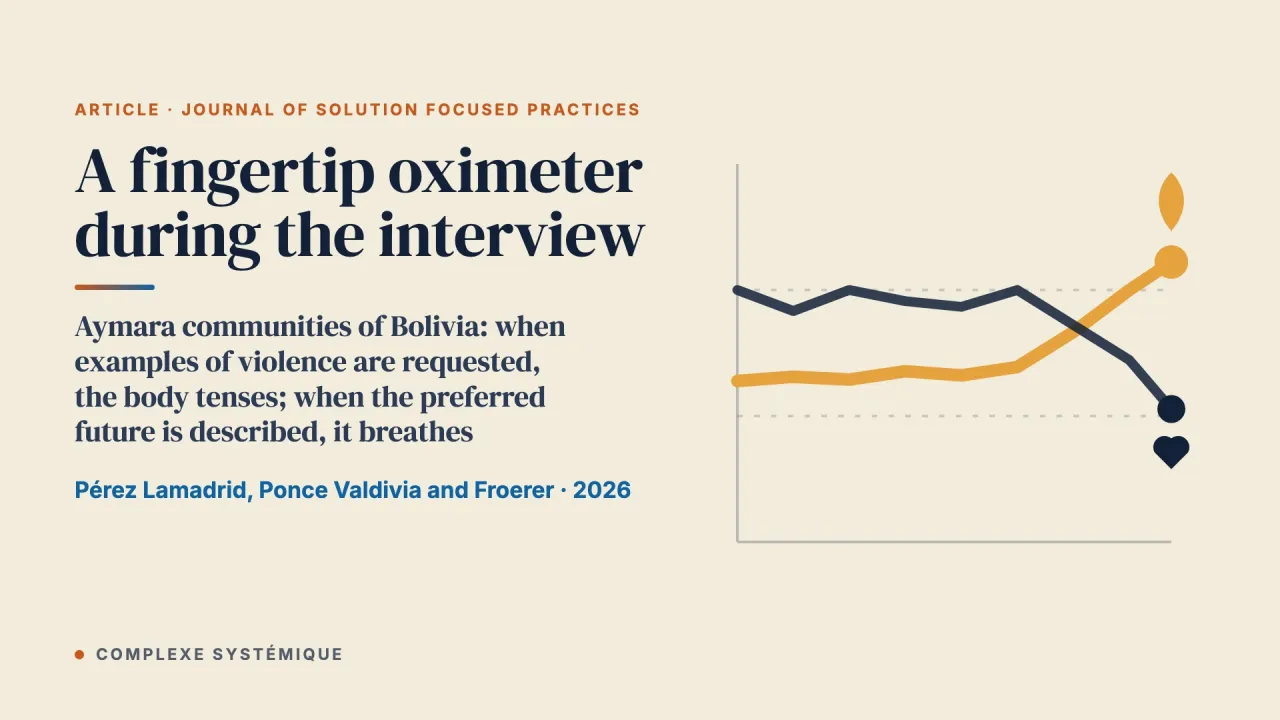
 Oxygenation and Heart Rate in Solution-Focused and Problem-Focused Interviews With Rural and Indigenous Aymara Communities (Viacha and Laja) Regarding Intersectional Violence
A fingertip oximeter on 19 Aymara people of the Altiplano: the problem-focused interview tenses when examples of violence are requested; the solution-focused one oxygenates and slows the heart.
 Article
 Ways of Supporting Coparenting in Child and Family Services: Discourses of Involvement, Capacity Building and Reconciliation
Involving the father, building capacity, reconciling after divorce: three ways of supporting coparenting in Finnish family centers, and one blind spot, the child.