AI-assisted translation
This version was translated from Italian by Complexe Systémique with the help of artificial intelligence. In case of doubt, the original version prevails.
Connessioni · Clinical practice
The impertinent mirror: exploring the family imaginary
The therapy-room mirror turned into a beach, a rug transformed into a marital bed crowded with soft toys, a letter to a mother mapped onto bodily organs: Beppe Pasini, a trainer at the Centro Milanese di Terapia della Famiglia, describes how he takes the family session from words to aesthetic and symbolic languages. For him, change passes through the body, play and beauty, provided one follows each family’s metaphors and the rhythm of the relationship.
Unofficial English translation. This article is a translation of Lo specchio impertinente: Esplorare l’immaginario della famiglia, by Beppe Pasini, published in Connessioni (Centro Milanese di Terapia della Famiglia), new series, no. 2 (2017), under a CC BY 4.0 licence. Translated by Complexe Systémique in November 2026 with the help of artificial intelligence: the original Italian text has been translated into English and reformatted, which constitutes a modification of the work under the terms of the licence. The paragraphs and subheadings are those of the journal; the Italian words on which the argument rests (sviscerare, soqquadro, manutenzione) are kept in italics, with their translation; the quotations from Munari, Calvino, Romagnoli and Sylvia Plath are translated from the Italian, Plath’s words as the author gives them; a few typographical errors have been silently corrected. This translation was made neither by the authors nor by the journal, who are not responsible for its content or for any errors. The original version prevails.
If every reality depends on the grammar with which we live and tell it, then by changing the logic with which we make sense of the world, the world changes.
Beppe Pasini
Beppe Pasini, psychologist and systemic psychotherapist, trainer at the CMTF and at the Shinui centre in Bergamo. Lecturer in experimental pedagogy at the State University of Brescia.
Your thoughts will turn from practical to aesthetic, and you will go home happy.
Bruno Munari
One-way in what sense?
The mirror is a thoughtful object. It reflects. I enter the therapy room and look at the image of my face. I fix my hair, I smile. What impression will I make on the people I am about to see? I switch on the halogen lamp; the light it gives off radiates a soft warmth and prepares an affectionate, intimate atmosphere. This is what I look for in the therapeutic encounter. In the centre, a plain circle of chairs. On the walls, a few paintings in colours now vivid, now more subdued. Still lifes and fishermen. A beach at sunset. Telling metaphors of family relationships. The muffled, festive shouts of the children at the nearby nursery school mingle with the comings and goings of the vehicles that take elderly people to the day centre. The beginning and the end of life are sounds in a single score. The family is about to arrive; the theatre of affections and words raises its curtain.
At the time I did my training as a therapist, a legend was going around. During a session by Milton Erickson, a few “eccentric” observers were invited behind the one-way mirror, among them a choreographer (what a lovely idea for “seeing” the dance of relationships!), who was asked at the end for a comment on what, in his opinion, had been the most effective and useful thing he had seen the therapist do. The choreographer thought about it a little and then said: the smoke from Milton’s cigarette and his hand tracing elegant spirals in the air as he talked. It had something magical and almost hypnotic about it! I do not know whether this legend was true, but I have always liked to believe it. Besides, one does not ask that of legends. I often call it to mind in the settings where I do training. It brings a dimension of elegance, beauty and the unexpected into clinical work. And a strong smell of tobacco. What sets change in motion in therapy? What facilitates it? When and in what ways does it show itself? These are questions we cannot avoid. To invent new solutions to old problems, one must have the courage to challenge their assumptions. If, for example, all communication always goes in at least two directions, characterized by circularity and feedback, in what sense can the mirror be one-way?
From practical to aesthetic
Your thoughts will turn from practical to aesthetic, and you will go home happy, Bruno Munari reminded us. What implications can this statement have for those engaged in clinical intervention? It seems to me that Munari was referring to an interesting transformation, indeed to a revolutionary paradigm shift in the logic by which reality is perceived and lived. Thinking and acting aesthetically involves a leap in level, even a somersault, that leads us to rethink the assumptions through which we organize communication, experiencing an active role as builders of knowledge and of new connections. If every reality depends on the grammar with which we live and tell it, then by changing the logic with which we make sense of the world, the world changes. We know very well that people do not easily abandon old versions for new ones, and an instructive, normative stance certainly does not help this transformation. How, then, can it be facilitated and encouraged? From this standpoint the therapeutic interview can be seen as an experience in which people, with the therapist’s help, concretely undergo new and healthier perceptual experiences of the problems they are living through. It is therefore always a second-order attention: not so much to the problems as, recursively, to the languages we use to describe them. I believe that this experience of change necessarily passes through the bodily and non-verbal dimension. Like the smoke rings Erickson traced in the air, family relationships are made up of impalpable and yet very concrete aspects: emotions, memories, expectations, stories, bodies, scripts, rules, sanctions, rewards, words, and so on. Alongside the usual conversation, which relies mainly on words, I am currently experimenting in the clinical interview with a variety of aesthetic and symbolic languages that try to make relational entanglements more visible, through activating practices offered to the members of a family so that they get in touch with the imaginary connected to the problem they are going through. The hoped-for outcome of these practices is a change in the premises and grammars that combine to define a critical situation. The family, understood as a place where specific behavioural scripts are tried out and learned, refers in fact to a cultural system with its own characteristics and rules of communication. Every language allows freedoms and reveals limits. If, for example, I cannot carve a block of marble with a paintbrush, I can always paint it. Disconcerting and amusing. The same happiness that takes hold of us when we play with other expressive toys, experiencing the creative sensation of a healthy reshuffle. One of the senses most called upon on these occasions is touch. At a certain point in the session, we move into action. At those moments there is a sudden change of rhythm and context. I try to make this discontinuity visible as well. I use formulas that create a certain suspense, such as: I’ve had an idea, excuse me… or: I’ll leave you for a few minutes, I’ll be right back, and so on and so forth. In this way I interrupt the conversation and return to the session shortly afterwards, inviting people to write, cut out, glue, colour, move with their bodies. To use the intelligence of the hands. In the happiest cases, to dance. An experience of lightness. Calvino reminded us that lightness is not superficiality but rather gliding from above with no weight on one’s heart. When, with couples, fathers, mothers and children, I experience this state of grace, all the more so in the most painful and tragic stories, everything is transformed into possibility and beauty. On those heady occasions I feel useful and nurture the conviction that I have truly been of help to them. I know, it is a seduction to be given in to sparingly. People are not put in the fridge between one session and the next. There are millions of events that may bring about a significant change in the meantime, and that do not depend solely on the therapeutic relationship, which at most merely perturbs or fosters them. In which directions? In a recent book with an evocative title, the journalist and essayist Gabriele Romagnoli (Romagnoli, 2015) asks a fascinating question for all those working in helping relationships. He asks: do we want to be traffickers in bad repressed memories or speleologists of buried happiness? Becoming aware of the directions in which we want to turn our gaze, and therefore our action, in a helping relationship is certainly a matter of ethical responsibility, but above all of aesthetic responsibility; sensitive to the relationship that connects (us).
In this contribution I would like to present a few stories, giving an account of how I try to explore the family imaginary through symbolic practices and actions that have a positive emotional impact on the climate of the session. On me first of all. I believe that a good yardstick for understanding whether what one is doing is useful consists in constantly monitoring oneself, refining one’s own “cardio-spiritual” sensitivity. This, after all, is what the masters of the Milan Approach taught when they urged us to practise a sort of pragmatic squint: one eye on the relationship and the other on oneself. If one or more colleagues are not available, one can always appoint the family itself, or one of its members, as co-therapists. People are usually always enthusiastic about feeling helpful towards a specialist who is in difficulty, experiencing in turn a healthy reversal of roles.
A first classification grouping the symbolic practices I have experimented with over these years adopts as its criterion the types of languages proposed, and I have promised myself to begin a more extensive treatment of it in the future. After many years of professional activity, I feel in fact only at the beginning of an exciting and most fertile path of research:
For an irreverent use of the mirror. The mirror is an extraordinary symbolic and evocative object. These practices involve using the mirror in therapy as a large board on which to write or draw (with a dry-erase marker), and to hang symbols, Post-it notes or various handmade objects. Provided, of course, that one works in a setting that allows for it.
Writings, sound symbolism and other sounds. This groups together practices in which people are offered prompts for autobiographical, poetic or evocative writing, dwelling on the iconic and sound-symbolic aspects of language, such as the sound and shape of words, their rhythm and their arrangement in space;
Narrative polychromies. These group together all the experiences in which colours are used to express emotions, relationships and lived experiences. A typical use is making collages and symbolic genograms in which the various members of the family are represented by symbols brought together on a single narrative background. For example a garden, the seabed, a sky, a wood, and so on.
(In)corporeal relationships. This concerns practices in which bodily expression predominates, aimed at restoring movement to relationships that are too static. Telling examples are sculptures, psychodrama, role play, the use of puppets to stage scenotests, mask-making, and so on.
Times and mistimings
When should these practices be used? Potentially, every story is an ideal opportunity. The fact is that they are now a constant feature of my current style of clinical intervention. I have also found that the more they “hook on” to the specific situation and to the metaphors that each family naturally uses to tell its story, the more effective they are. Indeed, they must do so in order to be meaningful and to “speak” to the family. It is therefore a matter of sharpening a keen attention to the many figurative or analogical expressions people naturally use to express themselves, and of using them as fascinating entry points for exploring the imaginary. Every family lexicon is, after all, a crackling and highly fertile jumble of these languages used in everyday life. For an outside ear it may be easier, at least at first, to catch their nuances and sounds. I remember how my mother, who came from Emilia and had been transplanted to the north for many years, would suddenly recover her very colourful Apennine accent when answering a phone call from relatives she had not heard from for a long time. At those moments she became once again the little girl who had fled war and poverty in search of hope, as if time had never passed. My relatives who emigrated to German-speaking Switzerland in the 1950s, amid a thousand forms of discrimination, would lose all their Teutonic aplomb when they quarrelled among themselves, bringing out their most authentic and heated dialect slang. The imaginary speaks the language of the guts, of the body, of the most intense and primal emotions. While people are usually prepared to converse with the therapist in a traditional (and at times soporific) talking therapy, the introduction of “other” languages has to be calibrated by synchronizing with the time (Boscolo and Bertrando, 1993) of the relationship itself. Seizing the right moment to move “from words to deeds” is a sensitivity that is refined by observing people’s reactions, caring for their stories, trusting in improvisation. There is of course no certainty that the family will willingly accept what the therapist proposes. In general I try to adopt a gentle, proposing, negotiating, self-reflexive and respectful attitude. Along the lines of: thinking about what you’ve told me, a suggestion came to mind that I’d like to make to you… or: I was wondering whether you would be willing to do… or again: I feel it would be better to move on to colours… and so on. In these cases the golden rule of the helping relationship always applies: the therapist proposes, the relationship disposes. One must always be ready to change course and explore other directions if the moment is not right or if one meets too much resistance. But a roar of laughter accompanied by a gust of unexpected self-ironic optimism about the difficulties being lived through is a sign that something important is happening. That is what being circular means. Paying attention to the feedback the relationship offers. Rather like the fortune-teller who told her client “you are surrounded by many friends” and, catching a look of puzzlement on the man’s face, hastened to add: “but few you can really trust!”.
A crowded bed
Where does a sexual encounter begin? And courtship? What fosters or inhibits it? In bed, emotions and mutual expectations meet, as do ancestral fantasies and inhibitions. The process of courtship and erotic seduction is highly complex, made of both bodies and imagination, and it begins long before the actual physical encounter. In this story, a married couple who come to therapy to deal with an unsatisfying sexual situation symbolically “have sex” (let us be clear!) with the therapist, who goes to bed with them in order to make inhibiting interferences visible. Ernesto and Anna are having serious sexual problems. They have been married for a few years. He feels permanently anxious when they have sex; he fears he will not satisfy her, that he will not be up to it. This leads to premature ejaculation, which frustrates them both. Both come from a conservative, closed and bigoted family tradition in which sex was experienced as embarrassing and dirty. Anna says she never saw her parents show each other affection in front of the children, and the very idea that they had a sex life makes her feel terribly uncomfortable. When she and her husband make love, she says, it is as if she could feel her parents’ presence in the bedroom, in front of her and her husband. In particular her mother’s face, which she imagines with an expression of condemnation and harsh reproach. It was obvious how very hard it was, in that emotional state, to relax and feel pleasure. While the two of them were talking, my eye fell on the rug in the therapy room, of modest make and bought at a department store, roughly the size of a three-quarter bed. Ideal for trying to make those presences explicit so as to talk with them and come to terms with them. What is more, in the office next to mine works a psychomotor therapist who uses soft toys of every shape and size in her work. Mostly animals. I had what I needed to go to bed with my clients! So we moved the chairs, and I suggested that they use their imagination to turn the rug into their bed, on which we settled, sitting down. I suggested that Anna choose from among the soft toys those best suited to represent symbolically the presences she was talking about, while Ernesto looked on, puzzled. Before long the big bed was crowded with mummy-kittens, father-hippos, embarrassment-crocodiles, taboo-birds and so on. We struck up a dialogue with each of them, listening to their thoughts and points of view in a gradual emotional escalation between laughter and deep emotion. At the end I asked Anna to place her partner in the “bed” too, paying close attention to the distances and spaces in relation to the other elements. It was a symbolic and liberating dialogue that made it possible to give voice to fears, unexpressed emotions and stories never told before. I took leave of the couple with a poetic gesture to celebrate what had been experienced: taking on the voice of the bed itself and writing a short thought addressed to the two of them. What did it think of all this? What were its wishes and its advice for the couple? Indirect and symbolic languages can be an excellent medium for tackling delicate subjects and easing embarrassment, fostering new awareness of the powerful influence of family models.
Relationships to dissect
A young gay doctor came to see me, prey to a dilemma that had been tormenting him for some time: should he reveal his homosexuality to his parents or not, at the risk of losing the admiration they had for him? With them, he said, he could not be authentic; the whole family had built its social redemption on him and on his success as a doctor. His existence was split in two: by day a blameless and well-regarded clinical practice, and by night the systematic search for sexual partners with whom to satisfy an insatiable appetite. He was worn out and at the same time excited by that frantic sexual frenzy, which made him feel loved, even if only for a single night. Many of his friends had come out to their families with opposite results: some had received affectionate solidarity from parents and siblings; for others, on the contrary, it had turned out to be something of a disaster, the revelation bringing harsh condemnation and even ostracism. So Franco was very torn about what decision to take and how to go about it. He said he wanted in particular to sviscerare (literally “eviscerate”, here “dissect”) his relationship with his mother, which he perceived as riddled with ambivalent feelings. This statement, which for a doctor certainly carried an additional implication, handed me on a silver platter the cue to suggest exploring the imaginary connected with that relationship. So I suggested he write a letter in which he addressed her, confiding his experience and his emotions. After that we worked on his text as if it were a body, looking for the parts that could be symbolically associated with bodily organs: eyes, belly, feet, brain, and so on, circling each relevant sentence with a line shaped like the associated organ. His writing turned into a colourful caviardage1. For each of the “organs”, important meanings, stories and emotions emerged, which helped him to sviscerare, precisely, his complex relationship with his mother.
To the rhythm of the tango
A decidedly overweight couple came to a session. He, a counsellor and a very experienced social worker, described himself as chronically depressed, a failure in his work and disillusioned with life. She ran a thriving catering business, and the more jovial she appeared, the more surly and intractable this made him. At the beginning of their account she used a telling metaphor to describe where they were in their life together. She said: he and I are like an old, tired tango. For the whole rest of the session that powerful image danced in my mind. So, as I went further into their story, I began to make a mental list of keywords that fitted it perfectly: disappointment, attraction, seduction, resentment, nostalgia, sex, and so on. At the end I told them that I found the metaphor they had used was wonderfully suited to describing their relationship and that it needed to be given a little movement. So I suggested that they try a few dance steps and find suitable music on the internet. I would keep time with my hands. The proposal threw them quite a bit. She burst out laughing, amused, while he looked at me dumbfounded and, utterly unwilling, declared that he would take good care not to accept my invitation. The situation was at an impasse for a few moments until she came to the rescue: she said that if the tango was a bit too much, she happened to have, as an alternative, a beautiful piece of music that she always kept with her on her smartphone because it was linked to their first meeting: Stravinsky’s Rite of Spring. We parted gracefully as we listened to it, and as I watched them leave the room it seemed to me that both of them were moving to that sweet and sexy rhythm. It is a good example of how the relationship with clients comes before the therapist’s odd initiatives.
Flavours of sea and salt
Recalling how a couple met means not only going back in time through memories and imagination, but concretely reliving a mythical, usually happy moment in one’s life, in order to reconsider the mutual expectations and the dreams that filled the future of former days, and to ask where they have gone and when they still peep through in the present. Sergio and Silvia were a seasoned and conflictual couple; their quarrels had grown more and more bitter and might perhaps have turned violent had the social services not intervened with a precautionary order placing the children with their mother and provisionally suspending the father’s parental authority. For both of them, the compulsory referral to therapy was aimed at trying to work through their relationship and attempt a reconciliation. The present seemed clogged with mutual accusations and resentment, immobilized by apparently irreconcilable rigidities that prevented any fruitful dialogue. Where had the two young people gone who, burning with love and passion, had met so many years before? And where had they met? On the beach! she recalled, her eyes lighting up for a moment as on that evening so many years before, around the bonfire, when he played the guitar for her by the sea. Would they be willing to go back there? The large mirror in the therapy room, with its placid surface as calm and flat as a millpond, seemed to us the right symbolic place to set this recollection. So we suggested that the couple draw on it with (dry-erase) markers the place of their mythical first meeting. As the two of them, visibly moved, gave shape to dunes, beach umbrellas and waves, even the laughter of their friends seemed to ring out merrily to the hypnotic sound of the surf. We too huddled around that adolescent fire to listen to the atmosphere of the couple’s meeting as it reached us across time. It then became easier to try to find the faint traces of their romantic couple myth in the present as well, despite the heavy seas on which their mutual resentment was sailing.
The therapist’s maintenance
The poet Sylvia Plath remarked that life has no meaning if you cannot translate it into verse. Using aesthetic and artistic languages to explore the imaginary is a generative and highly promising opportunity, including for the training of those who aspire to a caring profession. Indeed, I would venture to say that it is precisely in the contexts of adult education that the most important wagers on change are played out, whenever settings are created in which the learner’s biography can be valued and celebrated so as to take form as knowledge. Alongside my clinical work, I do training in many contexts and with different audiences: therapists and counsellors, teachers, professional educators, nurses. Among the few but essential things I feel I have learned on these many occasions of human growth is that people, especially adults, cannot wait to play with ideas by setting them in motion, to try out learning opportunities by revisiting the resources of experience, taking an active part in their own path of professional growth. It is a matter of giving them the chance to put this into practice. If care for languages, contexts, places, spaces, bodies and environments that encourage a thoughtful conviviality is an essential precondition, artistic expression offers a formidable systemic framework for connecting seemingly distant worlds. This means starting from concrete experience and returning to it, questioning it and making it a theme; giving voice to one’s own biography as carer and as cared-for in order to develop a local, embodied theory; nurturing reflexivity in action; critically reviewing one’s own prejudices by making their origins and partiality explicit; pursuing beauty, curiosity and creativity in the helping relationship. As I said a moment ago, I feel I am only at the beginning of a new, fascinating and seductive adventure of research and experimentation devoted to exploring the family imaginary. A search for a happy way of being in the relationship. A stance that we know to be most complex and attractive, but which I believe constitutes a genuine strategy of professional survival, enabling us to take care of people by nurturing an authentic trust in hope, in the resources, abilities and possibilities of every living system to invent unforeseen solutions to the problems it encounters. Among the many, often unwitting, masters from whom I never cease to draw inspiration and who actively contribute to this continuous process of maintenance, I would like to recall one who is joyfully bound up with my autobiography. It is by revisiting the role of symbolic legacies such as these that we explore with future therapists the links between the imaginary, experience and professional vocation:
I remember a workshop, a smell of oil, of grease, of light in half-shadow, of precise, skilful gestures. Order and confusion. Everything in its place and everything upside down (a soqquadro). With two q’s. How funny: when I write it I expect the computer to mark it as a mistake, and instead… Manutenzione (maintenance) is made up of two words: manus, which is hand, and teneo, which means I possess. Maintenance is done with the hands, it is a practical thing, you need the right tools: screwdrivers, spanners, hammers, nails, pincers, but above all… the overalls! I remember the workshop of Tullio, who repaired ramshackle bicycles, and his hands dirty with grease above a smile for every customer. He had his shop by the side of the road, and we went there on Sundays, to my father’s village. A smell of farmhouse and of grandparents, and of a strand of spaghetti that nearly choked me. Hands fishing in my throat, me coughing and not forgetting. Tullio liked his drink and wore an impeccable blue boiler suit with a little white pocket closed by a zip. Elegant and austere. We often found him at the bar counter after his child-bride wife had died. In the shop he took the bike in his hands as if it were a crystal chandelier. Gracefully he swung it through the air to the stand, where he clamped it, ready to let itself be caressed. That was enough to mend it, and I was already intoxicated by all that elegant devotion.
(Opening image: “Chiome e radici”, Beppe Pasini, 2016, paper)
Complexe Systémique: key points
Pasini offers neither a protocol nor an evaluation: he describes a practice, including the element of seduction he himself acknowledges, “a seduction to be given in to sparingly”. Its clinical interest rests on three points. First, the media used (mirror, soft toys, colours, dance) are only worthwhile if they extend the metaphors the family already uses: the “old, tired tango”, the wish to “dissect” a relationship. Second, the move into action is negotiated at the pace of the relationship: when the proposal is turned down, it is the family that finds another way, like the couple who replace the tango with Stravinsky. Third, these practices keep a second-order aim: changing the premises and grammars through which a problem is described, rather than the problem itself. It is a pity that their effects are reported only at the scale of a single session, with no follow-up. Clinical teams will find here a repertoire close to floating objects, with a valuable attention to the body and to the pleasure shared in the session. Read alongside the overview of floating objects, and the tango as a metaphor in family therapy.
Notes from the original
1 Caviardage, from the French caviar (Italian caviale). It could loosely be rendered [in Italian] as “cavialeggiare”, that is, to black out. In fact, “caviardage” was what used to be done in the past to suppress passages in certain writings that the censors deemed immoral. Here it refers to a lexical and syntactic game in search of the poetry hidden in a text.
References
Barker P. (1987), L’uso della metafora in psicoterapia, Roma, Astrolabio.
Bateson G. (1972), Stile, grazia e informazione nell’arte primitiva, in Verso un’ecologia della mente, Milano, Adelphi.
Boscolo L., Bertrando P. (1993), I tempi del tempo: Una nuova prospettiva per la consulenza e la terapia sistemica, Torino, Bollati Boringhieri.
Caille P., Rey I. (2005), Gli oggetti fluttuanti: Metodi di interviste sistemiche, Roma, Armando.
Calvino I. (2000), Lezioni americane: Sei proposte per il prossimo millennio, Milano, Mondadori Oscar.
Di Pasquale M. (s.d.), Sylvia Plath: La scrittura-difesa di una bambina che voleva essere Dio, in http://www.psychomedia.it/pm/culture/liter/dipasquale.htm (acc. 12 2017)
Leher J. (2008), Proust era un neuroscienziato, Torino, Codice.
Lumer L, Zeki S. (2011), La bella e la bestia: Arte e neuroscienze, Bari, Laterza.
Munari B. (2017), Pensare confonde le idee, Mantova, Corraini.
Romagnoli G. (2015), Solo bagaglio a mano, Milano, Feltrinelli.
Vettese A. (2010), Si fa con tutto: Il linguaggio dell’arte contemporanea, Bari, Laterza.
Unofficial English translation of Lo specchio impertinente: Esplorare l’immaginario della famiglia, by Beppe Pasini, Connessioni, new series, no. 2 (2017), under a CC BY 4.0 licence. Translation (with the help of artificial intelligence) and layout: Complexe Systémique, November 2026 — the work has been modified under the terms of the licence. Neither the authors nor the journal are responsible for this translation; the original version prevails.
Unofficial English translation of “Lo specchio impertinente: Esplorare l’immaginario della famiglia”, published in Connessioni (2017) under a CC BY 4.0 licence. Made by Complexe Systémique with the help of artificial intelligence, it does not come from the authors or the journal, who are not responsible for its content; the original version prevails.
Read the original articleHow to cite this article
Pasini, B. (2017). The impertinent mirror: exploring the family imaginary (Complexe Systémique, Trans.). Complexe Systémique. https://app.complexe-systemique.com/en_GB/articles/the-impertinent-mirror-exploring-the-family-imaginary (Original work published in 2017 in Connessioni, nuova serie, n. 2 (2017); republished in 2017 by Connessioni, https://connessioni.cmtf.it/lo-specchio-impertinente-esplorare-limmaginario-della-famiglia/)
To go further
- Floating objects in systemic therapyAn overview of floating objects.
- The tango in family therapyThe tango as a metaphor for the session.
- Therapy without talking: possible?When words are not enough.
Related training courses
 Short course
Extramarital affairs in couple therapy: from crisis to forgiveness
One-day online training with Julien Besse: reading the crisis triggered by an extramarital affair, positioning oneself as a couple therapist, rebuilding trust and working on forgiveness up to the repair ritual. Delivered in French.
 Symposium
État des Lieux: a psychological approach to spaces
Replay of the “État des Lieux” conference (Paris, 16 October 2026): Ivy Daure, Maurizio Frisina, Viola Sallay and Gilbert Pregno on places as a clinical resource. In French.
 Certifying course
Training in Systemic Therapy and Interventions – Cycle 1
Certifying training cycle in systemic therapy and interventions – year 1. Courses, supervision and practice, aligned with EFTA/SFTF. In French.
 Certifying course
Training in Systemic Therapy and Interventions – Cycle 2
Certifying training cycle in systemic therapy and interventions – year 2. Clinical complexity, supervision and practice. EFTA/SFTF aligned. In French.
Related articles
 Blog
Challenging in therapy: What a patient taught me
A couples therapy session led me to reflect on confrontation, authenticity and resonance: how to address difficult behaviour without invalidating the person.
 Blog
Adult parentification: when being useful becomes a condition for being loved
Why is it sometimes so hard to hand over? Julien Besse explores parentification and parentalisation, acknowledgement and the place we take in our adult relationships.
 Scientific
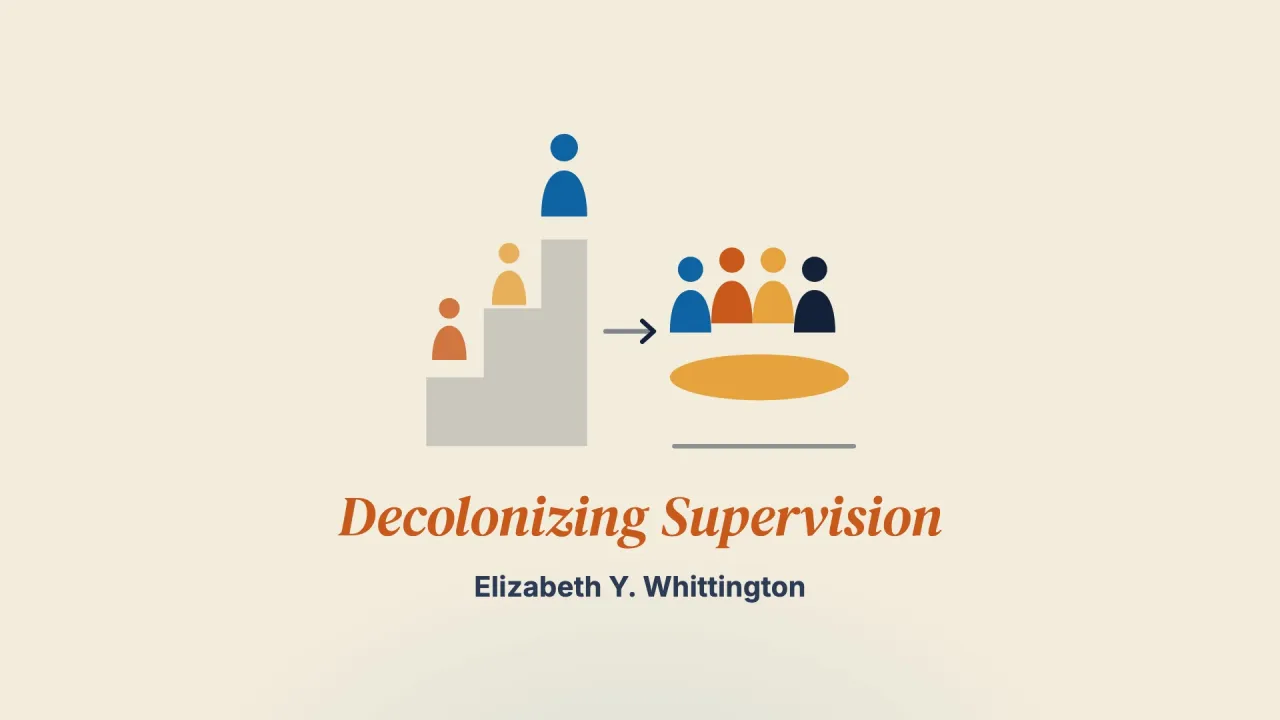
Decolonizing Supervision: A Critical Race and Queer Theory Framework for Marriage and Family Therapy
Supervision is not neutral: a framework drawing on Critical Race Theory and Queer Theory to name and share power in supervision, with a vignette.
 Scientific
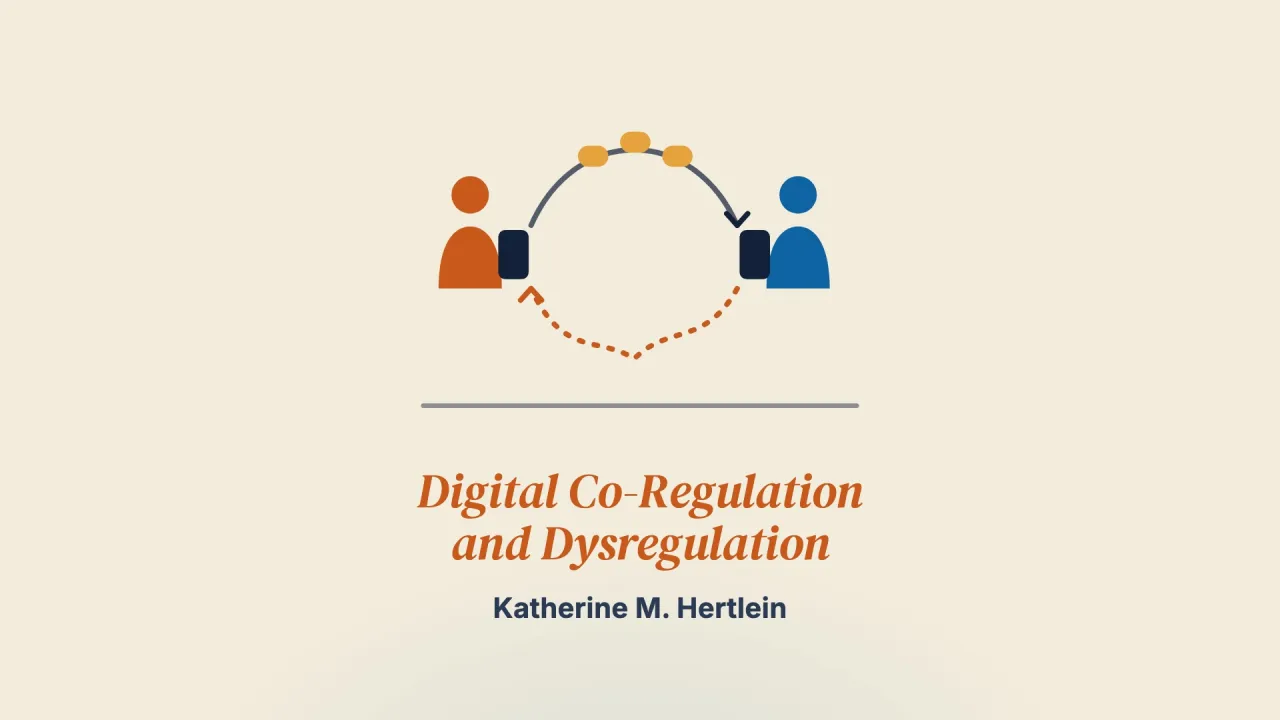
Digital Co-Regulation and Dysregulation in Romantic Relationships: A Systemic Model of Technology-Mediated Emotional Processes
Checking, chasing, blocking: 31 interviews show how the phone regulates or dysregulates a couple’s anxiety, with a systemic model of the loop.
Comments 0
Log in to join the discussion. Log in