Red Sistémica · Schools and burnout
The psychological erosion of the teacher: a hidden problem
Feeling “melted down”, “burnt out”, “eroded”: the sensation is a familiar one to a great many teachers, and yet the education system, parents and educators themselves pass over it in silence. Jacinto Inbar shows that this wearing down strikes precisely the most committed, distinguishes stress from psychological erosion and proposes, rather than blaming the victim, work on the way the teacher appraises what is happening to him.
“Men are disturbed not by things, but by the views which they take of them.”
Epictetus
A wearing down that nobody wants to see
To those of us who have had the good fortune to hold educational posts and who then ventured into the world of psychotherapy, the sensation of being “melted down”, “burnt out” or “eroded” is very familiar — expressions used with relative frequency by a significant number of teachers.
This sensation of emotional exhaustion, which translates into a progressive and gradual loss of the teacher’s energy and of his concern to meet the pupil’s needs, has been concealed or delegitimised by the education system, by parents and even by educators themselves.
This is happening at the very moment when Argentine society, through its education system, is striving to devise, disseminate and implement major changes in structures, curricula, methodologies and content, adjusting them to the emerging needs of any dynamic and modern community.
This process of transformation can only be effectively carried through insofar as all the significant agents of change invest their ideological resources, their professional competence and their sensitivity in the pursuit of such decisive objectives.
Teachers play a fundamental role in this process of change. And yet the school, by virtue of its hierarchical organisational structure (a “flat” system, offering few opportunities for internal professional mobility); the expectations of the teaching role that Argentine society and the education system itself have developed, particularly since the National Pedagogical Congress; the pressure groups (among them parents and colleagues themselves); the recipients of educational activity (the pupils); together with constant dedication in the search for solutions and in meeting the pupil’s needs, with the emotional load that this represents — all of this potentially contributes to creating stressful conditions and a wearing down, a psychological erosion, which in turn bear on the causal attributions of his conduct, and most particularly on the effects his behaviour produces on the pupil.
Data gathered by means of institutional diagnoses in schools, of surveys conducted during seminars and reflection workshops, and in clinical practice with teachers, have prompted us to take the measure of this phenomenon, which is emerging precisely at the moment when significant efforts are being made to develop, revitalise and transform the education system, while seeking at the same time to strengthen the image of the educator and to restore the standing of the profession.
It is the most committed who wear out
When we set out to identify certain idiosyncratic characteristics among the teachers who report the strongest sensation or perception of stress and considerable emotional wear and tear, we discovered that this phenomenon occurs precisely in people who are committed to their profession and to their educational task, which presupposes a foundation of dedication, responsibility, involvement and identification with the pedagogical ideals and objectives of the education system.
In fact, these educators constitute the most important and most significant human resource for producing the desired transformations and changes. We thus observe the existence of a circular relationship that must be modified: those who can create the necessary change are the most committed, but also, potentially, the most vulnerable to psychological erosion and emotional wear and tear.
It would be useful to offer a few conceptual clarifications here, which would help to understand the phenomenon and, consequently, to identify certain effective coping strategies.
Stress, a matter of perception
Stress occurs in the educator when he perceives an overload or an excess in the demands of the physical and social environment, greater than the capacities he perceives himself as having to meet them satisfactorily. In other words, perceived stress is a function of the threats perceived and of the coping resources perceived by the teacher (Inbar, 1983).
The following formula, developed in the article mentioned, makes it possible to illustrate the importance of cognitive appraisal in the experience of stress, and can help us to understand certain effective coping strategies.
In other words, the intensity of the stress experienced by the teacher will depend on his perception, on the self-appraisal of his resources, his capacities and his mechanisms for confronting the stressors.
The formula
Perceived stress = (perception of the threat × importance of the perceived consequences) ÷ perceived coping resources
The educator’s perception, his cognitive appraisal and his interpretation of environmental factors, grounded in earlier social learning experiences, are what will determine the extent of the stress experienced. As Sara Baringoltz (1988) put it clearly, “what largely influences the emotional state (of the teacher, in our case), his ideas and his conduct is not the events of life (of the school) in themselves, but the interpretation made of them” (Perspectivas Sistémicas, 1988, no. 1, p. 7).
From a relational perspective — that is, one that takes into account environmental conditions, the characteristics of the individual and the relationship between the various factors, within a multicausal conception — stress and the phenomenon of psychological erosion constitute a particular relationship between the physical and social environment and the individual who appraises it as threatening, or as exceeding his personal capacities or resources. The educator’s behaviour is mediated by the process of cognitive appraisal; it expresses an idiosyncratic relationship established between the teacher, bearer of his own distinctive characteristics (beliefs, values, styles of elaborating and processing information, perception), and the environment.
Stress and erosion are not the same thing
It is important to distinguish the two concepts mentioned, stress and psychological erosion, for they are neither synonyms nor interchangeable terms. To assume that the accumulation of stressful experiences leads inevitably to the psychological erosion of the teacher is mistaken in its very principle. Stress may, as the case may be, produce negative effects; but in certain circumstances it can even produce positive results, enhancing achievement and performance. Emotional wear and tear, by contrast, has none but negative consequences for the person (the teacher) and for the recipient of his educational action (the pupil).
“Psychological erosion may be defined as a state of physical, emotional and mental exhaustion arising from a constant, intensive and committed interaction, in an atmosphere charged with emotionality.”
Jacinto Inbar
Teachers who experience this sensation of exhaustion lose the motivation and the concern that so characterised them at other moments of their educational action; emotional contact diminishes, until they come to relate to the pupil in an uninterested and dehumanising way.
Psychological erosion leads to a decrease in the rapport between teacher and pupil, in the educator’s warmth and in his satisfaction in the task; it bears on the pupil’s motivation, on the effectiveness of the educational action and on the gains achieved by the educator-educated pair in the creative process of teaching and learning. This syndrome may even manifest itself in dogmatic and authoritarian conduct, leaving little room for pupils to express themselves, and only in firmly controlled situations.
Key takeaway
Stress is a reaction that may, according to circumstances, prove negative or positive: it sometimes enhances achievement and performance. Psychological erosion, on the other hand, has none but negative consequences — for the teacher as much as for the pupil. It represents the terminal stage of a series of unsuccessful attempts to confront a negative stress with no way out and no support.
Not blaming the victim
At this point in the article, it is essential to underline the danger of blaming the victim. We mean that the eroded, exhausted, “melted down” educator is in reality the product of his own involved and committed conduct, but also of an organisational system which, through its structure, its dynamics, its expectations (including those of parents, colleagues, superiors, pupils, society, and the “ideological mandate”), its vulnerability and its conflicts, harbours an enormous erosive potential.
Over time a feeling of helplessness develops in the person: despite the efforts made, the teacher receives neither recognition nor appreciation for what he has accomplished. This sensation, which develops when the individual perceives that he cannot control the outcomes or the contingencies of his own conduct, we are accustomed to call learned helplessness or learned hopelessness (Seligman, 1965, 1976).
We distinguished earlier between the manifestation of stress and psychological erosion: the latter may be regarded as a terminal stage in the progression of unsuccessful attempts to confront conditions of negative stress with no way out, no containment, no framework and no support system.
Which coping strategies?
The coping strategies proposed to reduce stress and its possible gradual outcome, psychological erosion, may be various; the choice among them depends on the conceptual, referential and operative model with which each of us identifies.
Some strategies favour the direct confrontation of stressors (they propose, for instance, “assertiveness training”); others favour the creation of social and professional support groups (with the differentiated functions this entails — listening, support, professional and emotional challenge, clarification of “social reality”). Others again insist on the importance of systemic interventions (producing a “genuine change”, or “second-order” change), or of organisational development (OD), which would modify the institutional structure and act directly on the aetiological variables producing the psychological erosion syndrome (for example quantitative or qualitative overload, organisational climate, interpersonal relations, and so on).
Each of these proposals has, of course, its potential, its advantages and its drawbacks; some research has even yielded contradictory data as to the results of the different coping strategies. A few are practically difficult to implement in present circumstances and in the Argentine socio-economic reality, since they require, besides an awareness of the situation, considerable budgets — as in the case of organisational development which, while perhaps the most effective (the one that can produce genuine change), is also the most expensive.
Re-educating oneself
At the same time, if we return once more to the scheme proposed above, we can identify a possibility for the person to confront these events while reducing the extent, the range or the intensity of his experiences of stress.
We note the importance of cognitions (perceptions, thoughts, ideas, beliefs) in the process of analysing situations and events. In other words, the stress a teacher experiences will depend significantly on the way he appraises the factors that threaten his well-being, or the demands of his social environment (parents, “superiors”, pupils, and so on); on the importance and value of the consequences or outcomes linked to the impossibility of meeting those demands; and on the extent to which he perceives himself as capable and as holding the resources necessary to confront the situation.
Since the educator’s emotions and conduct are the product of the way he perceives, appraises and structures situations and events, we may suppose that experiences of stress and of a possible erosion or emotional wear and tear also “depend” on him. It is not our wish to burden him with any further responsibility or guilt; on the contrary, it is a matter of offering him more independence, autonomy and control in his interaction with “real reality”.
The intent of our proposal is to “re-educate” the teacher — or rather to have him re-educate himself: by learning to check his underlying assumptions, to question the perceived reality, to consider different alternative explanations or attributions, to correct maladaptive perceptions and appraisals, and to adopt new conduct, broadening his interactional repertoire and his coping and problem-solving skills.
Perhaps in this way we shall be able to contribute, modestly, to the teacher’s well-being, to a more effective and less wearing educator-educated interaction, to a reduction in premature departures (products of emotional wear and tear) and, indirectly, to the quality of the educational process and to the possibility of introducing changes so needed in our education system.
Who is Jacinto Inbar
Dr Jacinto Inbar, of the University of Derby (England), Israel branch, is a clinical psychologist, supervisor and family and couple therapist, qualified in hypnotherapy and an expert in prevention and in intervention in crises and collective disasters.
This article is an English translation of “La erosión psicológica del docente: Un problema oculto”, published by Red Sistémica (first published in Perspectivas Sistémicas, n° 2). Translated and republished with the journal’s permission.
Read the original articleHow to cite this article
Inbar, J. (2022). The psychological erosion of the teacher: a hidden problem (Complexe Systémique, Trans.). Complexe Systémique. https://app.complexe-systemique.com/en_GB/articles/the-psychological-erosion-of-the-teacher-a-hidden-problem (Original work published in 1988 in Perspectivas Sistémicas, n° 2; republished in 2022 by Red Sistémica, https://redsistemica.ar/2022/06/20/la-erosion-psicologica-del-docente-un-problema-oculto/)
To go further
- Integrating cognitive hypnotherapy into the treatment of couples. Interview with Jacinto InbarThe same author, some thirty years later, on how he articulates the cognitive and the systemic.
- Professional exhaustion (burnout), self-care and care of teams working on violenceThe same wearing down, in another helping profession, and the team arrangements that prevent it.
- Education, health and community. “We are no longer the same”The school caught in its institutional and community environment, from the standpoint of those who work in it.
Related articles
 Article
 Becoming a therapist: Stessie Fougeroux's journey
Stessie Fougeroux, creator of the crossed-beliefs game, recounts her path, the Mony Elkaïm turning point, and how hard it is to think “family” inside institutions.
 Article
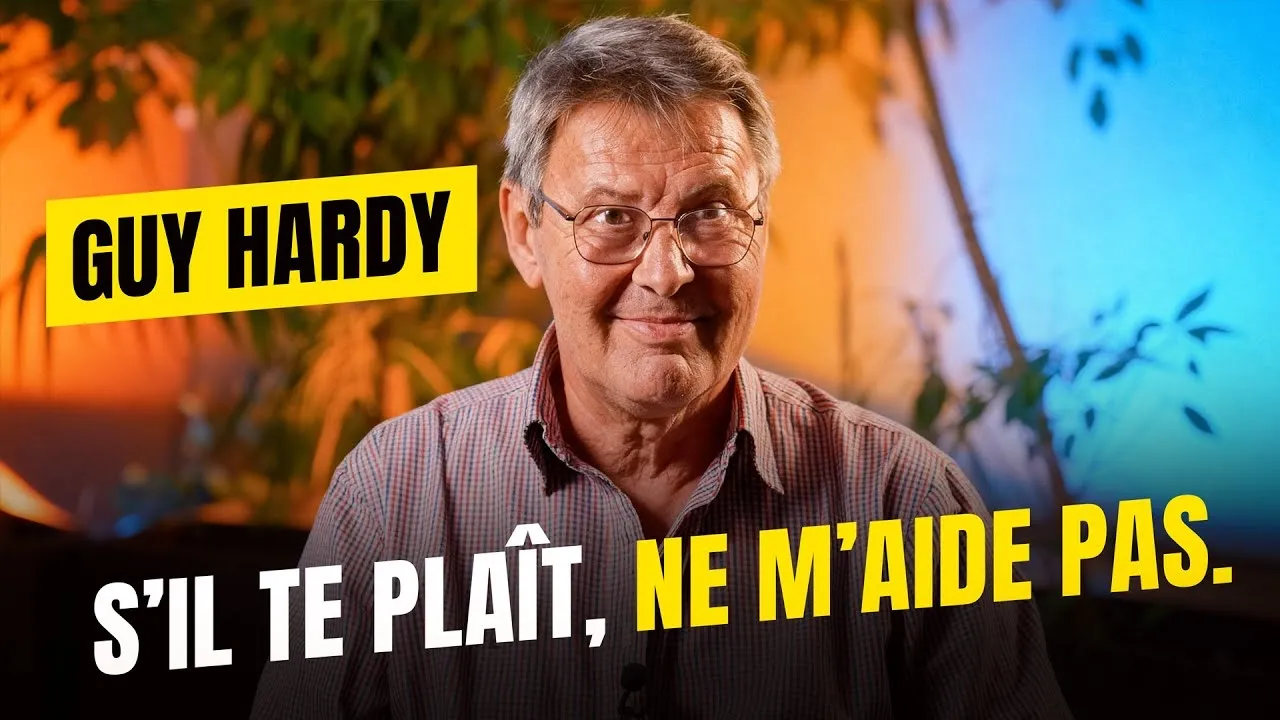
 When 'helping' becomes a subtle violence: what Guy Hardy's journey unsettles in us
From the therapeutic community he joined at fourteen to court-mandated help, Guy Hardy lays bare a paradox of our professions: how do we protect without crushing?
 Article
 Empathic Solutions
A Florentine foundation joins the solution-focused approach with Lipchik’s empathy in a European peaceful-communication project: gestures, stories to continue, tales with roles reversed.
 Article
 The Therapeutic Hotel: a systemic utopia turned living legacy
Imagined by Guy Ausloos, the therapeutic hotel welcomes young people in great difficulty: individualise, depathologise, socialise. Stéphane Bujold keeps it alive.
Comments 0
Log in to join the discussion. Log in