Journal of Family Therapy · Family therapy
The role of cultural factors in engagement and change in Multisystemic Therapy (MST)
What happens when multisystemic therapy enters a family that has come from elsewhere? Simone Fox’s team in London interviewed seven ethnic minority caregivers after treatment. Beyond the alliance, two drivers emerge: being understood in one’s culture in order to agree to engage, and then finding in the therapist a broker between the culture of origin and the one in which the child is growing up.
This is a reformatted republication of The role of cultural factors in engagement and change in Multisystemic Therapy (MST), by Simone Fox, Fatima Bibi, Hayleigh Millar and Amaryllis Holland, published in Journal of Family Therapy (Wiley) (2017), doi: 10.1111/1467-6427.12134, under a CC BY 4.0 licence. Prepared by Complexe Systémique in September 2026: the authors’ text is unchanged; the layout has been adapted for reading online, which constitutes a modification of the work under the terms of the licence. Tables are presented as lists. This edition was made neither by the authors nor by the publisher, who are not responsible for its content or for any errors. The original version prevails.
However, what is vital is a continuous open and curious approach to the family's perspective and narrative (cultural sensitivity).
Simone Fox, Fatima Bibi, Hayleigh Millar and Amaryllis Holland
Abstract
Evidence has shown that Multisystemic Therapy (MST) has been particularly effective in the treatment of youth with antisocial behaviour from ethnically diverse backgrounds. Although the process of change within MST has been explored, there is a dearth of research in looking at this for families from ethnic minority backgrounds. This qualitative study aimed to explore ethnic minority caregiver experiences of MST and understand how this might impact on engagement, the presenting problems and the process of change. Semi-structured interviews were conducted with seven ethnic minority caregivers who had completed treatment. A constructivist version of grounded theory was used to analyse the data. Specific cultural theoretical codes that emerged were around the consideration of cultural difference in terms of the engagement process, the conceptualisation of difficulties and the therapist acting as cultural broker in the process of change. This research integrates culturally specific ideas into the existing MST Analytical Process.
Practitioner points
- Being culturally understood, cultural sensitivity and respecting difference can help engagement with ethnic minority caregivers
- The role of culture may be important to consider in the conceptualisation of difficulties
- For change to occur therapists may need to act as cultural brokers
Introduction
Multisystemic Therapy (MST) is an intensive, family and community-based intervention for adolescents engaging in antisocial behaviour (Henggeler and Borduin, 1990). MST seeks to work with the systems around the young person to contextualize difficulties and create change, specifically identifying and targeting maintenance cycles within the system (Ashmore and Fox, 2011). The MST theory of change identifies the caregiver as the main facilitator of change (Henggeler et al., 2009). Empowering caregivers and enhancing parenting skills (e.g. increasing monitoring and supervision of the young person, affective relations) to improve family functioning is viewed as critical in facilitating key changes in the youth's social network, including the peer group and the school. The ultimate goal is to surround the youth with a context that better supports pro-social behaviour.
MST has been extensively researched, progressing from small-scale efficacy studies to multisite trials, which have produced a strong evidence base demonstrating its effectiveness in reducing youth anti-social behaviour, increasing school/training participation, and decreasing out-of-home placement rates (Henggeler and Sheidow, 2012). Curtis et al. (2004) conducted a meta-analysis examining the effectiveness of MST. The review found the largest effect size on measures of family relations, consistent with the importance MST places on family functioning (Henggeler and Bourduin, 1990). Fifty-four per cent of the sample across all reviewed studies were African American, although ethnicity was not specifically explored.
There have been fewer studies evaluating the processes and mechanisms that lead to change in youth and their families with MST. Studies have begun to identify important moderators, e.g. treatment fidelity (Henggeler et al., 1998) and treatment mediators, e.g. improved peer relations (Huey et al., 2000) and family engagement (Schaeffer and Bourduin, 2003) of MST outcomes. In identifying processes that facilitate change with MST Huey et al. (2000) and Henggeler et al. (2009) found that decreasing involvement with negative peers is mediated by improvements in family relations and increases in caregiver consistency and discipline.
Qualitative research
A number of UK studies have recently aimed to fill the gap in the MST literature, examining the processes of change for carers and young people. Tighe et al. (2012) conducted a thematic analysis with caregivers and young people who had received MST. This study highlighted the central importance of the therapeutic alliance in families’ positive experiences of the intervention. The data generated indicated an increase in caregivers’ confidence and improved family functioning as a result of participation in MST. Tighe et al. (2012) concluded that a key mechanism of change in MST is intervening in the multiple systems in the young person's life. Paradisopoulos et al. (2015) and Kaur et al. (2015) further highlighted the systemic, developmental and individual factors in relation to how change may be sustained up to twenty-one months post MST. These latter two studies used grounded theory to generate a model of sustained change.
It is worth noting that although there were ethnic minority participants within these studies (ranging from 10 to 48 per cent of the total sample), there was no discussion about whether culture or ethnicity specific issues arose and, if so, how they were negotiated within MST. There is a danger in interpreting the absence of the discussion of such issues as indicative of them not being present or relevant, which in reality may not be the case. In light of the aforementioned studies’ findings that highlight the importance of the therapeutic alliance as a key mechanism of change, it becomes ever more important to consider the potential challenges to forming a therapeutic alliance in MST when working with families from different cultural backgrounds, and the impact this may have on engagement and change.
Outcome and ethnicity
Is has been argued that MST is a culturally competent intervention (Brondino et al., 1997). Indeed, the effectiveness of MST for minority ethnic groups has been evidenced by several clinical trials in the US that have included relatively high percentages of ethnic minority families (Brondino et al., 1997). In their literature review, Painter and Scannapieco (2009) queried whether families and children from diverse populations who experience mental health problems have similar outcomes across race and ethnicity. Across the ten randomized controlled studies reviewed, African American males were over-represented, ranging from 15.5 per cent to 80.6 per cent of the sample. The majority of the studies reported on the effectiveness of MST in improving family relationships, decreasing behaviour problems and/or improving psychiatric symptoms. The authors concluded that MST was a promising intervention in reducing disparities in mental health care for African American children in the child welfare system.
It is noteworthy, however, that the over-representation of African Americans in the studies reviewed poses problems for generalizability across all ethnic minority groups. Different cultural groups are likely to have significant structural differences across important dimensions within the family, and within culture specific value systems, e.g. acceptability of outside involvement (Hines et al., 1992). One other study found that Hispanic young people who had MST had significantly more positive outcomes on a number of youth justice measures compared to Hispanic young people from a comparison group (Fain et al., 2014). The reason for this difference is unclear. All the studies reviewed above were carried out in the US, which once again raises questions about the generalizability of findings for ethnic minority groups outside the US, since there are likely to be major societal and cultural differences across the various ethnic minority populations in different countries.
Butler et al. (2011) published the results of the first independently conducted RCT in the UK, in a large, ethnically diverse urban sample, evaluating the effectiveness of MST in comparison to existing youth offending protocols. Sixty-six per cent of the sample was from an ethnic minority background (mainly black African, Afro-Caribbean or mixed ethnicity). Young people from both arms of the study showed reduced reoffending and out-of-home placements. Despite no between groups difference at earlier time points, there was a significant difference between the numbers of non-violent offences at eighteen-month follow up. However, ethnicity was not explored explicitly as a factor impacting outcome within this study.
Rationale for study
All the studies that have explored MST with ethnic minority groups have been quantitative. It has been argued previously that the social-ecological approach adopted in MST inherently addresses some of the key barriers to accessing mental health services for ethnic minority groups (Henggeler et al., 2009), yet there has been no qualitative research to corroborate this.
In light of the common view that ethnic minority groups are typically referred to as ‘hard to reach’ groups (Begum, 2006), it seems pertinent not only to examine mechanisms of change specifically for minority groups, but also to consider factors that impact engagement, since this is arguably the precursor to any effective change. Understanding which aspects of a complex intervention, such as MST, are associated with better outcomes for ethnic minority groups may enhance clinical practice. As the model places the responsibility of family engagement on the therapists, it would seem imperative to understand the needs of a group within the renowned ‘difficult to engage families’ MST tends to work with. It is important to take into account that there is no published research on ethnic minority users’ perspectives of MST to date, and what they perceive as the advantages and challenges of this treatment.
The aim of the study was to generate an understanding of what contributed to or hindered engagement and change with MST from the perspective of minority ethnic caregivers. It further aimed to generate a theoretical understanding of the processes of engagement and change with MST for this group and relate this to the MST structures that guide assessment, treatment planning and intervention.
Method
Participants and setting
The sample consisted of seven caregivers in two London MST services. All participants were from ethnic minority backgrounds, and had completed MST in the twelve months prior to taking part in the study. The study recruited caregivers who were not born in the UK in order to capture dual cultured families. Participant demographics are displayed in Table 1.
Table 1 — Demographic summary of the sample
Number of participants (n=7).
- Gender. Male: 1; Female: 6.
- Age. 40s: 2; 50s: 4; 60s: 1.
- Gender of adolescent. Male: 3; Female: 4.
- Parent country of origin. Rwanda: 1; Jamaica: 1; Israel: 1; Ghana: 2; China: 1; Ireland: 1.
- Reason for migration to UK. Education: 1; Work: 2; Family: 3; Refugee: 1.
- Number of years in the UK. 10-20: 2; 20-30: 4; 30-40: 1.
- Time since completing MST. 0-3 months: 2; 3-6 months: 0; 6-9 months: 2; 9-12 months: 3.
- Therapist ethnicity. White British: 1; White Romanian: 1; Northern Irish: 1; Black Jamaican: 1.
- Gender of therapist. Male: 1; Female: 6.
Interviews with caregivers were conducted in the participants’ homes. Interviews varied in duration from one to one and a half hours.
Procedure and analysis
Charmaz's social constructivist version of GT was employed (Charmaz, 2006) to analyse the data. This approach situates social and psychological processes in their material and cultural context and challenges the notion that there is a single, universal reality. It holds that reality can be different for each of us based on our unique understandings and experience of the world (Berger and Luckman, 1966) and aims towards an interpretative understanding of participants’ meanings. There are likely to be cultural differences regarding minority ethnic caregivers’ understandings of concepts fundamental to Western models of therapy, such as emotions and the self in relation to others (Fernando, 1991).
Interviews were transcribed and analysed, and subsequent interview schedules were amended in light of insights gained from previous interviews. Additional data was thus collected in light of categories that emerged from earlier stages of analysis until no new categories emerged.
Data analysis commenced with initial coding: breaking the data down into sentence by sentence segments, closely examining each segment and using gerunds to define and summarize what the researcher considers to be happening in the text. Focused coding, which is the next major stage of coding, involved synthesizing the low-level conceptual codes generated during open coding, to develop more abstract codes to describe larger segments of data (Charmaz, 2006). Focused codes were generated from the most frequent or significant codes that were identified during the initial coding stage. The final stage of the coding process involved selectively raising focused codes to tentative analytic categories and sub-categories, which were then raised to tentative concepts. Through the iterative process of constant comparisons, memo writing, and theoretical sampling, the researchers were able to engage in successive levels of analysis to construct abstract theoretical understandings of data (Charmaz, 2006). As such, a number of theoretical codes were generated to explain the emergent theory. Published guidelines on conducting qualitative research were incorporated into the design of the study and followed closely to increase the quality of the research (Elliott et al., 1999).
Findings
Seven theoretical codes emerged from the data. Three of these codes were related to the engagement process, titled ‘environment of alignment and engagement’, and four related to the process of change which is referred to as ‘finding a new way forward’. Each theoretical code was composed of specific and interacting focused codes which capture its key dimensions. Tables 2 and 3 outline the properties of the focused codes (or initial codes), and the subsequent theoretical codes that emerged in relation to the engagement process and the process of change respectively.
Table 2 — Environment of alignment and engagement of family
For each theoretical code: focused codes, then properties of the codes (initial codes).
- Deciding to engage with MST. Having choice over decision to engage: choosing to participate with MST; source of referral impacting perceived choice to engage; not feeling forced to engage. From uncertainty to renewed hope: initially being uncertain; bad experiences with services leading to hopelessness; being apprehensive but hopeful. MST making sense: therapist's lack of clarity leading to disengagement; therapist being specific; working out a plan; focusing on present difficulties. Being willing to try a new way: needing things to change; willing to allow for outside help; previous ways working with siblings of adolescent, but not with him/her.
- Becoming therapeutically aligned. Creating a shared position: therapist ‘joining/aligning’ with family (therapist being on family's side; appreciating therapist valuing collective interest of the family; distinguishing therapist from other services experienced as unhelpful); having shared goals (agreeing on outcomes; agreeing to focus on difficulties in the present). Developing a therapeutic alliance: valued therapist qualities (empathy; sensitivity; professionalism; reliability and flexibility); developing a positive working relationship (a relationship of mutual respect with therapist; finding a fit with the therapist; feeling valued rather than blamed).
- Considering cultural difference. Being culturally understood: not feeling judged; therapist being curious about caregiver's culture, religion and background; therapist checking out the meaning behind words. Therapist taking a culturally sensitive approach: therapist considering cultural difference within the family; cultural sensitivity of therapist determining engagement. Therapist understanding and respecting difference: professionalism of therapist more important than culture/ethnicity; feeling better understood by a therapist who is a cultural/ethnic minority. Considering role of culture in difficulties: therapist taking into account perceived relationship between culture and difficulties; being disapproving of certain cultural practices in the UK.
Table 3 — Finding a New Way Forward; the process of change
For each theoretical code: focused codes, then properties of the codes (initial codes).
- Working within a safe and trusting relationship. Establishing a trusting relationship with therapist: actively consulting therapist's advice; feeling safe to experiment with a new way. Being supported to risk trying new things: acknowledging concerns to try new things; being supported to take risks; taking a step by step approach; being pushed out of comfort zone. Working collaboratively: sharing ideas; working through problems together; therapist sharing strategies en vivo.
- Empowering the parent. Taking a strength's based approach: identifying strengths in young person and parent; positively re-framing setbacks. Focusing on successes: feeling increasingly confident. Therapist helping to managing the power differential within and outside the family: increasingly feeling more in control at home; increasingly feeling more in control with other agencies.
- Increased communication within and outside of the family. Increasing positive communication between parent and young person: being able to talk instead of argue; thinking about response and impact. Increasing positive communication between the family and other agencies: therapist attending appointments with parent; being supported in relationship with young person.
- Therapist acting as a cultural broker. Facilitating perspective taking: being able to see things from child's perspective; therapist facilitating young person to see parent's perspective; opening up new perspectives. Negotiating cultural difference in the family: support in understanding difficulties in light of dual cultures; seeing the positives of adapting in spite of being uncomfortable; being helped to find the threshold for compromising; finding a way to meet in the middle. Being helped to contextualise young person's behaviour in UK culture: therapist helping to distinguish between ‘normal’ and ‘troublesome’ teenage behaviour; therapist appropriately normalising adolescent behaviour in cultural context. Therapist acting as cultural reference point: consulting the therapist about adolescents behaviour in the UK.
The theoretical codes that relate specifically to culture are discussed more fully below. With regards to the engagement process, theoretical codes that did not relate to culture and that will not be discussed in detail in this article included deciding to engage with MST, creating a shared position and developing a therapeutic alliance. Although these factors are not explored in detail here, this decision does not minimize the value of attending to these key factors regardless of culture group. Extracts from the data will be provided to evidence the codes. Pseudonyms have been used to protect anonymity of participants.
Environment of alignment and engagement
Considering cultural difference
Cultural difference featured to differing degrees for the caregivers interviewed in the study. The narratives of some caregivers were heavily nuanced with references to culture and religion, whereas for others it just formed the backdrop to their story. For the majority, however, considering cultural differences facilitated the ‘choosing to engage’ and contributed to developing a shared position.
1. Being culturally understood
For some caregivers, being culturally understood by the therapist challenged their initial ambivalence around engagement, and seemed to facilitate a therapeutic alignment. These caregivers talked about finding it helpful for the therapist to be curious and explore their cultural backgrounds, alluding to a sense of their identity being valued and validated in the therapeutic process. Caregivers described the importance of the therapist not making assumptions, and checking out the meaning behind words since they can have multiple, and qualitatively different, meanings in different cultural contexts.
Miriam: I think it's important to find out the meaning behind the words. Like when people talk about family here, I think they are talking about a different thing.
2. Therapist taking a culturally sensitive approach
Most of the caregivers communicated the importance of the therapist taking a culturally sensitive approach. Some of the caregivers expressed the need for the therapist to consider the intra-cultural and inter-cultural differences that the family is embedded in and articulated the risk of this not being considered.
Joy: She did respect my culture, she did respect my views. That was important. If she had not gone through that line, I wouldn't have worked with her. So it was a really important part.
3. Therapist understanding and respecting difference
Caregivers described being indifferent to the culture and the ethnicity of the therapist so long as they were professional and respectful in their approach.
Leila: I didn't think that it really made any difference. She was really good. But if even someone else who is English comes in, as long as they consider my background, my culture, my feelings, it would work but if they don't see it that way, it probably would not work.
Despite this, some caregivers made references to having had a therapist who was from an ethnic minority in the UK (i.e. someone from a different ethnicity/culture to the mainstream but not necessarily the same as theirs), and most perceived this as being helpful in them feeling understood.
Joy: So it is good because if they are from a different culture they will better understand how it can be for you.
4. Considering the role of culture in difficulties
Some of the caregivers contextualized the difficulties they were experiencing within a cultural framework, seeing the existence of dual cultures within the family as the source of their conflicts.
Jin: You see it is different here, different culture to how I grow up. And this is causing main problem with me and the girls.
Finding a new way forward: the process of change
Finding a new way forward refers to the process of change with MST for participants in the study. Four distinct categories emerged in participants’ accounts of change, which capture the mechanisms that were conceptualized to underpin this process. Again, only the theoretical code that is relevant to culture will be explored in more detail. Non-cultural specific theoretical codes related to working within a safe and trusting relationship, empowering the parent and increased communication within and outside the family.
Therapist acting as a cultural broker
For some caregivers, tensions between the culture they grew up in and the cultural context of their child were perceived to play a central role in their difficulties. Discourses around culture, adolescence, identity and parenting were drawn upon. For such caregivers, the therapist acting as cultural mediator or broker between the parent and the young person and the wider cultural context emerged as a key facilitator for change in opening up and allowing for constructive conversation about culture.
1. Facilitating perspective-taking and negotiating cultural difference in family
The therapist opening up cultural perspective-taking within the family was described by some caregivers as being instrumental in managing cultural difference within the family, creating a powerful shift from being stuck to moving forward. Some caregivers talked about being helped to find the threshold for compromising on cultural and religious practices, and seeing the positives of compromising despite feeling uncomfortable. This may have contributed to the process of change through allowing the parent and the young person to find a way to meet in the middle.
Leila: It was helpful for my daughter to know that I have a background, and it's as important to me as her background, you know, she probably has to start thinking about how do I feel about my own background, just as I feel about hers.
2. Being helped to contextualise young person's behaviour
Caregivers who ascribed their child's behaviour to cultural factors expressed the powerful impact of the therapist being able to help them to distinguish between behaviour that could be conceived as culturally acceptable or unacceptable in the context of UK culture, and strategies around how to manage unacceptable behaviours.
Leila: The therapist, tried to make me understand that this is the culture here, and perhaps I should look into it and give me guidance to what step I need to take before agreeing.
Joy: So after that, even when I spoke to Mary [therapist], she said you know, that's his age. You know, he needs to go out with his friends. It's not so abnormal.
The therapist normalizing some of the adolescent's behaviour may have enabled them to re-evaluate the narrative around the child to be less problem-saturated, creating a shift towards gradually being able to accept differences.
3. Therapist acting as cultural reference point
Some of the caregivers expressed the value of being able to actively consult the therapist about culture and age-appropriate behaviour in the context of a safe and trusting relationship with the therapist. Some reflected on the positive impact of the therapist helping to negotiate cultural difference in the family through acknowledging, validating and suggesting ways to accommodate the dual cultures within the family.
Joy: She understands the way things are here, the culture and everything you know so she help me to understand that some things are what the children do here. She explain it when I ask with her so I don't feel so worry about him … She say I need to change some things too because it's not the same as my country.
Discussion
It is worth noting that many of the theoretical codes that emerged in this study overlap with findings from previous studies that have examined the process of change in MST (Tighe et al., 2012; Paradisopoulos et al., 2015; Kaur et al., 2015), highlighting the common and universal similarities that families are likely to share across all cultures. These included the importance of a good therapeutic alliance and a respectful and sensitive approach to working with families. These are consistently referred to as essential to positive engagement and change. There were, however, a number of unique findings that related specifically to ethnic minority caregivers.
The MST analytical process for minority ethnic caregivers
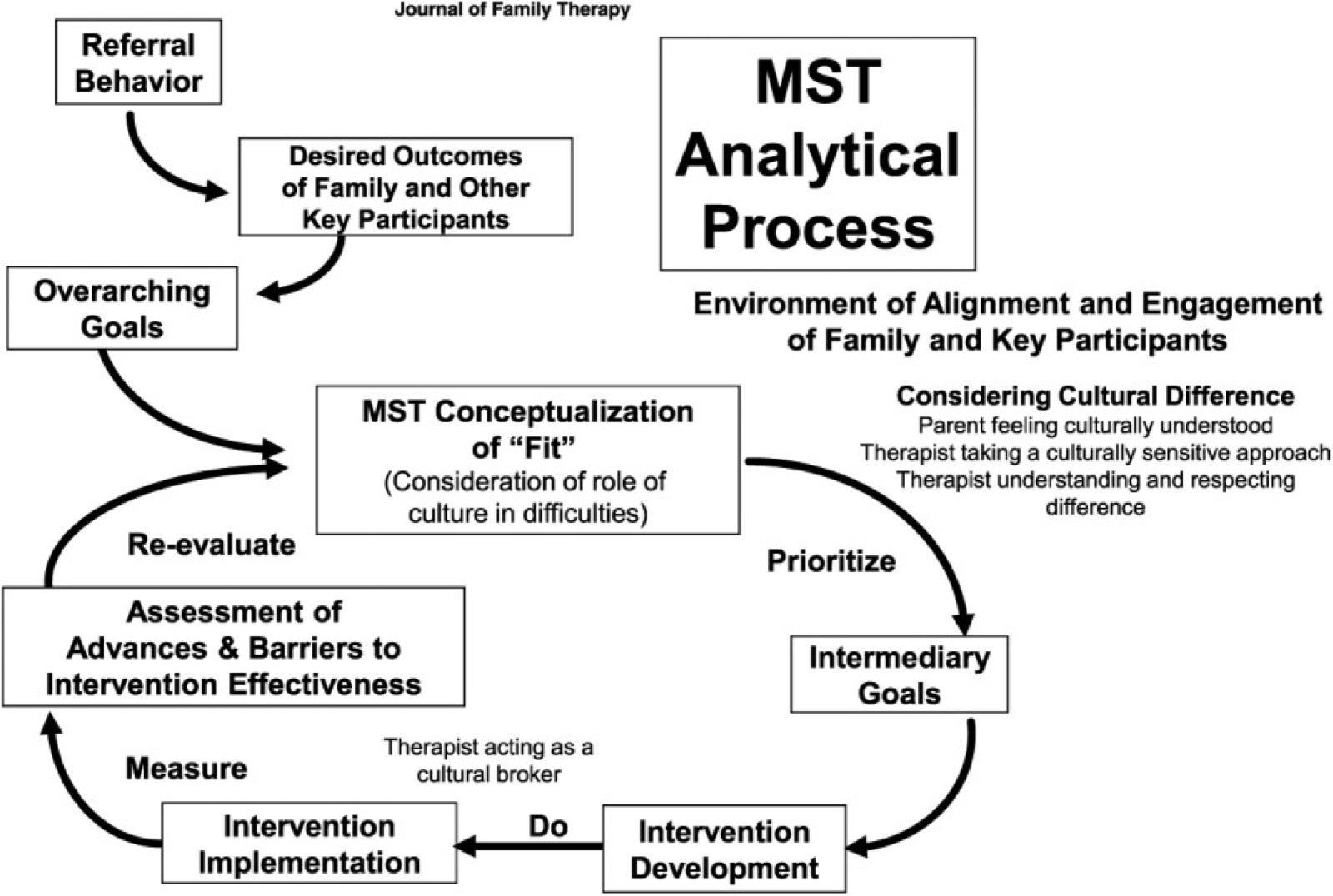
The MST analytical process, also referred to as the MST ‘do-loop’, is used as a guide for treatment planning and intervention (Henggeler et al., 2009). The theoretical codes, specifically around culture, that have emerged from these interviews have been integrated into the MST analytical process and can be seen in Figure 1. Cultural factors have emerged as important in terms of alignment and engagement, the MST conceptualization of ‘fit’, and intervention development and implementation.
Alignment and engagement
The MST analytical process proposes that there must be an environment of alignment and engagement of family and key participants. Cultivating and maintaining engagement throughout treatment is fundamental to MST (Henggeler et al., 2009). Considering cultural difference featured as an important part of the engagement process for many of the caregivers interviewed. This supports findings from previous studies which suggest that talking about culturally salient and meaningful content encourages more active engagement and participation in therapy (Jackson-Gilfort et al., 2001). The findings indicated that the therapist assessing and responding to cultural difference sensitively in the initial stages of the engagement engendered a sense of being understood by the therapist, contributing to the therapeutic alignment. Importantly, not feeling judged, therapist curiosity, validating difference and sensitively making recommendations were identified as facilitating trust in the therapist. This supports previous research which shows that clients identify culturally competent therapists as those with a mixture of both generic skills that can be adapted to meet individual needs and knowledge of specific issues such as oppression, discrimination and racism (Chang and Berk, 2009).
Falender and Shafranske (2008) argue that ‘regardless of race, a common therapist barrier to establishing therapeutic alliance is the lack of understanding and appreciation for cultural or value based differences’ (p. 274). This was very much in keeping with the accounts of some of the caregivers in the study. Cunningham and Henggeler (1999) propose that ‘therapists who have difficulties empathising with a caregiver – often the result of a lack of cultural understanding – will lead to a therapeutic relationship that lacks trust, collaboration and ultimately has poor outcomes – the impact of cultural non-connect on treatment success’ (p. 311).
Brown (2009) highlights that many of the skills required to work with ethnic diversity are similar to those used in therapy generally. Lo and Fung (2003) suggest a range of additional skills to sustain engagement and facilitate a therapeutic alliance for positive outcomes with the ethnically diverse clients. For instance, the therapist must be skilled in actually addressing ethnicity with the client, in terms of conversations about race, spiritual beliefs, religious practices or cultural background (Chang and Berk, 2009). Yarhouse and VanOrman (1999) argue that a therapist cannot hope to comprehensively formulate the importance of a client's ethnic background without gaining information about it, which was echoed in caregivers’ accounts about therapist curiosity. Participants who had been able to have conversations with the therapist about their own cultural up-bringing felt that it aided a therapeutic alignment and found it helpful in feeling heard and understood.
The therapist understanding and respecting cultural difference was identified as a key feature in taking a culturally sensitive approach. This is well recognized in the MST literature (Tuerk et al., 2012). Adopting a respectful approach when working with cultural diversity in MST has been identified as facilitative to engagement (Cunnigham and Henggeler, 1999). Some caregivers described being indifferent to the ethnicity of the therapist, providing they were professional and respectful in their approach. This is supported by Cunningham and his colleagues (2010), in a study of African American and Caucasian therapists and caregivers, who found a variety of therapist behaviours that may enhance family engagement regardless of race, racial match between therapist and caregiver, and socio-economic status of caregiver. These included focusing on strengths and supporting specific positive changes.
Cultural factors in assessment and intervention
The MST conceptualization of ‘fit’ is the process of understanding the identified problem, or referral behaviour, in its broader systemic context. Considering the role of culture in these difficulties was important for some caregivers. They highlighted the role of the therapist in making sense of difficulties in light of dual cultures.
The therapist acting as cultural mediator or broker between the caregiver and the young person and the wider cultural context emerged as a facilitator for change in many families. For the families who found it to be relevant, the ‘cultural broker’ focused codes were felt to help in the development of intermediary goals, intervention planning and implementation, and advances and barriers to the intervention effectiveness.
The concept of family therapists acting as cultural brokers has previously been identified as helpful in working with migrant families (McGoldrick and Hardy, 2004). Rasheed (2003) claims that the culturally attuned therapist must have the clinical skills that allow the therapist to enter into the family's narrative world to uncover with the family the interplay of those ethnic themes and broader socio-cultural narratives. Indeed, the therapist's sensitivity and acknowledgement of this, and ability to tailor interventions collaboratively, in line with the cultural milieu of the family played an important role in helping to negotiate cultural difference in the family.
The therapist's ability to facilitate cultural perspective taking in the family, enabling the caregiver to see things from the child's perspective of trying to navigate two cultures, and the child acknowledging that the caregiver is doing the same was described as creating a powerful shift. Increasing perspective to facilitate change is well documented in family therapy (Barker and Chang, 2013). The findings of this study are in keeping with this, highlighting the facilitative function of opening up cross-cultural perspectives in families with dual cultures. Caregivers alluded to the impact of this in helping to validate cultural difference within the family. Moreover, it was described as facilitating behavioural change through the parent and young person being able to find compromises and meet in the middle.
An important feature of the therapist acting as cultural broker was in helping the parent to contextualize some of the young person's behaviour in the wider cultural milieu. The normalizing function of this was described as powerful in increasing understanding and shifting the narrative around the child as less problem-saturated. Walsh (2011) argues that through normalizing their experience, families can make it manageable and meaningful, as well as use it to strengthen family coherence, which was resonant in the caregivers’ accounts. McGoldrick and Hardy (2004) highlight that a key component of the therapist acting as cultural broker and legitimizing the experiences of dissonance requires that the therapist maintain an empathic, contextualizing and normalizing stance, with assumptions of competence and good intent about the participant's behaviours. This was very much in keeping with the findings of this study. The therapist's ability to fulfil this function was reported to consolidate the therapeutic relationship, enabling caregivers to utilize the therapist as a cultural reference point.
A defining feature of MST, and one that is distinguishable from most family therapy approaches, is that clinical efforts address risk and protective factors across the individual and social ecology (Cunningham and Henggeler, 1999). The caregivers in this study talked about the role of the therapist in helping them to contextualize their child's behaviour across different systems. Whilst some of the points could be generalized to other family therapy approaches, the findings from this study raise specific issues relevant to the process of engagement and change for caregivers who had completed MST.
Clinical implications
This study has highlighted a number of important clinical implications. Whilst there were common themes around what facilitated engagement in comparison to previous studies, for this specific group it is important that therapists consider additional cultural factors as potential drivers to non-engagement and lack of alignment. Therapists need to acknowledge and respect difference within the family itself and the family from the larger societal expectations. They should openly explore and be curious about the difference. Whilst being culturally competent is highly valued in the field of family therapy (Rober and De Haene, 2014), therapists do not necessarily need to be knowledgeable about the family's specific culture or ethnicity (cultural awareness) nor have the same background. However, what is vital is a continuous open and curious approach to the family's perspective and narrative (cultural sensitivity).
It is important that therapists look at cultural drivers when conceptualizing referral behaviours. Asking specific questions about the culture of origin, particularly with the young person present, will open up discussions of difference and potential sources of parent-child conflict. The therapist can then be a cultural reference point by normalizing behaviour in the context of UK culture.
Furthermore, therapists need to guard against assuming shared meanings of words used through treatment. The therapist has a role in respectfully educating the family about the norms and expectations of larger society to help caregivers support their child to negotiate their family and the culture within which they are living. Opening communication can aid caregivers to accept the difference between themselves and the young person.
Supervision can be useful to help the therapist with developing the concepts of self-awareness (Abu Baker, 1999) and self-reflexivity (Krause, 2012). In MST this is done in a group context and reflections can be shared and discussed with other therapists. Supervision provides an ideal opportunity to identify potential cultural barriers to engagement and support the therapist to address these in the next sessions.
Limitations
This study excluded ethnic minority caregivers who were born in the UK. Thus the experiences and views represented in the study constitute a very specific group of ethnic minority caregivers. Also, the study did not include the accounts of those that refused or those who did not complete the intervention and is, therefore, potentially missing invaluable information about factors that hinder engagement with minority ethnic families. Due to the financial constraints of carrying out this research, it was not possible to pay for an interpreter to interview non-English speaking caregivers. A number of potential participants were excluded from the study for this reason. It is, thus, regrettable that non-English speakers could not participate. Accordingly, the sample used is biased towards English speakers, who perhaps represent a more integrated and acculturated cohort of ethnic minority caregivers.
The findings of this study present only one part of the picture in relation to the process of engagement and change with ethnic minority families. With the focus on the caregivers, the voice of the referred young person is missing. This could be an area for further research.
Conclusions
This study attempts to make a contribution to the knowledge and understanding of the processes of engagement and change through examining minority ethnic caregiver perspectives of MST. The findings highlight the importance of considering cultural difference, particularly in the initial stages of MST interventions. This study points to the complexity of the engagement process for minority ethnic caregivers participating in MST. The therapist's role in helping to open up meaningful and constructive conversation around culture was identified as an important change mechanism, through helping to negotiate cultural difference in families where difficulties were contextualized within such a frame. The findings of the study were used to suggest ways in which the existing MST analytical process could consider factors that were identified by ethnic minority caregivers in facilitating engagement and change with MST. Whilst this study focused on caregivers who had received MST, many of the findings can be generalized to other family therapy approaches.
Complexe Systémique: key points
The study is small, but it addresses a blind spot. MST is often presented as culturally competent because it works with ethnic minority families; but how it does so still needs to be understood. The accounts gathered shift the question from matching to stance: the therapist’s background matters little, provided they are curious, check the meaning of words and do not judge. Above all, the conflict between caregiver and adolescent is reread here as a tension between two cultures, and the therapist becomes a third party who helps each see the other’s place, without siding with either culture. For systemic practice, this is an invitation to include migration in the hypothesis about the function of the symptom. The limits are clear: seven people, all English-speaking and born outside the UK, no young people’s voices, and no families who left treatment. Read alongside the article on the alliance in home-based family treatment, and the article on mobility and migration.
Notes from the original
Acknowledgements. The authors would like to thank Molly Brunk and Annemarie Fox for their input into drafts of the paper.
References
Abu Baker, K. (1999) The importance of cultural sensitivity and therapist self-awareness when working with mandatory clients. Family Process, 38: 55–67.
Ashmore, Z. and Fox, S. (2011) How does the delivery of multisystemic therapy to adolescents and their families challenge practice in traditional services in the criminal justice system. British Journal of Forensic Practice, 13(1): 25–31.
Barker, P. and Chang, J. (2013) Basic family therapy. Chichester: John Wiley & Sons.
Begum, N. (2006) Doing it for themselves: participation and black and minority ethnic service users. Social Care Institute for Excellence and the Race Equality Unit. Available at: http://www.scie.org.uk/publications/reports/report14.pdf.
Berger, P. L. and Luckman, T. T. (1966) The social construction of reality – a treatise in the sociology of knowledge. Garden City, NY: Anchor Books.
Brondino, M. J., Henggeler, S. W., Rowland, M. D., Pickrel, S. G., Cunningham, P. B. and Schoenwald, S. K. (1997) Multisystematic therapy and the ethnic minority client: culturally responsive and clinically effective. In Health-promoting and health-compromising behaviors among minority adolescents. Application and practice in health psychology (pp. 229–250). Washington, DC: American Psychological Association.
Brown, L. S. (2009) Cultural competence: a new way of thinking about integration in therapy. Journal of Psychotherapy Integration, 19(4): 340.
Butler, S., Baruch, G., Hickey, N. and Fonagy, P. (2011) A randomized controlled trial of multisystemic therapy and a statutory therapeutic intervention for young offenders. Journal of the American Academy of Child & Adolescent Psychiatry, 50(12): 1220–1235.
Chang, D. F. and Berk, A. (2009) Making cross-racial therapy work: a phenomenological study of clients’ experiences of cross-racial therapy. Journal of Counselling Psychology, 56(4): 521.
Charmaz, K. (2006) Constructing Grounded Theory: a practical guide though qualitative analysis. London: Sage Publications.
Cunningham, P. B. and Henggeler, S. W. (1999) Engaging multiproblem families in treatment: lessons learned throughout the development of multisystemic therapy. Family Process, 38(3): 265–281.
Cunningham, P. B., Foster, S. L. and Warner, S. E. (2010) Culturally relevant family-based treatment for adolescent delinquency and substance abuse: understanding within-session process. Journal of Clinical Psychology, 66(8): 830–846.
Curtis, N. M., Ronan, K. R. and Borduin, C. M. (2004) Multisystemic treatment: a meta-analysis of outcome studies. Journal of Family Psychology, 18(3): 411–419.
Elliott, R., Fischer, C. T. and Rennie, D. L. (1999) Evolving guidelines for publication of qualitative research studies in psychology and related fields. British Journal of Clinical Psychology, 38 (7): 215–229.
Fain, T., Greathouse, S. M., Turner, S. F. and Weinberg, H. D. (2014) Effectiveness of multisystemic therapy in minority youth. Outcomes over 8 years in Los Angeles Country. Journal of Juvenile Justice, 3: 24–37.
C. A. Falender and E. P. Shafranske (eds.) Casebook for clinical supervision: a competency-based approach. Washington, DC: American Psychological Association.
Fernando, S. (1991) Mental health, race and culture. London: Macmillan.
Henggeler, S. W. and Borduin, C. M. (1990) Family therapy and beyond: a multisystemic approach to treating the behavior problems of children and adolescents. CA: Brooks/Cole.
Henggeler, S. W. and Sheidow, A. J. (2012) Empirically supported family-based treatments for conduct disorder and delinquency in adolescents. Journal of Marital and Family Therapy, 38(1): 30–58.
Henggeler, S. W., Letourneau, E. J., Chapman, J. E., Borduin, C. M., Schewe, P. A. and McCart, M. R. (2009) Mediators of change for multisystemic therapy with juvenile sexual offenders. Journal of Consulting and Clinical Psychology, 77(3): 451.
Henggeler, S. W., Schoenwald, S. K., Borduin, C. M., Rowland, M. D. and Cunningham, P. B. (1998) Multisystemic treatment of antisocial behavior in children and adolescents. Treatment Manuals for Practitioners. New York: Guilford Press.
Hines, P. A., Garcia-Preto, N. and McGoldrick, A. R. and Weltman, S. (1992) Intergenerational relationships across cultures. Families in Society: The Journal of Contemporary Human Services, 80: 323–338.
Huey, S. J., Henggeler, S. W., Brondino, M. J. and Pickrel, S. G. (2000) Mechanisms of change in multisystemic therapy: reducing delinquent behavior through therapist adherence and improved family and peer functioning. Journal of Consulting and Clinical Psychology, 68(3): 451–467.
Jackson-Gilfort, A., Liddle, H. A., Tejeda, M. J. and Dakof, G. A. (2001) Facilitating engagement of African American male adolescents in family therapy: a cultural theme process study. Journal of Black Psychology, 27(3): 321–340.
Kaur, P., Pote, H., Fox, S. and Paradisopolous, D. (2015) Sustaining change following multisystemic therapy; caregivers’ perspectives. Journal of Family Therapy. DOI: 10.1111/1467-6427.12093.
I.-B. Krause (ed.) (2012) Culture and reflexivity in systemic psychotherapy: mutual perspectives. London: Karnac.
Lo, H. T. and Fung, K. (2003) Culturally competent psychotherapy. Canadian Journal of Psychiatry, 48: 161–170.
M. McGoldrick and K. V. Hardy (eds.) (2004) Re-visioning family therapy: race, culture, and gender in clinical practice. New York: Guilford Press.
Painter, K. and Scannapieco, M. (2009) A review of the literature on multisystemic treatment within an evidence-based framework: implications for working with culturally diverse families and children (part 1). Journal of Family Social Work, 12(1): 73–92.
Paradisopoulos, D., Pote, H., Fox, S. and Kaur, P. (2015) Developing a model of sustained change following Multisystemic Therapy: young people's perspectives. Journal of Family Therapy. DOI: 10.1111/1467-6427.12070.
Rasheed, J. M. and Rasheed, M. N. (2003) Family therapy with ethnic minorities. London: Sage.
Rober, P. and De Haene, L. (2014) Intercultural therapy and the limitations of a cultural competency framework: about cultural differences, universalities and unresolvable tensions between them. Journal of Family Therapy, 36(1): 3–20.
Schaeffer, C. M. and Borduin, C. M. (2003) Long-term follow-up to a randomized clinical trial of multisystemic therapy with serious and violent juvenile offenders. Journal of Consulting and Clinical Psychology, 73(3): 445.
Tighe, A., Pistrung, N., Casdagli, L., Baruch, G. and Butler, S. (2012) Multisystemic therapy for young offenders: families' experiences of therapeutic processes and outcomes. Journal of Family Psychology, 6(2): 187–197.
Tuerk, E. H., McCart, M. R. and Henggeler, S. W. (2012) Collaboration in family therapy. Journal of Clinical Psychology, 68(2): 168–178.
Walsh, F. (2011) Strengthening family resilience ( 2nd edn). New York: Guilford Press.
Yarhouse, M. A. and VanOrman, B. T. (1999) When psychologists work with religious clients: applications of the general principles of ethical conduct. Professional Psychology: Research and Practice, 30(6): 557.
Reformatted republication of The role of cultural factors in engagement and change in Multisystemic Therapy (MST), by Simone Fox, Fatima Bibi, Hayleigh Millar and Amaryllis Holland, Journal of Family Therapy, vol. 39, no 2 (2017), doi: 10.1111/1467-6427.12134, under a CC BY 4.0 licence. Edition and layout: Complexe Systémique, September 2026 — the work has been modified under the terms of the licence (tables presented as lists). Neither the authors nor the publisher are responsible for this edition; the original version prevails.
This is the original article “The role of cultural factors in engagement and change in Multisystemic Therapy (MST)”, published in Journal of Family Therapy (2017) under a CC BY 4.0 licence. Republished by Complexe Systémique: the author’s text is unchanged; only the presentation has been adapted for reading online, as set out at the head of this page.
Read the original articleHow to cite this article
Fox, S., Bibi, F., Millar, H., et Holland, A. (2017). The role of cultural factors in engagement and change in Multisystemic Therapy (MST). Complexe Systémique. https://app.complexe-systemique.com/en_GB/articles/the-role-of-cultural-factors-in-engagement-and-change-in-multisystemic-therapy-mst (Original work published in 2017 in Journal of Family Therapy, 39(2), 243-263 (2017); republished in 2017 by Journal of Family Therapy, https://onlinelibrary.wiley.com/doi/full/10.1111/1467-6427.12134)
To go further
- Therapists’ Contributions to the Alliance in Home-Based Family Treatment: The Role of Alliance Building Behaviors, Personality, and Clinical ExperienceThe alliance at home.
- Mobility and migration: rethinking the systemic approach in a globalized worldThinking about migration.
- How MFTs of Color Develop Their Multicultural Counseling CompetenciesMulticultural competencies.
Related training courses
 Short course
The suicidal crisis in adolescents and young adults
Training: assessing and supporting the suicidal crisis in adolescents and young adults. Clinical landmarks and systemic tools. In French.
 Certifying course
Training in Systemic Therapy and Interventions – Cycle 1
Certifying training cycle in systemic therapy and interventions – year 1. Courses, supervision and practice, aligned with EFTA/SFTF. In French.
 Certifying course
Training in Systemic Therapy and Interventions – Cycle 2
Certifying training cycle in systemic therapy and interventions – year 2. Clinical complexity, supervision and practice. EFTA/SFTF aligned. In French.
 Certifying course
Training in Systemic Therapy and Interventions – Cycle 3
Certifying training cycle in systemic therapy and interventions – year 3. In-depth intervention, supervision and practice. EFTA/SFTF aligned. In French.
Related articles
 Article
 How Venezuelan mothers and their young children use storytelling to process immigration journeys
Seven Venezuelan mothers tell their young children about crossing the Darién: shared memories or superhero tales, six ways of facing fear together.
 Article
 The AFFIRM Model for Navigating Challenges in Continuously-Interfaith and Divergent-Interfaith Marriages
Thirty happy interfaith couples describe how they navigate their religious differences: five processes, from respecting each other’s choices to religious intimacy, gathered in the AFFIRM model.
 Article
 “Tired of Being Tired”: Intergenerational Trauma and Relational Bridging Among 1.5‐Generation East African Refugees
Sixteen Somali, Oromo and Ethiopian refugees who arrived as children describe their role as bridges between generations, between inherited silences and burdened resilience.
 Article
 Silent Witnesses, Protective Bonds: Sibling Memories and Shielding Behaviors in Households Affected by Intimate Partner Violence
Fourteen sibling pairs recount how they protected one another during violence between their parents: a “sibling shield”, divergent memories, a long silence.