AI-assisted translation
This version was translated from French by Complexe Systémique with the help of artificial intelligence. In case of doubt, the original version prevails.
Rome school · The symptom
The Rome school of family therapy: understanding the symptom differently
Among the great currents of systemic family therapy, the Rome school holds an important place through its singular way of thinking about the symptom, about change, and about the therapist’s stance. Carried in particular by Maurizio Andolfi, Carmine Saccu, Paolo Menghi and Anna Maria Nicolò, this approach took a close interest in families where change seems both desired… and dreaded.
The symptom is never only individual
One of the central ideas of this model is that the symptom is never merely an individual problem. It has a relational function. It expresses suffering, of course, but it also takes part in regulating the family system. In other words, what makes the family suffer may also, in a certain way, help to maintain its stability. That is why the Rome school takes such an interest in the question of homeostasis: that movement by which a system seeks to preserve its balance, sometimes even at the cost of great rigidity.
Seen this way, the symptom can be understood as a warning signal, but also as an attempt at change that remains a prisoner of the system’s old rules. A family may then come to consultation with a paradoxical request: it wants something to change, while deeply fearing that this change might endanger its identity, its bonds or its implicit balances.
Clinical marker
The therapist cannot simply push for change head-on. They must first acknowledge what the current stability protects, before opening a space for transformation.
Three emblematic techniques
It is precisely within this framework that several emblematic techniques of the Rome school take on their meaning. They are powerful, sometimes disconcerting, and always call for a great deal of finesse, caution and humanity in their use.
Therapeutic provocation
It is never a matter of provoking the person themselves, but of provoking the function of the symptom. The therapist then names, sometimes in a deliberately heightened way, the relational logic that is playing out in front of everyone. In a family where a teenager stays silent while a parent speaks in their place, the therapist might for instance underline this pattern by explicitly asking the young person to remain silent so that the parent can go on organising everything. Well conducted, this intervention makes the rigidity of the system visible. Badly conducted, it can become hurtful. The whole difference lies in the quality of the therapeutic alliance and in the subtlety of the stance.
Amplification
Here, the therapist pushes a dynamic that is already present slightly further so that it appears more clearly. They may stage, almost dramatise, a family interaction so that everyone sees more plainly what usually repeats itself without ever being named. Amplification makes the relational organisation of the symptom perceptible. It sometimes has an almost comic dimension, not in order to ridicule the family, but to introduce a shift that opens up reflection.
Strategic denial
It consists, paradoxically, in not validating observed progress or change too quickly. If a family comes back to a session explaining that things are much better, the therapist may adopt a position of withdrawal and cautiously play down the idea of a change already achieved. This type of intervention aims to protect a change that is still fragile. Indeed, when a system is afraid of evolving, celebrating improvement too soon can sometimes reactivate its defences and trigger a step backwards. Strategic denial then prevents the emerging change from being attacked too early by the system itself.
Supporting resistances rather than fighting them
These three techniques illustrate the clinical intelligence of the Rome school well: instead of fighting resistances head-on, it seeks to understand them, to accompany them, and sometimes even to use them as a foothold for transforming the system. Non-change is not treated as a pathological obstacle; it is recognised as an attempt at survival. This is why the Rome school therapist is at once engaged, authentic, directive and unpredictable. They do not merely seek to correct behaviours, but to alter the implicit rules that organise relationships.
Key point
In suffering families, what needs to change is often precisely what made it possible to hold on for so long. Any transformation therefore first demands respect for the old balances, even when they have become painful.
That is doubtless this current’s major contribution, and the reason why it continues to shed light on our work with families. The full presentation of this model — in French — can be watched below.
How to cite this article
Besse, J. (2026, March 15). The Rome school of family therapy: understanding the symptom differently. Complexe Systémique. https://app.complexe-systemique.com/en_GB/articles/the-rome-school-of-family-therapy-understanding-the-symptom-differently
To go further
- The Rome school of family therapyThe history and the figures of a current born in the city of the epic.
- Maurizio Andolfi: a life devoted to family therapyThe journey of the clinician who carried the multigenerational approach through to us.
- What if our symptoms had a function?What the symptom protects within the system, even before what it makes us suffer.
- The Milan school of systemic family therapyThe other great Italian school, its circular hypotheses and its prescriptions.
Related training courses
 Symposium
État des Lieux: a psychological approach to spaces
Replay of the “État des Lieux” conference (Paris, 16 October 2026): Ivy Daure, Maurizio Frisina, Viola Sallay and Gilbert Pregno on places as a clinical resource. In French.
 Certifying course
Training in Systemic Therapy and Interventions – Cycle 1
Certifying training cycle in systemic therapy and interventions – year 1. Courses, supervision and practice, aligned with EFTA/SFTF. In French.
 Certifying course
Training in Systemic Therapy and Interventions – Cycle 2
Certifying training cycle in systemic therapy and interventions – year 2. Clinical complexity, supervision and practice. EFTA/SFTF aligned. In French.
 Certifying course
Training in Systemic Therapy and Interventions – Cycle 3
Certifying training cycle in systemic therapy and interventions – year 3. In-depth intervention, supervision and practice. EFTA/SFTF aligned. In French.
Related articles
 Blog
Blog Adult parentification: when being useful becomes a condition for being loved
Why is it sometimes so hard to hand over? Julien Besse explores parentification and parentalisation, acknowledgement and the place we take in our adult relationships.
 Scientific
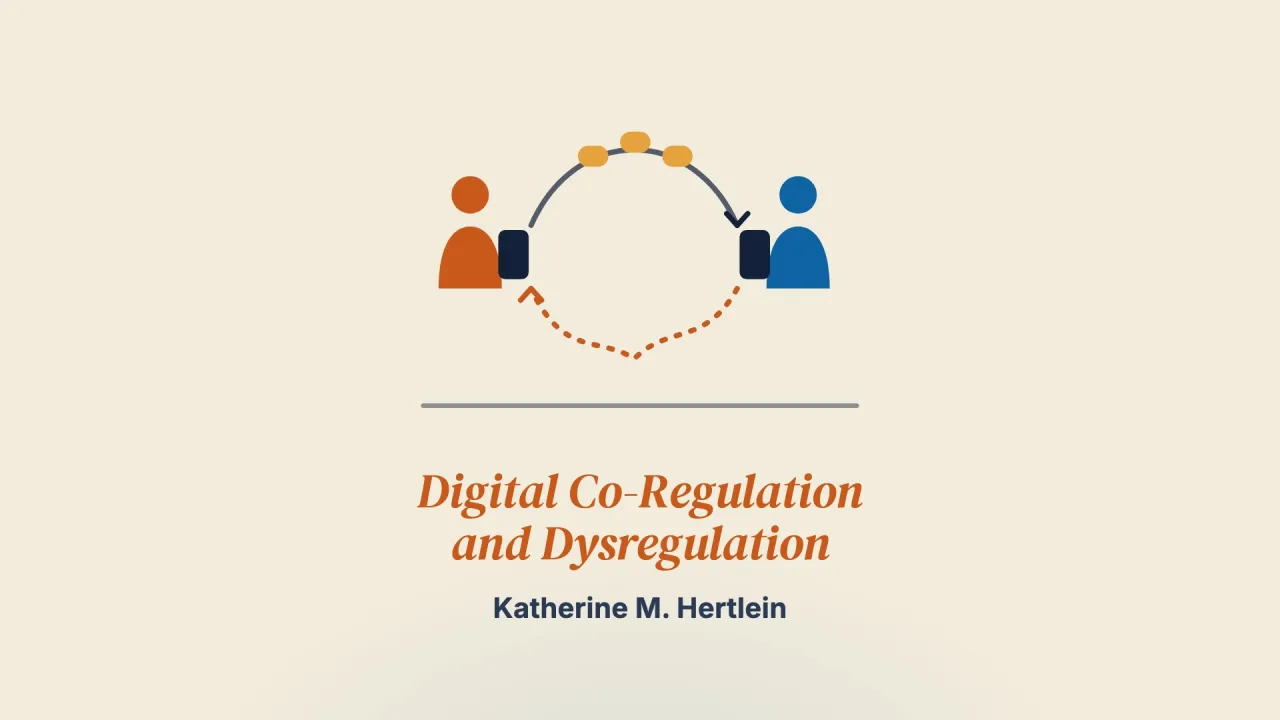
 Digital Co-Regulation and Dysregulation in Romantic Relationships: A Systemic Model of Technology-Mediated Emotional Processes
Checking, chasing, blocking: 31 interviews show how the phone regulates or dysregulates a couple’s anxiety, with a systemic model of the loop.
 Scientific
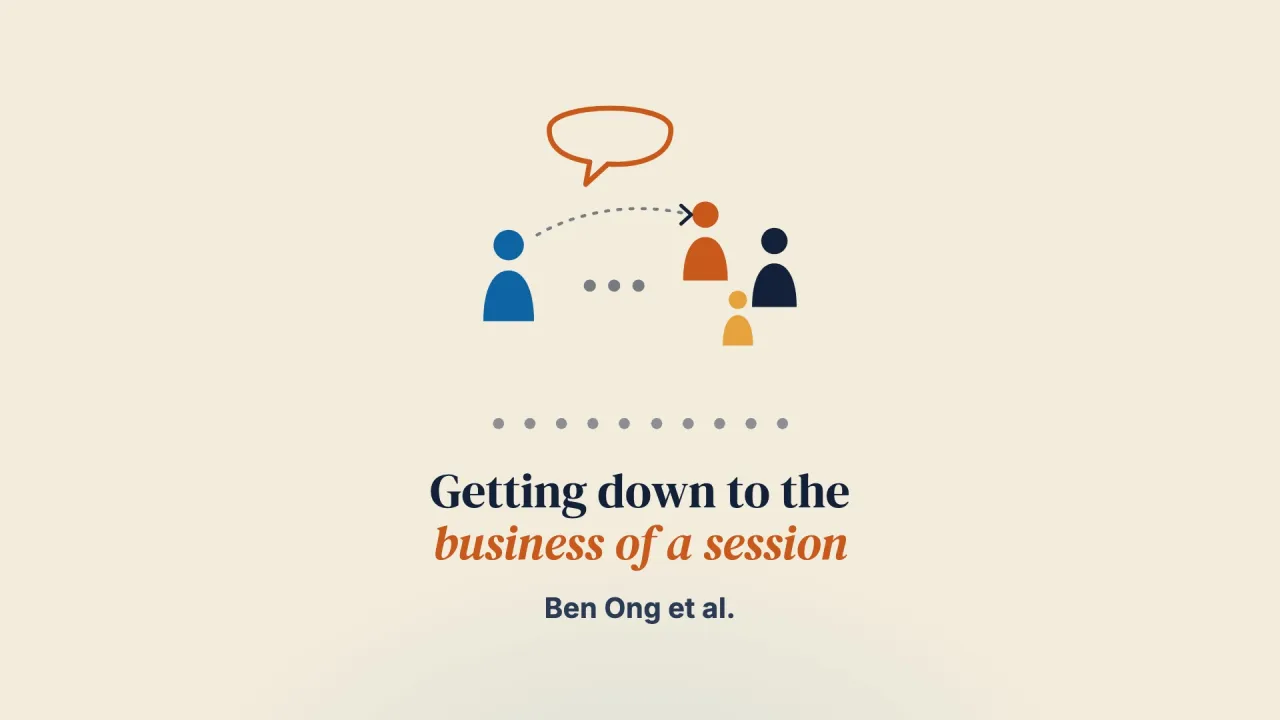
 Transitioning to the Business of a Session in Collaborative-Dialogic Meetings: A Conversation Analysis
How do Open Dialogue therapists move to the business of a session? The open question creates silences and family negotiation: a conversation analysis of ten sessions.
 Scientific
 Understanding the Impact of Family-Focused Youth Care: Examining Outcomes, Effective Elements and Tipping Points as Experienced by Parents and Youth
After family-focused youth care, the child and the family are doing better, the parents much less so. Alliance, content, organization and tipping points as families see them.
Comments 0
Log in to join the discussion. Log in