AI-assisted translation
This version was translated from Italian by Complexe Systémique with the help of artificial intelligence. In case of doubt, the original version prevails.
Connessioni · Addiction
The trigenerational approach and addictions: an epistemological reading (part 1)
Why does a member of the third generation become dependent on a substance? In the first part of her psychotherapy specialization thesis, Maria Puleo, a former student of the Centro Milanese di Terapia della Famiglia, brings together three vantage points: the trigenerational systemic reading of Cirillo and Byng-Hall, attachment theory and mentalization. The substance appears as an attempt at self-care where a caregiving deficit runs through the generations without ever being thought, read also in the light of Porges’s polyvagal theory.
Unofficial English translation. This article is a translation of Trigenerazionale e dipendenze: una lettura epistemologica (parte 1), by Maria Puleo, published in Connessioni (Centro Milanese di Terapia della Famiglia), “Contributi” section (2024), under a CC BY 4.0 licence. Translated by Complexe Systémique in November 2026 with the help of artificial intelligence: the original Italian text has been translated into English and reformatted, which constitutes a modification of the work under the terms of the licence. The paragraphs are those of the journal; the title of the author’s thesis is left in Italian; the quotation from Cirillo is translated from the Italian; a few typographical errors have been silently corrected. This translation was made neither by the authors nor by the journal, who are not responsible for its content or for any errors. The original version prevails.
It is in this sense that, in addiction, the effect of the substance serves as self-healing and self-care.
Maria Puleo
In my psychotherapy specialization thesis, entitled Trigenerazionale e dipendenze patologiche. Una triade epistemologica per la lettura dell’eziopatogenesi delle dipendenze patologiche, I developed two parts: a first, in which I examined the epistemological framework in depth, and a second, in which I presented a brief exploratory study carried out during my fourth-year specialization placement with fourteen members of six families of service users of an addiction service (Servizio Dipendenze Patologiche) of the ASP of Palermo, to whom I administered the Adult Attachment Interview.
The epistemological framework I drew on concerns three vantage points: the systemic-relational one, attachment theory and the construct of mentalization.
Starting from the research of Cirillo and colleagues (1996), I developed the idea that trigenerational history, deficient/traumatic family bonds and the unthinkability of these deficits/traumas are the founding dimensions that connect the three constructs mentioned above in an epistemological triad of reference; this triad anchors the addiction of one family member in a history of non-mentalized family bonds unfolding over at least three generations.
The theme running through the whole thesis is that of caregiving, of the practices connected with it in the construction of family bonds at the trigenerational level, and of the trigenerational transmission of the deficit (trauma) of caregiving in the process of building bonds in families in which a member of the third generation develops an addiction. In attachment theory, caregiving practices play a central role in the construction of the affective/emotional mother-child bond, on the basis of which the child will develop their own Self and their social competence/capacity to explore the surrounding world. From the very first moments of the child’s life, the two behavioural patterns of seeking care and giving care engage mother and child in an emotional and interactive coordination that leads to the construction of a bond that becomes a “secure base” for the child (Bowlby, 1988). The continuity and repetitiveness of caregiving practices (rocking, hugging, feeding, consoling, comforting), characterized by continuous verbal and non-verbal communicative patterns (words, gestures, looks, actions) coordinated between mother and child, become the vehicle of the emotional and affective meanings that will characterize the mother-child bond. Starting from the construction of this bond as an emotionally significant, lasting and stable relationship, the child will internalize relational representational models (IWMs) of the self, of the other and of the relationship with the other, which will allow the child to anticipate the relationship with the environment, to form expectations of it and to enter into it with a specific attachment style. The mother, too, will have internal working models that guide her in the relationship with the child: coordinated mother/child interaction is connected to the mother’s capacity to recognize the child as a separate person, endowed with mental states, and to her capacity to make continuous interactive adjustments and updates connected to those mental states: a mother capable of mentalizing. Representation and interaction become two synchronically coordinated dimensions that foster a secure or an insecure attachment bond. Using systemic language, we can say that the attachment bond expresses the intersection between the synchronic-interactive mother-child level and the diachronic-representational level of the mother’s history and of the pragmatic effects that this history has in the present.
The systemic-relational model makes it possible to widen the field of observation and make it more complex, extending it from the affective mother-child bond to the mother-father-child bond and to the affective bonds that characterize the trigenerational history of the family system.
This means rereading the theme of caregiving and of the practices connected with it, grasping the way the dimensions of giving care and receiving care unfold in family history, and the way each member constructs their own semantics in relation to internalized models. This relational web is characterized by the coexistence and continuous connection between the family’s relationships in the present and its trigenerational history. Byng-Hall (1998) proposes the two concepts of the family caregiving script and of the family as a secure base as a “family evolution” of the Bowlbian concepts of internal working model and secure base. The family script, or family caregiving script, refers to the family’s shared expectations of how family roles are to be performed in different contexts, in relation to the distribution of roles between those who give care and those who receive it. Family scripts belong to a view that integrates the intra-relational scripts of individual family members and individual behavioural scripts with internal working models (Cacioppo, Gori, Guccione 2017). The mental representation of the family script handed down at the trigenerational level, and interaction on the family stage, contribute to building the family caregiving scenario. Connected to this is the concept of the “secure family base”, which rests on the awareness, shared by all family members, that attachment relationships must be protected and not threatened. For the child, growing up in a family that is a secure base and internalizing a secure family script means being certain of being able to build a sense of trust towards others, both inside and outside the family. Attention to the whole family caregiving system makes it possible to observe how family bonds are built in terms of closeness/distance between members, and the emotional positions they take in relation to one another, opening a reflection on multiple attachments and loyalty conflicts within the family system at the trigenerational level, that is, on how closeness between some family members excludes or nourishes the relationship with the others. Starting from Cronen and Pearce’s CMM model (1983), Byng-Hall places family caregiving scripts within a hierarchy of broader shared meanings that includes Myths (family, cultural, social, community myths), in which each level becomes the context of another. Internal Working Models, Family Scripts and family Myths can be observed within a “context matrix” in which they are connected through hierarchical levels of broader meanings of the trigenerational family history, and they come to constitute what has been called “implicit relational knowledge” (Onnis, 2017). According to Onnis, in fact, there is an “unrepressed unconscious” in which emotions, experiences and memories that could not reach conscious elaboration are deposited. The action of internal working models, scripts and myths remains unconscious, but we can define them as unthought knowns: a relational knowledge that the person possesses at a non-conscious level and that may remain so until events demand a verbal translation.
The relationship between family scripts and family myths is such that the latter are the beliefs that the family holds about itself, which guide family scripts; they too are deposited in the register of the implicit, having formed over the trigenerational family history on the basis of family affective sharing, and have become unconscious shared family beliefs. The enactment of the family caregiving script is communicated unconsciously through the symbolism of action or through linguistic metaphors (Byng-Hall, 1998). Every family history carries its own myths and will have its own “founding myth”, on which the family evolves, organizes and reorganizes itself over the course of its trigenerational history. Within this reflection on caregiving practices, mentalization is the expression of the affective and emotional bonds that the child builds with their parents and with their extended family. These family bonds may be marked by good mentalization or by poor or absent mentalization, which will threaten a rupture of family bonds and/or bring about a rupture of the bonds. The parent’s capacity to treat the child as an individual endowed with mental states (Bateman, Fonagy, 2010), and not merely as a bearer of needs, makes it possible to grasp the close relationship between attachment security and mentalization. The more capable parents are of mentalizing their own trigenerational family history of attachments, the more capable they will be of mentalizing the child’s mental states and of building a secure bond with the child. Mind-mindedness becomes a facilitator of the construction of secure parent-child bonds.
Taking up the concept of the family as a secure base and connecting it to the concept of mentalization within a systemic framework, we might say that a family system becomes a secure base for its members if the bond between them is characterized by a mentalizing stance of each towards themselves and towards the other, which may foster higher levels of individual reflexivity about representations, beliefs and myths concerning the family bonds built over the family history. But what can create problems of mentalization, threatening family bonds?
Addressing the family’s inability to mentalize allows us to connect emotion, mentalization and the threat to family bonds to the specific context, to the matrix of meaning, in which they emerge. When we say that mentalization is context-specific (Bateman, Fonagy 2010), we mean that a person will show an inability to mentalize in specific emotional/affective contexts in which intense emotions and/or attachment-related representations are at stake that prevent the person from mentalizing. Emotions are connected to, and expressed through, analogical, pre-verbal, implicit language: they inform us about the “relational” level that characterizes the mental states underlying the emotional and affective exchanges of a family system, and that will determine its emotional fractal (Bertrando 2014), which will characterize the history of family bonds.
Cirillo (1996) showed that, in the trigenerational history of families in which a member of the third generation develops an addiction, this symptom is connected to the extreme difficulty the whole family had encountered in dealing with the tasks characteristic of the adolescent phase, and in passing on to the children a sense of responsibility for themselves as autonomous and differentiated persons, failing to support attempts at differentiation flexibly and to provide that “secure base” to return to in difficult moments and from which to set out again on new explorations. This inability of the parents to act as a secure base is connected to the intergenerational transmission of trauma, as the expression of “a caregiving deficit that creates a pathological attachment pattern in the child”. Trauma due to a caregiving deficit thus appears as a factor that runs across the family history at the diachronic level and intersects with the present synchronic family level, in which a family member develops symptoms of substance use. In Cirillo’s study, the two dimensions emerging in the trigenerational family history that co-occur in the symptomatic development of the filial subsystem that develops an addiction are: the intergenerational dimension of trauma/caregiving deficit, and the transgenerational dimension, which refers to the unconscious transmission of unprocessed adverse events, the expression of the family system’s inability to recognize the deficits/traumas it has experienced.
The trigenerational family relational etiopathogenetic model proposed by Cirillo and colleagues identified three subgroups of families, in which three trigenerational relational processes through which this trauma is transmitted are highlighted. In each of the three relational pathways identified (disguised abandonment, unacknowledged abandonment, enacted abandonment), differences were found in the ways in which the trauma of the caregiving deficit is concealed/kept silent.
The attention Byng-Hall pays to family myths as well as to family caregiving scripts allows us to understand how these beliefs, which guide shared expectations of the roles played by family members in family scripts, can contribute to concealing the trauma of the caregiving deficit in the families observed, carrying within them what Byng-Hall calls “self-deception” (Byng-Hall 1998). Byng-Hall identifies three groups of role images present in family myths that guide the scripts being enacted, among them consensual role images, about which there is a tacit agreement that everyone will fulfil the role assigned to them, and any attempts to question these images are rejected by all. In this sense, there is family consensus that the truths of the household cannot be revealed. The member who develops an addiction becomes the expression of a challenge, however clumsy and dysfunctional, to the consensual family myth of self-deception, which through the symptom this member seeks to reveal, uncovering the truth about the history of family bonds.
Byng-Hall connects these consensual images of family myths to the narrative styles of the various attachment relationships in families. In families with secure attachment there is a belief in mutual acceptance, in which everyone expects and accepts both good and bad behaviour, with a realistic and coherent view of relationships. In the insecure/avoidant style there is shared rejection; these families show a high degree of defensive denial of past and present events, so that role images are split between good and bad, and people are at times idealized and at times denigrated. In the insecure-ambivalent style, ghosts from the past prevail: in these families there is a constant revisiting of right and wrong in the past, both recent and remote, without a solution ever being reached. Family members are overwhelmed by strong feelings of injustice and imagine how things could, and should, have been handled, but they also feel obligation and gratitude towards figures from the past. Because of this consensus, role images are confused and marked by past experiences. Roles are often reversed, and children may take on the parental role. The shared family script repeats itself, maintaining rigidly polarized role expectations: healthy/sick, good/bad, strong/weak.
In the families studied, the repetitive script reorganizes itself around the problem of the “sick” child, who becomes the sole cause of the family’s problem in a family that would otherwise have no problems at all. This prevents the filial subsystem from building a unique and differentiated sense of self, because an evolutionary regression of the family subsystems occurs (Cacioppo, Gori, Guccione 2017). The sick body of the member who develops an addiction remains a body-as-sign, which the family system views as a dormitive principle (Bateson 1977), unable to grasp the possible connections with family relational meanings that would allow it to be transformed into a body with a history, a lived body, connected to the meanings of its existence and of its being in relation to the world (Onnis 2017). The sick body of the child who encounters the substance in adolescence becomes the expression of a family body that organizes its own rigid homeostasis around the child’s problem; the child oscillates between an infantilizing dependence, the only way of being confirmed and cared for by the family system, and a need for separation, clumsily pursued through pseudo-individuation. On the family side, the child’s addiction traces the family myth of the family that would have no problems were it not for the child’s addiction, which protects the family system from uncovering, from awareness of the relational family caregiving trauma that has affected the family history at the trigenerational level. The child’s addiction fits into this context of meanings, in which the body carries the suffering within itself, a symptom connected to emotional blocks, unexpressed conflicts and the impossible developmental movements of the family body.
To grasp the function that substance use takes on, by connecting it to trigenerational relational family trauma, we can relate the three epistemological constructs referred to here to the contributions of neuroscience. Specifically, we can connect the quality of the care received within family attachment bonds to the functional or dysfunctional neurophysiological circuits that are activated, with reference to Porges’s polyvagal theory (2014), which studied the neurobiological correlates of attachment and intersubjective motivational bonds. This theory has shown that the functioning of the autonomic nervous system, which involuntarily regulates the internal organs, is correlated with the quality of the affective bonds experienced first by the child and then by the adult. The two systems that make up the autonomic nervous system, sympathetic and parasympathetic, are involved in and synchronized with the relational patterns experienced over the course of life. Porges maintains that the sympathetic system produces a hyperactivation that leads to fight or flight reactions in response to an imminent threat, with a resulting increase in heart rate, reduced salivation and gastrointestinal tension. The vagal side produces a defensive freezing response to protect the individual. The parasympathetic system, by contrast, supports the attachment relationship by enabling a request for help and regulating emotional and behavioural states. Porges states that these three physiological states regulated by the autonomic nervous system are connected to each individual’s capacity to experience safety and danger (neuroception) on the basis of intersubjective experience: two dimensions closely connected to the construction of the attachment bond in the child’s development. If we feel threatened, at a first level the person seeks social engagement by asking for help, support and comfort from those nearby (Van Der Kolk, 2015). At a second level, the physiological state of fight/flight, in which the person experiences an absence of support and help from those close to them, returns to a primitive survival mode. The third physiological reaction comes into play when escape is impossible, when one is held back or trapped, and the human being tries to preserve themselves by shutting down or expending as little energy as possible.
Porges’s studies on levels of safety and studies on children’s attachment styles can be related to post-traumatic reorganizations (Liotti, Fassone, Monticelli 2017) as the expression of post-traumatic adaptation linked to fight (hypervigilance), flight (dissociation) and frozen (freezing) reactions. Traumatic reorganization arises because, attachments being a source of panic and anguish, the subject tries to activate the other motivational systems to resolve the impasse (Cirillo, Selvini, Sorrentino 2016). We can understand post-traumatic reorganizations as emotional-affective positions that the child takes in the relationship with their reference figures. In terms of the identity development of the self, these positions are to be understood as an adaptive response of the child to a conflict that arises between the identity level of the self and the relational level (Mosconi 2014), the latter being characterized by a predominant relational pattern organized around the relational caregiving trauma, which acts by disconfirming the identity level of the Self. To re-establish a sense of self and to manage the anxiety and anguish connected to a disconfirmation of their needs, the child reorganizes by taking strategic positions that respond to the need for adaptive control of the relationship with caregiving figures. Insecure and disorganized attachment relationships will lead to continuous activation of the sympathetic autonomic nervous system, with a resulting malfunction of the amygdala-hippocampus-cingulate-neocortex neurophysiological circuit, leading to deactivation of the prefrontal cortex, the consequent blocking of mentalization and the construction of deficient internal working models. The malfunction of this neurobiological circuit provides the neurobiological correlate of relational trauma, understood as a rupture of the secure attachment bonds that safeguard and protect against any threat and danger and that are connected to forms of pre-mentalization. Mind/body integration breaks down as a function of the traumatic attachment bonds experienced within the family history, and this is expressed through the dysfunction of neurobiological circuits which, correlated with attachment styles defined as insecure and disorganized, lead to impulsive, compulsive, obsessive and frequently also somatizing behaviours. At the trigenerational level, traumatic memories involving the whole family may become structured, which in turn influence the individual’s adaptation to their environment and increase the risk of developing dissociative problems. In these family systems, the relational trauma characterized by the caregiving deficit is linked to bereavements, abandonments, emigrations, radical separations and coercive dependencies from previous generations that were not recognized as traumatic, resulting in their defensive distortion and their transmission to the next generation. Traumatic memories are dissociated: the different sensations recorded by the brain are not correctly assembled into a story, into a piece of autobiography. Cirillo’s study showed that a family history characterized in this way at the trigenerational level can generate vulnerability to the development of an addiction in the child, a member of the third generation, because the defences organized to seek alternatives to the failure of the intersubjective relationship experienced in the first years of life rest on the activation of dissociative states of the self that do not shield the individual from intolerable stressful subjective experiences associated with attachment motivations. This type of attachment disorganization, due to a deficit/disorganization of caregiving and defined as “hidden trauma”, shows, in the light of Porges’s polyvagal theory, how the motivational systems of attachment come into conflict with the survival-related defence systems of the autonomic nervous system, which lead to the activation of secondary and tertiary levels of safety, with the resulting enactment of hyperarousal or hypoarousal, flight, fight or frozen behaviour. From the perspective of Porges’s polyvagal theory, the substance becomes a regulator of the feelings of stress that the individual perceives whenever, in the course of their personal and social growth, they activate the attachment system to cope with developmental insecurities. It is in this sense that, in addiction, the effect of the substance serves as self-healing and self-care.
Complexe Systémique: key points
This text is a theoretical synthesis drawn from a thesis, not a clinical report: the data come in the second part. Its interest lies in the way it links three traditions that are often kept apart. The work of Cirillo and colleagues on the family of the person with a drug addiction, with its three pathways of abandonment (disguised, unacknowledged, enacted), meets Byng-Hall’s family scripts and myths and Bateman and Fonagy’s mentalization. The resulting hypothesis is useful in session: addiction clumsily challenges a consensual myth of “self-deception” while also protecting it, since the family can describe itself as problem-free except for its “sick” member. One may question the weight given to the mother-child dyad, the room given to polyvagal theory, several of whose claims remain debated, and the risk of a causal reading in which the family would “produce” the addiction. Read with caution, the text helps clinicians look for what the substance replaces rather than for someone to blame. Read alongside Maurizio Coletti’s account of the relational treatment of drug addiction, and the article on attachment-based family therapy for adolescent substance use.
References
Bateman, A.; Fonagy, P. (2010), Guida pratica al trattamento basato sulla mentalizzazione. Per il disturbo borderline della personalità, Raffaello Cortina Editore, Milano.
Bateson, G. (1977), Verso un’ecologia della mente, Adelphi edizioni, Milano.
Bertrando, P.( 1997), Nodi Familiari, Feltrinelli, Milano.
Bertrando, P. (2014), Il terapeuta e le emozioni. Un modello sistemico-dialogico, Raffaello Cortina, Milano.
Bowlby, J. (1988), Una Base Sicura. Applicazioni cliniche della teoria dell’attaccamento, Raffaello Cortina Editore, Milano.
Byng-Hall, J. (1998), Le trame della famiglia. Attaccamento sicuro e cambiamento sistemico, Raffaello Cortina editore, Milano.
Cacioppo, M.; Gori, A.; Guccione, C. (2017), Sistemi Familiari e mentalizzazione. Verso una prospettiva Integrata, Franco Angeli, Milano.
Cirillo, S.; Berrini, R.; Cambiaso, G.; Mazza, R. (1996), La famiglia del tossicodipendente. Tra terapia e ricerca. Raffaello Cortina editore, Milano.
Cirillo, S.; Selvini, M.; Sorrentino, A.M. (2016), Entrare in Terapia. Le sette porte della terapia sistemica, Raffaello Cortina editore, Milano.
Cronen, V.E.; Johnson, K.M.; Lannamann, J.W. (1983), “Paradossi, doppi-legami e circuiti riflessivi: una prospettiva teorica alternativa”, Terapia Familiare: Rivista Interdisciplinare di Ricerca e Intervento Relazionale, 14, 87-120.
Liotti, G.; Fassone, G.; Monticelli, F. (2017), L’evoluzione delle emozioni e dei sistemi motivazionali, Cortina Editore, Milano.
Mosconi, A.; Gonzo, M.; Sorgato, R.; Tirelli, M.; Tomas, M. (1999), “Ipotesi diagnostiche e relazione terapeutica: ricorsività e coerenza nel ‘Milan Model’”, Connessioni, 5, 67-96.
Mosconi, A. (2014), Identità ed Identità Sistemica in Mosconi, A.; Pezzolo, M.; Racerro, G. (a cura di) (2014), Identità Sistemiche, Ultima Books.
Onnis, L. (2017), Teatri di Famiglia. La parola e la scena in terapia familiare, Bollati Boringhieri editore, Torino.
Porges, S.W. (2014), La Teoria Polivagale. Fondamenti neurofisiologici delle emozioni, dell’attaccamento, della comunicazione e dell’autoregolazione, Giovanni Fioriti Editore, Roma.
Unofficial English translation of Trigenerazionale e dipendenze: una lettura epistemologica (parte 1), by Maria Puleo, Connessioni, “Contributi” section (2024), under a CC BY 4.0 licence. Translation (with the help of artificial intelligence) and layout: Complexe Systémique, November 2026 — the work has been modified under the terms of the licence. Neither the authors nor the journal are responsible for this translation; the original version prevails.
Unofficial English translation of “Trigenerazionale e dipendenze: una lettura epistemologica (parte 1)”, published in Connessioni (2024) under a CC BY 4.0 licence. Made by Complexe Systémique with the help of artificial intelligence, it does not come from the authors or the journal, who are not responsible for its content; the original version prevails.
Read the original articleHow to cite this article
Puleo, M. (2024). The trigenerational approach and addictions: an epistemological reading (part 1) (Complexe Systémique, Trans.). Complexe Systémique. https://app.complexe-systemique.com/en_GB/articles/the-trigenerational-approach-and-addictions-an-epistemological-reading-part-1 (Original work published in 2024 in Connessioni, sezione «Contributi» (2024); republished in 2024 by Connessioni, https://connessioni.cmtf.it/trigenerazionale-e-dipendenze-una-lettura-epistemologica-parte-1/)
To go further
- Theory and epistemology of the relational treatment of drug addictionThe relational treatment of drug addiction.
- Attachment-Based Family Therapy for Adolescent Substance Use: A Move to the Level of SystemsAttachment and adolescent substance use.
- Learning to mentalize: Exploring vulnerable parents’ experiences of change during video guidance in an infant mental health clinicLearning to mentalize.
Related articles
 Scientific
Collaborative Polyphonic Writing as Therapeutic Practice: A Longitudinal Case Study
A patient and her therapist co-write her autobiography: the psychiatric diagnosis becomes one voice among others, coordinated by an “I as a writer”.
 Scientific
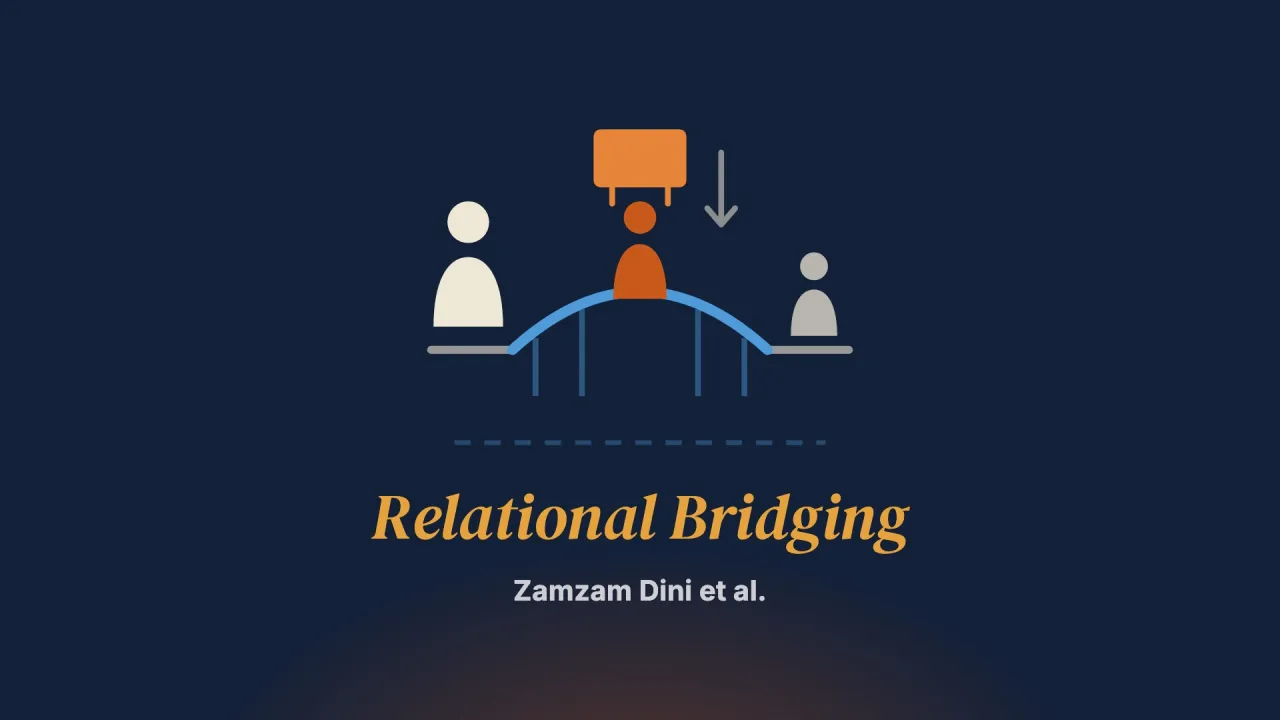
“Tired of Being Tired”: Intergenerational Trauma and Relational Bridging Among 1.5‐Generation East African Refugees
Sixteen Somali, Oromo and Ethiopian refugees who arrived as children describe their role as bridges between generations, between inherited silences and burdened resilience.
 Scientific
Redefining Grandparenting in Autism: A Qualitative Study of Emotional Experience and Role of Grandparents
Ten grandparents of autistic children describe grief, anger and hope, and a reinvented role: scaffolding, supporting their child, training, asking for help.
 Scientific
Narratives about Breaking the Cycle of Intergenerational Violence in Families: Different Routes, Same Goal
Fifteen Finnish parents, maltreated as children and exposed to partner violence, tell how they broke the cycle, or did not: three pathways, a non-linear transmission.
Comments 0
Log in to join the discussion. Log in