Family Relations · Family
Redefining Grandparenting in Autism: A Qualitative Study of Emotional Experience and Role of Grandparents
When a grandchild is diagnosed with autism, what happens to the grandparents? A team from the University of Tours interviewed ten grandparents, mostly grandmothers. Between grief, anger and hope, they invent a new role: scaffolding learning, supporting their own child, training themselves, and daring to ask for help.
This is a reformatted republication of Redefining Grandparenting in Autism: A Qualitative Study of Emotional Experience and Role of Grandparents, by Mathilde Duflos, Zoé Chapet and Caroline Giraudeau, published in Family Relations (Wiley) (2026), doi: 10.1111/fare.70345, under a CC BY 4.0 licence. Prepared by Complexe Systémique in September 2026: the authors’ text is unchanged; the layout has been adapted for reading online, which constitutes a modification of the work under the terms of the licence. This edition was made neither by the authors nor by the publisher, who are not responsible for its content or for any errors. The original version prevails.
Grandparents' need for relatedness could be met through a group animated by grandparents for grandparents.
Mathilde Duflos, Zoé Chapet and Caroline Giraudeau
Abstract
Objective. The aim of this study was to explore the emotional experience and the specific role of grandparents of a child with autism.
Background. Grandparents are recognized as an important source of family support to maintain family balance, especially in families of a child diagnosed with autism. When facing autism, the experience of grandparents may be reshaped to fit with new expectations and family dynamics; however, this experience is less defined in the literature.
Method. Semi-structured interviews were conducted with 10 French grandparents of a 4- to 14-year-old child diagnosed with autism. Using a thematic analysis, we identified themes related to the role of grandparents, their emotional experience, and their needs, and embedded them in the Family Stress and Resilience Model.
Results. Using thematic analysis, we identified three themes as stressors, five themes as resources either to support the grandparents or as them being resources for the family role, and two themes reflecting grandparents' perception of the stressors.
Conclusion. These findings underline the important role of grandparents in the lives of families of children with autism and provide suggestions to better support them by acknowledging their emotional experience and needs.
Implications. Implementing discussion groups and peer mentoring among grandparents of children with similar needs and abilities could contribute to support families. Given the substantial involvement of many grandparents, raising awareness among professionals about the central role grandparents play in supporting families could encourage the inclusion of grandparents in the care pathway and alleviate some pressure from the family system.
1 Introduction
Grandparenting is experienced by most as a joyful and rewarding experience as grandparents specifically value the mutual affection and activities they share with their grandchild while emphasizing their pride toward their grandchild (Mansson 2016). If providing intensive and non-intensive childcare was shown to benefit grandparents' health in Europe (Di Gessa et al. 2016), a recent study conducted in the United States has shown contradictory findings as it reported that providing childcare may be detrimental to grandparents' physical functioning and subjective health (Eibich and Zai 2024). Having a grandchild being diagnosed with autism often results in grandparents overinvesting (Novak et al. 2022), which should encourage practitioners to pay particular attention to their needs and to their physical and mental health associated with the new characteristics of their role within the family. Indeed, when a child is diagnosed with autism, traditional roles within the family can be overturned, leading to a reorganization of family roles and inducing a significant emotional upheaval upon the family (Ben-Cheikh and Rousseau 2013; Woodbridge et al. 2009). Characteristics of autism are linked to stressors and challenges for the family (J. Hillman 2007), and many of the challenges parents face can be alleviated by family support (Gray 1994). This support is mostly provided by grandparents who are often considered the ones holding the family together in these situations (Ben-Cheikh and Rousseau 2013). It is therefore essential to understand changes in grandparents' role and experience following an autism diagnosis in their grandchild to provide them with appropriate support given the importance of their role in the overall family functioning (D'Astous et al. 2013).
Diagnosing autism can be a complex and lengthy process, particularly due to the heterogeneity of symptoms (Hayes et al. 2021). It is common for families to face a form of diagnostic wandering as many parents report that several years can elapse between noticing anomalies in their child and obtaining a diagnosis of autism (Beaud and Quentel 2011). In France, the situation is even more worrying with the country being referred to as “the most delayed in Europe when it comes to autism treatment” (Sajidi in Davidson 2014). In France, autism care has been historically rooted in the psychoanalytical approach that tended to blame families for their child's autism (Bishop and Swendsen 2021), which explains that some families remain reluctant to seek support from public services and prefer to rely on family support and nonprofit organizations. Since the 1950s, parents' associations have emerged to advocate for new theoretical approaches of autism and to provide support and resources to families. In a study of caregiving peer support in France, McCrossin et al. (2025) identified 14 programs providing support to families of persons with autism from organizations implemented in 14 of the 101 French departments and two providing support nationwide (de Maman et Autisme Info Service). Most organizations provide information and training about autism but individual support for parents and occasionally siblings is mostly provided by CRA (Centres Ressources Austime) that are implemented in each French administrative region and that provide information and support for persons with autism, their families, professionals and are major actors in the diagnosis, assessments, and care of autism. However, before or in addition to considering these resources, parents first seek help within their own family. Grandparents often play an important role in the detection of the first alarm signs as frequent grandparent-grandchild interactions often lead to a reduction in the delay of the diagnostic process due to their previous experience with the development of typically developing children, whether their children or other grandchildren (Sicherman et al. 2018). When a child is diagnosed with autism, other relatives and family friends usually provide less support than grandparents (Trute et al. 2008), which makes grandparent's support role even more necessary and complex for the family (DePape and Lindsay 2014; Sullivan et al. 2012), leading to adjustments in the role and responsibilities of grandparents. However, grandparent's role is not limited to providing instrumental support and a deeper exploration of their role in families with a child with autism is needed.
Even though there is substantial heterogeneity in the enaction of their role, grandparents tend to play an important role in the life of their grandchildren who benefit from being emotionally close to them (Duflos et al. 2022). Providing childcare is one of the most common forms of support offered by grandparents, and especially by grandmothers (Ramos et al. 2021). It has been shown to benefit the subjective well-being of grandparents (Glaser and Di Gessa 2025), partly by fostering physical activity, which in turn improves their physical health (Baker and Silverstein 2008).
While many grandparents perceive their relationship with their grandchild on the autism spectrum as an incentive to remain active, giving a sense of meaning to their lives (Hillman et al. 2017), they also experience a range of concerns and difficulties. Hillman (2007) identified three specific areas of concern for grandparents of a child with autism: (1) a fear of losing their protective role about both their child and grandchild, (2) a fear of disrupting family relationships, and (3) experiencing role confusion, partly because of a lack of information about the disorder itself and its diagnosis. Other areas of concern would be educational hardships with problem behaviors (e.g., grandchild's tantrums, eloping, toilet training), financial concerns related to the cost of appropriate care for their grandchild and concerns for the future of their grandchild when autonomy seems unreachable (Hillman and Anderson 2019). The specificity of having a grandchild with autism could also lead to a certain frustration due to the difficulty of fulfilling the traditional role of grandparent such as giving advice and conversing with the grandchild (Sullivan et al. 2012). For instance, childcare, which is an important part of the traditional grandparenting role, can be perceived as a burden by grandparents who feel obliged to provide extensive childcare for their grandchild with autism as a family duty whereas their physical and mental capabilities might be pushed to their limits, which in turn can be detrimental to their well-being (Glaser and Di Gessa 2025; McGarrigle et al. 2018). There is an ambiguity around the role of these grandparents as they try to strike a balance between providing support and remaining committed to their children and grandchildren, without overstepping into their personal lives (D'Astous et al. 2013; Hillman 2007). The mourning associated with the loss of the traditional grandparent role, combined with the mourning of the idealized grandchild may even lead to the withdrawal of some grandparents as they struggle with role confusion and social stigma (Helle et al. 2022; Huang et al. 2020; Trew 2024). Role confusion as well as a lack of knowledge regarding the causes of the disorder and appropriate responses to cope with its symptoms are significant sources of suffering for grandparents, particularly during the period surrounding the diagnosis (Margetts et al. 2006). Although grandparents are recognized as an important source of support in the context of disability, the lack of knowledge about autism sometimes results in grandparents becoming a burden to parents (Hornby and Ashworth 1994). These difficulties prompt them to seek support from different sources, both formal (e.g., psychologists, social workers) and informal (e.g., religious groups, friends) (Hillman et al. 2016). However, the specificity of their experience makes it difficult for them to find help to deal with the concrete difficulties they face, and they might have other needs that are not met solely through these kinds of support.
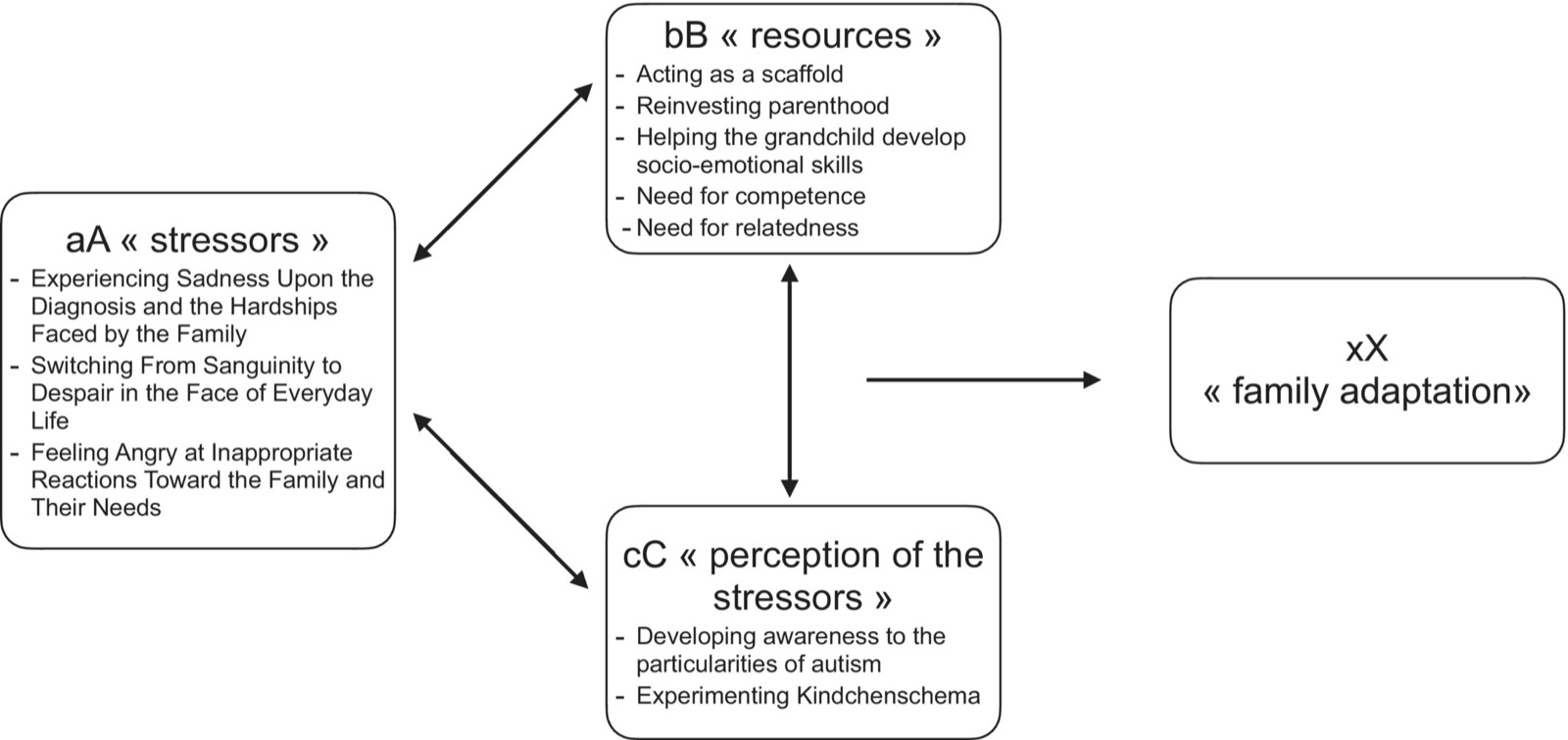
The Family Stress and Resilience Theory proposed by McCubbin and Patterson (1983) is an evolution of Hill's ABC-X family crisis model (Hill 1949, 1958) that underlines the importance of understanding individual reactions to stress in families by looking at the mediator resources between the stressors and the outcomes for the family in terms of adjustment and adaptation over time. In the present study, the double ABC-X model will allow us to better situate grandparents' perspectives on the family's experience and of their own role. The double ABC-X model includes (aA) initial and emerging stressors that trigger the crisis, (bB) the resources available, here for the grandparents as well as resources they can provide to the family, to deal with stressors, (cC) the meaning families, and here the grandparents, attached to the event, (xX) the likelihood of the family crisis or adaptation. It is known that grandparents play a major role of support for their family when a child is diagnosed with autism, especially by providing respite and financial support (Kornilaki and Kypriotaki 2024; Prendeville and Kinsella 2019), less is known about their own experience of managing the crisis and family adaptation and their perception of the support they can provide. Thus, interpreting the results of the present study in the light of this model would help to draw more specific interventions for families of children with autism experiencing stressors related to this diagnosis by identifying potential stressors and resources based on the grandparents' perspectives.
1.1 Rationale
Parents of autistic children experience more parental stress than those dealing with other disorders (Davis and Carter 2008), as well as a higher risk of depression, anxiety and schizophrenia (Daniels et al. 2008), marital difficulties (Gau et al. 2012), and financial hardship (Hillman 2007). To face these difficulties, most parents look at their own parents (i.e., the grandparents) to receive extensive support (e.g., emotional, financial, instrumental) (Novak et al. 2022). In fact, acceptance and adaptation by grandparents contribute to improvements in parental coping (Mirfin-Veitch et al. 1997), psychological well-being and increased optimism (Ekas et al. 2010). Notwithstanding, the multifaceted nature of autism makes it extremely difficult for grandparents to grasp the nature of their role in response to the unique needs of their grandchildren. The role of grandparents is ambiguous by nature, with no consensus on how to enact it. Indeed few social conventions define what should be a good grandparent, and existing classification tend to frame grandparents either within typologies or in terms of their investment across the different dimensions of intergenerational solidarity (Neugarten and Weinstein 1964; Roberts et al. 1991; Silverstein and Marenco 2001). As a result, grandparents need to be creative when defining their role (Silverstein and Marenco 2001), although the lack of information about grandparenting a child with special needs implies that they must be even more versatile and creative when grandparenting a child with autism (Huang et al. 2020). At the same time, some studies highlight the creation of a form of cohesion, stronger bonds within the family, and better adaptation to life events (Prendeville and Kinsella 2019).
Autism is a major challenge for families that alters family dynamics (Sánchez Amate and Luque de la Rosa 2024). Based on this evidence, helping families to better identify factors contributing to reach adaptation rather than crisis by defining the roles and sources of support within the family can only benefit them. Thus, the present study aims to reach this goal by contributing to the growing body of literature on extended family and autism by answering the following questions: How do grandparents of children with autism perceive their role in the family? What are their emotional experiences related to having a grandchild with autism? And how do they contribute to family adaptation by avoiding crises?
2 Methods
2.1 Design
This study is based on a cross-sectional qualitative analysis of semi-structured interviews with grandparents of a child or adolescent with autism. Grandparents discussed their perspectives on grandparenting a child with autism in terms of their role in the family and their emotional experience.
2.2 Participants
This study was carried out with a sample of 10 grandparents of a child or a teenager with autism. Participants were recruited by social media advertisements on pages of associations for families of individuals on the autism spectrum, by posters at the hospital, by therapeutic groups for children with autism, and by word of mouth. Eligible participants had to have at least one grandchild under 15 with a diagnosis of autism, to not be the current primary caregiver of this grandchild, and to reside in France. Participants who were interested initiated contact with the research team, after which we explained the aim of the study to each of them and scheduled an interview. Grandparents' demographic characteristics are presented in Table 1. The authors did not access the medical files or documents of the grandchildren but according to grandparents, the grandchild they are referring to in the present study had been diagnosed with autism and, more specifically, based on the DSM-5 levels of severity in autism, four were diagnosed with Level 1 autism (requiring minimal support), two with Level 2 autism (requiring substantial support), and four with Level 3 autism (requiring very substantial support; all four were nonverbal and one also had epilepsy).
Table 1 — Grandparents' and their grandchildren's demographic characteristics.
- Grandparents' demographics — Lineage. Maternal grandmother: 5; Maternal grandfather: 1; Paternal grandmother: 3; Paternal grandfather: 1.
- Grandparents' demographics — Age. M (SD): 68.50 (3.60); Range: 64–74.
- Grandparents' demographics — Relational status, n. Married or committed: 3; Divorced, or widowed: 6; Widowed and currently committed: 1.
- Grandparents' demographics — Number of children, M (SD). 2.80 (1.03).
- Grandparents' demographics — Number of grandchildren, M (SD). 5.50 (2.46).
- Grandparents' demographics — Geographic distance from the grandchild in km, M (SD). 67.45 (92.40).
- Grandchildren's demographics — Sex. Boys: 8; Girls: 2.
- Grandchildren's demographics — Age. M (SD): 9.10 (4.07); Range: 4–14.
- Grandchildren's demographics — Age of diagnosis. M (SD): 4.3 (2.08); Range: 1.5–9.
2.3 Data Collection
Ethics approval was obtained from the research ethics committee of the University of Tours (CER-TP 2023-01-08). Participants received the consent form and demographic survey prior to the interview and returned them to the authors on the day of the interview. All the interviews were conducted in French by the second author and a research assistant in videoconference or by telephone depending on the willingness and mastering of online tools of the participants and lasted between 47 and 110 min. The interviews were recorded using a digital recorder and were manually transcribed for analysis. Names and identifying features were removed from the transcriptions, and participants were given pseudonyms to protect their anonymity.
2.4 Measures
Prior to the interview, participants completed a demographic questionnaire about themselves, their family and about characteristics of their grandchild. The qualitative semi-structured interviews focused on grandparents' perspective on grandparenting a child with autism. Grandparents were asked open-ended questions about their role (e.g., What is your role toward [name of the grandchild with autism]? How did your role change since your grandchild's diagnosis?), their emotional experience (e.g., What emotions did you experience when your grandchild was diagnosed? What do you feel today about this grandchild?).
2.5 Data Analysis
For the present study, a thematic analysis was conducted to investigate grandparents' perspectives on their role and subjective experience when grandparenting a grandchild with autism. Interviews were transcribed by two researchers and checked for accuracy by the three authors. Data analysis began as soon as the first interview was conducted and was updated continuously with the following ones, resulting in minor adjustments in the interview guide for the subsequent interviews (e.g., adding probing questions to help the grandparents better visualize themselves). As the interviews were carried out, the content gradually overlapped and we considered data saturation to be reached when no new themes emerged from new participants (Saunders et al. 2018), here, after eight interviews. Then, two final interviews were conducted to triangulate and substantiate themes already identified in prior interviews.
The data analysis was carried out following the six stages described by Braun and Clarke (2019). First, the second author and a research assistant were trained in qualitative data collection and supervised by the first and last authors who already have experience in conducting research interviews and publishing qualitative research. Once trained, she conducted and transcribed the interviews, and all authors then read the interviews several times to become more familiar with the content and discussed regularly their impressions and ideas about emerging themes. Second, in an inductive process, the authors extracted initial codes based on the interviews' content. Third, codes identified by the authors were compared and refined based on a common discussion around the interviews' content and were attributed to broader themes. Fourth, preliminary themes were discussed in terms of their relevance regarding the research questions. At this point, authors noticed the redundancy of the theme of grandparents' needs in most of the interviews, questioning the relevance of analyzing this aspect in forthcoming interviews. Fifth, two authors independently verified that each coded extract matched each identified theme correctly and that there was an agreement concerning these associations. At this step, the authors assessed the intercoder reliability which was assessed by dividing the number of agreements within the extract coded by the addition of the number of agreements and of the number of disagreements for each code (Miles and Huberman 1994). The intercoder reliability was greater than 0.80 for each theme, indicating “relatively high degree of reliability” (Hodson 1999, 51). Finally, a report was prepared outlining the main characteristics of grandparents' role with their grandchild with autism, their emotional experience as well their needs as expressed by our sample and connected to the Family Stress and Resilience Model. Following the initial analysis, the themes were revised in light of the theoretical model during the reviewing phase, and some of them were relabeled by the authors to ensure greater consistency between the aim of the paper and its theoretical foundations.
The authors recognize that when conducting a qualitative study, especially on a sensitive topic, their life experiences, their emotional attitudes as well as their values may influence the relationship with interviewees, data, and the thematic analysis itself, making it inherently subjective (Tufford and Newman 2012). For more transparency about this reflexivity, it is important to note that the first author formerly worked with adolescents with autism, the second author was doing internships in a hospital unit specialized in autism at the time of the interviews and personally knew grandparents of children with autism, and the fourth author is training future psychologists and involved in a network gathering educators and psychologists working with people with autism. This reflexivity therefore became a resource for the analysis of the interviews rather than a weakness that should have been minimized (Yardley 2008), fostering the authors to openly discuss their personal experience related to family relationships of children with autism.
3 Results
Grandparents shared various perspectives of their experience as grandparents of an autistic child, including the unique attributes of their role, their emotions, and their specific needs. We extracted 10 themes from the thematic analysis that can be included in the components of the Family Stress and Resilience Model: three being identified as stressors (aA), five being identified as resources (bB), and two being identified as components of the perception of the stressors (cC) (see Figure 1). Each theme is described below.
3.1 Stressors
Grandparenting a child with autism can be stressful, especially when compounded with intense emotional turmoil. Here, grandparents' reports of feeling sadness, sanguinity to despair, and anger have been identified as the “stressors” component of the Family Stress and Resilience Model.
3.1.1 Experiencing Sadness Upon the Diagnosis and the Hardships Faced by the Family
When thinking about their perception of their grandchild's autism at the time of the diagnosis, eight grandparents shared that they felt sadness: “I cried all night. That's it, I really cried all night, imagining a bleak future, the world was falling apart for me, and why did it have to fall on him?” (P7, grandmother of a boy with Level 3 autism who sees him several times a week), three of whom expressed sadness for their own child for having to face a painful ordeal: “I was so sorry. It was a real blow, too sad for my daughter. Because she had a real battle to fight. Well, not just her, but all of us” (Astrid, grandmother of a boy with Level 2 autism, seeing him once a month).
3.1.2 Switching From Sanguinity to Despair in the Face of Everyday Life
Grandparents' perception of their grandchild autism then evolved as they experienced grandparenting their grandchild. Participants' emotions then ranged from sanguinity to despair. All grandparents experienced emotions on this spectrum, sometimes alternating between sanguinity and despair. Their stressful emotional experience related to their grandchild's autism seemed rooted in remembering the diagnosis and in thinking about the future of the child as well as when worrying about the parents. The most predominant emotion within our sample was despair as all 10 grandparents reported it. Jeanne (grandmother with a boy with Level 1 autism, seeing him several times a month) for instance, remembers her feelings when she learnt about the diagnosis: “So when my daughter said to me, ‘You know, Mum, [grandson's name] might be autistic,’ for me that wasn't autism, it was a child with no future. I cried my eyes out when she told me that” and most grandparents also express worries about the future of their grandchild, especially as they realize that some difficulties may persist over time:
I'm worried. I'd have liked him to be able to get some jobs, a few hours, but I don't think that's going to be possible with [X] but you never know. You always have to be hopeful; that's what they say. But you never know. But I don't hold out much hope for [X] that he'll be able to work one day, for instance. You know, at first I thought “Oh dear, how long is he going to stay disabled,” but he's going to be disabled for the rest of his life. That's when I realized that, no, he's never going to be apprenticed, so he won't be able to read or write, so we have to face the facts. He won't be able to support himself, so he'll remain disabled. It's not always easy, but hey. (Sarah, grandmother of a boy with Level 3 autism, seeing him everyday)
This despair might be counterbalanced by sanguinity (n = 6) through an idealization of the future of the grandchild, like this grandfather of a nonverbal boy with Level 3 autism carrying unachievable dreams for his grandson:
I'm hoping he'll become more autonomous, and then maybe why not have a home of his own, a flat or something like that. Then maybe he'll have a girlfriend, we don't know, it's not out of the question. I hope so. And then on the other hand, I'm a bit reluctant, thinking “Gosh, that confuses me, my children are going to have him for the rest of their lives.” But I prefer to think about him having his own flat with his fiancée. (Adrien, grandfather of a boy with Level 3 autism, seeing him several times a week)
The six grandparents referring to sanguinity alternate between despair and sanguinity in their discourse, underlining the uncertainty related to the psychological development of the grandchild: “Because, well, it's always in-between. One foot in normality and the other in difference. So, what's going to win? Fears are always there” (Fanny, grandmother of a boy with Level 1 autism, seeing him every day). Finally, most of the grandparents in our sample (n = 8) did not only feel despair about their grandchild but also toward their own child, bringing them back to their role as parents first and foremost: “The sky is falling. You're very worried about your son, your daughter-in-law” (Lucinda, grandmother of a girl with Level 1 autism, seeing her every day).
3.1.3 Feeling Angry at Inappropriate Reactions Toward the Family and Their Needs
Four grandparents shared that they often feel angry about the way others behave toward their autistic grandchild; it can be when a teacher refuses to welcome the grandchild in their classroom, when a doctor refuses to let the grandparent attend a medical appointment, when a psychologist does not provide the expected support, or when lay people make inappropriate comments about autism, as illustrated by the following quotes:
I can only say bad things about the psychologist, so I'm not going to say anything. I can only say bad things, because I'm sorry, it's not what we expect to hear when she tells us that the little girl is banging her head “get that into your head.” It's not interesting, it's low-class psychology, well it's not interesting, it's not that. (Lisa, grandmother of a girl with Level 3 autism, seeing her everyday)
In fact, it makes us a bit angry when people say “oh well, you can't see it,” well no, you can't see it, if he was in a wheelchair you'd see it. And that too is one of the difficult things. This sort of recognition of disability even when you can't see it. (Thomas, grandfather of a boy with Level 1 autism, seeing him several times a week)
3.2 Resources
When grandparenting their autistic grandchild, grandparents' roles can be enacted in order to provide support to the family and they can also turn themselves toward support that would help them to adapt to the situation. Grandparents can be a resource for their grandchild and for their family by acting as a scaffold, reinvesting parenthood, and helping their grandchild develop socio-emotional skills and they can better invest this role by receiving support filling their need for competence and their need for relatedness.
3.2.1 Acting as a Scaffold
In grandparenting a child with autism, all participants expressed that part of their role was to act as a scaffold to support their grandchild in their learning. Scaffolding is defined as a process “that enables a child or novice to solve a task or achieve a goal that would be beyond his [sic] unassisted efforts” (Wood et al. 1976, 90). To act as a scaffold, grandparents need to understand what their grandchild has already learned and mastered so they can lead them on to new learning, often in relation to what their other grandchildren of the same age can do. This process can be time-consuming as this grandmother described:
Every day I looked on the internet for puzzles and coloring books… He didn't know how to color, he'd never held a pencil in his life, but he could stick different colored stickers on a drawing, for example, to color in his own way. So I prepared a lot of things like that. So in fact I spent two hours with him in the evening, for example, but I spent two hours at home preparing things. (Romane, grandmother of a boy with Level 3 autism, seeing him several times a week)
To act as scaffolds in this specific context, grandparents must adapt to the specificities of autism either by finding the right paths for communication or by adapting to the emotions of the grandchild as shared by this grandmother:
You have to make an effort with everything. We've always been told that in autism you have to do things over and over again, say things over and over again. So we get him ready and we tell him “We're going shopping now” and we show him the pictogram, we tell him “You mustn't shout in the shop.” So we tell him and repeat things. (Sarah, grandmother of a boy with Level 3 autism, seeing him everyday)
3.2.2 Reinvesting Parenthood
In order to support the family, eight grandparents felt that their role was not only toward their grandchild but also toward their child. Thus, they chose to reinvest parenthood as their own child was facing hectic parenthood, as said by a grandmother (Lisa, grandmother of a girl with Level 3 autism, seeing her everyday): “We are here to support the parents, we have no other goal. Because it's the goal of a lifetime,” sometimes this also translated into acting as a family caregiver by accompanying their child and grandchild to medical appointments (it concerned all grandparents of a grandchild with Level 3 autism, and one grandparent of a grandchild with Level 2 autism):
My granddaughter needs almost two people at all time, and I go to child psychiatrists all the time. I was even there when the pediatrician diagnosed her as autistic at the CAMPS (Early Medico-Social Intervention Center). I take her to all her appointments; I always come with her. I'm a very present grandmother (laughs). (Lisa, grandmother of a girl with Level 3 autism, seeing her everyday)
Caring for their family also means trying to spare their child from their worries as expressed by Rose (grandmother of a boy with Level 2 autism, seeing him several times a month): “How could I complain to my own children? They suffered as much as I did. It's their family, it was my daughter's child, my son-in-law's child, my son's nephew.”
3.2.3 Helping the Grandchild Develop Socio-Emotional Skills
Five grandparents believed that they could be a resource for the family by helping their grandchild develop socio-emotional skills and more specifically to develop social skills by getting to get along with their peers and emotional skills by supporting them in regulating their emotions and welcoming their emotions:
My role was to support my grandson and help him with communication in areas that were difficult for him. Helping him to accept the presence of other children and other persons. Like all autistic people, he doesn't like to be surrounded by other people. We had to teach him how to socialize. That's part of my role. (Rose, grandmother of a boy with Level 2 autism, seeing him several times a month)
During the interviews, grandparents evoked specific needs for themselves that could be classified into two categories from the Self-Determination Theory: need for competence and need for relatedness (Deci and Ryan 1985, 2000). These needs underline that if grandparents aim to be resourceful for the family, they also need to access to some resources to be able to be source of support for their children and grandchildren.
3.2.4 Need for Competence
The need for competence is defined as the need to “feel a sense of mastery over the environment and to develop new skills” (Van den Broeck et al. 2016, 1198). Eight grandparents expressed having this need, especially as they did not feel as having sufficient knowledge about autism to fully understand autism when receiving the diagnosis, as shared by this grandmother: “So what I did: when the diagnosis came, I trained myself, I wanted to be more effective with him so that I could communicate better straight away, and then help him through this difficulty, that's what I did” (Rose, grandmother of a boy with Level 2 autism, seeing him several times a month). Grandparents also felt the need to continue training to provide appropriate care based on the current needs of their grandchild:
And now I'm wondering about it… He doesn't speak and… well, maybe it'll come, but I'm wondering if I'm not going to take classes to learn how to use gestures, because when he gets a bit older, if we want to relate to him, we're going to have to learn his language. If he can't learn ours. (Adrien, grandfather of a boy with Level 3 autism, seeing him several times a week)
Overall, grandparents reported fulfilling this need through online training and training courses run by doctors and educators from the institutions welcoming their grandchildren, through internet forums, books, tv shows, and movies about autism.
3.2.5 Need for Relatedness
The need for relatedness is defined as the need to “feel connected to at least some others, that is, to love and care for others and to be loved and cared for by others” (Van den Broeck et al. 2016, 1199) and can be satisfied by being part of a group and developing close relationships. Interestingly, five grandparents in our sample reported the importance of confiding to their partner and close friends to fulfill this need:
I'm not at all closed in on myself. I tell you, on Wednesdays all my friends come to help me and it's great. I'd advise lots of people to do it. Because I've got a dozen friends who take turns, who come in the morning or afternoon, voluntarily, to give me a hand. And then we chat, so we're not always talking about my granddaughter's autism, even though we talk about that too. (Lisa, grandmother of a girl with Level 3 autism, seeing her everyday)
The same grandparents did not express the need to belong to groups of family caregivers of autistic children which are sometimes organized by nonprofit organizations and that could have been an alternative way to fulfill this need: “In fact, there is a considerable waste of time, in the testimonies of each person, who speaks only for their case, and it does not make much time for others, who would have relevant questions to ask but cannot” (Rose, grandmother of a boy with Level 2 autism, seeing him several times a month). Finally, one grandmother took advantage of online forums to get information and share testimony and get support from other grandparents of children with autism (P7, grandmother of a boy with Level 3 autism, seeing him several times a week).
3.3 Perception of the Stressors
3.3.1 Developing Awareness to the Particularities of Autism
Eight grandparents reported that part of their role was to develop their awareness of the particularities of autism, which would enable them to adjust their perception of their grandchild's autism. For most of these grandparents, it began at a very early stage as grandparents were alert to the first signs of autism, such as behavioral specificities and emotional struggles, and raised their concerns to the parents, as shared by this grandmother:
He had communication difficulties. He was a very gentle and calm child and when he wanted to communicate he did so violently, throwing objects in his face. That's how I realized that he was behaving abnormally, even though he was a gentle, cuddly, charming, calm child. (Rose, grandmother of a boy with Level 2 autism, seeing him several times a month)
Having a grandchild with autism also required heightened vigilance as this grandfather remembered:
When he comes over here, we're much more careful about where he goes, what he touches… Yes… we're paying a lot more attention to him than to the others! It's more watchful. You must be much more careful about what he's doing, always keeping an eye on him…. (Adrien, grandfather of a boy with Level 3 autism, seeing him several times a week)
Some grandparents must adapt their role by loosening the rules to give them more autonomy:
You don't always have to be on them, talking about them, you have to look like you're doing something else and you can see that when you're not talking about her, she goes her own way. So she doesn't want to eat at the moment, and so just now we were making her eat a yoghurt and she didn't want to and as soon as we turned our backs she ate her yoghurt… When my daughter saw it she said “oh that's great she's eating all by herself.” (Lisa, grandmother of a girl with Level 3 autism, seeing her everyday)
Part of their role can be to just be there for the grandchild like they would be for any other grandchild: “Sometimes he picks up the phone and calls me. We live two minutes away but ‘Grandma, Mummy and Daddy are bothering me, are you coming?’ (laughs)” (Jeanne, grandmother of a boy with Level 1 autism, seeing him several times a month).
Grandparents' perception of their grandchild's autism can also be influenced by their emotional experience of the diagnosis and daily life with their child and grandchild.
3.3.2 Experimenting Kindchenschema
Children with autism exhibit specific traits based on their autism (e.g., fuller cheeks, wide-set eyes) (Ozgen et al. 2011) which elicits in their grandparents increased attention, kindness, willingness for care, and tenderness. The ambiguity of grandparents' pride and tenderness toward their grandchild with autism despite their difficulties seemed to be well encompassed under the term Kindchenschema defined by Lorenz as infantile physical features being perceived as cute that motivates caretaking behavior in other individuals, with the evolutionary function of enhancing offspring survival (Lorenz 1943). It was found in seven interviews of grandparents, from simply expressing “He is cute, it is my greatest joy” (Rose, grandmother of a boy with Level 2 autism, seeing him several times a month) to demonstrating an idealized picture of the abilities of their grandchild:
When it's your grandchild, you see the child with affection. She's not easy, but at the same time she's pretty, endearing, you can decipher her sensitivity. She has talents, you can feel that she is very… has very fine motor skills. You can tell she's sensitive to music, she paints, she does lots of things. You learn all that, you see it. And then with a disabled grandchild, as soon as there's progress, it's fantastic. More so than with another child. (Lucinda, grandmother of a girl with Level 1 autism, seeing her every day).
4 Discussion
The present study explored the specific roles and emotional experiences of grandparents in families of children with autism, in relation to the Family Stress and Resilience Theory (McCubbin and Patterson 1983). This qualitative study highlights the creativity of grandparents when defining and experiencing their role to be a resource for their family. Indeed, grandparents described how their emotional responses to the diagnosis as well and to everyday life with a grandchild with autism (sadness upon the diagnosis and the hardships faced by the family, switching from sanguinity to despair in the face of everyday life, feeling angry at inappropriate reactions toward the family and their needs) contribute to their ability to become a resource for their family (by acting as a scaffold, by reinvesting parenthood, by helping the grandchild develop socio-emotional skills) and to find resources for themselves to be able to continue to support their family (by acknowledging their need for competence and relatedness). Their perceptions of their grandchild's autism and of their own ability to cope and maintain balance in family life (by developing their awareness to the particularities of autism and by being sensitive to the Kindchenschema, raising their motivation to care for their grandchild and to idealize them) are influenced by the stressors and resources, thereby helping the family to adapt to these crises.
In the present study, the initial and additional stressors (identified as the “stressors” in the double ABC-X model) correspond to grandparents' emotional responses to autism and to their daily life with their grandchild and family as they influence their perspective in displaying their traditional role as grandparents. In line with Woodbridge et al. (2009), who, when studying grandparents of children with disabilities, described the emotional rollercoaster they experience, grandparents in the present study oscillated between sanguinity and despair; sanguinity through the idealization of their grandchild's future, and despair upon recognizing the developmental constraints their grandchild will face. Grandparents also reported experiencing sadness following the diagnosis of their grandchild, when thinking about the challenges their child will face in raising the grandchild as well as when contemplating their grandchild's future. Anger was also experienced, particularly in response to inappropriate comments made by professionals (e.g., medical doctors, psychologists) discussing the diagnosis, and by peers. A scoping review revealed that similar anger was reported by parents who did not receive an empathetic delivery of the diagnosis and who received inadequate explanation of their child's diagnosis (Makino et al. 2021). Grandparents' anger may thus raise from directly receiving the diagnosis or from emotional contagion from their child.
Concerning the resources (bB “resources” in the double ABC-x model) they felt they could be for their family, grandparents reported that they could be supportive by reinvesting parenthood. This phenomenon reveals the deep-seated need for grandparents to reinvest their role not merely as grandparents but truly as parents. It was highlighted in a previous study by Woodbridge et al. (2009) who reported Australian grandparents' priority need to support their own children when a grandchild was diagnosed with a disability. However, grandparents in our study did not only support their children to facilitate their parenting but also acted as family caregivers for their grandchild. In terms of attempting to adapt their grandchild to the world, grandparents expected to be a resource by acting as a scaffold and helping the grandchild develop socio-emotional skills are two themes that are also described by grandparents of typically developing children (Duflos et al. 2023). However, these roles appear to be even more invested by grandparents in this study, as they sought to compensate for the developmental differences between their grandchild with autism and neurotypical children of the same age to facilitate their grandchild's inclusion. In order to be able to support their family, grandparents also identified personal needs. For instance, grandparents mentioned their need for competence, which they identified as a way to better support their family. In this line, most grandparents followed online training, read books, or negotiated to join trainings offered to parents by nonprofit organizations, especially to learn how to communicate with their grandchild. Grandparents in this study also expressed their own need for relatedness. It looked like autism gave them an opportunity to dare to ask for help: They gather their friends around them to get support, which gives them the freedom to reinvent grandparenting as “it takes a village to raise a child (with autism).” Compared to other grandparents who are locked into normative injunctions inherent to the role of grandparent, struggling to care for their grandchildren to the detriment of their health (Guijarro 2001), these grandparents might feel more legitimate to ask for help so they can better experience grandparenthood and focus on building a positive relationship with their grandchild.
Considering their perception of their grandchild's autism (identified as the “perception of the stressors” in the double ABC-X model), even though the theme developing awareness to the particularities of autism echoes Prendeville and Kinsella (2019) who already highlighted grandparents' lack of education on autism, although it was not specifically described as being part of their role in the literature. However, it resonates with Klitzman et al. (2023) who underlined that for families, receiving accurate information about autism contributed to a more positive attitude toward autism and to a better adaptation to this disorder. Therefore, grandparents understanding that receiving accurate information about autism and about the needs of their grandchildren would reinforce their supporting role within the family and prevent them from becoming a burden for the parents. On a less anticipated perspective, grandparents' experiences can be tinged with positivity that softens their perception of the stressors. Through experimenting Kindchenschema, each progress, each success is amplified and there is an idealization of the reality of the grandchild which places them under a positivism spectrum when it comes to this grandchild compared to their other grandchildren. Thus, all these emotional experiences can be seen as altering grandparents' perception of their grandchild's autism and should be acknowledged to better understand how the whole family can cope with these stressors.
4.1 Implications
These findings can be used to support grandparents' role within families with a child with autism. If grandparents are not meant to substitute their children in parenting, they can positively contribute to the well-being of their family by being a resource. Grandparents report their need for relatedness and their need for competence, two needs that can be met through discussion groups and peer mentoring with other grandparents. These types of support can help them by sharing creative tips on how to better care for a grandchild with autism. In implementing these kinds of initiatives, psychologists should be aware of the age of the grandchildren, as their needs differ based on their age, but also the severity of autism, since grandparents may encounter difficulties if other grandchildren have opportunities that are unattainable for their own grandchild. These initiatives should be intergenerational by including parents who could share their feelings, fostering discussion about the needs of each generation as already suggested (Zakirova-Engstrand et al. 2023). Another implication is that, since grandparents reported negative experiences with physicians and psychologists who lacked empathy or refused them to attend appointments, it is important to inform professionals that grandparents are often deeply involved in the daily care of their grandchild with autism and, in many cases, serving as caregivers. Accordingly, they should be considered part of the healthcare journey, while emphasizing the central role of the parents. Raising awareness among healthcare practitioners and psychologists about the central role grandparents play in supporting families could pave the way for grandparents to be considered in the care pathway. This could incentivize Centres Ressources Autisme (CRA) and other medical-social organizations to develop targeted information for grandparents, aligned with what they perceive as fitting with their role and by addressing the needs identified in this study. Thereby, family would benefit from more tailored support from the grandparents in daily life. Future studies should evaluate the benefits of peer supporting groups and targeted trainings for grandparents. Psychoeducational intervention groups already exist and showed benefits for grandparents' understanding of autism (Zakirova-Engstrand et al. 2023); however, our study suggests that grandparents' need for relatedness could be met through a group animated by grandparents for grandparents.
4.2 Limitations and Futures Directions
This study was unique in exploring the emotional experiences and roles of French grandparents who have a grandchild with autism. However, this study is not without limitations. First, only grandparents were interviewed here, and it would be enriching to compare their perspective with parents' concerning their role within the family. While grandparents consider it their family duty to devote themselves to their autistic grandchild, some parents feel that certain grandparents overstep their role without knowing how to communicate this discomfort (Li et al. 2025). Giving a voice to the other grandchildren would also be a key perspective, as caring for a grandchild with a disability could alter grandparents' involvement toward other grandchildren. Another limitation would be that all grandparents in our study were invested in the care of their grandchild (with grandparents' involvement varying between caring for their grandchild every day to once a month); interviewing grandparents with various levels of investment would provide a more comprehensive approach of this role. Furthermore, grandparents' involvement might influence the components of the Family Stress and Resilience Model and therefore could be measured in a quantitative study modeling the role of grandparents for grandparents' and their families' experience of the crises linked to the child's autism. Testing this model would allow to better understand the interrelations that may exist between what was identified as “resources” and what was identified as “perception of the stressors” related to the grandchild's autism in the present study. Another limitation is the over-representation of maternal grandmothers in our sample, which is consistent with sample characteristics of most studies involving grandparents but could be anticipated in future recruitment strategies. Additionally, in this sample, there are more boys than girls with autism among the grandchildren mentioned; if this is in line with the stronger prevalence of autism diagnosed among boys, the grandchild's gender could influence grandparents' caregiving practices and should therefore be controlled in a future study. Finally, future studies should also test the benefits of implementing a peer supporting group for grandparents in Autism Centers. Psychoeducational intervention groups already exist and showed benefits for grandparents' understanding of autism (Zakirova-Engstrand et al. 2023), but these groups were animated by practitioners while we believe that peer-to-peer groups could be meaningful in this context.
5 Conclusion
The present study should help define with more clarity the role of grandparents in families of a child with autism. This clarity could help families better navigate through their journey with autism as it could precise the possible involvement of grandparents in the care of their grandchild and reaffirm their role as a support for their children, while reminding that parents must remain in the front line to act and decide on matters relating to their child's care. However, this study also raises concerns toward the emotional rollercoaster these grandparents experience. Given the essential role of grandparents in helping families cope with the challenges of autism, it is important to recognize their emotional experiences so they can continue offering support while preserving their own psychological well-being.
Complexe Systémique: key points
Grandparents are often the first port of call for families after an autism diagnosis, especially in France, where a mistrust inherited from a clinical tradition that blamed parents leads families to seek help within the family. The study shows a generation that reinvests parenthood, scaffolds learning and trains itself, while going through grief, anger and swings between hope and despair. For systemic practice, two ideas are valuable: thinking of support across three generations, with the risk that grandparents encroach on the parents’ place, and acknowledging these grandparents’ own experience rather than seeing them only as a resource. The Kindchenschema invoked to explain tenderness and idealisation remains a debatable hypothesis. The sample is very small, mostly maternal grandmothers who were already highly involved, and the parents’ perspective is missing. Read alongside the article on parent–child triadic processes around an autistic child, and the article on supporting families with an autism diagnosis.
Notes from the original
Funding. The authors have nothing to report.
References
Baker, L. A., and M. Silverstein. 2008. “Preventive Health Behaviors Among Grandmothers Raising Grandchildren.” https://academic.oup.com/psychsocgerontology/article/63/5/S304/592312.
Beaud, L., and J. C. Quentel. 2011. “Information et vécu parental du diagnostic de l'autisme. I. Premières identifications et nature des premières inquiétudes.” Annales Médico-Psychologiques 169, no. 1: 54–62. https://doi.org/10.1016/j.amp.2010.11.008.
Ben-Cheikh, I., and C. Rousseau. 2013. “Autisme et soutien social dans des familles d'immigration récente : l'expérience de parents originaires du Maghreb.” Santé Mentale au Québec 1, no. 38: 189–205. https://doi.org/10.7202/1019192ar.
Bishop, D. V. M., and J. Swendsen. 2021. “Psychoanalysis in the Treatment of Autism: Why Is France a Cultural Outlier?” BJPsych Bulletin 45, no. 2: 89–93. https://doi.org/10.1192/bjb.2020.138.
Braun, V., and V. Clarke. 2019. “Reflecting on Reflexive Thematic Analysis.” Qualitative Research in Sport, Exercise and Health 11, no. 4: 589–597. https://doi.org/10.1080/2159676X.2019.1628806.
Daniels, J. L., U. Forssen, C. M. Hultman, et al. 2008. “Parental Psychiatric Disorders Associated With Autism Spectrum Disorders in the Offspring.” Pediatrics 121, no. 5: e1357–e1362. https://doi.org/10.1542/peds.2007-2296.
D'Astous, V., S. D. Wright, C. A. Wright, and M. L. Diener. 2013. “Grandparents of Grandchildren With Autism Spectrum Disorders: Influences on Engagement.” Journal of Intergenerational Relationships 11, no. 2: 134–147. https://doi.org/10.1080/15350770.2013.782744.
Davidson, C. 2014. “Management of Autism in France: ‘A Huge Job To Be Done’.” Lancet Psychiatry 1, no. 2: 113–114. https://doi.org/10.1016/s2215-0366(14)70290-1.
Davis, N. O., and A. S. Carter. 2008. “Parenting Stress in Mothers and Fathers of Toddlers With Autism Spectrum Disorders: Associations With Child Characteristics.” Journal of Autism and Developmental Disorders 38, no. 7: 1278–1291. https://doi.org/10.1007/s10803-007-0512-z.
Deci, E. L., and R. M. Ryan. 1985. Intrinsic Motivation and Self-Determination in Human Behavior. Plenum.
Deci, E. L., and R. M. Ryan. 2000. “The “What” and “Why” of Goal Pursuits: Human Needs and the Self-Determination of Behavior.” Psychological Inquiry 11, no. 4: 227–268. https://doi.org/10.1207/S15327965PLI1104_01.
DePape, A.-M., and S. Lindsay. 2014. “Parents' Experiences of Caring for a Child With Autism Spectrum Disorder.” Qualitative Health Research 25, no. 4: 569–583. https://doi.org/10.1177/1049732314552455.
Di Gessa, G., K. Glaser, and A. Tinker. 2016. “The Impact of Caring for Grandchildren on the Health of Grandparents in Europe: A Lifecourse Approach.” Social Science & Medicine 152, no. January: 166–175. https://doi.org/10.1016/j.socscimed.2016.01.041.
Duflos, M., C. Giraudeau, and C. Ferrand. 2022. “What Is Emotional Closeness Between Grandparents and Their Adolescent Grandchildren? A Systematic Review.” Journal of Family Studies 28, no. 2: 762–784. https://doi.org/10.1080/13229400.2020.1752771.
Duflos, M., H. Hussaina, and M. Brussoni. 2023. “‘When I'm Playing With Him, Everything Else in My Life Sort of Falls Away’: Exploring Grandparents' and Grandchildren's Learning Through Outdoor Play.” Journal of Adventure Education and Outdoor Learning 25, no. 2: 319–332. https://doi.org/10.1080/14729679.2023.2230503.
Eibich, P., and X. Zai. 2024. “Are the Grandparents Alright? The Health Consequences of Grandparental Childcare Provision.” Journal of Population Economics 37, no. 4: 71. https://doi.org/10.1007/s00148-024-01044-5.
Ekas, N. V., D. M. Lickenbrock, and T. L. Whitman. 2010. “Optimism, Social Support, and Well-Being in Mothers of Children With Autism Spectrum Disorder.” Journal of Autism and Developmental Disorders 40, no. 10: 1274–1284. https://doi.org/10.1007/s10803-010-0986-y.
Gau, S. S. F., M. C. Chou, H. L. Chiang, et al. 2012. “Parental Adjustment, Marital Relationship, and Family Function in Families of Children With Autism.” Research in Autism Spectrum Disorders 6, no. 1: 263–270. https://doi.org/10.1016/j.rasd.2011.05.007.
Glaser, K., and G. Di Gessa. 2025. “Grandparental Childcare and Subjective Well-Being: The Role of Activities and Reasons for Care.” Social Science and Medicine 366: 117711. https://doi.org/10.1016/j.socscimed.2025.117711.
Gray, D. E. 1994. “Coping With Autism: Stresses and Strategies.” Sociology of Health & Illness 16, no. 3: 275–300. https://doi.org/10.1111/1467-9566.ep11348729.
Guijarro, A. 2001. El síndrome de la abuela esclava [The slave grandmother syndrome]. Grupo Editorial Universitario.
Hayes, J., R. McCabe, T. Ford, D. Parker, and G. Russell. 2021. “‘Not at the Diagnosis Point’: Dealing With Contradiction in Autism Assessment Teams.” Social Science and Medicine 268: 113462. https://doi.org/10.1016/j.socscimed.2020.113462.
Helle, S., A. O. Tanskanen, D. A. Coall, and M. Danielsbacka. 2022. “Matrilateral Bias of Grandparental Investment in Grandchildren Persists Despite the Grandchildren's Adverse Early Life Experiences.” Proceedings of the Royal Society B: Biological Sciences 289, no. 1969: 20212574. https://doi.org/10.1098/rspb.2021.2574.
Hill, R. 1949. Families under stress: adjustment to the crises of war separation and return. Harper.
Hill, R. 1958. “Generic Features of Families Under Stress.” Social Casework 39, 139–150. https://doi.org/10.1177/1044389458039002-318.
Hillman, J. 2007. “Grandparents of Children With Autism: A Review With Recommendations for Education, Practice, and Policy.” Educational Gerontology 33, no. 6: 513–527. https://doi.org/10.1080/03601270701328425.
Hillman, J., A. R. Marvin, and C. M. Anderson. 2016. “The Experience, Contributions, and Resilience of Grandparents of Children With Autism Spectrum Disorder.” Journal of Intergenerational Relationships 14, no. 2: 76–92. https://doi.org/10.1080/15350770.2016.1160727.
Hillman, J. L., and C. M. Anderson. 2019. “It's a Battle and a Blessing: The Experience and Needs of Custodial Grandparents of Children With Autism Spectrum Disorder.” Journal of Autism and Developmental Disorders 49, no. 1: 260–269. https://doi.org/10.1007/s10803-018-3761-0.
Hillman, J. L., M. C. Wentzel, and C. M. Anderson. 2017. “Grandparents' Experience of Autism Spectrum Disorder: Identifying Primary Themes and Needs.” Journal of Autism and Developmental Disorders 47, no. 10: 2957–2968. https://doi.org/10.1007/s10803-017-3211-4.
Hodson, R. 1999. Analyzing Documentary Accounts. Sage.
Hornby, G., and T. Ashworth. 1994. “Grandparents' Support for Families Who Have Children With Disabilities.” Journal of Child and Family Studies 3, no. 4: 403–412.
Huang, Y. P., S. Y. Wang, U. Kellett, and C. H. Chen. 2020. “Shame, Suffering, and Believing in the Family: The Experiences of Grandmothers of a Grandchild With a Developmental Delay or Disability in the Context of Chinese Culture.” Journal of Family Nursing 26, no. 1: 52–64. https://doi.org/10.1177/1074840719895264.
Klitzman, R., E. Bezborodko, W. K. Chung, and P. S. Appelbaum. 2023. “Impact of Receiving Genetic Diagnoses on Parents' Perceptions of Their Children With Autism and Intellectual Disability.” Journal of Autism and Developmental Disorders 55: 284–296. https://doi.org/10.1007/s10803-023-06195-0.
Kornilaki, E. N., and M. Kypriotaki. 2024. “Grandparenting Children With Typical Development and Special Educational Needs and Disabilities.” Educational Gerontology 50, no. 6: 455–469. https://doi.org/10.1080/03601277.2024.2304523.
Li, J.-L., M. Washington-Nortey, T. H. Kifle, F. Cotier, and R. A. Hoekstra. 2025. “The Role of Extended Family Members in the Lives of Autistic Individuals and Their Parents: A Systematic Review and Meta-Synthesis.” Clinical Child and Family Psychology Review 28: 507–539. https://doi.org/10.1007/s10567-025-00525-7.
Lorenz, K. 1943. “Die angeborenen Formen möglicher Erfahrung.” Zeitschrift für Tierpsychologie 5, no. 2: 235–409. https://doi.org/10.1111/j.1439-0310.1943.tb00655.x.
Makino, A., L. Hartman, G. King, P. Y. Wong, and M. Penner. 2021. “Parent Experiences of Autism Spectrum Disorder Diagnosis: A Scoping Review.” Review Journal of Autism and Developmental Disorders 8, no. 3: 1–18. https://doi.org/10.1007/s40489-021-00237-y.
Mansson, D. H. 2016. “The Joy of Grandparenting: A Qualitative Analysis of Grandparents.” Journal of Intergenerational Relationships 14, no. 2: 135–145. https://doi.org/10.1080/15350770.2016.1160738.
Margetts, J. K., A. Le Couteur, and S. Croom. 2006. “Families in a State of Flux: The Experience of Grandparents in Autism Spectrum Disorder.” Child: Care, Health and Development 32, no. 5: 565–574. https://doi.org/10.1111/j.1365-2214.2006.00671.x.
McCrossin, J., L. Lach, S. Biette, and É. Cappe. 2025. “Caregiver Peer Support for Families of Autistic Children in France.” Child: Care, Health and Development 51, no. 4. https://doi.org/10.1111/cch.70123.
McCubbin, H. I., and J. M. Patterson. 1983. “The Family Stress Process.” Marriage & Family Review 6, no. 1–2: 7–37. https://doi.org/10.1300/J002v06n01_02.
McGarrigle, C. A., V. Timonen, and R. Layte. 2018. “Choice and Constraint in the Negotiation of the Grandparent Role: A Mixed-Methods Study.” Gerontology and Geriatric Medicine 4: 233372141775094. https://doi.org/10.1177/2333721417750944.
Miles, M. B., and A. M. Huberman. 1994. Qualitative Data Analysis: An Expanded Sourcebook. 2nd ed. Sage.
Mirfin-Veitch, B., A. Bray, and M. Watson. 1997. ““We're Just That Sort of Family” Intergenerational Relationships in Families Including Children With Disabilities.” Family Relations 46, no. 3: 305–311. https://www.jstor.org/stable/585129.
Neugarten, B. L., and K. K. Weinstein. 1964. “The Changing American Grandparent.” Journal of Marriage and the Family 26, no. 2: 199–204. https://doi.org/10.2307/349727.
Novak-Pavlic, M., S. Abdel Malek, P. Rosenbaum, L. G. Macedo, and B. Di Rezze. 2022. “A Scoping Review of the Literature on Grandparents of Children With Disabilities.” Disability and Rehabilitation 44, no. 13: 3326–3348. https://doi.org/10.1080/09638288.2020.1857850.
Ozgen, H., G. S. Hellemann, R. K. Stellato, et al. 2011. “Morphological Features in Children With Autism Spectrum Disorders: A Matched Case-Control Study.” Journal of Autism and Developmental Disorders 41, no. 1: 23–31. https://doi.org/10.1007/s10803-010-1018-7.
Prendeville, P., and W. Kinsella. 2019. “The Role of Grandparents in Supporting Families of Children With Autism Spectrum Disorders: A Family Systems Approach.” Journal of Autism and Developmental Disorders 49, no. 2: 738–749. https://doi.org/10.1007/s10803-018-3753-0.
Ramos, P., C. Moreno, S. Luna, and F. Rivera. 2021. “Grandparent Affection and Emotional Well-Being of Adolescents With Different Family Types.” Journal of Family Issues 42, no. 12: 2942–2964. https://doi.org/10.1177/0192513X21993183.
Roberts, R. E. L., L. N. Richards, and V. Bengtson. 1991. “Intergenerational Solidarity in Families.” Marriage & Family Review 16, no. 1–2: 11–46. https://doi.org/10.1300/J002v16n01_02.
Sánchez Amate, J. J., and A. Luque de la Rosa. 2024. “The Effect of Autism Spectrum Disorder on Family Mental Health: Challenges, Emotional Impact, and Coping Strategies.” Brain Sciences 14, no. 11: 1116.
Saunders, B., J. Sim, T. Kingstone, et al. 2018. “Saturation in Qualitative Research: Exploring Its Conceptualization and Operationalization.” Quality & Quantity 52, no. 4: 1893–1907. https://doi.org/10.1007/s11135-017-0574-8.
Sicherman, N., G. Loewenstein, T. Tavassoli, and J. D. Buxbaum. 2018. “Grandma Knows Best: Family Structure and Age of Diagnosis of Autism Spectrum Disorder.” Autism 22, no. 3: 368–376. https://doi.org/10.1177/1362361316679632.
Silverstein, M., and A. Marenco. 2001. “How Americans Enact the Grandparent Role Across the Family Life Course.” Journal of Family Issues 22, no. 4: 493–522.
Sullivan, A., G. Winograd, J. Verkuilen, and M. C. Fish. 2012. “Children on the Autism Spectrum: Grandmother Involvement and Family Functioning.” Journal of Applied Research in Intellectual Disabilities 25, no. 5: 484–494. https://doi.org/10.1111/j.1468-3148.2012.00695.x.
Trew, S. 2024. “Made to Feel Different: Families Perspectives on External Responses to Autism and the Impacts on Family Well-Being and Relationships.” Autism 28, no. 8: 2120–2139. https://doi.org/10.1177/13623613231221684.
Trute, B., C. Worthington, and D. Hiebert-Murphy. 2008. “Grandmother Support for Parents of Children With Disabilities: Gender Differences in Parenting Stress.” Families, Systems & Health 26, no. 2: 135–146. https://doi.org/10.1037/1091-7527.26.2.135.
Tufford, L., and P. Newman. 2012. “Bracketing in Qualitative Research.” Qualitative Social Work 11, no. 1: 80–96. https://doi.org/10.1177/1473325010368316.
Van den Broeck, A., D. L. Ferris, C.-H. Chang, and C. C. Rosen. 2016. “A Review of Self-Determination Theory's Basic Psychological Needs at Work.” Journal of Management 42, no. 5: 1195–1229. https://doi.org/10.1177/0149206316632058.
Wood, D., J. S. Bruner, and G. Ross. 1976. “The Role of Tutoring in Problem Solving.” Journal of Child Psychology and Psychiatry 17, no. 2: 89–100. https://doi.org/10.1111/j.1469-7610.1976.tb00381.x.
Woodbridge, S., L. Buys, and E. Miller. 2009. “Grandparenting a Child With a Disability: An Emotional Rollercoaster.” Australasian Journal on Ageing 28, no. 1: 37–40. https://doi.org/10.1111/j.1741-6612.2008.00344.x.
Yardley, L. 2008. “ Demonstrating Validity in Qualitative Psychology.” In Qualitative Psychology: A Practical Guide to Research Methods, edited by J. A. Smith, 235–251. https://eprints.soton.ac.uk/54781/.
Zakirova-Engstrand, R., L. Roll-Pettersson, K. Andersson, H. Larsson, M. Allodi Westling, and T. Hirvikoski. 2023. “Group Psychoeducational Intervention for Grandparents of Young Children With ASD: An Open Feasibility Study.” Journal of Autism and Developmental Disorders 53, no. 2: 808–824. https://doi.org/10.1007/s10803-021-05189-0.
Reformatted republication of Redefining Grandparenting in Autism: A Qualitative Study of Emotional Experience and Role of Grandparents, by Mathilde Duflos, Zoé Chapet and Caroline Giraudeau, Family Relations, advance online publication (2026), doi: 10.1111/fare.70345, under a CC BY 4.0 licence. Edition and layout: Complexe Systémique, September 2026 — the work has been modified under the terms of the licence. Neither the authors nor the publisher are responsible for this edition; the original version prevails.
This is the original article “Redefining Grandparenting in Autism: A Qualitative Study of Emotional Experience and Role of Grandparents”, published in Family Relations (2026) under a CC BY 4.0 licence. Republished by Complexe Systémique: the author’s text is unchanged; only the presentation has been adapted for reading online, as set out at the head of this page.
Read the original articleHow to cite this article
Duflos, M., Chapet, Z., et Giraudeau, C. (2026). Redefining Grandparenting in Autism: A Qualitative Study of Emotional Experience and Role of Grandparents. Complexe Systémique. https://app.complexe-systemique.com/en_GB/articles/redefining-grandparenting-in-autism-a-qualitative-study-of-emotional-experience (Original work published in 2026 in Family Relations, EarlyView, e70345 (2026); republished in 2026 by Family Relations, https://onlinelibrary.wiley.com/doi/full/10.1111/fare.70345)
To go further
- Une colère sans voix, une colère sans solution : processus triadiques parents-enfant et expérience de prendre soin d’un enfant ayant un diagnostic d’autismeAnger and triads around autism.
- Les familles sont-elles aidées à accepter un diagnostic d’autisme ? Une évaluation de service des orientations en thérapie familiale de jeunes avec autisme dans un trust du NHSComing to terms with the diagnosis.
- La thérapie familiale structurale pour l’autisme : une intervention systémique pour les familles neurodiversesThe structural approach and autism.
Related articles
 Article
 “Tired of Being Tired”: Intergenerational Trauma and Relational Bridging Among 1.5‐Generation East African Refugees
Sixteen Somali, Oromo and Ethiopian refugees who arrived as children describe their role as bridges between generations, between inherited silences and burdened resilience.
 Article
 Relational Therapy in Post‐Incarceration Reentry: A Scoping Review
What does the literature say about relational therapy after prison? A review of 19 articles: decisive family bonds, almost no tested model, nothing on couples.
 Article
 “I Want to Make Sure I'm Doing What It Takes”: Parental Role Changes Following Separation
Seventeen mothers and fathers describe how they redefine their parental role right after separation: revisiting the past, facing uncertainty, adjusting or feeling stuck.
 Article
 “I Self‐Protect to Avoid Child Protection”: Transgender Parents' Fears of Help‐Seeking and Social Service Systems
108 trans parents in the United States describe their fear of being reported to child protective services, and how it leads them to forgo help and care.