AI-assisted translation
This version was translated from French by Complexe Systémique with the help of artificial intelligence. In case of doubt, the original version prevails.
Theory of change
Changing… but at which level?
From simple adjustment to paradigmatic revolution: a logical hierarchy of the levels of change.
Heraclitus’s famous aphorism, “nothing is permanent except change”, shows how central transformation is to our experience. Yet understanding the nature of change remains a theoretical challenge.
Change can take very different forms, from a simple surface adjustment to a genuine metamorphosis of the system. This article offers a conceptual reflection on the logical levels of change.
Level 1
First-order change: adjustments within the existing frame
First-order change refers to modifications that occur without altering the system’s frame of reference. It is the most common level and the easiest to produce day to day. It could be summed up as: doing more or less the same thing, but better.
The system makes predictable, coherent adjustments in reaction to a problem, without questioning its fundamental principles. The existing repertoire of responses is enriched, or effort is intensified in the same direction.
These adjustments can be useful, even indispensable, for maintaining the system’s balance and adapting to current circumstances. They usually follow common sense and allow the established functioning to continue.
The limit
“The more things change, the more they stay the same.” As long as we remain at the first order, the system does not really change in depth.
It can suffice for a while. A family with young children may maintain apparent harmony through stable authoritarian rules set by the parents. That existing repertoire of solutions sustains a functional status quo.
But when the context evolves, these solutions show their limits. When the children reach adolescence, the same once-effective rules begin to provoke conflict and opposition. The family system enters crisis, because the old responses no longer work in the new reality. It becomes necessary to change logic rather than to intensify old recipes.
Level 2
Second-order change: transforming the system’s rules
Second-order change occurs when the system breaks with its frame of thought and adopts a new way of structuring itself. Rarer and harder to produce, it generally arises when first-order adjustments have failed.
Rather than adding a new coat of paint to the same building, the point is to modify the system’s architecture: to change the rules of the game.
First order
The responses change. The frame stays intact. The change is predictable, reversible, coherent with the system’s common sense.
Second order
The frame changes. It often looks illogical from within the old logic. It is generally irreversible.
Paul Watzlawick and his colleagues described the phenomenon as a leap to a new order of reality, involving a sometimes paradoxical discontinuity in how the situation is approached. What seemed illogical or counter-intuitive in the old frame can become the saving solution in the new one.
A brief-therapy adage puts it well: to solve certain problems, you must stop trying at all costs to solve them with the usual common sense. Second-order change often seems incomprehensible as long as one reasons within the old logic. It requires a creativity that steps outside the initial frame.
Take again the authoritarian family facing their children’s adolescence. An effective intervention may consist in loosening the rules and establishing new forms of exchange, rather than reinforcing authority or discipline. The family develops a new, more flexible way of functioning in order to move beyond the conflict. The frame of reference — educational principles, distribution of parental power — is transformed so that balance can be restored on new foundations.
At the individual level, we speak of second order when a person changes perspective on themselves and on the world, bringing about a spontaneous change of behaviour. The reality of the problem has been redefined, more than the problem itself resolved.
This level is not automatically better or worse than the previous one: it differs in nature, and can produce unpredictable effects, sometimes beneficial, sometimes destabilising.
Level 2+
Higher second-order change: the paradigmatic revolution
Beyond the second order, higher second-order change designates the most radical transformations. These are particular cases of second order in which the frame of reference itself — the belief system, the underlying ideology, the system’s identity — is abandoned in favour of an entirely new frame.
It is a paradigm shift in the strong sense: a recasting of the concepts and criteria of truth accepted until then. Not an improvement of the old model, but a new reading grid that often makes comparison with the old frame incommensurable. The questions asked, the methods used, and the very definition of relevant facts are transformed.
An example
A person who has lived their whole life within a traditional religious faith becomes, after a long journey, a convinced atheist. This is not an isolated change of opinion: it is an identity transformation. They abandon one explanatory frame of the world — its dogmas, rites, its vision of life and death — and replace it with another frame of meaning.
Once that threshold is crossed, there is no returning to the previous state: the earlier paradigm survives at most as a historical reference.
Such changes are rare and precious. They are often accompanied by a chaotic period, since the old and the new paradigm coexist for a time within the same system, generating tension. Only with hindsight can the coherence and explanatory superiority of the new paradigm be assessed.
Synthesis
The principle of variability
The levels described form a logical hierarchy from the simplest to the most complex. The principle of variability states that any particular change necessarily sits at one of these levels.
In practice, most everyday changes belong to the first order, second-order transformations are rarer, and paradigm upheavals altogether exceptional.
What to take away
Understanding at which level the winds of change are blowing, in order to steer the system better.
Change is not a uniform phenomenon. It ranges from change without change — moving on the surface to maintain balance — to the deep transformation that brings a new order into being.
As Paul Valéry wrote: “The wind is rising!… We must try to live.”
Sources
- Doumit, Y., & Perrone, R. (2024). Provoquer le changement : la méthode stratégique résolutive (2nd ed.). ESF éditeur.
- Watzlawick, P., Weakland, J. H., & Fisch, R. (1974). Change: Principles of Problem Formation and Problem Resolution. Norton.
Further reading on this site
- Homeostasis: what holds us together, and what holds us backThe force that protects a system’s balance and brakes its change.
- Strategy: the invisible art of systemic changeNeither force nor flight: mētis, the art of the detour.
- What if the shortest path ran through a joyful detour?Humour as a clinical skill, with its safeguards.
- The more things change, the more they stay the same? Not alwaysMorphogenesis, or how a system produces unprecedented forms.
How to cite this article
Doumit, Y. (2025). Changing… but at which level? Complexe Systémique. https://www.complexe-systemique.com
Related training courses
 Symposium
État des Lieux: a psychological approach to spaces
Replay of the “État des Lieux” conference (Paris, 16 October 2026): Ivy Daure, Maurizio Frisina, Viola Sallay and Gilbert Pregno on places as a clinical resource. In French.
 Certifying course
Training in Systemic Therapy and Interventions – Cycle 1
Certifying training cycle in systemic therapy and interventions – year 1. Courses, supervision and practice, aligned with EFTA/SFTF. In French.
 Certifying course
Training in Systemic Therapy and Interventions – Cycle 2
Certifying training cycle in systemic therapy and interventions – year 2. Clinical complexity, supervision and practice. EFTA/SFTF aligned. In French.
 Certifying course
Training in Systemic Therapy and Interventions – Cycle 3
Certifying training cycle in systemic therapy and interventions – year 3. In-depth intervention, supervision and practice. EFTA/SFTF aligned. In French.
Related articles
 Blog
Blog Adult parentification: when being useful becomes a condition for being loved
Why is it sometimes so hard to hand over? Julien Besse explores parentification and parentalisation, acknowledgement and the place we take in our adult relationships.
 Scientific
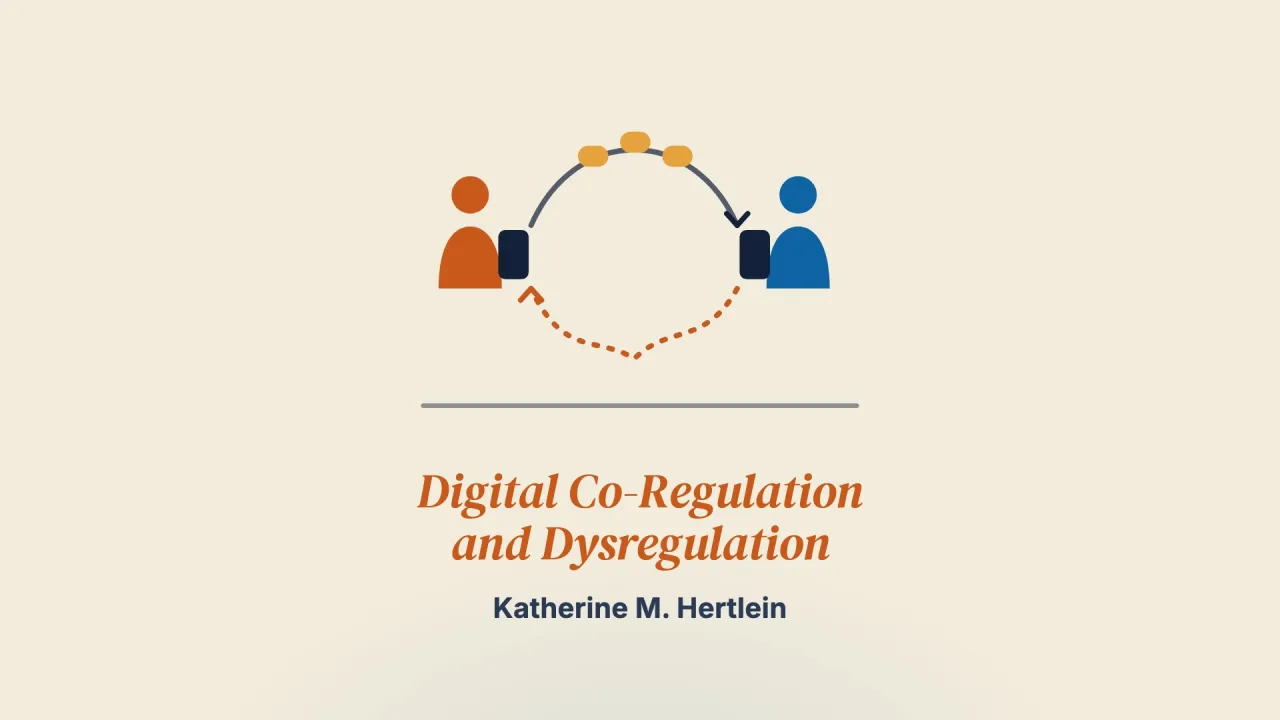
 Digital Co-Regulation and Dysregulation in Romantic Relationships: A Systemic Model of Technology-Mediated Emotional Processes
Checking, chasing, blocking: 31 interviews show how the phone regulates or dysregulates a couple’s anxiety, with a systemic model of the loop.
 Blog
Blog Toxic, narcissistic, borderline: what therapy speak does to your relationships
Narcissistic, borderline, toxic: therapy speak has left the consulting room. Julien Besse shows how these labels close the debate and relieve us of our own part.
 Scientific
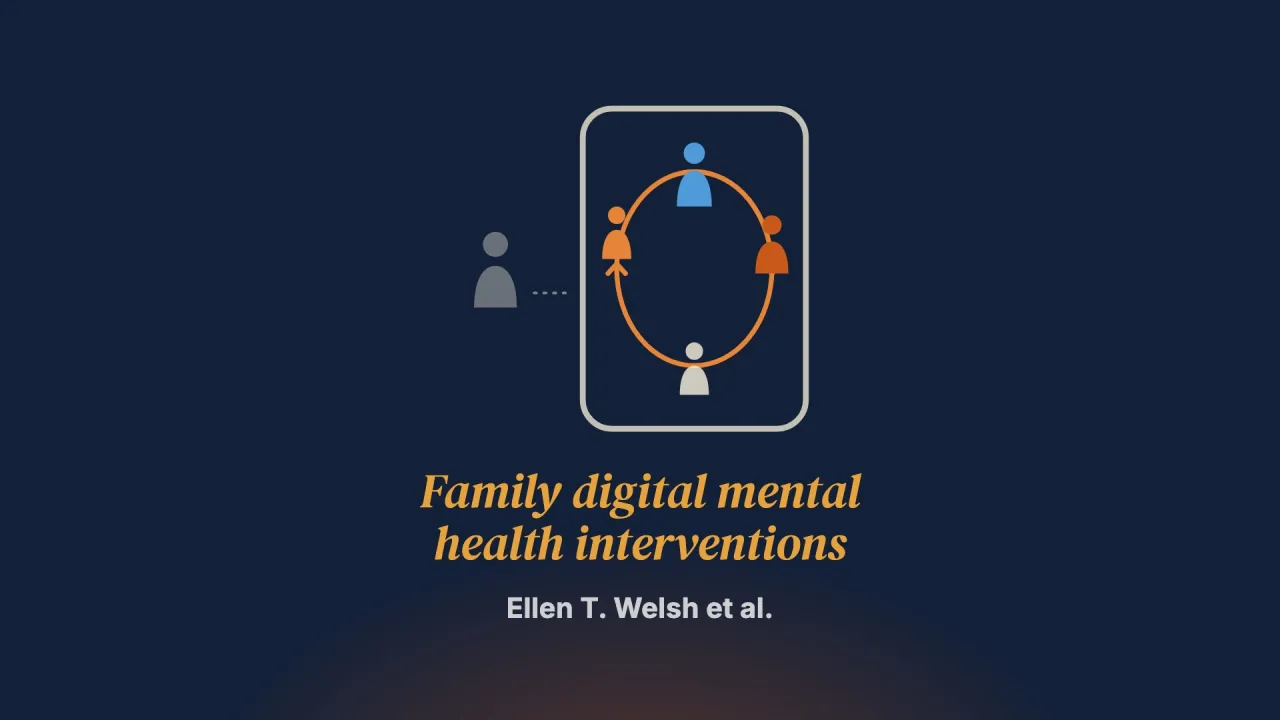
 Family digital mental health interventions: aligning design and systemic practice principles
Mental health apps follow the individual CBT model. What would a design faithful to systemic principles change, with the whole family as the client?
Comments 0
Log in to join the discussion. Log in