AI-assisted translation
This version was translated from French by Complexe Systémique with the help of artificial intelligence. In case of doubt, the original version prevails.
Systems theory
Homeostasis: what holds us together, and what holds us back
A system’s balance protects its integrity. That same balance can become the main obstacle to change.
Part 1
What is homeostasis? A dynamic balance above all
Homeostasis refers to a system’s capacity to maintain its internal balance despite outside disturbances.
The concept comes from biology. The French physiologist Claude Bernard first hinted at it in the nineteenth century, speaking of the “stability of the internal milieu”; Walter B. Cannon formalised it in 1932 and coined the term homeostasis. Etymologically, from the Greek hómoios (similar) and stásis (stable position): remaining similar in a changing world.
In practice, a warm-blooded organism keeps its body temperature constant, and our bodies continually regulate blood sugar. This stability rests on negative feedback loops: like a thermostat, a sensor detects a change in a parameter and triggers corrective action to return to the reference value.
Stability is not rigidity
Homeostasis is a living, fluctuating balance. Think of your breathing: it swings between inhaling and exhaling, adjusting constantly to effort, while maintaining a sufficient supply of oxygen. A homeostatic system resembles a living river far more than a stagnant pond.
Part 2
Homeostasis in families, groups and organisations
In systems thinking, homeostasis describes a human group’s tendency to preserve its habits and its way of functioning. Every family, couple, team or institution holds an implicit balance made of rules, roles and routines. Within a family, each person may occupy a well-defined role — the mediator, the rebel, the protector — and interact according to tacit rules that maintain the group’s coherence. That coherence is reassuring: it offers members a sense of safety and predictability.
Clinical vignette
A teenager displays rebellious behaviour at school and at home. However problematic, the symptom may play a homeostatic role: it focuses the parents’ attention on the young person’s conduct, perhaps sparing them a confrontation with their own latent marital conflict. As long as “the teenager’s problem” fills the whole space, the family edifice holds.
If therapeutic intervention were to calm the young person abruptly, the underlying parental tension would risk resurfacing. The family system then seeks to restore its former balance. Hence the relapses one sometimes observes, or the emergence of a new symptom: another child develops physical complaints, a parent becomes depressed. As if the family were inventing a way back to the status quo.
Organisations show homeostasis too. Faced with a change of procedure or the arrival of a new manager, a company may display informal resistance. Employees quietly keep applying the old habits, or wait for it to blow over, until the organisation returns to its familiar way of working.
The same holds for individuals. Our psychological habits, even unhealthy ones, serve an internal balancing function: they maintain a known comfort zone. This is why changing an ingrained behaviour can produce a diffuse unease, as though something abnormal were happening inside us. The system that is our mind seeks to return to its known point of equilibrium, sometimes at the expense of our conscious well-being. We may sabotage a project we care about simply because stepping outside our usual frame generates too much anxiety.
Part 3
A vital regulating force, and a brake on change
Homeostasis is at once a valuable ally and a stubborn opponent of change.
What it protects
Without homeostatic mechanisms, living systems would spin out at the slightest disturbance. Our social systems need a minimum of stability — shared values, laws, routines — to avoid collapsing into chaos at the first crisis.
What it prevents
Once a system has organised itself around a status quo, any attempt at major change triggers restoring forces in the opposite direction. The system treats change as an error to be corrected.
It makes continuity possible. Think of a tightrope walker constantly adjusting their centre of gravity to stay on the wire: each micro-correction prevents a fall.
But a family that has always communicated avoidantly — never speaking about problems — will react with discomfort if one member starts expressing their emotions honestly. Others will immediately minimise, make a joke, or change the subject. All of it aimed at restoring the original climate of avoidance.
Homeostasis therefore acts as a brake on change as soon as change is perceived as a threat to the existing balance. The paradox is that every member of the system may say they want things to get better, while involuntarily contributing to maintaining the problematic situation, simply because it is the functioning they know.
Family therapists have identified this phenomenon since Don Jackson’s work in 1957, which described family homeostasis as what accounts for resistance to change in families. The more a system feels threatened, the more it clings to what it knows: better the devil you know.
Part 4
Supporting change: working with homeostasis, not against it
Faced with a system’s homeostasis, the instinct might be to break it at all costs. If it maintains a problem, why not confront it head-on? Experience shows that a brutal approach risks reinforcing fear, leading the system to grip its old way of functioning even tighter. It amounts to pulling too hard on an elastic band: it comes back in your face.
A therapist who violently confronted a family by listing all its dysfunctions from the outset risks watching it close up and break off therapy, overwhelmed by the perceived threat.
1
Acknowledge what is good in the current balance
Legitimise the part of each member that fears losing something in the process of change.
2
Bring the hidden functions to light
“If your family stopped arguing altogether, what would you dread?” The question may reveal that a mother fears that, once she stops worrying about her children’s conflicts, she will finally have to face her own emptiness.
3
Use the resistance as leverage
The Palo Alto school developed paradoxical techniques in which the patient is asked on no account to change, or even to exaggerate the symptom.
4
Co-construct a new balance
Once the fears have settled, guide the system through gradual adjustments. Each small accepted change gently shifts the point of equilibrium.
The paradoxical approach defuses the power struggle with homeostasis: instead of a lose-lose tug of war, the system is given permission to stay stable, which can lead it to alter its functioning of its own accord.
The aim, of course, is not to leave the system frozen in a problematic status quo. It is to co-construct a new and more satisfying balance.
What to take away
Being at once the safety rail that secures and the catalyst that inspires movement.
Changing with homeostasis rather than against it calls for humility and patience on the practitioner’s part. They become an element of the system in transition, a partner who supports stability as much as transformation.
Further reading
- Cannon, W. B. (1932). The Wisdom of the Body. W. W. Norton.
- Jackson, D. D. (1957). The question of family homeostasis. The Psychiatric Quarterly, 31(1), 79-90.
- Watzlawick, P., Weakland, J. H., & Fisch, R. (1974). Change: Principles of Problem Formation and Problem Resolution. Norton.
- Maturana, H. R., & Varela, F. J. (1980). Autopoiesis and Cognition: The Realization of the Living. D. Reidel.
- Damasio, A. (2018). The Strange Order of Things: Life, Feeling, and the Making of Cultures. Pantheon Books.
Further reading on this site
- The more things change, the more they stay the same? Not alwaysMorphogenesis, or how a system produces unprecedented forms.
- Circular causality: when the cause is also an effectMoving past “whose fault is it” to understand the loops.
- Changing… but at which level?First order, second order, paradigmatic revolution.
- Crisis: a catalyst of transformationIt is not chaos, it is the threshold.
How to cite this article
Doumit, Y. (2025). Homeostasis: what holds us together, and what holds us back. Complexe Systémique. https://www.complexe-systemique.com
Related training courses
 Symposium
État des Lieux: a psychological approach to spaces
Replay of the “État des Lieux” conference (Paris, 16 October 2026): Ivy Daure, Maurizio Frisina, Viola Sallay and Gilbert Pregno on places as a clinical resource. In French.
 Certifying course
Training in Systemic Therapy and Interventions – Cycle 1
Certifying training cycle in systemic therapy and interventions – year 1. Courses, supervision and practice, aligned with EFTA/SFTF. In French.
 Certifying course
Training in Systemic Therapy and Interventions – Cycle 2
Certifying training cycle in systemic therapy and interventions – year 2. Clinical complexity, supervision and practice. EFTA/SFTF aligned. In French.
 Certifying course
Training in Systemic Therapy and Interventions – Cycle 3
Certifying training cycle in systemic therapy and interventions – year 3. In-depth intervention, supervision and practice. EFTA/SFTF aligned. In French.
Related articles
 Blog
Blog Adult parentification: when being useful becomes a condition for being loved
Why is it sometimes so hard to hand over? Julien Besse explores parentification and parentalisation, acknowledgement and the place we take in our adult relationships.
 Scientific
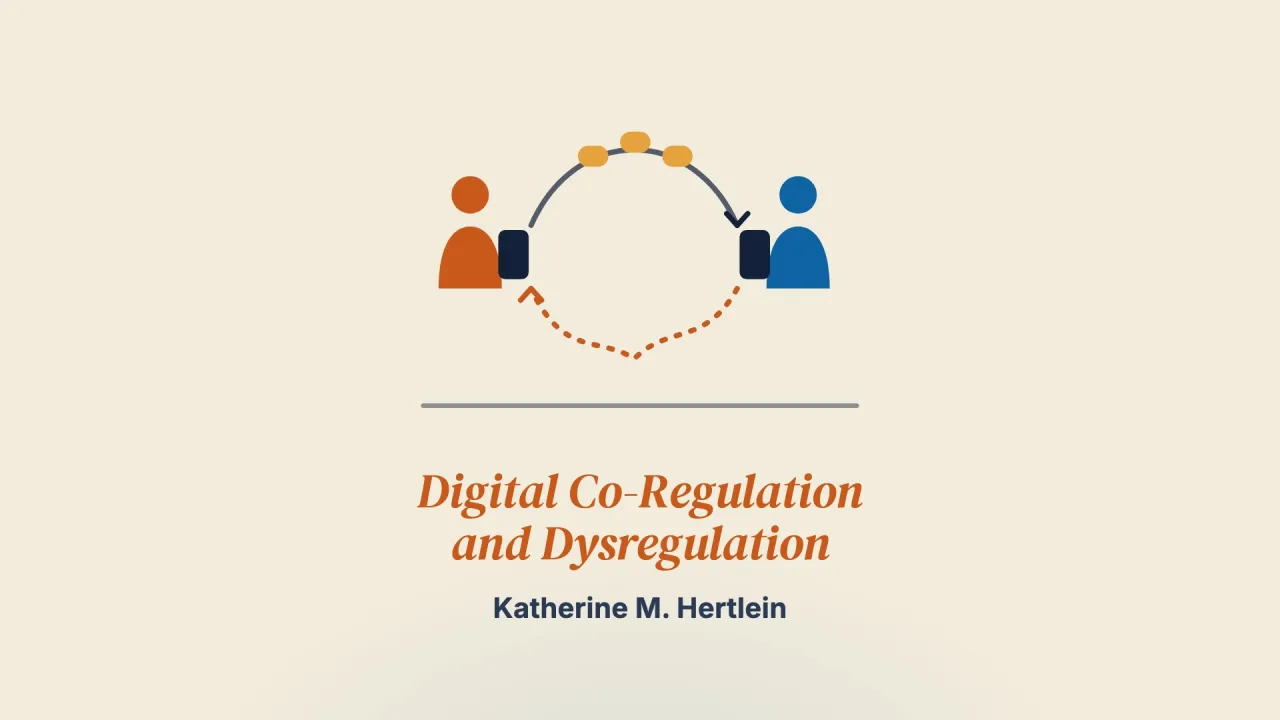
 Digital Co-Regulation and Dysregulation in Romantic Relationships: A Systemic Model of Technology-Mediated Emotional Processes
Checking, chasing, blocking: 31 interviews show how the phone regulates or dysregulates a couple’s anxiety, with a systemic model of the loop.
 Scientific
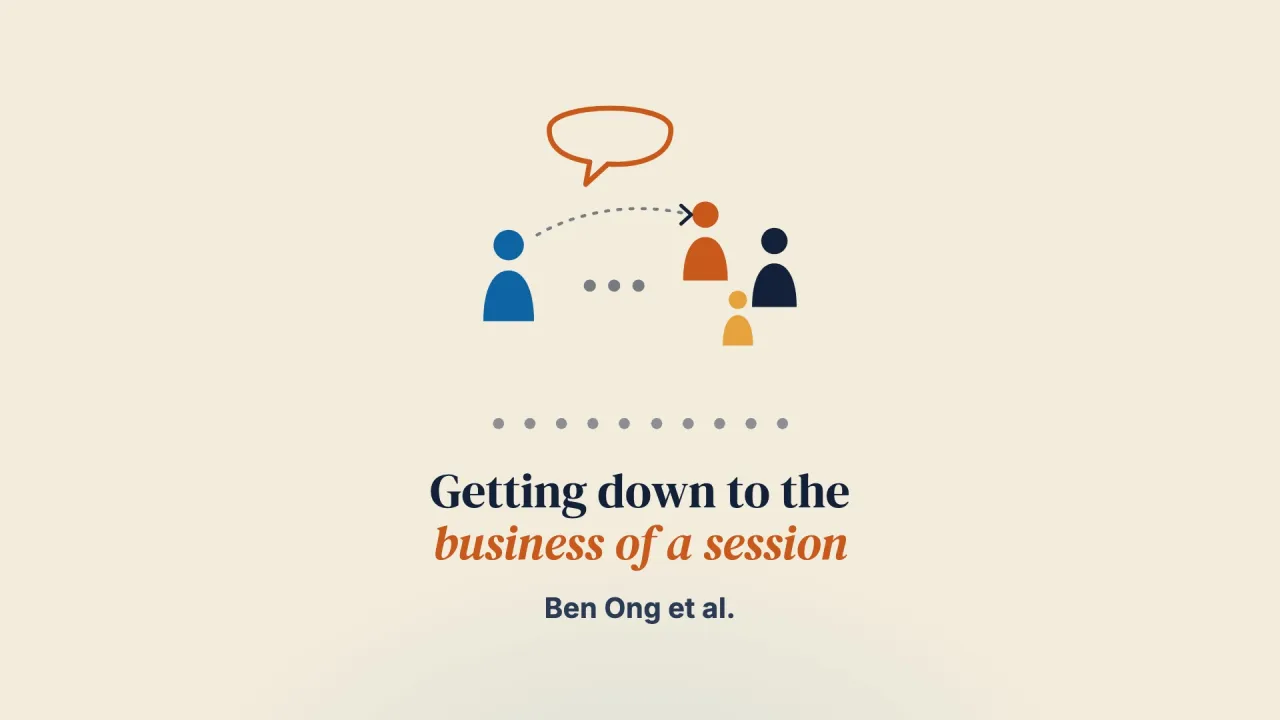
 Transitioning to the Business of a Session in Collaborative-Dialogic Meetings: A Conversation Analysis
How do Open Dialogue therapists move to the business of a session? The open question creates silences and family negotiation: a conversation analysis of ten sessions.
 Scientific
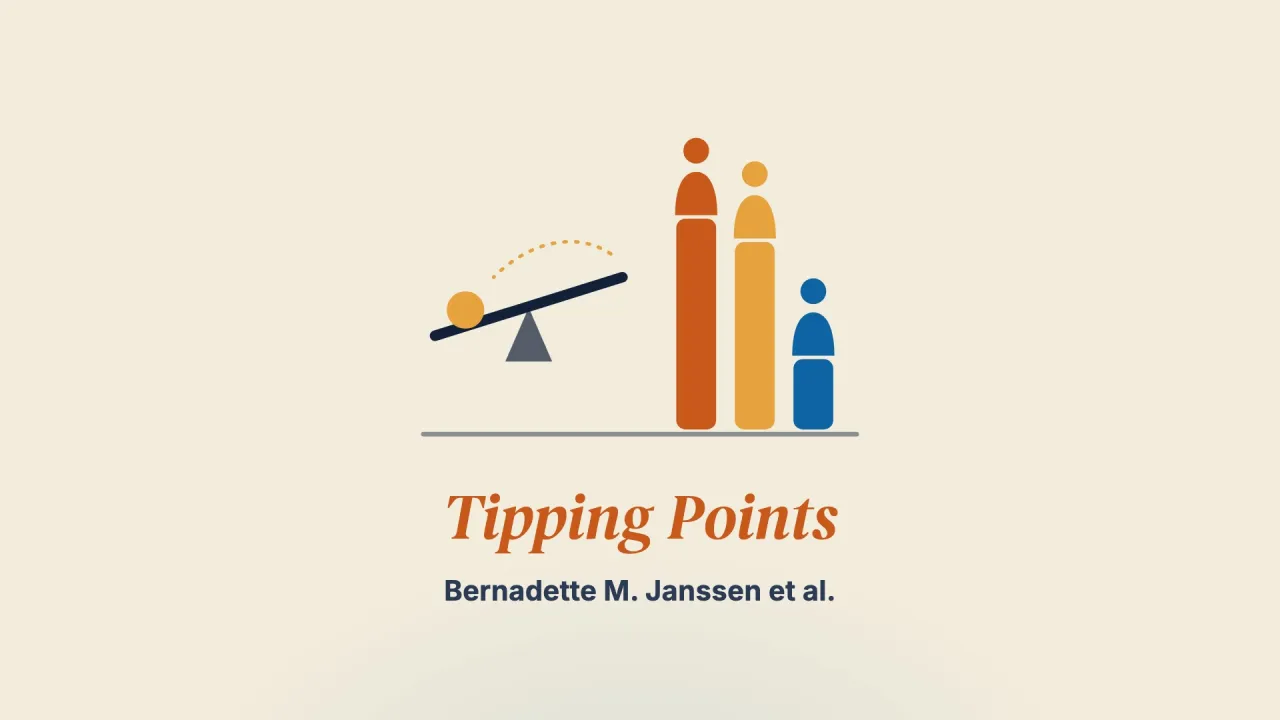
 Understanding the Impact of Family-Focused Youth Care: Examining Outcomes, Effective Elements and Tipping Points as Experienced by Parents and Youth
After family-focused youth care, the child and the family are doing better, the parents much less so. Alliance, content, organization and tipping points as families see them.
Comments 0
Log in to join the discussion. Log in