Red Sistémica · Psychopathology
Love, unlove and psychopathology
Receiving the degree of doctor honoris causa from the Maimónides University of Buenos Aires, Juan Luis Linares speaks from a threefold belonging: member of the university community, Spaniard, systemic family psychotherapist. From Maimonides, Averroes and Llull — three men who never used anything but learned speech in the service of their ideas — he draws the thread of a wholly modern perplexity: that of the compatibility between love and psychotherapy.
Note from the original
(*) Address given on being invested as doctor honoris causa, Maimónides University.
A threefold belonging
Distinguished academic authorities, dear colleagues and friends, ladies and gentlemen. I shall address a few words to you from my threefold condition as a member of the university community, as a Spaniard and as a systemic family psychotherapist.
As a member of the academic community, I must thank the Maimónides University for the honour it is bestowing upon me. Its generosity is great in granting me this distinction without any services of any kind having been rendered on my part, and this, do not doubt it for a moment, makes me feel in debt and obliges me to respond. The future will bear witness to my gratitude.
Maimonides, Averroes and Llull
As a Spaniard and an Andalusian, I should like to dwell for a moment on the figure of my compatriot (or perhaps it would be better to say of my country) the Cordoban Maimonides, the indisputable patron of this learned house. And I should like to do so in a contextualised way, contemplating not in isolation his gigantic figure as a Jewish sage, but accompanying him with two other titans of human thought: the Muslim Averroes, his contemporary and a Cordoban like him, and the Christian Llull, a Majorcan born a century later. All three lit up the supposed medieval darkness from that privileged space of creative coexistence which for a certain time was Spain — Sepharad — Al-Andalus.
All three belonged to their age and took part in its contradictions, but they faced them with a singular characteristic that united them beyond their differences: the will to convince by reasoning and by scientifically grounded persuasion. They paid a heavy price for it. Llull was rejected and persecuted, Averroes fell into disgrace and died under house arrest, and Maimonides had to go into exile to escape the rigour of Almohad fundamentalism. None of them submitted and, in particular, Maimonides brilliantly rebuilt in exile a life that allowed him to develop his extraordinary work.
I am not the right person to gloss the immense work of Maimonides. I shall refer, very briefly, to only two of his books: a minor one, the Treatise on Sexual Intercourse, and a major one, the Guide for the Perplexed — which could just as well be called the guide for those who have gone astray. In the Treatise on Sexual Intercourse, our sage displayed a great capacity for reframing, since he turned what was no more than a commission from the lustful sultan of Hama, eager to increase his virile potency, into a rich and measured manual of sexual hygiene. As for the Guide for the Perplexed, its title would deserve to belong to Argentine literature, for Borges and Cortázar would doubtless dispute its paternity. The content, however, belongs unequivocally to Maimonides and to his time, since it is an immense effort to make faith and science compatible. The perplexed would be those who, guided by reason, felt themselves in danger of colliding with revealed truth, which medieval man could hardly do without. A further merit of Maimonides, and one that has not perished — doubly perceptible in these times when religion continues to justify attacks, massacres and invasions — is that he never used anything but learned speech in the service of his idea, and neither the stake nor the sword.
A modern perplexity: love and psychotherapy
As a systemic family psychotherapist, I want, in all modesty, to imitate Maimonides by travelling through a territory of modern perplexity: that of the compatibility of love and psychotherapy. At bottom, a crossroads of reason, emotion and practice, not so different from the one the Cordoban explored eight hundred years ago.
There are anthropological arguments that make it possible to maintain that love is the defining element of the human condition…
Who is Juan Luis Linares
(1) Dr Linares is a psychiatrist and psychologist, full professor of psychiatry at the Autonomous University of Barcelona, director of the psychotherapy unit and of the family therapy unit of the Sant Pau Hospital in Barcelona. He was president and founder of the Societat Catalana de Teràpia Familiar, of the Spanish Federation of Family Therapy Associations and of the European Family Therapy Association. He is the author of numerous books, among them Tras la honorable fachada. Los trastornos depresivos desde una perspectiva relacional and Del abuso y otros desmanes. El maltrato familiar entre la terapia y el control.
Partial text
Red Sistémica publishes online only a fragment of this address, which breaks off here, at the opening of its central development. The full text appeared in no. 89 of Perspectivas Sistémicas, the journal published in print by the house.
This article is an English translation of “Amor, desamor y psicopatología”, published by Red Sistémica (first published in Perspectivas Sistémicas, n° 89, 2005). Translated and republished with the journal’s permission.
Read the original articleHow to cite this article
Linares, J. L. (2022). Love, unlove and psychopathology (Complexe Systémique, Trans.). Complexe Systémique. https://app.complexe-systemique.com/en_GB/articles/love-unlove-and-psychopathology (Original work published in 2005 in Perspectivas Sistémicas, n° 89, 2005; republished in 2022 by Red Sistémica, https://redsistemica.ar/2022/08/01/amor-desamor-y-psicopatologia/)
To go further
- A relational view of personality disordersPsychopathology read from the quality of the love received and given.
- Love: harmony in the systemAnother attempt to hold love and the systemic view together.
Related training courses
 Certifying course
Training in Systemic Therapy and Interventions – Cycle 1
Certifying training cycle in systemic therapy and interventions – year 1. Courses, supervision and practice, aligned with EFTA/SFTF. In French.
 Certifying course
Training in Systemic Therapy and Interventions – Cycle 2
Certifying training cycle in systemic therapy and interventions – year 2. Clinical complexity, supervision and practice. EFTA/SFTF aligned. In French.
 Certifying course
Training in Systemic Therapy and Interventions – Cycle 3
Certifying training cycle in systemic therapy and interventions – year 3. In-depth intervention, supervision and practice. EFTA/SFTF aligned. In French.
 Certifying course
Training in Systemic Therapy and Interventions – Cycle 4
Certifying training cycle in systemic therapy and interventions – year 4. Clinical integration, supervision and certification. EFTA/SFTF. In French.
Related articles
 Article
 Toxic, narcissistic, borderline: what therapy speak does to your relationships
Narcissistic, borderline, toxic: therapy speak has left the consulting room. Julien Besse shows how these labels close the debate and relieve us of our own part.
 Article
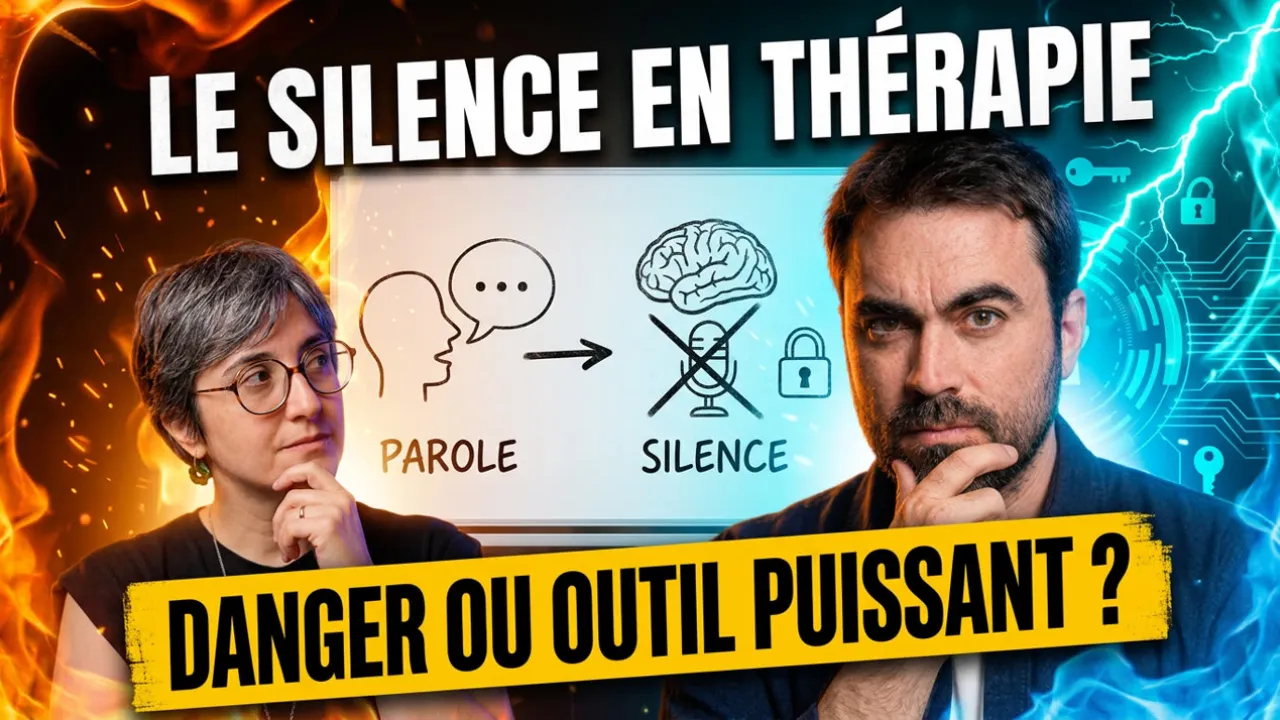
 Silence in therapy: a polysemic presence
From Heidegger to Palo Alto, silence is not an absence but a message. Defensive, strategic, reflective or shared: its forms, its functions and its risks.
 Article
 When intuition comes before strategy. The first flash of meaning
From Bergson to von Foerster, intuition is not the enemy of rigour but its immediate side. How it works concretely in the clinical interview, and why it calls for a reflexive stance.
 Article
 Crisis: a catalyst of transformation in human systems
A crisis is not a malfunction to correct but an effort by the system not to founder. From the Denver Project to Falicov: a typology and what it asks of the practitioner.
Comments 0
Log in to join the discussion. Log in