AI-assisted translation
This version was translated from French by Complexe Systémique with the help of artificial intelligence. In case of doubt, the original version prevails.
Concept · Identity
The areas of identity
How do we become ourselves? The notion of identity is a complex phenomenon: at once the set of criteria that define a subject, and the inner feeling that develops and builds itself throughout life, for each and every one of us.
This construction is also a narrative construction, in the sense that identity is largely tied to the story we tell ourselves about ourselves — a story obviously nourished by all the stories we have heard about us since our earliest childhood.
Here I present the different areas of identity, according to the original model of Gerald Caplan, later enriched by systemic therapists from Lyon.
Genetic identity
Genetic identity is the one that — a priori — is the most stable over time for most people (I am a woman, I am a man, I have freckles, and so on). It is also the one that could not be changed, at least until a few years ago. This has been evolving a great deal lately, and today there exists the possibility, for people who feel profoundly different in their genetic identity, to change sex.
Family identity
Family identity is built very early, through all the interactions within the family environment. It is the result of a complex construction, at the crossroads of the parents’ projections and the child’s behaviour. This identity is built on all the confirmation messages that parents may address to their child, as well as on the potential disqualification messages. This is what will help build the foundation of self-esteem and self-confidence.
The family plays a leading role in the learning and emotional maturation of individuals. It is the children’s experimental laboratory for defining their identity. It is first within the family that we develop the feeling of filiation, the notions of power and status, individual differentiation, the confirmation of self-esteem, and so on. In families with several children, the different identity-confirmation messages are plain to see: one will be the scientist, another the literary one; one the intellectual and the other the practical one, one the calm one and the other the dynamic one. You will notice that I am deliberately using positive labels, but this construction of identity can unfortunately also take place on a demeaning basis: instead of the calm one and the dynamic one, we will then have the lazy one and the angry one.
The way things are said in the family is just as important as the words that are used: if there is a dissonance, it is the non-verbal message that the child will pick up to give meaning to the experience. We must not forget that from a developmental point of view, and even on the scale of the evolution of species, well before the development of spoken language and its complexification, the understanding of one’s environment and of social interactions rests on non-verbal decoding. One must grasp very quickly whether the other is potentially aggressive or harmless, whether they are coming towards us with good or bad intentions: extrapolating, it is even a matter of survival.
Social identity
Social identity begins to develop from our first experiences of collective life, generally from the moment we start school. It is the part of us that is defined notably through friendships. It is the way you perceive yourself in society.
For example: I am a good friend, I am someone reliable (I am there when my friends need me, for a house move, and so on), I am someone funny — and note that I may perceive myself as having a sense of humour in the social sphere, but not at all in the family sphere, and vice versa.
Professional identity
Professional identity, for its part, develops from our first experiences in the world of work: starting with internships, then small summer jobs, then the start of professional life. This identity is the set of representations you have of yourself in the context of work.
For example: I am rigorous, I have great adaptation skills, and so on.
Sexual identity
This area of identity is built through the development of our sexualised role. Let me draw your attention to the fact that this development begins in childhood: at that stage, we are not talking about sexuality the way we would for an adult, but it is built from the very first sensory experiences and matures with life experience.
To explore these different areas further, I invite you to watch the video — in French — below.
How to cite this article
Besse, J. (2021, May 2). The areas of identity. Complexe Systémique. https://app.complexe-systemique.com/en_GB/articles/the-areas-of-identity
To go further
- Pathological communications: defusing operationThose messages that confirm or disqualify the other person, and how to spot them.
- The self-fulfilling prophecy explained simplyWhen the stories told about someone end up shaping them.
- What destroys us and what builds us: a journey into systemic therapyA systemic journey to the heart of what damages people and what repairs them.
Related training courses
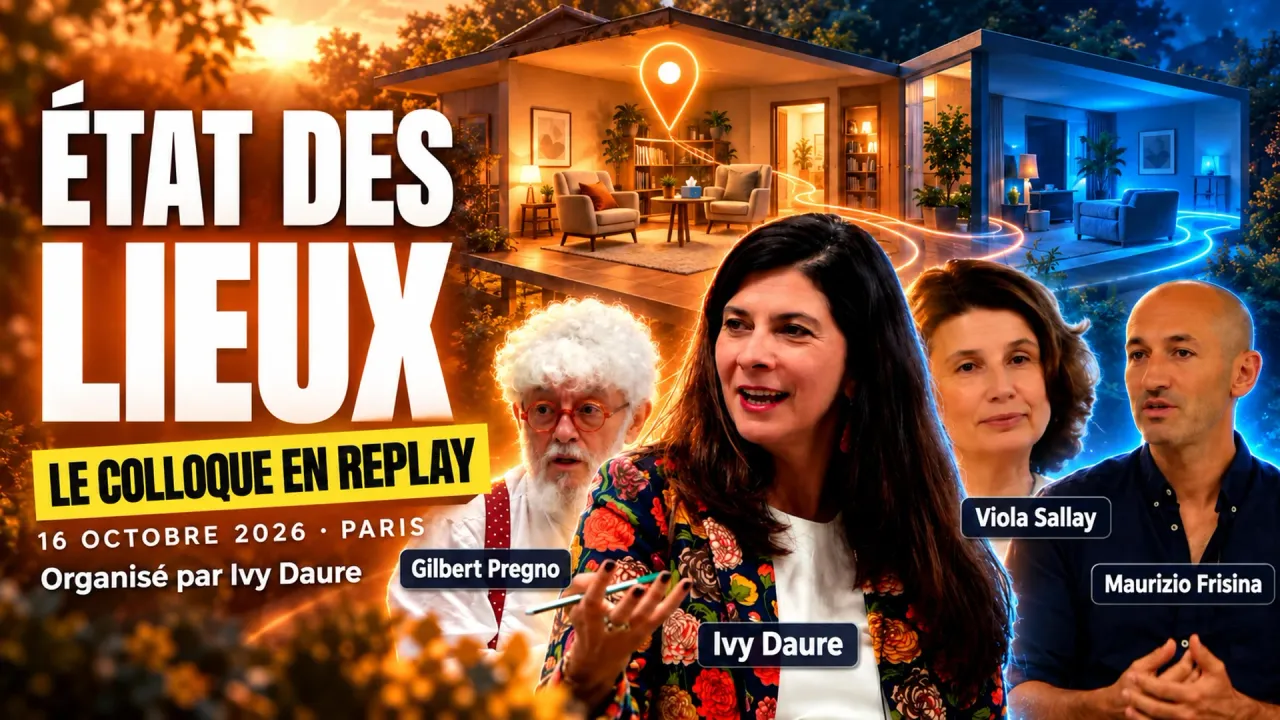 Symposium
État des Lieux: a psychological approach to spaces
Replay of the “État des Lieux” conference (Paris, 16 October 2026): Ivy Daure, Maurizio Frisina, Viola Sallay and Gilbert Pregno on places as a clinical resource. In French.
 Certifying course
Training in Systemic Therapy and Interventions – Cycle 1
Certifying training cycle in systemic therapy and interventions – year 1. Courses, supervision and practice, aligned with EFTA/SFTF. In French.
 Certifying course
Training in Systemic Therapy and Interventions – Cycle 2
Certifying training cycle in systemic therapy and interventions – year 2. Clinical complexity, supervision and practice. EFTA/SFTF aligned. In French.
 Certifying course
Training in Systemic Therapy and Interventions – Cycle 3
Certifying training cycle in systemic therapy and interventions – year 3. In-depth intervention, supervision and practice. EFTA/SFTF aligned. In French.
Related articles
 Blog
Blog Adult parentification: when being useful becomes a condition for being loved
Why is it sometimes so hard to hand over? Julien Besse explores parentification and parentalisation, acknowledgement and the place we take in our adult relationships.
 Scientific
 Family group conference provision across the lifespan of child welfare intervention: A mixed-method realist-informed evaluation comparing three stages of welfare concern
Early help, child protection or children in care: among 155 UK families, experiences and outcomes of family group conferences vary very little by stage.
 Scientific
 Digital Co-Regulation and Dysregulation in Romantic Relationships: A Systemic Model of Technology-Mediated Emotional Processes
Checking, chasing, blocking: 31 interviews show how the phone regulates or dysregulates a couple’s anxiety, with a systemic model of the loop.
 Scientific
 The Role of Parental Expressed Emotion and Loss-Specific Parental Responses in Children’s Loss-Related Outcomes Following Traumatic Loss: A Mixed-Methods Observational Study
After a road-traffic bereavement, parental criticism goes with the child's depression, positive appraisals of the loss with better well-being.
Comments 0
Log in to join the discussion. Log in