AI-assisted translation
This version was translated from French by Complexe Systémique with the help of artificial intelligence. In case of doubt, the original version prevails.
Behind the scenes · The project
The craziest project of my career…
I want to tell you about the most “pharaonic” project I have carried so far. But for that word to mean anything, I need to rewind a little: a solid university training, a mismatch out in the field, a turning point, and then an urge to pass things on that ended up becoming a house.
Better at detecting than at supporting
When I trained at university, I learned a great deal. Truly. Precious markers on child and adolescent development, solid notions on neuroatypicality and autism spectrum disorders, tools for observation and assessment. I was trained to spot, to classify, to understand ways of functioning. And at the start of my working life, that served me well.
But fairly quickly, out in the field, a mismatch imposed itself on me. I was working in an institution, with children and their families, and I realised I was often better at detecting than at supporting. Better at naming than at transforming. As if I had learned to light up a room… without having learned to live in it with people.
The tools I had been trained in were serious and structuring: functional analysis grids, behavioural assessments, methods such as ABA and PECS, and other standardised approaches. I do not deny their value. But in the reality of family bonds, in the thickness of life stories, in contradictory emotions, in loyalties, in exhaustion, I felt that something was not getting through. It worked sometimes, yes. But too often I came out of certain situations with an unpleasant impression: that of having done what one knows how to do instead of genuinely joining people where they are.
Let me say it simply: I felt limited. And for me, that limit was a signal saying: “You need to learn differently. You need to learn to support human systems, not only symptoms.”
The turning point
That was when I turned towards a training in systemically oriented family therapy. And I weigh my words: it was a revolution. A shift in the way I listened. A shift in the way I was in the room.
What I discovered was not only a toolbox. It was a change of gaze. The idea that the problem is not always inside the person, but in relational loops, contexts, implicit rules, attempted solutions that harden. The idea that a symptom can have a function, a place, a paradoxical usefulness. The idea that, very often, what causes suffering is not an individual flaw but a system that can no longer adjust.
And above all, I discovered something very concrete: attention to resources.
Before
A training in which one hunts for deficits, spotting what is wrong, what is missing, what malfunctions.
After
Another question, almost subversive in its simplicity: “What is still holding? What works, even a little? What has allowed this family to get this far?”
That reversal changed my practice. And honestly, it changed me. I was seized by a reading frenzy: I think I read everything I could get my hands on. Founding texts, ways of thinking that had, for me, slipped somewhat under the radar during my university years. I had vaguely heard of them at the end of my studies, thanks to one teacher — a seed planted late, but one that eventually grew.
Over time, something else mattered: meeting the people who founded, embodied or transformed this current. The systemic approach is not that old, and there is something rare in being able to cross paths with pioneers who are still alive, to listen to them, to watch them work, to hear their voice, to sense their way of being in the world.
Making things accessible without impoverishing them
And that is where another thread wove itself, almost in spite of me: transmission. I think I am driven by a very simple, and very demanding, question.
“How do you make something accessible without impoverishing it?”
The question that holds the whole project together
How do you speak of complex concepts without simplifying them in the sense of making them false, but rendering them approachable, breathable, practicable? How do you teach without betraying complexity — and without crushing people under jargon?
I began passing things on around me, then more widely, and one day I launched a YouTube channel and content on social media. At the time I had no idea what that would open up. I thought I was sharing. I did not yet realise that above all I was going to meet people. Practitioners in the field. People who embody ways of thinking. People who doubt, who work, who try, who fail, who adjust. And, mirroring that, an audience too: people in training, professionals with questions, curious minds, sceptics sometimes. A community in the making.
Out of all this came the idea of the Complexe Systémique. I say “idea”, but in reality it has become a training organisation. And I want to say it as I think it: I do not see it first as a structure. I see it as a community of mutual aid, support, sharing and exchange of knowledge. A place where the diversity of viewpoints is not a problem to solve but a resource to cultivate. A place where we try to make complexity exist in a living way, not a theoretical one.
Knowledge is situated
At this point, a confidence helps explain the way I think. I am a great reader. And I have always had a strange frustration: not being able to hear Victor Hugo. I can read him, of course. But I cannot see his bearing, his presence, his voice. I cannot grasp what he gave off, what he embodied when he spoke.
Why does that touch me so much? Because I deeply believe that knowledge is situated. It does not exist out of the ground. It has a geography, a history, a body, an era. And a thought is also understood through the way a person carries it, says it, qualifies it, lives it. That is one of the reasons I wanted to go and meet authors, therapists, people who have built approaches, and to film them. For posterity, yes — the word may sound grandiloquent, but it says something true: keeping a trace, preserving a voice, passing on an embodiment, not only concepts.
In that spirit, I have had the chance to live through powerful human adventures, sometimes urgent ones. I am thinking in particular of this online training created with Charlie Crettenand, at a time when illness was striking him. Charlie is no longer with us. But that transmission exists. And I say it soberly: I am proud that this knowledge can keep circulating.
I am also thinking of Robert Neuburger, an immense source of inspiration, and of this online training on the foundations of couple therapy that we built together. Here again, it is not only content: it is a way of making an experience, a way of thinking, a clinical practice available.
One channel for the foundations, another for the present
But something was still missing. Going to find the founders is essential: understanding the roots, the historical shifts, the initial gestures. Yet for an approach to endure, it must also renew itself. It must confront its own era. It is in that spirit that I am very happy to announce the creation of a new YouTube channel: the Complexe Systémique channel, distinct from the Julien Besse channel.
The idea is simple, and it came from an observation: you do not address everyone in the same way. There is a very broad audience that deserves rigorous, accessible, human popularisation, free of condescension. And there is also an audience of professionals, future therapists, people who want to go into more technical detail, into epistemology, into deeper clinical work. Gradually, the Complexe Systémique channel will host more specialised, more craft-oriented content: worked-through concepts, tools, analyses, dialogues between practitioners, reflections on ethics, stance and intervention. And the Julien Besse channel can go on playing its role as a general-audience gateway, introducing the systemic approach to as many people as possible.
We are at the very first stammerings, truly. The beginning of an adventure. And I say this without artifice: it moves me to write it, because I know what it costs to begin, to expose oneself, to propose something.
The other side: a long training programme
For a long time I have had a desire: to create a long, certifying, demanding, contemporary training programme. A four-year programme, 1,400 hours. That is a lot. It is even double what most systemic therapy institutes offer.
4
years of training
1400
hours, double most curricula
2026
first cohort starting in March
Why aim so high? Out of ego? No. Very honestly: out of responsibility. Because I see too many therapists left alone, too soon, with heavy situations, families in crisis, couples at a dead end, institutions under strain, and a feeling of imposture or isolation. And I believe you do not train therapists with concepts alone. You train them with time, practice, supervision, intervision, feedback, friction, living clinical work. You also train them by giving them a backbone: an epistemology, an ethics, a capacity to think in complexity without getting lost.
This programme will obviously integrate the foundations of the systemic approach. But it will also be designed for today: with the digital world, contemporary uses, social media, and questions that are rising fast, such as artificial intelligence — not as a gadget, but as a transformation of practices, frames and our relationship to knowledge.
Because, in my view, doing therapy today is no longer confined to the scale of the consulting room. Our action can unfold otherwise: through prevention, training, the creation of resources, intervention in institutions, the spread of a relational culture, the opening of spaces for thought. Many ways of being a therapist are opening up, and the idea is to train the therapists of tomorrow: competent, grounded, critical, able to work with complexity without reducing it.
The first cohort will begin in March 2026. After that, depending on demand, a new cohort may open each year.
If either of these two adventures speaks to you — the Complexe Systémique channel or the long training programme — I hope to meet you there. And, as always, take good care of yourselves. I tell all of this in my own voice in the video below, in French.
How to cite this article
Besse, J. (2026, January 11). The craziest project of my career…. Complexe Systémique. https://app.complexe-systemique.com/en_GB/articles/the-craziest-project-of-my-career
To go further
- My path and the genesis of the projectThe very first post, back in 2021: where this urge to share already came from.
- My decision is madeResigning from the institution after ten years — without which none of this would exist.
- Show your work!The book that changed how I relate to making my own work visible.
Related training courses
 Symposium
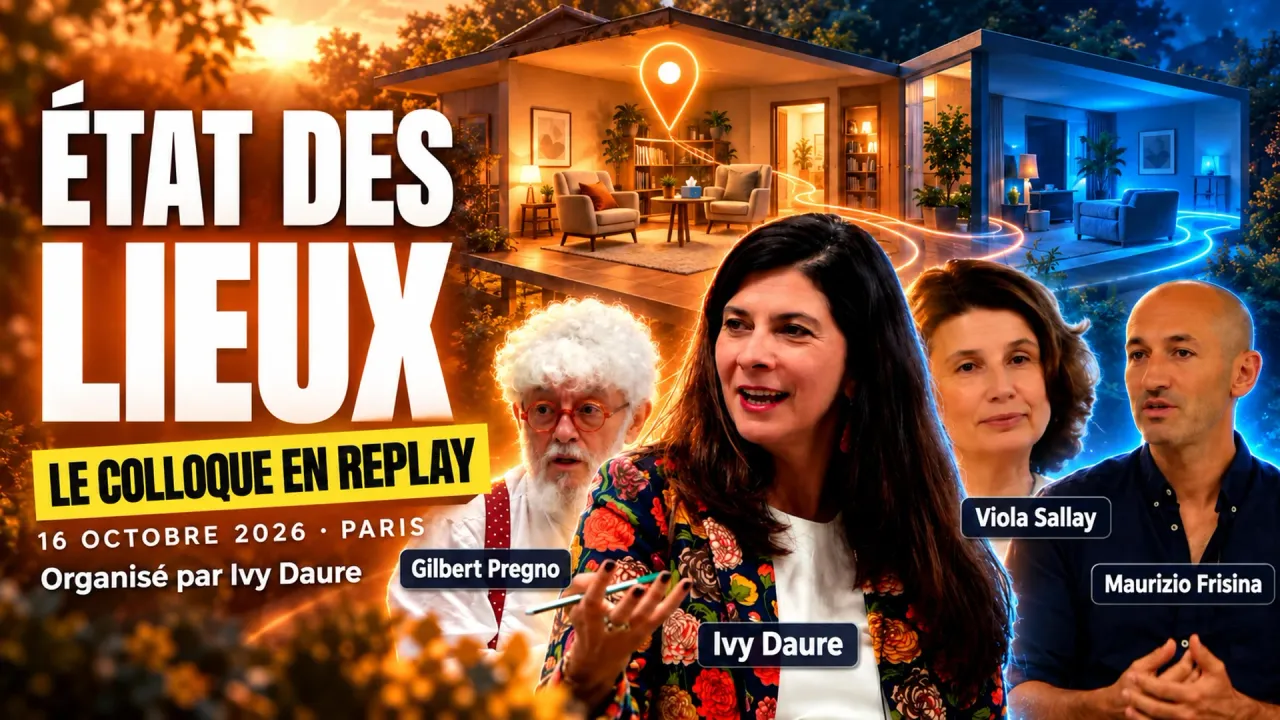
État des Lieux: a psychological approach to spaces
Replay of the “État des Lieux” conference (Paris, 16 October 2026): Ivy Daure, Maurizio Frisina, Viola Sallay and Gilbert Pregno on places as a clinical resource. In French.
 Certifying course
Training in Systemic Therapy and Interventions – Cycle 1
Certifying training cycle in systemic therapy and interventions – year 1. Courses, supervision and practice, aligned with EFTA/SFTF. In French.
 Certifying course
Training in Systemic Therapy and Interventions – Cycle 2
Certifying training cycle in systemic therapy and interventions – year 2. Clinical complexity, supervision and practice. EFTA/SFTF aligned. In French.
 Certifying course
Training in Systemic Therapy and Interventions – Cycle 3
Certifying training cycle in systemic therapy and interventions – year 3. In-depth intervention, supervision and practice. EFTA/SFTF aligned. In French.
Related articles
 Blog
Blog Adult parentification: when being useful becomes a condition for being loved
Why is it sometimes so hard to hand over? Julien Besse explores parentification and parentalisation, acknowledgement and the place we take in our adult relationships.
 Scientific
 Decolonizing Supervision: A Critical Race and Queer Theory Framework for Marriage and Family Therapy
Supervision is not neutral: a framework drawing on Critical Race Theory and Queer Theory to name and share power in supervision, with a vignette.
 Scientific
 Digital Co-Regulation and Dysregulation in Romantic Relationships: A Systemic Model of Technology-Mediated Emotional Processes
Checking, chasing, blocking: 31 interviews show how the phone regulates or dysregulates a couple’s anxiety, with a systemic model of the loop.
 Scientific
 “Left Speechless in Front of My Children”: A Thematic Analysis of Parents’ Experiences During War & Displacement
Four mothers displaced after 7 October 2023 describe parenting under threat: alone in the shelter, children who mature overnight or regress, and an ambivalent welcome.
Comments 0
Log in to join the discussion. Log in