Systemic Practice and Action Research · Systemic practice
A Systemic Evaluation of the State of Affairs Following the Negative Outcome of the Referendum in Cyprus Using the Structured Dialogic Design Process
Cyprus, autumn 2006: thirty months after the rejection of the Annan plan, 26 peace activists, Greek and Turkish Cypriots, meet face to face and online to understand why the gap between the two communities keeps widening. Using the structured dialogic design process, they propose 120 factors and build a root-cause map: the media and vested interests weigh more heavily than the lack of vision.
This is a reformatted republication of A Systemic Evaluation of the State of Affairs Following the Negative Outcome of the Referendum in Cyprus Using the Structured Dialogic Design Process, by Yiannis Laouris, Marios Michaelides, Mustafa Damdelen, Romina Laouri, Derya Beyatli and Aleco Christakis, published in Systemic Practice and Action Research (Springer) (2009), doi: 10.1007/s11213-008-9111-y, under a CC BY 4.0 licence. Prepared by Complexe Systémique in September 2026: the authors’ text is unchanged; the layout has been adapted for reading online, which constitutes a modification of the work under the terms of the licence. Tables are presented as lists. This edition was made neither by the authors nor by the publisher, who are not responsible for its content or for any errors. The original version prevails.
differences are not between GCs and TCs but between different ideologies.
Yiannis Laouris, Marios Michaelides, Mustafa Damdelen, Romina Laouri, Derya Beyatli and Aleco Christakis
Abstract
This paper reports the results of the first of a series of co-laboratories organized by Cypriot peace pioneers 30 months after the negative outcome of the referendum concerning UN General Secretary’s plan for reunification of the island. The purpose of this co-laboratory was to support a diverse group of disengaged and disappointed peace pioneers and activists representing Turkish and Greek communities of Cyprus develop a shared understanding of factors contributing to the perceived widening of the gap between the two divided communities in Cyprus. The co-laboratory was organized using the structured dialogic design process (SDDP) approach within the context of a rich web-based communication environment. The root causes contributing to the widening of the gap are discussed and are also compared with those identified during a similar co-laboratory employing the Interactive Management methodology 12 years earlier.
Keywords: Cyprus, Peace, Referendum, Structured dialogic design process, Collective wisdom, Law of requisite action, Co-laboratories, Interactive management, Dialogue, Social system design, Agora, Democracy, Skype, Claripoint, Stakeholders, Technology of democracy, Learning community
Introduction
The negotiations between the political leaders of the Greek and Turkish communities in Cyprus (Turkish and Greek Cypriots; TCs, GCs) under the auspices of the UN culminated to the drafting of a comprehensive plan for the resolution of the Cyprus problem. This plan, known as the Annan plan, was put on separate referenda on the two sides of the island on April 24, 2004. The negative outcome of the referendum concerning the UN’s proposal for the solution of the protracted Cyprus problem and re-unification of island left behind it a climate of disappointment, and disempowerment. It also produced a foggy picture regarding any next step that can or should be taken in order to evade the impasse. Although, at the time of preparation of this article, more than 30 months have passed since the referendum, both the Cypriot politicians and the public at large remain heavily polarized and notably agitated. Two years after the Greek Cypriot media publicly tarnishing the reputations of peace pioneers by claiming they had been rewarded millions of dollars by the US government to support and promote the Annan plan, the House of Representatives through its Institutions Committee has decided to investigate allegations against “selected” Cypriots in the period leading to the referendum. Those who have invested years of their lives in trying to build trust and cooperation between the two communities were under “investigation” as being traitors. Such allegations contribute to the further increase of the division both across and within communities. In the northern part, the masses that supported the “yes” feel betrayed by the Greek side.1 They also feel disappointed by their own political leadership for not taking any tangible initiatives in order to resume dialogue and build trust. The polarization pushes constructive dialogue and wisdom away from the daily agenda. It is within the context of this deteriorating climate that the authentic dialogue process documented in this article was launched.
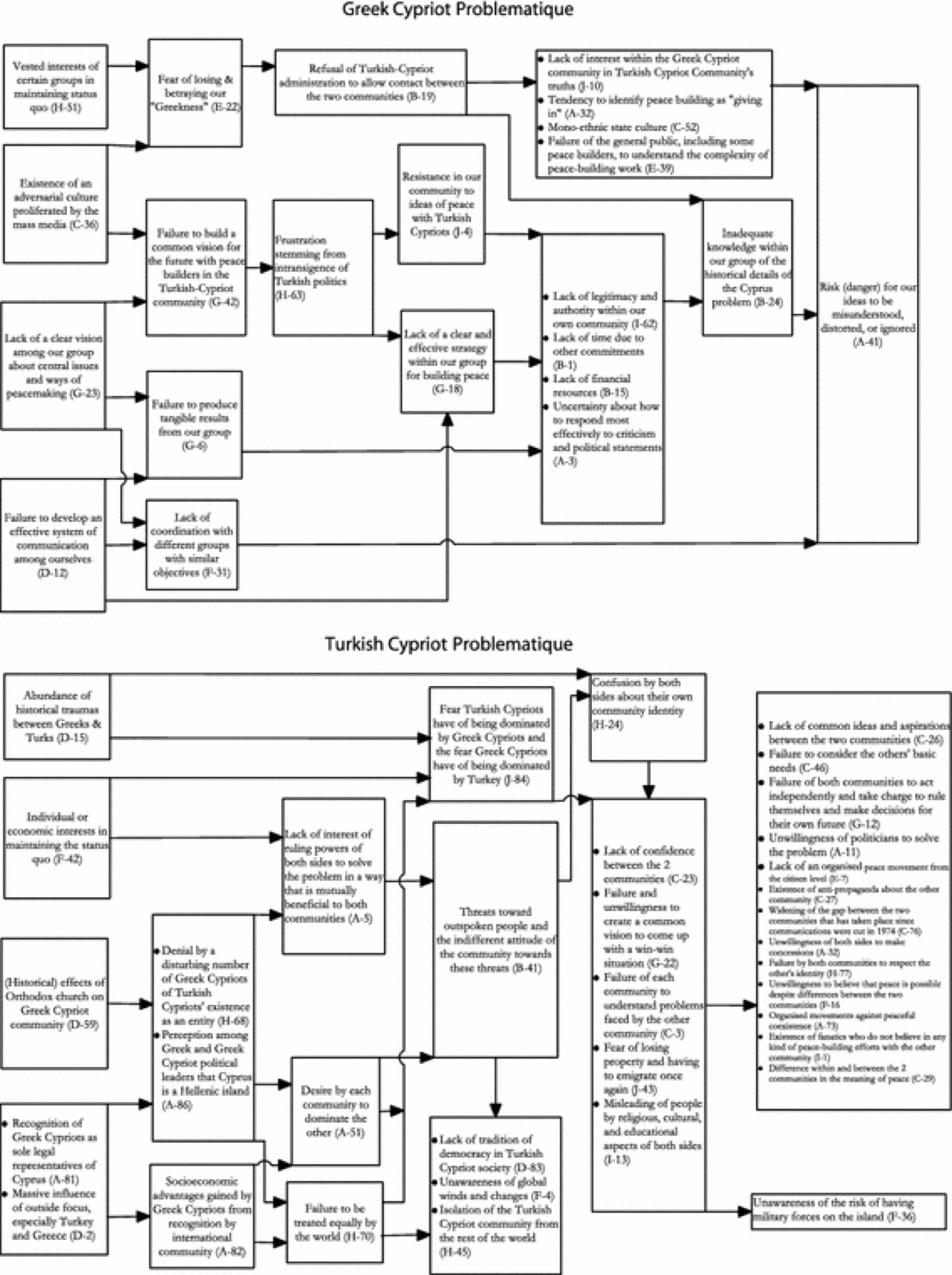
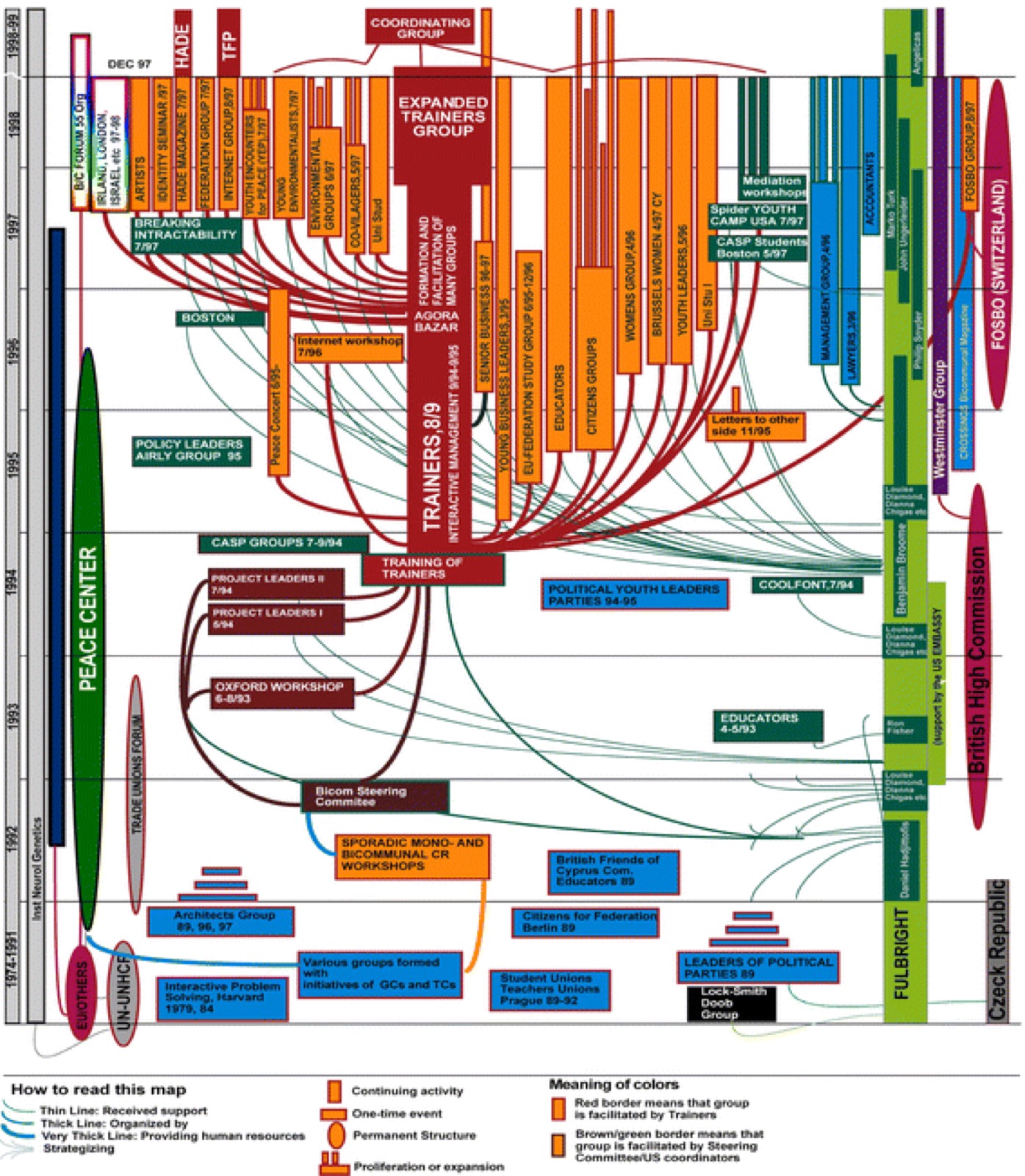
The initiative reported here was inspired by a team of six veteran peace pioneers, who decided to meet (physically) in September 2006 to discuss the post-referendum political situation in Cyprus and explore possibilities to revive their dream for a reunited island. These six pioneers were members of the peace group, widely known as conflict resolution trainers group (CRTG), which in the years between 1994 and 1997 managed to inspire and mobilize a few thousand Cypriots to work for peace and reconciliation. This core group of 32 Greek and Turkish Cypriots participated earlier in numerous problem solving, leadership, project management and design sessions focused on peace building efforts in Cyprus. They all became experts in the application of conflict resolution methodologies to facilitate authentic dialogue. Between the fall of 1994 and the summer of 1995, Benjamin Broome (a Fulbright scholar previously employed at George Mason University) facilitated their sessions using a computer-supported method of structured dialogue known as Interactive Management (IM; Christakis 1973; Broome and Chen 1992; Warfield and Cardenas 1994; for a recent review and worldwide applications see Christakis and Bausch 2006). Interactive Management is a technology-supported method to advance organizational democracy by encouraging and focusing on open dialogue. It is grounded on the works of Alexander Christakis and John Warfield, who researched and developed the method at the University of Virginia and George Mason University. Over a 9-month period, the Conflict Resolution Trainers Group met on a weekly basis in separate (North and South) community meetings. By the end of this 9-month period, they managed to develop very detailed Obstacles Maps shown as Appendix 1. The triggering question, which drove their early work, was “What are obstacles we must deal with as we engage in our peace-building efforts in Cyprus?” In response to this triggering question, GCs generated 67 and TCs 87 responses. These factors were structured using the IM methodology to produce the root-cause maps of Appendix 1. Subsequently, they applied the same methodology to produce a common vision map, which served as their works roadmap for the next decade2 (Broome 1997, 1998, 2001, 2005; Damdelen 1998; Laouris 2004; Laouris and Laouri 2008; Uludag 2006). In the summer of 1995, the CRTG group opened up to the communities and invited more people to join. Hundreds of Cypriots participated in their conflict resolution workshops. By the end of 1997, more than 2,000 individuals were introduced to the IM methodology and had the opportunity to meet and discuss in the context of structured dialogue with members of the other community. During a bi-communal workshop, which took place in October of 1997, the CRTG documented all newly created peace groups and their respective activities (see Appendix 2). The use of structured dialogue enabled the CRTG group of pioneer peace builders to demonstrate to their extended respective communities and to the world at large, that although significant differences may exist between the communities of stakeholders, structured dialogue produced ample common ground on which to build peace on the island (Broome 1996). The CRTG considered that one of the major obstacles towards building a culture of peace on the island was the fact that only a small number of Cypriots had the opportunity to participate in well-structured peace dialogue. They argued that this deprived them the opportunity to gain deeper understanding of the political situation and to engage in constructive dialogue. They did not have the opportunity to evaluate options and trade-offs critically. As a result, their interest for re-unification of their island remained diminished. (For early reviews and analyses of peace-building efforts in Cyprus, see Anastasiou 2000; Broome 1998, 2001; Gumpert and Drucker 1997; Hadjipavlou-Trigeorgis 1993; Laouris 1998, 2000, 2004.)
The primary goal of the co-laboratory reported here was to develop a shared understanding of the factors, which contribute to the perceived dissonance between the two communities. A critical comparison of the factors with those attained 10 years earlier, would reveal whether years of peace-related work managed to achieve tangible societal transformation. A secondary goal was to re-design SDDP exploiting the web and other virtual technologies in order to reduce the time and cost required for achieving desirable results. The authors aspired that with the use of modern technology they would (a) make possible the participation of remote participants located at different places, (b) break the process in smaller asynchronous chunks of time, thus making it more manageable and accessible to the diversity of stakeholders required for disciplined dialogue on complex issues, and (c) significantly shorten the time and lower the cost required for achieving reasonable results in terms of diagnosis and agreement on a collaborative action plan. Results related to this secondary goal and the scientific grounding of the new methodology within the science of cybernetics have been published in a technical paper (Laouris and Christakis 2007).
The SDDP Method
A hybrid version (i.e., combination of virtual and face-to-face interactions as well as synchronous and asynchronous communication) of the structured dialogic design process (SDDP) methodology was chosen to implement the co-laboratory. A typical SDDP co-laboratory is specifically designed to assist inhomogeneous groups of stakeholders to deal with complex issues in a reasonably limited amount of time (Banathy 1996; Warfield and Cardenas 1994). It enables the integration of contributions from individuals with diverse views, backgrounds and perspectives through a process that is structured, inclusive and collaborative (for a complete review of the methodology see Christakis and Bausch 2002, 2006). The SDDP methodology was chosen over other options for three reasons. First, the authors (who were also members of the KMT) have extensive experience with the method. They have used it in many other analogous forums to facilitate organizational and social change (e.g., Hays and Michaelides 2004; Laouris 2004; Laouris and Christakis 2007; Laouris and Michaelides 2007; Laouris et al. 2007). Second, the fact that an earlier version of the method (known as Interactive Management—see “Introduction”) has been applied extensively in Cyprus to address the same question would allow us to make comparisons. The triggering question for this study was “What factors contribute to the increasing gap between the two communities in Cyprus?”, whereas for the 1994 it was “What are obstacles we must deal with as we engage in our peace-building efforts in Cyprus?” Furthermore, we anticipated that it would be easier to test the hybrid model with participants who had extensive experience with the SDDP methodology. Third, the method was considered appropriate for the specific group of participants because they were all experienced peace pioneers and therefore knowledgeable of the particular political problem as well as with the structured dialogue methodology.
Knowledge Management Team, Authors and Participants
The authors of this communication were also members of the Knowledge Management Team (KMT). The KMT had also four international members who are not authors in this paper. Four of the authors (first, third, fourth and fifth author) were also participants of the dialogue, i.e., contributed ideas, participated in the clustering and the structuring phases of the SDDP. Thus, this paper reflects a consensus of interpretations of the results among members of the KMT, the facilitators and representatives of participants. The first draft of the paper has been sent to all participants for contributions. This final version includes comments, interpretations and ideas from practically all participants.
The Hybrid Model of SDDP
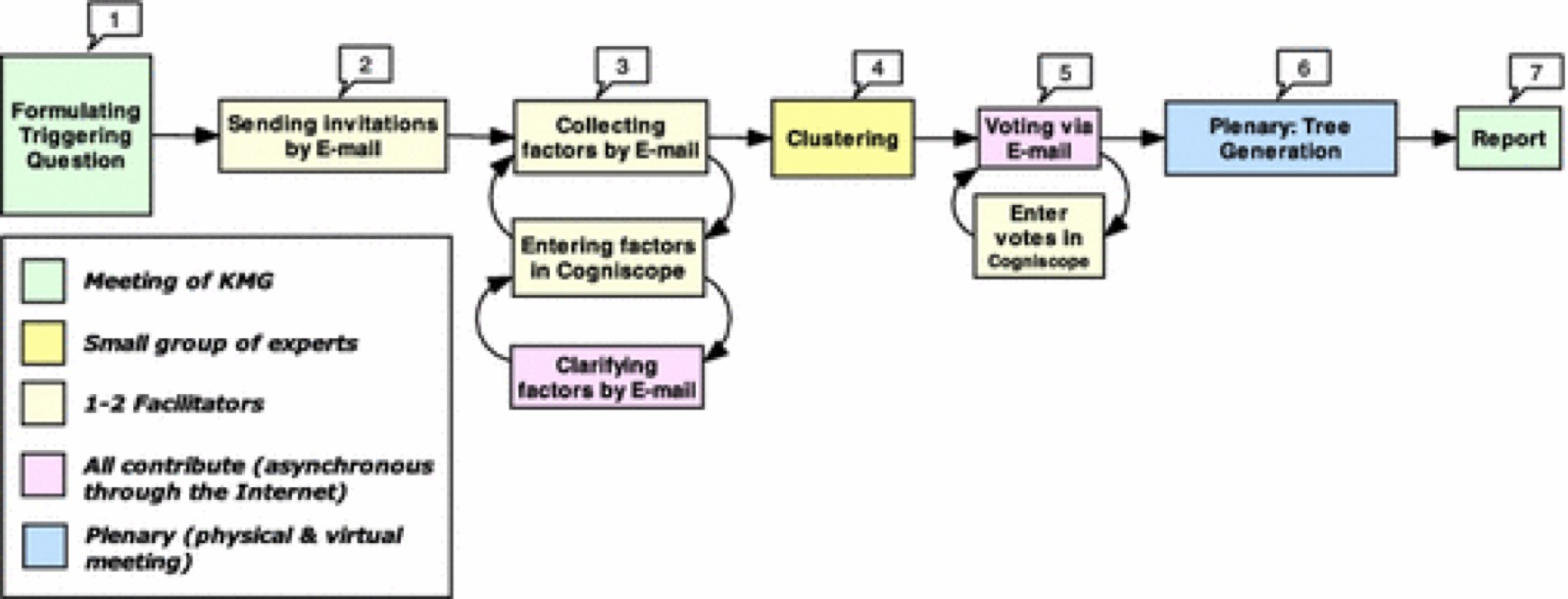
The co-laboratory reported here also served to revise the SDDP method by exploiting the power and potentials of virtual communication technologies. Figure 1 exemplifies the process adopted. It combined synchronous/asynchronous activities as well as physical/virtual meetings in plenary or in smaller groups.
Indices of Complexity and Spreadthink
To enable objective comparisons between the data collected during this co-Laboratory and previous analogous ones, we make use of the measures defined below.
The situational complexity index (SCI) is defined as follows:
where V is the number of ideas receiving 1 or more votes,N the total number of ideas,K the number of distinct connections in the map,R the number of ideas in the map, andD = (V − 5)/(N − 5)
TheSpreadthink (ST) is defined as:
If all participants choose the same 5 factors, ST will be zero. If they choose allN factors, then their degree of disagreement will be maximal; i.e., 100%.
TheErroneous Priorities Effect is defined as:
The Erroneous priorities effect (EPE: discovered by Dye 1999) refers to the fact that individual importance preferences on factors relevant to the problem situation voted on prior to relational inquiry among the factors may prove to be “Erroneous,” if at the end they are collectively judged to not be the most influential. It can be demonstrated by calculating the cumulative influence of the most influential factors and compare it with the influence of those factors that received most votes of relative importance.
Results
The results, reported in detail below, stem from a combination of asynchronous and synchronous interactions, that took place in the period between 20 September 2006 and 29 December 2006. The table in Appendix 3 (Table 2) documents all events, synchronous and asynchronous in order to provide a clear picture not only regarding the time over which the dialogue and related data collection were spread, but moreover as a registry of the overall time investment. The latter is useful to evaluate the efficiency of the newly developed virtual SDDP model, as this was the secondary goal set at the beginning of this work.
The process required 11 h of synchronous events among the extended members of the participants group and KMT (Phases 9, 14 and 16). Smaller groups spent 8.5 h to discuss initially about their vision (Phases 1 and 5), to form the KMT and decide about appropriate participants (Phase 3), and to produce a tentative clustering of the factors (Phase 8). The KMT invested an additional 7 h 25 min (Phases 2, 3, 4, 6, 7, 10, 11, 12 and 15) in synchronous and asynchronous sessions between them, plus 4 h for the preparation of the report (Phase 17). The total person-hours invested on the project exceeded 218 h (calculated as the total time invested by all people involved). The time invested for detailed analysis and preparation of the present publication is outside the scope of this article and is not reported.
Composition of the Participants Group
The participants were 24 Cypriots and 2 American scholars who spent about a year on the island working on their Masters thesis. Fourteen were GCs and ten were TCs. Twenty-one participants who were based on the island participated in the face-to-face, while five participated remotely (via virtual communication means). All participants had relevant experience and have contributed significantly to the Cyprus peace process earlier. Twelve were members of the CRTG. More than one-third of the participants had extensive experience with the SDDP methodology; have previously facilitated SDDP sessions. Seven participants are academically active and have published their own ideas and research results about the Cyprus problem. Four are business people. Eight are female and eighteen are male. Fifteen were 40–55 years of age and eleven were 25–40. The fact that the authentic dialogue was spread over a period of three months and engaged remote participants by means of web technologies resulted in variations of the composition of the group from session to session. While 26 individuals contributed their ideas at the onset of the process, only eleven remained active throughout the dialogue (eight physically and three remotely). While five persons participated remotely in the generation of ideas, only three of them participated in the structuring phase using virtual technologies. The international wing of the KMT remained constant and active throughout the process. The five members of the international of KMT supervised the process.
The Emergence of a Virtual SDDP Approach
The methodological details and the scientific grounding of the application of virtual communication technologies used to reduce the time and cost required for achieving reasonable results are not provided here. The interested reader is encouraged to refer to the technical paper published previously (Laouris and Christakis 2007). Figure 1 summarizes the process and Table 2 in Appendix 3 documents the time invested in each sub-process.
Factors Contributing to the Perceived Widening of the Gap
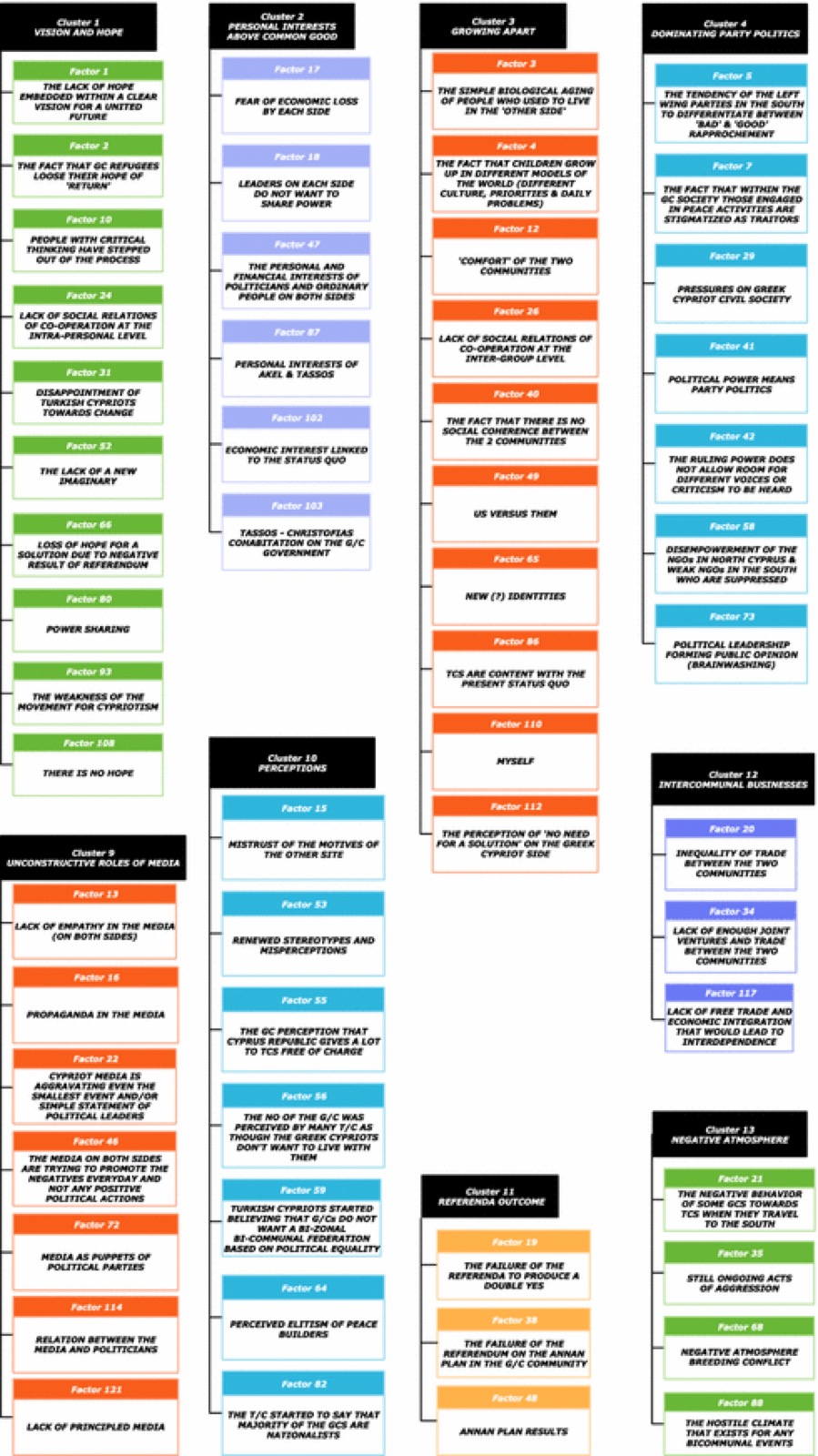
As documented in Table 2 in Appendix 3, until the deadline, only 11 individuals responded. They have contributed 61 factors. By midnight of the same day, the participants increased to 17 and the number of factors to 99. On the following 2 days participants contributing ideas reached 26 and their contributions increased to 107 factors. The discussion, which took place during the Clustering phase, lead to the deletion (merging with others) of three factors (not shown here) and addition of some more. The number of factors stabilized at 120 (note one factor appears as “121” because of the deletions of factors with smaller numbers). Compared with similar stakeholder engagements, this number is quite impressive (see “Discussion”). Figure 2 documents all factors proposed clustered in 20 categories (see “Clustering and Prioritizing the Responses”). The table in the Appendix 4 summarizes all the factors proposed by the group as contributing to the perceived widening of the gap that received at least one vote.
Clustering and Prioritizing the Responses
A smaller team of four individuals, who were considered knowledgeable of the situation, met for 4 h to develop a first draft of the clustering pattern and to come up with distinct names for the different categories. They clustered the 107 factors available at that time in 20 categories. During the following first plenary virtual meeting, 12 participants (8 physically present and 4 remotely) invested 4 h and 40 min going in great detail through the clustering process. Because the typical phase of idea generation was skipped (i.e., ideas were collected off line via email), this first meeting of all participants was used as an opportunity to clarify items and discuss about their meaning in order to acquire a deeper understanding of the situation and each others' perspectives. Their discussion resulted to deletion (merging with others) of three factors, and addition of few more. The total number reached 120. Ten factors were moved to other categories. Five participants, who were not present, were requested to provide further clarifications and to re-word their contributions to make them clearer. Figure 2 shows the categories that resulted at the end of the clustering.
Participants were requested to choose their five favorite factors, i.e., those they considered most important. All 26 participants were allowed to vote even though not all managed to participate in the structuring. The voting results were used to select factors for the subsequent structuring phase. The table in Appendix 4 documents the number of votes that each factor has received. Fourty-seven factors received a total of 130 votes. During the next synchronous face-to-face meeting, the participants managed to structure only 11 factors. Because the process was delayed, the issue was discussed among the members of the KMT, who decided to schedule for the final structuring work another nine factors. However, in order to ensure that the resulting tree would be as comprehensive as possible and would address all perspectives they applied scientifically grounded rules to select the final factors. The guideline was based on two rules: (a) ensure that if possible all clusters were represented; (b) choose factors which a team of knowledgeable participants would consider as possible root-causes, i.e., propose factors which would have the possibility to appear in the lower layers of the map.
The Root Cause Map
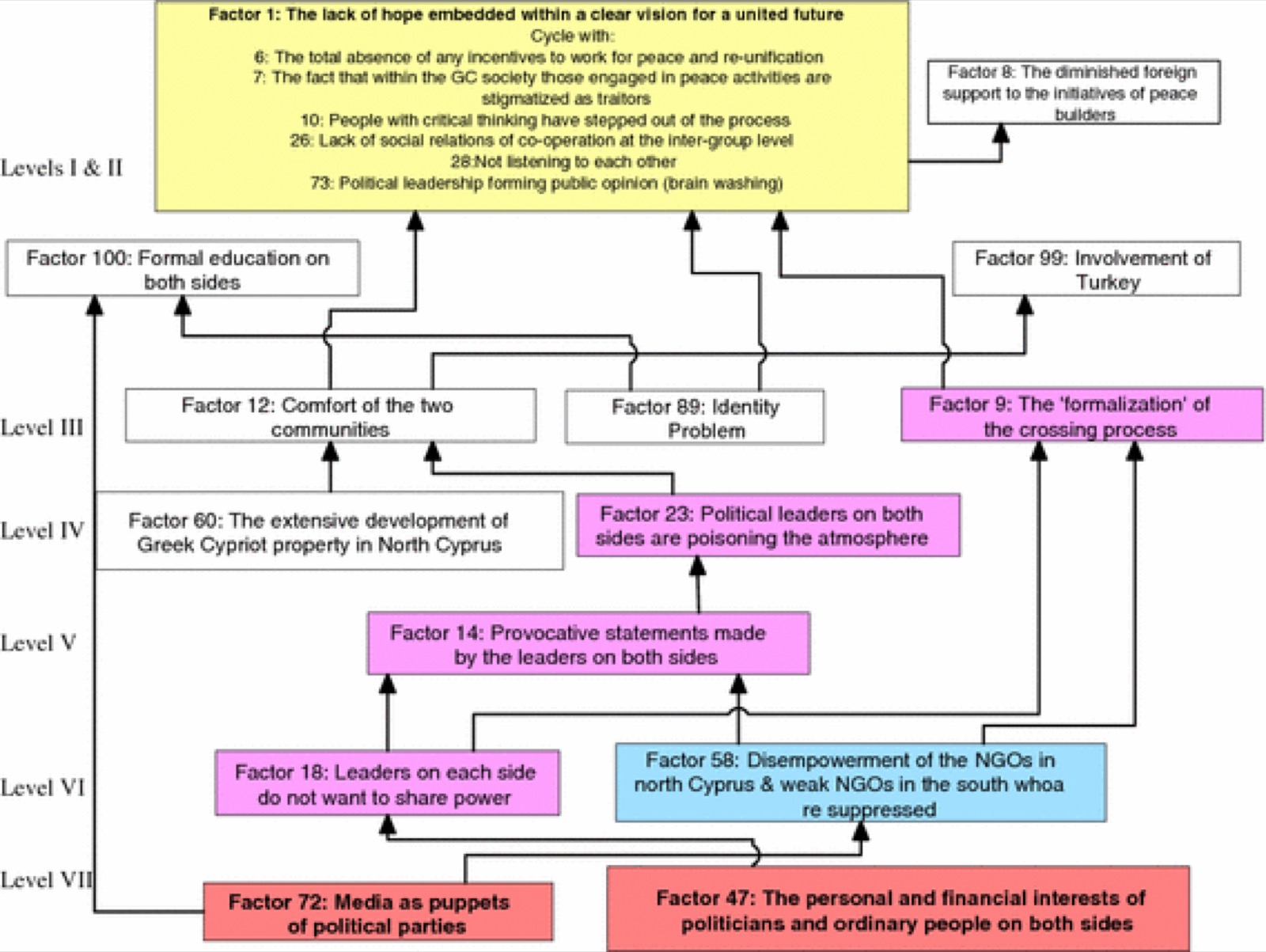
Figure 3 shows the resulting influence map. Twenty factors were structured within seven layers. The interpretation of the results is done in the “Discussion”.
Discussion
It would be fair, at the opening of this discussion, to state that the six peace pioneers, who launched the initiative, and the extended group of all 26 peace activists, who participated in the co-laboratory that followed, managed to produce a rich map of the obstacles that describe the post-referendum political situation in Cyprus as perceived by them. In response to the triggering question “What factors contribute to the increasing gap between the two communities in Cyprus,” they came up with 120 factors. The proposed factors were categorized into 20 clusters. With 17 factors, the cluster “Uncompromising politics” was by far the largest. “No vision/hope” and “Growing apart” ranked second and third with ten factors each. The following three categories had seven factors each: “Perceptions,” “Unconstructive roles of media” and “Dominating party politics.” (For details refer to Fig. 2). Subsequently, the group produced an influence pattern among these 20 factors (Fig. 3), which incorporated all 20 factors structured over seven levels. The root-causes mostly focus on the negative role of media and politicians as well as the disempowerment of NGOs. To the best knowledge of the authors, this is the first group that devoted this amount of time and energy to address the impasse in the Cyprus problem following the negative outcome of the referenda. The total amount of person-hours invested to complete this structured dialogue exceeded 218 h! This excludes the time invested by the authors to analyze the results and produce this publication. The participants demonstrated the foresight and the commitment that is required to go through the structured design process. This preparatory work positions them favorably for further analyses of the situation. The authors, as well as the 26 participants, anticipate that all those interested for a resolution of the Cyprus problem will need to base their initiatives on solid grounds and on detailed analysis of the current situation. The report of this co-laboratory has been sent to the following: (a) the 26 participants; (b) 20–30 people who were invited but could not participate; (c) all political leaders and party executives; (d) persons involved in the negotiations; (e) political analysts; (f) selected representatives from the world of the media (especially those who value such analyses); (g) foreign academicians who have been involved in the problem over the past 20 years; (h) the UN and foreign diplomatic missions in Cyprus. If one considers that the number of scientific studies focusing on the post-referendum period are only a couple, the value of this work is indispensable to all interested stakeholders.
A typical application of the SDDP to address a complex societal problem consists of four phases:
- In phase one, the participants develop a vision map. In our case, this step has been skipped because (a) almost all participants have been involved in a vision building SDDP before, and (b) we assume that all participants do share a strong and clear vision for the reunification of their country.
- In phase two, the goal is to develop consensus and shared understanding of the obstacles which obstruct the materialization of that vision. The work reported here concerns only this phase.
- In phase 3, the participants propose options, projects and solutions, which could remove the obstacles identified in the previous phase.
- In phase 4, the goal is to come up with a practical road map and strategy to help the participants move forward. It usually requires the mobilization of forces and stakeholders beyond the original participants.
Future work must therefore focus on phases 3 and 4. At the time of preparation, several follow-up SDDPs have taken place.
A Note About the Authenticity of Ideas
Before we embark on the analysis and discussion of the results of this co-laboratory it deems necessary to offer some clarifications, especially for those who may not be so familiar with this methodology. It is imperative that the various statements offered by the participants are read having always in mind that they reflect individual perceptions. One of the basic requirements of SDDP is Tsivacou’s Law of Requisite Autonomy (1997). The Law obliges the facilitator(s) to protect the autonomy and the authenticity of every participant. Individuals are free to phrase their ideas in any way they wish. Others may ask for clarifications, but they are not allowed to make any value judgments or request re-wording, or improvement of statements of others. Their only option, in case they disagree with a certain idea, is to offer a different statement. Therefore, it is possible that the specific wording of some statements might not satisfy all participants. However, if no other alternative has been offered, and the specific statement was voted as important, then it appears in the map in its authentic version. It is possible that a slightly different statement was suggested, but did not receive enough votes to make it into the root-case mapping phase. It is also thinkable that a person who disagrees slightly with the wording of a specific statement refrains from offering a different one in order to avoid an anticipated spreading of votes, which could result that none of them makes it into the tree.
The Value of Exploring the Problématique
The work presented here probably represents the first serious, scientifically grounded, group effort after April 2004, to explore the situation in which Cyprus has relapsed following the negative outcome of the referendum. Exploring the influence structure of the factors, which contribute to the perceived widening of the gap between the two divided communities, is important for at least two reasons, which are discussed in detail in the following sections.
First, depending on the number and type of participants in the structured dialogue, the influence structure of the factors may incorporate a variety of perspectives into an overall understanding of the current problematic situation. It is only natural that individual participants perceive the situation from a limited point of view. The application of the SDDP to facilitate structured democratic dialogue enables stakeholders to integrate a variety of perspectives on a particular problem situation. Thus, a much more comprehensive and spherical perspective emerges. Of course, for the resulting map to be of practical and generalized value, the organizers must ensure the participation of actors who can offer such a variety of perspectives. In the case of the present co-laboratory, practically all participants were peace pioneers. Therefore, the resulting map cannot be read as a universal map that incorporates the viewpoints and perspectives of the whole Cyprus society. It is a group work that has been designed especially to support a diverse group of disengaged and disappointed peace pioneers and activists to develop a shared understanding of the factors, which contribute to the perceived widening of the gap between the two divided communities in Cyprus. According to the first law of SDDP (the Law of Requisite Variety proposed by Ashby 1958), an objectively balanced problématique requires that the working group includes all stakeholders and embodies all perspectives. The search for a sustainable solution to the Cyprus problem can only be based on the knowledge and wisdom produced collectively by the community of stakeholders, and consideration of the problems and obstacles as perceived by all those concerned. If the goal is to explore the current state of affairs as perceived by the whole society, then more work is required in various directions3:
- (a)
Actors with opposite views need to be engaged in similar co-laboratories. - (b)
All possible local stakeholders must be represented: displaced people, politicians, media, business people etc. - (c)
The interests of foreign players must also be considered (e.g., Greece, Turkey, UK, US, EU, UN etc.). - (d)
The similarities and differences in the interpretation of the current situation across the two communities needs to be explored in separate and mixed sessions, again engaging a sample of actors that represent the whole spectrum of views within the society at large.
If the goal is to explore options and design strategies and roadmaps (as required by a typical SDDP application), it is necessary that follow-up co-laboratories address these weaknesses.
Second, the definition of the problématique is a pre-requisite for a follow-up SDDP that focuses on action options and solutions. Achieving a shared understanding of the problématique before any other action is taken helps avoid the error of stakeholders (both at the level of politicians/diplomats and at the level of civil society) focusing prematurely on action options. One of the factors that makes it difficult to deal with complex situations, such as the current state of affairs in Cyprus, is the tendency to focus on the merits of particular points of view, strategies or options without first investing the time to understand collectively the overall system of problems adequately. This may tempt those with decision-making power over the conflict situation to become locked in intractable arguments over details without much possibility of progress. This tendency has indeed been observed in Cyprus during the recent months. For example, the discussion that surrounded the possible opening of an additional Gate at the center of the old city has shifted not only the attention of the public to minor details of the problem, but it also discourages those working towards a comprehensive long-lasting solution. More often than not, discussions about the Cyprus problem focus on technical details of what systems theory would call non-problems, i.e., issues that would not even exist in the context of a final solution. By first gaining a deeper appreciation of how the proposed factors contributing to the perceived widening of the gap relate to one another, the stage is set for a more creative and fundamental approach to exploring the relative merit of possible action options and solutions.
Reflecting on the Breadth and Depth of Ideas
The participants came up with 120 factors, which possibly contribute to the perceived widening of the gap. The number is relatively high, compared to analogous co-laboratories for similar complex situations. For example, in two co-laboratories that were very similar to this, and which took place in 1994 with a similar triggering question and a similar composition of participants, the number of factors generated was 67 for the GCs and 87 for the TCs. In three recent co-laboratories, which involved networks of European experts in making broadband technologies widely available (www.Cost219.org; Laouris and Michaelides 2007; www.Cost298.org; Laouris, Michaelides and Sapio 2007, 2008) and a group in Australia focusing on Democracy and The Enlightenment run by the same KMT with co-laboratories also applying a combination of synchronous and asynchronous events the number of factors was 64, 82 and 49, respectively. From 81 applications during the decade of 1980, the average number of observations needed to adequately describe a complex problem is 64 (Warfield 1995). The increased number of factors in the context of this peace process revival co-laboratory can be attributed to two factors. One, maybe that the frustration of the participants due to the current status quo translates into an increased effort to understand the situation in order to explore ways to get out of the impasse.
The second reason might be due to the fact that most of the participants were quite knowledgeable of the situation and therefore have many ideas to contribute. Of course one may also argue that the problem, as it stands today, is more complex compared to its 1994 version. The situational complexity index, discussed above, for this particular co-laboratory is equal to 17.5, compared to much lower ones for all other co-laboratories considered in the comparative Table 1. Besides the number of ideas generated, also the breadth of those factors was quite high. The factors were clustered in 20 distinct categories. These categories covered issues across a sociological spectrum, ranging from technical logistical to deeply-rooted cultural and/or psychological. The Spreadthink was 47%, which is a sign that the level of agreement between the participants is actually less than one would have expected (considering the fact that one could criticize the global validity of this study since all participants were known peace builders). It is also interesting to observe that their disagreement is higher than that of the two earlier studies (which were 27.4% and 37.8 for GCs and TCs, respectively). In the early work, there was also a significant difference between GCs and TCs with the latter being more in disagreement with one another. The fact that the overall Spreadthink of the current study is higher than both should still be taken as an alarm that the participants demonstrate a great degree of disagreement between them. This is another reason why more SDDPs engaging further groups could add more light to the problem and help Cypriots converge to a greater consensus.
Table 1 Comparison of scientific descriptors of different co-laboratories
- Workshop title: Barriers to peace-building efforts (GC’s); Year: 1994; Factors generated: 67; Clusters: 10; Factors structured: 22; Layers in map: 7; CSI: 4.1; ST (%): 27.4
- Workshop title: Barriers to peace-building efforts (TC’s); Year: 1994; Factors generated: 87; Clusters: 9; Factors structured: 36; Layers in map: 6; CSI: 9.3; ST (%): 37.8
- Workshop title: Cost219ter; Year: 2005; Factors generated: 64; Clusters: 10; Factors structured: 24; Layers in map: 7+; CSI: 5.19; ST (%): 37.5
- Workshop title: Democracy and Enlightenment; Year: 2006; Factors generated: 49; Clusters: 9; Factors structured: 9; Layers in map: 4; CSI: NA; ST (%): NA
- Workshop title: Cost298; Year: 2006; Factors generated: 82; Clusters: 11; Factors structured: 20–37; Layers in map: 4–6; CSI: 6.35; ST (%): 61
- Workshop title: Peace process revival; Year: 2006; Factors generated: 120; Clusters: 20; Factors structured: 20; Layers in map: 7; CSI: 17.5; ST (%): 47
The table compares the total number of ideas generated; the number of clusters, the number of layers in the map the Situational complexity index (CSI) and the Spreadthink (ST) of this co-Laboratory with 5 others. Please refer to the text for interpretation of the data
Root Causes and Influences
The dominating root causes in the deepest Layer 7 appear to be:
Factor 72: Media as puppets of political parties and
Factor 47: personal and financial interests of politicians and ordinary people on both sides
Interestingly, similar factors came out as root causes 12 years earlier when the CRTG implemented SDDP over a 9-month period to study practically the same question (Appendix 1). The triggering question in 1994 was “What are obstacles we must deal with as we engage in our peace-building efforts in Cyprus?” For example, in the Greek Cypriot community, it was C36: existence of adversarial culture proliferated by the mass media and in the Turkish Cypriot community F42: individual economic interests in maintaining the status quo. When seen in connection with the layer VI factors,
Factor 18: Leaders on each side do not want to share power
Factor 58: Disempowerment of the NGOs in north cyprus weak NGOs in the south who are suppressed
one is justified to conclude that the greatest obstacles still lie within the political leaders and the media. Whether this can be attributed to them sharing a different political ideology/line or it is simply the result of putting personal interests over the common good and/or political corruption is an issue that requires further analysis and discussion. For example, the president of the Cyprus Republic Mr. Tassos Papadopoulos was accused by his opponents that his decision to call for a “NO” in the referendum was partly based on the fact that a “YES” outcome would have cost him his presidential position. At least one author argues that in order to justify his choice and shift public attention, he accused his opponents as having being rewarded through UN and US funds4 to brain wash the public to accept the Annan plan (Droushiotis 2005). The media followed up the daemonization of NGOs that was inaugurated by the President. Even UN diplomats did not respond to the President’s accusations against them and abstain from offering support to the civil society in order to avoid escalation. Equally disappointing was the ambivalent response of the left party AKEL; the historically rapprochement pioneer remained a pathetic observer; it’s secretary backed up the President, while its official spokesman suffice to make soft statements in support of civil society merely for future reference in case history attempts to allot responsibilities. As a consequence, according to the Chief editor of the Politis Newspaper (Politis, 15/10/2004 and following issues) the already extremely weak civil society was assassinated.
In a similar manner, the opponents of the Turkish Cypriot leader, Mr. Mehmet Ali Talat, accuse him for not taking any practical initiatives to re-launch the peace negotiations during the post-referendum period. They also criticize him that following his victory in the elections he cut all links with those political powers that brought him into power and especially with those who organized the massive demonstrations against the Denktash regime. Also when TC NGOs were invited to participate as observers to the EU Parliament, Mr. Talat’s wife attempted to use NGOs to promote their political agenda of recognition and embargo by asking them to refuse participation under the Republic’s umbrella thus refusing them the opportunity to promote the interests of civil society at the European level. (S. Uludag 2007, personal communication). According to the same author, when the Turkish army attacks NGOs in the North (for example attacks against the activities of the ENORASIS NGO in the North), the authorities followed instead of standing up and defending its people. As a result of the weakening and the daemonization of civil society, when NGOs from one community are looking for partners in the other, they cannot find.
In concluding, the observation of the participants of the current co-laboratory that political leaders (as well as people from all walks of life) may put more value to their personal and financial interests than to the common good and to the resolution of the Cyprus problem may not be unjustified. This argument becomes stronger when one considers the confusion they create regarding what each side is actually trying to achieve. It appears that creating confusion is their deliberate strategy; Proposing solutions that are not feasible or not workable; Saying something and implying something else. The destructive, adversarial culture proliferated by the mass media (root cause in the maps of 1994; Appendix 1) certainly adds to the disorientation of the citizens from the goal of reunifying the island. It is interesting to note that those groups that are considered more vulnerable to the propaganda of the media (i.e., the youth, the female population and those with lower levels of education), favorite the “NO” in the referendum, demonstrate higher levels of nationalism and racism and do not endorse the federal solution or the reunification of the island to the same degree as other groups (see details below). The discovery made in this co-laboratory pointed peace builders towards the right direction. A number of projects targeting the media emerged. By the time of publication of this report, at least two major initiatives addressing the media have been launched. The first initiative, called “New media landscape now” aims to support a mixture of progressive senior and junior journalists together with media activists from both sides envision an ideal media landscape in a united Cyprus. The report of this work can be found on line (NML Wiki Report 2008). The second initiative is directed more towards the creation of community based media. Representatives from seven NGOs meet regularly in an attempt to jointly agree on a strategy to develop a media center to support their needs. The UN has been approached to support the initiative with funding. The prospects of both initiatives are considered quite promising.
Habituation, New Realities, Fear of Change, Identity Issues
Most of the televised public debates as well as newspaper articles provide support to the thesis that even the current status quo is preferable to a risky settlement. A survey conducted two weeks after the referendum (Christophorou and Webster 2004) revealed that reunification appeared to be the solution preferred by only a slim majority of 51.4% of Greek Cypriots population. What may be even more uncomforting was that 28.2%, of Greek Cypriots, chose the division of the island, either in the form of continuation of the present situation or the existence of two separate states. Even more surprising was that the permanent division was voiced by the younger groups (18–24 and 25–34 years olds) with 41 and 35.4%, while the lower levels of support for separation was expressed by the older group of 55–65 (10.2%). High rates of people with secondary education (30.9%), those living in Limassol (34.3%) and in rural areas (33.5%) chose the division of the island.
In sum, the continuation of the current status quo appears to worsen the situation and people consider, for the first time in the history of the island, the current situation satisfactory. They feel “ok” as they are now and do not see why they should take any action to change it (Factor 12 in Layer III, Comfort of the two communities). At the same time they do not perceive any danger of worsening for the foreseeable future. One reason might be that people suddenly realized that they would be expected to make major changes in their lives. For example, some would have to work and live with another community; politicians would have to learn to share power; with unification they will need to share resources and life can become less comfortable; to get what they had on the other side they would have to give up what they have now etc. Especially for the GC community, de facto developments convince them that they will never actually be able to get back their properties, thus rendering them indifferent (e.g., Factor 60: The extensive development of GC property in the North Cyprus in layer IV and Factor in layer III, The formalization of the crossing process). Similarly in the North, people feel that even though they tried their best, the desired goal remains distant. Life style is comfortable as it is and there is a widely shared belief that this is the solution. Many citizens simply, deliberately and consciously choose to not care any more.
About Property Issues
Taiwanization of the North is already happening. At the time of publication, many of the statements and fears expressed during the co-laboratories became reality. Two factors from cluster “Cementing the division” made it to Levels II & IV of the Obstacles Map. Yet, we still not have a clear idea of how people imagine the economics of the settlement. For example, regarding the property issue, there is still the fear that prices in Paphos (southern part) will go down or in the northern areas will go up. The TC community rushes to take even short-term advantage of GC properties in the North, thus further complicating the problem. Such speculations are not helping. What people fail to understand is that the competition is global and not between North and South. It is not Paphos against Keryneia; it is between Cyprus and Canary islands. The high values of property in the South might serve a negotiation where both GCs and TCs show preference for properties in the North because it will be easier to compensate them. Others maintain the position that it is simply a myth that a solution will bring prices down.
Reflecting on the Ideas Just Below the Top Layer of the Map
Two factors climbed just below the top of the influence map. These were:
Factor 100: Formal education on both sides
Factor 99: Involvement of Turkey
This result was probably expected. The reason is because at least both factor 100 and factor 99 lay beyond the reach and capabilities, not only of the participants of this co-laboratory (and other peace activists within civil society actors), but probably also of many other stakeholders. In other words, the fact that the “Involvement of Turkey” did not appear as a root-cause must not be misinterpreted as if it were not. One cannot claim that any actors or any actions originating in Cyprus could dramatically change the “Involvement of Turkey”, at least within the foreseeable future. The negative influences produced by the “Formal Educational System” on both sides, is probably more tangible, but again is something that cannot be transformed within a short period of time. It is interesting that in the Christophorou and Webster (2004) survey the federal solution was endorsed by only 7.5% of the younger group, while those belonging to the 45–54 age group (20.9%) and those with tertiary education (17.0%), higher socioeconomic level (21%) and men (17.6%) presented the higher rates. This finding is a challenge for those involved in education. The situation might be different for the two sides. For example, one could argue that the TC community might have more leverage to change its educational system because it has great majority within the parliament and because the educational system has a shorter history. At the same time, any effort to make changes would most probably strike on the resistance of the Turkish Government and/or the Turkish army. A recent example was the intervention of Mr. Talat’s regime to postpone the initiative of a study group that works for the upgrading of the history books. The picture is different within the GC community. A formal process has been recently initiated to totally transform the formal educational system. Although, this process addresses the totality of the educational world and inspires to upgrade the country’s educational system to European standards, it does not take sufficiently into account aspects that directly address the relationship between the two communities. It also violates basic ethical principles as well as the law of requisite action by not engaging those whose lives will be affected in an authentic and sincere dialogue (see below; see also Laouris et al. 2008). Nevertheless the mere fact that the new curriculum puts emphasis on multiculturalism, in connection with the fact that the Ministry of Education has declared 2008 as the year of Multicultural Education certainly empowers those pioneering in peace education to take action. The educational transformation process may prove handy for example to those striving to update the history books by removing hatred and references, which do not reflect real facts. However, again developments on this arena are relatively slow, the political will of the current government is not so obvious, the stakeholders are not participating in the process and the role of peace builders limited. This why the authors recommend the application of the SDDP technology especially when it comes to transforming the educational system. Grounding their arguments on the logic and ethics of design, described by Professor Bela H. Banathy (2000),5 Özbekhan’s axiom6 and the Requisite Law of Action7 (Laouris et al. 2008), the authors are currently implementing a number of SDDPs in which educators, students, parents and technocrats from the Ministry of Education work together to envision the ideal schools of tomorrow (Wittig and Laouris 2008).
Reflecting on the Ideas at the Top Layer of the Map
Factors at the top of the tree are usually obviously important but less influential. For example factor 1: “The lack of hope embedded within a clear vision for a united future” would make a nice title for the map. During the voting process it ranked second in terms of number of votes received. It is a good example to demonstrate the Erroneous priority effect, i.e., factors that receive many votes, when collectively judged turn out not be the most influential. If we were to take action on obstacles that received the maximum votes, we would not have been able to make progress. The SDDP method allows us to discover the actual root causes. They serve as optimal leverage points. Any action that addresses these obstacles is most effective.
It is not surprising that Factor 1 climbed at the top of the map. The participants of this co-laboratory have already developed a vision more than 10 years ago. It is evident from their continuing dedication to peace work that this shared vision has been guiding them since then. They therefore don’t see the lack of a “clear vision for a united future” as an influential obstacle. They know that without a vision, one also looses all incentives (hence factor 6, the total absence of any incentives to work for peace and re-unification).
At first glance, it was rather surprising that the following ideas remained at the top layer, thus having practically no influence:
Factor 6: The total absence of any incentives to work for peace and re-unification
Factor 7: The fact that within the GC society those engaged in peace activities are stigmatized as traitors
Factor 8: The diminished foreign support to the initiatives of peace builders
Factor 10: People with critical thinking have stepped out of the process
Factor 7 (the fact the within the GC society those engaged in peace are stigmatized as traitors), factor 10 (people with critical thinking have stepped out of the process), and factor 8 (the diminished foreign support to the initiatives of peace builders) are inevitable consequences of the problematic situation; they are not root causes. With complete absence of any peace initiatives on the ground and with victimization of whoever is involved in peace projects it is only natural that also inter-group relations will disappear (i.e., factor 26).
One could argue that peace-pioneers like those who participated in this study and have suggested these ideas, would have voted particularly these four ideas as instrumental to any attempt to revive the peace process. We therefore extend our discussion on this issue. Taking the result at face value one can state that the absence of incentives to work for peace, the fact that especially those in the GC society who are engaged are stigmatized as traitors and the diminished foreign support have absolutely no influence on the current impasse. In other words, even if these obstacles disappear from the scene, no significant progress will be made to the Cyprus problem. This line of reasoning is compatible with the fact that all political life on the island is currently dominated by the positions of the President’s line. Interestingly, if one had interviewed the same peace pioneers individually, some would have placed overwhelming importance to the above factors (ref: personal communication with UN experts who have performed such interviews). It is only natural that some would blame the absence of incentives (Factor 6) and foreign support (Factor 8). Their personally biased views are the result of their frustration. However, when they work collectively to construct an influence tree, their collective wisdom prevails. The group does not consider these factors as sufficiently influential. The construction of the influence tree SDDP methodology is able to draw in the views and critical thinking of many people to decide what the prime obstacles are. It is very important that actors engaged in a group dialogue remain committed to contribute unbiased ideas and thoughts. It is in fact to the honor of the participants of this co-laboratory that they did not vote factors 6 and 8 as root-causes. An interesting parallel is the observation that also in the years 1994–1997 the work of pioneer peace builders evolved in an environment of total absence of incentives. Not only there were no possibilities for financial support of their courageous efforts, but also the society at large viewed them also then as traitors. One difference might lie in the fact that in the present day, following the public allegations of peace builders as having been compensated to promote the YES during the referendum, their peace work cannot happen in the dark. However, one could see this as an advantage of the times. It forces all those interested and involved in the effort to bring the two communities in continuous and constructive dialogue to work more transparently and to face and respond to the reactions of those with opposite points of view. Another difference is that in previous years various diplomats were interested to meet with peace pioneers, listen to their ideas and provide moral support. Today, because the Government's dominant political line is against such initiatives, foreign diplomats restrain from approaching and engaging with peace pioneers so that they are not misunderstood and/or attacked by the Government. This of course makes the work of peace builders even more difficult.
Conclusions and Recommendations
Year 2004 was a Grand milestone for the recent history of Cyprus. The political leaders and the public at large failed to bring an end to their long struggle for peace, co-existence and growth within the European context. They also failed to lead the way on a global scale by breaking new ground on how peace is achieved. If Cyprus had managed to resolve its problem through a process combining political peace negotiations and citizens' contributions and participation, the UN would have been significantly empowered to take analogous action in other regions of the world. The reasons for the failure of the process must be searched at various levels, and primarily at (a) the UN themselves, (b) the political leaderships in Cyprus, Turkey and Greece, and (c) the peace pioneers themselves. The current co-laboratory has dealt with and has therefore revealed mostly problems either within the Cypriot political leadership and their media, or the civil society at large. We therefore restrict our discussion and recommendations to the latter.
Until recently, the Papadopoulos camp, backed up by GC nationalistic groupings and the head of the Cypriot Greek Orthodox church propagated the idea that the status quo was a preferred solution when contrasted with the Annan plan. However, the Papadopoulos propaganda that following the “NO” in the referendum he would manage to turn things around and present the GC people a proposal significantly better than the Annan plan turned out to be at least a historical misjudgment of the situation. Especially the way the legal angles of the Property issue are evolving within the European courts makes it clear that the status quo is not an acceptable situation. People understand that what they were promised is not really happening. The President asked the people to equip him with a “NO” in order to fight for a better proposal. He framed the problem as a purely legal problem. Now he finds out that the law can also work on the side of TCs. For example, Mike Tymvios who owns the Acapulco place and many plots in Karavas and Lapythos, is now being promised land in Larnaca (Tymvios case 2003) and analysts believe that the Cyprus government will have to follow the directives of the European court. The GCs felt for years that the law was on their side. With the Papadopoulos diplomacy and arguments falling apart, people (especially the displaced) are left without any other option, but to take their faith at their own hands. If the political agenda does not change really soon, Cypriots will find themselves in a situation where TCs and GCs will be taking each other to the European court in order to resolve the Cyprus problem and the EU will be playing a negative role without having such an intention. It is becoming evident that "Europeanization" in itself will not solve the Cyprus problem. The problem needs to be addressed from within a political framework.
Political analysts explain that the TC side needs to realize that a second state on the island is not yet on the agenda of any institution outside of Cyprus. Also Turkey will not support a two-state island because such a development would open the door to the Kurds and Armenians. Kosovo, Kurdistan, Palestine, Belgium, Moldova are higher on the list than Cyprus. As the situation is now, the international community will not consider, a two-state neither in Cyprus nor in any other region. In the mean time some analysts also claim that the aim of Turkey is to reach a population of 650,000 in the North in order to equalize with the south. The TCs today number 89,000. In 1972 they were 72,000 because of the incredible exodus. How many will remain on the island with the situation worsening?
With today’s political paradigm, extreme leaders are indeed elected by the extreme people in the other side, because they serve their interests. This is illustrated by the fact that a bi-communal group of participants came up with the particular combination of root causes, i.e., although both the politicians and the media in theory have completely “opposite” political positions and agendas across the green line, they both act synergistically in increasing the gap between the two communities and consequently division of the island. Thus the lesson from this work is that if the people of Cyprus had more opportunities to participate in similar structured dialogue sessions, they would be able to recognize that differences are not between GCs and TCs but between different ideologies. Consequently, their enemy should not be a particular group but a particular ideology. Similarly, if politicians had the possibility to participate in SDDPs sitting next to regular people, they would be confronted with uncomfortable truths. This could encourage them to appreciate the pressing need for communication of empathy. Our recommendation to organize further SDDPs within diverse groups could contribute towards the creation of a new paradigm in the social infrastructure of the society.
Currently, the two community representatives either avoid meetings altogether or respond to any initiatives with a lot of suspicion. They do not define the problem as a problem that they have to solve together. The dichotomyus versusthem prevails as a strong stereotype in all their thinking. A culture of nationalism and racism dominates daily life. For example, the GC side has been talking about a solution for decades, but has never taken any actions to build the necessary culture for a solution at the level of the educational system, the world of the media or society at large.
If Cyprus is going to reach a settlement we will need to have mutual trust not only across the communities but also within the communities themselves. For example, the party of the left, AKEL doesn’t trust the party of the right, DHSY, or the hardliners don’t trust the moderates. Hardliners across the two sides work closer and smoother together than with moderates in their own communities. Because this is built at the leadership level this extends to a more general lack of a culture for co-existence. Instead we have a culture of nationalism. Therefore, the organization of structured dialogue sessions would be very useful also if implemented mono-communally.
Having a strong and widely shared vision is a necessary condition for people and their leaders who dare take the road forward. The development of the shared Vision Map in 1995 (not shown in this publication; this Vision Map was created bi-communally by the CRTG after they produced their respective Obstacles Maps shown in Appendix 1; Broome 1996) served as inspiration and as roadmap, to secure the long-term engagement and commitment of many facilitators, who eventually have created opportunities for thousands of people to meet and engage in authentic dialogue with people from the other side (see Map of bi-communal groups in Appendix 2). This process culminated to the creation of an embryonic civil society, which had a sense of ownership over the peace movement and subsequently embraced the UN initiatives. The TC peace pioneers presented a much stronger case for the power that such a vision statement can exert. The Common Vision Platform within the Turkish Cypriot Community, grounded on a well-defined and shared vision, served as the major mobilizing power to encourage more than half of the population to participate in street demonstrations. The fact that the need for a “clear vision for a united future” (Factor 1) did not come out to be a root cause must not be misunderstood. As explained above, the particular group did not feel that the lack of such a vision is responsible for the current impasse because (a) they themselves do have a strong and shared vision and (b) they felt that the interests of politicians and the media (and the interests of ordinary people) were the main obstacles within the current negative political climate. At the same time, it is evident from the participants’ own life paths that a peace process guided by a clear, strong, inspiring, realistic and rich vision for future Cyprus has more chances to culminate into a viable solution.
In conclusion, the authors make the following recommendations:
- The root causes as discovered in this study must be taken into careful account. Follow-up co-laboratories should explore options to address the root causes.
- Any future attempt to re-launch a peace process in Cyprus should first be based on an excellent, and widely definition of the problématique, the wall of inhibitors and the vision; where the people of Cyprus are now, where their peace leaders are firmly committed to be going, and what are the obstacles along this road. The process should engage as many people as possible.
The Road Ahead Grounded on the Lessons of the Past
The people of Cyprus failed to respond to the challenge and grasp the opportunity for reunification. Many authors, including results of this study, situate significant responsibility within the GC political leadership. If one restrains from granting them with filthy incentives, they failed to offer leadership. Their main argument was focused on the feasibility and viability of the proposed solution. As Bob Anderson argues in his masterpiece “Mastering Leadership”, “…leaders should go for that result in spite of all the reasons why that choice might not seem feasible.—Making that choice is the fundamental act; everything else follows from that.” This is exactly the point that the great systems thinker Hasan Özbekhan made in the 1970s in his theory of planning and also in his proposal for the Club of Rome. According to these authors, feasibility kills idealization, because it focuses people to compromise before they idealize. Anderson dares to claim, “Choice is a leap. It means accepting in one moment all the risks that pursuing the choice entails.- It means letting go of the need to know how and trusting that the creative how will be discovered along the way.” Hasan called this “Will to act.” Of course this implies that there is a political leadership in place, which masters the transformative style of leadership. Politicians, like people from all walks of life, can run out of ideas. They can drain themselves in the face of events and ideas they can no longer understand, predict or control. When they find themselves in such an unpleasant situation, they may choose to regress to the repetitive allegation of their most primitive and most soothing founding ideas. In the case of Cyprus, the arguments of those who promoted the “NO” in the referendum found roots largely in political scenarios and logic of the 1960s. Such (probably unconscious) behaviors that aim to avoid and reject the unknown by engaging rituals and core beliefs of previous decades reminds us of the ghost dance, a ritual dance of the Sioux Indians,8 who believed that their dance could resurrect their ancestors who would come to their rescue. One could identify numerous instances of the ghost dance in speeches, interviews and debates of GC politicians during the pre- and post-referendum period.
Not only Cypriot politicians, but also the UN and others who were working for peace in Cyprus between 2000 and 2004, obviously made terrible mistakes that have not only deprived Cyprus from a glamorous and peaceful future. Even though they have been accused for the opposite, in reality they have not provided authentic opportunities for people on the ground to participate in the process. As explained above, the number of conflict resolution workshops and other opportunities to interact within the GC society9 was almost negligible and did not reach the masses. Also when the hard liners attacked peace builders, they did nothing to support them. “It is not only the GC president, Tassos Papadopoulos and his regime who assassinated the civil society and the peace builders,” as Paraschos stated; “the UN has done unintentionally almost the same.” It is rather fortunate that by the time of publication of this paper, the overall atmosphere began to change. The newly elected president Demetris Christofias managed to re-activate the process and revive hopes. He and TC leader Mehmet Ali Talat agreed to initiate negotiations through 12–14 technical committees working in parallel.10 The UN Secretary General Ban Ki-moon used the peace pioneers' wording “a settlement found by Cypriots for Cypriots!” (Laouris and Anastasiou 1998) European, British and American diplomats followed the UN’s mantra in underscoring that this new process will be decided by “Cypriots for Cypriots”. It is the first time that Track I use this terminology. It is fundamental to ensure that all stakeholders are included in an authentic and sincere dialogue, because their exclusion is not only unethical but it will also compromise the success of any effort. Building the necessary bridges to get to the final destination of peace and reconciliation, collectively supported by the scientifically grounded methods of dialogue and communications as in the SDDP, will guarantee that the will of the people, by the people, and for the people, will become the new reality.
Credits
This work would have not been possible without the enthusiastic participation of the 24 Cypriot and 2 American peace builders, who have invested at least 10 h each and especially to those peace pioneers who have agreed to share their wisdom acquired over a period of ten years of intensive peace work. The last phase of this work was partly supported through a grant given to the Cyprus EU Association by the USAID/UNDP program in Cyprus. Special thanks go to the international wing of the Knowledge Management Team and especially to Ken Bausch, Roy Smith, Vigdor Schreibman and Diana Connaway for all their constructive suggestions and criticism and for having the patience to join the synchronous phases of the workshops through the various technologies being tested; Special thanks to Ron Fisher and Diana Chigas for their constructive comments on an earlier version of this paper. The authors would finally like to thank participants of the co-laboratory for their valuable comments and contributions during the preparation of this article, CWA Ltd, for providing their proprietary software Cogniscope for use in these workshops and Golden Telemedia Ltd., for providing telephone conference services.
Appendices
Appendix 1
Appendix 2
The CRTG is shown as a vertical brown box in the middle (labeled “Trainers”) (Fig. 5). New groups created by members of the CRTG following their “Agora/Bazar” pubic invitation are shown as vertical orange rectangles. Each group, totaling approximately 40, was composed of an equal number of TCs and GCs. Twenty-four groups were formed, some of which later produced multiple spin offs (shown as thin vertical rectangles). A total of over 2,000 were introduced to the concepts of conflict resolution and structured dialogue. Primarily the members of these groups subsidized their training and related activities. Fulbright, and its Executive Director Mr. Daniel Hadjittofis provided space, logistical support and inspiration. Although the UN and many foreign diplomatic missions morally supported these efforts, they were not able to make funds available when needed. A UNDP fund provided through their project UNOPS was first made available in year 2000 when this whole movement was practically worn out. All meetings and activities were banned in December 1997. Only the bi-communal forum, the peace magazine “Hade,” the technology-assisted communication project “tech4peace”, a coordinating group and some citizens groups remained active. The 1,000 TCs who had the opportunity to participate managed to create a momentum within the 5-times smaller TC community. Those who did not have the opportunity to participate (the great majority for the south) became suspicious and eventually hostile to the initiative.
Appendix 3
This calendar of milestones and events serves to illustrate, not only the sequence of processes, but also the length of time invested in each sub-process and the type of communication (physical vs. virtual) used and the purpose that each event served. The rows are referred in the text as phases. The second column gives the date of the event, the third column provides a short descriptor of the purpose, and the fourth column documents details related to participation, technologies used and general conditions applicable. The last column gives an estimate of approximate time invested in each phase. From the date of envisioning and deciding the initiative up to the completion of the workshops and production of full reports, the process took less than 23 h spread over roughly 3 months to complete. The total man-hours invested on the project exceeded 218 (calculated as the total time invested by all people involved) Table 2.
Table 2 Calendar of important milestones and events
- Date: 20 Aug 2006; Purpose/goal: First initiative; Details about the event/process: Six veteran peace builders (two GCs and four TCs) meet at a Cultural Centre in the northern part of Nicosia to exchange views on how they could mobilize peace activists, and the public at large, to engage again in processes that serve the reunification of their island. Their initiative is quickly embraced by the extended group of peace pioneers known as CRTG and by the authors of this article, who join forces to apply the structured dialogue methodology to facilitate the process.; Min: 90
- Date: 27 Aug 2006; Purpose/goal: Formalization of the process; assuming responsibility and taking action; Details about the event/process: Three of the authors (1st, 2nd and 6th) meet physically and explore how the Cypriot peace initiative could benefit from the Cogniscope and Webscope tools. They agree to design and facilitate synchronous and asynchronous interactions between Cypriot stakeholders based in Cyprus and abroad together with Cogniscope theoreticians based in the US and UK. They set two Goals:; Min: 30
- Goal one, to support disengaged and disappointed peace pioneers and activists develop a shared understanding of the factors, which contribute to the perceived widening of the gap between the two conflicting communities in Cyprus.
- Goal two, to test a modified synchronous and asynchronous implementation of SDDP using a combination of technologies with the aim not only to improve communication among participants, but moreover to reduce the total time required to achieve tangible and satisfactory results. Communication with the International wing of the KMT.
- Date: 8 Oct 2006; Purpose/goal: Formation of the Cyprus wing of the KMT; Details about the event/process: Two GCs and three TCs meet in the southern part of Nicosia and agree on the names of about 50 individuals, who will be invited to participate. One of them (5th author) informs the others that her organization is trying to secure UNDP funding to support the initiative.; Min: 60
- Date: 9 Oct 2006; Purpose/goal: Invitations sent; Details about the event/process: Meeting of the Cyprus wing of the KMT. Invitations are sent via email to the list prepared during the meeting.; Min: 30
- Date: 11 Oct 2006; Purpose/goal: Vision building; reflecting on the triggering question; Details about the event/process: Six GCs, six TCs and one foreign visitor meet at a place close to the crossing point to revive friendships, share frustrations, ideas and visions. They agree on a process to revive their peace building work. The consensus was to launch two parallel processes. One, to move forward with the scheduled synchronous-asynchronous workshop allowing those who wish to participate to contribute. Second, to organize a more traditional workshop allowing people more time to interact.; Min: 120
- Date: 13 Oct 2006; Purpose/goal: Triggering question sent; Details about the event/process: The KMT meets. Twenty-five selected participants (who responded to the invitation) receive the triggering questions and the “Factor Response Worksheet.” They are requested to send their responses to the triggering question by Sunday night 15 October 2006.; Min: 30
- Date: 15–16 Oct 2006; Purpose/goal: List of all responses sent to all participants; Details about the event/process: Until the morning of the day of the day of the deadline, only 11 individuals have contributed a total of 61 factors. By midnight the participants increased to 17 and the number of factors to 99. These 99 factors were emailed to all participants at midnight 15 October 2006. On the next day (and also on the following two days) participants contributing ideas reached 24. The revised factor list was re-sent to all on October 16 and 17. The final list contained 107 factors (as of October 17) proposed by 25 individuals.; Min: 30
- Date: 19 Oct 2006; Purpose/goal: Draft clustering; Details about the event/process: Four individuals, who were considered by the participants knowledgeable of the situation at stake, meet to develop a first draft of the clustering and name the categories. They clustered 107 factors in 20 categories (one category named miscellaneous was used for all “un-clustered” factors).; Min: 240
- Date: 20 Oct 2006; Purpose/goal: Clustering; Details about the event/process: Plenary with 12 participants. Four GCs and four TCs were physically present, three GCs and one TC were remotely connected. Five international members of the scientific crew tested all technologies. The discussion lead to the deletion (merging with others) of three factors and addition of some more. The total number reached 120. Ten factors were moved to other categories. A decision was taken to contact five participants not present requesting clarifications and re-wording of their statements.; Min: 280
- Date: 21 Oct 2006; Purpose/goal: Voting request; Details about the event/process: The revised Table with all 20 clusters is sent to all participants. They are informed that a slightly revised version is to be sent shortly after. In the mean time they are requested to study and begin choosing their five favorite ideas. Their voting should arrive by 23 October, 19.00 Cyprus time.; Min: 10
- Date: 24 Oct 2006; Purpose/goal: Voting entered in Cogniscope; Details about the event/process: Three facilitators meet physically to enter the votes on the Cogniscope and prepare for the structuring workshop. They assign responsibilities and tasks.; Min: 140
- Date: 25 Oct 2006; Purpose/goal: Draft Table with ranked factors; Details about the event/process: The Table with all 120 factors, together with the number of votes received, is sent to all participants. They are informed that a slightly revised version is to be sent shortly after a few missing participants file their votes.; Min: 15
- Date: 26 Oct–27 Nov; Purpose/goal: Dead period; Details about the event/process: Some participants send their votes and the table is revised and re-sent. Due to other responsibilities of the key facilitators the process had to be delayed for three weeks. Participants were requested to use that time to sleep over their ideas and study the ideas and clarifications contributed by others.; Min: 0
- Date: 28 Nov 2006; Purpose/goal: Tree generation Phase 1; Details about the event/process: The workshop takes place in the office of the 1st author with full support of web technologies. Eight people are physically present while 8 more participate through telephone conferencing and view the Cogniscope screen using Claripoint. Parallel communication is also possible using Skype. The new model of virtual SDDP is tested. The participants go through the voting process and structure 11 factors.; Min: 260
- Date: 30 Nov-20 Dec; Purpose/goal: Selection of additional factors; Details about the event/process: Intensive interactions between the members of the KMT. They evaluate the functionality, advantages and shortcomings of the virtual SDDP model. They discuss on what is the best way to conclude the workshop. They decide that the order of factors to be structured needs to change and their number reduced. They decide on 9 additional factors to structure.; Min: 100
- Date: 29 Dec 2006; Purpose/goal: Tree generation Phase 2; Details about the event/process: Twelve participants meet physically at the buffer zone office of Fulbright. No provision is made for virtual participation of others. During this final meeting, all stakeholders agree that the tree should be completed. The participants manage to structure the 9 additional factors.; Min: 120
- Date: 5 Jan 2007; Purpose/goal: Report; Details about the event/process: The authors prepare a report for the results using the outputs of the Cogniscope.; Min: 240
Appendix 4
Out of 120, 47 factors received one or more votes. The participants managed to structure only 20 factors. The spreadthink is unusually high (Table 3).
Table 3 Prioritization of factors
- #: 23; Votes: 7; Factor: Political leaders on both sides are poisoning the atmosphere
- #: 1; Votes: 5; Factor: The lack of hope embedded within a clear vision for a united future
- #: 47; Votes: 5; Factor: The personal and financial interests of politicians and ordinary people on both sides
- #: 6; Votes: 4; Factor: The total absence of any incentives to work for peace and re-unification
- #: 8; Votes: 4; Factor: The diminished foreign support to the initiatives of peace builders
- #: 9; Votes: 4; Factor: The ‘formalization’ of the crossing process
- #: 10; Votes: 4; Factor: People with critical thinking have stepped out of the process
- #: 18; Votes: 4; Factor: Leaders on each side do not want to share power
- #: 56; Votes: 4; Factor: The no of the G/C was perceived by many t/c as though the Greek Cypriots don’t want to live with them
- #: 58; Votes: 4; Factor: Disempowerment of the ngos in north cyprus & weak ngos in the south who are suppressed
- #: 60; Votes: 4; Factor: The extensive development of greek cypriot property in north cyprus
- #: 68; Votes: 4; Factor: Negative atmosphere breeding conflict
- #: 73; Votes: 4; Factor: Political leadership forming public opinion (brainwashing)
- #: 84; Votes: 4; Factor: Lack of willingness to implement a humanistic and multicultural educational systems for cyprus
- #: 89; Votes: 4; Factor: Identity problem
- #: 90; Votes: 4; Factor: Lack of common political goals
- #: 117; Votes: 4; Factor: Lack of free trade and economic integration that would lead to interdependence
- #: 7; Votes: 3; Factor: The fact that within the GC society those engaged in peace activities are stigmatized as traitors
- #: 12; Votes: 3; Factor: ‘Comfort’ of the two communities
- #: 14; Votes: 3; Factor: Provocative statements made by the leaders on both sides
- #: 28; Votes: 3; Factor: Not listening to each other
- #: 72; Votes: 3; Factor: Media as puppets of political parties
- #: 99; Votes: 3; Factor: Involvement of turkey
- #: 100; Votes: 3; Factor: Formal education on both sides
- #: 4; Votes: 2; Factor: The fact that children grow up in different models of the world (different culture, priorities and daily problems)
- #: 16; Votes: 2; Factor: Propaganda in the media
- #: 17; Votes: 2; Factor: Fear of economic loss by each side
- #: 24; Votes: 2; Factor: Lack of social relations of co-operation at the intra-personal level
- #: 26; Votes: 2; Factor: Lack of social relations of co-operation at the inter-group level
- #: 38; Votes: 2; Factor: The failure of the referendum on the annan plan in the G/C community
- #: 46; Votes: 2; Factor: The media on both sides are trying to promote the negatives everyday and not any positive political actions
- #: 52; Votes: 2; Factor: The lack of a new imaginary
- #: 77; Votes: 2; Factor: Denial of turkish cypriot constitutional citizenship rights
- #: 80; Votes: 2; Factor: Power sharing
- #: 86; Votes: 2; Factor: TCs are content with the present status quo
- #: 112; Votes: 2; Factor: The perception of ‘no need for a solution’ on the greek cypriot side
- #: 121; Votes: 2; Factor: Lack of principled media
- #: 30; Votes: 1; Factor: Blame game
- #: 31; Votes: 1; Factor: Disappointment of Turkish Cypriots towards change
- #: 34; Votes: 1; Factor: Lack of enough joint ventures and trade between the two communities
- #: 78; Votes: 1; Factor: Anglo-americans’ partition engagement plan
- #: 79; Votes: 1; Factor: Growing military presence and influx of settlers
- #: 81; Votes: 1; Factor: Nationalism and the lack of self-criticism in the south
- #: 85; Votes: 1; Factor: GCs do not want to share power with the minority T/Cs
- #: 105; Votes: 1; Factor: Anti-climax following the failure of the 2004 referendum
- #: 106; Votes: 1; Factor: Papadopoulos indifference to re-activating negotiations
- #: 107; Votes: 1; Factor: Papadopoulos’ attempt to europeanize the cyprus problem
- Votes: 130
Complexe Systémique: key points
Coming from action research rather than from the clinic, this text nonetheless speaks to systemic practice. It shows a group that, instead of simply voting for what seems most important, builds a map of influences together: what looked central (the lack of vision, the absence of support) turns out to be a consequence, while more discreet factors (the media, vested interests) emerge as the real levers. This “erroneous priorities effect” will resonate with anyone who facilitates family, network or team meetings. The idea that the conflict sets ideologies rather than communities against each other also echoes the circular reading of symmetrical escalation. Some distance is needed, however: the research team is itself a stakeholder and comments on results it produced, the group consists almost entirely of people already committed to peace, the complexity indices rest on formulas that are hardly discussed, and the text, written in the heat of events, takes strong political positions. Read alongside Mony Elkaïm’s systemic vision of the Israeli–Palestinian conflict, and the article on the culture of silence in Northern Ireland.
Notes from the original
1 65% of TCs voted “yes”, while 76% of GCs voted “no” to the Annan plan.
2 Unfortunately, for Cyprus, the work of these pioneers has never been directly supported financially, neither from the UN/US/International community, nor from Cypriot sources. Nevertheless, this group envisioned in 1997 the funding program that subsequently supported the work of many peace builders. They submitted a formal request to the UN (Trainers Letter to the UN, 1997, http://www.cnti.org.cy/tfp_Album/HistoricDocuments/slides/TrainersLetterToUN.html ), which eventually culminated to the creation of a UNDP funding program implemented through UNOPS (see UNDP website: http://www.undp-act.org/MAIN/default.aspx and UNOPS website http://www.undp-unops-pff.org/News.asp?Pg=4&CiD=63&NewID=530). This fund supported dozens of civil society organizations and initiatives, but it has never supported the initiatives of these pioneers directly. On the contrary, following an event to honor them (initiated by US ambassador Kenneth Brill, other foreign diplomats and Fulbright Executive Director Daniel Hadjittofis) in December 1997, some media especially in the North accused them for doing “too much for peace” therefore provoking Turkish Cypriot leader Rauf Denktash to ban bi-communal meetings!.
3 Yet, it must be emphasized that with regard to the requirements as set by the organizers of this initiative, the workshop design succeeded to engage diverse stakeholders in the following ways:(a)
About half of the participants were members of the historic peace pioneers group known as CRTG, while the other half were other peace activists or much younger actors (at least a generation younger). This composition is also reflected in the KMT and in the authors of this paper.
(b)
The participants represented both communities, i.e., they included about equal number of Turkish and Greek Cypriots.
The participants were mixed in terms of their backgrounds, i.e., theoreticians, academicians, representatives of NGOs, business people etc. The virtual SDDP design enabled the participation of actors, who live abroad and are outside of the current political environment. Being out of the box, they were able to contribute new ideas and offer unbiased perspectives.
4 (a)
About half of the participants were members of the historic peace pioneers group known as CRTG, while the other half were other peace activists or much younger actors (at least a generation younger). This composition is also reflected in the KMT and in the authors of this paper.
5 (b)
The participants represented both communities, i.e., they included about equal number of Turkish and Greek Cypriots.
6 His statement was: “From what I read and from what I hear, those who become party to such activities are certainly not [he obviously meant to say “issued”] stamped receipts so that there can be substantiation. Many things can be deduced from behavior. Others can be deduced from the ambient atmosphere.” (Cyprus News Agency, 15.10.2004).
7 “When it comes to the design of social and societal systems of all kinds, it is the users, the people in the system who are the experts. Nobody has the right to design social systems for someone else. It is unethical to do so. Design cannot be legislated, it should not be bought from the expert, and it should not be copied from the design of others. If the privilege of and responsibility for design is given away, others will take charge of designing our lives and our systems. They will shape our future.”
8 “Designing action plans for complex social systems requires the engagement of the community of stakeholders in dialogue. Disregarding the participation of the stakeholders is unethical’.
9 The law states ‘the capacity of a community of stakeholders to implement a plan of action effectively depends strongly on the true engagement of the stakeholders in designing it. Disregarding the participation of the stakeholders the plans are bound to fail’.
10 The term is used in a Sioux Indian ritual dance believed to resurrect ancestors.
11 The 2,000–3,000 people who had the opportunity to interact with people from the other side and benefit from the values of SDDP and authentic dialogue may have been significant for the small number of Turkish Cypriots living in the north, but they have been a completely insignificant effort for the south. On the contrary, people who did not have the opportunity to participate became suspicious and eventually hostile to the initiative. For the sake of history, it must be re-stated here that numerous peace pioneers have alerted repetitively UN officials and have requested support that was not approved. Many decision makers have even promoted the ridiculous thesis that funding should go to the unconverted, thus condemning the embryonic peace movement in the south to death.
12 http://www.setimes.com/cocoon/setimes/xhtml/en_GB/features/setimes/features/2008/03/25/feature-01.
References
Alexander GC (2002) Interactive management and emancipatory methodology. Syst Pract Action Res 15:111–122
Anastasiou H (2000) Negotiating the solution to the Cyprus problem; from impasse to post-Helsinki hope. Cyprus Rev 12(1):11–33
Anderson B Mastering Leadership. Available on line http://www.theleadershipcircle.com/site/pdf/pp-mast-lead.pdf
Ashby R (1958) Requisite variety and its implications for the control of complex systems. Cybernetica 1(2):1–17
Banathy BH (1996) Designing social systems in a changing world. Plenum, New York
Banathy BH (2000) Guided evolution of society 288–291
Boulding K (1966) The impact of social sciences. New Brunswick Rutgers University Press, NJ
Broome BJ (1996) Designing the Future of Peace-Building Efforts in Cyprus; Report of Design Workshops held during Fall 1994 and Spring of 1995 with Conflict Resolution Trainers and Project Leaders. Fulbright, Nicosia, Cyprus
Broome BJ (1997) Designing a collective approach to peace interactive design and problem-solving workshops with Greek-Cypriot and Turkish-Cypriot communities in Cyprus. Int Negot 2(3):381–407
Broome BJ (1998) Overview of conflict resolution activities in Cyprus. Their contribution to the peace process. Cyprus Rev 10(1):47–66
Broome BJ (2001) Participatory planning and design in a protracted conflict situation Applications with citizen peace-building groups in Cyprus. Syst Res Behav Sci 19:18–19
Broome BJ (2005) Building bridges across the green line; a guide to intercultural communication in Cyprus, available in English, Greek and Turkish. UNDP, Cyprus
Broome BJ, Chen M (1992) Guidelines for computer-assisted group problem-solving: meeting the challenges of complex issues. Small Group Res 23:216–236
Christakis AN (1973) A new policy science paradigm. Futures 5(6):543–558
Christakis A, Bausch KC (2002) Technologue: technology-supported disciplined dialogue. In: Roberts N (ed) Transformative Power of Dialogue. Elsevier Publishing Co., New York
Christakis AN, Bausch K (2006) How people harness their collective wisdom and power. Information age publishing, Greenwich, CT. http://www.harnessingcollectivewisdom.com
Christophorou C, Webster C (2004) Greek Cypriots, Turkish Cypriots and the future; the day after the referendum. A development associates occasional paper in democracy and governance; number sixteen in the series. CYMAR Market Research, Cyprus
Damdelen M (1998) Scenarios to the Cyprus problem: European Union and sustainable peace. Ate_printing, Cyprus
Droushiotis M (2005) The construction of reality and the mass media in Cyprus. Available on line at: http://www.makarios.ws/upload/20051111/1131713084-12865.pdf
Dye K (1999) Dye's law of requisite evolution of observations. In: Christakis AN, Bausch K (eds) How people harness their collective wisdom and power. Information age publishing, Greenwich, CT, pp. 166–169, 2006
Gumpert G, Drucker S (1997) The question of identity in a divided media landscape; the case of Cyprus.Res Publica, (Belgian Journal of Political Science), vol. XXXIX Num 2, pp. 281–292
Hadjipavlou-Trigeorgis M (1993) Unofficial inter-communal contacts and their contribution to peace-building in conflict societies; the case of Cyprus. Cyprus Rev 5(2):68–87
Hays PR, Michaelides M (2004) Constructing agoras of the global VillageA Co laboratory of democracy on the conscious evolution of humanity. Syst Res Behav Sci 21:539–553
Laouris Y (1998) Citizens contributions to the political settlement in Cyprus. Speech given at peoples Europe 98 Conference, as part of a symposium with special advisor Sir David Haney, London, June 57
Laouris Y (2000) The double personality of the Cypriot society, available at: http://www.tech4peace.org/nqcontent.cfm?a_id=714www.tech4peace.org/nqcontent.cfm?a_id=714
Laouris Y (2004) Information technology in the service of peace building; the case of Cyprus. World Futures 60:67–79
Laouris Y, Anastasiou H (1998) Confidence building measures made in Cyprus by Cypriots: creative innovation for transcendence. Technology for Peace Press, Nicosia, Cyprus
Laouris Y, Christakis AN (2007) Harnessing collective wisdom at a fraction of the time using Structured Design Process embedded within a virtual communication context. Int J Appl Syst Stud 1(2):131–153
Laouris Y, Laouri R (2008) Can information and Mobile technologies serve close the gap and accelerate development? World Futures 64(4):254–275
Laouris Y, Laouri R, Christakis AN (2008) Communication praxis for ethical accountability: the ethics of the tree of action: dialogue and breaking down the wall in Cyprus. Syst Res Behav Sci 25(2):331–348
Laouris Y, Michaelides M (2007) What obstacles prevent practical broad-band applications from being produced and exploited? In: Towards an inclusive future impact and wider potential of information and communication technologies, Editor Roe Patrick. Chapter7. Available on line at: http://www.tiresias.org/cost219ter/inclusive_future/inclusive_future_ch7.htm
Laouris Y, Michaelides M, Sapio B (2007) What are the obstacles that prevent the wide public from benefiting and participating in the broadband society? Conference proceedings Cost 298 conference, Moscow 2007. Available on-line at www.cost298.org
Laouris Y, Michaelides M, Sapio B (2008) A systemic evaluation of obstacles preventing the wider public benefiting from and participating in the broadand society. Observatorio J 5:21–31
NML Wiki Report (2008) Available online at http://cyprusmedia.wetpaint.com/page/SDDP+Report
Özbekhan H (1969) Towards a general theory of planning. In: Jantsch E (ed) Perspectives of planning. OECD, Paris
Özbekhan H (1970) On some of the fundamental problems in planning. Technol Forecast 1(3):235–240
Politis newspaper, front page, 15.10.2004: “Democracy in Plaster”
Schreibman V, Christakis AN (2006) New technology of democracy. The structured design dialogue process. http://www.harnessingcollectivewisdom.com/pdf/newagora.pdf
Schreibman V, Christakis AN (2007) New agora new geometry of languaging and new technology of democracy; the structured design dialogue process. Int J Appl Syst Stud 31(1):1–15
Tsivacou I (1997) The rationality of distinctions and the emergence of power. A critical systems perspective of power in organizations. Syst Res Behav Sci 14:21–34
Turrisi PA (ed) (1997) Pragmatism as a principle and method of right thinking. State University of New York, New York
Tymvios case 2003 available at: http://www.echr.coe.int/Eng/Press/2003/july/JudgmentEugenia_Michaelidou&Michael_TymviosvTurkeyandDemadesvTurkey31July2003.htm and http://www.observercyprus.com/observer/NewsDetails.aspx?id=2788
Yankelovich D, Harman S (1988) Starting with the people. Boston, Houghton Mifflin Company, 18, 13
Uludag S (2006) Oysters with the missing pearls. Untold stories about missing persons, mass graves and memories from the past of Cyprus. IKME & BILBAN, Cyprus
Warfield JN (1988) The magical number three, plus or minus zero. Cybernetics Syst 19:339–358
Warfield JN (1995) Spreadthink; explaining ineffective groups. Syst Res 1(1):5–14
Warfield JN, Cardenas AR (1994) A handbook of interactive management. Iowa State University Press, Ames
Whyte WH (1955) Group think, Fortune, 45, March, pp 114–117, 145–146
Wittig K, Laouris Y (2008) Building a Multicultural School; Report of a Structured Dialog Co-Laboratory. Elementary School Deryneia A’ 02, 03, 16 November 2007. Future Worlds Center Press, Nicosia
Reformatted republication of A Systemic Evaluation of the State of Affairs Following the Negative Outcome of the Referendum in Cyprus Using the Structured Dialogic Design Process, by Yiannis Laouris, Marios Michaelides, Mustafa Damdelen, Romina Laouri, Derya Beyatli and Aleco Christakis, Systemic Practice and Action Research, vol. 22, no 1 (2009), doi: 10.1007/s11213-008-9111-y, under a CC BY 4.0 licence. Edition and layout: Complexe Systémique, September 2026 — the work has been modified under the terms of the licence (tables presented as lists). Neither the authors nor the publisher are responsible for this edition; the original version prevails.
This is the original article “A Systemic Evaluation of the State of Affairs Following the Negative Outcome of the Referendum in Cyprus Using the Structured Dialogic Design Process”, published in Systemic Practice and Action Research (2009) under a CC BY 4.0 licence. Republished by Complexe Systémique: the author’s text is unchanged; only the presentation has been adapted for reading online, as set out at the head of this page.
Read the original articleHow to cite this article
Laouris, Y., Michaelides, M., Damdelen, M., Laouri, R., Beyatli, D., et Christakis, A. (2009). A Systemic Evaluation of the State of Affairs Following the Negative Outcome of the Referendum in Cyprus Using the Structured Dialogic Design Process. Complexe Systémique. https://app.complexe-systemique.com/en_GB/articles/a-systemic-evaluation-of-the-state-of-affairs-following-the-referendum-in-cyprus (Original work published in 2008 in Systemic Practice and Action Research, 22(1), 45-75 (2009); republished in 2009 by Systemic Practice and Action Research, https://link.springer.com/article/10.1007/s11213-008-9111-y)
To go further
- The Israeli-Palestinian conflict: Mony Elkaïm's systemic visionThe conflict seen by Mony Elkaïm.
- Briser la « culture du silence » : le regard de thérapeutes sur la psychothérapie systémique culturellement sensible en contexte sociopolitique contestéBreaking the culture of silence.
- First- and second-order cybernetics: from puppeteer to dancerFrom puppeteer to dancer.
Related training courses
 Symposium
État des Lieux: a psychological approach to spaces
Replay of the “État des Lieux” conference (Paris, 16 October 2026): Ivy Daure, Maurizio Frisina, Viola Sallay and Gilbert Pregno on places as a clinical resource. In French.
 Certifying course
Training in Systemic Therapy and Interventions – Cycle 1
Certifying training cycle in systemic therapy and interventions – year 1. Courses, supervision and practice, aligned with EFTA/SFTF. In French.
 Certifying course
Training in Systemic Therapy and Interventions – Cycle 2
Certifying training cycle in systemic therapy and interventions – year 2. Clinical complexity, supervision and practice. EFTA/SFTF aligned. In French.
 Certifying course
Training in Systemic Therapy and Interventions – Cycle 3
Certifying training cycle in systemic therapy and interventions – year 3. In-depth intervention, supervision and practice. EFTA/SFTF aligned. In French.
Related articles
 Blog
Adult parentification: when being useful becomes a condition for being loved
Why is it sometimes so hard to hand over? Julien Besse explores parentification and parentalisation, acknowledgement and the place we take in our adult relationships.
 Scientific
Decolonizing Supervision: A Critical Race and Queer Theory Framework for Marriage and Family Therapy
Supervision is not neutral: a framework drawing on Critical Race Theory and Queer Theory to name and share power in supervision, with a vignette.
 Scientific
Digital Co-Regulation and Dysregulation in Romantic Relationships: A Systemic Model of Technology-Mediated Emotional Processes
Checking, chasing, blocking: 31 interviews show how the phone regulates or dysregulates a couple’s anxiety, with a systemic model of the loop.
 Scientific
The Role of Parental Expressed Emotion and Loss-Specific Parental Responses in Children’s Loss-Related Outcomes Following Traumatic Loss: A Mixed-Methods Observational Study
After a road-traffic bereavement, parental criticism goes with the child's depression, positive appraisals of the loss with better well-being.