AI-assisted translation
This version was translated from Portuguese by Complexe Systémique with the help of artificial intelligence. In case of doubt, the original version prevails.
Revista Brasileira de Terapia Familiar · Sexuality
Absence of Sexual Desire in Post-Menopausal Women: Fate or Choice?
Why do some married women give up sexuality altogether after menopause? Drawing on the medical literature, the DSM and the sociology of sexuality, Miriam Felzenszwalb argues that the loss of desire owes less to hormones than to the quality of the marital bond and to inherited beliefs. Two clinical cases show how menopause can legitimize a refusal that had long been impossible to voice.
Unofficial English translation. This article is a translation of A Morte do Desejo da Mulher após o Climatério: Destino ou Escolha?, by Miriam Felzenszwalb, published in the Revista Brasileira de Terapia Familiar (ABRATEF), vol. 2, no. 1 (2010), doi: 10.60114/rbtf.v2i1.111, under a CC BY 4.0 licence. Translated by Complexe Systémique in November 2026 with the help of artificial intelligence: the original Brazilian Portuguese text has been translated into English and reformatted, which constitutes a modification of the work under the terms of the licence. Paragraphs and headings are those of the journal; the etymological epigraph, set in two columns in the journal, is presented on two lines. The abstract is the author’s own English version. This translation was made neither by the authors nor by the journal, who are not responsible for its content or for any errors. The original version prevails.
Menopause legitimizes refusal.
Miriam Felzenszwalb
Abstract
For some women menopause may bring with it a significant decline or even complete loss of sexual desire. There is strong evidence that female subjectivity is affected by a variety of non-biological – psychosocial or relational – factors. The decision to give up all sexual activity derives from and often reveals the presence of serious relational conflicts, mostly related to sexuality, which worsen considerably at this time. Menopause gives women, in both social and cultural terms, the possibility to control their sexuality and to make a choice that previously was not possible. In this study, based on clinical examples, we address some of the questions this raises and the repercussions for the life of the couple.
Keywords: post-menopause; sexual desire; choice.
DESIDERARE De – to leave / Siderare – immobility
To leave immobility and move towards the other.
DESIDERIUM (the etymology of the word desejo, “desire”, which means the disappearance of the star) is defined by the Aurélio dictionary as “the act or effect of desiring; the wish to possess or to enjoy; longing, aspiration, covetousness, ambition; the wish to eat or drink; sexual appetite” (Ferreira, 1975, p. 450). It is the experience that gives access to self-awareness, which is what defines the human being. Desire is a tension towards an end that the person who desires regards as a source of satisfaction. It is irrational par excellence. It is a tendency that may be conscious, unconscious or repressed.
Menopause
Reproductive ageing is a process whose reference point is menopause, that is, a woman’s final menstrual period, confirmed by 12 consecutive months of amenorrhoea. In chronological terms, spontaneous menopause generally occurs between the ages of 48 and 52. The average age is around 51, but for some women it happens around 30 and, for others, at 60 (North American Menopause Society, 2000a, in Fleury, 2006).
During the menopausal transition, the abrupt decline in sex steroids may affect mood and behaviour. Some women, on entering perimenopause, are more vulnerable to developing significant physical and psychological disorders, which makes this period more conducive to the onset of mood disorders and sexual disorders (Abdo & Fleury, 2005).
Sexuality is an important issue at this stage of life. A progressive decrease in desire and sexual response may occur. Those women who valued sexual activity when they were younger tend to maintain this pattern. Some women even become more interested in sex. Others, generally those with difficulties in this area, tend to experience the decrease in sexual activity as a relief.
Although many studies demonstrate the association between female reproductive ageing and the symptoms characteristic of this stage of life, they also identify strong signs of a multifactorial influence on female subjectivity (Dennerstein et al., 2003; Bachmann & Leiblum, 2004, in Fleury 2006; Abdo & Fleury, 2005), supporting the need for dialogue between different fields of knowledge in order to grasp the biological aspects and those understood as more subjective, such as the psychosocial and relational aspects involved.
Female sexuality - specific features
The menopausal transition is therefore characterized by various changes. Some psychosocial/psychosexual tasks characteristic of perimenopause are: in the biological dimension, the challenge of identifying and adapting to changes in sexual arousal; in the psychological dimension, adapting to physical changes and to the impact of ageing, brought about, for example, by the presence of depressive symptoms or by grief over the loss of youth; in relational terms, maintaining or strengthening the relationship with the partner; in the sociocultural dimension, critically evaluating, in order either to accept or to reject them, social messages about sexuality, appearance and attractiveness. And, still within this last dimension, developing appropriate psychosocial roles both in the family and in the community.
The theoretical model currently advocated for understanding female sexual function takes into account biological, psychological, sociocultural and relational aspects, favouring the diagnosis and treatment of sexual dysfunctions with broader frames of reference.
Research carried out in Canada added to the traditional model (American Psychiatric Association, 2002, in Fleury, 2006) aspects related to a woman’s receptivity to sexual experience. In this alternative model, the desire for intimacy, rather than a biological drive, would trigger the sexual response cycle in many women.
Psychological intimacy is a transient and pleasurable state of emotional connection, acting as a “glue” in important relationships. It is a powerful motivation for sexual expression, ensuring that a state of inner tranquillity is maintained. On the other hand, its absence may give rise to numerous complaints, both sexual and non-sexual (Levine, 2003). It refers to the capacity to share intimate experiences with someone. From the perspective of the person who is going to initiate the process of communication, it can be divided into three skills: the capacity to recognize what one feels and thinks, followed by the willingness to tell the other about it and the verbal ability to express feelings and ideas in words. From the perspective of the person listening, it involves accepting what is being said without criticism, being aware of the importance of the moment for the person speaking, as well as the capacity to grasp what is being said and an interest in what is being said. The presence of these three components, especially the capacity to share private inner experiences, is essential in a loving relationship (Levine, 2003).
The emotional and physical outcome of the sexual experience is thus seen as playing an important role in a woman’s receptivity to a subsequent experience, which characterizes a circular model that values responsiveness (grounded in vascular and neuroendocrine changes) and receptivity (grounded in relational and psychosocial aspects).
Considering the results of several studies indicating that the increase in genital vasocongestion is similar in functional women and in those with low sexual desire, and that the subjective experience of arousal does not always correspond to objective arousal, studies (Van Lunsen and Laan 2004, in Fleury 2006) conclude that female sexual arousal is influenced more by thoughts and emotions than by the response of the genitals. They thus contradict the notion that the impairment of sexual function in female reproductive ageing is generally due to the decrease in oestrogen and the resulting urogenital changes.
The Diagnostic and Statistical Manual of Mental Disorders – DSM-IV-TR (American Psychiatric Association, 2002) describes sexual dysfunction as a disturbance in the processes that characterize the sexual response cycle, which may occur in one or more phases of this cycle, causing marked distress and interpersonal difficulty. It includes among the sexual dysfunctions the sexual desire disorders (comprising hypoactive sexual desire disorder and sexual aversion disorder), sexual arousal disorders, orgasmic disorders, sexual pain disorders (dyspareunia and vaginismus), sexual dysfunction due to a general medical condition, substance-induced sexual dysfunction and sexual dysfunction not otherwise specified, each of them causing marked distress and interpersonal difficulty.
What interests us most directly is Sexual Desire Disorder:
- Hypoactive Sexual Desire Disorder. Defined as the persistent and recurrent deficiency (or absence) of sexual fantasies and/or desire for sexual activity;
- Sexual Aversion Disorder. Active behaviour to avoid genital sexual contact with the partner, accompanied by moderate to intense anxiety.
Epidemiological studies highlight two points regarding women: the high prevalence of sexual difficulties/dysfunctions in all age groups, age being an important variable, and a predominance of disorders of arousal/interest in sex.
Hartmann et al. (2004, in Fleury, 2006) identify in the results of several recent studies that increasing age brings great variability in all sexual parameters, suggesting that the sexuality of menopausal and post-menopausal women depends increasingly on basic conditions, such as well-being, physical and mental health, the quality of the relationship and life circumstances. Moreover, the intensity of sexual interest depends mainly on previous sexual experience and on the quality and meaning of a woman’s own sexuality when she was younger. Among older women, sexual interest is not always accompanied by sexual activity, mainly because there is no partner with whom to realize it. In some cases, sexual activity ceases as a result of a lack of affection, communication problems and feelings of guilt or pain.
With regard to the sexuality of perimenopausal women, this research team identified as the main factors feelings and problems with the partner, subjective well-being, and the incidence and severity of menopausal symptoms. While recognizing the influence of menopausal status on vaginal dryness and dyspareunia, they acknowledge the complexity of the question.
Female sexuality is also very sensitive to experiences of anger and disappointment with partners. Evidence of an association between hostility and sexual dysfunction (Roffe and Britt, 1981) suggests a possible impairment of the relational dynamics underlying the sexual difficulty. This condition may lead women in troubled relationships to express their lack of satisfaction through behaviours that avoid the sexual act and through restrictions on sexual experience and intimacy, and they may even lose their vitality for lack of personal resources to cope with such unfavourable conditions.
These considerations support the broader scope proposed by scholars for an investigation of sexual dysfunction that addresses: interpersonal issues, the characteristics of stimulation and of the sexual context, psychological issues (negative past experiences or abuse, negative self-image and feelings of shame or guilt) and expectations of negative outcomes (the partner’s sexual dysfunction, insufficient sexual skills, dyspareunia and emotionally negative outcomes).
Female sexual expression involves multiple dimensions and requires satisfactory physical conditions and an available partner who is also healthy. It further implies the articulation of psycho-socio-cultural conditions and a developed sexual identity for a relational experience that favours the triggering of sexual function.
Beyond physiological aspects, other subjective dimensions must necessarily be considered, such as the couple’s resources for living an intimate relationship, expressing feelings and thoughts, and calmly experiencing movements of closeness and separation, among others.
Women tend to believe that their identity is characterized by the absence of anger and of needs of their own, which makes anger a feeling that threatens their identity as women and their femininity. They therefore tend to suppress anger systematically, except when caring for their children, which increases their sense of fragility and undermines their self-esteem. This mechanism may be expressed through psychological or somatic symptoms, most often through depression or even sexual dysfunctions (Fleury, 2006).
Historical changes in the female role and the influence of current expectations that women perform a diversity of roles may overburden women in the menopausal transition.
In a study of 3,167 women of various ethnic origins, Avis et al. (2005) found that cultural variables (attitude towards ageing and the importance given to sexuality) are those most strongly associated with sexual functioning, confirming the significant role of sociocultural values in sexuality.
The influence of the quality of the overall relationship with the partner and of previous sexual experiences on a woman’s receptivity to sexual stimulation confirms the relevance of a model of female sexual response that takes psychosocial and relational aspects into account, especially for women in the menopausal transition, since they are going through a process of change that generally runs alongside the one their sexual partner is going through.
Sex steroids such as oestrogen, progesterone and androgens have subtle but important effects on female sexual functioning. However, these effects may be overridden by powerful psychosocial factors, such as a recent relationship or earlier learning, which modify premorbid functioning and call for an individualized assessment of the relative role of each of the elements involved in order to guide the proposed treatment.
Hormonal changes, the quality of previous sex life, the presence of uncomfortable symptoms, impaired well-being, the level of anxiety and the type of relationship with the partner are important factors in the extent to which sexuality is impaired by menopause.
In clinical practice, an association is observed between impaired sexual life and unsatisfactory marital relationships.
Sociology of sexuality
Let us now analyse the phenomenon of sexuality through its social and cultural contextualization, so as to establish multiple relationships between sexual phenomena and other social processes, in other words, a social construction of sexuality.
Social construction plays a central role in the elaboration of human sexuality. And, as a social construction, human sexuality inevitably implies the coordination of a mental activity with a bodily activity, both learned through culture. Human sexuality is not a given of nature. It is a specific – but not autonomous – sphere of human behaviour, comprising acts, relationships and meanings. Socially constructed by the social context in which it is inscribed, this sexuality derives its political importance from what it contributes, in return, to structuring the cultural relations on which it depends, insofar as it incorporates and represents them.
In the sexual behaviour of individuals, practices, relationships and meanings are rooted in the whole set of experiences that constitute these people as social beings, within the cultural scenarios of sexuality dominant in their respective societies. The factors that contribute to shaping this experience of sexuality differently according to social groups are: biographical trajectories, religion, living conditions, networks of sociability, patterns of relations between the sexes, uses of the body and position in the social structure.
It is not possible to speak of a natural state of human sexuality. All our sexual experiences are constructed as scripts, that is, they have been at the same time learned, codified and inscribed in consciousness, structured and elaborated as narratives.
There are three types of scripts: intrapsychic, interpersonal and cultural, which manifest themselves respectively on the subjective plane of mental life, on the plane of the organization of social interactions and on the plane of more general cultural prescriptions.
Intrapsychic scripts coordinate mental life and social behaviour, carrying out the recognition of sexual situations and bodily states.
Interpersonal scripts are ritualized sequences of acts that come into play in encounters and in the establishment and maintenance of relationships, provoke arousal and coordinate the practical accomplishment of sexual relations.
Cultural scripts are collective prescriptions that say what it is possible to do, but also what must not be done in sexual matters. These cultural scenarios serve as a backdrop when conduct is negotiated. Individuals appropriate these cultural contents, whose pace of historical change may be very slow, in their own way when elaborating their intrapsychic scripts.
Interpersonal elaboration is governed by the social conditions of interaction: with unequal powers and resources, social actors do not always share the consensus that apparently exists on the cultural plane, but they bring their conduct into agreement on a basis of social rituality.
The mismatch between two partners who do not share the same expectations about sexuality is one of the most recurrent components of a sexual relationship.
Thus, both the persistent primacy of men’s desire and the tendency to ignore women’s desire do not stem from a logic intrinsic to the sexual sphere, but correspond to one of the aspects of a differential gender socialization, which is not expressed solely through sexuality.
For a long time, reproduction was so much an integral part of the social order and of the order of the world that it established an immutable order of the sexes. The emergence of a modern subjectivity and a modern subject was accompanied by the autonomization of a domain of sexuality distinct from the traditional order of procreation.
The order of procreation is part of the fundamental principles of social organization. Most cultures have translated the difference between the sexes into a binary and hierarchical language, in which only one of the terms was valued. The meanings mobilized in each society to evoke sexual relations serve equally to refer to sexual domination in general. All sexual behaviour is perceived on the basis of these categories of activity and passivity, strictly associated with the masculine and the feminine.
For example, the verb “comer” (to eat) is used to indicate the action and the social role of the one who penetrates in the sexual act, while, for the one who is penetrated, the verb is “dar” (to give).
Thus, reproduction and sexuality contribute to the traditional construction of gender relations. Women’s bodies are perceived and treated as an object and a receptacle, of which men take possession through the sexual act. The repetition of the acts serves as confirmation of the initial appropriation. And it is the sexual objectification of women that allows men to take possession of the offspring they bear.
In the traditional representation of sex and reproduction, illustrated in Western culture by the medicine of Antiquity, whose concepts remained current until the middle of the eighteenth century, women differed from men only in being less perfect males, both physically and socially, placed lower in the hierarchy.
For Aristotle, man is the only one able to “cook” his blood, which, transformed into sperm, is received by the woman, a cold receptacle.
On the threshold of the nineteenth century a new conception emerged in which males and females became opposites: the male’s testicles produce spermatozoa and the female ovary produces ova. In the nineteenth century it was discovered that ovulation occurred spontaneously, with no link to fertilization or coitus. The discovery of these biological differences was followed by a whole psychology of difference. Modesty, the possibility of sexual continence, moderation and the absence of desire came to be considered natural qualities of women, linked to the loss of the former function of female pleasure. Conversely, desire, aggressiveness and activity were defined as belonging to the male individual.
The spread of modern contraceptive methods brought about a reversal in the way fertility is viewed. The periods of life in which reproductive sexuality is practised and those in which non-reproductive sexuality is practised are completely distinct.
From the 1960s onwards, major transformations affected the situation of women in society and in the family: the spread of contraception, the rise in women’s education, the growth in women’s participation in the labour market and the greater ease of obtaining a divorce considerably increased their material and personal autonomy in relation to men. However, it is not certain that relations between the sexes have undergone an equivalent radical transformation.
In the contemporary couple, sexuality plays an unprecedented role in the constitution and maintenance of the marital relationship. There has been a shift from an institutional definition of the couple to a subjective and intersubjective definition, which places the sexual relationship in the foreground. In the more classical institutional view of marriage, social concern was directed more towards unconsummated or childless marriages, which did not fulfil their social function. Today, sexual activity is considered the very expression of the spouses’ mutual impulse towards each other. The absence of sexual relations between spouses is therefore the sign of a difficulty or a marital problem that may lead to separation.
However, the transformations of social relations, in and through sexuality, may be less radical than has been claimed.
Adolescence, youth, old age: the contemporary organization of ages distinguishes ever more subtly between the phases of life, which have particular attributes. These new definitions of age and of the sequences of life go hand in hand with new relations between the generations, marked by more autonomy, equality and, sometimes, rivalry as well.
The repercussions of these changes on the biographical construction of sexuality are numerous, the most spectacular of them being the lengthening of the calendar of individuals’ sexual lives, both through an earlier initiation and through an extension into older ages.
The extension of sexual life into older ages corresponds to a striking change in the last decades of the twentieth century. It is linked to the increase in healthy life expectancy, the improvement in the social condition of older people and the spread of the ideal of youth. Menopause, a social and psychological construction built on a biological reality, no longer marks the end of women’s sexual lives. This came about, on the one hand, because the preventive treatment of the physiological consequences of menopause has greatly improved and, on the other, because the psychosocial consequences of this passage have been reduced by the strengthening of women’s social position, especially in the labour market, making women less dependent on the family dimension of their social identity.
The new organization of ages has shifted, but not eliminated, the existing differences between the ways men and women engage with sexuality.
Sexual life is no longer identified with fertility and procreation. In the new couple, the sexual relationship between men and women has striking features, owing both to a high degree of convergence and reciprocity between the partners and to the intensity and variety of their sexual activity. This agreement diminishes in the later phases of the relationship, as the partners begin to follow divergent paths. Procreation is a decisive threshold in the couple’s passage. Female sexual desire moves into the background, as if, after becoming a mother, the woman allowed herself to play a secondary role in the sexual relationship.
In practice, the social organization of parenthood and the sexual division of labour within the couple have changed very little. Women remain socially obliged to engage personally in the ties with other generations and to watch over the functioning of the family enterprise. This burden contributes to reducing their investment in and availability for sexuality, marital or otherwise.
In this way, sexuality, transformed into the basic language of the relationship, has neither revolutionized gender relations nor radically changed the respective places of men and women.
Men continue to be thought of as independent subjects of desire and women continue to be seen as objects to be possessed. Women’s value corresponds to the parsimony with which they give themselves, men’s to the number of “objects” conquered.
Renunciation
Demographic studies show that finding a partner is no easy task for a woman in menopause. In Brazil, Brazilian women’s disadvantage in the marriage market is striking: in the 30 to 34 age group there are 11.3 unmarried women for every unmarried man. In the 50 to 54 age group, an unmarried man is 30 times more likely to find a partner than a woman of the same age. The situation becomes increasingly asymmetrical as men and women grow older. With ageing, the chances decrease for women and increase for men – for every 50-year-old man there are 53 available women. At 65, 80% of men are married, while only 30% of women are (Goldenberg, 2006). Renouncing the games of desire with male partners acts as a protection against inevitable disappointments. However, this renunciation is also observed in women whose husbands are still desiring.
Thus, sexual deprivation increases with age. Between 50 and 60, people are less often married and find occasional partners with greater difficulty. But even among those living as a couple, abstinence increases with age, especially among women. Between 50 and 69, almost all men (90%) have a sex life, whereas 28% of women state that they no longer have one. For them, sex life is no longer appropriate to their age. The difference between men and women is due above all to the lower likelihood of women remarrying.
The very fact of believing that sexual decline is correlated with menopause brings about its decrease. (the representations society has of the relations that a menopausal woman should maintain with sex). In Morocco, 82% of menopausal women refuse sexuality. The end of the possibility of becoming pregnant entailing a radical prohibition (Laznik, 2004).
The capacity to procreate constitutes, in fantasy, an obstacle to death. A text from ancient India states: “Indra says to the women: (...) you have a menstruation every month. (...) But it will last only as long as you are fertile; when it ends, your life will be over” (Laznik 2004, p. 22).
It is currently estimated that there are practically 30 years between the age of menopause and the average age at which women die.
Menstruation is the most tangible trace of female identity. It is always linked to representations of femininity, sexuality and fertility. At menopause, one has to face the inevitable loss of youth and fertility. Even if a woman made the conscious decision long ago not to have a child, this possibility always exists in her fantasy, until menopause destroys this fantasy of hope and this feeling of eternal youth. Menstruation is the guarantee of a possible female identity and of an ever-potential motherhood. For many women it is one of the most difficult moments to face.
Fate or choice?
On the basis of what we have seen so far, we allow ourselves to speculate about how some women deal with their sexuality and their desire after menopause. In this study, our interest is to understand specifically the renunciation of sexuality by women who are married and the repercussions of this renunciation on the quality of the relationship.
Biological data attest that, far beyond hormonal changes, other factors have a strong impact on female sexuality after menopause.
Among them, the most important are the quality of the existing relationship within the couple and the weight of the beliefs and myths learned and inherited about women’s relationship with their sexuality. And, above all, the use that women can make of these values.
There are, then, three dimensions at work: the intrapsychic dimension, which coordinates mental life and social behaviour, carrying out the recognition of sexual situations and bodily states. This dimension is forged by the woman’s experiences, by her personal idiosyncrasy, by the values and conceptions of what it is to be a woman that she inherited from her family of origin, and by what she believes to be the role of women and the place that sexuality can and should occupy in her life. The inherited (pre)conceptions about sexuality that (still) make up the moral upbringing of many women, laden with content that qualifies it as something sinful, dirty, intended fundamentally for procreation.
These women seem to feel and live menopause as a disqualification of their female condition: only while they menstruate and can procreate can they consider themselves truly feminine. Being free from an unwanted pregnancy does not free them for sexual activity; quite the contrary, it imprisons them in a condition of lack, of finitude. The woman gives up, abdicates her sexual role.
This intrapsychic dimension seems to be more or less activated depending on the interpersonal dimension: the worse the relationship between the couple, the worse the history of experiences between the partners, the more one resorts to preconceived values and ideas about sex and desire.
As we have seen, sex involves, especially for women, intimacy, trust and partnership. And these ingredients, as we know, are not present in many relationships. Resentments, accumulated hurt and the constant struggle for power culminate in an attitude of aversion to sexual practice.
As if the advent of menopause freed them from the heavy obligation of having sex with this partner who displeases me, who oppresses me. Menopause legitimizes refusal.
Clinical cases
Purely to illustrate this discussion, we present two clinical cases:
Ana and Maurício
Ana and Maurício, both 54, are health professionals and have been married for 28 years. They have three children – aged 27, 22 and 21.
About four years ago, after her menopause, Ana experienced a sharp drop in her sexual desire. She turned to hormone replacement therapy, which caused her serious problems, including the threat of a uterine tumour, which left her extremely frightened. Unable to resort to hormonal treatments, Ana saw her sexual desire disappear completely and, as a consequence, sexual exchanges within the couple ceased entirely. Four years went by in this way.
The sexual distance gradually caused the two of them to drift apart. Their complicity diminished; their intimacy was shaken.
To Ana’s enormous disappointment, she discovered that Maurício had had an extramarital affair for more than two years. For Ana, their life together, the children, family commitments, friends and all the other partnerships that existed within the couple were enough to sustain the couple and, to a certain extent, made sex life “dispensable”.
However, the suppression of Ana’s desire did not take Maurício’s desire into account; he cannot conceive of a life, his life, without sex. He finds it humiliating to have to resort to masturbation and, quite simply, sees himself as still young, active and desiring. He does not want to, and cannot, give up his sexual desire.
The impasse is set. The woman claims, through the passage of time, to have won primacy over the couple and expects her lack of desire to be able to contain the other’s desire as well. The man does not want to, and cannot, give up exercising his desire.
Ana considers herself deeply betrayed by Maurício who, according to her, exchanged a whole life of projects, achievements and partnerships for an adventure. For her, everything they have, which means A LOT, does not compare with a renunciation of sex. Maurício, for his part, feels devalued, rejected and disregarded as a man. As well as very guilty.
Luiza and Pedro
Luiza, 52, and Pedro, 51, have been married for 26 years. Luiza retired four years ago from her job as a bank clerk and Pedro still works at a bank. They have three children, aged 25 (a daughter), 24 (a son) and 14 (a daughter).
Luiza is from Bahia and the youngest of a family of nine children. From the age of 15 she lived away from her family to study in various parts of the country, until she came to Rio, where she met Pedro, marrying him soon afterwards.
Luiza adopted Pedro’s family and was adopted by it, and she was always the most devoted as wife, daughter-in-law, sister-in-law and mother. She never spared any effort to please her husband and his family. She always did everything she could to avoid any conflict.
Pedro, for his part, is a very devoted father. However, he likes to make his will prevail and does so in a way that is at times dictatorial and violent. He also drinks heavily, which Luiza deeply dislikes. According to Luiza, this is how married life went: she displeased, always trying to please. Sexually as well.
Over time, Luiza found ways to avoid sexual relations with her husband, putting their youngest daughter to sleep first in their bedroom and then in the bed with her.
After her menopause and/or her retirement (or vice versa), Luiza stopped having sexual relations with her husband for good. Her arguments were that she was old, that it was more than normal at her age not to feel anything any more, that she did not need sex to live, etc.
Once again, the impasse was set, because for her husband his sex life was far from over. The whole family was drawn into this dispute, and Luiza went to therapy to be cured.
However, what is clear in her case is that she was finally able to exercise her power of refusal and to decline to give in to her husband’s desires and, as she saw them, his orders.
As we can see, in these two cases the three dimensions act together to legitimize a renunciation of sexuality. The intrapsychic dimension is massively influenced by the sociocultural dimension – the notion of sex as sin, that of the procreative purpose of sexual activity, and that of the end of femininity with the end of the capacity to procreate. This scenario is definitely aggravated by the (poor) quality of the interpersonal dimension. It is not worth trying to carry on, not for this unsatisfactory relationship.
Complexe Systémique: key points
The title poses an alternative, and the article settles it: for some married women, the disappearance of desire after menopause is less a hormonal fate than a choice that can at last be voiced. That is where its systemic interest lies. The sexual symptom is read as a message addressed to the couple, in a relationship where resentment and power struggles have built up, and menopause as a context that legitimizes refusal. Luiza’s case shows this clearly: sent to therapy “to be cured” by the whole family, she is the identified patient of a marital impasse. For clinical work, then, the question is not how to restore sexual activity but how to explore what the refusal says about the relationship and what each partner can hear of the other’s desire. The limits are those of a text of its time: frequently second-hand sources, poorly referenced demographic figures, an exclusively heterosexual frame and two brief vignettes. Read alongside Julie Nicol’s systemic reading of the couple’s sexuality, and Silvina Singer’s book on women in the middle of life.
References
Abdo C. H. N., Fleury H. J. (2005). Flutuações hormonais e variação de humor. In V. R. Bagnoli; A. M. Fonseca; H. W. Halbe & J. A. Pinotti (orgs.) Climatério: terapêutica não hormonal. São Paulo: Roca.
American Psychiatric Association (APA) 2002. Manual diagnóstico e estatístico de transtornos mentais. 4a ed. rev. Porto Alegre: Artmed.
Bozon, M. (2002). Sociologia da sexualidade. Rio de Janeiro: Editora FGV.
Ferreira, A. B. de Holanda (1975). Novo dicionário Aurélio da língua portuguesa. Rio de Janeiro, Nova Fronteira.
Fleury H. J. (2006). Estudo comparativo entre dois modelos de intervenção sobre as manifestações da sexualidade na perimenopausa: modelo fitoterápico e modelo psicoterapêutico associado ao fitoterápico. [dissertação]. São Paulo: Faculdade de Medicina, Universidade de São Paulo; 2006.
Goldenberg, M. (2006). Infiel – Notas de uma antropóloga. Rio de Janeiro: Record.
Hartmann U, Philippsohn S, Heiser K & Ruffer-Hesse C. (2004). Low sexual desire in midlife and older women: personality factors, psychosocial development, present sexuality. Menopause, 11(6), 726-40.
Laznik, M. (2003). O Complexo de Jocasta: feminilidade e sexualidade pelo prisma da menopausa. Rio de Janeiro: Companhia de Freud.
Levine S.B. (2003). What patients mean by love, intimacy and sexual desire. In S. B. Levine, editor. Handbook of clinical sexuality for mental health professionals. New York: Brunner-Routledge.
Unofficial English translation of A Morte do Desejo da Mulher após o Climatério: Destino ou Escolha?, by Miriam Felzenszwalb, Revista Brasileira de Terapia Familiar, vol. 2, no. 1 (2010), doi: 10.60114/rbtf.v2i1.111, under a CC BY 4.0 licence. Translation (with the help of artificial intelligence) and layout: Complexe Systémique, November 2026 — the work has been modified under the terms of the licence. Neither the authors nor the journal are responsible for this translation; the original version prevails.
Unofficial English translation of “A Morte do Desejo da Mulher após o Climatério: Destino ou Escolha?”, published in Revista Brasileira de Terapia Familiar (2010) under a CC BY 4.0 licence. Made by Complexe Systémique with the help of artificial intelligence, it does not come from the authors or the journal, who are not responsible for its content; the original version prevails.
Read the original articleHow to cite this article
Felzenszwalb, M. (2010). Absence of Sexual Desire in Post-Menopausal Women: Fate or Choice? (Complexe Systémique, Trans.). Complexe Systémique. https://app.complexe-systemique.com/en_GB/articles/absence-of-sexual-desire-in-post-menopausal-women-fate-or-choice (Original work published in 2010 in Revista Brasileira de Terapia Familiar, v. 2, n. 1 (2010); republished in 2010 by Revista Brasileira de Terapia Familiar, https://revbrasterapiafamiliar.abratef.org.br/revista/article/view/111)
To go further
- A systemic reading of the couple's sexuality, with Julie NicolDesire as a couple matter.
- Backstage. Women in the middle of lifeMenopause and midlife.
- The six forms of intimacy in the couple: a systemic and clinical perspectiveIntimacy is more than sex.
Related training courses
 Short course
Extramarital affairs in couple therapy: from crisis to forgiveness
One-day online training with Julien Besse: reading the crisis triggered by an extramarital affair, positioning oneself as a couple therapist, rebuilding trust and working on forgiveness up to the repair ritual. Delivered in French.
 Symposium
État des Lieux: a psychological approach to spaces
Replay of the “État des Lieux” conference (Paris, 16 October 2026): Ivy Daure, Maurizio Frisina, Viola Sallay and Gilbert Pregno on places as a clinical resource. In French.
 Webinar
Extramarital affairs: what does the therapist do when the couple explodes?
Replay of the free webinar of 5 November 2026: how to position yourself as a systemic therapist in the crisis of the extramarital affair. Revelation, secrecy, multipartiality.
 Webinar
The three loves
Replay of the free webinar with Dr Robert Neuburger of 1 October 2026: the three loves, attachment and ways of loving. Held in French.
Related articles
 Blog
Why do we feel we are behind in our lives?
Checking how old Yalom was when he published his first book reassured me. But in which race? A systemic look at the feeling of being behind, and at what we can change together.
 Scientific
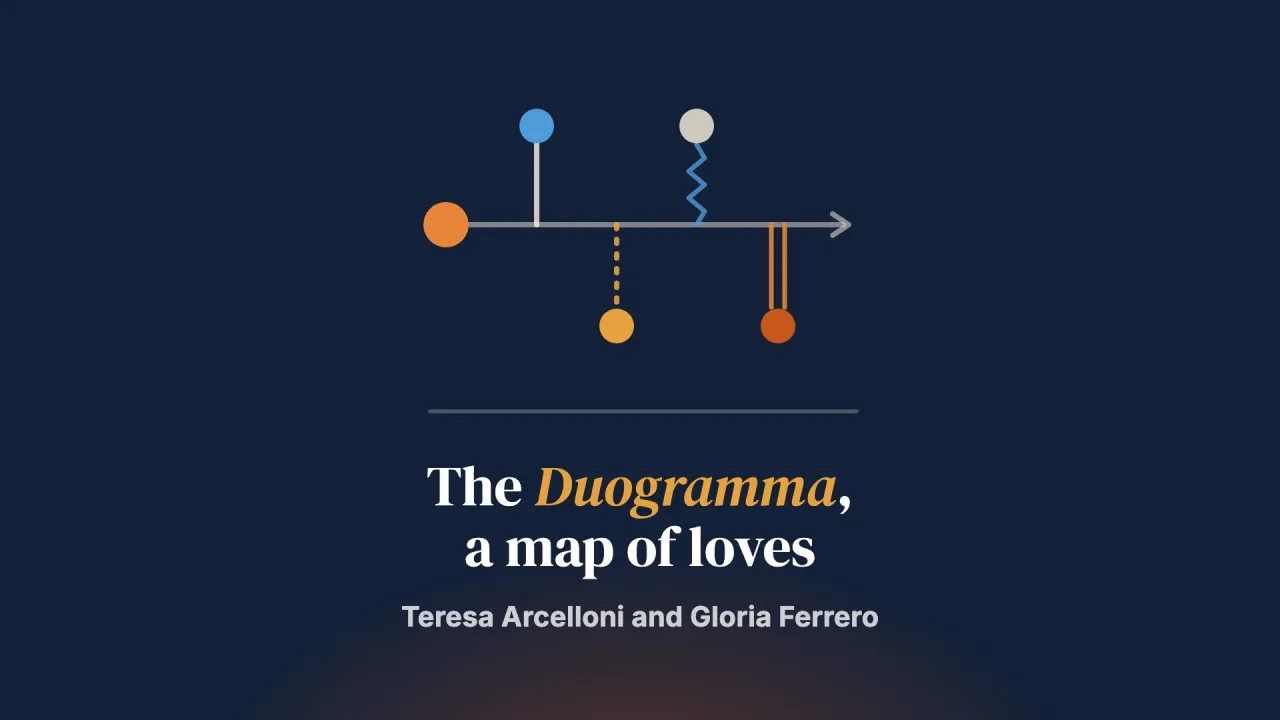
The Duogramma®: An innovative methodology for psychotherapy
A map of the couple relationships lived, desired or rejected since childhood: the Duogramma®, its graphic rules and its use in individual therapy.
 Blog
Challenging in therapy: What a patient taught me
A couples therapy session led me to reflect on confrontation, authenticity and resonance: how to address difficult behaviour without invalidating the person.
 Blog
Adult ADHD: when forgetting turns into a misunderstanding
Forgetting, compensating, tension in the couple: a systemic look at adult ADHD, to understand what is at stake and to look for more fitting forms of support.
Comments 0
Log in to join the discussion. Log in