AI-assisted translation
This version was translated from Portuguese by Complexe Systémique with the help of artificial intelligence. In case of doubt, the original version prevails.
Revista Brasileira de Terapia Familiar · Couples
Can Desire, Passion and Love Survive in Marriage?
A psychiatrist and couple therapist, then president of ABRATEF, Luiz Carlos Prado starts from two clinical situations: a young couple shaken by the wife’s passion for another man, and a sixty-year-old man who loves his wife but will not give up his lover. Drawing on evolutionary psychology and Helen Fisher’s work, he distinguishes three brain circuits, desire, passion and love, which may be directed at different people. From this he derives a reading of infidelity and some ways of keeping a long-term relationship alive.
Unofficial English translation. This article is a translation of O Desejo, a Paixão e o Amor podem sobreviver no casamento?, by Luiz Carlos Prado, published in the Revista Brasileira de Terapia Familiar (ABRATEF), vol. 1, no. 1 (2008), doi: 10.60114/rbtf.v1i1.125, under a CC BY 4.0 licence. Translated by Complexe Systémique in November 2026 with the help of artificial intelligence: the original Brazilian Portuguese text has been translated into English and reformatted, which constitutes a modification of the work under the terms of the licence. Paragraphs and headings are those of the journal; the abstract, keywords and author note, printed in the margin of the first page, are given at the head of the article and in the presentation; the lines by Vinicius de Moraes that close the article are summarized in indirect speech; a wrong first name in the original (“Alberto” for João) is flagged in square brackets. The abstract is the author’s own English version. This translation was made neither by the authors nor by the journal, who are not responsible for its content or for any errors. The original version prevails.
Sex is one thing, passion is another, love is a third – and together they form the web of love.
Luiz Carlos Prado
Abstract
The present paper makes some considerations based on clinical situations, about sexual desire, passion and love in couple relationships. From the point of view of evolutionary psychology, it looks at the origin of each of these three aspects of loving relationships and considers some differences in the way they are experienced by men and women. It integrates this view with recent research in Neurosciences about sex, passion and love and it also describes the brain circuits through which each one of these factors express themselves. As the neurochemical basis of each one of these factors are different, defining a “love web”, this paper deals with the matter of loyalty and infidelity in couple relationships. At last, it discusses the possibility of keeping love relationships warm in lasting marriages.
Keywords: passion, love, couple relationship
When I found myself facing that young couple, good-looking and successful, telling me their story, I was shaken for some time.
Both were lawyers and worked for the same company, a large law firm. Married for four years, they had a two-year-old daughter, a delightful little girl whom they adored. They told me how much they loved each other, how good their life was – they enjoyed tenderness and good sex, their family relationships were satisfying, and they were growing professionally.
Alberto, as I shall call him, was going through a period of great challenges. Besides working at the firm, he taught at a law school in a nearby city, to which he often had to travel. At weekends he took several case files home to finish, since he could no longer cope with his many tasks during normal working hours. Cláudia, his young wife, divided herself between her work at the firm, caring for their daughter and caring for herself – she studied English, went to the gym and played tennis with a group of women friends.
It was precisely in her English class that she met Marcelo, an attractive and seductive man, who began to court her insistently. At first she paid him no attention, but little by little she was charmed by his compliments, his seductive way of talking to her, his physical beauty. They began to talk often after class, in an increasingly eroticized atmosphere. Cláudia found herself in love – Marcelo now took up a large place in her imagination. And so she began to feel more distant from her husband: she did not miss him as much and no longer longed to be so close to him.
Noticing this withdrawal, Alberto began to ask her why she was behaving this way – and, under pressure, Cláudia ended up telling him what was going on. The revelation exploded like a bomb. Alberto felt the ground give way beneath his feet, while at the same time he was seized by intense hatred and a desire for revenge. He thought of leaving, of ending the marriage; the next moment, however, he felt like holding his wife in his arms, in an uncontrollable surge of passion.
Alberto eventually mastered his impulse to leave his wife, thought things over and decided to seek therapy. That was when I met them, entangled in the deepest of marital crises. For several days they had been unable to work: their hearts were in pieces as they tried to survive the impact of the revelation. Both were certain that they loved each other deeply and that they did not want to lose each other. But they did not really understand what had happened to them – how could such a successful couple, a couple who loved each other so much, have reached such a crisis?
We began to reflect together on this puzzle, in which some pieces seemed to be missing. But no: everything was there. In truth, they loved each other, had a good-quality relationship and made up a lovely family. Something, however, had happened that led them into this deep crisis – a desire, a fantasy, a passion had crept into Cláudia’s heart, taken up space like a weed, robbing her of peace and giving rise to a series of feelings that had brought them to where they now were.
João and Lílian are at another moment in life. Together for almost twenty years, they are a couple who live the love of maturity: they no longer feel the passion of the early years, but they share a great friendship and, above all, they nurture a great mutual tenderness and enjoy a pleasant companionship. Lílian is a gentle, affectionate woman, delightful at almost fifty, a sensitive and creative stage actress. For her, her relationship with João is beyond question. She believes she will never leave him, for she feels an intense love for him. She experiences her husband as very close, considers him a good partner and feels secure in his affection.
João, however, cannot live with Lílian alone, even though he too feels a deep love for her. He admires his wife, likes her ways, thinks he could not live without her; and yet, while aware of this love, he has another woman in his life, whom he meets regularly at certain times in his week. Already in his sixties, he senses that life is passing him by and fears growing old. In recent years he has been beset by the fear of no longer attracting women’s attention, of no longer being desired by them, even though he is a successful businessman and still sees himself as attractive.
Working less in his company – because his eldest son, from his first marriage, has begun to take over many of his activities – he has more free time during the week, while his wife still works long hours as an educational psychologist. So he thinks he can keep up his relationship with his lover without endangering his marriage; after all, at this stage of his life, he feels entitled to enjoy these moments of tenderness and pleasure. In his view, his lover is neither better nor more interesting than his wife; she is simply younger and fills some spaces that Lílian is not in a position to occupy. Alberto [sic, for João] is very afraid of losing anything that matters in his life, which makes any decision, one way or the other, very hard for him to take.
More than anything, Alberto [sic] fears putting his relationship with Lílian at risk – because his lover is asking for more space in his life, which is why she had been pressuring him very often. On the other hand, when he thinks of ending the affair, he fears never again being desired the way he feels wanted by his lover. Torn between these different paths, he comes to me for help. How can he deal with these divided feelings? How can he reconcile his love with his desires, his personal needs and his marriage?
Conflicts like these – between desire, passion and love – lead to dilemmas that are hard to resolve, because they arise precisely from our human nature. Understanding them and facing them is certainly a challenge for those of us who work with couples and families, and who live in this urban world, full of the contrasts of our time.
The birth of passion – an evolutionary view
In the last fifty years, impressive changes have become visible thanks to technological progress, which has brought with it a vast range of new possibilities. Among them, the many methods of contraception and the new forms of fertilization have brought about profound changes in relations between men and women. The ever smaller number of children they now have (many men and women are even choosing to have none at all) has had a significant impact on the way couples have organized their relationships in recent years. In addition, women’s growing participation in the labour market, which seems to show how successful they are in many professional fields, reduces their opportunities to be involved in activities related to childcare.
It is not hard to see that a new outlook is taking shape. In a society that produces many goods aimed at comfort and pleasure, there is a craving to live well, to “curtir” life (to enjoy it), to make the most of time, to live in the present rather than think of the future. This short-termism leads to the prevalence of transitory relationships, friends with benefits (amizades coloridas), one-night stands, casual sex – all forms of relationship without any commitment or emotional involvement.
Yet if so many transformations have occurred in so few years, our history began much earlier. When we think of historical time, of roughly the last five thousand years (since the first peoples of whom we have records, such as the Egyptians, the Greeks and the Romans), we see great cultural differences from our present world. Taking twenty-five years as a generation, there have been about two hundred generations in the historical time of humankind.
Consider, then, the times that came before. The remains found of our closest ancestor, Homo sapiens – who began to communicate through language and made objects for various purposes – date back some five hundred thousand years, that is, twenty thousand generations! Living on the African savannahs and later in certain regions of Europe, these early humans reproduced thousands of times over before reaching historical time, which looks short indeed next to human prehistory. Before them, there are remains showing that even older ancestors existed, some hominids dating back five million years, or Homo habilis, who lived by hunting with a stone axe for almost two million years.
As we know, there was a slow evolution from our ancestors to the present day. Five million years ago the brain weighed less than 500 grams; today it weighs about 1,350 grams on average – a growth to be credited to the complex processes of language, thought, memory and awareness of oneself and of others. However, with the evolution of the brain and the resulting growth of the skull, it became increasingly difficult for babies to pass through the birth canal, and their time in the womb had to be shortened, which gradually made the human infant the most immature and fragile in nature. As a consequence of this change, the human baby had no chance of surviving away from its parents or carers, and needed a great deal of support to grow and develop. And since, as in every evolutionary process, the fittest prevail over the rest, babies who had a father and a mother to care for them had a better chance of survival.
We must also bear in mind that, in human prehistory, our ancestors needed only to survive on natural foods and hunting and to reproduce as many times as possible. Like the other primates, they were driven by the survival instinct and by sexual desire, which pushed the male to fertilize as many females as he could, so that his genes multiplied to the utmost. The female had to spend many months taken up with her pregnancy and with caring for her young; she therefore had to be more selective, choosing the strongest males so as to be better protected in the harsh conditions of primitive life.
Now, as the human baby was born ever more immature and needed ever longer care, relations between men and women in primitive societies changed. The need arises for males and females to spend more time together to care for their offspring. Thus passion is born, and the desire for monogamous pairing – with the consequent search for exclusivity in the relationship and the demand for sexual fidelity – and also jealousy, “the green-eyed monster”, as Shakespeare (2003) called it, found in every society in which anthropologists have studied passion. For human beings in love, the pure longing for emotional union becomes even stronger than sexual desire.
In the early days, this “being together” did not need to last very long – it had to cover the period in which the offspring needed special care, that is, the baby’s first two or three years. From then on, the children could be looked after by other members of the group, allowing the mother to go back to gathering food for her own survival and that of her offspring. The love bond, accordingly, did not need to last more than those two or three years, after which the couple could separate and seek new mates. So it was for over a million years, while slow human evolution took its course.
Over time, human societies became more and more complex, until historical times, which are better known through their legacies. In this period, education is added to the many needs of development, making the task of raising children long and complex – they had to be taught knowledge and skills developed and refined over the centuries. Raising successful children becomes a far greater challenge, involving years of teaching, support and protection. This process ends up giving children cared for by both parents a better chance of success than those abandoned by their father.
It was then that what evolutionists call MPI – Male Parental Investment – gradually developed: the father’s presence in caring for the children (Wright, 1996). To maternal investment, already the greatest in all of nature, was added the father’s investment in the children, to make them stronger and more competitive. But this imposed a new condition on the couple: they had to stay together longer, so that they could care for the children together. We may suppose that this is the origin of long-lasting love relationships, the basis of the couple and of the human family as we know them today.
Men and women experience sex differently
In a large study, researchers interviewed thousands of men and women in 37 different societies, seeking to assess which characteristics mattered in choosing a partner. Both sexes said that love and mutual attraction came first, followed by good character, emotional stability, maturity and good humour. They also stated that kindness, intelligence, education, sociability, health and an interest in starting a family would be important attributes (Fisher, 2006, p. 142).
To the affinities between men and women are added the differences. Men are more visual; their sexual desire is governed by a series of physical attractions – a woman’s face with balanced features, full lips, bright eyes, silky hair and a body with prominent, rounded breasts, as well as a suitable hip-to-waist ratio. These female attributes indicate good reproductive potential, which can be assessed visually.
A woman needs to assess a man more broadly, to see whether he will be a good partner. She likes taller men, more self-confident and assertive, the best endowed intellectually and the bravest, who take risks for others, since such courage holds out the promise of greater protection in a world full of dangers. For a long-term relationship, however, the factors that most arouse her interest are age, level of education and financial situation – older and better-educated men give a feeling of greater security, offer stability and may therefore mean a more promising future. Being able to hold a conversation, tell funny stories, sing, know poetry or have sporting skills are also qualities that make a man very attractive to a woman, because they show sensitivity and the ability to communicate.
As we can see, there are many aspects that bring men and women together, but they also have different perceptions and perspectives on love relationships, which may well lead to many misunderstandings. Even though what has been said above can be questioned – especially as regards the characteristics that draw people together or push them apart in love relationships – there is consensus that sexual relations, in the context of passionate relationships, further strengthen the desire for union with the partner.
While pure and simple desire fades as soon as the sexual act is consummated, passion seeks continuity of the relationship with one particular person, creating a desire for exclusivity. The love bond leads to a connection between a man and a woman – it is in this relational context that the sexual act strengthens the connection. Although it is a fundamental element in men’s search for a sexual partner, physical attraction no longer necessarily takes precedence in the choice of a long-term partner; what predominates is the search for love, affection, friendship, intelligence, companionship and spiritual affinities, among other characteristics and qualities.
However, because of human nature itself, exclusive relationships are never entirely protected from desires directed at other individuals. Here it is worth recalling the thought of Winston (2006), who stresses the importance of voluntary determination in maintaining the love bond:
In a lasting relationship, the feeling of loyalty, the morals and traditions of a given culture and the unwritten laws of the institution of marriage make a man resist the temptation to sleep with other women, but this resistance amounts to overcoming a physical temptation and making a moral choice (p. 138).
By recalling Winston, I want to stress how much the moral elements and the feelings of loyalty and fidelity in marriage need investment in the relationship to be maintained, and how much they are subject to the values of each era.
The crisis of marriage today
The monogamous model of relationship worked quite well while men spent their days absorbed in work and women stayed at home caring for the couple’s many children, in rural communities or small villages. However, according to Desmond Morris, “the pair-bonding mechanism is not perfect. It was grafted onto the primitive primate system, and the seam has not yet disappeared” (2004, p. 96). As with everything in evolution, stages follow one another, accommodating the earlier ones in some way, often with elements of the present and the past side by side. If something happens that upsets the couple’s unstable balance, primitive instincts may prevail once more.
If, on the one hand, we must consider that a love relationship involves investment, on the other we must take into account that today’s social context is profoundly changing couple relationships. Indeed, with fewer children to care for and with women competing with men for the same workplaces outside the home, the stability of these relationships has been badly shaken. The introduction of divorce in most modern societies is one consequence of this – men and women are no longer so willing to stay together for life. Not least because human life, which less than a century ago lasted around forty years, has become much longer. In times of great transformation, couple relationships have become very unstable. Living together therefore comes to be understood as a personal choice.
Although most of the human communities studied have a polygamous configuration and only 15% of them are monogamous, this achievement is present in most of the more developed societies (Wright, 1995). Couple relationships may be said to be an important human development. But this does not cancel out individuals’ interest in sexual activity outside marriage, as shown by the high rates of extramarital relationships. A study carried out in Brazil by the anthropologist Mirian Goldenberg found infidelity rates of 60% among men and 47% among married women (Goldenberg, 2006). These data show the tendency of human beings to seek alternatives for dealing with the contradiction between their stable couple relationships and their indiscriminate sexual desires. Voyeurism offers another way of dealing with this situation – there is an ever-growing volume of films, soap operas and Internet material with erotic content, which allow a certain sexual satisfaction without the need for an actual relationship with other partners.
Some recent studies, however, indicate that an excess of pornography creates certain problems, especially because it is so easily accessible on the Internet, which ends up leading to saturation and to a loss of interest in real love relationships (Paul, 2006). Another, older way of dealing with this issue is the use of prostitution – relations with sex workers do not put marriages so much at risk and may be better tolerated than a love affair. It is always more men who turn to prostitution and pornography, giving free rein to their natural tendency towards indiscriminate and varied sex. This primitive model of the human mind was not eliminated by the arrival of the new circuits of passion and love: the desire for indiscriminate and varied sex coexists with the new circuits in an unstable and often difficult balance.
In animals, it is very common to observe certain characteristics typical of primitive sexuality. Studies of turkeys show that a male will spread its tail in a seductive display to win over a straw female, or even a frame bearing only a wooden turkey hen’s head (Wright, 1995). The male’s indiscriminate pursuit of as many females as he can obtain is commonly seen in nature. But are these characteristics, laid down at the very beginning of the long course of human evolution, really still present in the men and women of today?
To test this question, researchers conducted an experiment on a university campus: they asked an attractive young man to propose a sexual relationship to a number of young female students, and an equally attractive woman made the same proposal to the young men on campus. The result was very clear – 75% of the men accepted the woman’s invitation to a sexual encounter, while none of the women accepted the same invitation made by a man (Wright, 1996). This experiment shows a clear difference in the way men and women of our time deal with sexuality.
The web of love
Sex, passion and love, three different mental circuits, were called the web of love by Helen Fisher, who has carried out interesting research in the neuroscience of passion. Each of these brain systems directs a different aspect of the process of human reproduction, which evolved over the years, as we saw earlier. While sexual desire has always existed – indiscriminate and non-specific, as in the primates that preceded us – passion arose to lead men and women to desire one person in particular, making possible relationships of some duration, long enough for the woman to be protected during pregnancy and breastfeeding. The third element of this complex system is love or attachment, which developed more recently with the evolutionary advance of our cerebral cortex. Love came to enable human beings to live lasting relationships, keeping the couple together long enough to raise children jointly, and binding parents to children for life.
The researcher studied the brains of people in love to see how they worked. From among university students she chose a group of twenty men and twenty women who were deeply in love at the time, selecting them through an inventory of the intensity of passion – those with the highest scores were chosen (Fisher, 2006). She showed each of them a photograph of their beloved for 30 seconds, while imaging the working brain with functional magnetic resonance imaging. For a further 40 seconds she asked them to count backwards in sevens from a high number, a device that distracts the brain from what it was thinking about. Then, for another 30 seconds, she imaged them looking at a photograph of an ordinary person for whom they had no feelings at all. On comparing the many images produced in this work, she was amazed: “When I first saw those images, with the active regions of the brain lit up in bright yellow and deep orange, I felt what I feel on a summer night when I look up at the glittering universe: an overwhelming awe” (Fisher, 2006, p. 94).
Many parts of the brain were activated in each participant in love, but two regions lit up most intensely: the caudate nucleus and the ventral tegmental area – regarded as among the most primitive parts of the human brain, linked to the so-called “reward system”, which is always activated in moments of pleasure.
The more intensely in love the participants were, the more active these areas became (findings compared with those of the questionnaire completed earlier, which scores the intensity of passion). According to neuroscience research, the ventral tegmental area is linked to the synthesis of the neurotransmitter dopamine, which is then distributed to other areas, including the caudate nucleus. Its release produces focused attention, intense energy, motivation for reward and feelings of elation – all central components of passion. The dopamine-irrigated caudate nucleus would thus be the furnace of human passion.
These are the same areas activated when a person uses cocaine or opiates, which means that passion has much in common with addiction: dependence, tolerance, withdrawal and relapse. As passion intensifies, lovers want to spend more and more time together; when apart, they react with intense separation anxiety; and when they try to keep away from each other, they are often tempted to resume the relationship. Helen Fisher describes this elegantly:
It is no surprise that lovers talk all night or walk until dawn, write extravagant poems and revealing e-mails, cross continents or oceans just to hold each other for a weekend, change jobs or lifestyles, even die for each other. Soaked in substances that confer focus, energy and vigour, and driven by the brain’s motivation engine, lovers succumb to the Herculean drive of courtship (Fisher, 2006, p. 98).
Other parts of our brain, according to Marazziti (2007), are linked to the process of passion, such as the amygdala, the part of the brain involved in regulating emotions, and the hippocampus, which stores emotional memories, making it possible to associate a specific face with a place, a piece of music, a setting and the emotions experienced with that particular person. These processes are all chemically mediated by a neurotransmitter called serotonin.
Passion is limited in duration, since, as already said, it dies out within three years at most. After that time, one may return to the state of “readiness for love” (Masters and Johnson, 1988), or else a love relationship develops, which lacks the impetuousness of passion but is a flame that can warm the human heart for a long time. “Loving and being loved is one of the greatest joys of our existence, if not the greatest”, says Marazziti, showing the enthusiasm this subject arouses in her (2007, p. 34). This author regards love as a kind of reward that nature offers human beings to compensate them for the great effort involved in the long care of children.
Another important evolutionary achievement that helped human beings to form more lasting relationships is their capacity to remember significant events, known as emotional memories. The human ability to memorize important events in one’s own history and to recall the emotions experienced at those moments is a fundamental achievement that makes long-term relationships possible.
In terms of its biological basis, the feeling of love – the attachment bond, in other words – has brain circuits that differ from those of passion. Today many scholars state that attachment is regulated by two hormones: vasopressin, released in all female mammals during birth, and oxytocin, synthesized in the hypothalamus, the ovaries and the testes. The hypothalamus is a part of the brain that centralizes control of the autonomic nervous system, the centre of all our automatic functions. During orgasm, levels of vasopressin rise in men and of oxytocin in women, which is why they are also called “satisfaction hormones”, since they are secreted particularly when the genitals or nipples are stimulated during the sexual act. These substances contribute to the sense of fusion, closeness and connection that goes with tender sex with a loved one.
In short, the web of love is expressed through three different circuits in our brain. Sexual desire is chemically based on the hormone testosterone, in both men and women. Passion is linked to dopamine and serotonin. Connection, attachment, is related to oxytocin and vasopressin. These systems are all interconnected: the chemistry of connection can trigger sexual desire, and the chemistry of passion can stimulate attachment. They can, however, have negative effects on one another. Very high levels of testosterone have been observed to lower vasopressin and oxytocin levels, while testosterone can be affected by high levels of vasopressin.
Perhaps these mutual influences help to explain some of the ups and downs of love relationships. Long-term relationships, for example, tend to reduce sexual arousal between partners. It is no surprise, then, that research has shown that men and women in stable relationships tend to spend less time engaged in sexual activity (Fisher, 2006). On the other hand, very high levels of testosterone reduce men’s inclination to marry, increase their search for extramarital relationships, and lead them to separate more often or to commit more sexual abuse and violence against their wives.
There are also interconnections between the chemistry of passion and that of love: the substances that drive passion – dopamine, norepinephrine and serotonin – stimulate the love bond, intensifying feelings of attachment and love, by raising the production of the hormones regarded as their brain substrate, oxytocin and vasopressin. The increase in these hormones may interfere with the brain circuit of passion, reducing the exciting effect of dopamine.
This explains why, in stable unions, passion diminishes over the years. This regulating effect is of considerable importance – if men and women lived permanently in a state of passion, they would have little inclination to work, produce and create in the many other areas of life, since they would be constantly preoccupied with the object of their passion. Moreover, as passion matures, “it often expands into hundreds of complex and satisfying feelings of attachment, which produce an enormously intricate, interesting and emotionally rewarding union with another person” (Fisher, 2006, p. 123). This is what may be called love.
The fact that these three fundamental circuits in human relationships – desire, passion and love – work along independent pathways in our brain, even though they are deeply interconnected and influence one another, is essential to understanding the most recurrent problems in love relationships. With this new knowledge, it becomes possible to address better certain vicissitudes of couple relationships that would otherwise seem to make no sense. In our work as couple therapists, we are often called on to intervene in situations in which desire, passion and love are directed at different people, causing intense anguish and suffering for the partners. Those involved in these conflicts feel confused; they may feel that they are wrong or bad people, experience conflicts of loyalty and feelings of guilt, and become involved in extramarital relationships. In such cases it is very valuable to know that it is part of human nature to feel, at some point in life, desire, passion and/or love for different people. As Helen Fisher says, “it seems to be the destiny of humankind that we are neurologically capable of loving more than one person at a time” (Fisher, p. 124).
At the beginning of this paper I described two such situations, which can be better understood in the light of this new knowledge about the mechanisms of desire, passion and love. When I heard Cláudia, from the vignette that opens this paper, say that she loved Alberto deeply despite having fallen in love with another man, I was able to understand her better with these new concepts in mind. Listening to the story of João – who, though he loved his wife Lílian very much, intensely desired his lover – I was also able to understand his dilemma better. I can now see that these are human conflicts, the fruit of mismatches between complex feelings that are regulated by different mechanisms in our brain. In short, it is possible for a man or a woman to become attached to more than one person at the same time in life, but to each in a different way – pure sexual desire, intense passion or a bond of love.
How to keep a long-term love relationship warm
Over the years, love relationships tend to become milder and to create many routines, so that the fire of passion and the pleasure of novelty are dampened. Many couples are able to live a whole life this way and feel good about it. But other people grow restless with this lukewarmness and look for something new – an adventure, a new excitement, something different. In our urban world, where men and women meet in many places of study, work or leisure, some opportunity for romantic involvement eventually arises. Someone stirs the restless heart, and the conflict is set: guilt, shame and feelings of loyalty on one side, and jealousy, possessiveness and a sense of betrayal on the other. This is the fertile ground in which love triangles, extramarital relationships and clandestine passions are born, leading so many individuals and couples to suffering and to the therapist’s office.
– “I adore this woman, she is the woman of my life”, said a man in his middle years, speaking of the wife he had lived with for more than thirty years. She, however, wanted to live a different life; she no longer loved her husband as a man, only as a friend and as the father of her children. – “I don’t understand, we’ve always got on so well, we have wonderful children, we never fight, I’ve always been loyal to you, why this now? She must be ill, doctor!”
It is hard to understand, and even some therapists fail to understand it. This woman’s heart has turned elsewhere, has become attached to another person – a situation her partner cannot accept. After all, “we built our life together, we made so many things together, why don’t you want to go on together?” To which she could only reply: “I’m very fond of you, I wish you every good, but I don’t love you any more”. But what are we, as therapists, to do when we face these conflicts?
Passion travels along channels different from those of attachment or love; and perhaps for this reason these feelings are often confused in our patients’ minds. Therapists, in these cases, must be very clear about this distinction: sex is one thing, passion is another, love is a third – and together they form the web of love. Managing to integrate these three feelings and experience them towards one and the same person, and also to have them reciprocated, is a hard-won achievement. These good marriages, these love relationships, which I define as “qualified”, are like a rare plant (Prado, 2002).
Answers to these dilemmas must start from the notion that men and women are capable of building qualified love relationships. Helen Fisher believes it is possible to keep the flame of passion alive in a long, stable relationship. But, according to her, to keep this magic alive we need to “trick” our brain, to make it experience new emotions. The couple can do this by doing things together – exciting experiences, especially those involving a degree of challenge and adventure, stimulate the production of adrenaline and strengthen the bonds of love (Fisher, 2006).
The pleasure of conquest is present in many physical activities, in various sports, and in exploring new paths and different places. Professional achievements, new ventures and new life experiences are also exciting challenges that make the dulled heart beat faster. All this is confirmed by various studies showing that couples who do different things together are able to feel great pleasure in their relationship. Even some couple quarrels, when well resolved, intensify the feeling of union (Perel, 2007).
Likewise, it is important to create spaces of individuality in the relationship, for they preserve a certain air of mystery, areas of novelty and excitement with the other. When fused, one cannot see the other in their difference, nor enjoy that richness. “When I’m sure someone wants me, I lose interest in that person” – this is a very common belief among men and even among some women. This kind of thinking rests on the principle that when one gets what one desires, the pleasure of desiring is gone. “The more often you go somewhere, the less pleasure you get from it”: this is another formulation with a similar meaning – what one owns has no value, “the grass is always greener on the other side of the fence”.
Some observations, however, contradict these beliefs: the more one does an activity, and the better one does it, the more pleasure one can draw from it. Skilled tennis or chess players feel ever greater satisfaction in playing as they see that they are able to improve their game with practice and over time.
The same can happen with couples: by exercising their affection, their sex life or their companionship in a variety of activities, in ever more interesting ways, they make the relationship more pleasurable. This goal requires investment to be achieved – it demands effort, determination and creativity. After all, love is not enough, as Aaron Beck tells us in his classic book on the subject (Beck, 1995). Love is not sustained simply by existing – it requires joint investment in the relationship, a decision, an act of will.
Moreover, it is important to know that sex itself, if experienced creatively, becomes a way of activating passion and love. Eroticism is an essentially human achievement; it is sex with creativity, in a playful relationship with the other, that allows many paths to be explored. Massage and caresses on certain erogenous zones stimulate the production of oxytocin and endorphins, substances that produce feelings of relaxation and closeness. As well as helping to maintain skin turgor, muscle tone and bodily health, sex is associated with the production of higher levels of testosterone, which stimulates the release of dopamine, rekindling the flame of passion and romance in the couple.
The game of conquest also sparks mutual interest: some degree of mystery, uncertainty or obstacle stimulates feelings of love. But it is a game that may be dangerous; it must be played with care, for relationships need stability and security. Another element is important in sustaining love over the years: both sexes are attracted to healthy and happy partners. It is therefore important for each partner to stay in good physical shape and in good humour in the relationship – sensuality and joy are precious tonics for a love bond.
Maintaining an intimate relationship presupposes an interest in what pleases one’s partner: when a woman goes skiing in the mountains with a man, or to a tennis match or to see his favourite football team, closeness and mutual interest increase. Men who are willing to see the films or plays that women prefer, and who offer to help them with traditionally more feminine activities, such as housework, kindle their partners’ desire (Gottman, 2000).
Another way of increasing intimacy is to talk about a variety of subjects. Although women are more skilled at verbal dialogue, this does not prevent men from learning from them to communicate better as they invest in a relationship. When a man learns to talk “eye to eye” with his partner, he is better able to draw her into a romantic mood.
From all this we can conclude that men and women are capable of learning to love. When the heart stays open and couples keep seeking new challenges, they are likely to keep activating the brain’s network of passion. To do so, it is necessary to preserve certain qualities: being committed to the relationship; listening attentively to one’s partner and responding from the heart; appreciating the partner and remaining attractive; continuing to grow intellectually; including the other and allowing them privacy; being sincere and trustworthy; accepting imperfections and being mindful of one’s own; exercising one’s sense of humour; respecting each other; saying “no” to adultery; making concessions; arguing constructively; never threatening to leave, while knowing that the relationship may not last forever; and building it one day at a time (Fisher, 2006).
This means that to sustain passion one must set aside time for courtship and develop a range of exciting interests, novelties and stimulating activities. “Variety, variety, variety: it stimulates the brain’s pleasure centre and keeps romance alive” (Fisher, p. 256). And to keep the flame of passion burning for many years, one must venture out and break with the daily routine. Above all, a good dose of creativity is needed.
Conclusion – reflections on a new era
We are living in a time of serial marriages – relationships that last a variable number of years and that, once their love potential is exhausted, may come to an end. Separations are not always easy: they are usually accompanied by much pain, some confusion and often hurt and resentment. All this passes too. New relationships may well come along, and people may go on living without having to carry bitter, disrespectful or even destructive relationships for the rest of their lives. The notion that life is short and should be lived as well as possible is an achievement of our time.
But how will love relationships fare in the future?
The next fifty or a hundred years will certainly bring even more striking changes in relationships between men and women, which makes the future unpredictable. In view of this, we can only speculate as to whether this model of serial monogamous relationships will go on being refined, or whether it will take new paths.
Shall we move towards Aldous Huxley’s Brave New World? In that fiction, men and women would no longer have relationships with bonds of love; consequently they would no longer feel possessiveness or the jealousy that follows from it. Relationships would be mere moments of pleasure, transitory encounters between independent and autonomous individuals, with children created in laboratories and brought up in social institutions. Or shall we march towards a world of virtual relationships, of which today’s Internet relationships are already in some way a sign? In these, real human encounter would gradually give way to a robotized world in the style of the replicants of Blade Runner.
Perhaps, however, love will remain a valued and refined human dimension, and love relationships will continue to be a growing source of satisfaction for human beings. For the time being, this has been the best possible path: building qualified relationships, which season life and give it special meaning. To conclude, nothing better than the words of a poet, who says with the heart what we try to express through reason:
[The article quotes here the last six lines of Vinicius de Moraes’s “Soneto de Fidelidade”, in which the poet hopes that one day, when death or loneliness may come for him, he will be able to say of the love he had that it was not immortal, since it is a flame, but infinite while it lasted.]
Complexe Systémique: key points
This 2008 text has the strengths and limits of its time. Its clinical strength lies in a simple distinction borrowed from Helen Fisher: desire, passion and attachment are three separate systems, which may be directed at different people. With a couple struck by an affair, this reading can lower shame and disqualification (“she must be ill, doctor”) and open a conversation about what each partner is going through, without reducing infidelity to a fault or a symptom. The limits are clear: an evolutionary essentialism that freezes differences between men and women, old experiments cited second-hand, a much simplified neurochemistry, and a couple conceived only as heterosexual and monogamous. A systemic reading will add what the article leaves in the shadows: the function of the third party in the couple’s balance, the loyalties at stake and the moment in the life cycle (a two-year-old daughter, a sixty-year-old man afraid of ageing). One idea remains useful in the consulting room: lasting love takes work, through shared novelty, preserved individuality and a decision renewed again and again. Read alongside the study on resilience factors in couple healing from infidelity, and the systemic reading of the couple’s sexuality with Julie Nicol.
References
Beck, A. T. (1995). Para além do Amor: como os casais podem superar os desentendimentos, resolver os conflitos e encontrar uma solução para os problemas de relacionamento através da terapia cognitiva (trad. Paulo Fróes). Rio de Janeiro: Ed. Record – Rosa dos Tempos.
Ferreira, A. B. H. (1975). Novo dicionário da Língua Portuguesa (1ª edição). Rio de Janeiro: Nova Fronteira.
Fisher, H. E. (2006). Por que amamos (trad. Ryta Vinagre). Rio de Janeiro: Ed. Record.
GOLDENBERG, Mirian (2006). Infiel: notas de uma antropóloga. Rio de Janeiro: Ed. Record.
Gottman, J. e Silver, Nan (2000). Sete princípios para o casamento dar certo. Rio de Janeiro: Objetiva.
Marazziti, D. (2007). A Natureza do Amor: conhecendo os sentimentos para vivê-los melhor (tradução Betina Mariante Cardoso). São Paulo: Atheneu.
Masters, W. & Johnson, V. E. (1988). O relacionamento amoroso; segredos do amor e da intimidade sexual. Rio de Janeiro: E. Nova Fronteira.
Morris, D. (2004). O macaco nu (trad. Hermano Neves). Rio de Janeiro: Ed. Record.
Paul, P. (2006). Pornificados: como a pornografia está transformando a nossa vida, os nossos relacionamentos e as nossas famílias (trad. Gilson César Cardoso de Sousa). São Paulo: Cultrix.
Perel, E. (2007). Sexo no cativeiro: driblando as armadilhas do casamento (trad. Adalgisa Campos da Silva). Rio de Janeiro: Ed. Objetiva.
Prado, L.C. (2002). O ser terapeuta. Porto Alegre, Edição do autor.
Shakespeare, W. (2003). Otelo, o Mouro de Veneza (trad. Jean Melville, original de 1604-1605). São Paulo: Ed. Martim Claret.
Winston, R. (2006). Instinto Humano (trad. Mário M. Ribeiro e Sheila Mazzonelis). São Paulo: Ed. Globo.
Wright, R. (1996). O Animal Moral – Por que somos como somos: a nova ciência da psicologia evolucionista (trad. Lia Wyler). Rio de Janeiro: Elsevier.
Unofficial English translation of O Desejo, a Paixão e o Amor podem sobreviver no casamento?, by Luiz Carlos Prado, Revista Brasileira de Terapia Familiar, vol. 1, no. 1 (2008), doi: 10.60114/rbtf.v1i1.125, under a CC BY 4.0 licence. Translation (with the help of artificial intelligence) and layout: Complexe Systémique, November 2026 — the work has been modified under the terms of the licence (quoted verse summarized in indirect speech). Neither the authors nor the journal are responsible for this translation; the original version prevails.
Unofficial English translation of “O Desejo, a Paixão e o Amor podem sobreviver no casamento?”, published in Revista Brasileira de Terapia Familiar (2008) under a CC BY 4.0 licence. Made by Complexe Systémique with the help of artificial intelligence, it does not come from the authors or the journal, who are not responsible for its content; the original version prevails.
Read the original articleHow to cite this article
Prado, L. C. (2008). Can Desire, Passion and Love Survive in Marriage? (Complexe Systémique, Trans.). Complexe Systémique. https://app.complexe-systemique.com/en_GB/articles/can-desire-passion-and-love-survive-in-marriage (Original work published in 2008 in Revista Brasileira de Terapia Familiar, v. 1, n. 1 (2008); republished in 2008 by Revista Brasileira de Terapia Familiar, https://revbrasterapiafamiliar.abratef.org.br/revista/article/view/125)
To go further
- Resilience Factors in Couple Healing from Infidelity: A Deductive Qualitative Analysis StudyRebuilding as a couple after infidelity.
- A systemic reading of the couple's sexuality, with Julie NicolDesire as a couple matter.
- The couple's life cycle: a clinical compass for navigating marital crisesCouple crises over time.
Related training courses
 Short course
Extramarital affairs in couple therapy: from crisis to forgiveness
One-day online training with Julien Besse: reading the crisis triggered by an extramarital affair, positioning oneself as a couple therapist, rebuilding trust and working on forgiveness up to the repair ritual. Delivered in French.
 Symposium
État des Lieux: a psychological approach to spaces
Replay of the “État des Lieux” conference (Paris, 16 October 2026): Ivy Daure, Maurizio Frisina, Viola Sallay and Gilbert Pregno on places as a clinical resource. In French.
 Webinar
Extramarital affairs: what does the therapist do when the couple explodes?
Replay of the free webinar of 5 November 2026: how to position yourself as a systemic therapist in the crisis of the extramarital affair. Revelation, secrecy, multipartiality.
 Webinar
The three loves
Replay of the free webinar with Dr Robert Neuburger of 1 October 2026: the three loves, attachment and ways of loving. Held in French.
Related articles
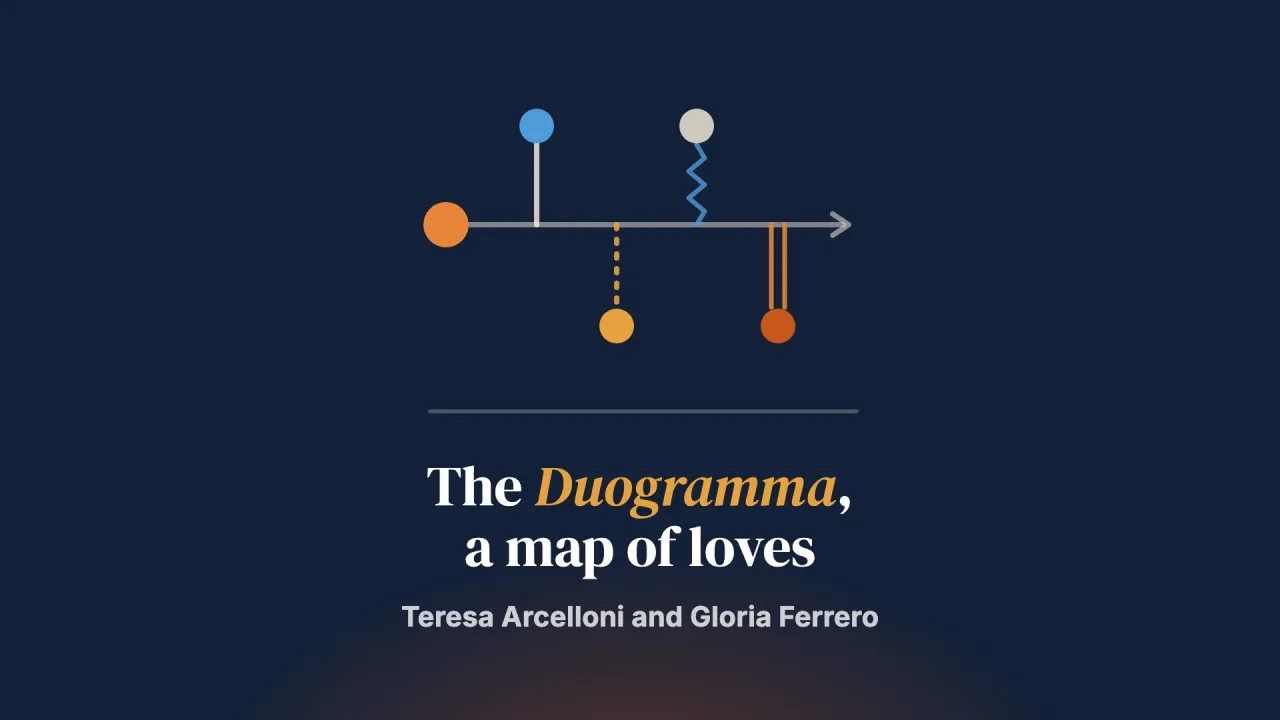 Scientific
The Duogramma®: An innovative methodology for psychotherapy
A map of the couple relationships lived, desired or rejected since childhood: the Duogramma®, its graphic rules and its use in individual therapy.
 Blog
Challenging in therapy: What a patient taught me
A couples therapy session led me to reflect on confrontation, authenticity and resonance: how to address difficult behaviour without invalidating the person.
 Blog
Adult ADHD: when forgetting turns into a misunderstanding
Forgetting, compensating, tension in the couple: a systemic look at adult ADHD, to understand what is at stake and to look for more fitting forms of support.
 Scientific
Sickle Cell Disease and Young Couples: Understanding the Influence of Shared and Individual Meaning on Couples’ Experience of Illness
Nine young adult couples facing sickle cell disease: how each partner makes sense of the illness, and how the couple moves from caregiving to equality from one crisis to the next.
Comments 0
Log in to join the discussion. Log in