AI-assisted translation
This version was translated from Portuguese by Complexe Systémique with the help of artificial intelligence. In case of doubt, the original version prevails.
Revista Brasileira de Terapia Familiar · Couples
Conjugal Organization and Gender Roles: The Arrival of the First Child
The first child turns the marital dyad into a triangle and forces the couple to redefine its roles. Drawing on a mostly Brazilian literature review and on Carter and McGoldrick’s work on the family life cycle, Izabel Ester Inácio Ferraz and Messiano Ladislau Nogueira de Sousa show that egalitarian ideals hold up poorly through this transition: the mother remains the main caregiver, while the father wavers between a supporting role and a new emotional closeness. A useful overview for anticipating the conflicts that arise from the gap between discourse and practice.
Unofficial English translation. This article is a translation of Organização Conjugal e Papel de Gênero: A Chegada do Primeiro Filho, by Izabel Ester Inácio Ferraz and Messiano Ladislau Nogueira de Sousa, published in the Revista Brasileira de Terapia Familiar (ABRATEF), vol. 9, no. 1 (2020), doi: 10.60114/rbtf.v9i1.32, under a CC BY 4.0 licence. Translated by Complexe Systémique in November 2026 with the help of artificial intelligence: the original Brazilian Portuguese text has been translated into English and reformatted, which constitutes a modification of the work under the terms of the licence. Paragraphs and headings are those of the journal; the four headings that follow “Development” are presented as subsections; the biographical notes of the two authors, printed as footnotes on the first page, are included in the presentation; the book by McGoldrick and Carter, cited in its Brazilian edition, is given under its original English title; the English title renders “Papel de Gênero” as “Gender Roles” (the authors’ English title reads “Gender Paper”); an obvious typographical error has been corrected silently. The abstract is the authors’ own English version. This translation was made neither by the authors nor by the journal, who are not responsible for its content or for any errors. The original version prevails.
Couples need to rewrite their relationship, because after the arrival of the first child nothing will be as it was before. Reality has to be taken into account: being three is different from being two.
Izabel Ester Inácio Ferraz, Messiano Ladislau Nogueira de Sousa
Abstract
In the last decade, we have witnessed a major revolution in the midst of internet-driven communication, changes in the pattern of sexual behavior and choice of partners between young people and young adults, the insertion of women into positions previously occupied only by men, expansion of professional requirements for entry into the labor market and reorganization of the way the family defines itself. The family, with its immense capacity for adaptation, has been changing without ceasing to fulfill structured and defining functions to guarantee the protection and care of the new generations and their social function of transmitting standards and norms. In this brief article we aim to discuss, through a literature review, how this adaptation has occurred within the family that is beginning, which is still constituted only by the couple, at the time of the arrival of the third member: the first child. We conclude that although changes have occurred in gender roles over the past few years, the arrival of the child is an element that expands the difference of these roles.
Keywords: couples therapy; children; family
Introduction
Over the years, the patterns of the family life cycle have undergone many changes. The family life cycle consists of the various stages that families go through, from their formation in one generation to the death of the individuals who started them (Osorio & Pascual do Valle, 2009). With divorce and remarriage, with the revolution in how male and female roles are perceived, and with changing sociopolitical norms and realities, the perspectives of the family life cycle have also changed (Carter & McGoldrick, 2011).
The individual life cycle takes place within the family life cycle, which is the primary context of human development, and the patterns of the family life cycle are changing in our time, altering what is considered “normal” (Carter & McGoldrick, 2011).
For the Brazilian Institute of Geography and Statistics (IBGE), the definition of the family is still limited by the condition of living in the same household, by ties of consanguinity and by economic dependence; distinct groups of people who live in the same place are also brought together under this term (Osorio & Pascual do Valle, 2009).
The family pattern has shown three main changes in recent decades: a substantial drop in the number of members, an increase in the number of women without a spouse who have children, and an increase in the number of families in which the reference person is a woman. There has also been a rise in the proportion of people living alone or of couples without children (Osorio & Pascual do Valle, 2009).
The female figure has gained a central role in the main changes that have taken place: entry into the labour market, heading a significant number of families, and, in addition, becoming responsible for the custody of the children in cases of separation (Osorio & Pascual do Valle, 2009).
Family stress is generally greater at the points of transition from one stage to another in the family developmental process, and symptoms tend to appear more when there is an interruption or dislocation in the unfolding family life cycle (Carter & McGoldrick, 2011).
Six stages of development were proposed by McGoldrick and Carter in their work The Changing Family Life Cycle: A Framework for Family Therapy (Brazilian edition, 2011), which addressed the family life cycle of the American middle class at the end of the twentieth century: 1) the launching of the single young adult; 2) the new couple; 3) becoming parents; 4) the family system in adolescence; 5) launching children and moving on; and 6) the family in later life (Osorio & Pascual do Valle, 2009).
Some life experiences, such as the birth or illness of a family member, require attention to be directed to the tightening and primacy of relationships, while others, such as starting school or taking up a new job, call for a focus on individuality. Cultural factors also play a significant role in the way families move through the life cycle (Carter & McGoldrick, 2011).
The birth of the first child is an event that triggers a phase of profound transformation in the couple’s life, creating new roles, mainly those of mother and father, whose performance will have repercussions on the marital relationship. This phase of the family life cycle also affects the whole extended family, which now comes to include a new grandparent, uncle or aunt, cousin, and it requires a reorganization of the entire system (Almeida, 2005).
When a couple has a child, whether deliberately or by chance, a new family is formed from the birth of that child. The dyadic relationship is transformed by the changes in the roles and functions to be performed by the man and the woman, now mother and father (Almeida, 2005). The new nuclear family is the product of a couple who come from different families, each partner carrying the marks and stories of their family of origin. The birth of the child connects the stories of the two families of origin, and it is an important moment of transition in the life of the new father and the new mother, as individuals and as a couple, bringing about intense emotional and relational transformations (Almeida, 2005).
During the transition to becoming a family with young children, parents need to take on the responsibility of raising their children while at the same time trying to maintain their own relationship (Almeida, 2005).
Given the scarcity of literature in this area, this article aims to serve health professionals who work with families, and couples who wish to have children, by anticipating the emergence of themes of contradiction and conflict in the marital relationship.
Through a literature review, we gathered the contributions of various authors on the changes that the arrival of a child can, and will, bring about in married life, using the systemic theory of the family as our theoretical basis.
Development
Social and historical context of marriage
The so-called traditional family of past centuries was ruled by the patriarchal figure. In such a structure, marriages were based on the maintenance and transmission of property. The husband held all the power, leaving the woman little influence over the family’s decisions. The woman herself was regarded as property (Araújo, 2002).
Around the eighteenth century, with the influence of the Enlightenment and the rise of Romanticism, marriage began to change, and love between the couple and giving priority to the care of children became essential in these relationships. People began to choose their spouses and to take more and more responsibility for their children’s upbringing (Bueno, Souza, Monteiro, & Teixeira, 2013).
As thinking about marriage changed over the centuries, a great deal of romanticization came to be associated with it, with the belief that it could resolve individual issues. It was common among women to believe that their happiness depended on meeting Prince Charming. Happiness and fulfilment would be tied to the other (McGoldrick, 2011a).
In the twentieth century, with the discovery of female contraception by means of the pill and the resulting separation between sex and procreation, together with the trend of women entering the labour market after the end of the Second World War, domestic life was left to children and the elderly, without women and men knowing very well who should raise the children, or how to raise them in a world that offers less community support than was customary in previous generations (McGoldrick, 2011a, 2011b).
Despite the changes of recent decades, resulting from the efforts of society and the enactment of laws aimed at recognizing women’s rights, the opinion of most educated young people is still that men, more than women, belong to the world of work outside the home, and that women belong to the home, with the task of bringing up the children falling to them (McGoldrick, 2011b).
It is much more common to see women heading in the domestic direction than men. Talking about one’s children in the workplace is socially accepted for men; for most women who want to advance in their careers, however, talking about their children at work can be a hindrance (McGoldrick, 2011b).
Although we still perceive such a differentiation between male and female roles, the reduction in the imbalance between men’s and women’s participation in domestic life over recent decades is clear. In the past, marriage was the main marker of the transition to the adult world, a role now played by entry into the labour market, with the university graduation party replacing the ritual of marriage (McGoldrick, 2011b).
The formation of the couple
In our culture, one of the rites of couple formation ends with a myth, “may they be happy forever”, which leads to the thought that difficulties will not occur, or that they will be easily overcome. It is no more than an ideal of relationship (McGoldrick, 2011a).
It is at the beginning of marriage that differences must be negotiated, rediscussed, reconfigured. If they remain latent, they will probably surface at other stages of the family life cycle, and it is not uncommon for them to emerge precisely when the couple’s first child arrives (McGoldrick, 2011a).
With the birth of the first child, the marital dyad takes on a triangular configuration, since attention turns mainly to the child. The couple is relegated to the background, often forgotten. The couple’s time and space now have to be shared (Gouveia, Pires, & Hipólito, 2015).
Often the man feels excluded from this relationship, which can trigger a moment of marital crisis. Such a crisis can have various effects, ranging from the creation of a new family balance, a new configuration, to ruptures (McGoldrick, 2011b).
The more differentiated the individuals are in the couple relationship before the child is born, the better placed the couple will be to readjust to the new configuration. In it, the parental and marital subsystems come to coexist, and new roles will have to be performed by each member of the couple (Bueno et al., 2013).
This adaptation to the new roles does not happen abruptly, and the individuality of each partner must be respected, as well as their ability, or inability, to connect with the new function. It is precisely at this phase of the life cycle that most divorces occur (McGoldrick, 2011b).
According to McGoldrick (2011b), the stage of the life cycle that causes the most profound change, or that represents the greatest challenge for the nuclear and extended family, is the addition of a new child to the family system. The balance between work, friends, siblings and parents shifts, and the child becomes the centre of life. The nuclear family tends to draw closer, and time with friends and work has to be redistributed (McGoldrick, 2011b).
The formation of the modern couple is a challenge in the face of the changes taking place in today’s society. It is a process in constant transformation, influenced, among other things, by greater gender equality, women’s emancipation in the labour market, sexual liberation and the rise of hedonism (McGoldrick, 2011a).
According to Féres-Carneiro (2003), the formation of conjugality should be seen as continuous, and not merely as involving the initial phases of romantic engagement, since it is patterns of relating that sustain the marital relationship and its quality over time, enabling it to withstand various circumstances and the predictable and unpredictable changes of the life cycle.
The contemporary couple is constantly confronted by two paradoxical forces: the force of individuality and that of conjugality. Individualistic ideals encourage the spouses’ autonomy, stressing that the couple must sustain the growth and development of each partner; on the other hand, there arises the need to experience conjugality, the couple’s shared reality, and their conjugal desires and projects (Féres-Carneiro, 1998).
In this construction of the new couple, which family traditions will be kept, and what new patterns will the couple develop? How will they deal with relationships with parents, siblings, the extended family and colleagues? This important decision about whom to share one’s life with is often made at moments of transition in the life cycle: after an unexpected death in the family, after a divorce, after a serious illness, for example.
In this process of couple formation, many individuals begin this new stage without having become emotionally independent of their parents, a situation that contributes to the fusion of the couple and, as a consequence, to non-individuation. It is usually these unresolved issues in the family of origin that will precipitate the main crises in the new family grouping (Bueno et al., 2013).
The couple after the arrival of the first child
Society still values fatherhood and motherhood highly, and, for many, having a child is still a source of great personal fulfilment, considered even a fundamental step in the course of life. Watching a child grow and develop produces a feeling of fulfilment (Brasileiro, 2002).
There are various contexts into which a child can be born. A child may be born into an environment in which there is no room for them, or in which there is a void for them to fill, usually created by the loss of a relationship with another generation or by a lack of marital intimacy, so that the child arrives already charged with saving the parents’ relationship or replacing a family member who has died (Carter & McGoldrick, 1995).
On becoming father and mother, the couple goes through a profound transition, which requires the man and the woman to take on new roles and a new configuration of their individual identities and of the couple’s identity (Brasileiro, 2002).
The way parents adapt to their new roles is influenced by the structure of the marital relationship. Even the best-adjusted couples experience strain in the transition to parenthood (Rocha, 1993).
Despite the changes in the traditional family, even when the modern couple has egalitarian intentions, mothers and fathers differ in the way they care for the child. Women tend towards caregiving, towards mothering, because of the traditional notion that the woman is responsible for domestic care. The man is concerned with providing for the family, with the breadwinner role, and the division of tasks ends up being more traditional than they would like (Brasileiro, 2002; Carter & McGoldrick, 1995).
The changes are felt differently by men and women, but both experience a decline in marital satisfaction, and tasks are not always divided in a balanced way, which can lead to conflict in the marriage. Mothers tend to be more involved in the baby’s primary care, while fathers tend to help with this care rather than share the tasks, and they spend more time on play activities (Brasileiro, 2002).
For the woman, being a mother is an all-encompassing experience and takes on a central place in her identity. Already during pregnancy, the woman positions herself as the one responsible for the baby, and many fathers feel disappointed by the secondary role assigned to them after becoming fathers. The birth of the baby unites the parents, but maternal responsibility tends to draw them apart (Rocha, 1993).
Women complain of chronic tiredness, prolonged confinement at home, a less active social life, more hours awake, less time to look after the house and dissatisfaction with their own appearance. Men complain, in addition to the same issues mentioned by women, of greater socioeconomic pressure and less sexual responsiveness from their wives. Even so, both consider that the birth of the first child was worth it (Rocha, 1993).
With the women’s revolution and women’s growing participation in the labour market, men have begun to help more, yet it is still mothers who carry out most household activities. This leaves women feeling more tired and men feeling guilty, which can result in conflict in the marital relationship. Women’s reduced attention to their own personal matters leads to low self-esteem, whereas men give up less of their own needs and tend to have fewer self-esteem problems (Cowan & Cowan, 2000).
According to Rocha (1993), marital dissatisfaction stems from six factors: the management of finances, social activities, each partner’s performance of household tasks, companionship, sexual interaction and the parent-child relationship. With the care given to the baby, the couple’s free time is reduced. And both before and after the birth of the first child, the decline in marital satisfaction is greater for women than for men (Rocha, 1993).
According to Clulow (1996), couples who were already functioning well before the birth of the child are those who show less stress and more satisfaction after the baby is born. In other words, the birth of the child does not only create new problems, it also brings to the surface the couple’s unresolved issues. The woman leaves work because of maternity leave, the husband works more to make up financially for the reduced household budget and is left with no time, a situation that contributes to a feeling of abandonment in the woman; the network of friends begins to narrow to other couples with young children, and the couple has less time to be together, resulting in a decrease in sexual frequency.
Transformations in gender roles
In the new family model, the boundaries of identity between the two sexes are more fluid and permeable, offering plural possibilities of representation. These ideals seem to have been absorbed more by women, who have frequently expressed egalitarian expectations, while men appear more attached to traditional values (Negreiros & Féres-Carneiro, 2004).
The current social and family scene appears closer to a period of transition than to a definitive revolution in mentalities and customs as such. This situation has been changing slowly and progressively, but the change in habits does not keep pace with the change in values (Martins, 2009; Sutter & Bucher-Maluschke, 2008).
The father often oscillates between trying to preserve the age-old traditional place of head of the family, with little time for the children, and giving them more attention, even if intermittently. In both models, the mother is still the main caregiver (Sutter & Bucher-Maluschke, 2008).
The man is expected to play at least a supporting role in raising the children and in household chores. A man who is able to express his feelings, who offers intimacy, who seeks physical contact with the child (Gomes & Resende, 2004; Sutter & Bucher-Maluschke, 2008).
Although new parents describe the presence of an ideology of equality in the performance of family roles and in the division of family tasks, a considerable gap remains between discourse and practice, with agreements and their implementation less balanced than expected, circumstances that tend to generate frustration in women and conflict in the marriage (Martins, 2009).
The father who takes the child to school, attends meetings, goes to the doctor with the child regularly, bathes the child and puts them to bed, mostly carries out these activities in support of the mother, and not on his own, as his habitual activity. He still functions as a complement, but in a much more egalitarian way in the sexual division of labour than previous generations (Negreiros & Féres-Carneiro, 2004; Sutter & Bucher-Maluschke, 2008).
Against the background of fathers’ lesser involvement in the daily care of their children, a greater emotional closeness between these men and their offspring can be observed. The image of the father who cannot show his feelings and does not draw close emotionally to his children has, still subtly, been showing the sociocultural changes of this new form of fatherhood (Negreiros & Féres-Carneiro, 2004).
Conclusion
Conjugality and the family change throughout the life cycle, and it is highly relevant for professionals who deal with families to study the impact of the birth of the first child on the marital relationship, especially in contemporary times.
With the birth of the first child comes the need to perform the maternal and paternal functions, which demand time, effort, care and dedication, while at the same time empathy, companionship and togetherness focused on the child grow stronger in the couple.
Couples need to rewrite their relationship, because after the arrival of the first child nothing will be as it was before. Reality has to be taken into account: being three is different from being two.
Along with the birth of the child, a father and a mother are born, who will now have to rebalance conjugality and parenthood. Many unresolved issues will emerge, resulting in more difficulties for the new configuration of the family.
Roles will be redefined, no longer as in the past, and each family will organize itself as best it can. Predefined roles have been diminishing over recent decades, although it is still noticeable that women are mainly responsible for looking after the house and the child.
The question of equality is still highly idealized; nevertheless, we cannot deny that much progress has already been made and that much more is under way.
Complexe Systémique: key points
This brief literature review, written by two psychiatrists, relies mainly on Brazilian studies and on Carter and McGoldrick’s book on the family life cycle. Its clinical interest lies in a simple observation: even when the couple holds egalitarian ideals, the arrival of the first child tends to revive a traditional division of roles, with the mother providing care and the father providing income and play, and this gap between discourse and practice feeds fatigue, guilt and conflict. Read systemically, the birth is a transition from dyad to triangle that brings to light what was not negotiated at the start of life together, notably differentiation from the families of origin. A practical lead: talk with the couple, before or during pregnancy, about how time, tasks and paid work will be shared. The limits are those of a narrative review without an explicit method: sources that are sometimes dated (including two master’s dissertations from 1993 and 2002), a model centred on the middle-class heterosexual couple, and generalizations about “men” and “women” that would call for data. Read alongside The couple, at the crossroads of conjugality and parentality, and expectations of cooperation in the transition to parenthood.
References
Almeida, M. E. G. G. (2005). Quando dois se tornam três: reflexões acerca da formação de uma nova família a partir do impacto do nascimento do primeiro filho. Psicologia.pt – O Portal dos Psicólogos. Retirado em 22 setembro, 2000, de https://www.psicologia.pt/artigos/ver_artigo_licenciatura.php?codigo=TL0060
Araújo, M. de F. (2002). Amor, casamento e sexualidade: velhas e novas configurações. Psicologia: Ciência e Profissão, 22(2), 70-77. doi: http://dx.doi.org/10.1590/S1414-98932002000200009
Brasileiro, R. de F. (2002). Transição para a parentalidade: papéis de gênero em questão. Dissertação de mestrado, Pontifícia Universidade Católica do Rio de Janeiro, Rio de Janeiro, Brasil.
Bueno, R. K., Souza, S. A., Monteiro, M. A., & Teixeira, R. H. M. (2013, janeiro/março). Processo de Diferenciação dos Casais de suas famílias de Origem. Psico, 44(1), 16-25. Retirado em 22 setembro, 2000, de http://revistaseletronicas.pucrs.br/ojs/index.php/revistapsico/article/view/9420
Carter, B., & McGoldrick, M. (1995). As mudanças no ciclo de vida familiar: uma nova estrutura para a terapia familiar. Porto Alegre: Artes Médicas.
Carter, B., & McGoldrick, M. (2011). As mudanças no ciclo de vida familiar: uma estrutura para a terapia familiar. In B. Carter & M. McGoldrick (Eds.). As mudanças no ciclo de vida familiar: uma estrutura para a terapia familiar (M. A. V. Veronese, Trad., 2a ed., pp. 7-28). Porto Alegre: Artmed.
Clulow, C. F. (Ed.) (1996). Partners becoming parents. Tavistock Institute of Marital studies. New Jersey: Jason Aronson.
Cowan, C. P., & Cowan, P. A. (2000). When partners become parents. New Jersey: Lawrence Erlbaum Associates.
Féres-Carneiro, T. (1998). Casamento contemporâneo: o difícil convívio da individualidade com a conjugalidade. Psicologia: Reflexão e Crítica, 11(2), 379-394. ISSN 0102-7972. Doi: http://dx.doi.org/10.1590/S0102-79721998000200014
Féres-Carneiro, T. (2003). Separação: o doloroso processo da dissolução da conjugalidade. Psicologia em Estudo, 8(3), 367-374. Retirado em 22 setembro, 2000, de http://www.scielo.br/pdf/epsic/v8n3/19958.pdf
Gomes, A. J. da S., & Resende, V. da R. (2004, maio/agosto). O Pai Presente: o Desvelar da Paternidade em Uma Família Contemporânea. Psicologia: Teoria e Pesquisa, 20(2), 119-125.
Gouveia, P. R. R., Pires, M. R. T., & Hipólito, J. E. J. (2015, janeiro/dezembro). O novo ciclo familiar após o nascimento do primeiro filho. PSIQUE, 11, 135-160. ISSN 1647-2284.
Martins, C. A. (2009). Transição para a parentalidade: uma revisão sistemática da literatura. In M. C. Barbieri, M. M. Martins, M. H. Figueiredo, M. J. Martinho, L. M. Andrade, P. C. Oliveira et al. (Eds.). Da investigação à prática de enfermagem da família (pp. 115-127). Porto, Portugal: Escola Superior de Enfermagem do Porto.
McGoldrick, M. (2011a). A união das famílias através do casamento: o novo casal. In B. Carter & M. McGoldrick (Eds.). As mudanças no ciclo de vida familiar: uma estrutura para a terapia familiar (M. A. V. Veronese, Trad., 2a ed., pp. 184-215). Porto Alegre: Artmed.
McGoldrick, M. (2011b). Tornando-se pais: famílias com filhos pequenos. In B. Carter & M. McGoldrick (Eds.). As mudanças no ciclo de vida familiar: uma estrutura para a terapia familiar (M. A. V. Veronese, Trad., 2a ed., pp. 206-222). Porto Alegre: Artmed.
Negreiros, T. C. de G. M., & Féres-Carneiro, T. (2004). Masculino e feminino na família contemporânea. Estudos e Pesquisas em Psicologia, 4(1).
Osorio, L. C., & Pascual do Valle, M. E. (2009). Manual de Terapia Familiar (Ciclo vital da família brasileira, Vol. I). Porto Alegre: Artmed.
Rocha, A. P. B. (1993). Dois é bom. Três é demais? Um estudo sobre a relação conjugal e o primeiro filho, em um contexto de acelerada mudança cultural, a partir do ponto de vista da mulher. Dissertação de mestrado, Pontifícia Universidade Católica do Rio de Janeiro, Rio de Janeiro, Brasil.
Sutter, C., & Bucher-Maluschke, J. S. N. F. (2008, janeiro/março). Pais que cuidam dos filhos: a vivência masculina na paternidade participativa. Psico, 39(1), 74-82.
Unofficial English translation of Organização Conjugal e Papel de Gênero: A Chegada do Primeiro Filho, by Izabel Ester Inácio Ferraz and Messiano Ladislau Nogueira de Sousa, Revista Brasileira de Terapia Familiar, vol. 9, no. 1 (2020), doi: 10.60114/rbtf.v9i1.32, under a CC BY 4.0 licence. Translation (with the help of artificial intelligence) and layout: Complexe Systémique, November 2026 — the work has been modified under the terms of the licence. Neither the authors nor the journal are responsible for this translation; the original version prevails.
Unofficial English translation of “Organização Conjugal e Papel de Gênero: A Chegada do Primeiro Filho”, published in Revista Brasileira de Terapia Familiar (2020) under a CC BY 4.0 licence. Made by Complexe Systémique with the help of artificial intelligence, it does not come from the authors or the journal, who are not responsible for its content; the original version prevails.
Read the original articleHow to cite this article
Ferraz, I. E. I., et Sousa, M. L. N. de (2020). Conjugal Organization and Gender Roles: The Arrival of the First Child (Complexe Systémique, Trans.). Complexe Systémique. https://app.complexe-systemique.com/en_GB/articles/conjugal-organization-and-gender-roles-the-arrival-of-the-first-child (Original work published in 2020 in Revista Brasileira de Terapia Familiar, v. 9, n. 1 (2020); republished in 2020 by Revista Brasileira de Terapia Familiar, https://revbrasterapiafamiliar.abratef.org.br/revista/article/view/32)
To go further
- The couple, at the crossroads of conjugality and parentalityWhere conjugality and parenthood meet.
- Dyadic expectations of cooperation and support in the transition to parenthoodWhat couples expect before the birth.
- The couple's life cycle: a clinical compass for navigating marital crisesReading a crisis as a transition.
Related training courses
 Short course
Extramarital affairs in couple therapy: from crisis to forgiveness
One-day online training with Julien Besse: reading the crisis triggered by an extramarital affair, positioning oneself as a couple therapist, rebuilding trust and working on forgiveness up to the repair ritual. Delivered in French.
 Symposium
État des Lieux: a psychological approach to spaces
Replay of the “État des Lieux” conference (Paris, 16 October 2026): Ivy Daure, Maurizio Frisina, Viola Sallay and Gilbert Pregno on places as a clinical resource. In French.
 Webinar
Extramarital affairs: what does the therapist do when the couple explodes?
Replay of the free webinar of 5 November 2026: how to position yourself as a systemic therapist in the crisis of the extramarital affair. Revelation, secrecy, multipartiality.
 Webinar
The three loves
Replay of the free webinar with Dr Robert Neuburger of 1 October 2026: the three loves, attachment and ways of loving. Held in French.
Related articles
 Scientific
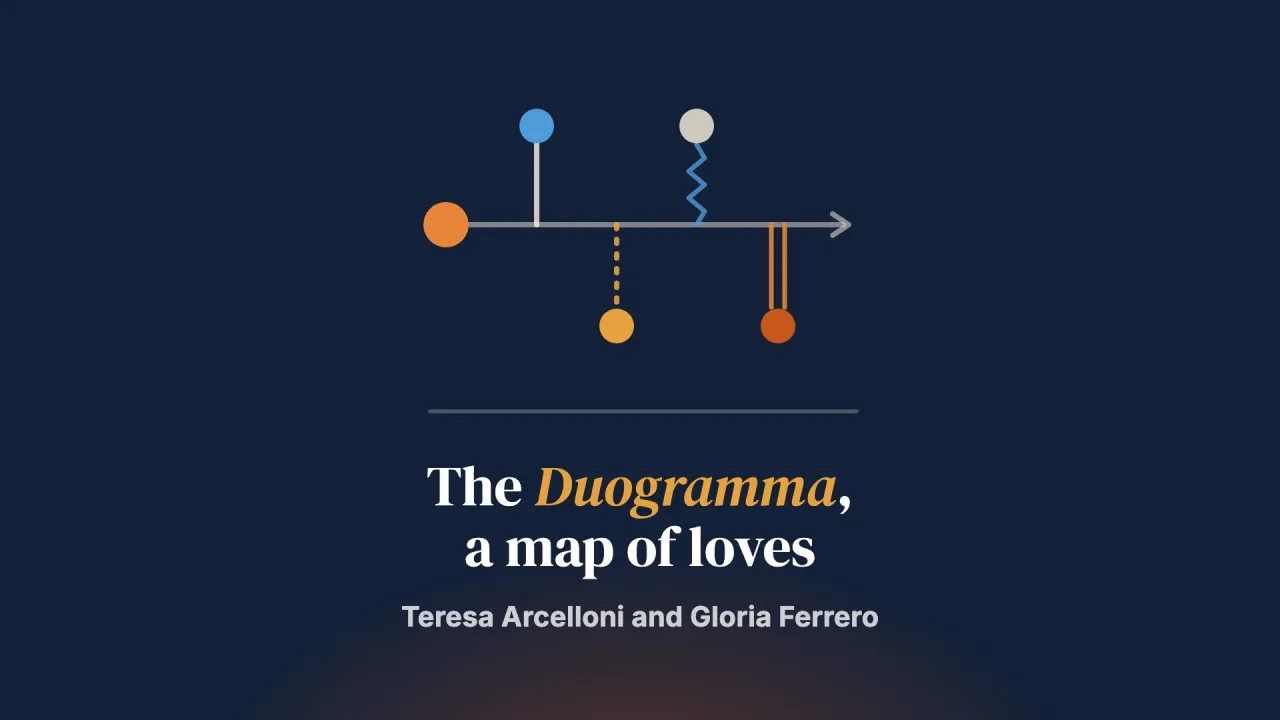
The Duogramma®: An innovative methodology for psychotherapy
A map of the couple relationships lived, desired or rejected since childhood: the Duogramma®, its graphic rules and its use in individual therapy.
 Blog
Capp® groups give parents a place to think together
How does a reflective parenting group work? Jalila Kormachi and Yara Doumit describe how parents revisit a difficult moment and choose what to try next.
 Blog
Challenging in therapy: What a patient taught me
A couples therapy session led me to reflect on confrontation, authenticity and resonance: how to address difficult behaviour without invalidating the person.
 Blog
Adult ADHD: when forgetting turns into a misunderstanding
Forgetting, compensating, tension in the couple: a systemic look at adult ADHD, to understand what is at stake and to look for more fitting forms of support.
Comments 0
Log in to join the discussion. Log in