AI-assisted translation
This version was translated from Portuguese by Complexe Systémique with the help of artificial intelligence. In case of doubt, the original version prevails.
Revista Brasileira de Terapia Familiar · Training
Considerations on the Training of Professionals for Working with Families
A psychiatrist and psychoanalyst who became a family therapist, Luiz Carlos Osório argued in 2008, in the journal’s very first issue, a position that still unsettles: family therapy must not become the preserve of psychiatrists and psychologists. He prefers “training” to “formation”, recalls that Bateson, Haley or Weakland would not have been admitted to most institutes, and warns ABRATEF against the corporatist drift of the psychoanalytic institution. He also sketches a three-part teaching model: knowledge, skills, attitudes.
Unofficial English translation. This article is a translation of Considerações sobre a capacitação de profissionais para o atendimento de famílias, by Luiz Carlos Osório, published in the Revista Brasileira de Terapia Familiar (ABRATEF), vol. 1, no. 1 (2008), doi: 10.60114/rbtf.v1i1.123, under a CC BY 4.0 licence. Translated by Complexe Systémique in November 2026 with the help of artificial intelligence: the original Brazilian Portuguese text has been translated into English and reformatted, which constitutes a modification of the work under the terms of the licence. Paragraphs and headings are those of the journal; the abstract, keywords and author note, printed in the margin of the first page, are given at the head of the article and in the presentation; the numbers in brackets refer, in order, to the entries in the bibliography. The abstract is the author’s own English version. This translation was made neither by the authors nor by the journal, who are not responsible for its content or for any errors. The original version prevails.
Our purpose in training professionals to work with families should not be to teach (in + signo: to put one’s mark on someone) but to educate (e + ducare: to lead out the potential knowledge that exists in each learner).
Luiz Carlos Osório
Abstract
The author presents his personal view on the training of professionals for the care of families, taking into account his experience initially enabling psychotherapists of children and adolescents (in the 70’s), then as a training psychoanalyst (in the 80’s), ahead in teaching group therapists (in the 90’s) and more recently training couples and families’ therapists (current decade). Initially he made conceptual considerations, addresses the issue of population and gives a profile of what are the basic designs of the process of training, supported by tripod acquisition of knowledge, development of skills and construction of attitudes. Finally he presents the background of such training under the interdisciplinary ideology.
Keywords: family therapists’ training, guidelines for family care, specialization of family therapists
Although I am not attached to the academic world, I have always been involved in teaching activities throughout these more than four decades of professional practice: first in the “formation” of child and adolescent psychotherapists, then of psychoanalysts, later of group therapists and, recently, of family therapists; in other words, in areas of specialization that university postgraduate teaching did not originally cover.
I believe I have thus acquired not only considerable know-how in passing on the clinical knowledge of these fields, but also a critical view of the way this knowledge has been transmitted and of why it has been so difficult to bring it into university postgraduate programmes.
What do we mean by training?
Training (capacitação, literally “making capable”), in the health sciences and related fields, is the preparation of professionals for what we might broadly call “caring” for other human beings. This preparation rests on the tripod of knowledge, skills and attitudes. Knowledge is acquired; skills are developed; and attitudes are built in interaction with others, on the basis of each person’s character and life experience.
Understood in this way, training lato sensu requires no academic prerequisites in order to be carried out.
But in its stricto sensu meaning, the training we are referring to requires a prior course of study in the subjects taught by university programmes in the relevant fields. It then becomes a “specialization”, obtained through a process or ritual usually called “formation” (formação).
As is well known, the term “formation”, referring to the training and specialization of professionals in the “psy” field, arose with psychoanalysis, from the tripartite model (personal analysis, supervision and theoretical seminars) created by Eitingon at Freud’s request. Established by usage, the term spread to other fields and theoretical systems, and today it designates distinct specializations, such as formation in psychoanalytically based psychotherapies, psychodrama, cognitive psychotherapy, Gestalt therapy, group dynamics, systemic family therapy, group therapies, and so on.
Since I do not consider the choice of words used to name things to be innocent, I think that opting for the term “formation” betrays the primary intention of whoever proposed or adopts it: it describes a teaching process based on the idea of “putting into a desirable and preconceived form” the professional aims of the disciples of these psychotherapeutic currents or schools, in line with the tenets and interests of their masters. That is why I prefer to use the term “training” (capacitação) or else “referencing” (referenciação), the latter designating the process of transmitting the theoretical and technical frames of reference that guide work with families. The aim is to offer those who seek the specialization the existing knowledge that can ground or guide their clinical work, leaving them free to choose whatever seems best suited to their personal expectations and encouraging them to seek a path of their own. A path that avoids uncritical adherence to other people’s thinking and rests on the creativity they exercise rather than on the imitation they grow used to.
I would add, under the aegis of the origin of words, that our purpose in training professionals to work with families should not be to teach (in + signo: to put one’s mark on someone) but to educate (e + ducare: to lead out the potential knowledge that exists in each learner).
The process of learning any form of psychotherapeutic work is, in our view, something to be built by the learner with the help of the educator, who acts as a mediator between the knowledge available and the person seeking it.
Who can or should be trained to work with families?
When we consider such training in its broad sense, and therefore not restricted to a postgraduate specialization, the target population is the vast body of professional “carers”, ranging from what were once called the paramedical specialties (a term now out of use, since it ranks medical care above other forms of care) to what we generically call attendants. This is an enormous body that may even include domestic staff and the relatives of those who need care.
That, however, is not our focus in the considerations that follow, which concern training in the strict sense, that is, specialists in family therapy.
There has been, and still is, much discussion at the trainers’ meetings held under the aegis of ABRATEF (7) about who may be accredited with a specialization in family therapy. Some think that only psychiatrists and psychologists should be able to work as family therapists, that is, those whose previous degrees (and postgraduate degrees) qualify them for psychotherapeutic practice. Others, a little less radical, believe that any health professional should be allowed to treat families, but by means of a euphemism that would distinguish family “psychotherapy” from family “therapy”. In this way the practice of “family psychotherapy” could be restricted to psychiatrists and psychologists, while “family therapy” could be practised by the other health professionals whose care is directed at “patients” (physicians in general, social workers, nurses, dentists, physiotherapists, speech therapists, etc.). And there are those who hold that any professional with a university degree should be able to train for the practice of family therapy, on the grounds that if someone is willing to undertake a long training in the so-called training institutes, and shows their aptitude during that training, it is because they have what it takes to become a family therapist, regardless of whether their first degree was in a field other than health.
Among the reasons given to justify this last position (which is mine) are the following:
1) Universities generally allow professionals to take postgraduate courses in a field other than that of their first degree. Thus we have, for example, physicians, veterinarians or dentists completing master’s degrees in administration. To anticipate the counter-argument that it is very different for a physician to become a business administrator and for a business administrator to perform therapeutic functions, we would point out that, for this, we consider it essential for such a professional to demonstrate their competence over the course of a specialization in family therapy, alongside health professionals and under the supervision of other family therapists.
2) The pioneers of family therapy, in the systemic strand that underpinned the birth and consolidation of this therapeutic practice, came from other disciplines that had nothing to do with health (Bateson, an anthropologist; Haley, a communications student who studied fiction films; Weakland, a chemical engineer, to name but a few). Indeed, many new disciplines have emerged or been built from unrelated fields, just as the emergence and development of the neurosciences were made possible by advances in quantum physics.
3) The neo-paradigmatic stance that, from its earliest days, linked family therapy to systemic-cybernetic epistemology is intrinsically interdisciplinary and inclusive; so, for the sake of elementary consistency, we cannot exclude bodies of knowledge, adjacent or not, that are complementary. To make our reasoning clearer, let us recall what Pichon-Rivière said (cited in 2): that all therapy is a learning process and, conversely, all learning is also a therapy. Education and health are therefore fields that enrich each other, and educators and psychotherapists can add value to their professional interventions when they act interactively and influence one another. By this we mean that we do not see why someone who originally comes from the field of education should not, after appropriate training, work as a family therapist.
4) Last but not least, the experience of training institutions that accept, on their specialization courses, professionals whose first degree is in a field other than health has shown that such professionals, when sufficiently motivated to take on a caring role, are in no way inferior to the others.
5) The reluctance of some training institutes to accept non-“psy” professionals on their courses is due in part to the demands of the Regional Councils of Psychology regarding psychologists teaching non-psychologists what would fall within their exclusive competence. This demand takes us back to the history of the psychoanalytic institution and its self-granted prerogatives in the formation of successive generations of psychoanalysts. The psychoanalytic institution we are referring to here is the direct heir of the original nucleus formed by Freud and his close disciples of unconditional loyalty. It is the International Association of Psychoanalysis (IPA), from which all the other formations in the “psy” field have directly or indirectly borrowed their structure and criteria, and which began by rigidly accepting only physicians for formation as psychoanalysts. In the USA this cost the IPA a lawsuit from the North American association of psychologists, leading to a resounding defeat for the IPA in this preserve that reserved the practice of psychoanalysis for physicians. Freud himself had already spoken out in favour of what was then called “lay analysis”, but not even the opinion of the founder of psychoanalysis dissuaded the North American arm of the IPA, the APA, from fighting against the entry of psychologists into the psychoanalytic “career”, for reasons closely tied to the labour market, which physicians did not want to share with psychologists (just as psychologists today oppose the entry of social workers and other health professionals into what they regard as their clinical fiefdoms, history repeating itself).
Learning from what happened to the psychoanalytic institution
Even after the uproar caused by the North American psychologists’ lawsuit against the IPA, some of its affiliated psychoanalytic societies (among them the Psychoanalytic Society of Porto Alegre, to which I belonged) maintained their refusal to accept psychologists for psychoanalytic formation until the mid-1980s. The SPPA, together with the Colombian Psychoanalytic Association, were the last in the world to open their doors to the psychoanalytic formation of psychologists. Needless to say, they only did so when there were no longer enough psychiatrists to make up new classes in the formation offered by the society. And to this day only psychiatrists and psychologists are accepted for analytic formation at the SPPA institute.
Meanwhile, at the Psychoanalytic Society of São Paulo, engineers, philosophers and even ladies of high society who held some university degree were accepted for psychoanalytic formation at the SPSP, provided they were willing to pay the fees, considered exorbitant by many, charged by the SPSP’s training analysts.
In the IPA, on the grounds of ethical protection of patients and greater rigour in the selection of training analysts, rules were created to curb the formation of new psychoanalytic nuclei. What was observed as a consequence was the formation of parallel training bodies which, claiming that the IPA did not “own” psychoanalysis, multiplied into new associations not affiliated with the IPA all over the world. In short, the dissident and alternative formations today “form” far more analysts worldwide than the IPA itself!
But what does all this have to do with us, family therapists affiliated with ABRATEF?
Well, I have a sense of déjà vu when proposals circulate today within ABRATEF to restrict the entry of professionals into the training bodies, or when rather restrictive criteria are proposed for setting up “study nuclei” in cities or states where we do not yet have training bodies recognized by ABRATEF. It seems we are not original even in the name, since this (study nuclei) is what those groups are called that are set up within the IPA’s rules, so that it can be verified over time whether they are fit (read: duly submissive) to become new societies and training institutes.
And then I have the very vivid feeling that we are heading towards the same contradictions and disastrous results as the psychoanalytic mother institution when it tried to keep its exclusive right to accredit new psychoanalysts. All it achieved with its institutional closure was to stimulate the spread of dissident nuclei and opportunistic bodies offering similar training.
Do not prejudge me as averse to minimum rules and criteria for monitoring the qualification of future family therapists. I think that in a continent-sized country like ours, if we want to expand the family therapy movement and allow a greater number of families to benefit from approaches we consider so valuable in reducing human suffering, it is not by creating conditions that cannot be met outside the axis of the major cities (where family therapists have been working and training for more than two decades) that we will help to spread the specialty.
On the other hand, born and raised in the territory of psychoanalytic formations, and having even been a training analyst for many years, I find it highly debatable to take the number of hours of “training” as the needle of the compass: the more than 1,500 hours on the couch and as many again of theoretical seminars and supervised practice, for a total of 3,000 to 4,000 hours of “formation” (a word which, it is worth insisting, comes etymologically from “form”, that is, putting oneself into a form), do not in themselves constitute (and experience is there to bear witness) a condition for the professionals who emerge from these training institutions to be better (and above all more human) therapists than many who exercise their caring vocation even clandestinely.
And have you considered that Bateson, Haley, Weakland, Watzlawick, Wiener and others among the mentors of the epistemological foundations on which systemic family therapy rests would not be qualified to enter most of our training bodies in our country today?
Finally, I have a firm impression that behind the legitimate ethical concerns about who will oversee the professional practice of therapists who lack such references in their respective professional councils lies what seems to me to be a rationalization serving the protection of the labour market by many of those who already practise the specialty.
I know this is a controversial subject and that my opinions are provocative, which merely confirms that, among the many labels generally attached to older people, that of complacent or conservative does not fit me, and never will…
Since I believe that ideas can (and should) be confronted without people having to confront each other, I continue to set them out, confident that a climate of respect for diversity of opinion, among other things, prevails among the family therapists of Brazil.
And with this we come to what underlies the questions concerning the training of family therapists: the reasons of the labour market and the competition for it among the related professions and specialties.
The labour market: a delicate ethical question
One of the subjects that has been polarizing attention and inflaming feelings between medical and non-medical professionals engaged in psychotherapeutic practice is the controversy surrounding the “medical act”.
Without questioning the legitimacy of the medical profession’s claim to have the territory of its action regulated and its borders with the so-called “paramedical fields” defined, I wonder why, after so long (centuries) of medical practice, this urgent need, this obsessive demand to see the medical profession regulated, has arisen only now. Well, there can be no other reason than “labour market protection”.
The rise of the bourgeoisie and the emergence of the so-called liberal professions, where the emphasis no longer falls on salaried work but on the provision of services, created the conditions for fierce financial competition in the emerging capitalist society.
For its part, the fragmentation of professional activities as a result of growing specialization required the drawing of borders that would set less blurred limits between them. The maxim “we know more and more about less and less”, which characterizes the boom in specializations over the twentieth century, corresponds to the deepening of the gulf between our knowing and our doing.
The struggle for slices of the labour market cake has generated the corporatist stance that today characterizes relations between the professions and hinders the advance of interdisciplinarity. At the same time, interprofessional ethics has become a swampy area, full of contradictions. Where patients are concerned, priority is given to who should treat them rather than to which of their needs must be met.
Corporatism grounded in the defence of positions in the labour market, and a pseudo-ethics towards patients based on rationalizations and distortions of meaning rather than on consideration of their real interests, end up contaminating the training of professionals to work with families, with the most outlandish arguments being used to justify the creation of fiefdoms to protect the “purity” and “seriousness” of the formations that those who set themselves up as holders of (psycho)therapeutic power seek to monopolize.
A model of training for work with families
Having made this initial digression on conceptual questions and on what might be considered an ideological point of view on training in family therapy, let us move on to the technical aspects of this training. To do so, let us return to the knowledge–skills–attitudes tripod on which this preparation rests and to the way we put it into operation in our praxis as “formators”.
Acquiring knowledge
As regards the theoretical content to be taught in a postgraduate programme aimed at training family therapists, it is our conviction that, before studying the family dysfunctions that lead people to seek help, or moving straight on to the techniques advocated by the different schools or currents of family therapy, as countless training centres do, it is necessary to introduce the different concepts of family and to review the various forms the family structure has taken over time, up to its contemporary shape and the transformations it is undergoing in these times of accelerated technological and sociocultural change. We also consider it relevant to study in detail the family life cycle, with the nuances and variations brought about by these transformations, as a prerequisite for understanding the vicissitudes of family life and choosing the procedures to alleviate them.
Only after this panoramic view of the evolution of the family up to our time, and the study of the roles and functions of the different members of the family group in its current context (taking into account its singularities according to the socio-economic and cultural milieu in which it is embedded), do we move on to study the contributions of the various theoretical and clinical frames of reference to work with the family, bearing in mind that our approach is interdisciplinary, encompassing both psychoanalytic and systemic theory, as well as the contributions of psychodrama and an appreciation of knowledge about group dynamics and operative groups as a foundation for approaching the family group.
In broad terms, we might outline as follows the theoretical content we consider relevant to a specialization in work with families:
Introduction to the study of the couple and the family, which covers the different conceptions of the family, its origin and evolution over time, family roles and functions and their redefinitions in the contemporary family, the new relational paradigms of this family arising from family reconstitutions, the question of sexuality and of the exercise of authority and power in families and, finally, the various stages of the family life cycle, as well as some of its vicissitudes, such as losses, separations, illnesses, migrations, etc.
Dysfunctions of family life, which studies disturbances of the family structure due to separation of the couple or to intra- and intergenerational splits, disturbances of family bonds (rigidity or laxity), of the identity of the family group (agglutination or dispersion) and of intrafamily behaviour (sexual perversions, abandonment, abuse of power).
Theories that provide a frame of reference for practice with couples and families, focusing on psychoanalysis and the intrapsychic paradigm, group dynamics and the interrelational paradigm, operative groups and the bond paradigm, psychodrama and the representational paradigm, and systemic theory and the communicational paradigm.
Theory of technique, which presents the approaches to clinical work adopted by the main schools or currents within the family therapy movement.
Developing skills
Skills are developed through direct work with families under “supervision” or, as we prefer, “intervision” with more experienced therapists.
Supervision or intervision? Once again we find ourselves grappling with the meaning of words and the connotation they lend to what they set out to conceptualize. The term “supervision” denotes a hierarchizing stance, casting the person who super-vises as the holder of a supposed knowledge to be passed on to the apprentice through the practice of supervised work. Yet in truth, what is offered from the position of “supervisor” is merely another way of looking, with critical distance (an advantage) but without “presence” (a disadvantage) in the clinical experience as lived. That is why we prefer to call “intervision” (5) the shared work of examining what happened in the therapy session, in which the “supervisee” has the benefit of the lived experience and the so-called “supervisor” that of accumulated experience (though it cannot always be extrapolated to the situation at hand) and of a supposedly impartial external observation.
Since the terms supervision, supervisor and supervise are established by usage, we will use them from now on in the text in the sense given above.
Teaching in the form of supervised work is perhaps the oldest form of passing on knowledge. Although, with a little imagination, its emergence can be placed in the tribal stage of the civilizing process (when elders “supervised” the young as they learned rudimentary forms of survival through hunting, fishing and gathering food from the plant kingdom), it was in the Middle Ages that supervision became institutionalized, through the dynamics specific to the relationship between a master craftsman and his apprentices.
Kusnetzoff (cited in 6), after noting the significant absence of a definition of the term in the literature on supervision, defines it as “a system of auditing and advising, in which a student acquires the skills and knowledge necessary for adequate performance of the psychotherapeutic task”.
In the psychological sciences, it was psychoanalysis that introduced supervision into its formative praxis as one of the pillars of training new psychoanalysts. Since the supervision of psychotherapeutic practice originated in the psychoanalytic training model, it is not surprising that it relied on the dual supervisor–supervisee relationship and favoured the verbal report of sessions. This model, however, became obsolete and inadequate, above all for group practices, which include family therapy.
Systemic family therapy introduced new and revolutionary supervision techniques, such as the use of the one-way mirror for “live” supervision, the use of the intercom for communication between supervisor and supervisee on either side of the mirror, and the filming and videotaping of sessions for later discussion.
Other variants of the supervision process were gradually introduced with the developments of systemic thinking, such as the supervisor entering the session as a kind of internal consultant; the supervisor occasionally replacing the therapist in conducting a given session (with the supervisee remaining in the room on the other side of the mirror when this happens); role reversal, with the therapist occasionally acting as “supervisor” to their supervisor when the latter comes on stage; the use of so-called reflecting teams, bringing the family itself into the discussion of the help it is receiving; and so on.
All these changes to the classic model of supervision through verbal or written reports of sessions brought about a fundamental change in the hierarchical supervisor–supervisee relationship, as well as demystifying the figure of the therapist, now exposed through simultaneous observation of their insecurities, hesitations, mistakes and successes, their style, in short, revealed in full to the supervisor and to whoever else is watching from the other side of the one-way mirror. Likewise, when supervisors expose their own way of working, often by showing videotapes of sessions with families they are seeing, the exaggerated idealization with which apprentices regard their masters falls away, and apprentices are also able to compare what they are told in supervision with what the supervisor actually does in practice.
These innovations raised certain ethical questions, such as those arising from the need to obtain the family’s permission for the session to be observed or filmed and recorded, and to introduce the supervisor to the family and inform it of the presence of other students on the other side of the mirror. Professional confidentiality (which before, perhaps, served more to protect therapists from exposing their mistakes than to protect patients themselves in revealing their conflicts) had to be rethought in this new context.
We may question these forms of supervision introduced by systemic family therapy, but we certainly cannot fail to acknowledge their relevance and their gradual introduction into the process of learning to work with family groups.
Building attitudes
As we said earlier, attitudes are built in interaction with others and according to the psychological characteristics of the individual. Therapeutically appropriate and ethically acceptable attitudes are undoubtedly the core of any clinical work. And, for obvious reasons, this is what depends least on the training process as such.
It is the responsibility of those who offer training courses in family therapy to provide models of appropriate and ethically acceptable attitudes; but between offering such models and having them introjected over the course of the formative process there is a considerable distance.
Someone once said that good therapists are born ready-made, and was surely referring to this vertex of the tripod. The “caring vocation”, as I sometimes call these innate qualities of those who, whether health professionals or not, are willing to contain human suffering and try to soothe it wherever it appears, is indeed an innate “gift” that cannot be acquired on specialization courses. And it is absolutely indispensable for anyone willing to be a therapist.
Although no one can be given what they do not have, it is possible to develop caring potential in those who show it over the course of training. And for this, besides offering models of therapeutically correct attitudes, there are auxiliary resources that can allow this potential to blossom, and they involve sensitizing practices such as those we will mention below.
In the tripartite model that regulates psychoanalytic formation according to the criteria of the IPA (International Psychoanalytical Association), founded by Freud, the training analysis of candidates is considered a cornerstone. At the origins of the training of systemic family therapists, no requirement equivalent to that of psychoanalytic formation was established, and its foundations remained the axis of theoretical seminars and supervised work.
As successive generations of family therapists came along, the need was felt, following the example of what psychoanalysts held about the importance of practitioners being analysed before analysing their patients, to give them opportunities to examine their own family relationships more closely while preparing to work with other people’s families.
This is how the practices known as “working on the therapist’s family” or “working on the therapist’s self” arose (the latter denoting a concern that goes beyond merely examining therapists’ relationships with their family of origin, leading them to exercises of insight into their psychic reality and revealing the value placed on self-knowledge as an indispensable tool for exercising psychotherapeutic functions). These activities, now widely included in courses for family therapists, are, allowing for due proportion, the equivalent of the training analysis in the tripartite model of psychoanalytic formation, showing that even systemic family therapists recognize the importance of a greater knowledge of our internal relational world in order to work as therapists.
Although they are far from providing the degree of refinement of the psychic instrument that the continuous experience of a personal analysis sets out to offer, we believe that these practices, added to the training of family therapists, can only add value to it.
Drawing on the operative model of reflection groups applied to learning (1), we have set up an experiential space, called “reflection groups on family experiences”, in our courses for couple and family therapists, where students bring their reflections on their families of origin and their current families to share with their group of peers under our coordination. To help them contribute information about their respective families, students are encouraged to use whatever means they feel best express their impressions and feelings, from the classic presentation of an annotated genogram to photos, videos, drawings, texts or evocative melodies, and anything else their spontaneous and creative choice may suggest.
These moments are divided into two phases, presentation and review, of variable length depending on the number of participants in the class and the needs of each (until experience indicates a suitable average time to set aside for such experiences), the second being devoted to an assessment by the presenter, with the help of the other members of the group and of the course coordinator(s), of the mobilizing impact of these experiences and of their potential contribution to each person’s work with the families they see.
Following the technical guidelines and aims of reflection groups, we prevent these moments from turning into “psychotherapy sessions”, while recognizing, with Pichon-Rivière, that in practice learning and therapy merge. Some of our students have come out of these experiential exercises on their family relationships motivated to keep examining those relationships in individual or group therapy outside the course.
On the trainer (the “formator”)
In the previous sections we have discussed how to develop the aptitudes of those who set out to work with families. And what requirements should be met by those who take on the role of training them? Is a solid academic background enough? Certainly not! Academia favours theoretical knowledge, and lecturers are encouraged to do research and produce scientific articles, but not to value clinical experience as “carers”. Consequently, trainers from academia, while usually keeping up to date with theoretical content and its relation to the field of research (and therefore unsurpassed in transmitting the knowledge referred to by the first vertex of the tripod), generally lack broader clinical experience for the task of helping trainees develop their skills in the day-to-day of clinical activity through supervision or intervision. On the other hand, professionals who work as family therapists outside academia generally lack a firmer theoretical grounding and are not used to the research that sustains and extends the frontiers of scientific knowledge, and they do not always have the necessary teaching vocation for the task, or art, of passing on knowledge.
The first conclusion these reflections lead us to is that a mix of professionals from academia and family therapists with extensive clinical experience and a vocation for teaching makes up the teaching staff closest to the ideal in institutions devoted to training family therapists.
There is, however, in our view, a conditio sine qua non for the task of training carers in general: the capacity for empathy with human suffering. Without this essential condition, be they holders of doctorates or master’s degrees or simply therapists specialized in family therapy working in clinical practice, none will be fit for the role of training other professionals to work with families.
And how can we assess this capacity for empathy with human suffering in others and in ourselves? Although, being so highly subjective, this question cannot be answered on the logical and rational plane, there is a question that can serve as a guiding thread for a self-assessment of our capacity for empathy in the therapeutic context: “How will the family group, or one of its members, feel about what I intend to say to them?” Putting oneself in the other’s place and, from that place, inferring the response or reaction this other will have to our words or interventions is without doubt a precaution to take in our attitude as therapists; moreover, exercising this practice in our clinical work can signal to us our greater or lesser degree of empathy with the suffering of others.
In short, the trainer’s qualities as a human being are the foundation of their ability to perform their functions well. Everything else (theoretical knowledge, the ability to pass it on, extensive clinical experience) cannot sustain the construction of their knowing and doing without the solidity of these foundations.
Learning to work with families without the straitjacket of theories and the techniques they inspire
Theories are born, in the form of hypotheses, from the observation of the reality of facts; that is, from practice. And once elaborated, theories provide support or tools for better and more accurate observation of the facts. Theory and practice are therefore inseparable in the epistemological field. There are, however, important differences in the way this interaction takes place, in the inferences it gives rise to and in the results it may produce.
Creative minds observe practice and elaborate theories. Imitative minds use theories to equip their praxis. And knowledge can do without neither the creation that opens frontiers nor the imitation that consolidates them. Both creative and imitative thinking are indispensable to drive the upward spiral of human thought. And it can be said that since the advent of human thought there has been no pure creation: all creation is, in a certain way, grounded in prior knowledge. So, by extension, it can be said that all practice is influenced by prior theories. Nevertheless, we must free praxis from the theories that stifle it if we want to allow new and creative knowledge to emerge. This is not, as it may seem to a less attentive observer, a paradoxical statement: the very care that is indispensable to a child’s development in the first years of life can hinder their development in later years; they must be left with enough freedom to learn from their own experience in order to realize their potential as an individual.
Family therapy is still at an experimental stage, where being trapped in theoretical and technical hypotheses prematurely erected into theories underpinning clinical practice can hinder the creative movement in search of new epistemic strands to support our praxis with families.
On the other hand, we think that technique should not override the person who uses it; it is only an instrument, and only in skilled hands does it acquire the reach and versatility that make it truly useful.
We consider that what underlies (and at the same time transcends) any clinical work is the creation of a therapeutic climate guided by empathy with the family that comes to us and by the real desire to help its members overcome their impasses and conflictual situations, providing them with adequate holding so that, starting from their own potential and with a minimum of interference on our part, they can resume the life projects curtailed by the suffering that afflicts them.
The recognition and acceptance of human beings in their singularities and respect for their differences are the pacemaker of our conduct as therapists, and the often reductionist position of the theories that underpin technical procedures seems to us to run counter to encouraging the search for personal and family autonomy which, in our view, underpins psychic well-being and the desired quality of family life.
The same goal we pursue with the families who come to us is the one we consistently set in our teaching task: to offer the students who seek their training as family therapists with us the opportunity to develop their potential and pursue knowledge in an environment that facilitates, and never impedes, the expression of their creativity and the affirmation of their autonomy.
Final considerations: in times of interdisciplinarity
As we have already mentioned in the text (and now wish to emphasize), the interdisciplinary context is, in the times to come, the indispensable space for any professional training. The complexity of human knowledge and the stage of development it has reached no longer allow disciplinary monoculture to be the origin and destination of a therapeutic praxis.
The interdisciplinary stance does not allow disciplines or professions to be ranked, or hegemonies and exclusive rights to be established regarding access to knowledge and the practices derived from it. By the same token, there is no justification for compartmentalizing knowing and doing into areas established by a corporatism tied to the protection of the labour market.
One last observation on interprofessional ethics in times of interdisciplinarity.
We believe that everyone should have the right to specialized professional work, provided they are duly qualified for the exercise of their craft, regardless of the university degrees that came before. The speed with which new occupations are emerging nowadays, as well as the dizzying transformation of the traditional professions as a result of the gains of the civilizing process, does not allow the flow of human evolution to stagnate on its way towards a future in which the value of professionals will be measured not by the academic degrees they have accumulated over their careers but by the adaptive and transformative capacity of their knowledge, skills and attitudes.
We are workers in the construction of human rights in our society. This must be done in the everyday of our existential actions and in the context of our professional activity. And the guiding thread leading us in this process will unquestionably be sovereign respect for the rights of others and for the singularities of the human being.
Just as I understand that our ethical attitude towards our patients in the context of family therapy is founded on respect for their feelings and recognition of their human rights, an attitude guided by our capacity to “put ourselves in the other’s shoes” in every circumstance of therapeutic action, I think that our ethical attitude towards professionals in our own and in related fields should rest on the same stance of respect and recognition of their rights in the labour market. In this way we can practise putting ourselves in their place and considering how we would like to be treated by them if we swapped positions and roles.
The savage competition of our time, devoid of ethical ballast, has unquestionably been an obstacle to the development of interdisciplinarity and of the group mentality that points to a new stage in interpersonal relations, in search of the solidarity indispensable to ensure our survival as a species and the continuous improvement of the human condition. Cooperation is the ethical imperative of our professional categories, so that we can be consistent with our interactional proposals in promoting the systemic well-being we aspire to for the families we work with. And for this, nothing compares with the Kantian maxim: “always act in such a way that we can will the motive of our actions to be a universal law”.
Complexe Systémique: key points
This text is not research but a position statement, published in the very first issue of the Brazilian journal. Its strength is to name a question the field often prefers to avoid: behind the criteria for access to training, what belongs to protecting the public and what to protecting a market? The analogy with the history of the IPA, whose closed doors ended up multiplying dissident groups, still speaks to every association that accredits therapists. The proposed model remains useful in training: a knowledge–skills–attitudes tripod, “intervision” rather than hierarchical supervision, and reflection groups on family experiences as a systemic equivalent of the training analysis. One may question the idea that the caring vocation is innate, and regret that the assessment of competence, central to the case for openness, is barely developed. Read alongside the study on training non-psychology staff in brief therapy, and working with the person of the therapist.
References
Delarossa, A. (1979). Grupos de reflexión. B. Aires: Paidós,
Osorio, L..C. ( 2000) Grupos: teorias e técnicas. P. Alegre: Artmed,
Osorio,L.C. & VALLE M.E. P. ( 2002) Terapia de famílias: novas tendências. P. Alegre: Artmed,
Osorio,L.C. ( 2006) Novos Paradigmas em Psicoterapias. S. Paulo: Casa do Psicólogo,
Osorio, L.C. ( 2007 )Grupoterapias: abordagens atuais. P. Alegre: Artmed.
Osorio,L.C. (1991) Supervisão em grupoterapias in LC.Mabilde, (coordenador) – Supervisão em Psiquiatria e em Psicoterapia Analítica. P. Alegre: Mercado Aberto.
Anotações pessoais por ocasião dos Encontros de Formadores da ABRATEF, no Rio de Janeiro (1998), Salvador (1999), Curitiba(2000), Florianópolis ( 2001), Belo Horizonte (2003), Gramado, RS ( 2005) e Petrópolis,RJ ( 2007)
Unofficial English translation of Considerações sobre a capacitação de profissionais para o atendimento de famílias, by Luiz Carlos Osório, Revista Brasileira de Terapia Familiar, vol. 1, no. 1 (2008), doi: 10.60114/rbtf.v1i1.123, under a CC BY 4.0 licence. Translation (with the help of artificial intelligence) and layout: Complexe Systémique, November 2026 — the work has been modified under the terms of the licence. Neither the authors nor the journal are responsible for this translation; the original version prevails.
Unofficial English translation of “Considerações sobre a capacitação de profissionais para o atendimento de famílias”, published in Revista Brasileira de Terapia Familiar (2008) under a CC BY 4.0 licence. Made by Complexe Systémique with the help of artificial intelligence, it does not come from the authors or the journal, who are not responsible for its content; the original version prevails.
Read the original articleHow to cite this article
Osório, L. C. (2008). Considerations on the Training of Professionals for Working with Families (Complexe Systémique, Trans.). Complexe Systémique. https://app.complexe-systemique.com/en_GB/articles/considerations-on-the-training-of-professionals-for-working-with-families (Original work published in 2008 in Revista Brasileira de Terapia Familiar, v. 1, n. 1 (2008); republished in 2008 by Revista Brasileira de Terapia Familiar, https://revbrasterapiafamiliar.abratef.org.br/revista/article/view/123)
To go further
- What works? A grounded theory investigation of training non‐psychology staff in using Solution‐Focused Brief TherapyTraining non-psychologists in therapy.
- Working with the person of the therapistThe person of the therapist in training.
- Supervision in systemic therapyThe forms of systemic supervision.
Related training courses
 Certifying course
Training in Systemic Therapy and Interventions – Cycle 1
Certifying training cycle in systemic therapy and interventions – year 1. Courses, supervision and practice, aligned with EFTA/SFTF. In French.
 Certifying course
Training in Systemic Therapy and Interventions – Cycle 2
Certifying training cycle in systemic therapy and interventions – year 2. Clinical complexity, supervision and practice. EFTA/SFTF aligned. In French.
 Certifying course
Training in Systemic Therapy and Interventions – Cycle 3
Certifying training cycle in systemic therapy and interventions – year 3. In-depth intervention, supervision and practice. EFTA/SFTF aligned. In French.
 Certifying course
Training in Systemic Therapy and Interventions – Cycle 4
Certifying training cycle in systemic therapy and interventions – year 4. Clinical integration, supervision and certification. EFTA/SFTF. In French.
Related articles
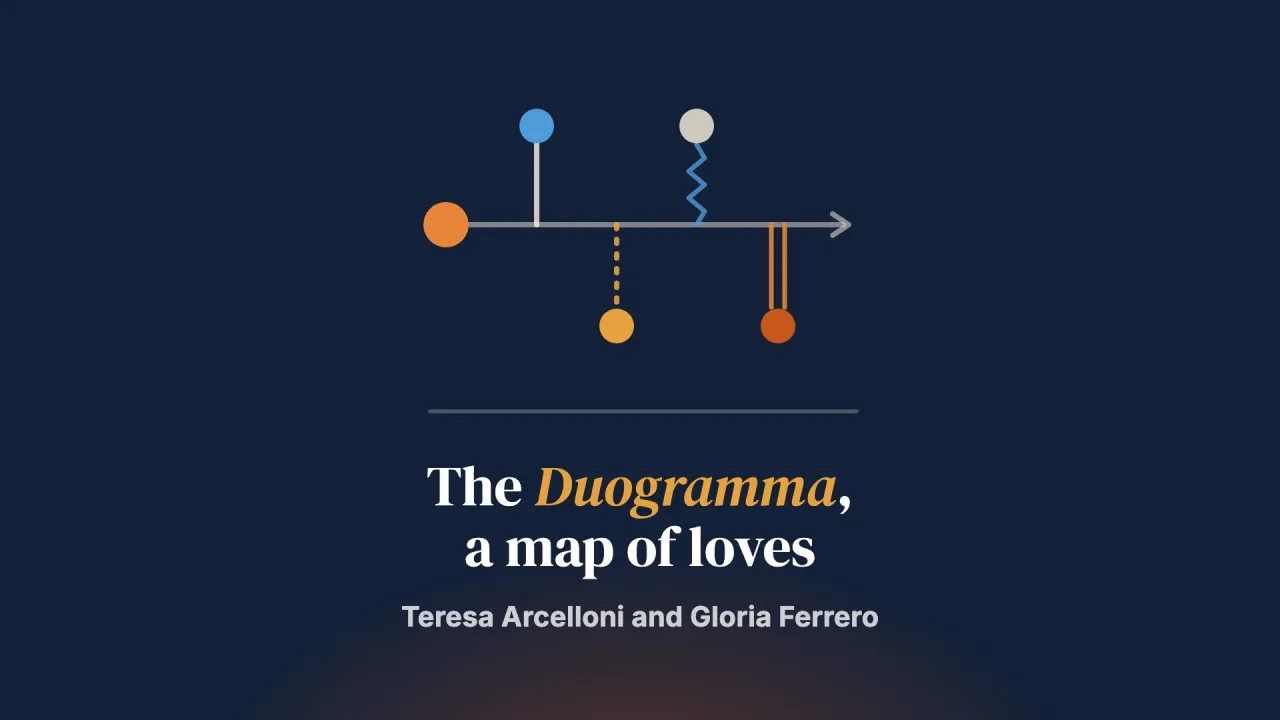 Scientific
The Duogramma®: An innovative methodology for psychotherapy
A map of the couple relationships lived, desired or rejected since childhood: the Duogramma®, its graphic rules and its use in individual therapy.
 Blog
Challenging in therapy: What a patient taught me
A couples therapy session led me to reflect on confrontation, authenticity and resonance: how to address difficult behaviour without invalidating the person.
 Scientific
Decolonizing Supervision: A Critical Race and Queer Theory Framework for Marriage and Family Therapy
Supervision is not neutral: a framework drawing on Critical Race Theory and Queer Theory to name and share power in supervision, with a vignette.
 Scientific
Internal Family Systems Therapy as Part of the ‘Family of Systemic Therapies’: A Critical Exploration of Systemic Practice in the Intra-Personal Domain
Does IFS belong to the family of systemic therapies? A critical exploration, grounded in a family court vignette, of systemic work with “parts”.
Comments 0
Log in to join the discussion. Log in