AI-assisted translation
This version was translated from Portuguese by Complexe Systémique with the help of artificial intelligence. In case of doubt, the original version prevails.
Revista Brasileira de Terapia Familiar · Family therapy
Family therapy and spirituality: a possible marriage?
Science long kept religion at a distance. A psychologist and couple and family therapist in Recife, Lúcia de Fátima Albuquerque Freire distinguishes religion, religiosity and spirituality, recalls the research linking spirituality and health, and argues that family therapy can welcome the search for meaning as a source of resilience for couples and families.
Unofficial English translation. This article is a translation of Terapia Familiar e Espiritualidade: Um Casamento Possível?, by Lúcia de Fátima Albuquerque Freire, published in the Revista Brasileira de Terapia Familiar (ABRATEF), vol. 7, no. 1 (2018), doi: 10.60114/rbtf.v7i1.63, under a CC BY 4.0 licence. Translated by Complexe Systémique in November 2026 with the help of artificial intelligence: the original Brazilian Portuguese text has been translated into English and reformatted, which constitutes a modification of the work under the terms of the licence. Paragraphs and headings are those of the journal. The Brazilian edition of Sadock, Sadock and Ruiz cited by the author is given under its original English title, Synopsis of Psychiatry. The abstract is the author’s own English version. This translation was made neither by the authors nor by the journal, who are not responsible for its content or for any errors. The original version prevails.
In the family, I learn who I am through my relationship with the other.
Lúcia de Fátima Albuquerque Freire
Abstract
During several human development stages, the religious paradigm was part of history until its exclusion by science, through its materialist view almost causing a division between science and religion. Understanding spirituality as a broader concept such as a search for life’s meaning and understanding family therapy as an invitation for the human being to interact and grow individually and collectively, this article aims to describe how it is possible to put the two of them together explaining how spirituality can be a source of resilience for the families in therapy.
Keywords: family; family therapy; spirituality.
Introduction
Humanity has already gone through various paradigms to understand suffering and mental disorders. Religious figures, philosophers, scientists, physicians and mental health professionals are confronted with the phenomenon of psychological suffering, and all of them have long been seeking answers to relieve it…
The years go by, the difficulties remain, theories are created to explain the psyche, and a great deal has been written and tested in the fields of psychology, psychiatry and mental health, always with the aim of understanding what really goes on in the human mind and in the brain.
But the question of where we come from, who we are and where we are going, regardless of any religious belief, is present in the mind and in the collective unconscious of all people, whatever their sex, age, culture, religiosity or lack of it. Human beings are questioning beings, and if they do not ask such questions at one point in their lives, they inevitably do so at another.
We are bio-socio-psycho-spiritual beings. Our nature is physical, material, but also spiritual. Indeed, some believe that we are eminently spiritual beings having a physical, material experience, as de Chardin tells us (1999, in Walsh, 1999, p. 3).
The fact is that we are made of energy, and energy is matter. We are therefore made of two kinds of “matter”: one that is tangible, physical, the one we see, and another, not visible to the naked eye, intangible, which is our spirit, called by some the soul.
To deny this existence is to deny our own existence.
The family, being the first group we experience in life, is also our first existential laboratory, the place where souls meet to have their physical and spiritual experiences. It goes through several stages in its development: young single adults, the couple, the arrival of children, their adolescence, their leaving home, and the family in later life (McGoldrick & Carter, 1995). Each of these stages presents challenges to be overcome, leading all its members to other evolutionary levels and different stages of faith (Freire, 2013).
When the family manages to deal with life’s challenges at its various stages flexibly and calmly enough, it lives in peace and without major problems. However, when difficulties settle within the family, it may often need greater help to deal with its problems. In this case, professional support can become very important, and, combined with it, the search for other sources of support (such as spirituality) can be a great source of resilience and of overcoming (Walsh, 1999).
This article aims to show how the lived experience of spirituality, combined with family therapy, can be an excellent resource for strengthening families as they face their challenges, by helping to soften the split between science and religion, by clarifying the difference between spirituality and religiosity, by encouraging family therapists to bring this perspective into their clinical practice, and thus by broadening their work with couples and families.
Religion, religiosity and spirituality
To understand how family therapy and spirituality can walk together, it is necessary to clarify the meaning of each term, specifying their characteristics and differences.
According to Walsh (1999), as therapists and health professionals, we need to pay attention to our clients’ spiritual beliefs and practices if we wish to assist them in their process of growth and healing. She sees psychotherapy as a profound spiritual experience, for the therapist as well as for the client.
Religion (Walsh, 1999) would be an organized set of beliefs, which includes shared and generally institutionalized moral values, beliefs in God or in a higher power, and involvement in a faith community, offering norms for living individual and family values based on common ideologies. Spirituality, for its part, can be experienced within or outside a religious community and would be something broader and more internal; that is, it concerns an active inner investment in a set of values. It is an invitation to the expansion of consciousness, alongside responsibility for oneself and for others, for personal, local or even global issues. In short, Walsh would say that religion is something extrinsic, an organized set forming a faith system, whereas spirituality concerns more intrinsic forms of belief and practice.
Religiosity, in turn, would be the way in which a person expresses their belief in something higher. It can be intrinsic (something from the inside out) or extrinsic (from the outside in); it may be accompanied by a conventional practice (belonging to a church, a religious temple or a community) or not (reading uplifting texts, practicing meditation or contemplative practices, for example).
Spirituality, defined as the belief in and search for a broader meaning in life, encompasses something much larger, which may or may not be linked to a religion, and in which a religiosity is implicit in the search for this meaning. It is an inner experience, personal and non-transferable for each individual.
These terms are also linked to another, faith, which would be something more subjective, since it is a personal, non-transferable belief, an implicit certainty that we must do our part in building our destinies, but that there are higher laws governing the universe and the lives of the beings who inhabit it.
Renowned researchers and authors in the field of health and spirituality, such as Pert (1997), Levin (2001), Koenig (2005; 2012), Lucchetti (2010) and Moreira-Almeida (2009; 2013) (the last two from the University of Juiz de Fora, MG, Brazil), and others such as Panzini and Bandeira (2007), show how spirituality has an enormous influence on patients’ physical, mental and emotional health, which makes it extremely important to assess their beliefs and practices.
Diagnostic instruments (Monod et al., 2010; Moreira-Almeida & Stroppa, 2012) have also been developed and used to help health professionals in the spiritual assessment of their patients. One of them, FICA, standing for faith, importance, community and action (Borneman, Ferrell & Puchalski, 2010), assesses four areas related to the patient’s spirituality: faith/belief, importance/influence, community, and action in treatment. This spiritual history can be taken with all patients and their families, whatever their beliefs, identifying possible points of spiritual conflict as well as wonderful sources of resilience through religiosity.
In the field of mental health, specifically regarding psychiatric disorders and their epistemology, the Synopsis of Psychiatry (Compêndio de Psiquiatria in the Brazilian edition), the great reference work by Sadock, Sadock and Ruiz (2007), already includes the topic of spirituality and states that the role of spirituality and religion in illness and health has gained prominence in recent years. The book reports that there is evidence that strong religious beliefs, spiritual tendencies, prayer and acts of devotion have positive influences on a person’s mental and physical health.
It therefore becomes unquestionable, for any health professional, that knowledge of the topic of spirituality matters and must be included, since it has a direct bearing on the physical, mental and emotional health of their patients.
Family therapy: an approach to understanding and working with the family…
The family is the first social laboratory we all experience in life, and it is through it that we grow and develop as people and as eminently relational beings. In it we learn respect, tolerance and conflict resolution, and it is still the best place to practice our greatest virtues and work on our worst faults.
In the family, I learn who I am through my relationship with the other. I learn to be a father, a mother, a child, a sibling, a grandchild, a grandparent, a nephew or niece, an uncle or aunt, and countless other roles. It is also there that I have the greatest of opportunities to work on my personal improvement, assessing my attitudes in my constant relationship with the other.
Family therapy emerged from the perceived need to work with individuals within their relational contexts, since everyone comes from a family, where their conflicts and also their solutions lie. Like several other clinical practices, it has been evolving, and its contribution is extremely important.
Having emerged in the 1950s, family therapy has been broadening its theories and practices, bringing in various fields of knowledge in order to help families and couples resolve their conflicts and improve their interpersonal relationships. The various schools of family therapy, such as structural, strategic, psychodynamic, constructivist, social constructionist, collaborative, and reflecting processes (Nichols & Schwartz, 2007), differ on some concepts, but all share a larger whole called systemic thinking (Rapizo, 1996; Vasconcellos, 2002), which considers individuals within their context and their relationships, influencing it and being influenced by it.
Working with the family in a structured setting allows unspoken words to be expressed, existing conflicts to be brought into the open, and greater openness to dialogue and mutual understanding. Having a facilitator for this conversation, a therapist who listens and translates for the family members what they hear, reduces the noise and enables everyone to understand and be understood in an atmosphere of respect and harmony.
Spirituality: an approach to understanding and working with the soul…
Today, countless studies point to the importance of spirituality for people’s physical, mental and emotional health. Suffice it to say that on the PubMed website, a scientific source of reference for medical articles, a search with the index terms spirituality or religion returns 68,760 articles, and this number is growing at an average of eight publications a day in these areas. These articles point to the importance of the topic, and also highlight the fact that patients with any physical or mental illness or disorder significantly reduce their complaints when they have some kind of religiosity, compared with those who do not (Panzini & Bandeira, 2007).
The search for the meaning of life, the main reason for the search for spirituality, is a unique journey for each person and has to be travelled individually. However, it is in the relationship with others that this growth takes place, that answers emerge and that the meaning of life as a whole is developed.
Thus, since the family is the best and largest social laboratory we have, we can say that it is there that we first seek the meaning of life (the lived experience of spirituality), and that it is in the relationships formed there that we put this meaning into practice. Our first experiences within the family, whether positive or not, establish for each individual their sense of identity, of the world and of life.
Over the course of the life cycle (McGoldrick, 1995), people grow, change, relate to other people and develop broader and more complex conceptions of the meaning of their lives. However, the family foundations and the meaning learned and absorbed in this experience are unique and will influence the paths of each family member for the rest of their lives.
Each phase of individual development also has a corresponding phase in the stage of faith experienced by each family member (Freire, 2013). These stages do not always keep pace with each person’s individual development, since some members (or the whole family) may stop at one of them and not go through them all.
Spirituality, understood as a search for transcendence, may or may not be accompanied by a religion (belonging to a system of beliefs and rituals within a consensual community) or by a religiosity (the practice of some kind of activity that leads the individual to connect with the divine, whether through a religion or through any other kind of activity). Conceiving of spirituality in this way, we can say that all of us, in one way or another, have a spirituality, even if we do not belong to or believe in anything higher, since in a broader sense we are all searching for the meaning of life as something beyond ourselves.
We understand that not everyone is at the same level of searching, and that people do not always awaken to the meaning of life until they face some major challenge in it. Nevertheless, we believe that sooner or later there always comes a moment in someone’s life when their beliefs are questioned and put to the test, and their way of living is revisited or at least shaken. These moments of crisis, when we are called to review our attitudes and our lives, inevitably come to each of us, and it is at such moments that the search for more complex answers becomes necessary and that the need to understand the why of our lives leads each of us to come up against the limits of science and to look beyond it.
Family therapy and spirituality: a possible marriage?
Having worked with couples and families for almost thirty years, I always find it surprising and moving to perceive the uniqueness of their stories and the ways in which each of them seeks to resolve their difficulties and answer their innermost questions.
Parents who complain about their children, couples who fight for countless reasons, siblings who quarrel and compete for their place in the family, relatives who do not get along… And I always ask myself: if we are a unit which, in theory, was formed in the name of a greater feeling called love, how is it that all this happens to these couples and families today, and what are the reasons for it all? How did love stories turn into power struggles, and how can the lack of affinity between family members be explained? How can a collective life project be transformed into a setting of so much suffering for those who take part in it?
These and other questions come to mind, and with them the one that concerns us as professionals: what can be done to help these people who seek help and who are suffering? How can we work on their issues and, at the same time, how can we look at them in a way that helps them find a meaning in all this?
The psychological sciences and all the courses and further training we take are certainly technical foundations for understanding the human mind, its relationships and its mental and emotional issues. But… is that all?
And what about when we come up against situations for which we find no answers, or when couples and families find no answers or feel limited by the conscious mind? Does materialist science really answer all our questions? Or is there something beyond that can give us knowledge and help our suffering patients even more?
To answer these and other questions, it is proposed to seek support in the study of spirituality, in the belief that it is fundamental for going beyond what the eyes see, and for perceiving what is invisible to them.
Understanding the meaning of life from a non-materialist perspective means offering therapists, and clients, a greater meaning for their experiences of pain and of life’s challenges. Going beyond the material means understanding that there is a much greater whole, that we are governed by a higher power, and that this power drives us towards our own evolution and towards the growth of everyone within the same family.
This is not about having a blind and complacent view of life, in which everything is caused by something external and in which God (or whatever name we give to this greater power) is the main cause of our lives and the one responsible for them. We need a reasoned faith, one that makes us question and leads us to higher evolutionary levels.
Having a genuine and true spirituality implies becoming aware of our roles as co-creators, as protagonists of our own story, and therefore as responsible for our actions. Understanding that everything we do has a consequence, and that this consequence is nothing other than the reaction to our actions, leads us to expand our consciousness and puts us in a privileged position to solve our problems.
Final considerations
In clinical work with couples and families, it is very common for everyone to begin treatment by pointing out one another’s mistakes, from the standpoint of victims of the situations created, with no (or little) awareness of their own share in the problems.
If we look at these couples and families from a materialist (non-spiritual) perspective, we will see how the arguments revolve around a selfish and prideful view of life, in which each person is focused on their own pain, unable to look at the other’s pain and to admit their own mistakes. No one is concerned with the other’s suffering, only with their own well-being and with how to get rid of their pain.
When we focus on our own pain, we stop focusing on the meaning of life, because when we question ourselves about it, we inevitably come up against some kind of suffering. Focusing on pain from a materialist point of view means looking at it in terms of its present causes, without asking ourselves what we did to find ourselves in it, or what meaning or lesson it is trying to teach us in the school of life.
Spirituality, being this search for a greater meaning in life, invites us to ask this question and to look within ourselves in order to understand where we went wrong and how we can improve and evolve.
Family therapy, being this space for speaking and listening, in an atmosphere of respect and acceptance, will offer us this space in which the meaning of life is sought together, in which each participant is interested in self-knowledge in order to discover their shortcomings and thereby evolve, change and grow.
Spirituality, being this search for the meaning of life, will provide precisely this broader vision, enabling everyone to understand the causes of their afflictions and the need to improve on their faults, thus bringing greater harmony to the family.
The spiritually minded couple and family therapist will try to go further, looking for these causes together with the family and giving it the opportunity to look at its own share in the problems and to move forward with an eye to the future.
Encouraging religiosity in patients, for those who allow room for it, means offering them broad scientific support, in which science and religion are no longer antagonistic but can coexist in an atmosphere of harmony and respect, just like what we aim for in family life.
Complexe Systémique: key points
This text is a plea rather than a study: it draws on the literature on health and spirituality (Walsh, Koenig, Moreira-Almeida) and on long clinical experience, without case material. Its contributions are practical: distinguishing religion, religiosity and spirituality, and recalling that a spiritual history, such as the FICA, can bring to light conflicts as well as resources for resilience. A systemic reading nevertheless calls for caution on two points. First, several statements reflect the author’s convictions (the soul, higher laws, a “reasoned faith”) more than demonstration. Second, the idea that our suffering is the reaction to our actions and calls on us to correct our faults can slide into a moral, even blaming, reading, at odds with the curiosity and neutrality that protect the alliance with each family member. The most fruitful path remains Walsh’s: taking an interest in each family’s beliefs and practices of meaning as resources, without imposing one’s own. Read alongside Andean spirituality in systemic spaces, and the AFFIRM model for interfaith couples.
References
Borneman, T., Ferrell, B., & Puchalski, C. (2010). Evaluation of the FICA tool for spiritual assessment. Journal of Pain and Symptom Management, 2(40), 163-173.
Freire, L. (2013). Terapia e espiritualidade: Reflexões e práticas. Recife: Libertas.
Koenig, H. (2005). Espiritualidade no cuidado com o paciente: Por que, como, quando e o que. São Paulo: Editora Jornalística Ltda.
Koenig, H. (2012). Medicina, religião e saúde: O encontro da ciência e da espiritualidade. Porto Alegre: L&PM Editores.
Levin, J. (2001). Deus, fé e saúde. São Paulo: Cultrix.
Lucchetti, G. (2010). Espiritualidade na prática clínica: O que o clínico deve saber. Revista Brasileira de Clínica Médica, 8(2), 154-158.
Lucchetti, G., & Lucchetti, A. (2014) Spirituality, religion, and health: Over the last 15 years of field research (1999-2013). The International Journal of Psychiatry in Medicine, 48, 199-215.
McGoldrick, M. (1995). As mudanças no ciclo de vida familiar. Porto Alegre: Artmed.
Moreira-Almeida, A. (2009). Espiritualidade e saúde mental: o desafio de reconhecer e integrar a espiritualidade no cuidado com nossos pacientes. Revista Zen Review, 40, 105-109.
Moreira-Almeida, A. (2013). Explorando a relação mente-cérebro: Reflexões e diretrizes. Revista de Psiquiatria Clínica, 40, 105-109.
Moreira-Almeida, A. & Stroppa, A. (2012). Espiritualidade e saúde mental: O que as evidências mostram? Revista Debates em Psiquiatria, 2, 34-41.
Monod, S., Brennan, M., et al. (2011). Instruments measuring spirituality in clinical research: A systematic review. Journal of General Internal Medicine, 26(11),1345-1357.
Nichols, M., & Schwartz, R. C. (2007). Terapia familiar: Conceitos e métodos (7ª ed.). Porto Alegre: Artmed.
Panzini, R., & Bandeira, D. (2007). Coping (Enfrentamento Religioso/espiritual). Revista Psiquiatria Clínica, 34(1), 126-135.
Pert, C. (1997). Molecules of emotion. New York: Scribner.
Rapizo, R. (1996). Terapia sistêmica de família: Da instrução à construção. Rio de Janeiro: NOOS.
Sadock, B. J., Sadock, V. A., & Ruiz, P. (2017). Compêndio de psiquiatria: Ciência do comportamento e psiquiatria clínica. (11ª ed.). Porto Alegre: Artmed.
Vasconcellos, M. J. E. (2002) Pensamento sistêmico: O novo paradigma da ciência. Campinas: Papirus.
Walsh, F. (1999) Spiritual resources in family therapy. New York: Guilford.
Unofficial English translation of Terapia Familiar e Espiritualidade: Um Casamento Possível?, by Lúcia de Fátima Albuquerque Freire, Revista Brasileira de Terapia Familiar, vol. 7, no. 1 (2018), doi: 10.60114/rbtf.v7i1.63, under a CC BY 4.0 licence. Translation (with the help of artificial intelligence) and layout: Complexe Systémique, November 2026 — the work has been modified under the terms of the licence. Neither the authors nor the journal are responsible for this translation; the original version prevails.
Unofficial English translation of “Terapia Familiar e Espiritualidade: Um Casamento Possível?”, published in Revista Brasileira de Terapia Familiar (2018) under a CC BY 4.0 licence. Made by Complexe Systémique with the help of artificial intelligence, it does not come from the authors or the journal, who are not responsible for its content; the original version prevails.
Read the original articleHow to cite this article
Freire, L. de F. A. (2018). Family therapy and spirituality: a possible marriage? (Complexe Systémique, Trans.). Complexe Systémique. https://app.complexe-systemique.com/en_GB/articles/family-therapy-and-spirituality-a-possible-marriage (Original work published in 2018 in Revista Brasileira de Terapia Familiar, v. 7, n. 1 (2018); republished in 2018 by Revista Brasileira de Terapia Familiar, https://revbrasterapiafamiliar.abratef.org.br/revista/article/view/63)
To go further
- La Espiritualidad: Transmitting Peruvian Culturo-Spiritual Elements into Occidental Systemic SpacesAndean spirituality at the heart of systemic practice.
- The AFFIRM Model for Navigating Challenges in Continuously-Interfaith and Divergent-Interfaith MarriagesWhen faith divides or binds couples.
- Systemic therapy of resilience. Opening paths, from suffering to well-beingResilience as the common thread of a systemic therapy.
Related training courses
 Symposium
État des Lieux: a psychological approach to spaces
Replay of the “État des Lieux” conference (Paris, 16 October 2026): Ivy Daure, Maurizio Frisina, Viola Sallay and Gilbert Pregno on places as a clinical resource. In French.
 Symposium
Digital technology, AI and mental health
Conference in Lyon, 11 December 2026: digital technology, artificial intelligence and mental health. Six talks, replay for participants. In French.
 Short course
The suicidal crisis in adolescents and young adults
Training: assessing and supporting the suicidal crisis in adolescents and young adults. Clinical landmarks and systemic tools. In French.
 Certifying course
Training in Systemic Therapy and Interventions – Cycle 1
Certifying training cycle in systemic therapy and interventions – year 1. Courses, supervision and practice, aligned with EFTA/SFTF. In French.
Related articles
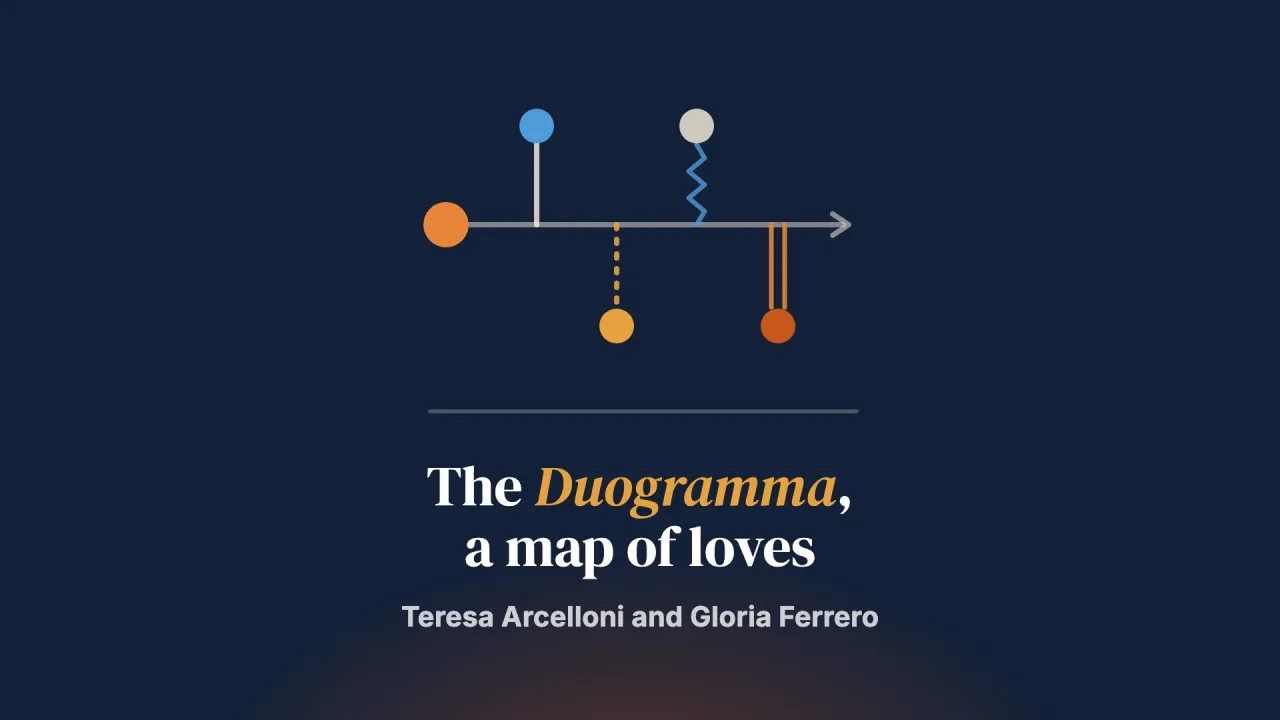 Scientific
The Duogramma®: An innovative methodology for psychotherapy
A map of the couple relationships lived, desired or rejected since childhood: the Duogramma®, its graphic rules and its use in individual therapy.
 Blog
Challenging in therapy: What a patient taught me
A couples therapy session led me to reflect on confrontation, authenticity and resonance: how to address difficult behaviour without invalidating the person.
 Blog
Adult parentification: when being useful becomes a condition for being loved
Why is it sometimes so hard to hand over? Julien Besse explores parentification and parentalisation, acknowledgement and the place we take in our adult relationships.
 Scientific
Sickle Cell Disease and Young Couples: Understanding the Influence of Shared and Individual Meaning on Couples’ Experience of Illness
Nine young adult couples facing sickle cell disease: how each partner makes sense of the illness, and how the couple moves from caregiving to equality from one crisis to the next.
Comments 0
Log in to join the discussion. Log in