AI-assisted translation
This version was translated from Portuguese by Complexe Systémique with the help of artificial intelligence. In case of doubt, the original version prevails.
Revista Brasileira de Terapia Familiar · Adoption
From the family of origin to the adoptive family
Between the family a child loses and the family that takes the child in lies a time of limbo that clinical work cannot ignore. Drawing on more than forty years of practice in the field of adoption in Brazil, Cynthia Ladvocat traces the development of Brazilian adoption law, revisits early bonding with Spitz, Bowlby and Winnicott, and describes the secrets that weigh on adoptive families. She argues for family therapy offered from the child’s arrival, with the genogram of the “adoptive triad” as its central tool.
Unofficial English translation. This article is a translation of Da Família de Origem à Família Adotiva, by Cynthia Ladvocat, published in the Revista Brasileira de Terapia Familiar (ABRATEF), vol. 9, no. 1 (2020), doi: 10.60114/rbtf.v9i1.33, under a CC BY 4.0 licence. Translated by Complexe Systémique in November 2026 with the help of artificial intelligence: the original Brazilian Portuguese text has been translated into English and reformatted, which constitutes a modification of the work under the terms of the licence. Paragraphs and headings are those of the journal; the author’s biographical note, printed as a footnote on the first page, is included in the presentation; a few obvious typographical errors have been corrected silently. The abstract is the author’s own English version. This translation was made neither by the authors nor by the journal, who are not responsible for its content or for any errors. The original version prevails.
Adoption is not necessarily the cause of the problems; rather, it is the vicissitudes of feelings kept secret.
Cynthia Ladvocat
Abstract
The author addresses the adoptive experience as a process involving individuals or couples who desire a child and also children or adolescents who need and have the right to live with a family. It raises the history about the institute of adoption and about the context of institutionalization. It presents questions about the bond of love as the basis of the formation of psychological development. It addresses the difficulties of parents and children both in the adaptation phase of the child to the new family and in the dynamics of the family in later years. Emphasizes the importance of family therapy as necessary to deal with the intrinsic vicissitudes of adoptive attachment.
Keywords: Adoption; secrets; genogram; bond; family therapy.
Introduction
To introduce the subject of adoption, we have to analyze the facts that lead to adoption being the solution for a child who loses their bonds with their family of origin. We must therefore begin by setting in context the situation of the mother who abandoned her child because of social problems, because of the way she herself dealt with her own deprivations, or because she had been abandoned by her own family. Or the situation of the mother who, through the courts, was prevented from living with her child.
Parental authority is removed only when abandonment, or the risks the child faces in the family, have been proven (Ladvocat, 2010). And when children are in residential care, this process requires a rigorous analysis of the child’s situation: how long the child has been placed in an institution, whether the child receives regular visits and, above all, whether or not it is possible to return home and come back under the guardianship of the biological family. If these factors remain undetermined, the child is kept in the care home. The child can therefore neither be reintegrated into their origins nor be adopted by another family.
Spitz (1988) holds that the mother who abandons her child rejects her own motherhood. And the baby who loses the bond with their biological mother suffers a trauma and a helplessness that concretely affect their psychological development.
When the courts learn of the situation of a child living on the street or at risk, the first step is to understand why the child was abandoned. The child is then referred to a care home for immediate protection. The search for the parents then begins, to assess whether the family is able to take responsibility for the child. However good a care home may be, and however well it meets the child’s basic needs, it remains a temporary protective measure, not a long-term one. And even though the child was abandoned by those who had custody, the child suffers from living in an institution far from their family.
For Freud and Burlingham (1946), the child’s relationships with the other children in the institution are central and stable. Life in a care home harms every aspect of development that depends on the affective maternal bond. The absence of the mother and of a family atmosphere brings frustration and deprivation to the child, who needs a maternal substitute. Since the biological bond has been lost, the child looks for someone in whom to invest emotions and affection. The staff the child lives alongside end up becoming substitute figures. The bond in the institution bears the mark of the danger of a new rupture, because these emotional ties do not satisfy the children’s natural needs, since they are temporary and replaced from time to time.
A whole series of factors can account for the rupture of the maternal bond, but what we find least often in the histories of institutionalized children is that they are orphans. That is why the term orphanage has been replaced by care home or residential care institution. In fact, many of these children and adolescents are like orphans of living parents, because, although they have a mother and/or a father, they have lost contact with their families. We find that the great majority of children in residential care are not available for adoption, because they keep their legal ties with their family. Efforts at reintegration into the family of origin must therefore be a priority of public policy. Only once the possibilities of returning to live with the family have been exhausted should the child be referred for adoption. Otherwise, these children run the risk of not being adopted and of living in the institution until the age of 18, which violates their right to family life as set out in the Statute of the Child and Adolescent (Estatuto da Criança e do Adolescente, ECA).
If the child is taken from the arms of the biological mother, and if this rupture is unavoidable, the ideal, hypothetically, would be for the child to be received immediately into the arms of the adoptive mother. So if living with the family of origin is not possible, the bonds should be replaced by affective bonds in a substitute family. In fact, adoption is the last stage in preserving and restoring family life for a child or adolescent. The migratory process between the biological family and the adoptive family goes through a whole series of vicissitudes. The conditions of the abandonment, of the residential placement and of the alternative care measures, up to placement in an adoptive family, must therefore be assessed.
The Historical Context of Adoption in Brazil
The institution of adoption has been evolving since it was first legislated in the Civil Code of 1906, when adoptive filiation was revocable and characterized by a kinship relationship without a break from the blood family. Most children were adopted illegally; parents did not reveal the secret of the adoption, or did so late. We must consider the context of adopted children, now adults, who lived through the secrets of informal adoptions in their childhood. They were registered as natural children without access to their history, or learned of their adoption only late. Their parents did not try to find out about the child’s biological origin, or knew facts that were never revealed. Adoption itself had no place to be talked about in the family, because it was a taboo subject: the children arrived clandestinely and these parents were illegally regarded as legitimate.
In 1965, under Adoptive Legitimation, filiation could be cancelled. And in 1979, the Code of Minors turned adoption that had been revocable into simple adoption, and full adoption into irrevocable adoption. However, the adoption certificate still contained the names of the parents of origin.
From the entry into force of the Statute of the Child and Adolescent (ECA) in 1990, adoption became irrevocable, with the adoptee fully integrated into the new family, with rights equal to those of blood children. The definitive break from the biological family and the sealing of the original birth certificate result in a new certificate that identifies only the names of the adoptive parents. Judicial secrecy, with the sealing of the biographical data, means that this new document does not reveal illegitimacy. Thus the secrets and the obstacles to accessing the child’s biography show that the denial of history remains at the basis of adoption practice (Hartman, 1994).
Today the context of adopted children is very different, especially with regard to the secret of adoption, because families are well informed during the approval process that they must not hide the story. Parents tell the child early on that they were adopted but generally prefer to give basic information without going into detail about the origins. Adoption meets with less prejudice in society thanks to awareness campaigns. Since 1996, the National Association of Adoption Support Groups has promoted, on National Adoption Day, more than 100 groups in different regions of Brazil to encourage late adoption, interracial adoption, the adoption of sibling groups and the so-called “necessary” adoptions.
Motivations for Adoption
When it is impossible to conceive through reproduction, whether natural or assisted, the desire for a biological child can lead to the desire for an adopted child. Each member of a couple experiences this loss according to their own subjectivity and must mourn a biological child and face the frustration of not finding their hereditary traits in the child.
And when one partner unconsciously excludes the other from their plans to have a child, infertility makes this impossibility concrete (Hamad, 2002). The fact that many mothers become pregnant after an adoption shows how far infertility covers up psychological problems that need to be understood and treated.
The motivations for adopting a child may be infertility or the choice to build a family through adoption. The process can lead the individual or the couple towards symbolic fertility. In pregnancy, the woman’s body changes to make room for the baby’s growth. In adoptive pregnancy, it is the mind that receives the child. The couple begin to long for the arrival of this child and to work through this new status of adoptive parenthood.
An adopted child is the continuation of the parents in the imaginary before becoming their continuation symbolically. However, if the child represents a fetish, this transformation is made impossible and the child will never be a descendant of the family (Dolto, 1998).
Despite the great changes in the diversity of family configurations, many difficulties interfere with and reduce the chances of a meeting between so many approved applicants and so many institutionalized children (Moorman, 1997). It is therefore very important to identify, in applicants, the wish for a particular age or gender of the child to be adopted. In the great majority of cases, the desired profile is that of a white baby girl. Many parents believe that young children carry no marks and have no memories of their life before the adoption, and so they want a child under one year old. Possible issues on the parents’ part regarding the gap between the real characteristics of the child proposed and the ideal, desired child need to be prevented and treated.
During the approval process at the Children’s Court (Vara da Infância), motivations and beliefs about adoption are explored and analyzed in interviews and meetings. The process results in the approval or not of the social and psychological conditions of the adoption applicants. If approved, they are entered in the National Adoption Register (Cadastro Nacional de Adoção), whose main tool is the entry and cross-matching of national data on children and on interested couples in order to simplify the adoption process. And if the outcome of the approval process is unfavourable, it can be started again later.
Adoption seeks to meet a child’s right to a family when it has not been possible to maintain the bonds with their origins. Children should not fill a void, much less serve to cure the life frustrations of adults (Hamad, 2002). The adoption process is fundamentally aimed at the child’s interest, through the solution that best serves that interest. And the main motivation to be considered is the legitimate desire of these applicants to become fathers and mothers.
The Bond in the Mother-Baby Relationship
According to Eiguer (1985), the loving relationship in the family defines the union between its members, with their personal psyches and shared fantasies that call for affective commitment. For Freud and Burlingham (1946), the mother who holds her baby close consolidates the development of the love object. Failures in this relationship in the baby’s first year of life contribute to emotional problems.
The mother-baby relationship is intense and rewarding, and it contributes to the future capacity for interpersonal relationships. The mother meets the child’s needs in a complementary relationship, going through the biological uterine stage, the stage of dependence and symbiosis, and the beginning of autonomy, up to the stage of social and hierarchical relationships. Through affective exchanges, and in front of the mother’s smiling face, the baby smiles too, marking the beginning of social relationships. The baby’s development is activated through the reciprocal relationship with the mother, which reveals a continuous circular exchange in which affects play the main role (Spitz, 1988).
For Winnicott (1997), the baby needs loving care for the development of its emotional and mental growth and of its personality. The baby is born with an inherited potential and, in fact, there is no such thing as a baby, only a baby in relation to its mother. Its healthy development depends on primary maternal preoccupation for the satisfaction of its needs. The mother and a good-enough environment foster the constitution of the baby’s self. Through holding, the mother’s embrace, the child has affective experiences, and through handling, basic care, the child develops a sense of “I” and the constitution of their own body. The best thing for a baby who cannot be raised by the biological family is to be placed with the adoptive mother as early as possible, so that maternal care can continue. Given the age at which an adoption is granted, the baby is already deeply marked by real experiences. Adoptive parents therefore face difficulties different from those they would have faced had they been with the baby since birth.
The mother provides pleasurable sensations, and possible failures in this initial phase of life can cause problems for the child. The loss of a loved person is one of the most intensely painful experiences there can be. For the person deprived of an attachment, only the return of the lost person could be a source of comfort (Bowlby, 1983).
In the case of children who have suffered the loss of the maternal bond, a substitute mother is able to provide the necessary affective care. For Kernberg (1985), the period between the arms of the biological mother and those of the adoptive mother is characterized by a limbo, that is, a time that is very hard for the child to get through and that can have consequences for the child’s early development.
It is therefore necessary to assess what happened in these two distinct worlds, that of the couple who wish to adopt a child and that of the child to be adopted. There is also a parental limbo before the child arrives in the new family (Ladvocat, 2002).
According to McGoldrick, Monica, Gerson and Shellenberger (2012), adoptive families are like remarried families, since two families are involved, the biological family and the adoptive family. This is a fact whether or not the biological parents are known, since it is possible to triangulate the memory or the idea of people.
The adopted child may present difficulties arising from the adoption itself or from the effects of earlier environmental failures, with the inevitable consequences of their past history. And the child may react with symptoms to these structural problems in their relationship with the adoptive parents. The family may resent the child’s behaviour and also face anxieties and doubts about the relationship with the adopted child.
Difficulties Between Parents and Children
Today we still find families who reveal the adoption late or avoid the subject in everyday life. The child’s biography up to their reception by the adoptive family may contain facts hidden by lack of knowledge or by the parents’ difficulty in revealing the story. Adopted children have a history full of failures, ruptures, changes, traumas and a great deal of suffering, factors that led to their placement in a substitute family. The subject of origins and their secrets therefore always lies at the root of the main difficulties in the adoptive family.
In cases of adoption we must consider a more vulnerable context, in which the adopted child may present an emotional fragility in their psychic structure. The child may have more difficulty with enigmas and need parents who are very attentive to any difficulty, because the child may resent and relive the rejection by the biological mother and the trauma of abandonment (Ladvocat, 2010).
Adoptive parents may prefer to keep some information hidden, as if these empty spaces could strengthen the adoptive bond, as if in this way the adopted child would become the biological child of the adoptive parents’ fantasy (Dolto, 1998). Children who do not know the story of their adoption generally bring themes of lies and of unauthorized knowledge, in which the unrevealed story is latent and needs to be put into context.
Fathers and mothers often wrongly associate a child’s behaviour, whether the child is biological or adopted, with genetic inheritance, highlighting the signs of difference between the idealized child and the real child. In these cases, problems with children are no different, whether they are biological or adopted, since a whole series of difficulties can be found in both kinds of family (Ladvocat, 2014). However, adoptive status marks a difference that cannot, and should not, be denied.
Soon after the adoption, during the adjustment period, the child may project onto the adoptive parents a strong fear of not being accepted. Parents may report impasses in these hard-to-manage situations. Apart from these issues, the child’s adjustment generally goes well.
According to Winnicott (1997), the greatest difficulty for parents and children concerns origins. The child wonders what became of the parents and how the abandonment happened. The biological parents are in fact unknown, so there is a charge of emotions of love and hate that cannot be lived out day to day because of these parents’ absence, leaving the child to project these feelings onto the adoptive parents.
Many doubts are raised about the adoptive bond. In the face of these reflections, children wonder whether they are truly loved and whether their parents would act differently if they were biological children. Parents, for their part, wonder whether they will be able to love this child as if it were their true child. And whether the adopted child will be able to love the adoptive parents as if they were the true parents. They may react negatively to the child’s curiosity about the biological family, as if it meant a betrayal of the adoptive family’s love. The mother may feel resentment at not having carried her adopted child in her womb. And when she refers to what happened during the pregnancy and the birth, she realizes how little she knows about her child’s story in relation to the biological mother. At the same time, whatever information about the child’s life she may have access to, she prefers not to reveal to the child.
The child has difficulties with identity, because even when there is no secret about the adoption, there may be hidden facts, or facts partly revealed and partly kept secret. According to Hartman (1994), the secret can affect the child’s sense of belonging to the family and the parents’ feelings of competence and of rights acquired or denied.
If the biography can be clarified, the child can understand that they were removed from the biological system and taken in temporarily until being integrated into the system of the adoptive family. The process of working through the real and fantasized information about biological origin is a fundamental task. The more access the child has to their origins, the less the biological ties interfere and the greater their integration into the adoptive family (Ladvocat, 2010).
The adopted child is always very curious and needs to know their real story so as not to have too many fantasies about their life before the adoption. The adolescent is also curious, has ambivalent reactions and may feel ashamed of their adopted status. They may show a lack of interest in talking about the adoption, or provoke the parents by saying they want to find their real family and run away from home in search of their past. The stronger the break in the bonds, the greater the involvement with origins. The crises of this age group bring adoption back to the surface with new fantasies. The adolescent may challenge the parents in their love and affiliation, idealize the biological parents and devalue the adoptive parents (Schettini, 1999).
Faced with the child’s story, parents do not know what part of the truth to tell. They may blame themselves, as if they had stolen the child from the biological family. They need to be good parents, much better than the biological ones, for fear of losing the child’s love (Ladvocat, 2009). An adoptive mother may feel in fantasized competition with the biological mother, feeling jealousy, anger, apprehension and other feelings that need to be treated.
It is important that questions about adoption can be raised by the child at the different stages of life: in early childhood, in latency, at puberty, in adolescence, in young and mature adulthood. Faced with curiosity about their story, the child should hear the answers possible for their age and the information available.
The adopted child, in a harmonious environment, can overcome their difficulties, which do not necessarily become serious, but parents should assess the need for psychotherapy. In the experience of the author, who has worked in the field of adoption for more than 40 years, family therapy should always be recommended to work through the feelings of parents and children, from the child’s placement in the new family and the constitution of the adoptive bond onwards.
Family Therapy
The general aim of the work with the family is to redefine the adoptive bond and the child’s biography, if possible from the time of gestation. Therapy may begin with the whole family, depending on what each case requires, or only with the parents, followed by individual sessions with the child and, as the process goes on, joint sessions, which may include grandparents and close relatives. Individual work and family therapy provide a flexible, reliable holding and setting for working through the traumas experienced that may have harmed the child’s development.
Parents may prefer to say nothing about the child’s biography, as if the biological family were a perpetual threat to the integration of the adoptive family. They may justify the secrecy of the adoption as a way of protecting the child from painful or threatening information, and that is why they benefit from the therapeutic space to set out their impasses.
The adopted child is very anxious to fill the gaps in their biography. Faced with so many doubts, the child needs to be sure that the information given is true. The child may be traumatically resentful on realizing they were deceived by the person they trusted most, which can have more impact than what was discovered.
According to Galli (2001), the child lives a double belonging, biological and adoptive, and therefore needs to know their story. The possible information about the child’s past must be transformed into a possible and truthful narrative, with the commitment to affect neither the adults nor the children.
Therapeutic work in assessing the child’s life brings us to a space in the void, between the baby’s contact with the biological mother and the meeting with the adoptive mother. Limbo refers to the moment when the child has neither a first name nor a surname. Thus, working with the real adoptive parents of a real adopted child means working with these parents’ feelings of aggression, guilt and ambivalence (Kernberg, 1985).
It is important to analyze all the factors involved in the adoptive triad, that is, the child, the child’s pre-adoptive history and the bond with the adoptive family. The therapist’s main function is to identify, together with the family, the myths and secrets, so that feelings can circulate freely and the adoption can be legitimized. The therapist can perceive the difficulties and the ambivalent feelings about whether or not to address the story of the adoption, and should assess whether the parents are seeking a solution or are paralysed in the search for alternatives to improve the relationship with the child.
The therapist welcomes the parents into the therapeutic setting so that they can talk about the adoption, and consequently the child can be therapeutically prepared to hear what has been recorded in hidden form and, above all, to work through the difficult questions about the two sets of parents. If the difficulties cannot be assimilated, a crisis sets in, affecting the child’s sense of inclusion and acceptance as a son or daughter.
The pre-adoptive biography deserves a prominent place, as regards both the child’s life before the adoption and the parents’ life while waiting for this child. This space and this time, symbolically recorded, become part of the child’s story. In therapeutic work, the system of origin and the other systems that were part of the child’s migration up to their reception into the adoptive family must be accessed (McGoldrick, Monica, Gerson, & Shellenberger, 2012).
To record the adoptive triad, the genogram is an excellent resource that encompasses the study of the adoptive family and of the family of origin. A variety of triangulations may emerge in the story, especially in cases where the child’s migratory process identifies abandonment, the limbo experienced after the bond with the origins was cut, residential care or care by substitute figures.
Drawing the genogram can be a way of fostering intimate and playful contact for telling and retelling the story of the adoption. The genogram helps the child find, within, a place for the gaps in their story and a graphic and symbolic representation of the biological system, which is already reassuring for a relationship of trust.
In family therapy, all family members can reveal hidden points, fantasies and secrets. The work addresses the story of the couple who went through mourning for a biological pregnancy and lived through a time of limbo waiting for the adopted child, until the adoption ruling.
In cases of late adoption, therapeutic support for the parents and the child is important in building the new family, especially concerning the child’s history, the period in residential care, blood ties and the child’s capacity to form new bonds. A child just out of a care home needs time to adjust to the new family, just as the parents must understand the difficulties of this period of living together, in which both systems have expectations and fears. Family therapy is indicated not only to repair possible initial problems but also as prevention, taking into account the child’s biography from their origins to the adoptive family (Ladvocat, 2015).
The age of a child already close to puberty, or of an adolescent, does not match most domestic adoption requests, which is why foreign applicants can only adopt children who do not fit the profile wanted by Brazilian families. The child is prepared in advance and introduced to the future foreign parents, who are allowed to live with the child for 30 to 40 days before the adoption ruling and the journey to their home country. Difficulties in the relationship are quite common, given the difficulty of communicating in a foreign language and the very short period of living together. And, in the author’s practice with Italian families, family therapy should be part of the process, because these families often do not know which professional to ask for help. Foreign parents may seek therapy on returning to their country and in fact have more support from their governments for intercountry adoption. However, it is during their time together in Brazil that the adoption may or may not succeed, which will depend fundamentally on emergency therapeutic work with this newly formed family about to leave for abroad.
The adopted child, in Winnicottian thinking, can recover from the loss and from a possible feeling of guilt that the child thinks they may bear, despite not having, in fact, contributed to the drama of their life. Adoption is not necessarily the cause of the problems; rather, it is the vicissitudes of feelings kept secret. Family therapy allows repressed affects to open up, as a reaction to an imposed silence. In this way the family can continue to evolve, overcome possible crises and develop trust in this truly adoptive bond.
Conclusion
One of the main aims of the work with the parents concerns working through and valuing adoptive parenthood. And with the child, it concerns working through these losses and a new opportunity to live with new good-enough parents, true adoptive parents. The goal is to bring out the difficulties and impasses, not in order to remove the marks and specific features of adoption, but to treat the repercussions of these marks in the life of the child and in that of the parents (Ladvocat, 2010).
Family therapy involves personal and relational histories lived by the members of the family. In the therapeutic context, these can be relived and redefined, and new perspectives on their questions can be discovered. The therapist works with empathic understanding and with the holding of the setting, so that the themes inherent in adoption can be explored, remembered, revealed and shared by the parents and the adopted children.
The treatment requires a therapeutic space that is whole and stable. Reflection on the therapist’s resonances with the theme of abandonment, and with the restoration of the child’s right to family life through placement in a new family, is important. The therapist analyzes affects that strongly stir the person of the therapist, not only because of the circumstances of life, but because they appeal to the therapist’s maternal and paternal feelings.
The genogram of the adoptive triad, which includes the adoptee and their history, that of the family of origin and that of the adoptive family, brings a sense of relief and of mission accomplished. The family feels more united and confident. The ghosts that were threatening the health of its members have been faced and worked through.
The work with the family includes the vicissitudes of the child’s biography: the abandonment, the limbo experienced after the bond with the origins was cut, residential care, care by substitute figures, up to adjustment in the new family. And in this context, questions arise about affects, bonds, prejudices, and secrets or taboo subjects.
An important therapeutic goal is transforming the need for a child into the desire for a child, that is, working through the mourning for the biological, fantasized child, so that the parents can fulfil the desire for an adopted, real child. The author, in her Winnicottian approach, affirms that a new, welcoming and good-enough environment is fundamental to adoptive legitimation, and that adopted children who, through a twist of fate, were separated from their family of origin have the right to feel truly adopted and loved.
Complexe Systémique: key points
This paper distils the experience of a clinician who has worked with adoption in Brazil for more than forty years. Its most useful contribution comes down to one idea: it is not adoption that causes problems, but what remains unspoken. Kernberg’s “limbo”, the nameless time between the arms of the biological mother and those of the adoptive mother, has its counterpart on the parents’ side, as they wait for a child after mourning a pregnancy. The genogram of the “adoptive triad” gives the family of origin, the care home and substitute figures a visible place, and allows the story to be told again and again, at every age. The passage on intercountry adoption deserves attention: a few weeks of living together in Brazil often decide what follows. The framework remains mainly psychoanalytic (Spitz, Bowlby, Winnicott), the systemic reference is limited to McGoldrick, and the article presents no case material: it offers an orientation more than a method. Read alongside the study of genealogy stories in intercountry adoptive families, and the study of birth parent contact after placement.
References
Bowlby, J. (1983). Attaccamento e perdita, la perdita della madre. Torino: Bollati Boringhieri.
Dolto, F. (1998). O destino das crianças. São Paulo: Martins Fontes.
Eiguer, A. (1985). Um divã para a família. Porto Alegre: Artmed.
Freud, A., & Burlingham, D. (1946). Niños sin hogar. Buenos Aires: Ediciones Iman.
Galli, J., & Viero, F. (2001). Fallimenti adottivi, prevenzione e riparazione. Roma: Armando Editore.
Hamad, N. (2002). A Criança adotiva e suas famílias. Rio de Janeiro: Companhia de Freud.
Hartman, A. (1994). Os segredos na adoção. In E. Imber-Black. Os segredos na família e na terapia de família (pp. 94-112). Porto Alegre: Artmed.
Kernberg, P. (1985). Child analysis with a severely disturbed adopted child. International Journal of Psychoanalytic Psychotherapy, 11, 277-299.
Ladvocat, C. (2002). Mitos e segredos sobre a origem da criança na família adotiva. Rio de Janeiro: Ed Booklink.
Ladvocat, C. (2008). Adoção e não-Adoção: devolução e reintegração da criança adotiva ao abrigo. In R. M. Macedo (Org.). Terapia familiar no Brasil na última década. São Paulo: Roca.
Ladvocat, C. (2009). Famílias com filhos adotivos. In L. C. Osório & M. E Valle (Org.). Manual de terapia familiar (pp. 286-331). Porto Alegre: Artmed.
Ladvocat, C. (2010). Desafios do trabalho do psicólogo na adoção: À luz da teoria psicanalítica de Kernberg e de Winnicott. In C. Ladvocat (Org.). Psicologia: Campo de atuação. Teoria e prática (pp. 118-127). Rio de Janeiro: Ed. Booklink.
Ladvocat, C. (2010). Famílias com crianças e adolescentes em risco. In L. C. Osório & M. E. Valle. Manual de terapia familiar vol II (pp. 39-50). Porto Alegre: Artmed.
Ladvocat, C. (2014). Prevenção na adoção & reparação na adoção. In C. Ladvocat & S. Diuana. O Guia da adoção, no jurídico, no social, no psicológico e na família (pp. 149-168). São Paulo: Roca.
Ladvocat, C. (2015). Prevenção e reparação da preservação do vínculo familiar. In R. M. S. Macedo. Expandindo horizontes da terapia familiar (pp. 261-272). Curitiba: Editora CRV.
McGoldrick, M., Gerson, & Shellenberger (2012). Genogramas, avaliação e intervenção familiar. Porto Alegre: Artmed.
Moorman, M. (1997). L’Altra faccia dell’adozione. Roma: Editrice Astrolábio.
Schettini, L. (1999). Adoção, origem, segredo e revelação. Recife: Ed. Bagaço.
Spitz, R. (1988). O primeiro ano de vida. São Paulo: Martins Fontes.
Winnicott, D. (1997). Duas crianças adotadas & armadilhas da Adoção & a adolescência das crianças adotadas. In R. Sheperd, J. Johns & H. Robinson (Org.). D. W. Winnicott, Pensando sobre crianças (pp. 115-142). Porto Alegre: ArtMed.
Unofficial English translation of Da Família de Origem à Família Adotiva, by Cynthia Ladvocat, Revista Brasileira de Terapia Familiar, vol. 9, no. 1 (2020), doi: 10.60114/rbtf.v9i1.33, under a CC BY 4.0 licence. Translation (with the help of artificial intelligence) and layout: Complexe Systémique, November 2026 — the work has been modified under the terms of the licence. Neither the authors nor the journal are responsible for this translation; the original version prevails.
Unofficial English translation of “Da Família de Origem à Família Adotiva”, published in Revista Brasileira de Terapia Familiar (2020) under a CC BY 4.0 licence. Made by Complexe Systémique with the help of artificial intelligence, it does not come from the authors or the journal, who are not responsible for its content; the original version prevails.
Read the original articleHow to cite this article
Ladvocat, C. (2020). From the family of origin to the adoptive family (Complexe Systémique, Trans.). Complexe Systémique. https://app.complexe-systemique.com/en_GB/articles/from-the-family-of-origin-to-the-adoptive-family (Original work published in 2020 in Revista Brasileira de Terapia Familiar, v. 9, n. 1 (2020); republished in 2020 by Revista Brasileira de Terapia Familiar, https://revbrasterapiafamiliar.abratef.org.br/revista/article/view/33)
To go further
- “I’m More Than Just Adopted”: Stories of Genealogy in Intercountry Adoptive FamiliesGenealogy in intercountry adoption.
- Adoptive parents' experiences of birth parent contact in the years after placementContact with the birth family.
- Becoming adopted: Rebuilding adoptive identity through artifactsThe objects of adoptive identity.
Related training courses
 Symposium
État des Lieux: a psychological approach to spaces
Replay of the “État des Lieux” conference (Paris, 16 October 2026): Ivy Daure, Maurizio Frisina, Viola Sallay and Gilbert Pregno on places as a clinical resource. In French.
 Certifying course
Training in Systemic Therapy and Interventions – Cycle 1
Certifying training cycle in systemic therapy and interventions – year 1. Courses, supervision and practice, aligned with EFTA/SFTF. In French.
 Certifying course
Training in Systemic Therapy and Interventions – Cycle 2
Certifying training cycle in systemic therapy and interventions – year 2. Clinical complexity, supervision and practice. EFTA/SFTF aligned. In French.
 Certifying course
Training in Systemic Therapy and Interventions – Cycle 3
Certifying training cycle in systemic therapy and interventions – year 3. In-depth intervention, supervision and practice. EFTA/SFTF aligned. In French.
Related articles
 Scientific
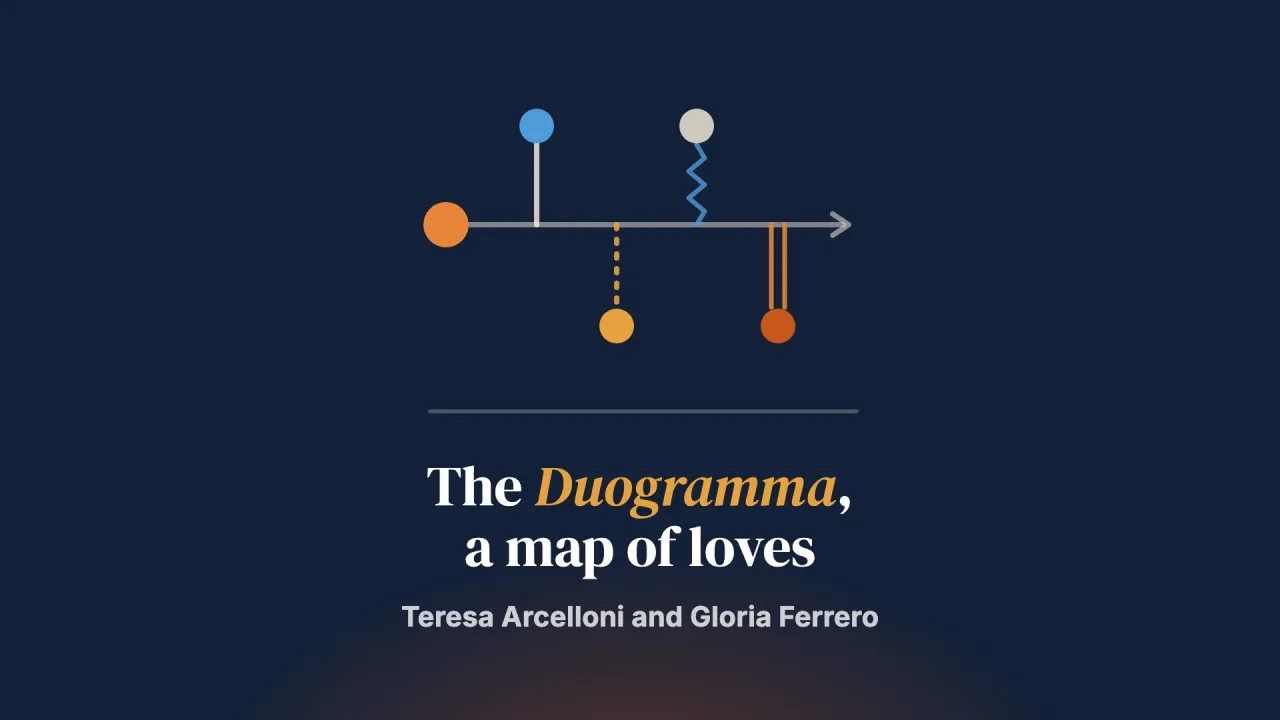
The Duogramma®: An innovative methodology for psychotherapy
A map of the couple relationships lived, desired or rejected since childhood: the Duogramma®, its graphic rules and its use in individual therapy.
 Blog
Capp® groups give parents a place to think together
How does a reflective parenting group work? Jalila Kormachi and Yara Doumit describe how parents revisit a difficult moment and choose what to try next.
 Blog
Adult parentification: when being useful becomes a condition for being loved
Why is it sometimes so hard to hand over? Julien Besse explores parentification and parentalisation, acknowledgement and the place we take in our adult relationships.
 Scientific
Family group conference provision across the lifespan of child welfare intervention: A mixed-method realist-informed evaluation comparing three stages of welfare concern
Early help, child protection or children in care: among 155 UK families, experiences and outcomes of family group conferences vary very little by stage.
Comments 0
Log in to join the discussion. Log in