European Journal of Social Work · Migration
On the reconstruction of family life and ‘institutional forms of parentification': unaccompanied minors’ experiences with family reunification in Belgium and Norway
In Belgium as in Norway, unaccompanied minors obtain protection, then bring their parents over. Kari Bergset’s team reanalysed 25 interviews: procedures, money for tickets, medical appointments, translation, siblings’ homework, everything falls on these young people, often with the tacit consent of services. A parentification produced by institutions far more than by families.
This is a reformatted republication of On the reconstruction of family life and ‘institutional forms of parentification': unaccompanied minors’ experiences with family reunification in Belgium and Norway, by Kari Bergset, Pascal Debruyne, Kaat Van Acker and Monika Alvestad Reime, published in European Journal of Social Work (Taylor & Francis) (2025), doi: 10.1080/13691457.2025.2492852, under a CC BY 4.0 licence. Prepared by Complexe Systémique in September 2026: the authors’ text is unchanged; the layout has been adapted for reading online, which constitutes a modification of the work under the terms of the licence. This edition was made neither by the authors nor by the publisher, who are not responsible for its content or for any errors. The original version prevails.
These young people may become professionals’ assistants in the latter’s integration work with the family, because it is easy to ask them.
Kari Bergset, Pascal Debruyne, Kaat Van Acker and Monika Alvestad Reime
Abstract
Family reunification in the context of unaccompanied minor refugees (UMs) has been an emergent phenomenon in Europe during the last decade. Knowledge about UMs’ experiences with family reunification is needed to enhance social workers’ understanding of family dynamics in reunited refugee families and how these are intertwined with the institutional context. This article is based on a reanalysis of two sets of in-depth interviews with former UMs in Norway (n = 10) and Belgium (n = 15). Drawing on the concept of ‘institutional parentification,’ the article explores the tasks and responsibilities former UMs take on for their family during the process of family reunification. Results from the study show that the reconstruction of family life is impacted by institutional regulations, rules, and social work practices. Through a complex assemblage of legal, administrative, and political issues, the youngsters are assigned to – and take up – new roles in and responsibilities for the family reintegration process. By shedding light on institutional forms of parentification, the article calls for an increased awareness of the impact of the policies that regulate family reunification and their practical consequences and redirects attention to the political role of social work with refugee families.
Keywords: Family reunification, unaccompanied minors, refugee families, parentification, institutional theory
Introduction
This article is based on extensive research from Belgium and Norway on family reunification with unaccompanied minors (UMs). It focuses on the lifeworld dynamics of refugee families that have been separated for years. Specifically, the research concerns situations in which parents and siblings of UMs who benefit from international protection apply for family reunification from their country of origin. The UMs are then often referred to as ‘sponsors.’ Such situations have been an emergent phenomenon in European countries during the last decade. Earlier research has shown the importance of a supportive family context for refugee children’s resilience and adaptive adjustment (Lustig et al., 2003). The institutional, logistic, and emotional challenges minors face during the process of family reunification and after the family has arrived can jeopardize their well-being and family relations (Debruyne et al., 2023; De Hertog & Belloni, 2023). Through in-depth qualitative interviews with UMs and former UMs in two European countries, this research explores what ‘new’ tasks and responsibilities UMs take on for their family during the process of family reunification; a process that starts with them considering inviting their parents and siblings over and ends with an eventual reunification (or when the reunification project is abandoned). Knowledge about UMs’ roles and responsibilities adds to a deeper understanding of child–parent relations in refugee families, which is much needed for identifying the conditions and needs for social support.
Family reunification with UMs
To date, research on family reunification with UMs is scarce (Lidén et al., 2020; Raghallaigh, 2018; Smith et al., 2025). Most research on family reunification has focused on the thresholds for family reunification, for example on the impact of ‘papers’ and documents (De Hertog & Belloni, 2023; Kraler & Bonizzoni, 2010) or on how families navigate the existing rules and policies (Bonjour & Cleton, 2021). Other studies have focused on family relations in general in case of separation due to migration, for example on situations of transnational care circulation (Baldassar et al., 2007; Merla et al., 2020), on ‘doing family at a distance’ (Rousseau et al., 2004; Strasser et al., 2009), or on the role of technology in intrafamilial communication (Bacigalupe & Parker, 2015; Bryceson & Vuorela, 2020). Some studies have looked at youngsters’ resilience during separation from their family (Meloni, 2021; Raghallaigh, 2018) or at how roles shift within families that migrated together, for example with the children taking on roles as culture or language brokers (Delgado, 2020; Trickett & Jones, 2007).
To the authors’ knowledge, only a few studies have explored family reunification processes in cases where the UMs arrived first. Tørrisplass (2022) studies the responsibilities given to one young girl after family reunification, while Johansen and Tørrisplass (2024) discusses UM’s life after family reunification as one of several topics in UM’s family relations. Furthermore, Smith et al. (2025) explore family reunification with former UMs in Ireland from the perspectives of parents and professionals. They point to heavy burdens and responsibilities for the youngsters, particularly related to supporting the settlement of their families. However, there is a lack of knowledge gained from the youngsters’ perspective. This article aims to fill in this gap and poses the following research question: How do rules, regulations, and social work practices shape how new roles and responsibilities are taken on by UMs?
Familial relations and role shifts
In the discourses of social professionals and policymakers, such role shifts are frequently perceived through the lens of ‘parentification,’ understood at the microlevel of the youngsters and their family (Delgado, 2020; Oznobishin & Kurman, 2009; Walsh et al., 2006). Importantly, most research on parentification has focused on the individual or the family system, locating the causes of parentification in parental circumstances such as physical illness (Dearden & Becker, 2004) or migration (Oznobishin & Kurman, 2009) and drawing on Western conceptions of parenthood. To avoid the negative connotation that comes with the concept of parentification, recent research has replaced it with the term ‘filial responsibility,’ which is more descriptive and focuses on the different roles minors take up (Dabbagh et al., 2017). From an anthropological perspective, researchers have also labeled refugee minors’ tasks and responsibilities within the family as ‘practicing kinship care’ (Crafter & Iqbal, 2022). These alternative terms posit that the take-up of (perceived) parental tasks need not be negative but can also be a source of solidarity, resilience, and adaptation (De Haene et al., 2014).
In a recent study among accompanied minors in Belgian asylum centers (Van Acker et al., 2024), we introduce the term ‘institutionalized forms of parentification’ to direct attention to the institutional and structural factors that lead children to take on adult-like responsibilities. Taking these findings one step further, this article analyzes the roles and responsibilities UMs take on during the process of family reunification through a social and political lens.
Study context: family reunification with UMs in Belgium and Norway
Family reunification is, in the words of the European Union’s ‘Family Reunification Directive,’ a ‘necessary way of making family life possible’ (Council Directive 2003/86/EC; see Council of the European Union, 2003). Article 10 in the Convention on the Rights of the Child (United Nations Children’s Fund [UNICEF], 1989) states that applications relating to child–parent reunification ‘shall be dealt with by States Parties in a positive, humane and expeditious manner.’ However, national policies vary and contribute to different practices and conditions for family-life dynamics (Debruyne, 2024b). In all cases, however, parents of UMs have to apply for family reunification in a foreign diplomatic post in their home country or a neighboring country (Debruyne, 2024a).
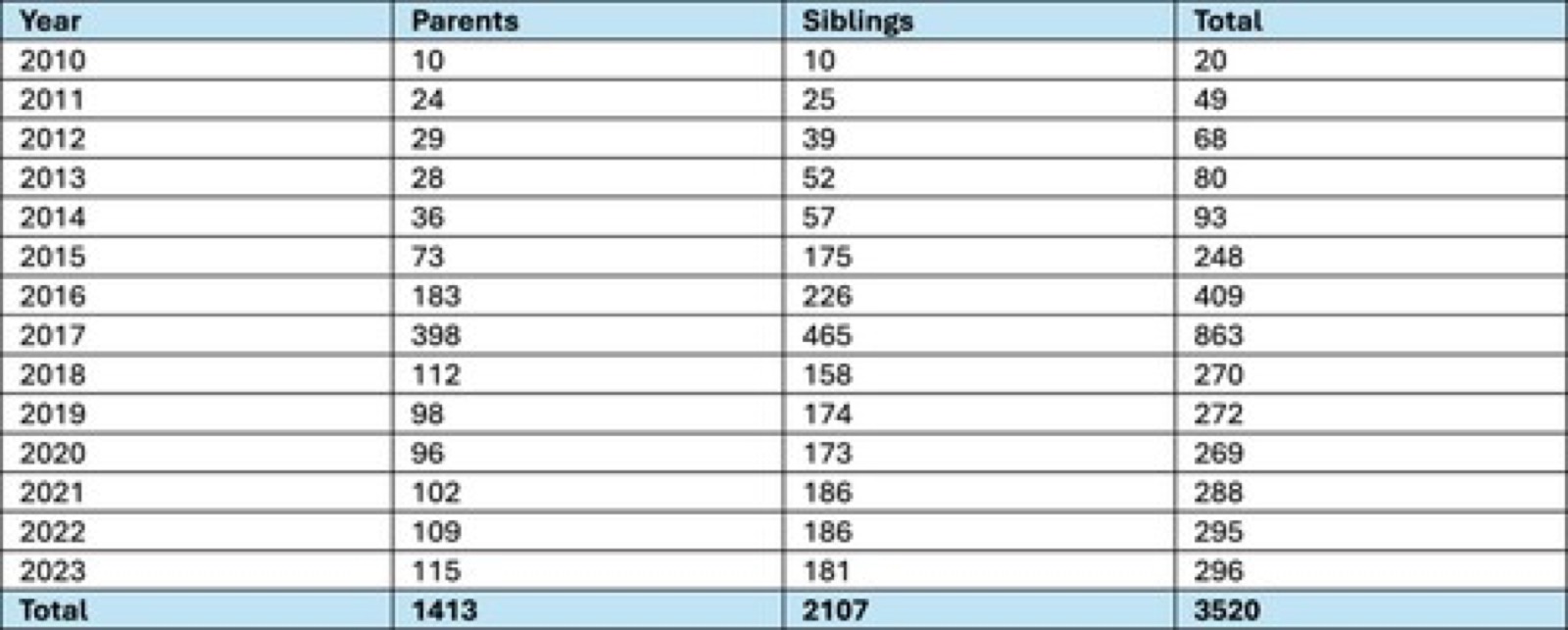
In Norway, upon arrival every UM is supported by a state-appointed guardian until they are of an adult age. After the UMs obtain refugee status, they are assigned to a local municipality and provided with a local child welfare caseworker. Depending on their age and presumed vulnerability, UMs are placed in foster care, child welfare institutions, or other, less-staffed accommodation arrangements (Eide, 2020). Family reunification with UMs in Norway is limited to cases where the UM is granted asylum (Ministry of Justice and Public Security, 2008, §43), and the application must be filed before the UM is 18. From 2015, the number of parents and minor siblings granted family reunification with UMs sharply increased, as shown in Figure 1 (Bergset et al., 2024).
Local governments receive state funding for each refugee, both UMs and reunited family members (Bergset et al., 2024). UMs have to live with their parents for the next five years. Housing for the families is considered a government responsibility. Still, support differs between local governments, and some municipalities provide less support to reunited family members than to refugee families that arrive together (Johansen & Tørrisplass, 2024). Civil society organizations sometimes supplement public services (Figures 2 and 3).
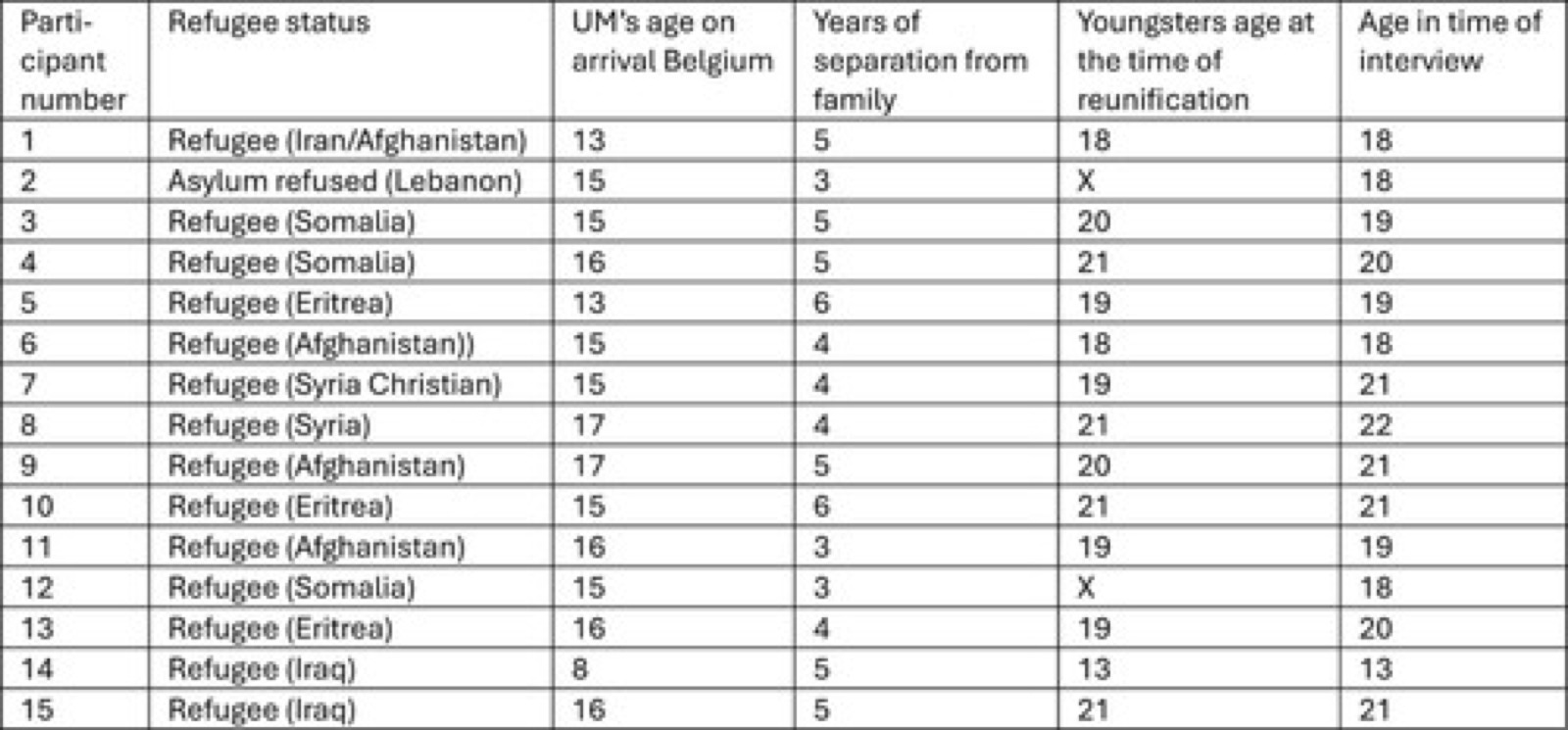
In Belgium, the number of parents reunited with former UMs increased from 40 in 2016 to 183 in 2021 (Dienst Vreemdelingenzaken, 2017, pp. 6, 11; Myria, 2022, p. 8). Like in Norway, upon arrival in Belgium, UMs are assigned to a legal guardian. Depending on their age and vulnerability, they are hosted in collective reception centers, child welfare institutions, or foster care. In each of these arrangements they are also supported by social workers (Behrendt et al., 2024).
Unlike in Norway, UMs’ family reunification is legally restricted to parents; minor siblings can request to join through humanitarian visas. Another difference is the regulation that family reunification can be requested by UMs who have obtained refugee status and those with subsidiary protection. Once UMs reach the age of 18, the time window for application is only three months, adding considerable time pressure (Myria, 2020, p. 5). Although guardians offer legal support, formal (socio)legal support is scarce in practice (Myria, 2022, p. 18).
The Belgian Immigration Office checks the administrative conditions and has to respond to the application within nine months. If the family reunification is approved and the family arrives, the UMs must leave their private or collective accommodation, usually within a couple of months. UMs have to live with their parents for the next five years, except UMs who turn 18 during this time. Currently, there is little to no formal family support in place for the reuniting and reunited families on the level of psychosocial support and housing (Debruyne, 2024b). Except for some local ‘good practices,’ issues of transnational parenting and transnational family relations are largely absent in social work practice.
Methods
The current research draws on a reanalysis of two research projects, one from Norway and one from Belgium, involving 25 semi-structured interviews with young people. The idea for a joint research project developed from a seminar where the two groups of researchers presented their original research and found that the two projects had several similarities in research questions, sample, and results. In particular, the researchers found the concept of ‘institutional parentification’ a useful analytical concept for reanalyzing the data.
Sample
The Belgian sample consists of 15 UMs in the process of reunification. The youngsters in the Belgian sample came from Afghanistan, Somalia, Eritrea, and Syria (11 male, four female). They were recruited through civil society partners. The interviews included questions about their experience with communication and family dynamics as well as their experiences with (in)formal rules and policies and support by social workers, guardians, and other social professionals throughout the process.
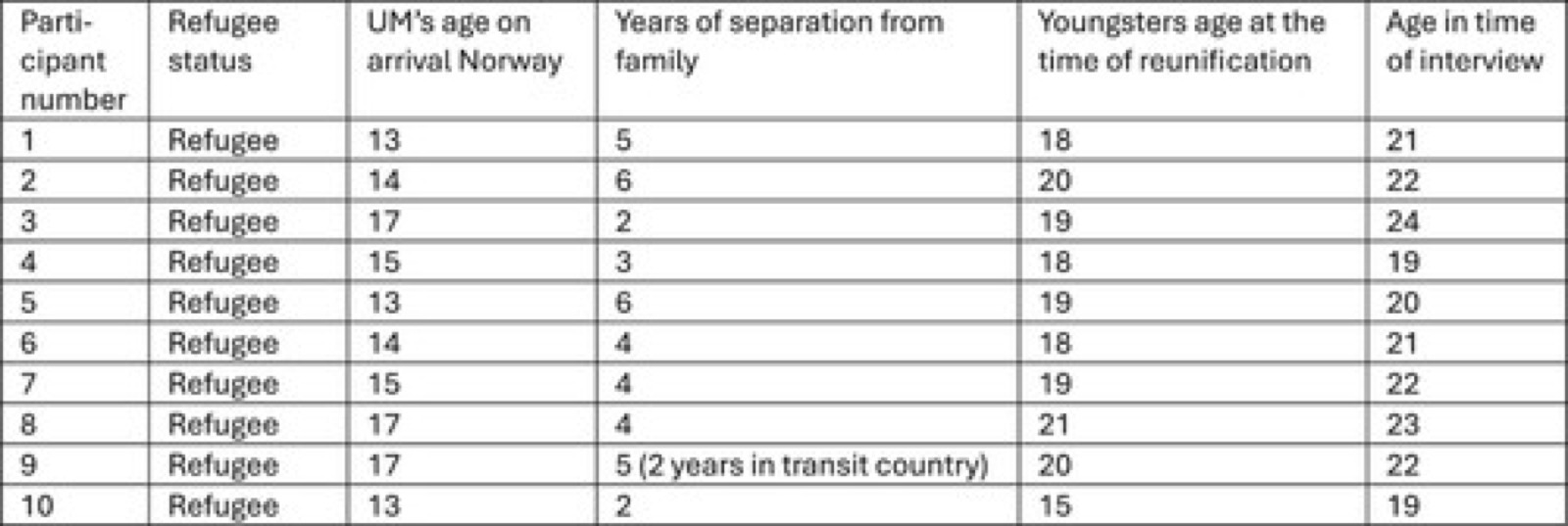
The Norwegian sample consists of 10 youngsters (eight male and two female) who first arrived as UMs but had been reunited with their parents and in most cases also siblings by the time of the interviews. The former UMs came from Syria, Afghanistan, Somalia, and Eritrea. The interviews included questions about their everyday life after family reunification, family dynamics, experiences of the reunification procedure, and experiences with the support offered.
All interviews were conducted in the local language (Dutch or Norwegian) due to the youngsters’ language skills. They were audio-recorded and transcribed verbatim.
Analysis
The two datasets were analyzed separately following a thematic reflexive approach (Braun & Clarke, 2022) starting from the research question, What tasks and responsibilities do youngsters take on for the family during the process of reunification? Transcripts were read repeatedly, and several themes related to the research question were identified separately for both datasets. Then, all researchers met and presented their preliminary analyses. The themes from the two datasets were thoroughly discussed by all four authors, and the authors agreed on one overarching theme that unified the common tendencies in the two datasets – describing youngsters’ (altered) responsibilities in the face of family reunification (‘New responsibilities and roles’). Upon this selection, the authors jointly identified three subordinated codes that are presented in the results section (see Figure 4).

Ethical considerations
The Belgian research protocol was approved by the Social and Societal Ethics Committee of the KULeuven. The Norwegian research was approved by the Norwegian Agency for Shared Services in Education and Research (SIKT) as well as the researchers’ own institution. All participants in both countries provided oral or written consent after a comprehensive explanation of the study and their rights as participants in the project. Consent forms and interview guides were approved by the national committees. Efforts were made to conduct the interviews under protective circumstances, acknowledging the possibility of retraumatization (De Haene et al., 2010). Thus, the young people were offered the possibility to talk about the interview experience afterwards, both with the interviewer and with the intermediary caseworkers. Interviews were carried out by experienced researchers with a background in social work. All participants were granted full anonymity. All names in this article are fictitious, and other possible identifying information was removed.
Results
Despite different contexts and different social and political systems, all youngsters mentioned repeatedly that family reunification impacted their roles and responsibilities. In particular, three domains of responsibilities became evident through the analysis. They are described in depth in the following sections (see Figure 4).
Navigating the family reunification procedure
After completing their migration trajectory in search of international protection, many youngsters in our study felt a strong responsibility to organize their lives around the goal of family reunification, which was formally on hold until they were granted international protection. While facing extensive waiting times, they had to cope with expectations from their family on top of all the integration and migration challenges. Rezwan, an Afghan who arrived in Belgium when he was 16 years old, talked about the burden of waiting, which impacted his education:
When I did the first interview I had to wait almost eight months for the second interview. [After that] I had to wait almost four months and twenty days for the answer. I was really tired, I left school. That was just because of the waiting. Are you going to get ‘your positive’? Can I stay or not? And I had stress from my family on the other side, which was hard. After four months and twenty days, my guardian called me, I have good news for you, you have received positive. I was really happy. But then there was stress again. I quickly told my guardian, ‘I’m about to turn eighteen, and I must hurry.’ She said, ‘Okay,’ and she’s applied for family reunification and all that. She has done a lot, she has made an appointment at the embassy in Pakistan and my family has been there and the day my family has been there, the day after I turned eighteen. That waiting … I was really, how do you say that in Dutch, … I didn’t know what to do. I quit school, that was really hard, and I didn’t feel like going to school or working, or eating or anything.
Our parents know each other now. That’s very nice, because now they help each other. Only her mom is there [in Kenya]. She is a mother alone with many children and her mother has a baby (…). I ask my dad if he can please help. They already met in Kenya. And my guardian also helps her guardian. It is now much easier to go to the embassy for the papers because there was already a nice example for her file. The family could ask her, ‘What was that like, where did you get that, where is that?’
The processes of family reunification dominated many choices the youngsters made. For example, they often felt encouraged to take on what are typically considered ‘adult roles’ in Western societies, including finding employment or engaging with their procedures and lawyers. The reunification process itself entailed administrative, travel, and housing costs for the youngsters that quickly added up to large sums. Abdul, an Afghan minor who was granted refugee status in Norway during the pandemic, testified that he felt responsible for the cost of the procedure and that it put considerable stress on him:
I had to send them money, I had to pay when applying for family reunification, (…) I had to pay their tickets. I have saved every krone [currency] to have enough money, so they could have enough to travel to the airport … And this was during the pandemic, and several of the plane tickets I bought (…) the flights were canceled. I delivered the tickets, but the company didn’t return the money.
Looking after the family
The youngsters’ stories from their daily lives after their parents’ and siblings’ eventual arrival show how they took care of their family in many ways. Nora and Salman, two minors living in Norway, both said that they became mothers for their mothers.
The interviews also suggest that the youngsters started to fulfill parental functions already during separation and maybe even earlier, in wartime. In addition to managing all the tasks that come with the procedure, they tried to look after their parents’ and siblings’ well-being and worried for their safety. Rezwan (see above) deeply worried about the well-being of his family at a distance, but held out hope for them:
Also, about my family, we are three brothers and one sister (…) I’m the oldest in the family. I don’t have a mom. She died when my brother was born. She’s been to the hospital, with surgery and stuff. That was a little difficult. She was a bit of a weak lady, my mom. I also have a dad, three brothers and a grandpa. All three live in Afghanistan. My dad doesn’t live with my family. He lives in a place that no one knows. I’m not allowed to say that either, because that’s dangerous for my dad. (…) But I find it super hard to say to Dad: Can I help you? I always say positive things. Everything will be fine. I’m busy here with family, with the embassy, but actually I don’t do much here. I’m still little here, one week ago I turned 18. I also go to school here.
In most families settled in Norway, only one of the parents came for reunification. This contributed to the son’s or daughter’s adult roles. Jamal was reunited with a widowed mother who suffered from cognitive failure after an accident. In the interview, he repeated the word ‘responsibility’ again and again: ‘I have responsibility for my family; my mother is a little sick.’ Jamal talked about joining his siblings to parent-teacher conferences and about how he explained his role to the teacher: ‘I said: We don’t have a father, and I am responsible for my family. (…) If a person is alone, there is not so much work. When we are four, you are responsible for all.’ In addition to his statements on responsibility, his nonverbal language during the interview suggested that he was proud of his crucial function in the family and his ability to manage the responsibility.
Selma’s father was also dead, and she obtained family reunification in Norway with her mother and five younger siblings. The following quote illustrates how Selma compares her new role after her mother and siblings arrived to the role of a family father, describing it as a comprehensive role:
Dad was the one who did everything for us. Then, when he died, and when I came to Norway, I became responsible like Dad, doing everything. I thought: (…) If you don’t send money to your family today, they have nothing to eat, they can’t have a place to live. So, you must do your job (…) Yes, I became an adult early. I am saying that often. (…). It is good for me that I became responsible early – when I was 16. For me it is normal, the way I did it. It is totally ok.
We must pay the rent, we have to pay electricity, and the children need shoes, clothes and everything. (…). So, I ask my siblings daily about what they have done, what happened in school, did anyone bother you, like that. I always ask, because my mom doesn’t know so much about this. So, I am asking them a lot.
Managing the family’s integration process
Some youngsters experienced being given tasks that they felt were the caseworkers’ responsibilities, to compensate for system deficits. For example, Naim from Norway had many examples of duties he saw as imposed on him by professionals and which he considered to be their responsibility. One task was connected to his father’s health problems, and Naim came up with a very specific example of how the caseworker handed over tasks to him:
Then he (Dad) talks to the case worker (…), and she says that if he needs medicine, ‘ … you can go home and your son can call the doctor to get a prescription.’ And then Dad comes to me. How can this happen?
I have lost something. I have lost the ability to enjoy life, my everyday life. (…). Yes, due to pressure and stress and responsibility over a very long time. I am down, very deep down. I can’t go to school. (…). So now, I feel like a sick person who is struggling mentally. (…). I don’t feel as normal as all these people walking in the streets or in the school (…). And I have not felt like this before. So – to get this heavy responsibility for my family has changed me. I have become another person, who is weak, actually. (…) So – my direction in life has changed because of this stress and the responsibility I had to deal with.
Then, suddenly Mum came (…) and it turned out … I don’t know how to describe it, but I was thrown into a huge ocean, and I couldn’t swim. It actually is like that. I had to take lots of responsibility for my mom. Suddenly, I became her mother, while I still go to school.
Formal and informal rules and institutional practices in the society of arrival clearly affected youngsters’ role in the family. Salman, living in Norway, described how he was longing to be a son in the family after so many years alone, but for him, the happiness he felt about the reunification was overshadowed by duties:
After they came here and I actually should have time with them, then all the duties came. Should I be an interpreter or the adult who … ? (…) My mother got used to asking me more than the caseworker. She did not feel confident asking him. (…) Everything had to go through me. I would like to be in a role as a child or young person who finally got some time with my family, but I found myself in a role as an adult who had to look after them. I wish the system were better in this sense. (…) So – in a way I became the mother of my mother.
Most youngsters experienced enormous relief when their parents and siblings arrived, but this was accompanied by stress, since a lot of responsibility was placed on their shoulders. Shireen, a Syrian girl who was 17 years old when she arrived in Belgium, migrated with her adult brother, while seven older sisters stayed behind. Her parents were quite old when they arrived. She testified:
Family reunification was also difficult because of their age. Because they don’t have a good command of the language. And they can’t write well. From here I was able to help him a bit with the money and stuff. And when they came I did the translation … for the visit to the doctor and so … and the paperwork.
Discussion
This study contains several examples of how UMs and former UMs faced new roles and responsibilities throughout the process of family reunification. The social and political context of the youngsters’ life and institutional arrangements, such as bureaucratic systems and local practices, all contributed to producing expectations and obligations for the youngsters that they needed to relate to in one way or another. The scant research on parentification in refugee minors has mostly focused on the microlevel of family relations and responsibilities, leading – although often unintentionally – to the stigmatization of refugee parents and the victimization of refugee children. Our research findings illustrate that a range of institutional thresholds are produced through rules, regulations, and social work practices related to family reunification processes. These form the premises for how family life is reconstructed and how new roles and positions within the family are negotiated and performed.
Inspired by an institutional perspective, we thus adopt the term ‘institutionalized forms of parentification’ (see Van Acker et al., 2024). Using this term, we aim to draw attention to the impact of migration policies, arrival infrastructures, and social work practices on family dynamics and the complex relations between youngsters, families, and social work. The institutional perspective directs attention to how rules, norms, and cognitive beliefs guide and frame human conduct and organizational practices through enduring social structures within different contexts (Scott, 2013). Institutions operate at different levels of jurisdiction, from the global system to localized interpersonal relationships. In a social constructivist sense, institutions will produce the context in which relations between the youngsters and their family members are negotiated at a distance, through the process of family reunification, and ‘nearby’ (in a physical sense) after the family has arrived. For example, in Norway, state funding to the local government is the same whether a refugee family comes for family reunification or arrives together (Bergset et al., 2024). Still, there are local practices discriminating against reunited family members compared to other refugee families (Johansen & Tørrisplass, 2024). When the sponsor is a son or daughter, this practice seems even more problematic and can be perceived as an example of local, institutionalized practices that produce parentification. The narratives of some of the youngsters above show a lack of professional support, which produced serious consequences for some of them.
Rules, regulations, and social work practices, together with norms and beliefs about family life in society and different cultures, shape how familial relations are practiced and change during the reunification and reintegration process. For social work practice with reunited refugee families, knowledge about this will be important in adjusting and targeting help and support. Some youngsters in the current study did not ask for more support but perceived their responsibilities as a natural part of the reunification process. Some described having parents who could support them. The family burdens on the youngsters differed, and so did local organizational welfare practices. Additionally, it is likely that norms and cognitive beliefs played a part in the youngsters’ perception of their increased responsibilities, and support systems may too easily utilize these. These young people may become professionals’ assistants in the latter’s integration work with the family, because it is easy to ask them or because the youngsters take the initiative to carry out tasks not done by the professionals. This sums up some of the complexity that surrounds family reunification in cases where the youngster came first, which makes up the context of the social work practice.
Strengths and limitations
The study builds on the narratives of 25 youngsters who have unique lived experiences with a family reunification process. It contributes with firsthand knowledge to an understudied research field, with the potential to inform policy, practice, and further research. The 25 youngsters were living in two countries, Belgium and Norway, with different political and institutional systems. Both countries adhere to the legal jurisdictions of the Family Reunification Directive (Council Directive 2003/86/EC, 2003, Recital 8; see Council of the European Union, 2003) and the Convention on the Rights of the Child (UNICEF, 1989). The inclusion of young people living in two countries made it possible to increase the number of research participants, thereby broadening the scope of the study. Moreover, the inclusion of two nations in the study design increases the possibility to transfer the study’s results to other, similar contexts. However, due to the qualitative design, there are limitations to generalization that need to be addressed.
Another limitation is the age range of the youngsters. In the Norwegian project, all youngsters were above the age of 18 at the time of the interview, while in the Belgian sample, the youngsters were between 13 and 22 at the time of the interview. The differences in age meant that the youngsters had different experiences. While most Belgian young people were in the process of family reunification, Norwegian youngsters could talk about both their experiences during the process and their life with the reunited family. As such, the breadth in experiences can be perceived as a strength accomplished by unifying the two datasets. However, neither of the studies included questions about the youngsters’ family life before migration. Such perspectives could add to our understanding of how cultural beliefs and norms impact family life, roles, and responsibilities and should be included in further research.
Despite the differences in local policies and bureaucratic systems in Belgium and Norway, the researchers were surprised by the similarities in the youngsters’ experiences. However, the special characteristics of the two national states included in the study should be taken into account, and the study’s findings must be interpreted with caution in this regard. The introduction of this article contains a detailed explanation of the research context to equip the reader with the relevant knowledge for understanding the study’s results in the right context.
Directions for further research, social work, and policies
We recommend further comparative research that systematically examines how different welfare state contexts, policies, and social work practices impact UMs’ experiences of being reunited with their families. Moreover, the current study’s findings highlight the complex interaction between institutional rules, regulations, and social work practices, which are important elements in the family reunification process that influence familial relations and practices. This knowledge is an important supplement to most prior research on parentification in the family migration context from an individual and family perspective (see, e.g. Oznobishin & Kurman, 2009; Walsh et al., 2006).
Based on the current finding that the institutional aspects of parentification define and determine the structural boundaries of family reunification, we call for critical awareness of the structural policies in which family reunification and its practical aspects are regulated. This requires attention to the political role of social work with refugee families. First, social professionals need to intervene in the complex and transnational assemblage of legal, administrative, and political issues in family reunification while engaging in the everyday management of these issues within the family. In doing so, they face the challenge of navigating between the institutional context and the reconstituted family to understand the youngsters’ responsibility. This implies taking up a political role. Social professionals should engage in ‘policy practice’ (Feldman, 2020) to influence and transform the policies at hand – and at work – on family reunification. Second, we urge social workers to mobilize the lifeworld stories of UMs to contest – and thus politicize – the dominant definitions, boundaries, and institutions at work in producing injustice and vulnerability for UMs during and after family reunification (Naert et al., 2023).
Complexe Systémique: key points
The article usefully shifts the question: parentification is not only a family matter; it can be manufactured by waiting times, funding rules, counters and service habits. When the caseworker hands the son the task of calling the doctor, role reversal does not arise in the family; it is deposited there. For systemic practice, the stakes are twofold: include institutions in the hypothesis, and avoid turning these young people into convenient assistants of integration work. Note the valuable contrast between Jamal’s or Selma’s pride and other young people’s collapse: the same burden can sustain or break depending on whether it is recognised, shared or imposed. The study is qualitative, limited to two countries, and says nothing about family life before exile, nor about the parents’ voices. Read alongside the article on the emotional experience of childhood parentification, and the article on mobility and migration in the systemic approach.
Notes from the original
Acknowledgments. We are most grateful to the 25 youngsters who shared their experiences with us.
Disclosure statement. No potential conflict of interest was reported by the author(s).
References
Bacigalupe, G., & Parker, K. (2015). Transnational connections through emerging technologies. In C. Suárez-Orozco, M. M. Abo-Zena, & A. K. Marks (Eds.), Transitions: The development of children of immigrants (pp. 61–79). NYU Press.
Baldassar, L., Baldock, C. V., & Wilding, R. (2007). Introduction: Transnational caregiving. In L. Baldassar, C. V. Baldock, & R. Wilding (Eds.), Families caring across borders: Migration, ageing and transnational caregiving (pp. 1–16). Palgrave Macmillan.
Behrendt, M., Lietaert, I., Bal, S., & Derluyn, I. (2024). Coping strategies of unaccompanied refugee minors shortly after arrival in Belgium. Transcultural Psychiatry, 61(1), 47–59. https://doi.org/10.1177/13634615231165138
Bergset, K., Husabø, G., Udberg-Helle, C., & Reime, M.A. (2024). Etterlengta familieliv og tungt ansvar: unge flyktningar si erfaring med hjelpeapparat og regelverk ved familiegjenforeining med foreldre og sysken. https://doi.org/10.18261/tfv.27.2.1
Bonjour, S., & Cleton, L. (2021). Co-constructions of family and belonging in the politics of family migration. In E. Carmel, K. Lenner, & R. Paul (Eds.), Handbook on the governance and politics of migration (pp. 161–172). Edward Elgar Publishing.
Braun, V., & Clarke, V. (2022). Thematic analysis: A practical guide. Sage.
Bryceson, D. F., & Vuorela, U. (2020). Transnational families in the twenty-first century. In D. F. Bryceson, & U. Vuorela (Eds.), The transnational family (pp. 3–30). Routledge.
Council of the European Union. (2003). Council Directive 2003/86/EC of 22 September 2003 on the right to family reunification states. Official Journal L 251, 3 October 2003, pp. 12–18, https://eurlex.europa.eu/LexUriServ/LexUriServ.do?uri = CELEX:32003L0086:en:HTML.
Crafter, S., & Iqbal, H. (2022). Child language brokering as a family care practice: Reframing the ‘parentified child’ debate. Children & Society, 36(3), 400–414. https://doi.org/10.1111/chso.12485
Dabbagh, T., Roer-Strier, D., & Kurman, J. (2017). Perspectives on filial responsibility among uprooted families from South Lebanon. Journal of Research on Adolescence, 27(3), 506–520. https://doi.org/10.1111/jora.12290
Dearden, C., & Becker, S. (2004). Young carers in the UK: The 2004 report. Carers UK.
Debruyne, P., Van Acker, K., Geldof, D., Schrooten, M., Gómez-Ciriano, E. J., Dedotsi, S., & Cabiati, E. (2023). Transnational dynamics of family reunification: reassembling social work with refugees in Belgium. In Migration and Social Work (pp. 95–111). Policy Press. https://doi.org/10.51952/9781447361831.ch006
Debruyne, P. (2024a). Reassembling the right to family reunification for refugees in Belgium through social work practices of welfare bricolage. In E. Desmet, M. Belloni, D. Vanheule, J. Verhellen, & A. Güdük (Eds.), Family reunification in Europe (pp. 296–314). Routledge.
Debruyne, P. (2024b). Gezinshereniging onder druk. Transnationaal sociaal werk [Family reunification under pressure. Transnational social work]. Antwerpen: Epo Uitgeverij.
De Haene, L., Grietens, H., & Verschueren, K. (2010). Holding harm: Narrative methods in mental health research on refugee trauma. Qualitative Health Research, 20(12), 1664–1676. https://doi.org/10.1177/1049732310376521
De Haene, L., Loots, G., & Derluyn, I. (2014). Vluchtelingenkinderen en -jongeren. In H. Grietens, J. Vanderfaeillie, & B. Maes (Eds.), Handboek jeugdhulpverlening: deel 1: een orthopedagogisch perspectief op kinderen en jongeren met problemen (pp. 369–398). Acco.
De Hertog, S., & Belloni, M. (2023). Fraudulent families? Investigating the role of paperwork in the assessment of refugees’ family reunification in Belgium. Journal of Immigrant & Refugee Studies, 1–15. https://doi.org/10.1080/15562948.2023.2271864.
Delgado, V. (2020). Children of immigrants as ‘brokers’ in an era of exclusion. Sociology Compass, 14(10), 1–11. https://doi.org/10.1111/soc4.12832
Dienst Vreemdelingenzaken. (2017). Kaarten voor vreemdelingen en verblijfsdocumenten afgegeven in het Kader van de gezinshereniging. Jaarlijkse statistieken 2010–2017. https://dofi.ibz.be/sites/default/files/2021-05/Kaarten%20GH%20-%20statistieken%202010-2017%20v2.pdf.
Eide, K. (2020). Barn på flukt : Psykososialt arbeid med enslige mindreårige flyktninger. Gyldendal.
Feldman, G. (2020). Making the connection between theories of policy change and policy practice: A new conceptualization. The British Journal of Social Work, 50(4), 1089–1106. https://doi.org/10.1093/bjsw/bcz081
Johansen, K., & Tørrisplass, A. T. (2024). Pain, obstacles and care: Unaccompanied minor and young refugees' challenges related to family separation and reunification. In Rebuilding family relations for children and youth separated from family (pp. 319–344). Cham: Springer Nature Switzerland.
Kraler, A., & Bonizzoni, P. (2010). Gender, civic stratification and the right to family life: Problematising immigrants’ integration in the EU. International Review of Sociology, 20(1), 181–187. https://doi.org/10.1080/03906700903525792
Lidén, H., Aasen, B., Seeberg, M. L., & Staver, A. B. (2020). Fra bosetting til voksenliv: Den kommunale tjenestekjeden for enslige mindreårige flyktninger (Report 2020: 1). Institutt for samfunnsforskning. https://hdl.handle.net/11250/2641091.
Lustig, S. L., Kia-Keating, M., Knight, W. G., Geltman, P., Ellis, H., Kinzie, J. D., … Saxe, G. N. (2003). Review of child and adolescent refugee mental health. Journal of the American Academy of Child & Adolescent Psychiatry, 43(1), 24–36. https://doi.org/10.1037/e318832004-001
Meloni, F. (2021). The limits of freedom: Migration as a space of freedom and loneliness among Afghan unaccompanied migrant youth. In A. Lems, K. Oester, & S. Strasser (Eds.), Children of the crisis(pp. 109–124).
Merla, L., Kilkey, M., & Baldassar, L. (2020). Examining transnational care circulation trajectories within immobilizing regimes of migration: Implications for proximate care. Journal of Family Research, 32(3), 514–536. https://doi.org/10.20377/jfr-351
Ministry of Justice and Public Security. (2008). Act relating to the admission of foreign nationals into the realm and their stay here (Immigration Act) (LOV-2008-05-15-35). https://lovdata.no/dokument/NLE/lov/2008-05-15-35.
Myria. (2020). Family reunification with beneficiaries of international protection in Belgium. May 2020. Federal Migration Centre. https://www.myria.be/files/Brochure_Family_reunification_-_International_protection.pdf.
Myria. (2022). Advies over gezinshereniging met begunstigden van internationale bescherming. Termijn en wijze van indiening van de aanvraag, toegang tot informatie, advies en professionele begeleiding, maart 2022. Federaal Migratie Centrum. https://www.myria.be/files/Advies_Gezinshereniging_termijn_indiening.pdf.
Naert, J., Debruyne, P., Van Bouchaute, B., & Roose, R. (2023). 'Listen very carefully, we will say this only once (again)' dead ends to politicisation in social work. The British Journal of Social Work, bcad266. https://doi.org/10.1093/bjsw/bcad266
Oznobishin, O., & Kurman, J. (2009). Parent–child role reversal and psychological adjustment among immigrant youth in Israel. Journal of Family Psychology, 23(3), 405–415. https://doi.org/10.1037/a0015811
Raghallaigh, M. N. (2018). The integration of asylum seeking and refugee children: Resilience in the face of adversity. In J. Bhabha, J. Kanics, & D. S. Hernández (Eds.), Research handbook on child migration (pp. 351–368). Edward Elgar Publishing. https://doi.org/10.4337/9781786433701.00036
Rousseau, C., Rufagari, M.-C., Bagilishya, D., & Mesham, T. (2004). Remaking family life: Strategies for re-establishing continuity among Congolese refugees during the family reunification process. Social Science & Medicine, 59(5), 1095–1108. https://doi.org/10.1016/j.socscimed.2003.12.011
Scott, W. R. (2013). Institutions and organizations: Ideas, interests, and identities. Sage Publications.
Smith, K., Raghallaigh, M. N., & Johnson, D. (2025). Careless hospitality: Family reunification in Ireland involving children and young people of international protection background. International Journal of Social Welfare, 34(1), e12604, 1–15. https://doi.org/10.1111/ijsw.12604
Strasser, E., Kraler, A., Bonjour, S., & Bilger, V. (2009). Doing family: Responses to the constructions of ‘the migrant family’ across Europe. The History of the Family, 14(2), 165–176. https://doi.org/10.1016/j.hisfam.2009.02.005
Tørrisplass, A.-T. (2022). ‘Dypet i livet mitt.’ Enslige mindreårige flyktningjenters erfaringer med familiegjenforeningsprosesser. Tidsskrift for velferdsforskning, 25(4), 1–13. https://doi.org/10.18261/tfv.25.4.2
Trickett, E. J., & Jones, C. J. (2007). Adolescent culture brokering and family functioning: A study of families from Vietnam. Cultural Diversity & Ethnic Minority Psychology, 13(2), 143–150. https://doi.org/10.1037/1099-9809.13.2.143
United Nations Children’s Fund. (1989). The United Nations convention on the rights of the child. https://downloads.unicef.org.uk/wp-content/uploads/2010/05/UNCRC_united_nations_convention_on_the_rights_of_the_child.pdf.
Van Acker, K., Fournier, K., & Geldof, D. (2024). On declining parental agency and institutionalized forms of parentification: Narratives of changing parenthood among refugee families and social workers in collective reception centres. European Social Work Research, 2(2), 150–167. https://doi.org/10.1332/27551768Y2024D000000014
Walsh, S., Shulman, S., Bar-On, Z., & Tsur, A. (2006). The role of parentification and family climate in adaptation among immigrant adolescents in Israel. Journal of Research on Adolescence, 16(2), 321–350. https://doi.org/10.1111/j.1532-7795.2006.00134.x
Reformatted republication of On the reconstruction of family life and ‘institutional forms of parentification': unaccompanied minors’ experiences with family reunification in Belgium and Norway, by Kari Bergset, Pascal Debruyne, Kaat Van Acker and Monika Alvestad Reime, European Journal of Social Work, vol. 28, no 5 (2025), doi: 10.1080/13691457.2025.2492852, under a CC BY 4.0 licence. Edition and layout: Complexe Systémique, September 2026 — the work has been modified under the terms of the licence. Neither the authors nor the publisher are responsible for this edition; the original version prevails.
This is the original article “On the reconstruction of family life and ‘institutional forms of parentification': unaccompanied minors’ experiences with family reunification in Belgium and Norway”, published in European Journal of Social Work (2025) under a CC BY 4.0 licence. Republished by Complexe Systémique: the author’s text is unchanged; only the presentation has been adapted for reading online, as set out at the head of this page.
Read the original articleHow to cite this article
Bergset, K., Debruyne, P., Van Acker, K., et Reime, M. A. (2025). On the reconstruction of family life and ‘institutional forms of parentification': unaccompanied minors’ experiences with family reunification in Belgium and Norway. Complexe Systémique. https://app.complexe-systemique.com/en_GB/articles/on-the-reconstruction-of-family-life-and-institutional-forms-of-parentification (Original work published in 2025 in European Journal of Social Work, 28(5), 1013-1026 (2025); republished in 2025 by European Journal of Social Work, https://www.tandfonline.com/doi/full/10.1080/13691457.2025.2492852)
To go further
- « Comme marcher sur du verre » : l’expérience émotionnelle de la *parentification* dans l’enfanceParentification experienced in childhood.
- Mobility and migration: rethinking the systemic approach in a globalized worldMobility and migration.
- Séances de thérapie familiale avec des *familles réfugiées* : une étude qualitativeFamily therapy with refugee families.
Related articles
 Scientific
Family group conference provision across the lifespan of child welfare intervention: A mixed-method realist-informed evaluation comparing three stages of welfare concern
Early help, child protection or children in care: among 155 UK families, experiences and outcomes of family group conferences vary very little by stage.
 Scientific
Internal Family Systems Therapy as Part of the ‘Family of Systemic Therapies’: A Critical Exploration of Systemic Practice in the Intra-Personal Domain
Does IFS belong to the family of systemic therapies? A critical exploration, grounded in a family court vignette, of systemic work with “parts”.
 Scientific
Implementing Family Group Decision-Making within statutory child protection social work in Scotland: Challenges and opportunities
Family group decision-making offered automatically in Scottish child protection: families find a voice, social workers doubt the plans, and everyone wants it offered earlier.
 Scientific
How Venezuelan mothers and their young children use storytelling to process immigration journeys
Seven Venezuelan mothers tell their young children about crossing the Darién: shared memories or superhero tales, six ways of facing fear together.