Red Sistémica · Crisis intervention
Psychological intervention in mass crisis. The terrorist attack on the Jewish community of Buenos Aires (part 2)
Second part of Jacinto Inbar’s article on intervention after the July 1994 attack in Buenos Aires. The author develops the model of hardiness — commitment, control, challenge, flexibility —, the social and community outreach strategies that go towards the people affected instead of waiting for them, and the phases and stages of psychological debriefing with survivors and rescue teams.
Note
To read the first part of this article, published in the previous issue of Perspectivas Sistémicas.
Developing hardiness (1) among the people affected by the attack
The experiences carried out with people affected by mass and natural disasters in certain Latin American countries, such as Colombia and Mexico, and with individuals and families who lived through acts of terrorism in Israel, tend to indicate that adopting certain concepts of hardiness (Kobasa, 1979), integrated into a psychoeducational and therapeutic model, can be useful as a preventive (Omer e Inbar, 1991) and post-traumatic (Inbar, 1992, 1994) intervention.
According to these authors, the development of certain “personality” characteristics is correlated with the capacity of some individuals to face stressful existential events, and might even account for it. The characteristics identified are: commitment and involvement, control, challenge and, we may add, flexibility.
Commitment and involvement
This characteristic refers to the development of a sense of significance and to the construction of meaning. It bears on cognitive appraisal (in the sense that the event lived through has a personal significance), it increases the feeling of identification with what is happening (not only with the pain, but also with the efforts of coping and recovery) and it allows a meaningful, non-personalised attribution of the event: in this way one avoids the negative and distorted attribution that consists in ascribing to oneself the guilt and the causality of the terrorist act.
Control
Control corresponds to the individual’s feeling of having an influence on their social environment, on events and on their own conduct during the crisis situation, as well as to the possibility of choosing, even in a limited way, between different options (such as confronting or avoiding).
Individuals who have developed a feeling of control over what is happening, or who perceive themselves as endowed with adaptive resources, will face stressful, anxiety-provoking or traumatising situations more effectively than those who appraise themselves as devoid of resources and of control capacities. Even in extreme situations such as acts of terrorism, those who possess a feeling of control, however relative, face them more effectively and express fewer symptoms of post-traumatic stress (Inbar, 1992). Different types of control can be developed by means of various cognitive techniques (Inbar, 1992):
a
Decisional control
The capacity to decide autonomously between different courses of action in order to cope with stress.
b
Cognitive control
The ability to interpret, appraise and integrate different types of stressful events into a plan, and thereby to deactivate their negative effects (Averil, 1973).
c
Motivational coping control
The ability to develop a wide repertoire of responses accessible in the face of stress, the product of a motivation to acquire them and to practise them on various occasions (Averil, 1973; Inbar, 1992, 1994).
Challenge
This characteristic refers to the perception of the crisis situation and of facing it as an emotional, behavioural and social challenge. Those who perceive it only as a psychological threat tend to face it in a maladaptive and ineffective way, and display more symptoms of post-traumatic stress disorder (PTSD). Despite the negative aspects of the crisis produced by acts of terrorism, such as that of the AMIA, it is possible, in the face of objective reality, to perceive the situation as a new opportunity for growth, development and learning. This therefore requires an open attitude and flexibility, for a renewed experimentation.
These “personality” characteristics can be educated, they can be trained and sustained by means of psychoeducational or therapeutic interventions, at the pre-warning and post-impact stages respectively. Adopting this model in the present situation would mean encouraging individual, group, family and community programmes that increase the commitment and involvement of the members of the various target groups: for example, active participation in programmes for the rehabilitation of the community.
The feeling of control can be developed by means of psychoeducational programmes centred mainly on cognitive, emotional and behavioural self-control (Mahoney, 1977; Melchenbaum, 1984; Inbar, 1988). But also by means of dynamic projects, in which the affected person is an active protagonist through demonstrations and expressions of community solidarity.
The challenge component is self-evident. It is a matter of facing reality, of carrying on despite what has happened, of changing what can be changed, of maintaining community education and of strengthening tolerance and democracy in the country, preventing harmful acts such as that of July from once again tarnishing the image of Argentine society.
Social and community outreach strategies (2)
The concept of reaching out corresponds to a social and community strategy aimed at identifying the people who may have been affected by the event and may need support, and at providing them with psychological counselling or assistance. Among the guiding principles of the crisis approach, the principle of proactivity stresses the importance of going towards the people affected, directly or indirectly, with diligence and effectiveness, rather than waiting for them to come forward spontaneously and ask for help.
In the case of the AMIA attack, affected people were identified in different circles of influence: the injured, the bereaved, colleagues at work or at school. During the seminars organised subsequently, we quickly identified target groups that had not previously been defined as relevant. For example, the survivors of the Holocaust, in whom the complete destruction of the community building brought significant traumatic experiences back to life.
Something similar occurred with certain combatants of the Falklands war. Under the supervision of the author of this article, a therapist carried out a series of interventions that proved useful in holding and supporting these former combatants, and in allowing certain cognitive and emotional changes in those who, following the attack, relived highly stressful and anxiety-provoking situations undergone during the fighting of 1982.
In some cases, when for various reasons (priority, awareness, available resources) reaching out could not be implemented in due time with secondary target groups, it can be effective to begin it even several months after the impact and to direct it towards affected people or survivors not identified until then: employees of the surrounding shops, injured or not, the bereaved, people who had to identify bodies, members of the rescue teams, and so on. The experience conducted with young people who took part in the rescue activities and with members of the Argentine rescue team confirms the relevance of this approach.
For the outreach process to be effective, it is necessary to:
1
Identify the affected population
In the broadest sense of the term.
2
Communicate and inform
Provide relevant communication and information about the existence and the accessibility of the available mental health resources, not only through the media, but also through community and health agents (priests, rabbis, lawyers, etc.). This requires a strategic approach and means of “community recruitment”, of supervision, of reinforcement and of effective involvement.
3
Develop methodologies
In order to increase the readiness and the motivation of survivors and affected people to begin or to continue the process of rehabilitation.
4
Spot the “case individuals”
Within the community: for instance the “hero” who neither acknowledges nor accepts his emotions as legitimate or normative, and who plays certain roles first reinforced by the social entourage, then stigmatised, which makes his recovery or his treatment more difficult (Inbar, 1992, 1994).
Adopting and implementing the model set out here also has preventive aims. It should be remembered that some individuals present no “abnormal” symptoms or manifestations in the short term, in the period immediately following the impact; taking this possibility into account, it is therefore useful to apply reaching out while seeking to identify potentially affected people, as described above.
The factors that influence outreach activities
The recovery environment after the event
A community that legitimises recourse to professional mental health resources, to counselling and even to therapy makes reaching out easier, by avoiding possible stigmatisation, the social labelling of “needy” or “incompetent”.
Cultural attitudes towards mental health
In connection with the above, cultural attitudes towards mental health take on importance: to what extent do the beliefs, norms, expectations and convictions of the people affected, of their relatives and, most particularly, the messages of community and religious leaders encourage or hinder the effective use of psychoeducational and health services? In the case of Buenos Aires, those who had relevant and adequate experience and knowledge — for example, having taken part in seminars given by followers of Pichon Rivière, or having attended training courses for community leaders — showed greater confidence, greater readiness to relearn, and made better use of mental health services.
The probability that the event will be repeated
This factor is of fundamental importance, inasmuch as the statements of those in charge of the security forces, the preventive measures (such as the concrete barriers in front of sensitive buildings, which can significantly reduce the destructive effects of another attack) or the relative impunity of the perpetrators and accomplices of the attack can reactivate or sustain the trauma.
Reaching out strategies must have continuity (for at least eighteen months) and accessibility (that is, people must be able to reach and use mental health services easily); they must avoid stigmatisation (which consists, among other things, in making the victim responsible for their own victimisation); they must adapt to the language and the idiosyncrasy of the different target groups; they must inspire credibility and choose, with the right timing, the appropriate circumstance, the one in which the people affected require it, in particular when they can come into contact with their dysfunctional or maladaptive cognitions, emotions and conducts, which then makes change, learning or the therapeutic process possible.
Those with experience of mass disasters know that, at certain phases of the post-impact, when the people affected directly or indirectly feel intense emotions (shock in the survivors; bitterness, anger and resentment in the relatives; euphoria in the members of the rescue team), psychological help has a limited scope and concentrates on holding, support, ventilation and abreaction. It is only after some time, when these emotions give way to others, such as depression and anxiety, that psychological help is really considered and potentially effective. And this occurs precisely at the moment when reaching out and psychotherapy services tend to withdraw, because of the restriction of resources — not only budgetary, but also political, motivational or conceptual. The same is true of international aid, which withdraws, diminishes or disappears entirely once its objectives have been reached (objectives that are sometimes political and not necessarily substantial, that is to say professional).
Another important condition for the development of reaching out is the expectation of an end and of results: in other words, the belief, in the affected person, that psychotherapeutic interventions are in general effective and that they come to an end after a relatively clear span of time, giving way to a reintegration, as rapid and effective as possible, into the tasks that were theirs before the event or the traumatic experience.
Key takeaway
The principle of proactivity reverses the usual logic of the provision of care: one does not wait for the request, one goes towards it. But this movement still has to last — the author speaks of eighteen months at the least — for psychological help becomes truly operative at the very moment when the services, for their part, withdraw for want of resources.
The stages of psychological debriefing
As we mentioned in the previous issue of Perspectivas Sistémicas, psychological debriefing is used as an immediate intervention with the survivors of the event and the members of the rescue and assistance teams. The intention is to prevent the appearance of long-term psychological symptoms and to allow survivors, rescuers and assistance teams to reach a cognitive and emotional coherence of what they have lived through. This technique comprises three distinct phases, linked to the objectives mentioned above:
1
Psychological ventilation
Phase of psychological ventilation of the people affected and of the rescue team: expression of the emotions and appraisal of the stress and anxiety potential.
2
Focus on the symptoms
Phase centred on the symptoms arising from the experience lived through during the event. It offers the opportunity to obtain support and to discover the normativity of the emotions, the feelings and certain conducts, avoiding the self-labelling of “abnormality”.
3
Activation of resources
Phase of activation of coping resources. It is a matter of identifying and promoting the cognitive, emotional, behavioural and social potential of the individual. At the same time, by continuing to provide relevant information on the various aspects of individual, family and community responses and reactions in a situation of mass disaster, one encourages the concentration of efforts on the preparation of a future programme of active adaptation and of adoption of effective coping resources.
Those who implement psychological debriefing as a preventive and therapeutic technique usually divide these three phases into different stages (Mitchell, 1983; Hodgkinson, 1988; Inbar, 1994):
a
Introduction
Introduction of the group facilitator (or therapist) and of the members of the group (who sometimes belong to different groups of volunteers, rescuers or affected people).
b
Fact stage
A large part of the emotions are the product of an “unreal reality” that becomes real through its consequences (Thomas y Thomas, 1918).
c
Cognition stage
This stage serves as a first, non-systematic diagnosis of the individual’s attributions, images, appraisals and predictions. Although psychological debriefing does not aim at the systematic modification of cognitions, it is sometimes possible, in our experience, to change during or through this technique certain “distorted” thoughts (for example catastrophic thoughts of the type “this is the end of our security”), to reattribute certain facts, to reframe situations or to reappraise capacities, in the face of statements such as “we deserve what happened” or “we do not have the resources to face the tragedy”.
d
Reaction stage
Recalling what was done: the conducts that served and the behaviours that proved ineffective. This stage is of crucial importance, since it frequently serves to lessen the feeling of guilt so common among the people affected, the survivors or the participants in the rescue activities. Other members of the group can help to confirm that the person acted in an effective, functional, appropriate and humanly understandable way.
e
Symptom stage
It makes it possible to discover that a given symptom is a common reaction among those who have lived through traumatising situations, with the ensuing feeling of normativity. It can serve to diagnose maladaptive manifestations that will call for a counselling intervention or a later therapy.
f
Teaching and learning stage
The cognitive model stresses the importance of these two fundamental processes (a kind of “teaching-learning” in Pichon Rivière’s sense). The affected or participating person learns about their cognitions, their emotions and their conducts; they differentiate what is functional and adaptive from what brings them unpleasant experiences or threatens their self-esteem, their perceived self-efficacy or their self-control. In certain cases, particularly within the rescue or health teams that took part in the event, one can teach and learn how to identify and mobilise social resources (creation of professional and social support groups; Caplan, G., 1988, 1993; Caplan, R. B., 1972; Inbar, 1988, 1994).
g
Stage of the return to the “here and now”
The emphasis of this stage is on what is happening in the present moment; it is a matter of integrating into the present what has been expressed and learned, at the level both of the individual and of the group (particularly when an established team is concerned).
h
Stage of preparation for the future
The individual perceives, feels, and may even understand and accept that they are no longer the same as before. The tragedy took place in reality; in a sense, denial is neither functional nor adaptive. The emphasis is on what should be done in order to be able to carry on, to put one’s plans into practice and to reach one’s objectives. At the same time, the person is prepared to accept the possibility of certain reactions and certain symptoms, legitimising recourse to psychological assistance should it prove necessary. At this point, the author usually includes the concepts and principles of hardiness and hopefulness, developed above.
What has just been set out makes it possible to observe the differences that exist between the models which privilege above all ventilation or abreaction and the model described here, in which fundamental aspects of the development of the feelings of self-control, competence, participation, commitment, involvement and psychological challenge are brought to the fore, to which is added the conviction that, despite the tragedy, we can carry on, in another way, growing and creating.
Notes from the original
(1) Other possible renderings of the term in the original language: “firmness”, “mettle” or “temperance”, “strength of spirit”, etc.
(2) In the original, the English expressions are kept and glossed: “to reach out”, to hold out a hand, to go towards; “outreach program”, a programme of extension, in the sense of social and community diffusion and approach.
(*) This article was published in issue no. 35 of Perspectivas Sistémicas, March-April 1995.
Who is Jacinto Inbar
Dr Jacinto Inbar is a clinical and organisational psychologist. He is an expert in crisis and mass-disaster intervention. He teaches at the Hebrew University of Jerusalem, in Israel. Other works by the author have appeared in Perspectivas Sistémicas no. 2 and no. 28.
This article is an English translation of “Estrategias de intervención psicológica en situaciones de crisis masivas. El atentado terrorista en la Comunidad Judía de Buenos Aires (2° parte)”, published by Red Sistémica (first published in Perspectivas Sistémicas, n° 35, mars-avril 1995). Translated and republished with the journal’s permission.
Read the original articleHow to cite this article
Inbar, J. (2022). Psychological intervention in mass crisis. The terrorist attack on the Jewish community of Buenos Aires (part 2) (Complexe Systémique, Trans.). Complexe Systémique. https://app.complexe-systemique.com/en_GB/articles/psychological-intervention-in-mass-crisis-the-terrorist-attack-on-the-jewish-community-of-buenos-aires-part-2 (Original work published in 1995 in Perspectivas Sistémicas, n° 35, mars-avril 1995; republished in 2022 by Red Sistémica, https://redsistemica.ar/2022/06/27/estrategias-de-intervencion-psicologica-en-situaciones-de-crisis-masivas-el-atentado-terrorista-en-la-comunidad-judia-de-buenos-aires-2-parte/)
To go further
- Psychological intervention in mass crisis. The terrorist attack on the Jewish community of Buenos Aires (part 1)The first part: the three-axis model and the guiding principles of post-impact intervention.
- Systemic therapy of resilience. Opening paths, from suffering to well-beingAnother way of thinking what Inbar calls hardiness, on the side of resilience.
- Community interventions. Interview with Celia FalicovGoing towards people rather than waiting for the request: community practice day to day.
Related training courses
 Short course
The suicidal crisis in adolescents and young adults
Training: assessing and supporting the suicidal crisis in adolescents and young adults. Clinical landmarks and systemic tools. In French.
Related articles
 Article
 First Psychological Aid for Families During War: Integrating the Narrative Approach With Emotionally Focused Therapy (EFT)
Three or four meetings for families living under the threat of war: telling their story before a witness, then repairing the attachment cycle disrupted by fear.
 Article
 Psychological trauma: what to do in the first 24 to 48 hours — Stéphanie Khalfa
Early intervention does not begin with a detailed account. Stéphanie Khalfa presents the nine-step MOSAIC emergency protocol: body, co-regulation and connection.
 Article
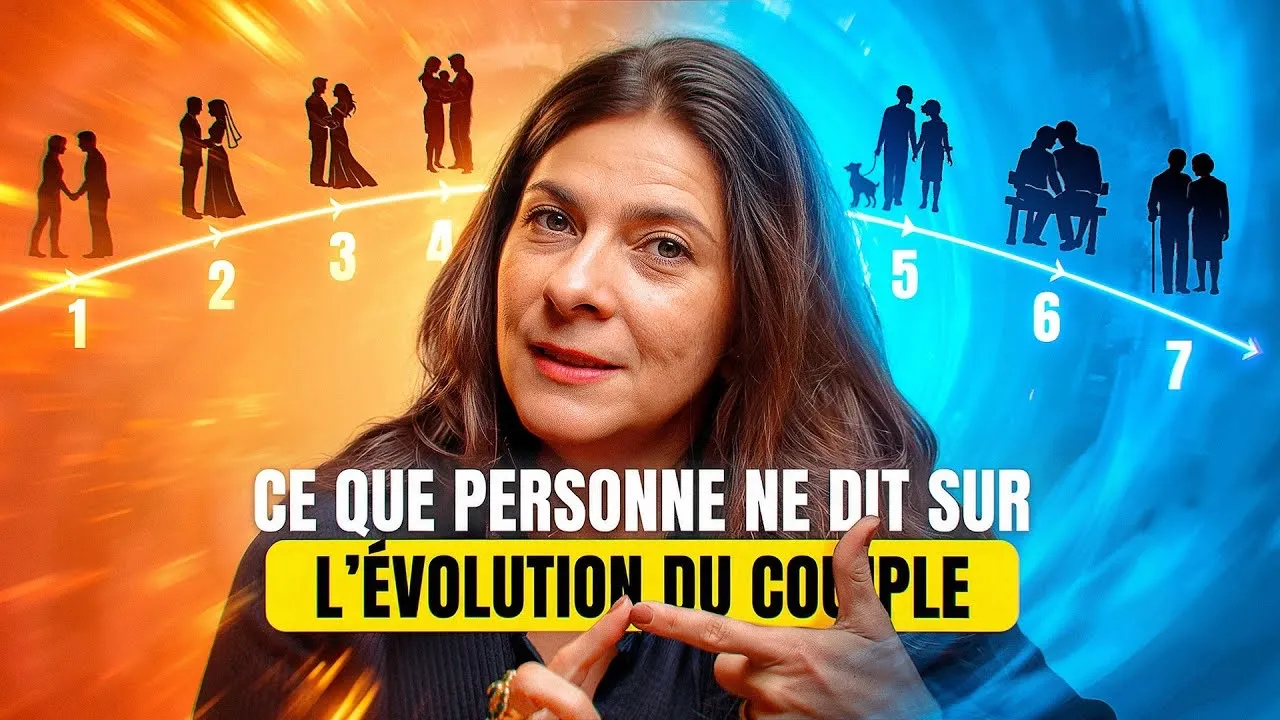
 The couple's life cycle: a clinical compass for navigating marital crises
A marital crisis may signal a passage rather than an exhausted love. Ivy Daure’s grid: eight stages, from first meeting to the bond’s continuity after a death.
 Article
 The craziest project of my career…
From university-taught detection to the systemic turning point, then the urge to pass things on: behind the scenes of Complexe Systémique, with two announcements.
Comments 0
Log in to join the discussion. Log in