AI-assisted translation
This version was translated from Portuguese by Complexe Systémique with the help of artificial intelligence. In case of doubt, the original version prevails.
Revista Brasileira de Terapia Familiar · Couples
Repercussions of experiencing high-risk pregnancy for pregnant couple
When a woman already living with diabetes or kidney disease becomes pregnant, the whole couple enters “high-risk” territory. Drawing on interviews with four couples followed at a university hospital in Minas Gerais, a team from the Federal University of Triângulo Mineiro describes the shock of the news, a routine that tightens, and a movement of mutual care that the men share to differing degrees.
Unofficial English translation. This article is a translation of Repercussões da vivência da gestação de alto risco para casais grávidos, by Maira Julyê Mota Fernandes, Ione Marques de Lima and Cintia Bragheto Ferreira, published in the Revista Brasileira de Terapia Familiar (ABRATEF), vol. 13, no. e0625 (2025), doi: 10.60114/rbtf.v13i1.153, under a CC BY 4.0 licence. Translated by Complexe Systémique in November 2026 with the help of artificial intelligence: the original Brazilian Portuguese text has been translated into English and reformatted, which constitutes a modification of the work under the terms of the licence. The paragraphs and headings are those of the journal, as are the interview excerpts set as block quotations; these excerpts, in informal spoken Portuguese, are translated in a spoken register; Table 1 is presented as a list; the text has been checked against the facsimile, as the automatic extraction was faulty; the end-of-article statements are grouped in the notes. The abstract is the authors’ own English version. This translation was made neither by the authors nor by the journal, who are not responsible for its content or for any errors. The original version prevails.
This fear may also have prompted a movement of mutual care within the couple.
Maira Julyê Mota Fernandes, Ione Marques de Lima, Cintia Bragheto Ferreira
Abstract
This study had as its goal to understand how couples deal with the repercussions of the wives’ high-risk pregnancy. Semi-structured interviews were done with couples, all residents of Minas Gerais, Brazil. The data analysis, guided by the social constructionist perspective, occurred through the transcription of the interviews, curious reading, and diving through the data, organized in two thematic axes: the repercussions of the discovery of the pregnancy, and the actions of the couples when faced with the risky pregnancy. The high-risk pregnancy awoke feelings related to fear and insecurity, in addition of changes in the couples’ routines and conjugality, demonstrating the need of attention in family planning and care to the partners involved in their wives’ pregnancy.
Keywords: High-risk pregnancy, Marital relationship, Chronic disease.
Introduction
Pregnancy can be understood as a period of physiological, emotional and social change in the life of a woman (Brasil, 2012) and her family (Araújo et al., 2021; Penteado & Edmundo, 2024). As a physiological phenomenon, pregnancy usually proceeds without complications. In some cases, however, when the woman has a chronic condition, pregnancy can cause complications for both mother and fetus (Azevedo et al., 2020; Brasil, 2012; Fernandes & Ferreira, 2020; Gregorio & Mariot, 2019; Varela et al., 2017; Vieira et al., 2019).
Chronic diseases are associated with multiple factors and are often characterized by a gradual onset and a long or indefinite duration. Their clinical course may change over time, with periods of acute exacerbation, and may lead to disability. There is also a risk of mortality, a strong association with comorbidities, and frequent hospital admissions. Living with a chronic disease therefore often entails a loss of quality of life (Brasil, 2013). In a high-risk pregnancy, emotional difficulties may also arise from the demands that pregnancy brings (Coelho et al., 2017; Fernandes & Ferreira, 2020).
A pregnancy is high-risk when the life of the mother and/or the fetus and/or the newborn is at risk (Brasil, 2012). Women with pre-existing clinical conditions, such as heart disease, diabetes mellitus, hypertension or anemia, as well as women over 35 or adolescents (Varela et al., 2017), aged 12 to 18 (Brasil, 1990), are more likely to develop pregnancy complications.
Varela et al. (2017) note that the number of pregnancy-related health problems has been rising worldwide. This increase is thought to be associated with changes in the population’s lifestyle, as well as with better diagnostic practices and early assessment of factors that may affect pregnancy (Lima et al., 2015). In view of these repercussions, it can be said that going through a pregnancy may give rise to apprehension about its outcome, especially in high-risk cases (Fernandes & Ferreira, 2020).
Couples’ feelings about the wife’s pregnancy
According to Chiodi et al. (2020), women who go through a high-risk pregnancy are more likely to develop emotional difficulties, such as anxiety, depressive feelings, guilt and insecurity, because they face situations over which, most of the time, they have no control. In this respect, Gadelha et al. (2020) and Gregorio and Mariot (2019) highlight the importance of family participation and support in a high-risk pregnancy, showing that women who were supported by their partner reported greater satisfaction with and acceptance of the pregnancy.
In this context, the partner plays an important role by showing companionship, but also experiences feelings such as guilt, resentment and exclusion, which are often similar to the woman’s emotional reactions (Brasil, 2012). Partners’ participation can therefore be beneficial throughout the pregnancy, and at the time of birth as well (Brasil, 2013).
Still with regard to partner support, Antoniazzi et al. (2019), investigating social support, identify partners as the main source of support. In this respect, Semente et al. (2016) state that the partner’s participation goes beyond attending prenatal examinations; it includes actions of emotional support for his partner. According to Antoniazzi et al. (2019), this may help reduce depressive symptoms and maximize the partner’s feelings of security and calm (Chiodi et al., 2020; Couto et al., 2019; Parada & Tonete, 2009; Semente et al., 2016).
It is worth stressing that the biopsychosocial changes of the pregnancy and postpartum period (Soncini et al., 2019) may also affect the partner, who may experience anxiety, insecurity, exclusion, jealousy, and even physical and psychological symptoms similar to those of his partner (Araújo et al., 2021; Barbosa et al., 2013; Ferreira et al., 2019; Santos et al., 2008). The partner may therefore become vulnerable during this period (Barbosa et al., 2013). Pregnancy and birth can thus be distinctive events in the couple’s life, and when this process involves a high-risk pregnancy, partners tend to share similar feelings (Azevedo et al., 2020; Semente et al., 2016).
In this regard, Araújo et al. (2021) suggest that health services are not yet prepared to support active paternal participation. This lack of support may give rise to insecurity and lower participation by the partner, which shows the need for professionals who are attentive and responsive to these needs, listening and answering questions.
Hence the importance of policies that support and promote safe motherhood, aimed at reducing the likelihood of adverse outcomes such as maternal (Costa et al., 2019) and neonatal death (Brasil, 2012). It is also important to encourage the partner’s participation, since it can increase the couple’s well-being (Gadelha et al., 2020; Gregorio & Mariot, 2019), strengthen the mother–baby (Araújo et al., 2021) and father–baby bond (Trindade et al., 2018), and contribute to maternal and fetal quality of life (Couto et al., 2019).
In light of the above, a high-risk pregnancy can be understood to affect how the couple experiences the process of motherhood and fatherhood. This experience involves not only the way women work through the pregnancy, but also the emotional, relational and identity changes that men undergo in this context. Studies in this field can provide useful information to help couples build motherhood and fatherhood in a more autonomous and secure way (Antoniazzi et al., 2019). In this sense, understanding couples’ experiences, singularities, values, goals, meanings and beliefs can facilitate the development of programs that offer more support to this dyad (Silva & Silva, 2009).
When couples are brought into focus, studies of their experience of a high-risk pregnancy are found to be mostly concerned with specific obstetric problems (Azevedo et al., 2020; Vieira et al., 2019) resulting from risk factors prior to pregnancy and/or complications acquired along the way (Wilhelm et al., 2015), such as diabetes (Backes et al., 2020; Fernandes & Ferreira, 2020) and heart disease (Araújo et al., 2020). Although some studies offer biopsychosocial discussions (Ferreira et al., 2019; Kronbauer & Schwertner, 2022; Vieira et al., 2019; Wilhelm et al., 2015), there is little research on how couples experience a high-risk pregnancy. Given this gap (Couto et al., 2019), this study is justified by the need to understand these experiences.
Thus, in view of the scarcity of research, the relevance of this field of inquiry, and comprehensive care for couples going through a high-risk pregnancy, the study aimed to understand how couples dealt with the repercussions of the wife’s high-risk pregnancy.
Method
This is a qualitative, descriptive study, methodologically guided by the social constructionist perspective. Social constructionism, as a guide for conducting research, implies a relational process that requires the coordination of various discourses, often competing ones (McNamee, 2017), but which are essential to constructing and collecting the data. It is a perspective that pays attention to the traditions and practices that may shape the experience of being diagnosed with a chronic health condition (Fernandes et al., 2019): in this study, those intertwined with high-risk pregnancy. It thus focuses on understanding how people perceive themselves and the world, and how social practices guide and produce meanings for things, so as to co-produce a version of reality. What is being said is valued, with the aim of opening up further possibilities for exploring the topic under study (Aragaki et al., 2014).
This research is part of a larger study that aimed to understand the repercussions and experiences of couples faced with the wife’s high-risk pregnancy.
Setting and participants
The research was carried out at a public university hospital in Minas Gerais that conducts teaching, research, outreach and care activities. The institution is a referral center for high-risk pregnancy care and for the treatment of people from 27 municipalities. Four couples going through a high-risk pregnancy took part in the study. The women had been diagnosed with a chronic disease before the pregnancy and were being followed at the hospital’s high-risk prenatal clinic.
Procedures
After the study was approved by the Research Ethics Committee (Certificate of Submission for Ethical Review no. 26286719.6.0000.5154), pregnant women were approached during their appointments at the hospital’s high-risk prenatal clinic and invited to take part in the study. Inclusion depended on verifying a pre-existing chronic condition, identified at first contact by asking the pregnant women directly. Only those who reported a diagnosis of chronic disease prior to pregnancy were included; the others were excluded from the study because they did not meet the established criteria. Once the pregnant women had agreed, the invitation was extended to their partners. To protect their identity, the participants’ names were changed.
The inclusion criteria were: pregnant women over 18, with a prior diagnosis of chronic disease, followed in high-risk prenatal care, and the couple’s consent to take part in the research. First, pregnant women were approached while waiting for their prenatal appointment at the clinic. If they met the inclusion criteria, they were informed of the study’s aims and asked whether they were interested in taking part. During the period set for the interviews, from February to October 2020, eight pregnant women were invited, but only four partners agreed to take part in the study. The study was therefore conducted with four couples.
With every interviewee, time was first set aside for reading and agreeing to the Free and Informed Consent Form, followed by the interview. The interview guide was semi-structured and covered the interviewees’ sociodemographic data, as well as identifying the couples’ perceptions of the pregnancy and their experiences of the wife’s at-risk pregnancy, with guiding questions such as: do you feel or perceive challenges because of the high-risk pregnancy?; what was it like when you found out about the pregnancy?; and what is it like living with your chronic disease while pregnant? The interviews were conducted individually, without the partner present.
Before the Covid-19 pandemic, the interviews took place in the participants’ homes. However, because of the social distancing imposed by the pandemic, the conversations moved to the telephone. As a result, two interviews were held in person, at the participants’ homes, and two by telephone. Each interview lasted 26 minutes on average and was audio-recorded and then transcribed in full.
Data analysis was guided by social constructionism, following Spink’s (2013) proposal for the analysis of meanings. The analytical process followed the steps below:
- Floating reading of the material, to become familiar with its content;
- Detailed, comparative reading of the interviews within each couple;
- Identification of cores of meaning and recurring discursive patterns;
- Construction of themes interpreted in light of studies on pregnancy and chronic disease.
Results and discussion
The participating couples were given the following fictitious names: Camélia and Gerânio, Angélica and Antúrio, Astromélia and Delfino, and Tulipa and Bogari. Of these couples, three lived in the city where the study was based (Camélia and Gerânio, Angélica and Antúrio, and Tulipa and Bogari) and one in one of the 27 municipalities served by the institution where the patients were recruited (Astromélia and Delfino). Of the pregnant women interviewed, one was a primigravida (Angélica), one was pregnant with her second child (Camélia), one with her third (Astromélia) and one with her fourth (Tulipa). At the time of the interviews, gestational age was nine weeks and one day (Camélia), 23 weeks (Astromélia), 24 weeks (Tulipa) and 37 weeks (Angélica).
Table 1 presents the sociodemographic characteristics of the participating couples. The mean age was 30, and most participants had completed secondary education. The mean length of the relationship was 11.5 years, with a predominance of stable, long-lasting marital relationships.
Table 1 — Sociodemographic and clinical characteristics of the participating couples
- Age (years): 8 participants (4 women and 4 men); percentage: 50 / 50; mean: 30 years.
- Education: completed secondary education (6) / primary education (2); percentage: 75 / 25; secondary education predominant.
- Type of chronic disease: diabetes (3) / chronic kidney disease (1); percentage: 75 / 25; diabetes predominant among the participants.
- Psychiatric comorbidities: 2 pregnant women (Camélia, Tulipa); percentage: 50; depression and anxiety the most frequent.
With regard to health conditions, diabetes was the most frequent chronic disease among the pregnant women, present in three of the four cases (75%), followed by chronic kidney disease (25%). The mean duration of illness was approximately seven years, indicating prolonged experience of living with chronic conditions.
In addition, two pregnant women (50%) reported psychiatric comorbidities, such as depression, anxiety and panic disorder, which underlines the emotional complexity experienced in this context. These findings show the importance of approaches that address physical and psychological aspects simultaneously in the care of high-risk pregnancies.
Repercussions of discovering the pregnancy
For the participating couples, discovering the pregnancy brought unexpected feelings and changes. It was a moment marked by shock and surprise, followed by changes in professional plans and everyday life, down to how to live, as a couple, with the partner’s high-risk pregnancy.
Discovering a pregnancy can bring a range of feelings, and in a high-risk pregnancy these feelings may intensify (Azevedo et al., 2020). In addition, an unplanned pregnancy may lead the pregnant woman to experience unpleasant feelings at first, which may later turn into resilience (Coelho et al., 2017).
In this respect, among the couples interviewed, the most common feelings were fright and worry, as shown below:
Kind of scared. We was kind of worried (Gerânio);
Um, I got really scared, you know, because I didn’t know how to tell people, I’d only started a new job a month before. I cried a lot, I was really scared at first. Really scared (Angélica);
I was happy, you know, but it’s always a shock, you know (Antúrio);
And in the current circumstances, with her being diabetic and taking medication for anxiety, she uses prescription medication for diabetes, so it was a shock, and because of it being an at-risk pregnancy, you know, both for her and for the baby (Bogari).
Antoniazzi et al. (2019) discuss the possibility that a woman with a high-risk pregnancy may report surprise on discovering the pregnancy, as well as apprehension related to fear of the disease and its consequences. In addition, Coelho et al. (2017) and Parada and Tonete (2009) point out that some women need time to accept this new event. The shock experienced by Angélica and Antúrio, as well as by Bogari (married to Tulipa), seems to point to a likely absence of conversations about family planning in the services that followed the wives before the pregnancy.
In the participants’ words, this initial difficulty in the face of the news of the pregnancy could be perceived, as shown below:
Oh, it was a bit complicated. [...] I felt a bit... How do you say... Thoughtful, you know (Astromélia);
At the start it’s, sometimes, harder, that we’re left. These days, the way things are, looking after a child is more complicated, but once it’s here there’s nothing you can do (Delfino);
It was, because it was like this, see, I was working, then right after I lost my job, right after I found out I was pregnant and then, gosh, the ground opened up under me, it felt like, gosh, it was hard! (Tulipa);
And at first I, we were pretty apprehensive (Bogari).
Still with regard to the worries that may be experienced during pregnancy, Gregorio and Mariot (2019) show that pregnant women may feel despair and anger at having a high-risk pregnancy, as can be seen in Camélia’s words:
So I was desperate and I suffered a lot those one or two weeks, with that uncertainty of there being no heartbeat, because on the one hand it confirmed: “See, I told you not to get pregnant”. [...] And then I blamed myself: “Gosh, how irresponsible of me, I shouldn’t have got pregnant”.
Various changes in the couple’s routine, such as changes in diet, reduced activity and rest (Gregorio & Mariot, 2019), were also reported:
Eating less, you know, because I like eating and having coffee and now I have to keep cutting everything out (Astromélia);
I don’t even leave the house. If I go out, it’s after a meal, even after my snack, because I have to eat every 3 hours (Tulipa);
Right, so we prefer to stay, she herself prefers to stay at home, we don’t order food in, IFood food, that kind of thing. So what we really value is making our... Our meals at home (Bogari).
Pregnancy may also bring changes to plans and the arrival of new responsibilities, goals and dreams for couples (Costa et al., 2019), as can be seen below:
Yeah, we had other plans (Gerânio);
At that point I was a long way from that dream, I had other plans (Camélia); and
We decided after I got pregnant we came to live together... Because that was better, that’s when my grandmother stayed, and we came here (Angélica).
In addition, fear may be present because of the risk of pregnancy complications that the woman faces (Ferreira et al., 2019). During this period, the pregnant woman may become vulnerable, worried, and may wonder about the possible outcomes of the pregnancy in view of the changes she perceives (Wilhelm et al., 2015).
On this basis, the experience may be more striking for some women than for others, being related to not knowing what lies ahead, lack of knowledge about the condition and loss of control over the disease (Wilhelm et al., 2015), as illustrated by the following statements:
You’re in that..., in that state of waiting. Anything could go wrong at any moment, it’s complicated, you know (Astromélia);
I’m very afraid, I’m just afraid of something happening (Tulipa); and
And you hear stories, you’re there in the hospital, you see other mothers who are diabetic too. I was admitted there, there was a mother whose baby was born weighing four kilos and something, and the baby died. So it feeds your fear even more, it keeps feeding it (Camélia).
The pregnant woman may become more vulnerable to negative thoughts, which may lead to psychological symptoms and even trigger more serious forms of the disease, affecting the pregnancy still further. The woman may thus live in a state of tension about the uncertainties and unforeseen events that may arise. Beyond these emotional difficulties brought on by this period, hospitalization may lead the woman with a high-risk pregnancy to see herself as different from other pregnant women (Costa et al., 2019; Fernandes & Ferreira, 2020).
This new reality may be accompanied by doubts and uncertainties that contribute to changes in routine that improve the quality of life of those involved (Costa et al., 2019). In this study, this is illustrated by Astromélia, Delfino and Tulipa:
Oh, I walk a lot, it helps me think less (Astromélia); Health is even better now than before, you know (Delfino);
I go to diabetes groups, now it’s sinking in that I need to take better care of myself. [...] So, like, me on a diet, all done properly... It’s easier to deal with it, it’s much calmer, you know, because... Because I don’t know what the difference is between type 1 diabetes and type 2 diabetes, so I, well, I heard that type 2 you control it a lot with food, so it’s been much easier, much more practical (Tulipa).
Diabetes was the most frequent chronic disease among the pregnant women, accounting for 75% of cases. As discussed in other studies of chronic diseases (Antoniazzi et al., 2019; Varela et al., 2017; Wilhelm et al., 2015), this condition tends to have a significant impact on the experience of pregnancy, since it requires continuous care, lifestyle adjustments and rigorous multidisciplinary follow-up.
In addition, two participants had associated comorbidities (Camélia and Tulipa), such as anxiety, depression and panic disorder, which increases emotional vulnerability during pregnancy and the postpartum period. This overlap of conditions reinforces the need for integrated approaches that take both physical and psychological aspects into account, and sets this study apart by highlighting the complexity of care in high-risk pregnancies related to chronic diseases (Varela et al., 2017).
Still with regard to the effects experienced, the high-risk pregnancy brought changes in quality of life resulting from more frequent hospital admissions, care to prevent acute exacerbations of the disease, and mood swings, as can be seen in the following statements:
“I eat little, then suddenly I have a hypo, then I eat a lot, then suddenly it’s at 350, I can’t control it [diabetes]” (Camélia);
It’s kind of complicated, she gets really unwell, she gets really stressed (Gerânio);
Sometimes you have to rush her to the hospital. She doesn’t sleep at night (Antúrio);
And you’re also in that..., in that state of waiting, anything could go wrong at any moment, it’s complicated, you know (Astromélia);
A day goes by and I think: one day less. Thank God, today everything was fine (Tulipa).
Living with a chronic disease alongside pregnancy may increase the need for medical care during this period (Gregorio & Mariot, 2019). In this respect, Gadelha et al. (2020) and Gregorio and Mariot (2019) draw attention to the importance of family support and of the husband’s participation in his wife’s pregnancy; this support can also be encouraged through the partner’s participation in groups for pregnant women, as Kronbauer and Schwertner (2022) recommend and as Penteado and Edmundo (2024) acknowledge in their study of family relationships, family health and support tools, which shows that families face challenges in contexts of change and health impacts. External support is often needed to help this couple find balance at certain stages of life. All this support can foster a calmer and safer environment, able to reduce feelings of fear and anguish. This support was expressed by Bogari and Delfino:
We talk a lot, and now she’s much better as far as the anxiety goes, as far as the baby’s development goes... (Bogari).
Yeah, she keeps talking, and I say: “You’re always managing, it’s always going to get better, you keep cutting out certain kinds of things, it keeps getting better”. Right now she’s cutting down on bread, she’s reducing it, every day that goes by it’s even better. So I give her more of this encouraging, you know. Yeah, and encouraging her: “Hey, do this, no, do this, it’s better”, and so it goes (Delfino).
Still with regard to support, Delfino emphasizes the guidance and information received about his partner’s high-risk pregnancy, highlighting the conversation they had with the doctor and how reassuring this was for managing the disease day to day.
At the start, I was really apprehensive about it, but we... I went with her to the obstetrician too, we talked, like, a lot, a lot. In an at-risk pregnancy all sorts of things can happen, they explained it would be risky if she didn’t look after herself with the diabetes, like, and the other things. So I feel more reassured because of that, so there isn’t so much worry in that sense. So, waiting for the birth to come at the right time, and otherwise for now it’s calm, normal (Delfino).
Delfino reflects on the importance of health education, which aims to educate and guide people toward healthier decisions that can foster the autonomy of those living with chronic health conditions (Gadelha et al., 2020).
Couples’ movement in the face of the at-risk pregnancy
The feelings the couples experienced in living through the at-risk pregnancy seem to have led them to become closer and to help each other. In the face of the situations brought about by the pregnancy, there seems to have been a movement of mutual care:
Oh, sometimes these things I keep track of, she goes and has the tests, she keeps telling me, we’re always talking (Delfino);
Me helping her and her helping me. I know that when I need it, she’ll be here with me helping me (Antúrio);
So you have to stay on her case, because if you don’t stay on her case she goes to sleep without eating anything, she doesn’t even check her blood sugar (Gerânio).
The couples’ growing closeness can also be seen in the care given to the pregnant woman and the baby on the way. Here, the men took a more active part in prenatal care and in encouraging and helping with everyday tasks:
Just think about her now, especially in the pregnancy. I’m going to stay right on her case now (Gerânio);
She asks me to do things, I do them. To help, you know, you have to help (Antúrio);
Oh, he [husband] supports me a lot (Astromélia);
Yes, gosh, my husband, my children, they help me a lot (Tulipa);
Most times I go with her to the appointments. I used to go, you know, now they’re not letting companions in anymore, but I used to go with her, sometimes when the appointment is quicker I even wait for her and that’s it (Bogari).
Thus, as Trindade et al. (2018) point out, during pregnancy many men begin to take on roles traditionally assigned to women, as a way of showing care and affection directly to their partner and indirectly to the baby.
Antúrio and Delfino also reported that, despite the changes imposed on their routine, they could see that they had grown closer, with their bonds strengthened:
“In the fact, like, that I got closer to her. I also noticed that I got more affectionate. I’m already practicing not sleeping at night, you know” (Antúrio); and
“Oh, it’s a strength, you know... The strength of union between the two of us is a really good strength that we have, the two of us” (Delfino).
Despite the broadening of caring behaviors and the strengthening of shared responsibility within the couples, not all the partners experienced this process in the same way. In some of the statements presented throughout the results, such as those of Gerânio and Delfino, more pragmatic or resigned attitudes emerged, in which support was expressed in an occasional and functional way, more associated with fulfilling traditional roles than with expressing affection and shared responsibility. This variation in involvement suggests that care in a high-risk pregnancy is a relational and socially constructed process (Semente et al., 2016; Vieira et al., 2019), in which more active and more distant forms of participation may coexist, depending on the model of masculinity and the context of each couple (Barbosa et al., 2013).
In this sense, on the basis of the accounts presented, we reflect on the directions that the high-risk pregnancy gave to the participants’ model of conjugality. They are in line with the changes identified in the traditional model of fatherhood, leading the man to present himself as a present father who seeks to care for his partner and his child, going beyond the meaning of providing, and contributing to changes in the roles of men and women and to the strengthening of shared responsibility within the couple (Barbosa et al., 2013; Trindade et al., 2018). In addition, the couple’s closeness and the resulting support are relevant to a positive course of pregnancy, even when there are worries about possible complications during this period (Parada & Tonete, 2009).
The couples also stated that the participation and inclusion of the couple in prenatal care seem to make for a calmer pregnancy (Barbosa et al., 2013; Kronbauer & Schwertner, 2022). Ferreira et al. (2019) point out that when the pregnant woman and her partner receive good guidance and information about the care to be provided, the couple is able to help each other and contribute to a favorable outcome of the pregnancy, reducing worry and making room for positive feelings.
Final considerations
In seeking to understand the experiences of expectant couples facing the wife’s high-risk pregnancy, this study found that a high-risk pregnancy can arouse a range of feelings and changes in the couple’s routine and ways of relating, leading them toward greater companionship and a sense of security, even when adverse outcomes remain possible.
The possibility of adverse outcomes aroused fear in the couples and greater insecurity in the wives about how the pregnancy would progress; however, this fear may also have prompted a movement of mutual care within the couple to prevent acute exacerbations of the disease. In addition, changes in conjugality and a broadening of ways of being a man were identified. It was observed, however, that not all the partners experienced this process in the same way, with variations in the degree of involvement and in how they deal with the pregnancy risk, reflecting different models of male participation in this context.
Among the chronic diseases reported, diabetes stood out as the most frequent condition, requiring continuous adaptations in everyday married life and intensifying feelings of worry and vigilance. Combined with the emotional demands of a high-risk pregnancy, this condition increases couples’ physical and psychological strain and underlines the importance of integrated and sustained care strategies.
The study has limitations: of the eight pregnant women invited to take part, only four partners agreed to be interviewed. This acceptance may be associated with partners who were already showing a willingness to share the experience of the wife’s high-risk pregnancy. Further studies are therefore needed, including research on psychological support for same-sex couples in assisted reproduction. Although this was not the focus of the present study, the growing presence of this population in specialized clinics reinforces the need to reflect on the emotional and social specificities involved, and on the importance of professional practices that are sensitive to the diversity of contemporary family configurations.
The study gave a voice to a population that shows the need for care teams to pay attention to family planning for women with chronic conditions that predate pregnancy, and to develop care practices aimed at partners. Such measures can ease the suffering experienced in going through a high-risk pregnancy.
Complexe Systémique: key points
This small qualitative study (four couples, one university hospital in Minas Gerais) usefully shifts the focus: a high-risk pregnancy is not only the business of a sick woman and her medical team, it is an event for the couple. A pre-existing chronic illness, diabetes above all, turns pregnancy into a shared regimen: meals, blood sugar, hospital stays, waiting. The accounts point in two directions. On one side, closeness and mutual care, with some men discovering a fatherhood of presence rather than of providing. On the other, a more functional support, even surveillance (“staying on her case”), a reminder that helping can slide into controlling. For systemic practice, two lines of work follow: discussing family planning with women who have a chronic illness well before any pregnancy, and making room for partners, often overlooked by services, without turning them into guardians of the treatment. One clear limitation: only couples in which the man agreed to be interviewed were heard, which leaves pregnancies lived without support in the shadows. Read alongside the study of type 1 diabetes in couples’ lives, and the article on expectations of cooperation in the transition to parenthood.
Notes from the original
CONFLICT OF INTEREST. Nothing to declare.
AUTHORS’ CONTRIBUTIONS. Conception and design: Fernandes, M. J. M. Data analysis and interpretation: Fernandes, M. J. M., Lima, I. M., & Ferreira, C. B. Writing of the article: Fernandes, M. J. M., & Lima, I. M. Critical revision: Fernandes, M. J. M., & Ferreira, C. B. Final approval: Fernandes, M. J. M., & Ferreira, C. B.
DATA AVAILABILITY STATEMENT. The entire dataset supporting the results of this study has been published in the article itself.
FUNDING. Not applicable.
ACKNOWLEDGMENTS. The authors thank the pregnant women and their partners who kindly agreed to share their experiences, making this study possible.
References
Antoniazzi, M. P., Siqueira, A. C., & Farias, C. P. (2019). Aspectos psicológicos de uma gestação de alto risco em primigestas antes e depois do parto. Pensando Famílias, 23(2), 191-207. Recuperado de http://pepsic.bvsalud.org/scielo.php?script=sci_arttext&pid=S1679-494X2019000200015&lng=pt&tlng=pt
Aragaki, A. S., Lima, M. L. C., Pereira, C. C. Q., & Nascimento, V. L. V. (2014). Entrevistas: negociando sentidos e coproduzindo Versões de realidade. In M. J. P. Spink, J. I. M. Brigagão, V. L. V. Nascimento & M. P. Cordeiro (Eds.), A produção de informação na pesquisa social: compartilhando ferramentas (pp. 57-72). Centro Edelstein de Pesquisas Sociais.
Araújo, L. T., Silva, J. M. L., Santos, S. R. P., Santos, P. C. L., Conceição, L. R., Cunha, A. G., & Lima, C. B. M. (2020). Ações educativas no pré-natal de alto risco para gestantes cardiopatas: estratégias para um autocuidado eficiente. Research, Society and Development, 9(10). https://doi.org/10.33448/rsd-v9i10.9405
Araújo, M. S., Melo, M. C. P., Viana, L. S. S., & Santana, Y. T. M. P. (2021). Vivências de homens acompanhantes de puérperas internadas na unidade de terapia intensiva por síndrome hipertensiva. Revista Enfermagem UFSM, 11, e47. https://doi.org/10.5902/2179769248306
Azevedo, C. C. S., Hirdes, A., & Vivian, A. G. (2020). Repercussões emocionais no contexto da gestação de alto risco. International Journal of Development Research, 10(9), 40216-40220. Recuperado de http://www.journalijdr.com/sites/default/files/issue-pdf/20034.pdf
Backes, G. M., Martin, A. T. S., Kalucz, N., Barros, P. B., Mendes, T. P. L. C., Pelloso, S. M., & Antunes, M. B. (2020). Diabetes na gestação de alto risco e desfechos perinatais: estudo caso controle. International Journal of Development Research, 10(9), 20065. https://doi.org/10.37118/ijdr.20065.09.2020
Barbosa, N. R., Almeida, M. S., Coelho, E. A. C., & Oliveira, J. F. (2013). Da gestação ao nascimento: percepção do casal grávido. Revista Baiana de Enfermagem, 27(2), 108-123. https://periodicos.ufba.br/index.php/enfermagem/article/view/7959/35592
Brasil (1990). Lei nº 8.069, de 13 de julho de 1990. Estatuto da Criança e do Adolescente e dá outras providências. Recuperado de http://www.planalto.gov.br/ccivil_03/leis/l8069.htm
Brasil (2012). Ministério da Saúde. Secretaria de Atenção à Saúde. Departamento de Ações Programáticas Estratégicas. Gestação de alto risco: manual técnico. Ministério da Saúde. Recuperado de http://bvsms.saude.gov.br/bvs/publicacoes/manual_tecnico_gestacao_alto_risco.pdf
Brasil (2013). Ministério da Saúde. Secretaria de Atenção à Saúde. Departamento de Atenção Básica. Diretrizes para o cuidado das pessoas com doenças crônicas nas redes de atenção à saúde e nas linhas de cuidado prioritárias. Ministério da Saúde. Recuperado de http://bvsms.saude.gov.br/bvs/publicacoes/diretrizes%20_cuidado_pessoas%20_doencas_cronicas.pdf
Chiodi, L. C., Domingues, A. N., Nakano, A. M. S., & Fonseca, L. M. M. (2020). As vivências e necessidades de informação das gestantes com risco para o nascimento. Revista Brasileira Multidisciplinar, 23(2 Supl.), 26-37. https://doi.org/10.25061/2527-2675/ReBraM/2020.v23i2Supl..802
Coelho, D. D. R., Souza, J. L. A., Torres, M. M. S. M., & Drezett, J. (2017). Gravidez e maternidade tardia: sentimentos e vivências de mulheres em uma unidade de pré-natal de alto risco em Barreiras, Bahia. Revista das Ciências da Saúde do Oeste Baiano, 2(1), 1-19. Recuperado de https://scispace.com/pdf/gravidez-e-maternidade-tardia-sentimentos-e-vivencias-de-2t7390w1er.pdf
Costa, L. D., Hoesel, T. C., Teixeira, G. T., Trevisan, M. G., Backes, M. T. S., & Santos, E. K. A. (2019). Percepções de gestantes internadas em um serviço de referência em alto risco. Revista Mineira de Enfermagem, 23, e-1199. https://doi.org/10.5935/1415-2762.20190047
Couto, P. L. S., Gomes, A. M. T., Fernandes, L. F. P., Bradão, M. L. N., Lima, M. R. P., França, L. C. M., Paiva, M. S., Santos, N. R., Barbosa, D. J., Marques, S. C., Pereira, S. S. C., & Vieira, A. G. S. (2019). Impressões maternas acerca da presença do pai/companheiro nas consultas de pré-natal. Enfermagem Brasil, 18(2), 254-263. https://doi.org/10.33233/eb.v18i2.2372
Fernandes, M. J. M., Carvalho, G. B., & Ferreira, C. B. (2019). Repercussões do diagnóstico de câncer para homens e mulheres: um estudo comparativo. Revista SPAGESP, 20(2), 68-83. Recuperado de http://pepsic.bvsalud.org/scielo.php?script=sci_arttext&pid=S1677-29702019000200006&lng=pt&tlng=pt
Fernandes, M. J. M., & Ferreira, C. B. (2020). Percepções de gestantes com diabetes mellitus gestacional: diagnóstico, hospitalização e enfrentamentos. Revista Família, Ciclos de Vida e Saúde no Contexto Social, 8(3), 435-445. https://doi.org/10.18554/refacs.v8i3.3921
Ferreira, V. S., Soares, M. C., Cecagno, S., Alves, C. N., Soares, T. M., Braga, L. R. (2019). Cuidado de enfermagem na ótica das gestantes de alto risco. REFACS, 7(2), 143-150. https://doi.org/10.18554/refacs.v7i2.3410
Gadelha, I. P., Aquino, P. S., Balsells, M. M. D., Diniz, F. F., Pinheiro, A. K. B., Ribeiro, S. G., & Castro, R. C. M. B. (2020). Qualidade de vida de mulheres com gravidez de alto risco durante o cuidado pré-natal. Revista Brasileira de Enfermagem, 73(Supl. 5):e20190595. https://doi.org/10.1590/0034-7167-2019-0595
Gregorio, S. B. G., & Mariot, M. D. M. (2019). Cuidados na gestação de alto risco na percepção dos enfermeiros, gestante e família: uma revisão integrativa. Revista Cuidado em Enfermagem, 5(6), 1-18. https://ojs.cesuca.edu.br/index.php/revistaenfermagem/article/view/1433
Kronbauer, F. A., & Schwertner, S. F. (2022). Aprende-se a ser pai? A participação de homens em grupos de gestantes e casais grávidos. Psicologia em Pesquisa, 16(1), 1-25. https://doi.org/10.34019/1982-1247.2022.v16.32718
Lima, I. M. A., Silva Filho, C. C., Tavares, V. S., Espíndola, M. M. M., Nascimento, M. A. R., & Nunes, G. F. O. (2015). Gestantes de alto risco: representações sociais do planejamento da gravidez, parto e família. Revista de Enfermagem UFPE Online, 9(12), 1255-1263. https://periodicos.ufpe.br/revistas/revistaenfermagem/article/view/10832/12030
McNamee, S. (2017). Pesquisa como construção social: Investigação transformativa. In M. A. Grandesso (Ed.), Práticas colaborativas e dialógicas em distintos contextos e populações: um diálogo entre teoria e práticas (pp. 459-481). CRV.
Parada, C. M. G. L., & Tonete, V. L. P. (2009). Experiência da gravidez após os 35 anos de mulheres com baixa renda. Escola Anna Nery Revista de Enfermagem, 13(2), 385-392. https://doi.org/10.1590/S1414-81452009000200021
Penteado, P. A., & Edmundo, K. M. (2024). Relações familiares, saúde da família e ferramentas de apoio. Revista Brasileira de Terapia Familiar, 12(1), e0824. https://doi.org/10.60114/rbtf.v12i1.142
Santos, M. R. C., Zellerkraut, H., & Oliveira, L. R. (2008). Curso de orientação à gestação: repercussões nos pais que vivenciam o primeiro ciclo gravídico. O Mundo da Saúde, 32(4), 420-429. https://doi.org/10.15343/0104-7809.200832.4.
Semente, P. A. S. N., Macedo, V. F., Fernandes, E. R. L., Teixeira, G. A., Araújo, M. G., & Carvalho, F. B. L. (2016). Vivências de homens na gestação de alto risco da companheira. Journal of Health & Biological Sciences, 4(3), 181-186. https://doi.org/10.12662/2317-3076jhbs.v4i3.751.p181-186.2016
Silva, L. J., & Silva, L. R. (2009). Mudanças na vida e no corpo: vivências diante da gravidez na perspectiva afetiva dos pais. Escola Anna Nery, 13(2), 393-401. https://doi.org/10.1590/S1414-81452009000200022
Soncini, N. C. V., Oliveira, C. M., Viviani, J. C., & Gorayeb, R. (2019). Aspectos psicossociais em mulheres brasileiras com gestações de alto e baixo risco. Psicologia, Saúde & Doenças, 20(1), 122-136. https://scielo.pt/pdf/psd/v20n1/v20n1a10.pdf
Spink, M. J. (2013). Práticas discursivas e produção de sentidos no cotidiano: aproximações teóricas e metodológicas. Centro Edelstein de Pesquisas Sociais.
Trindade, Z., Cortez, M. B., Dornelas, K., & Santos, M. (2018). Pais de primeira viagem: demanda por apoio e visibilidade. Saúde e Sociedade, 28(1), 250-261. https://doi.org/10.1590/S0104-12902019170892
Varela, P. L. R., Oliveira, R. R., Melo, E. C., & Mathias, T. A. F. (2017). Intercorrências na gravidez em puérperas brasileiras atendidas nos sistemas público e privado de saúde. Revista Latino-Americana de Enfermagem, 25, e2949. https://doi.org/10.1590/1518-8345.2156.2949
Vieira, V. C. L., Barreto, M. S., Marquete, V. F., Souza, R. R., Fischer, M. M. J. B., & Marcon, S. S. (2019). Vulnerabilidade da gravidez de alto risco na percepção de gestantes e familiares. Revista Rene, 20(1). https://www.redalyc.org/journal/3240/324058874018/324058874018.pdf
Wilhelm, L. A., Alves, C. N., Demori, C. C., Silva, S. C., Meincke, S. M. K., & Ressel, L. B. (2015). Sentimentos de mulheres que vivenciaram a gestação de alto risco: estudo descritivo. Online Brazilian Journal of Nursing, 14(3), 284-293. Recuperado de http://www.objnursing.uff.br/index.php/nursing/article/view/5206/html_882
Unofficial English translation of Repercussões da vivência da gestação de alto risco para casais grávidos, by Maira Julyê Mota Fernandes, Ione Marques de Lima and Cintia Bragheto Ferreira, Revista Brasileira de Terapia Familiar, vol. 13, no. e0625 (2025), doi: 10.60114/rbtf.v13i1.153, under a CC BY 4.0 licence. Translation (with the help of artificial intelligence) and layout: Complexe Systémique, November 2026 — the work has been modified under the terms of the licence (table presented as a list). Neither the authors nor the journal are responsible for this translation; the original version prevails.
Unofficial English translation of “Repercussões da vivência da gestação de alto risco para casais grávidos”, published in Revista Brasileira de Terapia Familiar (2025) under a CC BY 4.0 licence. Made by Complexe Systémique with the help of artificial intelligence, it does not come from the authors or the journal, who are not responsible for its content; the original version prevails.
Read the original articleHow to cite this article
Fernandes, M. J. M., Lima, I. M., et Ferreira, C. B. (2025). Repercussions of experiencing high-risk pregnancy for pregnant couple (Complexe Systémique, Trans.). Complexe Systémique. https://app.complexe-systemique.com/en_GB/articles/repercussions-of-experiencing-high-risk-pregnancy-for-pregnant-couple (Original work published in 2025 in Revista Brasileira de Terapia Familiar, v. 13, n. e0625 (2025); republished in 2025 by Revista Brasileira de Terapia Familiar, https://revbrasterapiafamiliar.abratef.org.br/revista/article/view/153)
To go further
- Impact of Type 1 diabetes on couples' health, well‐being, and relationship: An Interpretative phenomenological analysis studyDiabetes lived as a couple.
- Dyadic expectations of cooperation and support in the transition to parenthoodThe couple before the birth.
- Contexts and circumstances of the new fatherhood. In search of the paternal instinct: implications for family therapyNew ways of being a father.
Related training courses
 Short course
Extramarital affairs in couple therapy: from crisis to forgiveness
One-day online training with Julien Besse: reading the crisis triggered by an extramarital affair, positioning oneself as a couple therapist, rebuilding trust and working on forgiveness up to the repair ritual. Delivered in French.
 Webinar
Extramarital affairs: what does the therapist do when the couple explodes?
Replay of the free webinar of 5 November 2026: how to position yourself as a systemic therapist in the crisis of the extramarital affair. Revelation, secrecy, multipartiality.
 Webinar
The three loves
Replay of the free webinar with Dr Robert Neuburger of 1 October 2026: the three loves, attachment and ways of loving. Held in French.
 Short course
The new arenas of couple therapy: work, money, tasks and co-existence
Online training: working with conjugal tensions around work, money, mental load and household tasks. Systemic reading and tools. In French.
Related articles
 Blog
Why do we feel we are behind in our lives?
Checking how old Yalom was when he published his first book reassured me. But in which race? A systemic look at the feeling of being behind, and at what we can change together.
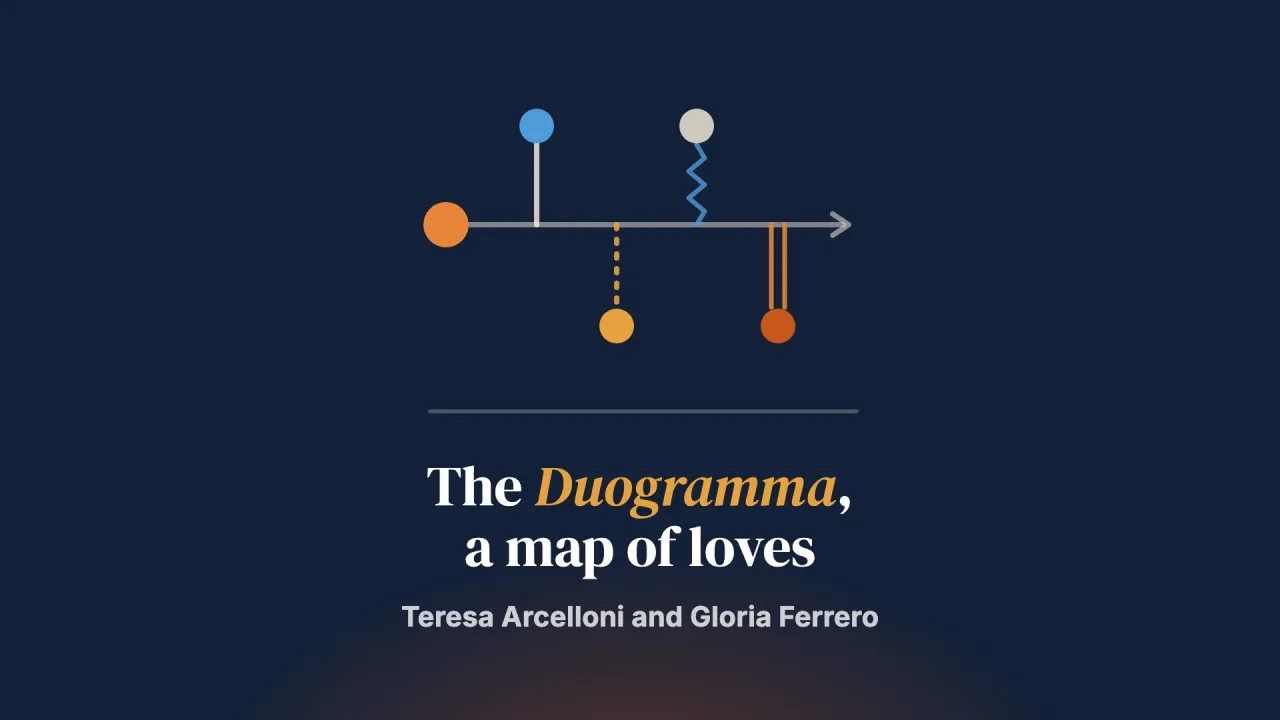 Scientific
The Duogramma®: An innovative methodology for psychotherapy
A map of the couple relationships lived, desired or rejected since childhood: the Duogramma®, its graphic rules and its use in individual therapy.
 Blog
Capp® groups give parents a place to think together
How does a reflective parenting group work? Jalila Kormachi and Yara Doumit describe how parents revisit a difficult moment and choose what to try next.
 Blog
Adult ADHD: when forgetting turns into a misunderstanding
Forgetting, compensating, tension in the couple: a systemic look at adult ADHD, to understand what is at stake and to look for more fitting forms of support.
Comments 0
Log in to join the discussion. Log in