AI-assisted translation
This version was translated from Spanish by Complexe Systémique with the help of artificial intelligence. In case of doubt, the original version prevails.
Red Sistémica · Interview
Schema therapy: treating borderline patients (part 2). Interview with Jeffrey Young
This article is the second part of the interview with Dr Jeffrey Young, a specialist in schema therapy applied to the treatment of borderline patients. He discusses group therapy with narcissistic patients, the personality disorders that respond most quickly to treatment, and the technique of limited reparenting.
“Therapy works on feelings; with severe patients, a long part of the treatment is devoted to helping them recognize their emotions.”
Jeffrey Young
Editor’s note from Perspectivas Sistémicas
This article is an excerpt: it is the second part of the interview with Dr Jeffrey Young, a specialist in “schema therapy: the treatment of borderline patients.” Dr Young is the founder and director of the Schema Therapy Centers of New York and Connecticut, as well as of the Schema Therapy Institute (United States). He has given seminars all over the world over the past 23 years and has published numerous articles in specialized journals, chapters in handbooks, and books, both in his own country and in Europe; among the most recent are Schema Therapy: A Practitioner’s Guide and a self-help book, Reinventing Your Life, of which there is a Spanish edition.
Part 1 of this interview appeared in no. 88 of Perspectivas Sistémicas, September-October 2005.
Narcissistic patients: group, individual or couple?
Do you believe it is possible to do group therapy with patients who have a narcissistic personality disorder?
I don’t think so: they would compete with one another over who has been the most successful; I don’t think they make good group members. In fact, in the research carried out in Norway, patients are given a preliminary diagnosis, and one of the profiles they stopped including in the groups is that of patients who present both disorders, borderline and narcissistic. It happened that, in one of the groups, a patient carrying both diagnoses was included following a diagnostic error; that patient turned out to be very disruptive for the group, and the team finally had to exclude them. That doesn’t surprise me: I think that, for them to be in group therapy, you would need a very strong leader, one who sets limits very well and holds them back when they go too far.
With them, I think individual therapy is preferable, because they don’t need as long a therapy as borderline patients do. Of course, we are not talking about 20 sessions, but they don’t need 2 or 3 years like borderline patients. Couple therapy also gives good results with them, because most of their problems are activated with their partner.
Who responds most quickly to treatment?
In your clinical experience with your model, with which of the personality disorders treated have the best results been obtained, in terms of a faster response to therapy?
Obviously, those whose problems in life are much less severe respond more quickly than those who have made suicide attempts, harmed themselves or been hospitalized. The other patients, whose personality problems are not that severe, who are able to keep their jobs, and so on, respond more quickly.
The same goes for those who are emotionally more open to their feelings, who can recognize them, cry, realize what makes them happier or recognize what their problems are. They respond more quickly because therapy works on feelings, and with severe patients, a long part of the treatment is devoted to helping them recognize their emotions.
Those who seek help on their own also respond better than those who come because others, parents, partners, friends, tell them to. That is, those who arrive motivated to change.
Treatment is slower with those who have suffered sexual abuse or who abuse alcohol or other drugs. In their case, the slowness of the treatment is proportional to the duration of the substance use, whether alcohol, cannabis or something else, given that the substance use blocks their emotions.
+
Respond faster
Patients whose life problems are less severe (no suicide attempt, self-harm or hospitalization); those who are open to their emotions and able to recognize them; those who come on their own, motivated to change.
−
Respond more slowly
Patients who have suffered sexual abuse, and those who abuse alcohol or other drugs: the slowness is proportional to the duration of the substance use, which blocks emotions.
Limited reparenting
In your lecture on patients with borderline disorder, given in Buenos Aires, you highlighted the technique of “limited reparenting” as occupying an important place in the treatment in your model. Could you describe it more precisely and point out its similarities to and differences from other perspectives?
Editor’s note from Perspectivas Sistémicas
The answer to this question and the rest of the interview can be read in the full text, published in Perspectivas Sistémicas no. 89, available at newsstands, in bookshops or by subscription.
Who is Lydia Tineo
Lydia Tineo, co-founder, teacher and researcher at the Centro de Terapia Cognitiva in Buenos Aires, has been studying, applying and evaluating the schema therapy model since 1988; since then she has taken part in numerous seminars, training courses and supervisions led by Dr Young. She has published chapters in handbooks and books, in Argentina and abroad, as well as articles in specialized journals, on clinical applications and research on therapeutic processes with patients presenting personality disorders.
This interview is an English translation of “Terapia de esquemas: Tratamiento de trastorno de pacientes borderline (2° parte). Entrevista a Jeffrey Young”, published by Red Sistémica (first published in Perspectivas Sistémicas, n° 89, 2005). Translated and republished with the journal’s permission.
Read the original articleHow to cite this article
Tineo, L. (2022). Schema therapy: treating borderline patients (part 2). Interview with Jeffrey Young (Complexe Systémique, Trans.). Complexe Systémique. https://app.complexe-systemique.com/en_GB/articles/schema-therapy-treating-borderline-patients-part-2-interview-with-jeffrey-young (Original work published in 2005 in Perspectivas Sistémicas, n° 89, 2005; republished in 2022 by Red Sistémica, https://redsistemica.ar/2022/08/01/terapia-de-esquemas-tratamiento-de-trastorno-de-pacientes-borderline-2-parte-entrevista-a-jeffrey-young/)
To go further
- Borderline personality in therapy: beyond the diagnosis, working the bondA systemic reading of the disorder that Young treats with schema therapy.
- Narcissistic personality disorder: beyond caricatures, understanding the systemic dynamicsWhy Young advises against group therapy for narcissistic patients, and what the systemic approach has to say about it.
Related training courses
 Symposium
État des Lieux: a psychological approach to spaces
Replay of the “État des Lieux” conference (Paris, 16 October 2026): Ivy Daure, Maurizio Frisina, Viola Sallay and Gilbert Pregno on places as a clinical resource. In French.
 Certifying course
Training in Systemic Therapy and Interventions – Cycle 1
Certifying training cycle in systemic therapy and interventions – year 1. Courses, supervision and practice, aligned with EFTA/SFTF. In French.
 Certifying course
Training in Systemic Therapy and Interventions – Cycle 2
Certifying training cycle in systemic therapy and interventions – year 2. Clinical complexity, supervision and practice. EFTA/SFTF aligned. In French.
 Certifying course
Training in Systemic Therapy and Interventions – Cycle 3
Certifying training cycle in systemic therapy and interventions – year 3. In-depth intervention, supervision and practice. EFTA/SFTF aligned. In French.
Related articles
 Scientific
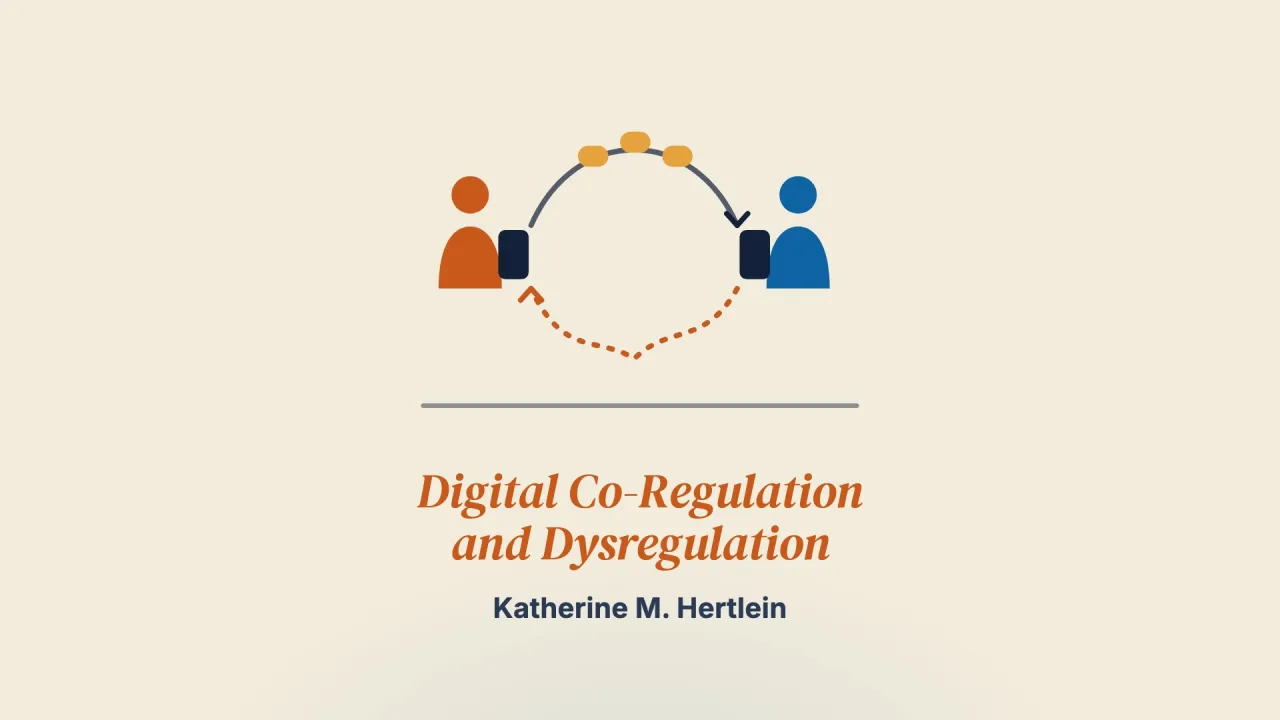
 Digital Co-Regulation and Dysregulation in Romantic Relationships: A Systemic Model of Technology-Mediated Emotional Processes
Checking, chasing, blocking: 31 interviews show how the phone regulates or dysregulates a couple’s anxiety, with a systemic model of the loop.
 Scientific
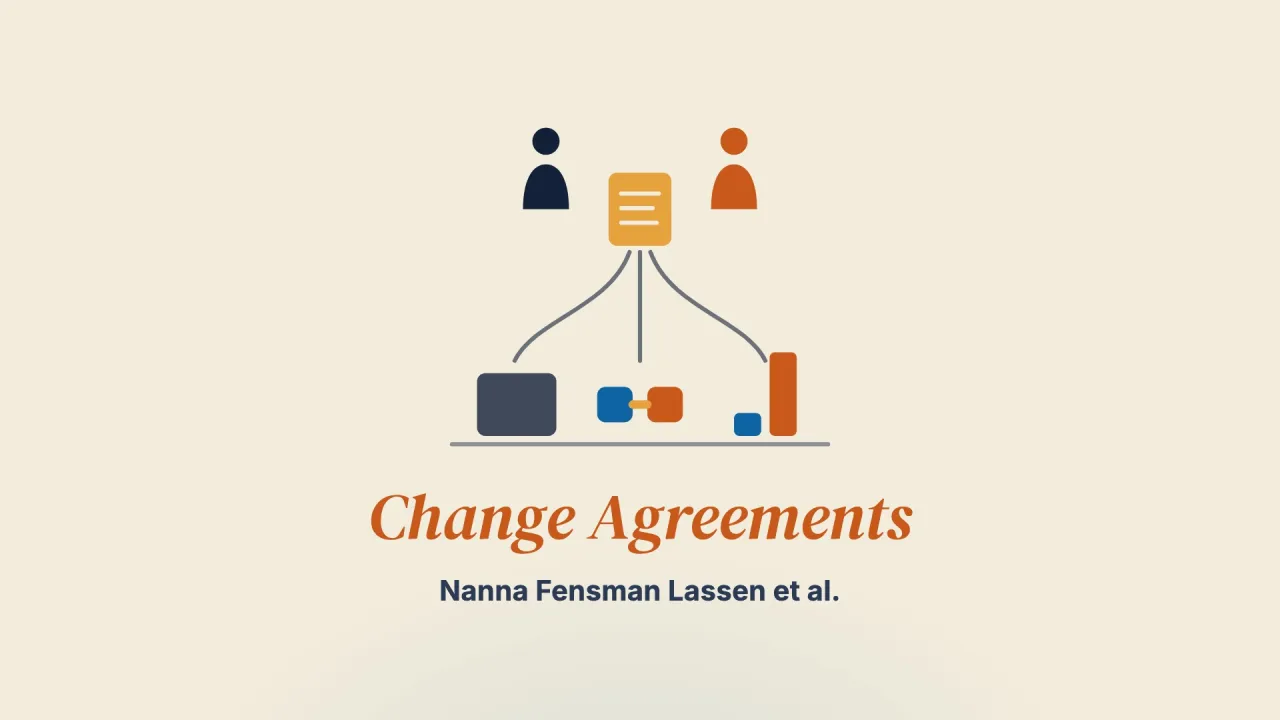
 “One Can Have All Sorts of Good Intentions but Sometimes in Everyday Life, It Turns Out Differently”: Change Agreements in Couples' Everyday Lives
Six Danish couples followed after an online couple program: their change agreements become guilt-inducing contracts, shared understanding or revealers of inequality.
 Scientific
 Internal Family Systems Therapy as Part of the ‘Family of Systemic Therapies’: A Critical Exploration of Systemic Practice in the Intra-Personal Domain
Does IFS belong to the family of systemic therapies? A critical exploration, grounded in a family court vignette, of systemic work with “parts”.
 Scientific
 The AFFIRM Model for Navigating Challenges in Continuously-Interfaith and Divergent-Interfaith Marriages
Thirty happy interfaith couples describe how they navigate their religious differences: five processes, from respecting each other’s choices to religious intimacy, gathered in the AFFIRM model.
Comments 0
Log in to join the discussion. Log in