AI-assisted translation
This version was translated from Portuguese by Complexe Systémique with the help of artificial intelligence. In case of doubt, the original version prevails.
Revista Brasileira de Terapia Familiar · Violence
The Need for the Family Therapist to Be Inserted in a Network to Work with Domestic Violence
How can one work with domestic violence when values are faltering? Starting from research on contagion in social networks, Maria Rita D'Angelo Seixas describes an ambivalent postmodernity, freer but more individualistic, in which violence thrives on the loss of bearings. Her thesis: family therapists cannot act alone; they need a multiprofessional network, legal, health and social, so as not to be drawn into the family’s secrecy.
Unofficial English translation. This article is a translation of A Necessidade do Terapeuta Familiar se Inserir em uma Rede para Trabalhar com Violência Doméstica, by Maria Rita D'Angelo Seixas, published in the Revista Brasileira de Terapia Familiar (ABRATEF), vol. 2, no. 1 (2010), doi: 10.60114/rbtf.v2i1.120, under a CC BY 4.0 licence. Translated by Complexe Systémique in November 2026 with the help of artificial intelligence: the original Brazilian Portuguese text has been translated into English and reformatted, which constitutes a modification of the work under the terms of the licence. The text was established from the journal’s scanned PDF; paragraphs and headings are those of the journal; the author’s biographical note, printed as a footnote on the first page, is included in the presentation; quotations from works first published in other languages (Rubio, Morin, Furniss, spelled “Furniss” in the article) are translated from the article’s Portuguese, not taken from the original texts; a few typographical errors have been corrected silently. The abstract is the author’s own English version. This translation was made neither by the authors nor by the journal, who are not responsible for its content or for any errors. The original version prevails.
We know that the attitudes that make up values do not change through sermons or admonitions, but through a new relational process of coexistence, living together and co-action.
Maria Rita D'Angelo Seixas
Abstract
This work starts with the report of a scientific research about the social network and its importance for a change in people’s acting and thinking.
This report will certainly motivate the idea that the mutually construction of human kind is not only necessary but occurs either we are conscious of that or not, especially in a pos-modern society dominated by fragile values.
Following that, we talked about the positive and negative consequences of pos-modern and of relativism in order to reach the thesis that the domestic violence derives from the family values downgrading and the need of the family therapist who works in this context, to be one with values. As a professional, who will be inserted in the pos-modern cultural context, there is a need for him to be integrated in a professional network which can offer a variety of views and perspectives about domestic violence and the multifaceted FAMILY who he sees, and within the network obtaining a greater support to achieve his objectives. We conclude that the family therapist will have to get in this co-construction, not only based by inclusive ideology, without values support, but within in a network which is able to envelop all the complexity of the family phenomenon which is his work subject.
Keywords: network; family therapist; domestic violence.
“Be the change you wish to see in the world.”
Gandhi
We live in a world that values research as a source of truth. That is why I decided to begin this article with a comment on the book Connected (2009), whose title in Portuguese would be Conectado: o surpreendente poder de nossas redes sociais e como elas moldam nossas vidas (in the original, Connected: The Surprising Power of Our Social Networks and How They Shape Our Lives). The book was written by Nicholas A. Christakis, Professor of Political Science at Harvard University, and James Fowler, a political scientist at the University of California; it is the result of many years of research on social networks and is enjoying enormous success in scientific circles.
Their research brings together social networks, health, well-being and medical care. They have already studied the importance of social networks in the contagion of obesity, alcoholism, depression and generosity. They show how people and their health are connected by affective bonds in social networks. By social networks – a branch of sociology – they mean what represents affective or professional relationships as linked in a network.
There is a pressure from the environment, or social contagion, to which human beings in a network are subject and which can infect them without their noticing. As for behaviours, they can only be passed on between people who have social ties. The authors draw attention to this so that everyone understands that they have not killed off free will: the work shows that having free will is the best way to live one’s life, because when we change, we bring about changes in the network, which changes with us. It is easy to transpose these ideas to the fight against violence. We believe that the only way to fight violence is through a positive change in meanings, behaviours and attitudes in violent settings, in other words through contagion by generosity.
We know that, before these authors, Moreno (1975), Gandhi (1999), Capra (1996) and Bertalanffy (1977) had already said a great deal about networks and their influence on people and their contexts, and that, long before all of them, Christ had preached at length “Love one another” as a way of changing the world.
All we can do is hope that these authors, with their research at respected universities, will earn more of the public’s attention. We know that modern values coexist with postmodern ones, and the concept of the network may perhaps be of service to those who wish to escape both the rationalism of modernity and the crisis of reason found in postmodernity, which many present-day thinkers identify as feeding the disorientation of postmodern human beings.
To understand the families they work with properly, family therapists need to know the socio-political, cultural and ideological context in which these families are placed. This is very difficult, since we are part of the same context that we will have to analyse and are therefore ideologically committed. I believe, however, that the possibility of error cannot justify our silence. All the more so because, since I believe that joint construction is what will guide us, I do not want to hold back my opinion and miss the chance to take part in this construction. As Moreno (1975) said, all human beings must take part in the joint construction of humanity.
The context of postmodernity
It is common sense today to speak of postmodern thought as a guarantee that all the problems we inherited from modern thought (rationalism, individualism, pragmatism, consumerism, liberalism), which led us to our present social situation, will be overcome. Those who think this way hold that postmodernism is synonymous with joint construction, inclusion, subjectivity, mutual respect and affection, and that its ideology is the salvation for our difficulties. For others, however, postmodernism is merely the antithesis of the failure of the modern promises of liberty, equality and progress for all.
Rubio (2001), without going into this question, says that postmodernism “is a sensibility distinct from the modern era, which affects all domains of existence” (p. 45). According to this author, we are today in a process of distrust of reason and of the ideologies of the modern world, and of valuing emotion, individuality and affection. This process brings certain consequences.
Among the positive consequences of this ideology he cites an increase in free choice, in freedom and in awareness of each person’s fundamental rights, which are important for human development, and an increase in the capacity for understanding and affection. Com-passion for others, for example, follows from this, as does the acceptance of differences.
Boff (2004) says that the most socializing characteristic of human beings is not reason but emotion, since it is emotion that leads us to love and to feel passion for the other, or com-passion. Yet human beings need reason to control it and keep it from going to excess.
For Blank (1996), rationalism, as a technocratic – scientific system, reduced the human being to an anonymous element. Individual productivity was demanded and, in its name, solidarity and human coexistence were sacrificed. The result was an inhuman world, full of aggressiveness, violence and wars. Faced with these results, postmodernity reacts by seeking to emphasize the opposite values, and it values gratuitousness, freedom and the pleasure of existence.
One might have expected a new society to be born of this: a more humane society, one of solidarity, governed by affection. But, because of the overvaluation of emotion guided by weak, insecure and tolerant thinking, there arise, according to Rubio (2001), the negative consequences of putting this kind of thinking into practice: the exacerbation of individualism, leading precisely to the loss of com-passion, a turning towards one’s own interests, an inability to keep lasting commitments, the exaltation of materialistic consumerism as a goal in life and the impoverishment of personal relationships. Exaggerated individualism leads one to question all established references, centring one’s experience on pleasure and consumption, but it quickly turns into a feeling of deep emptiness in the organization of one’s own life. There are no lifelong commitments. Postmodern commitments are light, provisional and momentary, as is loyalty to social, political and religious institutions. Paradoxically, one ends up back at the starting point, in a society full of disrespect, violence and disregard for others.
We cannot forget, as J. Comblin (1998) says, that alongside postmodernity many traits of modernity remain, which hinder its implementation. But this does not excuse the ineffectiveness of postmodern ideology in solving today’s social problems. Today’s family, caught up in this context of individualism and egocentrism, is systemically influenced by the context in which it is placed and has difficulty carrying out its functions of protecting and socializing the children, while spouses have difficulty maintaining lasting bonds, which generates insecurity about the family’s continuity and, often, domestic violence.
According to Libânio (2001), “in this world where there is a polarity of moods, a tension between projects, an opposition of forces, games of divergent interests, there is a place for the practice of discernment” (p. 194).
The discernment of values is the first step in the search for a new reconstruction of conjugal and family life in today’s world, and the possibility of excluding what is without value.
Values are formed from our lived experiences, which bring us into direct contact with things and make us aware of their existence. From there we learn what the consequences of our way of acting on them are. These consequences acquire meaning for us. Drawing on various experiences, we acquire or formulate rules, basic principles to guide our way of being in the world. The set of these basic principles, beliefs or values will make up our view of the world, a synthesis of our lived experiences. We can call it our social and ethical paradigm.
Values are built up from lived experiences and only change through other lived experiences. We can hardly pass on values through lessons or any other form of rational and/or verbal transmission. Families and communities develop these shared values over time, influenced by their cultural context, and it is this set that we call Ethics (Seixas, 2006).
Habit, as ethike, requires participatory action – taking part in the process – producing acts in this sphere – it is not an aesthetic appreciation or an intellectual understanding… (Diskin, 1998).
We must learn to be here, on the planet. Learning to be means learning to live, to share, to communicate and to commune (Morin, 1998, in Lia Diskin).
Ethics is thus made up of ethical precepts and behaviours developed through our existence and our Human-World interrelationships. That being so, precepts are changeable, not at random, according to spontaneist or voluntarist values, but determined by particular cultures in keeping with certain historical moments, varying with each society and each period of its existence. Cabanas (1996) calls this position “relativism”, in which fundamental values are relative to particular places and times and do not exist as universal values. Without adopting either extreme, we can agree with Adorno (1978), who says that universal values such as justice and truth do exist. What we cannot say is that we have already attained them, because we only grasp a part of them.
To adopt their values, people need time to live some of them, question them, think about them and finally adopt them critically. The speed of experience in today’s world does not make it easy to set out clearly guiding precepts and behaviours that have been duly lived and valued. How can the family, caught up in the social crisis and with its values shaken by present-day relativism, as are those of the society in which it is placed, help its members?
We think that the very relativism that confuses us is what offers us a way out. Coexisting with a technicist view of the world, alongside unbridled consumerism and individualism, another way of seeing the world is beginning to take shape, which seems to us to offer a more constructive way out of the present reality.
For Capra (1996), an understanding of the world as an ecological and complex unity is increasingly imposing itself on us: it cannot be understood without perceiving the interaction between its elements and without seeking co-participation. Awareness of a growing complexity of perspectives on each fact abolishes the linear view of cause and effect, makes a judging attitude of right and wrong difficult and consequently makes the existence of a single truth impossible.
On the one hand, this makes it difficult to choose a single scale of values and can lead to impunity; on the other hand, it brings advantages, because it makes society less judgemental, less prejudiced and less authoritarian, and more able to live with differences. From the evolution of this conception of the world, constructivist epistemology arises. It holds that each of us grasps only one aspect of reality. The world we live in is defined through the joint descriptions we make of our experience. All reality is a social co-construction. Since we cannot validate our conceptions as true, because reality is “outside” us, independent of the observer and inaccessible to human experience, what we have to do is take responsibility for how we construct this reality and for the consequences of this way of constructing it. The search for joint constructions, so that our truths rest on a social and consensual construction, becomes desirable, and the way to achieve it is through dialogue, the opposite of competition: dialoguing while respecting differences and seeking to reach a consensus without impositions, taking care that each person is considered in their individuality, provided that they bear the consequences of their actions and do not encroach on others.
For all these reasons, the activity of the subject in constructing their own individuality takes on a central role today. Today people take in diverse fragments from various systems (school, media, family, company and church) and must put together their own. This involves many risks, but it also opens up new potential for a freer, more egalitarian and more fraternal human life. It is the time of the decline of power and authoritarianism, and it brings some important changes in values that will have repercussions on family and conjugal life.
In the face of all these transformations, it is easy to imagine how lost people and families feel in their ethical values, how difficult it has become today to pass these values on appropriately from parents to children, and how necessary it is for each person to build their own values. Families often lose their way in this construction and even move away from their own functions, which can become distorted. In these situations we see relational disorder, meaningless actions, unprincipled upbringing and violence appear. Co-construction becomes impossible without the help of a family therapist.
The social network and the co-construction of family values
Here we return to the beginning of our conversation. We know that the attitudes that make up values do not change through sermons or admonitions, but through a new relational process of coexistence, living together and co-action.
We have also seen that the construction of Ethics has to do with the cultural construction in which it is placed, and that family therapists are needed to co-construct new meanings with families that need to change their relational values; and we now know, as has been scientifically proven, that people within networks have a great deal of influence on personal and ethical formation. It is therefore easy to conclude that, although family therapists will be working directly with the family, their work will be made easier if they are part of an institutional network to which the family belongs, especially if they intend to work on one of the issues that most affects families today, namely domestic violence.
- Furniss (1991), speaking of violence, says that one point on which those who work with violence unanimously agree is that it must be seen “as a genuine and generic multidisciplinary problem; it requires the close cooperation of a wide range of different professionals with different tasks” (p. 5).
- Since it is both a legal and a therapeutic problem, all the professionals involved must be familiar with its criminal aspects and with victim protection services, as well as with the psychological and medical aspects of the problem.
- Highly qualified therapy can be very antitherapeutic and psychologically harmful if it does not take place within a broader context. In any abuse we have to consider two aspects: the interactional and the legal. In interactional terms it is the result of family dysfunction; in legal terms it is a crime that sets the legal system in motion against the person who abuses, and the protection system in favour of the victims.
- The family therapist works with the interactional aspects of abuse only. Where abuse is a syndrome of secrecy (on the part of the family) and addiction (on the part of the abuser), family therapists are unable to bring about change when they cut themselves off from the work of other professionals in the network. They run the risk of siding with the family’s conspiratorial secrecy; after a short time the family drops out of therapy under pressure from the abuser, insisting that everyone is fine now and that the problem has been solved.
- The involvement of the legal process as a contextual support for therapy is fundamental for the person who abuses, insofar as that person is addicted, the drug being the child. The legal process can protect and secure treatment. On the other hand, it is important for police officers to know that any unsuccessful intervention from which they have to withdraw for legal reasons, without proving anything, may be taken by the person who abuses as explicit and implicit permission to go on abusing, under growing secrecy and with less risk of punishment. This makes the abuse more severe and prolonged, and the abused person may think that nobody out there will believe them and that there is no way to defend themselves. Hence the importance of working together with the family therapist.
In addition, it is also important for various forms of therapy, individual, group and family, to come together in work with violence, so that the aspects of secrecy and addiction in abuse are addressed.
The functions of the family therapist in the field of violence
Domestic violence is a dangerous reality, because we have loving and aggressive impulses, and the family is the reference point, the identity matrix that should teach us how to control anger and give an outlet to our inner drives within limits. If the family provides models of aggression, the harmful act comes to be regarded as normal, children sometimes become insensitive to the horrors of violence, the consequences that flow from it are not criticized, and the aggressive model learned in their network is the one used to react to frustration. The mistreated child may in turn become a future aggressor and contribute to the growth of violence in the world, in a pernicious cycle that therapy could break.
The first goal of therapists working with violence is to bring peace to the families they intend to care for and, through them, to transform the society we live in. To do so, these therapists have to develop and maintain inner peace, and belonging to a network will help them a great deal in this respect, keeping them from feeling unsupported and offering the resources they need for their work as well as personal support.
During their training they should develop the capacity to work with values, respecting values different from their own. Through dialogue, dramatization and Nonviolent Communication, they can help people rethink their values and rebuild their lives and those of their families on the basis of reflective thinking. Here, too, the network will help them remain impartial. To cover all the many aspects of violent behaviour in the family, these therapists will need to work with the backing of a support network that guarantees them resources for dealing with the health, social and legal aspects that are often involved in treatment.
The family therapist in the network
For Moreno (1975), networks are like the beds of a river, and the waters of that river are the positive and negative interrelationships that bind people together.
According to Souza (2009), networks strengthen the reach and quality of strategies and actions around common interests. In the case of violence, the network breaks the barrier of silence, making mutual support proactive. Networks encourage the exchange of experiences, help develop joint projects and actions, bring together efforts and skills, exert political influence, increase our potential for resilience and solidarity, and assist in developing education and training projects.
Violence is a complex and multifaceted problem involving various services and sectors of society. The network creates an opportunity for dialogue between services and sectors, sharing the wealth of different kinds of knowledge and skills, taking into account the specificities, limits and possibilities of each organization, and helping to find more effective solutions to problems. Moreover, family therapists, whose systemic outlook allows them to see the family as a relational whole, are the only professionals who could bring to the network a broader view of the family situation, showing among other things the need to treat the abuser, which is now known to be essential not only for the family but also for society, which will have the chance to recover one of its members, who will stop causing further harm.
Unfortunately, the authorities are not yet fully aware of the potential and functions of family therapists. Few would make room in the public sector for this type of professional, and as a result our access to the areas where we could help develop public projects and policies suited to working with violence remains limited. It is up to our professional bodies to fight for this space, and up to us to make ourselves known by carrying out pioneering work in the field of violence. For this, most family therapists need to become aware that family violence, which strikes the family, is unquestionably our field of action, since it affects and distorts our very object of work, THE FAMILY, and we need to take on the responsibility that falls to us in rebuilding this so paradoxical postmodern society.
In short, what we wish to put forward here is:
- That violence is an unacceptable human reality that must be controlled, or else a dignified life becomes impossible;
- That this work will only make sense if it is carried out using constructive methods, grounded in an ideology of peace aiming at social justice, one that considers all people equally important because they share the same humanity;
- That family therapists must enter into this construction, not merely on the basis of an inclusive ideology without a grounding in values, but within a multiprofessional network able to encompass the full complexity of the phenomenon of family violence.
Complexe Systémique: key points
Written in 2010 by a pioneer of Brazilian family therapy, this text is closer to advocacy than to research: the reliance on Christakis and Fowler, presented as proof, rests on correlations whose causal reading has been hotly debated, and the idea that violence stems from an absence of values remains a conviction rather than a finding. Its clinical value lies elsewhere. Drawing on Furniss’s view of abuse as a syndrome of secrecy and addiction, the author shows why family therapy working in isolation risks collusion: the family leaves therapy as soon as the abuser applies pressure, and an aborted legal intervention amounts to permission to carry on. The network is therefore not an add-on but the condition of the work: it links the legal and the relational, protects victims, and sustains the therapist’s inner peace and impartiality. Finally, the figure of the “therapist of values” questions the neutrality inherited from Milan: a question to work through as a team rather than a stance to adopt as it stands. Read alongside the interview with Silvia Mesterman on clinical work with family violence, and Juan Luis Linares’s assessment of postmodernism in family therapy.
References
Bertalanffy, L. Von (1977). Teoria geral dos sistemas. Petrópolis: Edit. Mestre Jou.
Blank, C. E. (2006). Construir o matrimônio na pós-modernidade: novas estratégias construtivas e interativas para a convivência matrimonial. São Paulo: Paulus.
Boff, L. (2004). Ética e moral: a busca dos fundamentos. Petrópolis: Vozes.
Cabanas, J. M. Q. (2002). Educación moral y valores. Revista de Ciencias de la Educación, 166, abr-jun.1996. In M. S. D. S Menin, Valores na Escola. Educ. Pesquisa, 28(1), São Paulo Jan./June 2002.
Capra, F. (1996). A teia da vida: uma nova compreensão científica dos sistemas vivos. São Paulo: Editora Cultrix.
Christakis, N. A. & Fowler, J. H. (2009). Connected: The surprising power of our social network and how they shape our lives. New York: Little Brown and Company.
Comblin, J. (2006). Vocação para a Liberdade. In C. E. Blank, Construir o matrimônio na pós-modernidade: novas estratégias construtivas e interativas para a convivência matrimonial. São Paulo: Paulus.
Diskin, L.; Martinelli, M.; Migliori, R. F & Espírito Santo, R. C. (1998). Ética ou arte da convivência. In L. Diskin, Ética valores humanos e transformação. São Paulo: Fundação Petrópolis.
Furniss, T. (1993). Abuso sexual da criança: uma abordagem multidisciplinar. Porto Alegre: Artes Médicas.
Gandhi, M. K. (1999). Autobiografia: minha vida e minhas experiências com a verdade. São Paulo: Palas Athena.
Horkeimer, M. & Adorno, T. W. (1978). Temas básicos da sociologia. São Paulo: Edit. Cultrix.
Libânio, J. B. (2001). As lógicas da cidade. In C. E. Blank, Construir o matrimônio na pós-modernidade: novas estratégias construtivas e interativas para a convivência matrimonial. São Paulo: Paulus, 2006.
Moreno, J. L. (1975). Psicodrama. São Paulo: Editora Cultrix.
Morin, E (1998). Terra Pátria. In L. Diskin, Ética valores humanos e transformação. São Paulo: Fundação Petrópolis.
Rubio, A. G. (2001). Unidade na pluralidade. In C. E. Blank, Construir o matrimônio na pós-modernidade: novas estratégias construtivas e interativas para a convivência matrimonial. São Paulo: Paulus, 2006.
Seixas, M. R. A. (2006). Trabalhando valores na terapia de casal. In S. Fedullo (org.) Gritos e sussurros, interseções e ressonâncias: trabalhando com casais. Vol II. São Paulo: Vetor.
Souza, M. J. L. (2009). Workshop sobre redes, apresentado na V Jornada de Terapia Familiar de São Paulo, APTF Pela Paz. Texto não publicado.
Unofficial English translation of A Necessidade do Terapeuta Familiar se Inserir em uma Rede para Trabalhar com Violência Doméstica, by Maria Rita D'Angelo Seixas, Revista Brasileira de Terapia Familiar, vol. 2, no. 1 (2010), doi: 10.60114/rbtf.v2i1.120, under a CC BY 4.0 licence. Translation (with the help of artificial intelligence) and layout: Complexe Systémique, November 2026 — the work has been modified under the terms of the licence. Neither the authors nor the journal are responsible for this translation; the original version prevails.
Unofficial English translation of “A Necessidade do Terapeuta Familiar se Inserir em uma Rede para Trabalhar com Violência Doméstica”, published in Revista Brasileira de Terapia Familiar (2010) under a CC BY 4.0 licence. Made by Complexe Systémique with the help of artificial intelligence, it does not come from the authors or the journal, who are not responsible for its content; the original version prevails.
Read the original articleHow to cite this article
Seixas, M. R. D. (2010). The Need for the Family Therapist to Be Inserted in a Network to Work with Domestic Violence (Complexe Systémique, Trans.). Complexe Systémique. https://app.complexe-systemique.com/en_GB/articles/the-need-for-the-family-therapist-to-be-inserted-in-a-network-to-work-with-domestic (Original work published in 2010 in Revista Brasileira de Terapia Familiar, v. 2, n. 1 (2010); republished in 2010 by Revista Brasileira de Terapia Familiar, https://revbrasterapiafamiliar.abratef.org.br/revista/article/view/120)
To go further
- Clinical work with family violence. Interview with Silvia MestermanClinical work with family violence.
- Does history end in postmodernism? Towards an ultramodern family therapyPostmodernism in family therapy.
- Professional exhaustion (burnout), self-care and care of teams working on violenceCaring for teams facing violence.
Related training courses
 Symposium
État des Lieux: a psychological approach to spaces
Replay of the “État des Lieux” conference (Paris, 16 October 2026): Ivy Daure, Maurizio Frisina, Viola Sallay and Gilbert Pregno on places as a clinical resource. In French.
 Certifying course
Training in Systemic Therapy and Interventions – Cycle 1
Certifying training cycle in systemic therapy and interventions – year 1. Courses, supervision and practice, aligned with EFTA/SFTF. In French.
 Certifying course
Training in Systemic Therapy and Interventions – Cycle 2
Certifying training cycle in systemic therapy and interventions – year 2. Clinical complexity, supervision and practice. EFTA/SFTF aligned. In French.
 Certifying course
Training in Systemic Therapy and Interventions – Cycle 3
Certifying training cycle in systemic therapy and interventions – year 3. In-depth intervention, supervision and practice. EFTA/SFTF aligned. In French.
Related articles
 Scientific
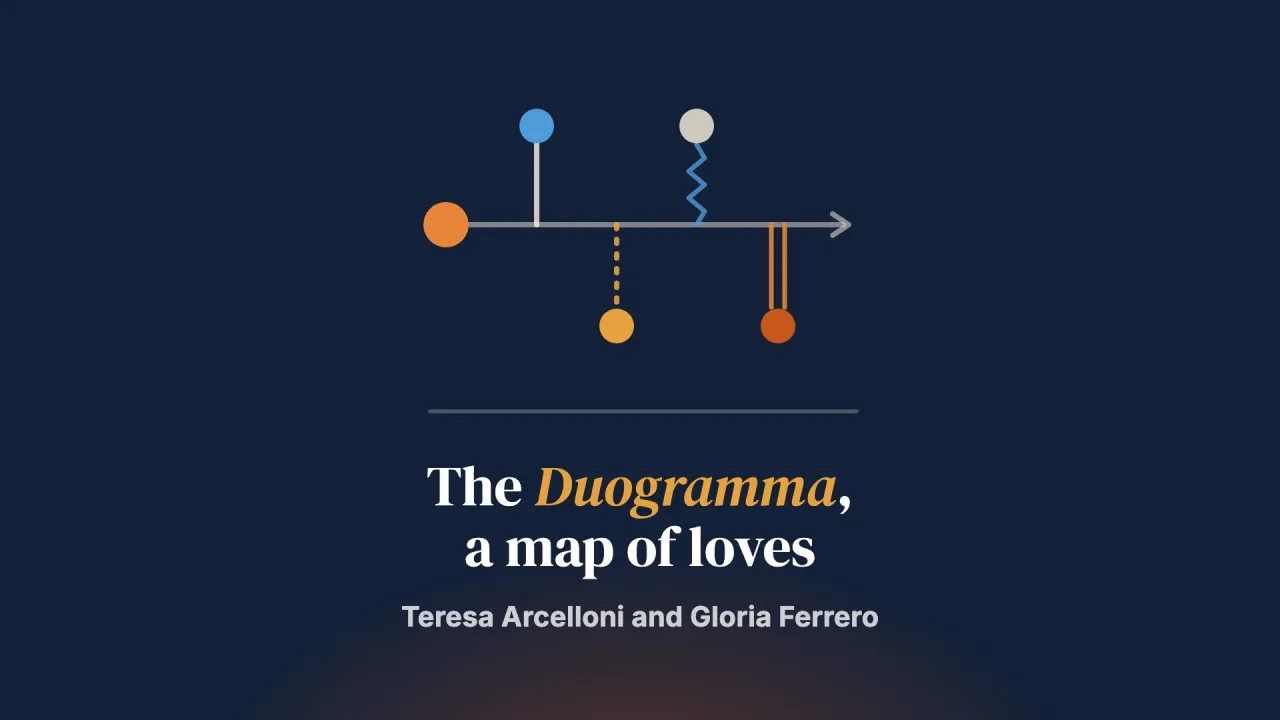
The Duogramma®: An innovative methodology for psychotherapy
A map of the couple relationships lived, desired or rejected since childhood: the Duogramma®, its graphic rules and its use in individual therapy.
 Blog
Challenging in therapy: What a patient taught me
A couples therapy session led me to reflect on confrontation, authenticity and resonance: how to address difficult behaviour without invalidating the person.
 Blog
Adult parentification: when being useful becomes a condition for being loved
Why is it sometimes so hard to hand over? Julien Besse explores parentification and parentalisation, acknowledgement and the place we take in our adult relationships.
 Scientific
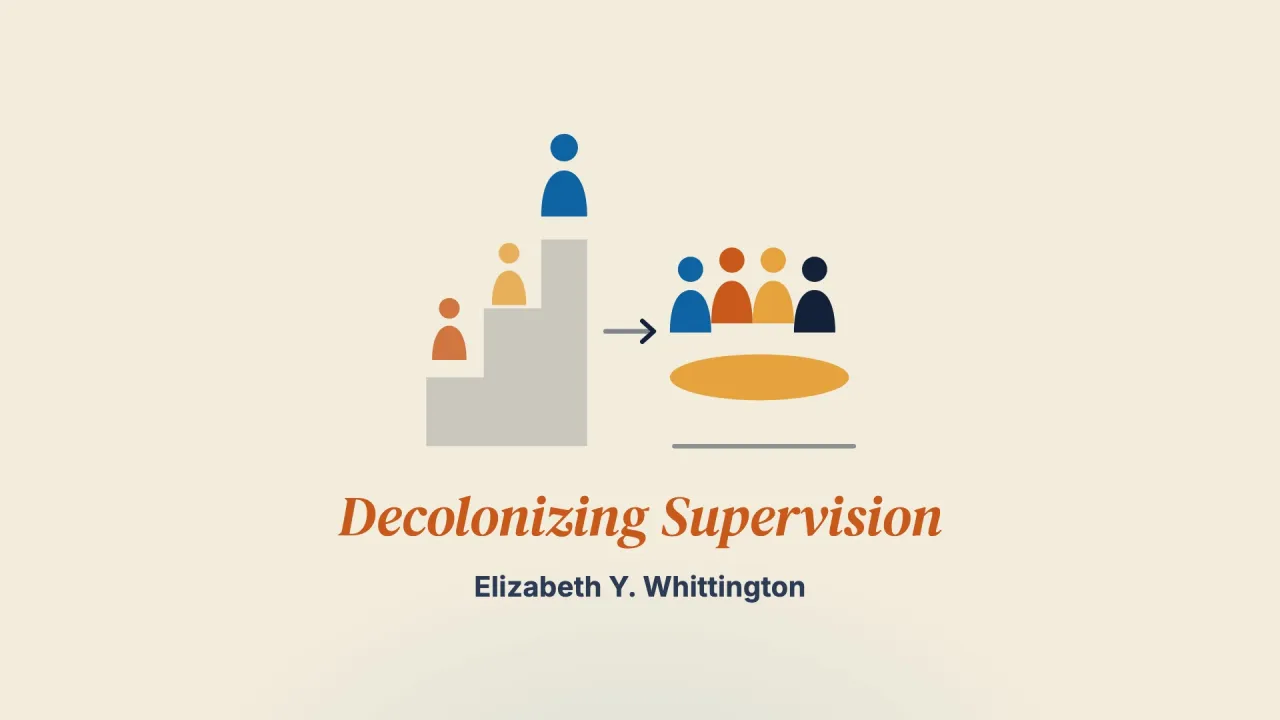
Decolonizing Supervision: A Critical Race and Queer Theory Framework for Marriage and Family Therapy
Supervision is not neutral: a framework drawing on Critical Race Theory and Queer Theory to name and share power in supervision, with a vignette.
Comments 0
Log in to join the discussion. Log in