AI-assisted translation
This version was translated from Portuguese by Complexe Systémique with the help of artificial intelligence. In case of doubt, the original version prevails.
Revista Brasileira de Terapia Familiar · Training
The Therapist’s Map and the Differentiation of Self as Resources for Family Therapy Training
How can therapists in training be helped to recognize what their own family does to their clinical work? Cynthia Ladvocat, a former president of ABRATEF, looks back on thirty years of groups devoted to the differentiation of self, in the tradition of Bowen, Andolfi, Elkaïm and Ausloos. Genogram, ecomap, duogram and dramatization are used to find where the therapist’s map crosses that of the family being seen, so that resonances can become resources.
Unofficial English translation. This article is a translation of O Mapa do Terapeuta e a Diferenciação do Self como Recursos para a Formação em Terapia Familiar, by Cynthia Ladvocat, published in the Revista Brasileira de Terapia Familiar (ABRATEF), vol. 5, no. 1 (2014), doi: 10.60114/rbtf.v5i1.90, under a CC BY 4.0 licence. Translated by Complexe Systémique in November 2026 with the help of artificial intelligence: the original Brazilian Portuguese text has been translated into English and reformatted, which constitutes a modification of the work under the terms of the licence. The text was established from the journal’s PDF, whose text layer is unusable; paragraphs and headings are those of the journal; the author’s biographical note, printed as a footnote on the first page, is included in the presentation; a few typographical errors (the name of Ausloos, “conformo” read as “conforto”, spellings in the references) have been corrected silently. The abstract is the author’s own English version. This translation was made neither by the authors nor by the journal, who are not responsible for its content or for any errors. The original version prevails.
Whenever a person tells something, they tell it against the background of their own experience. Therefore, the world is always self-referential.
Cynthia Ladvocat
Abstract
The author looks back on their experience working for differentiation of the Self over the last thirty years. Emphasizes the approach of some pioneers in family therapy. And presents his method of working with therapists training in family therapy through the use of the resource genogram.
Keywords: genogram; duogram; Self´s differentiation; training; origin family
Introduction
The aim of this text is to present the author’s experience of working on the therapist’s family of origin. Given the importance of this work, which other trainers also carry out, ABRATEF has included the topic in the curriculum of its family therapy courses since 2008. Thus, in accordance with ABRATEF’s Documento Mínimo Norteador de Formação (minimum guiding document for training), training includes at least 100 hours of exercises and experiential work to develop technical resources related to the person of the therapist.
Work on the family of origin is an experiential exercise for therapists in training, aimed at identifying the family patterns of their families of origin that affect their work with the families they see. And the author confirms the beneficial results observed among beginning therapists. Trainers in the Brazilian network of family therapists consider work on the family of origin to be fundamental to training.
Theoretical considerations
Over the last years, since Bowen’s (1978) studies on the differentiation of self, very little has been written on this topic. One of the reasons why there are not many articles on working with the self of the therapist may be that this is personal work done by family therapists themselves. And how can these experiences be written up anonymously? And how can one present a practice that has no scientific methodology? And, consequently, how can the trainer’s creative experience in this work on the therapist’s family of origin be presented didactically? In this sense, the author presents her experience as a trainer and as the coordinator of many self-differentiation groups.
Bowen (1978) presented the text “Anonymous” at a large conference, on a professional’s experience with his family of origin in order to achieve his differentiation. This text revealed his own story, but without identifying him. Shortly afterwards, he acknowledged authorship of the paper and began to encourage his students to turn to their families in order to understand their stories. He noted the difference in how the ability of those who had sought to understand their stories developed in therapeutic work with families. For this author, the imprint of the family was so decisive that the degree of individual autonomy could be assessed during childhood. And he developed a scale according to the degree of fusion or differentiation in triangular relationships.
Andolfi (1999) develops work on the self in the search for a capacity grounded in one’s own emotional resources. This capacity helps in discovering a similar capacity in patients in therapy. Professional growth and maturity are closely related to one’s position in relation to clinical material and to one’s own worldview. That is why it is important to exercise all of the therapist’s senses, the resonances and the feared scenes that put the therapist as a person at risk. These scenes are related to scenes lived or fantasized in their family history. For this author, three factors are important in training. Learning about therapy, through seminars. Learning to work in therapy, through clinical work and supervision. And finally, on the basis of a personal analysis, learning to be a therapist, learning to use one’s person as a therapist through all of one’s theoretical and technical learning, which will be filtered through one’s personality.
Elkaim (1988) approaches the impasses therapists meet in their work with families as obstacles they face in their own family history. These feelings can be transformed into resources and instruments for analysis and intervention, starting from the resonance of the person of the therapist. To identify these impasses, therapists must analyze the intersection of the maps, that is, their own family map and the map of the family they are seeing, because it is in this intersection that the technique unfolds. For the author, the concept of resonance refers to unconscious or conscious feelings of strangeness mobilized in the face of human situations. And this work is obviously important so that therapists do not identify with or project themselves onto the family’s story in order to resolve the impasses of their own story. That is why resonances must be identified, so that possible obstacles or blind spots can be unblocked. Reflecting on oneself, for this author, is a long process that evolves through new experiences in which the therapist is always attentive to the crossings of the maps, their own and that of the family in therapy.
For Ausloos (2011), therapists bring their cases to supervision with questions that make them uncomfortable. This is because it can be observed that some interventions have more to do with the therapist’s values than with the family’s values. Family therapy is a process of mutual responsibility and, in this sense, therapists must assess their own position before assessing the family. Therapists are often uncomfortable and look for a technique or something without knowing what they are looking for. In that case they are implicated and should assess themselves. For this author, the approach and the intervention are not outside the system of care. The work develops from relevant information that comes from the family itself. Technique must be handled according to one’s subjectivity. The therapeutic relationship will depend on the practitioner’s personal style. Once therapists become competent at identifying their own issues, they will be able to identify the competences of families.
Personal motivations for working with the self
Since the author began working as a supervisor, she has been able to see that some issues brought by patients can result in a difficulty for the therapist with regard to technical handling. This observation goes back to her practice as a supervisor and as partner-director of GRUPSI: Terapêutica e Estudo da Criança, do Adulto e da Família in Rio de Janeiro. In the 1980s she supervised placements for final-year psychology students, in individual psychotherapy with children and adolescents. It became clear that many of the trainees’ impasses were related to personal issues and, at the time, as a way of dealing with this impasse, personal therapy came to be recommended for enrollment in the placement program.
At the same time, the author began working on her own family of origin during her family therapy training at CEFAC: Centro de Família e Casal. One of the teachers on the course was Maurizio Andolfi, who was always attentive to the students’ reactions to clinical material.
This teacher worked from the three-generational model, which aims at an in-depth review of the genogram of the therapist’s family of origin, in order to unblock possible impasses.
Training as a group psychoanalyst was also an important experience as regards the strong impact of the therapeutic group on the person of the therapist. Psychoanalytic training at the Sociedade Psicanalítica do RJ was fundamental with regard to training analysis and to the study of the phenomena of transference, countertransference and projective identification, and of the analyst’s reactions to the issues brought by the patient. Case supervisions emphasized the importance of the bond between patients and their analyst. Thus, between 1982 and 1991, the author was able to study further the impact of the vicissitudes of clinical material in group and individual psychoanalytic treatment.
In the 1990s, over three intensive weeks, the author took part in the Practicum at the Accademia di Psicoterapia della Famiglia in Rome, with experiential work, supervision, discussion and sessions with Italian families. This work on the self of the therapist, with the analysis of the personal genogram in the light of the impact of family stories on the person of the therapist, was fundamental in reinforcing her experiences up to then.
Shortly afterwards, the author came into contact with Mony Elkaim’s methodology on how to work with issues concerning the person of the therapist. And when she was accepted as a member of the EFTA - European Family Therapy Association, she took part in the event “The Life and Mind of the Therapist” in London. She was part of the long and fruitful discussion with the heads of European training institutes about work on trainees’ families of origin based on their resonances.
Through her involvement in family therapy training as partner-director of Instituto Mosaico, the author organized several trips to Rome to take part in Maurizio Andolfi’s Practicum, in Rome. And she began to coordinate the work on “The Differentiation of the Therapist’s Self and the Development of Their Competence” with trainees, as well as in other training institutes in Rio and in other cities.
Aim of the work of self-differentiation
As an individual psychoanalyst, the author observes that personal history, which involves the family, is extraordinarily rich. The family is always the theme of the stories told, lived or fantasized, and they bring anxieties, traumas, joys and achievements. And the psychoanalyst, working with the individual, works on unconscious issues through transference, dreams, symbols and defense mechanisms, in the analysis of object relations and love relationships within a family, biological or substitute, real or imaginary.
As a family therapist working within the approach of link psychoanalysis (psicanálise vincular) and systemic therapy, the author sees the importance of working on reactions to clinical material and on the practitioner’s inner resonances. And she notes, in contact with so many beginning therapists, that some feared scenes concern their competence, which is connected to their family experiences. These scenes are closely related to beliefs, values and patterns of behavior in their history, and they need to be identified. Work on these issues aims at understanding the points that intersect, so that they do not become mixed up with the reality presented through the material a family provides.
The main aim of the work with the self of the therapist on the family of origin and the current family is precisely the development of competence in the search for the differentiation of one’s self. With this competence, therapists will then be able to analyze their resonances and use their own intellectual and emotional resources in therapeutic work, discovering a similar competence in the family they are seeing.
Training in family therapy
The practice of therapists and trainers with their students underlines the importance of this process of exploring family stories. And in analyzing one student’s story, it is important to consider the participation and the circular effect on the other members of the group. In other words, how each person reacts and feels when faced with a colleague’s family genogram in the training context. It is important to stress that the reality reported is the result of an observer’s observation of something, which produces reactions in those who listen to the account. And that circular questions in the group reveal that a person always says something about someone to someone, that a person does something with someone, who reacts and has an effect on the group as a whole. Whenever a person tells something, they tell it against the background of their own experience. Therefore, the world is always self-referential. And, consequently, when practitioners present the case of a family, they reveal their perception and their worldview.
In the course of their practice, family therapists face family stories in different contexts. Therapists, even with long experience, feel the impact of beliefs, myths and projections onto their person. The same case produces different reactions in different practitioners. The therapist’s feelings are connected to their personal history and to what happens in the family being seen. The intersection and crossing of the maps, the therapist’s map and the family’s map, must be identified and analyzed in the training of family therapists. Therefore, factors such as the therapist’s self, self-reference, worldview, resonance and the impact the therapist feels when faced with a family are factors that need to be understood and integrated so that they are not obstacles but therapeutic resources. This is because impasses are points of resonance arising from the history of one’s family of origin.
In family therapy training, beginning therapists come to rewrite and redefine the biography of their story. Through dramatization, a new view is created, opening new paths and a fresh look at old stories, from which new meanings emerge. The group hears stories, and many of them intersect with its members’ own stories.
Some difficulties can be observed in beginning therapists, such as: strangeness, discomfort, anxiety, stress and a demand to have clear or right answers; surprise when the family solves a serious problem without difficulty or fails to solve a simple issue; rejection of beliefs and patterns different from their own; identification with the family’s problems, pressure on themselves not to be “swallowed up” by the family, and even irritability with colleagues’ opinions, etc. In the work of self-differentiation, therapists realize that resources are not external but developed in their own person. And they realize that, through analyzing their resonances and the crossing of the maps, they may feel more able to look for new therapeutic tools.
For participation in the work of self-differentiation, many other resources can be used, such as photos of members of the current family and the family of origin, photos of significant events in the family history, family games and pastimes, typical dishes of each family, but above all the genogram and the duogram.
According to McGoldrick (2012), the genogram is important for family therapy training and for case supervision, because it clarifies the dynamics and family patterns of the therapist’s current family and family of origin. The genogram is a tool in clinical work, insofar as it brings out technical and personal impasses and makes it possible to assess the beliefs and myths relevant to the topic.
According to Arcelloni (2008), the duogram is a narrative and graphic representation of a person’s couple stories. Just as the genogram describes, by contrast, kinship relationships, the duogram tells couple stories over time, from childhood to the present day. The duogram raises relational hypotheses, offers a new understanding of the various affective relationships, challenges the couple’s myths, highlights the differences between the various phases of the life cycle, and makes explicit the premises about love relationships. It also aims to create new connections, foster new points of view, discover one’s own strengths, experience the pleasure of listening and raise questions about relationships.
The aim of the work with the genogram and the duogram is to discover new ways of looking at one’s history, of connecting one’s story to other stories and to the cases one is seeing. Therapists can observe their prejudices and stereotypes about family relationships and about love choices. And the history can certainly be analyzed with a focus on various issues, for example sexuality, power, profession, pathological conditions, raising children, marriages and divorces, patterns of behavior, secrets, myths and many other relevant topics.
In this text, the author intends to show what this experiential process involves. And she stresses that it is always difficult to describe human situations in their family experiences. The only example reported was not actually lived; it is merely a hypothetical situation for the purposes of this publication. Likewise, the methodology described below is one of many possible ways of proceeding, which will always depend on the style and subjectivity of the coordinator, as well as on the dynamics of the situation presented.
The process with therapists in training
The author’s many years of experience with the work of self-differentiation have produced an intense body of material that cannot be written up. The therapists write in a “golden book” about what they have experienced, but for reasons of privacy this cannot be reported, not even anonymously. In general, these testimonies deal with the emotions aroused by the new meanings given to past events, now connected to and redefined in relation to the personal or professional situation.
The methodology reported by the author is based on what she learned through personal contact with her mentors in the field of family therapy: Maurizio Andolfi, Mony Elkaim, Guy Ausloos and, more recently, Vanna Puviani. And on a practice developed with so many groups of students and also of colleagues and friends who placed their trust in this work.
Preferably, the work takes place in a private setting, so that each participant can present their family of origin. At the beginning, participants are told that they will be addressing issues concerning their intimacy and privacy, and therefore respect and confidentiality about the process are required. This space must be one of integration, containment and respect for all the issues presented and for the emotions that arise in the group. Participants are also told that all the stories told are always self-referential and that, therefore, all phenomena are always connected with the personal experiences of the person reporting them, as well as with the group as a whole.
The theoretical reference for the experiential work is Bowen’s premises on differentiation, Andolfi’s on three-generational analysis, Elkaim’s on resonances and, finally, Ausloos’s on the therapist’s comfort and competence. The resources used in the work of self-differentiation are extremely important in the process, namely the genogram, the ecomap and the duogram. The genogram (McGoldrick, 2012) is a drawing of structure and relationships across generations. It photographs the family nucleus and analyzes hidden points, conscious or unconscious, ghosts, secrets and fantasies of the family. The ecomap (Santi, 1984) is a drawing that assesses the context, the interventions and the relationships of reciprocal interdependence between the family system and the ecological environment. It is important as a photograph that reveals how the family relates to different systems. And the duogram (Arcelloni, 2008) is a graphic representation that fosters narrative and hypotheses about couple relationships. It photographs the differences between the phases of a person’s life in their different love relationships, lived or fantasized since childhood. As the process of the therapist’s self-differentiation is not theoretical work, this information on its foundations is sufficient for the group of participants.
The work on the differentiation of self aims to analyze the therapist’s family of origin in a training context. To begin the process, the coordinator asks the practitioner to say what they would like to talk about, a difficulty or an inability that may be interfering with their competence as a therapist. To develop the creativity this task requires, the coordinator must be available and listen empathically.
The following fictitious example may help in understanding the process. A member of the group of participants says that he prefers not to see couples living in a context of family violence. And he presents a clinical case of a couple who were very aggressive towards each other, in which the therapist found the situation very difficult to handle. He adds that this theme of violence affects his work and that, for this reason, he avoids seeing couples with any issue of aggression. The therapist says that the issue of aggression bothers him only because it is difficult to deal with a couple who communicate with a great deal of anger. The next step concerns understanding how aggression affects his competence as a therapist. For this, the three-generational genogram, the ecomap and the duogram with the history of love choices need to be analyzed. And with regard to the group, it should be assessed how the theme of “intrafamily violence” affects the group in different ways. Some may feel the same difficulty, others do not feel affected or in difficulty. The group then discusses how aggression in the family provokes a different reaction in each therapist. After this discussion, the theme should be worked on again with the field therapist who raised the issue.
Drawing the genogram looks for the theme of “aggression” in the hypothetical family in a context of violence. Next, the coordinator looks in the therapist’s genogram for the theme of violence, aggression and its other variations. It is important to analyze the resonances and their implications in the therapist’s professional life. The coordinator works with self-referential situations in personal or professional life. The therapist comes into contact with a very poorly told story in his family of origin, concerning the complicated relationship of his maternal grandparents, which affected the health of his mother, who in the end reacted passively to her authoritarian husband, the therapist’s father. Therefore, the violence in the couple being seen affected the therapist, insofar as he felt powerless to deal with aggressive behavior with all its repercussions, without clearly understanding why.
Dramatization is a resource used in this experiential work, in which the practitioner who brings a difficulty takes the place of the therapist to see this family. All the issues are worked on with a view to differentiating what belongs to the therapist’s life story and what belongs to the story of the clinical case. From the crossing between the maps of the therapist’s family of origin and the family being seen, resonances and possibilities are brought out. It is important that the old story of the family plot, with its real or fantasized storyline, can be worked through. The therapist in question describes his feelings about the analysis of his story, now connected to the story of the family seen or dramatized. In this process of differentiation, the therapist can develop new resources.
The coordinator must stay in charge of the tasks and know when to take in the group’s comments, because each intervention can be understood as a reaction to the material presented. The discussion as a whole allows new versions and solutions to emerge. The group members act as auxiliary egos and also come face to face with their own resonances in relation to the material. In this context of intimacy, the group of therapists is confronted with accounts of family stories that bring past memories to the surface and rekindle them.
Conclusion
The themes dealt with in the work of self-differentiation in family therapy training require careful handling. The resources used and the conduct of the process depend a great deal on the situations that arise from each individual’s vast inner and relational world. Self-referential resonances and emotions are connected to the family cases, so that only afterwards can they be differentiated. The author hopes to have managed to convey, if only superficially, this work, which only comes about through trust among the members of the group, including the person who leads the experiential work. The author is always looking for more references on this work, developed together with the other professionals committed to family therapy training.
Complexe Systémique: key points
This text is less a demonstration than an account of how a practice is passed on: that of a trainer who made work on the family of origin a compulsory part of Brazilian training, with a hundred hours written into ABRATEF’s framework. Its strength is to bring together four readings of the therapist’s involvement: Bowen’s differentiation, Andolfi’s three-generational approach, Elkaïm’s resonance and Ausloos’s notion of competence. The idea that emerges is useful in supervision: a clinical impasse often signals a crossing between two maps, that of the family being seen and that of the person seeing it, and this crossing can become a tool rather than an obstacle. Arcelloni’s duogram, which traces a person’s couple stories, is a tool still little known outside Italy. It is a pity that the method remains loosely formalized and the example fictitious, and that the text says little about the risks of such work in a training group beyond confidentiality: the boundary with personal therapy, the weight of assessment, the position of the coordinator. Read alongside the article on working with the person of the therapist, and the introduction to the concept of resonance.
References
Andolfi, M. & Haber, R. (1999). Por favor me ajude com esta família. Porto Alegre: Artmed.
Arcelloni, T. & Ferrero, G. (2008). Il duograma nella formazione sistemica, i terapeuti e le loro relazioni di coppia. Rivista Terapia Familiare, 87, 5-27, Roma, Itália.
Ausloos, G. (2011). A competência da família. Rio de Janeiro: Terra dos Homens.
Bowen, M. (1978). Toward the differentiation of self in one´s family of origin. In M. Bowen, Family Therapy in Clinical Practice (pp. 467-528). New York: Jason Aronson.
Elkaim, M. (1988). Formações e práticas em terapia familiar. Porto Alegre: Artmed.
McGoldrick, M., Gerson, R. & Petry, S. (2012). Genogramas – Avaliação e intervenção familiar. Porto Alegre: Artmed.
Santi, G. (1984). Adozione e sistema familiare: Strumenti e tecniche di valutazione. In G. Santi, collana di psicologia giuridica e criminale, (pp. 136-151). Varese: Giuffrè Editore.
Unofficial English translation of O Mapa do Terapeuta e a Diferenciação do Self como Recursos para a Formação em Terapia Familiar, by Cynthia Ladvocat, Revista Brasileira de Terapia Familiar, vol. 5, no. 1 (2014), doi: 10.60114/rbtf.v5i1.90, under a CC BY 4.0 licence. Translation (with the help of artificial intelligence) and layout: Complexe Systémique, November 2026 — the work has been modified under the terms of the licence. Neither the authors nor the journal are responsible for this translation; the original version prevails.
Unofficial English translation of “O Mapa do Terapeuta e a Diferenciação do Self como Recursos para a Formação em Terapia Familiar”, published in Revista Brasileira de Terapia Familiar (2014) under a CC BY 4.0 licence. Made by Complexe Systémique with the help of artificial intelligence, it does not come from the authors or the journal, who are not responsible for its content; the original version prevails.
Read the original articleHow to cite this article
Ladvocat, C. (2014). The Therapist’s Map and the Differentiation of Self as Resources for Family Therapy Training (Complexe Systémique, Trans.). Complexe Systémique. https://app.complexe-systemique.com/en_GB/articles/the-therapists-map-and-the-differentiation-of-self-as-resources-for-family-therapy (Original work published in 2014 in Revista Brasileira de Terapia Familiar, v. 5, n. 1 (2014); republished in 2014 by Revista Brasileira de Terapia Familiar, https://revbrasterapiafamiliar.abratef.org.br/revista/article/view/90)
To go further
- Working with the person of the therapistWorkshops beyond courses and supervision.
- The concept of resonance in therapyWhen emotions in session are informative.
- What you need to know about the genogram, a systemic toolThe genogram, a map of legacies.
Related training courses
 Certifying course
Training in Systemic Therapy and Interventions – Cycle 1
Certifying training cycle in systemic therapy and interventions – year 1. Courses, supervision and practice, aligned with EFTA/SFTF. In French.
 Certifying course
Training in Systemic Therapy and Interventions – Cycle 2
Certifying training cycle in systemic therapy and interventions – year 2. Clinical complexity, supervision and practice. EFTA/SFTF aligned. In French.
 Certifying course
Training in Systemic Therapy and Interventions – Cycle 3
Certifying training cycle in systemic therapy and interventions – year 3. In-depth intervention, supervision and practice. EFTA/SFTF aligned. In French.
 Certifying course
Training in Systemic Therapy and Interventions – Cycle 4
Certifying training cycle in systemic therapy and interventions – year 4. Clinical integration, supervision and certification. EFTA/SFTF. In French.
Related articles
 Scientific
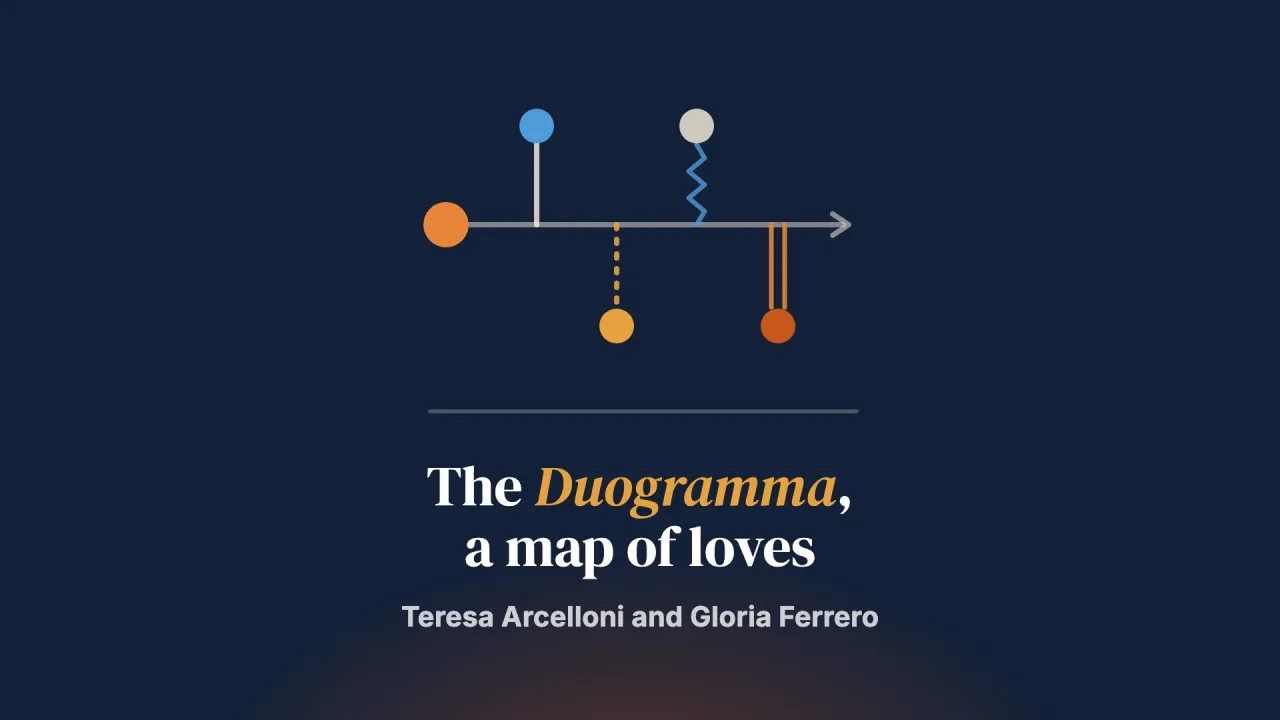
The Duogramma®: An innovative methodology for psychotherapy
A map of the couple relationships lived, desired or rejected since childhood: the Duogramma®, its graphic rules and its use in individual therapy.
 Blog
Challenging in therapy: What a patient taught me
A couples therapy session led me to reflect on confrontation, authenticity and resonance: how to address difficult behaviour without invalidating the person.
 Scientific
Decolonizing Supervision: A Critical Race and Queer Theory Framework for Marriage and Family Therapy
Supervision is not neutral: a framework drawing on Critical Race Theory and Queer Theory to name and share power in supervision, with a vignette.
 Scientific
Internal Family Systems Therapy as Part of the ‘Family of Systemic Therapies’: A Critical Exploration of Systemic Practice in the Intra-Personal Domain
Does IFS belong to the family of systemic therapies? A critical exploration, grounded in a family court vignette, of systemic work with “parts”.
Comments 0
Log in to join the discussion. Log in